





Spot Search
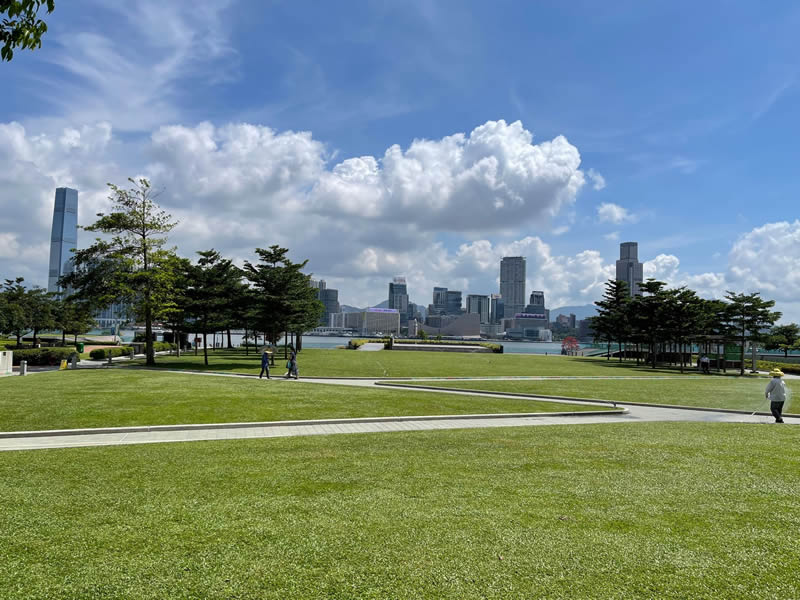
Tamar Park is located at Harcourt Road, Admiralty. Adjacent to the Central Government Offices and the Legislative Council Complex, it covers an area of around 1.76 ha. Designed with elegant simplicity, the park offers broad views of the picturesque Victoria Harbour. Apart from the spacious green lawns, park facilities include a landscaped garden, water features, a floating platform, an amphitheatre and Tamar Cafe.
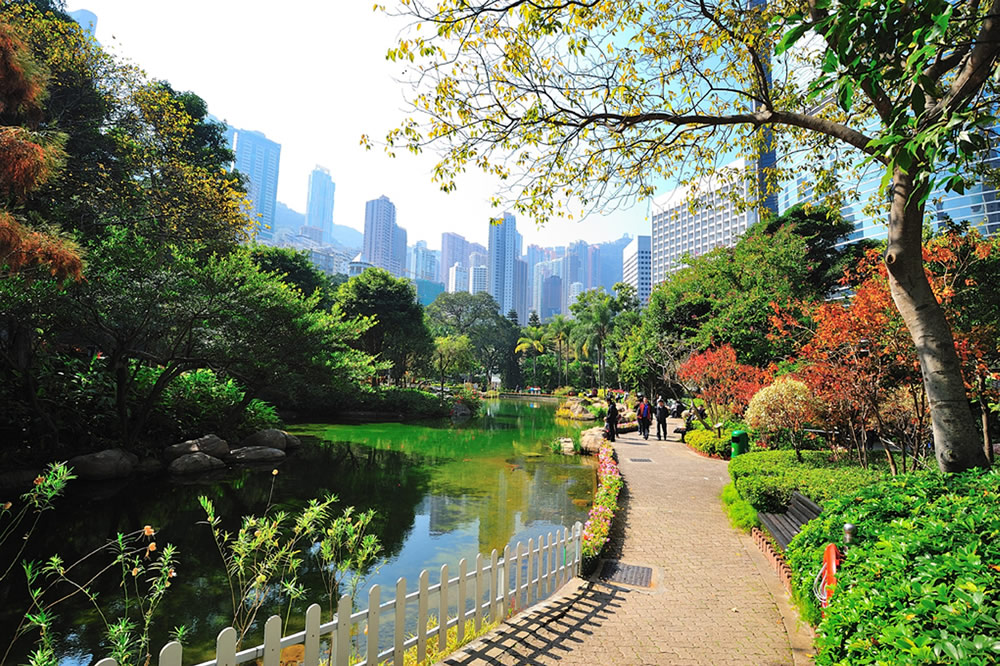
Hong Kong Park at Cotton Tree Drive, Central covers an area of 8.16 ha.
The present site of the Park was originally a garrison named Victoria Barracks. A number of garrison buildings built between 1842 and 1910 are preserved, including Flagstaff House (currently accommodating Flagstaff House Museum of Tea Ware), Rawlinson House (currently housing the Park management office and Cotton Tree Drive Marriage Registry), Wavell House (currently accommodating Education Centre) and Cassels Block (currently housing Hong Kong Visual Arts Centre). Flagstaff House was declared a monument in 1989 and the other 3 buildings were rated Grade 1 historic buildings in 2009.
Website:
https://hkp.lcsd.gov.hk/en
.jpg)
Located inside Hong Kong Park on Cotton Tree Drive in Central, Flagstaff House Museum of Tea Ware was originally Flagstaff House which served as the office and residence of the Commander of the British Forces in Hong Kong until 1978. Built in 1846, Flagstaff House is one of the oldest surviving Western buildings in Hong Kong. It was converted into Flagstaff House Museum of Tea Ware in 1984.
The Museum specialises in the collection, study and display of tea ware. Alongside its exhibitions, the Museum holds regular demonstrations, tea gatherings and lecture programmes to promote ceramic art and Chinese tea drinking culture.
Flagstaff House was declared a monument in 1989.
.jpg)
Bank of China Tower at Garden Road in Central was designed by the world-renowned Chinese-American architect I. M. Pei. Inspired by the sectioned trunk of bamboo reaching higher and higher with each new growth, the 367.4 m tower has 4 prism-shaped shafts and is one of the tallest skyscrapers in Hong Kong.
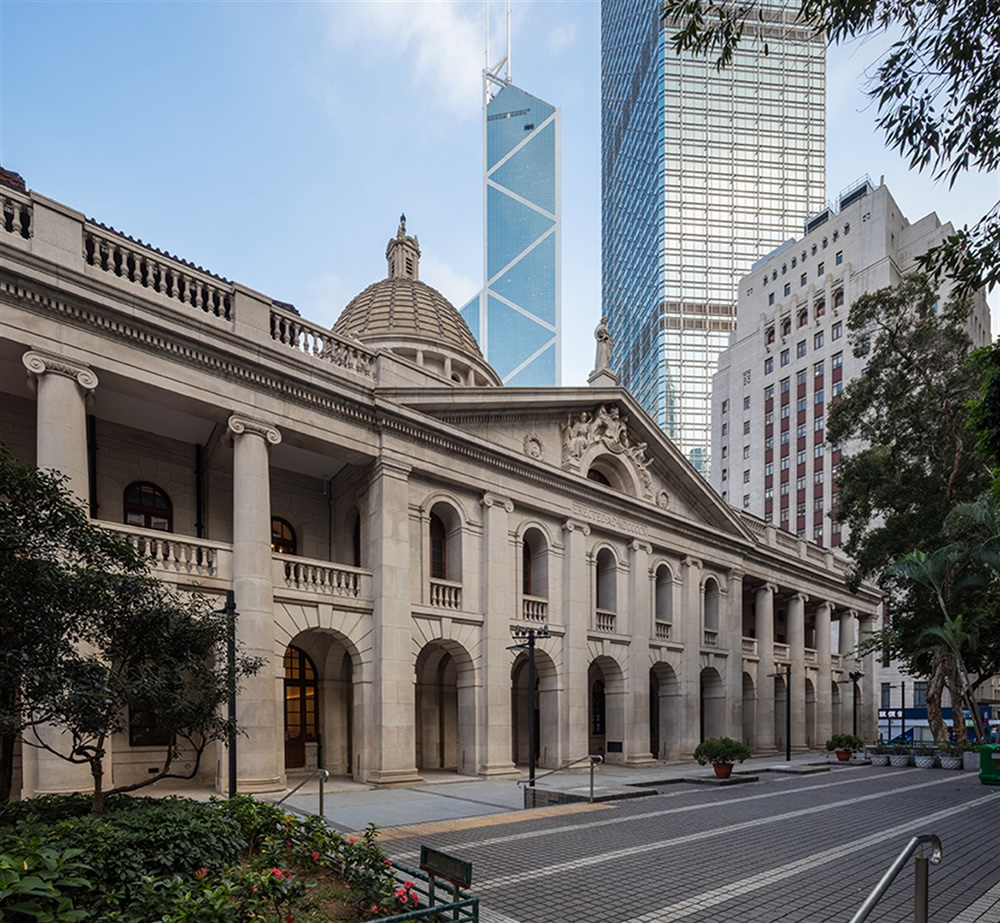
The Court of Final Appeal Building on Jackson Road (also called “the Old Supreme Court Building”) was opened in 1912 and housed the Supreme Court at that time. The Building was used as the Supreme Court and other courts and government offices except during the Japanese occupation and the period between 1978 and 1981 when the Supreme Court was temporarily moved to the former French Mission Building. In 1984, the Supreme Court moved to the current High Court Building (formerly called “the Supreme Court Building”) in Queensway. The Building was used as the Legislative Council Chamber and associated facilities from 1985 until 2011 when the Legislative Council moved to its current premises in Tamar. The Building has been home of the Court of Final Appeal since 2015.
Chater Garden and Statue Square are on the east and west sides of the Court of Final Appeal Building respectively. Supported by tall Ionic columns, the 3-storey granite building is Neo-classical in style, surmounted by a blindfolded statue of Justice personified in the form of the Greek goddess Themis holding a sword and a pair of scales in her left and right hands respectively. The exterior of the Old Supreme Court Building was declared a monument in 1984.
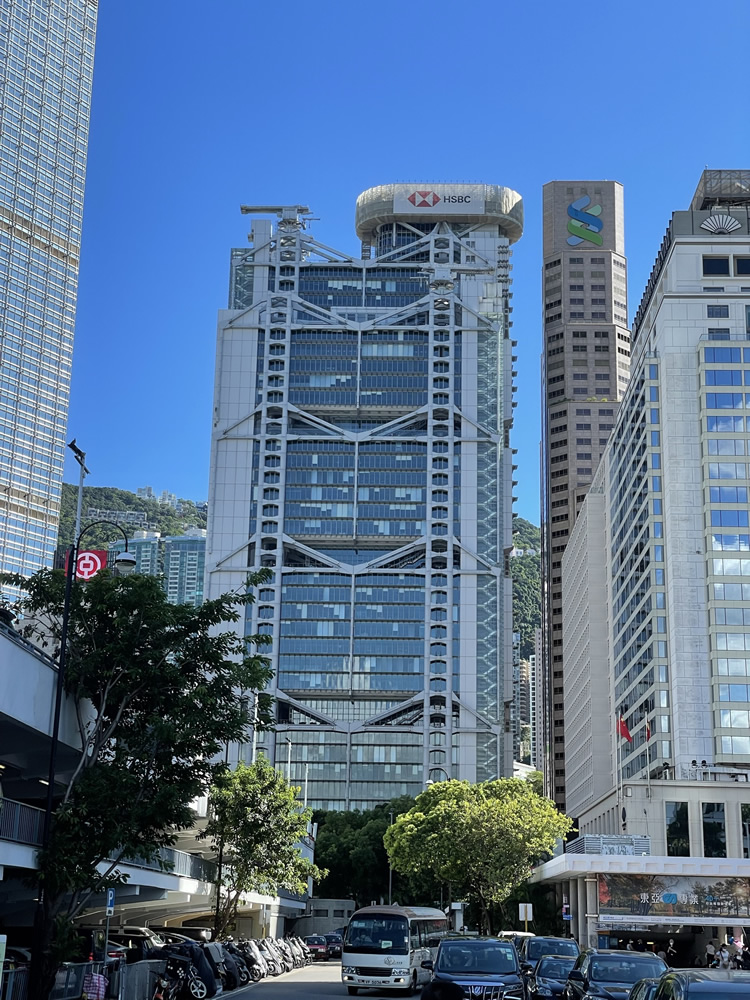
HSBC Main Building at Queens Road Central is designed by the famous British architect Norman Foster. The Building stands 178.8 m high across 52 floors and is one of the prominent landmarks on Hong Kong Island.
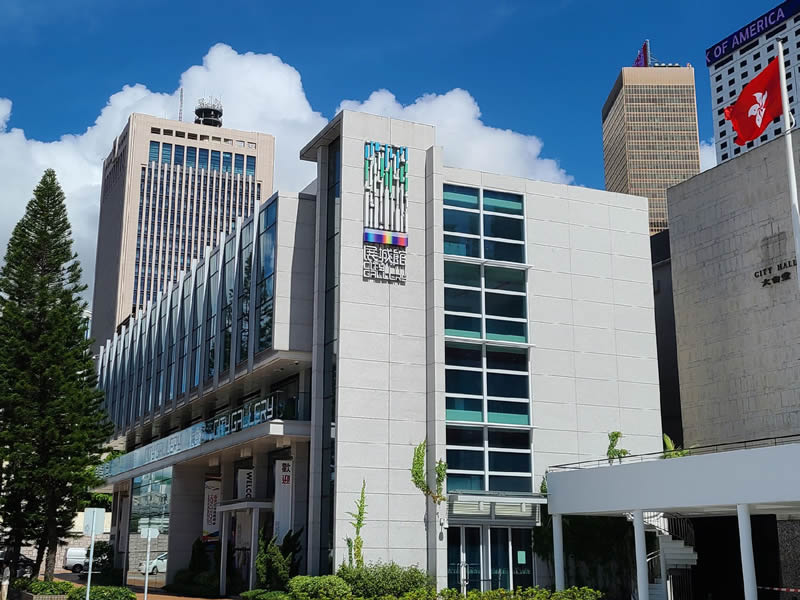
The City Gallery, situated in Edinburgh Place, Central, is Hong Kong’s first exhibition hall with the theme of urban planning and large-scale infrastructure development. The Gallery was previously known as “The Hong Kong Planning and Infrastructure Exhibition Gallery”. Following refurbishment and expansion works since 2009, the permanent gallery — the City Gallery — was officially opened to the public in 2012.
Apart from the permanent exhibitions, the City Gallery also showcases extraordinary interactive exhibition experiences from the past, present and future achievements of Hong Kong’s urban planning to enable the public to have a better understanding of the planning process of major projects and the future development of Hong Kong.
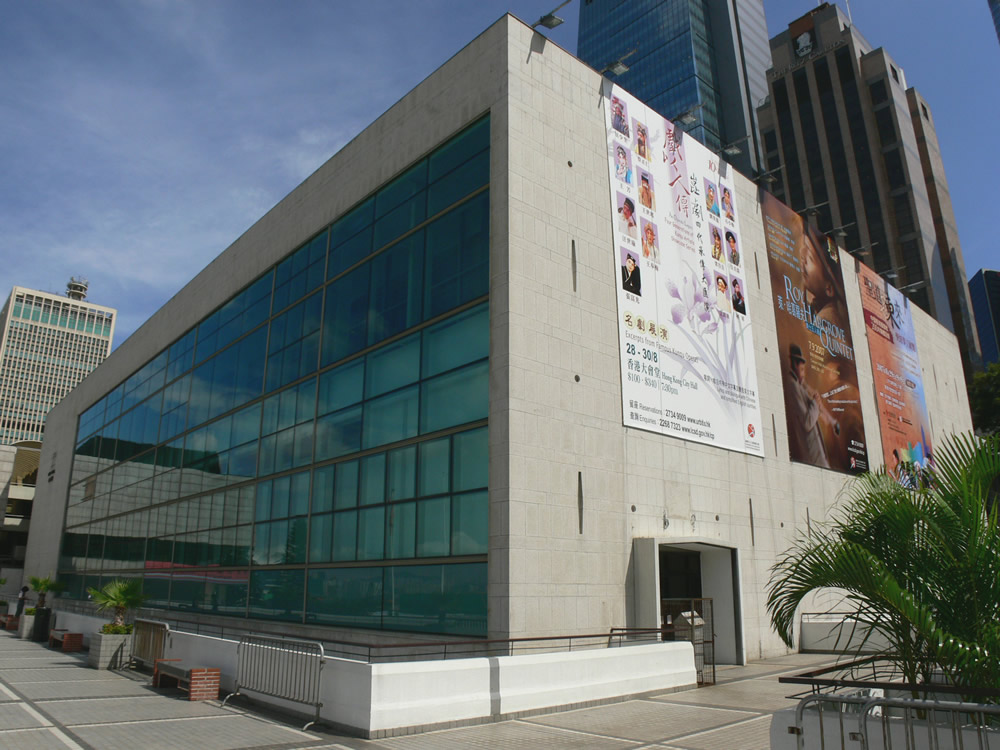
Hong Kong City Hall, situated at Edinburgh Place in Central, opened in 1962. It has been reputed as one of the most prominent arts and cultural venues in Hong Kong.
Occupying an area of 11 000 sq m, Hong Kong City Hall comprises 2 buildings and a memorial garden. The garden was built in memory of the soldiers and citizens who died in defence of Hong Kong during World War II. The Low Block houses major facilities, including a well-equipped concert hall, a theatre, an exhibition hall and restaurants, whilst the recital hall, exhibition gallery, committee rooms, public library and the City Hall Marriage Registry are located in the High Block.
Hong Kong City Hall was declared a monument in 2022.
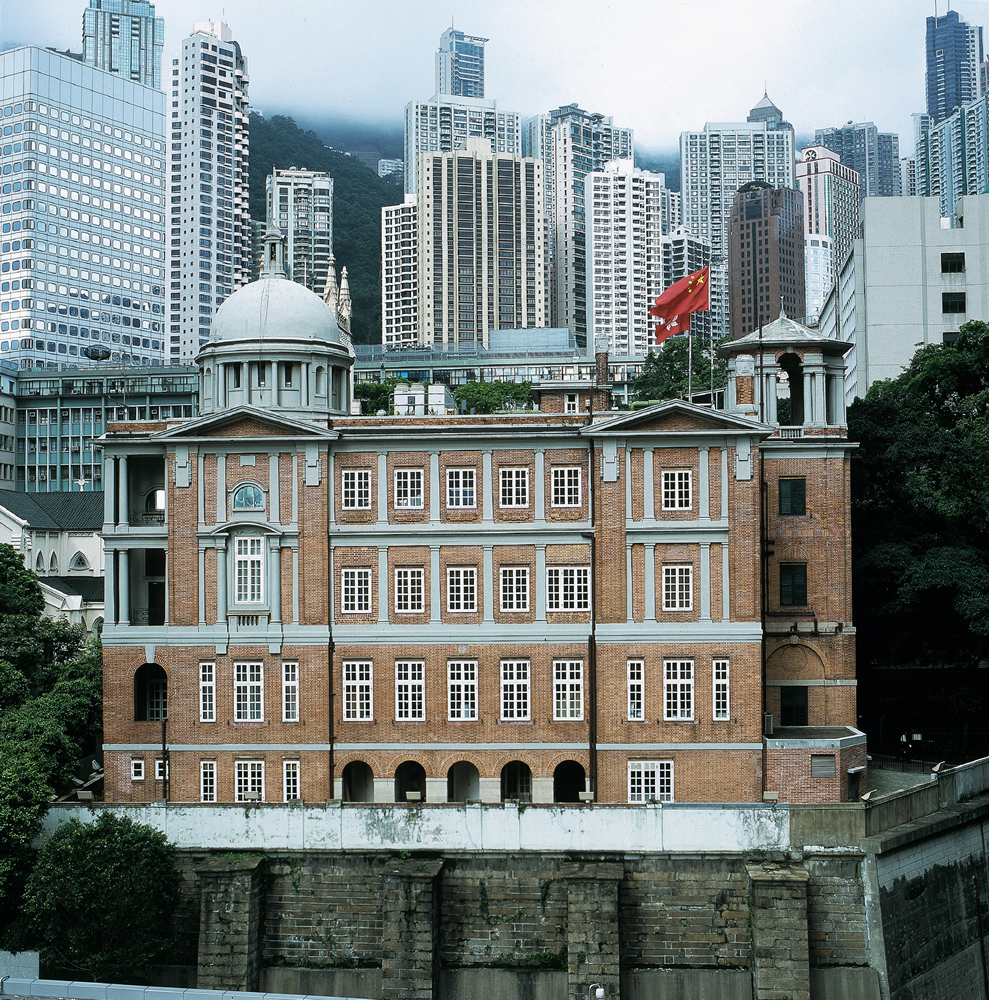
The former French Mission Building on Battery Path in Central, was originally built in 1842. Expansion and conversion works were completed in 1860 and 1917 respectively. Dating from the Edwardian period, the 3-storey building with a basement is constructed in granite and red bricks in the Neo-classical style. A chapel is incorporated in the northwest corner, where its cupola projects above the roof. The Building was declared a monument in 1989.
The Building was once government residence and accommodation of tycoons and celebrities. It had also been used as a consulate, the French Mission Building, the post-war temporary government headquarters, the District Court, the Supreme Court and government offices. It housed The Court of Final Appeal between 1997 and 2015.
After the relocation of The Court of Final Appeal to Jackson Road, Central, the Building was incorporated into the Legal Hub project. To enhance and promote Hong Kong’s status as an international legal hub for legal, deal-making and dispute resolution services, the government has allocated space in part of the West Wing of the former Central Government Offices, the Building and Two Exchange Square to form the Legal Hub for housing local, regional and international Law-related organisations (“LROs”), with a view to providing premier legal and dispute resolution services. LROs have gradually moved in the Building and commenced operation upon completion of the renovation works in mid-2020.
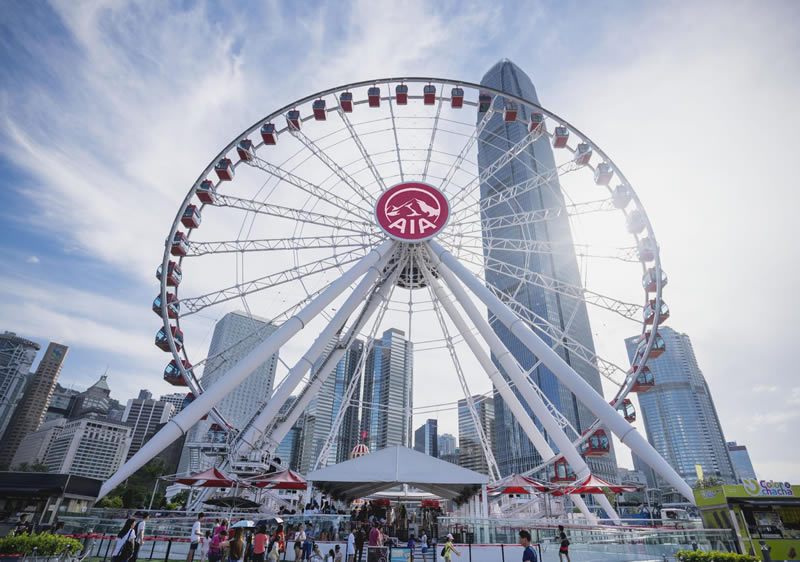
Located at Man Kwong Street, Central near the Central Harbourfront, the Hong Kong Observation Wheel is a 60-metre tall ferris wheel with 42 gondolas, each holding up to 8 passengers. Passengers can enjoy the spectacular view of Victoria Harbour from any angle as the wheel spins.
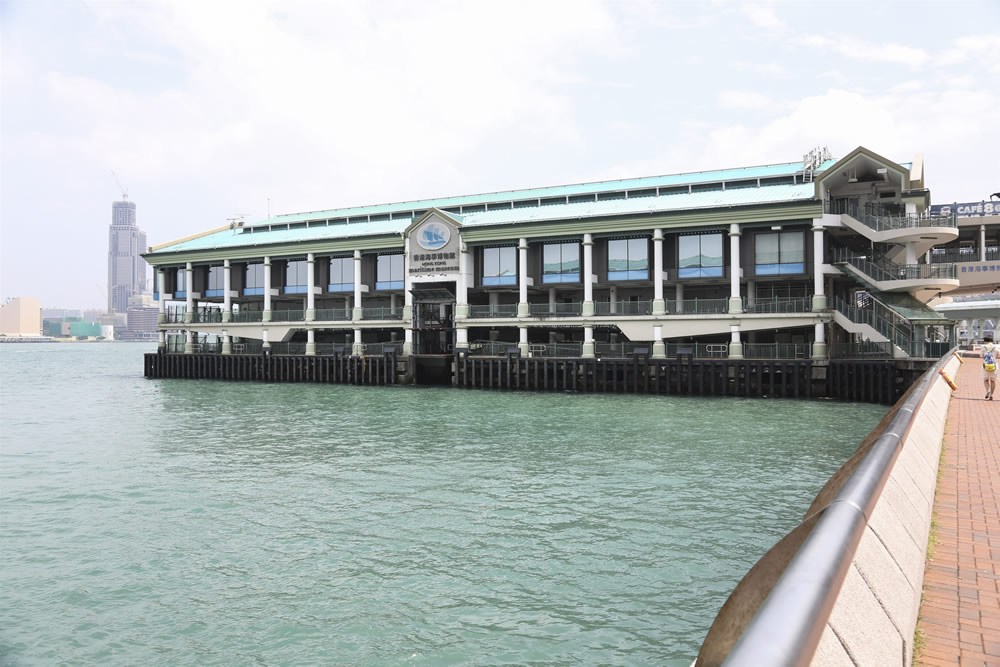
Hong Kong Maritime Museum was established in 2005 at Murray House in Stanley and relocated to its current address at Central Pier 8 in 2013. It is dedicated to preserving, collecting and displaying objects that tell the story about trade and maritime in Hong Kong and the Pearl River Delta. The 3-level museum has over 10 galleries displaying more than 1 200 objects, the Museum Shop and Museum Café.
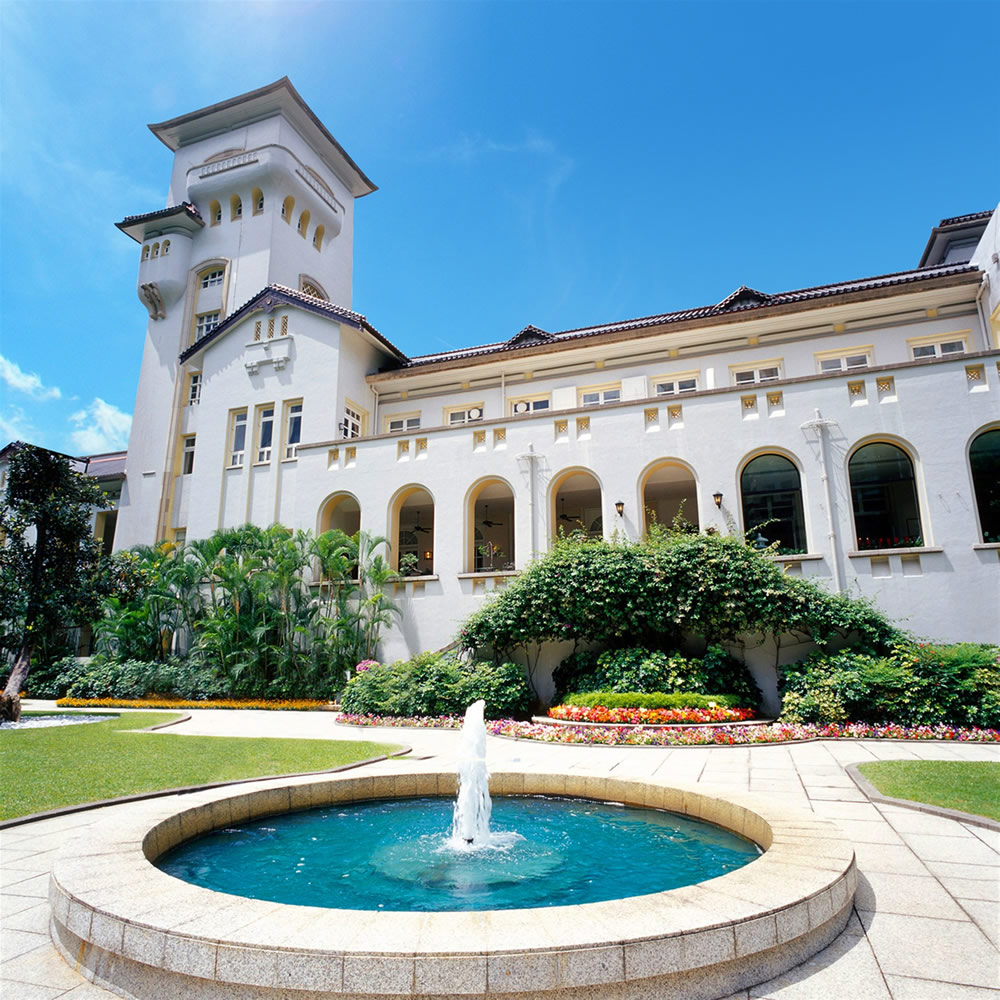
Government House at Upper Albert Road in Central is the official residence of the Chief Executive of the Hong Kong Special Administrative Region and a venue for the reception of dignitaries and other important official and social functions.
Completed in 1855, the Government House was originally built in the Neo-classical style. After a number of large-scale renovations, the building now features an exquisite and unique blend of Eastern and Western designs and is a prominent landmark of Hong Kong.
Government House was declared a monument in 1995.
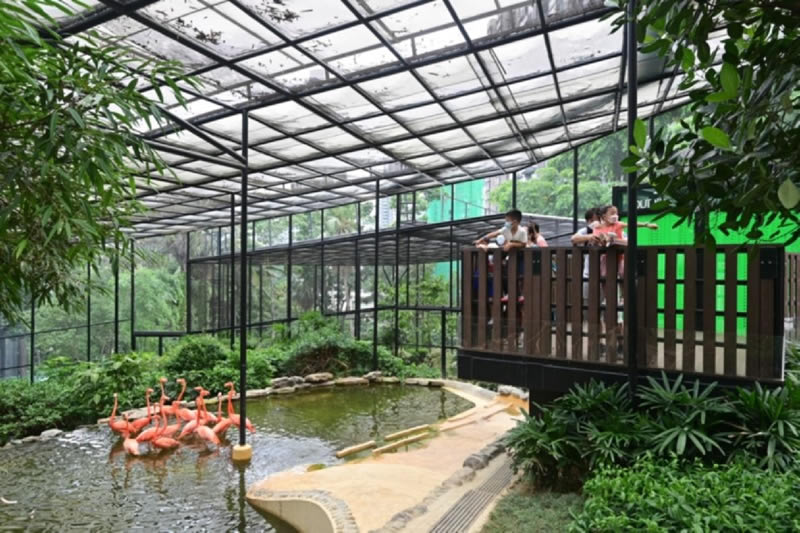
Located at Albany Road in Central, the Hong Kong Zoological and Botanical Gardens is the oldest park in Hong Kong. Built in 1860, the Gardens was fully completed and opened to the public in 1871.
The Garden used to house an assemblage of native plants for collection and research in its early years, and had therefore been known as the Botanic Gardens. Since 1876, the Gardens expanded its zoological collection comprising birds and mammals, and was officially renamed as the Hong Kong Zoological and Botanical Gardens in 1975.
The Gardens covers an area of 5.6 ha. The eastern part of the Gardens, known as the Old Garden, provides children’s playground, aviaries, a greenhouse and the fountain terrace garden, whereas the western part, or the New Garden, is mainly home to mammals and reptiles. On top of the zoological and botanical attractions, visitors may also enjoy a stroll down the heritage trail and savour the stories of the Gardens.
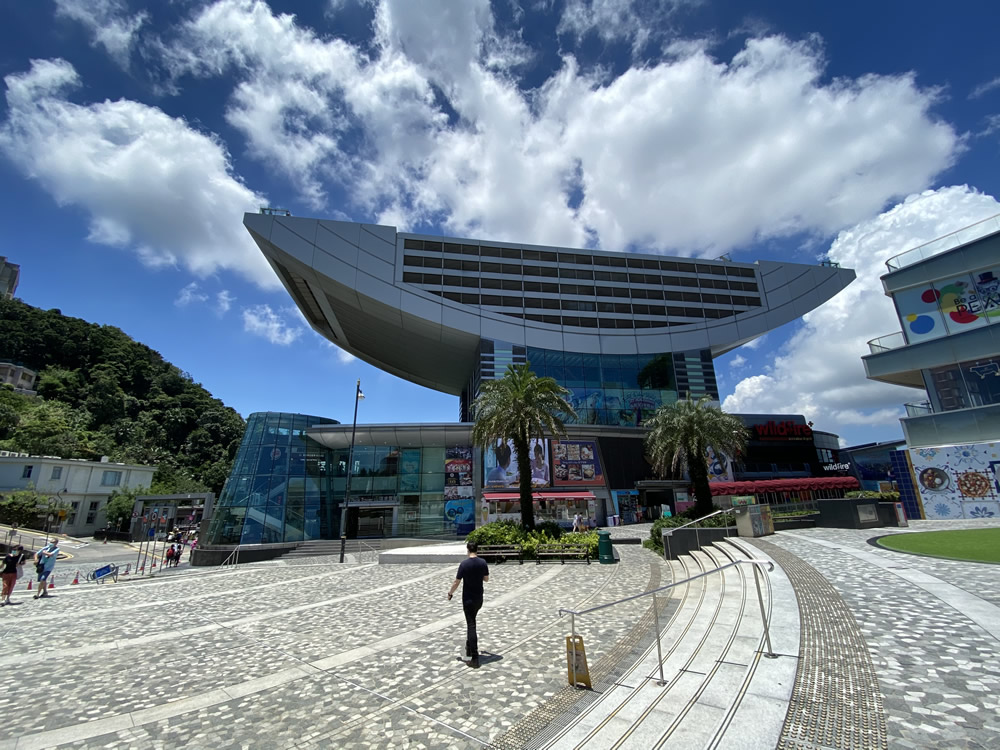
The Peak, about 552 m high, is the highest point on Hong Kong Island. You can enjoy the spectacular cityscape from the Peak.
The Peak Tram is one of the ways to get to the Peak. Commenced operation in 1888, it is the 1st cable funicular in Asia. It carries passengers from the downtown, passes the residential area of the Mid-Levels and then to upper terminus of Peak Tram at Peak Tower.
A dazzling array of restaurants, shops and entertainment venues, as well as a viewing platform make the Peak Tower a leisure destination for dining, entertainment and shopping. Opposite to Peak Tower is Peak Galleria which also provides an observation deck and houses various shops and restaurants, rendering it a can’t be missed spot on the Peak.
Winding around the Peak, the Peak Circle Walk offers stunning vistas of the city. Walking along Harlech Road and Lugard Road, you will be looking at Hong Kong Island’s scenic north and south sides, and panoramic views of the city and the Victoria Harbour.
Going up either Mount Austin Road or Harlech Road Fitness Trail, you will find Victoria Peak Garden where you can see sprawling lawns and pagodas, and enjoy the spectacular views of Mount High West, Pok Fu Lam Reservoir and Lamma Island.
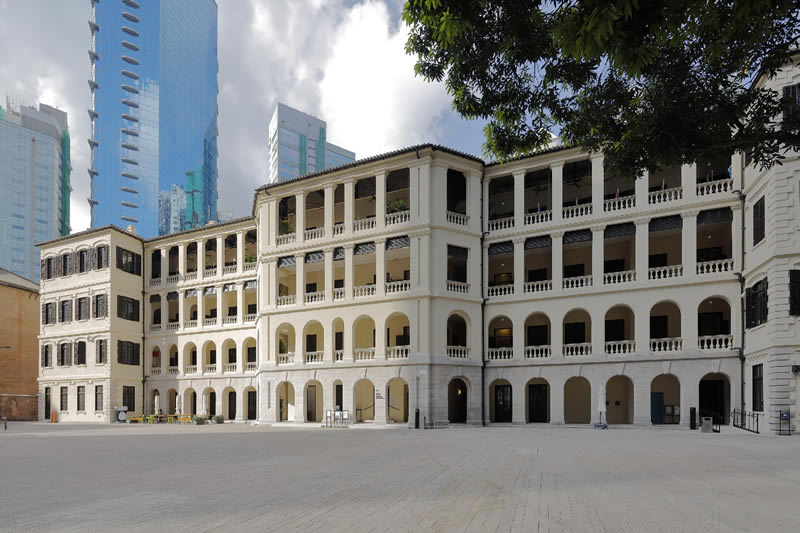
Tai Kwun, located at Hollywood Road, Central, is a centre for heritage and arts. It comprises three groups of magnificent buildings: the former Central Police Station, Central Magistracy and Victoria Prison.
After a decade of conservation and revitalisation works, Tai Kwun was opened to the public in phases starting from 2018. Under the joint partnership between the Hong Kong Jockey Club and The Government of the HKSAR, Tai Kwun represents one of the most significant revitalisation projects in Hong Kong. The historic buildings, together with 2 new buildings (including JC Contemporary and JC Cube) and outdoor spaces, offer various multi-purpose venues for a wide range of programmes, exhibitions and performances for the public to cultivate their knowledge and appreciation of arts and history in the community.
The former Central Police Station, Central Magistracy and Victoria Prison were declared monuments in 1995.
Website:
https://www.taikwun.hk/en/
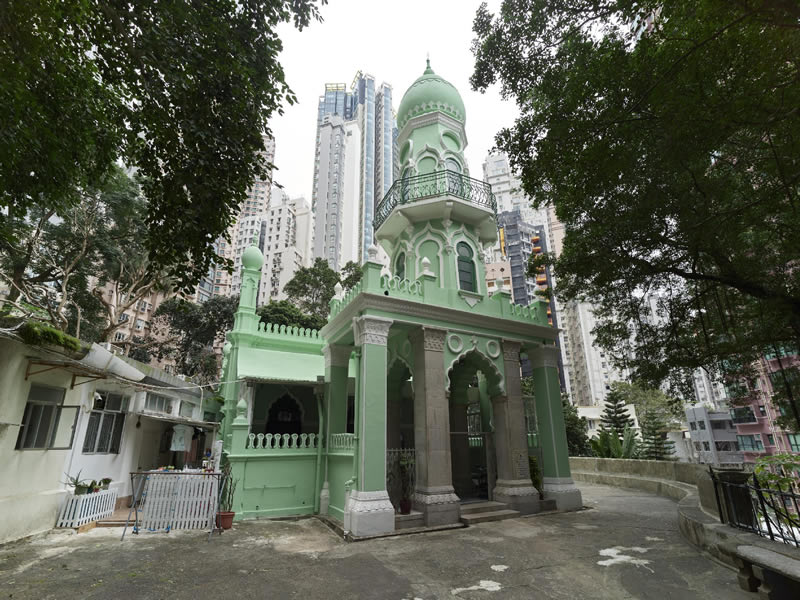
Located on Shelley Street, Central, Jamia Mosque is the oldest mosque in Hong Kong, which could accommodate a congregation of around 400 people. It was built in the 1910s with donations from Haji Mohamed Essack Elias, a Bombay merchant, to replace the old mosque on the same site.
Jamia Mosque is constructed in concrete and bricks with rich Islamic mosque architectural features. It is historically significant as it has witnessed the growth of the Muslim community in Hong Kong. It remains an important place of worship and gathering for local Muslims.
Jamia Mosque was declared a monument in 2022.
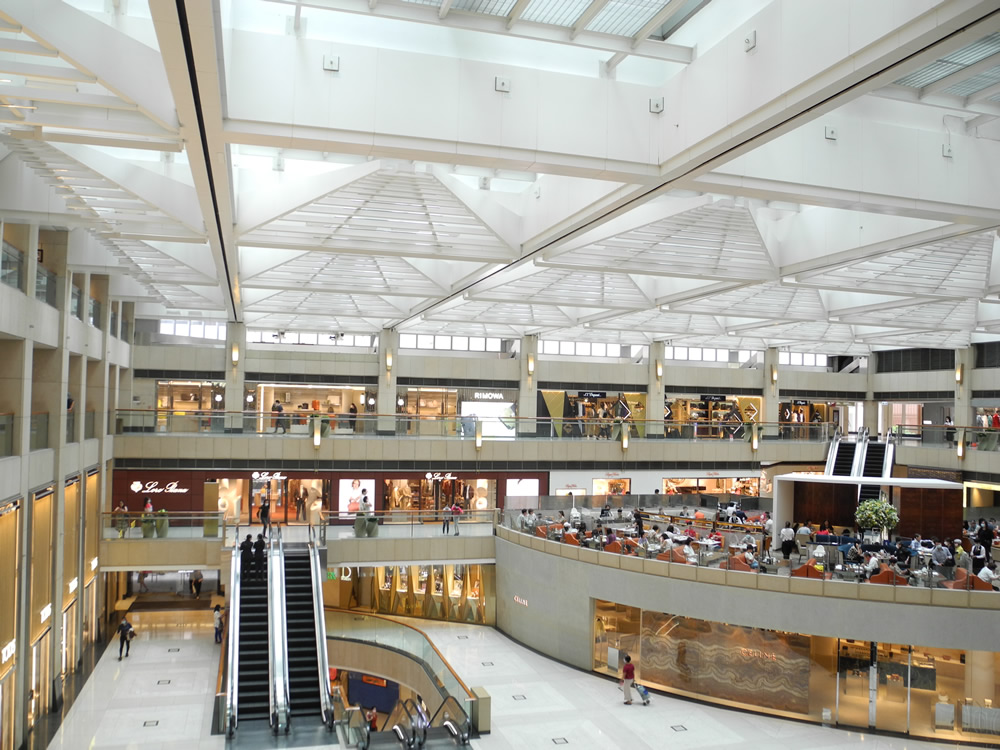
There are a number of large-scale malls and department stores in the Central and Western District, including the Pacific Place, Queensway Plaza and the United Centre in Admiralty; The Landmark, The Galleria, Pedder Building, Prince's Building, Chater House, ifc mall in Central; and Shun Tak Centre and Wing On Centre in Sheung Wan, etc. Apart from these malls, you can also find a number of small stalls along Li Yuen Street East and Li Yuen Street West selling affordable clothing and commodities.
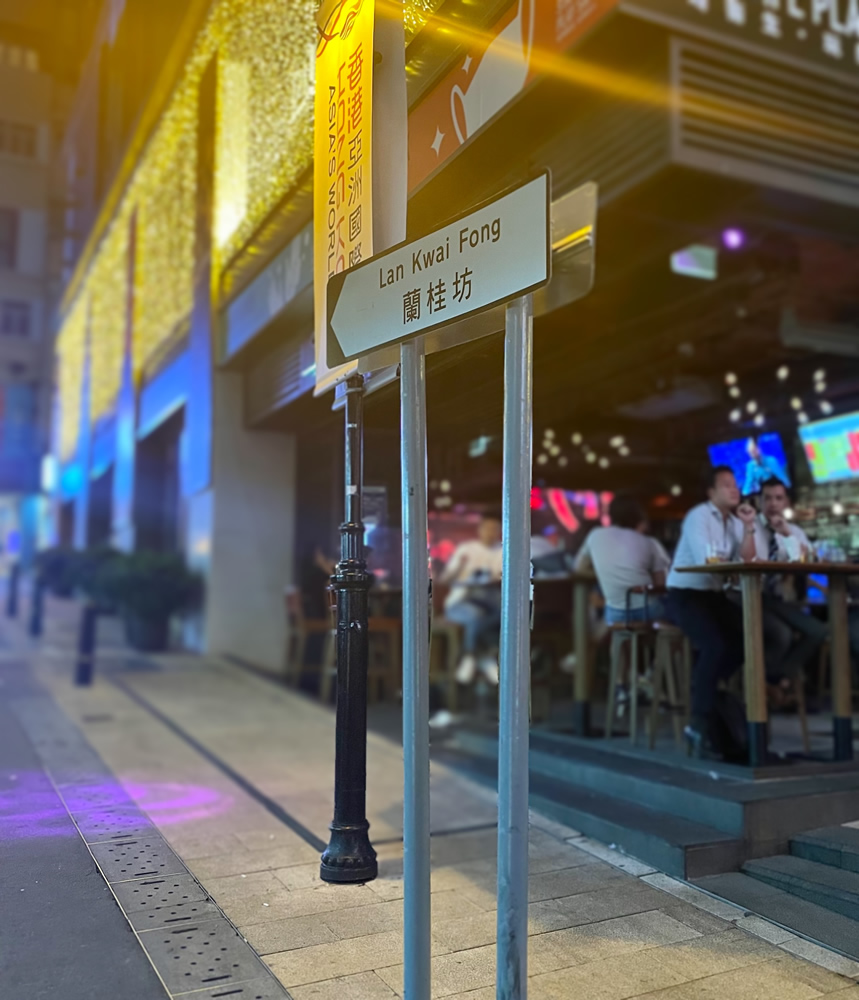
Located at Central, Lan Kwai Fong is one of Hong Kong’s most popular nightlife hot spots. Clustering with unique bars and restaurants, the area attracts thousands of local and overseas visitors alike. During festivals like Halloween, Christmas Day and New Year's Eve, the area is particularly lively, like a street carnival.
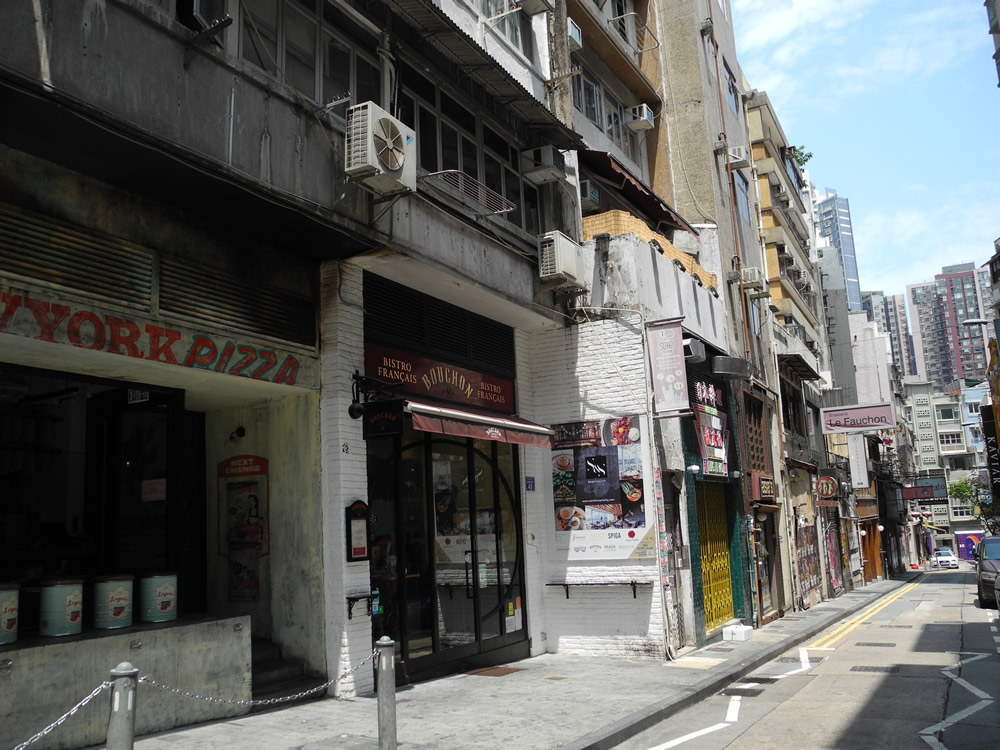
SoHo refers to the array of restaurants and bars along Staunton Street, Elgin Street and Shelley Street. The area derives its name from being located south of Hollywood Road, Central and is a must-go place for nightlife. Taking the Central to Mid-Levels Escalator, you can find a huge range of international cuisines and lively pubs there.
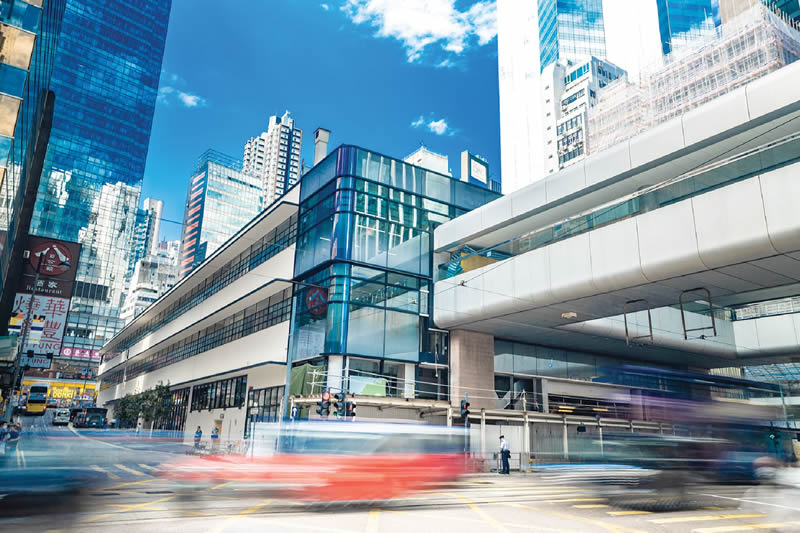
Accorded as a Grade 3 historic building, the Central Market is located in Central between Queen's Road Central and Des Voeux Road Central. Built in 1939 and ceased operation in 2003, it was then handed over to the Urban Renewal Authority for conservation and revitalisation and fully reopened to the public in 2022.
After revitalisation, the Central Market has become a hub for retailing shops, restaurants and bars; and offered venues for exhibitions and cultural and arts events.
Website:
https://www.centralmarket.hk/en
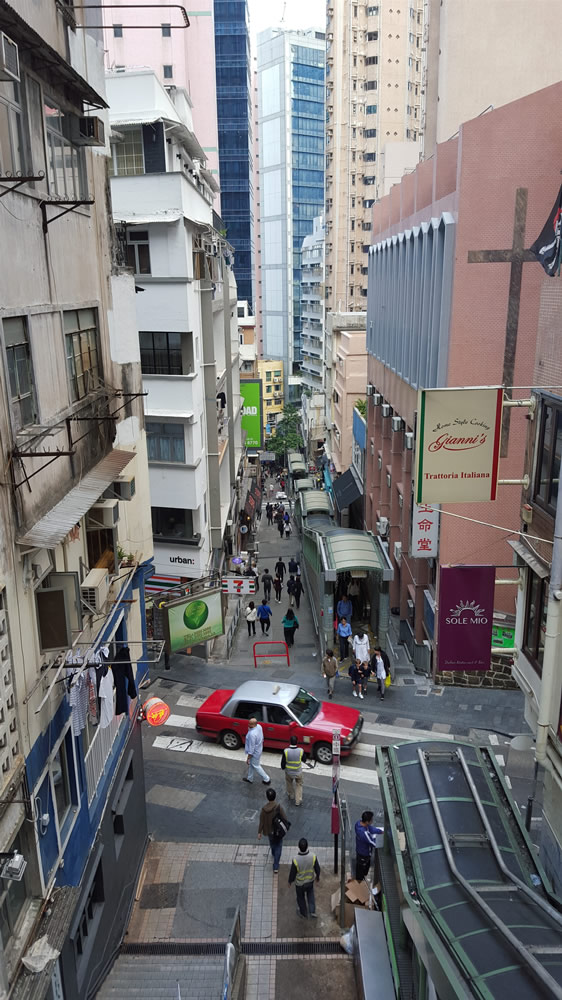
The Central to Mid-Levels Escalator and Walkway System starts at Queen's Road Central, passes through narrow streets and ends at Conduit Road. It consists of covered walkways, 16 reversible one-way escalators and 3 reversible one-way travelators. Visitors can enjoy the local street scenes and distinctive city views built on hillside along the way.
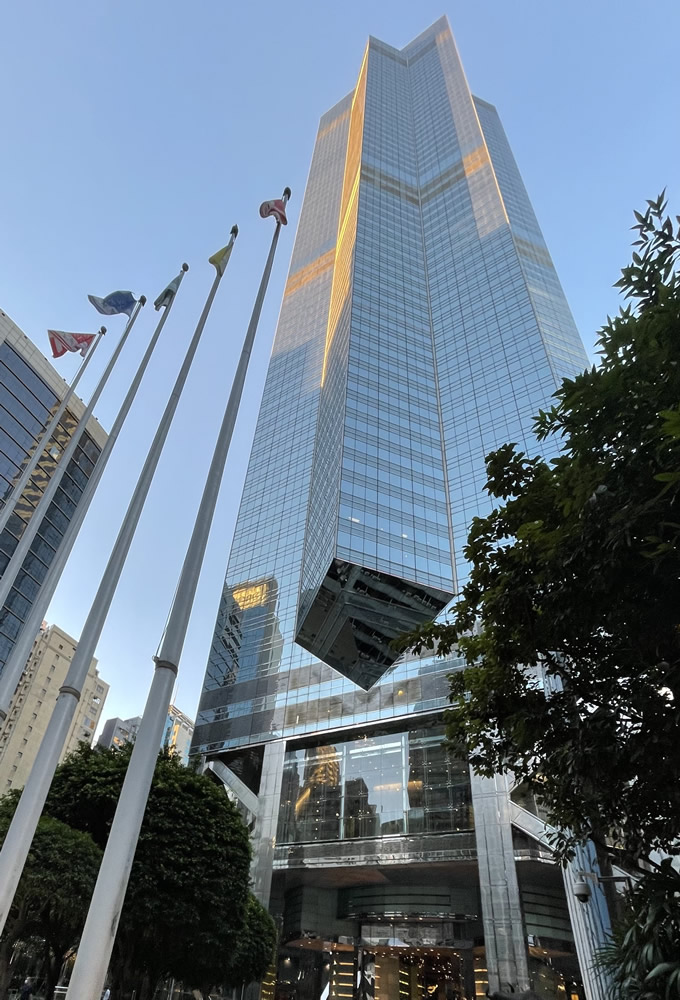
Located at Queen’s Road Central, The Center is about 350 m high and adorned with a landscape garden spanning over 1 500 sq m at the front entrance, making it one of the landmarks on Hong Kong Island. A community space named “H6 CONET” on ground floor seeks to connect the community and the creative art talents through art appreciation. Venues for holding exhibitions and performances, and greening and leisure seating area are provided.
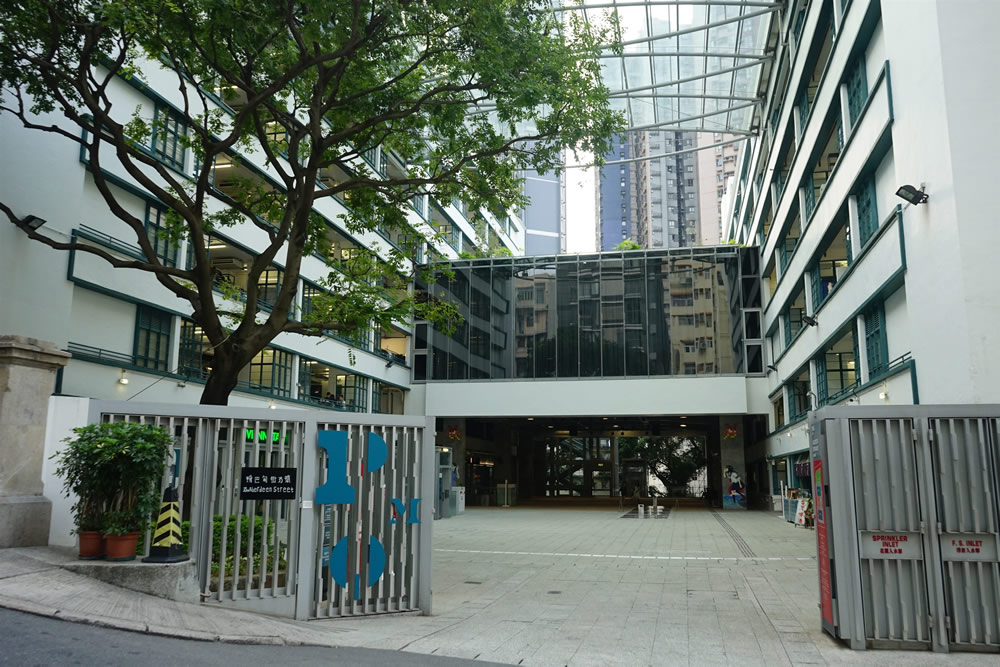
PMQ at Aberdeen Street in Central was revitalised and transformed from the Former Hollywood Road Police Married Quarters. The site first served as the campus of the Central School.
Established in 1862 at Gough Street in Central, the Central School was the 1st government school providing upper primary and secondary education to the public. In 1889, the school was relocated to the current site of PMQ and was renamed Victoria College. It was again renamed Queen’s College in 1894. Severely damaged during World War II, the school premises were demolished, and Queen’s College moved to its present site at Causeway Bay in 1950. In 1951, the Police Married Quarters which was the first of its kind to provide residence for married Chinese rank and file police officers, were constructed at the former school site at Aberdeen Street.
The building design of the Former Hollywood Road Police Married Quarters reflects the architecture of the modern movement. The quarters were rated Grade 3 historic buildings in 2010. Revitalised as PMQ in 2014, the original quarters units have been converted into studio units, pop-up stores and co-working spaces for leasing to budding create-preneurs as well as some international and local designer brands for showcasing and marketing their products and services.
Dr Sun Yat-sen Museum is located in Kom Tong Hall at Castle Road, Mid-Levels in Central. Opened in 2006, the 4-storey museum, with a floor area of 2 560 sq m, has 2 permanent exhibitions displaying a number of precious historical artefacts. Supplemented by a wide range of audiovisual programmes, the Museum gives a comprehensive overview of the life and career of Dr Sun, and Hong Kong's vital role in the reform movements and revolutionary activities in the late 19th and early 20th centuries.
Built in 1914, Kom Tong Hall was named after its first owner Mr Ho Kam Tong. A typical Edwardian Classical building, Kom Tong Hall was among the earliest residential buildings constructed with reinforced concrete structure and fitted with concealed electrical wiring in Hong Kong. It is also one of the best-preserved buildings dating back to the early 20th century Hong Kong. Kom Tong Hall was declared a monument in 2010.
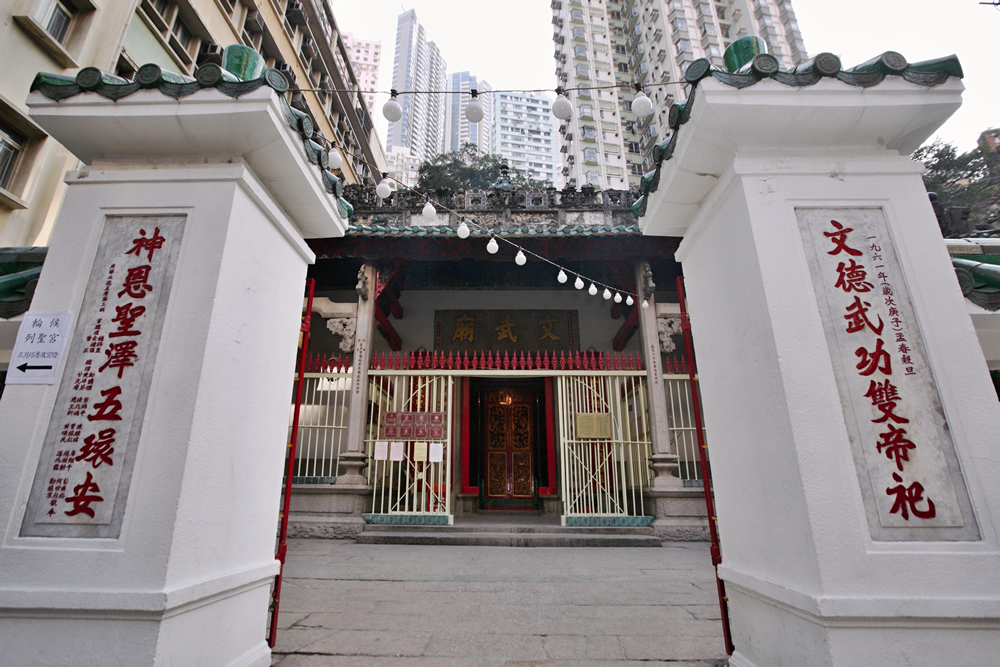
Located at Hollywood Road, Man Mo Temple in Sheung Wan is a compound comprising 3 blocks built between 1847 and 1862 – Man Mo Temple, Lit Shing Kung and Kung Sor. Man Mo Temple was mainly dedicated to Man Cheong and Kwan Tai. Lit Shing Kung was built for the worship of all Chinese gods and Kung Sor served as a meeting place and venue for dealing with matters related to the Chinese community in the neighbourhood. The 3 blocks are separated by 2 alleys.
Man Mo Temple enshrines the gods Man Cheong (God of Literature) and Kwan Tai (God of Martial Arts). Legend has it that Man Cheong, also known as “Wen Chang Celestial Lord” and “Wenquxing”, governs knowledge and studies and therefore many students and examination candidates pay homage to him. He is also a figure representing filial piety. Kwan Tai refers to Guan Yu (courtesy name Yunchang) who was a famous military general of the State of Shu during the Three Kingdoms period (220 - 280). He was reputed as "the enemy of ten thousand people", and is the paradigm of mightiness, loyalty and righteousness. Kwan Tai is widely glorified and worshipped for his wisdom, trustworthiness, benevolence, righteousness and courage.
Man Mo Temple Compound was declared a monument in 2010.
.jpg)
Hong Kong Museum of Medical Sciences at Caine Lane in Sheung Wan is formerly the Old Pathological Institute (also known as Bacteriological Institute).
Opened in 1906, the Old Pathological Institute was the 1st purpose-built public health and medical laboratory in Hong Kong. Comprising 2 upper floors and a basement, the red-brick structure was built in the Edwardian style. It was declared a monument in 1990.
Established at the building in 1996, Hong Kong Museum of Medical Sciences provides various exhibition galleries introducing the development of Chinese Traditional Medicine and Western Scientific Medicine in Hong Kong and Hong Kong’s medical heritage.
.jpg)
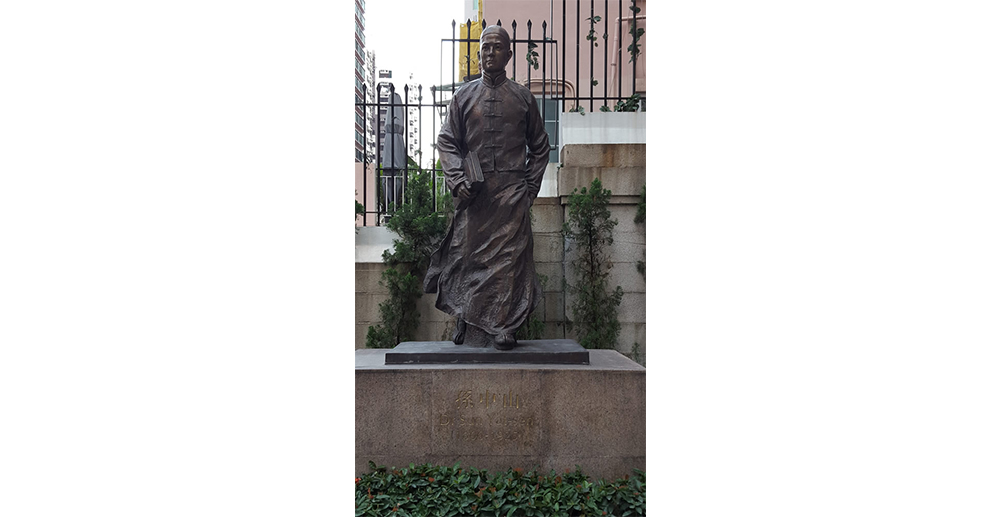
Sun Yat Sen Memorial Park at Eastern Street North in Sai Ying Pun covers an area of about 4 ha and is named after Dr Sun Yat Sen to commemorate his contribution as the father of modern China. Dr Sun received his secondary and university education in Hong Kong and the majority of his activities during that time took place in the Central and Western District. The Park locates at the previous berthing place of Dr Sun’s vessels many time on his way back to the Mainland.
A bronze statue of Dr Sun is placed at the memorial lawn at the centre of the Park. The covered walkways of the children's play area and the roof of the chime tower are respectively modeled on the colonnade structures of the Central School (now Queen's College) and the design of the Main Building of The University of Hong Kong where Dr Sun received education.
Other major facilities of the Park include basketball courts, a waterfront promenade, a 7-a-side artificial turf soccer pitch, swimming pool complex, etc.
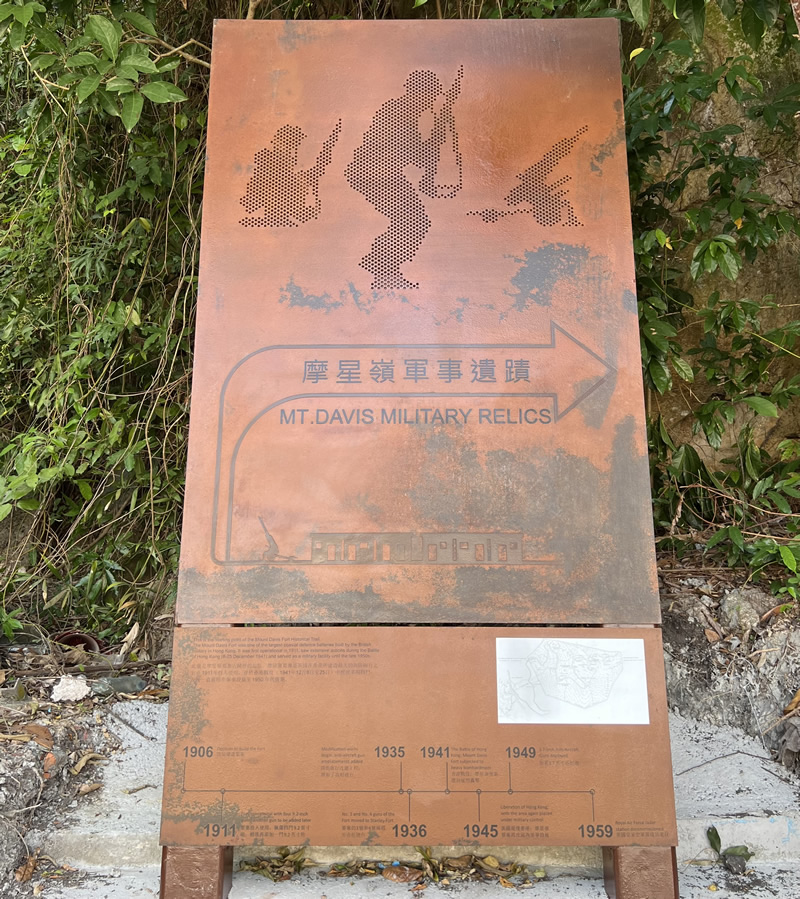
Mount Davis Fort Historical Trail is about 2 km long starting at the junction of Victoria Road and Mount Davis Path. Visitors can visit the military relics of Mount Davis Fort, as well as embrace the full view of Lamma Island and West Lamma Channel.
The Mount Davis Fort was one of the largest coastal defence batteries in Hong Kong and was first operational in 1911. It saw extensive actions during the Battle of Hong Kong (8th – 25th December 1941). The existing relics include artillery batteries, lookout, barracks and training field etc. Visitors can understand the history of the Fort through the information boards along.
The Mount Davis Battery was rated Grade 2 historic building in 2009.
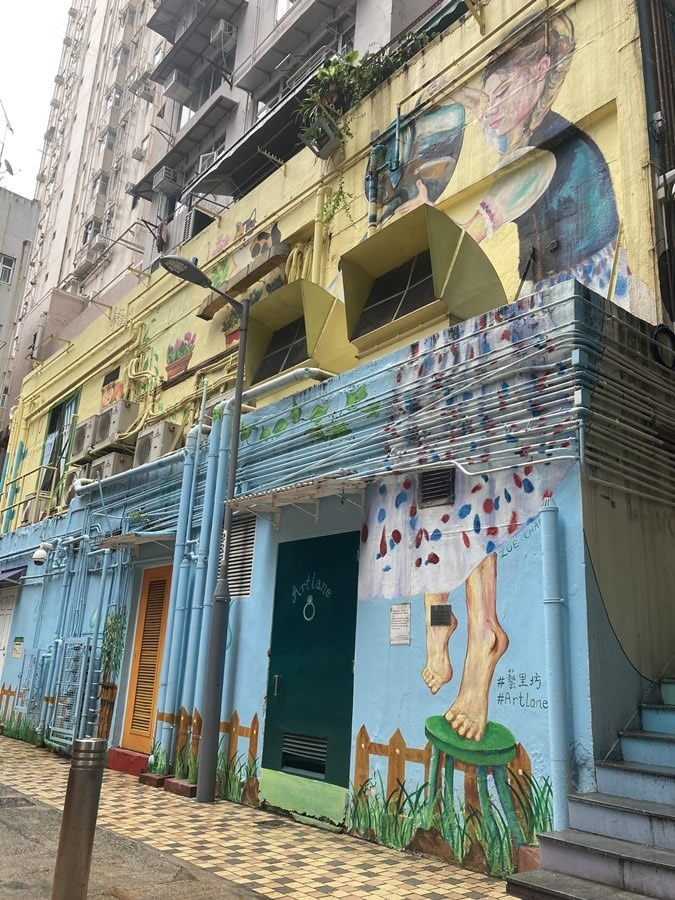
Artlane is a popular mural village located in Sai Ying Pun in the areas around Chung Ching Street, Ki Ling Lane and Shek Chan Lane. Showcasing colourful murals of different styles created by local and international artists on the exterior walls of buildings in the areas, the village is a perfect spot for visitors and photo lovers.
_西區副食品批發市場段_Western_Wholesale_Food_Section.jpg)
Occupying an area of around 5 200 sq m, Central and Western District Promenade – Western Wholesale Food Market Section comprises a promenade of about 400 m long and 4 idle piers.
The design of the Promenade preserves the distinctive features and historical elements of the Western Wholesale Food Market and the piers. The 4 piers have been converted into recreation areas with different themes, making the Promenade an unique pier-turned-park. Not only does the park provide activity space for the public, but also serves as an ideal venue for different groups to organise activities.
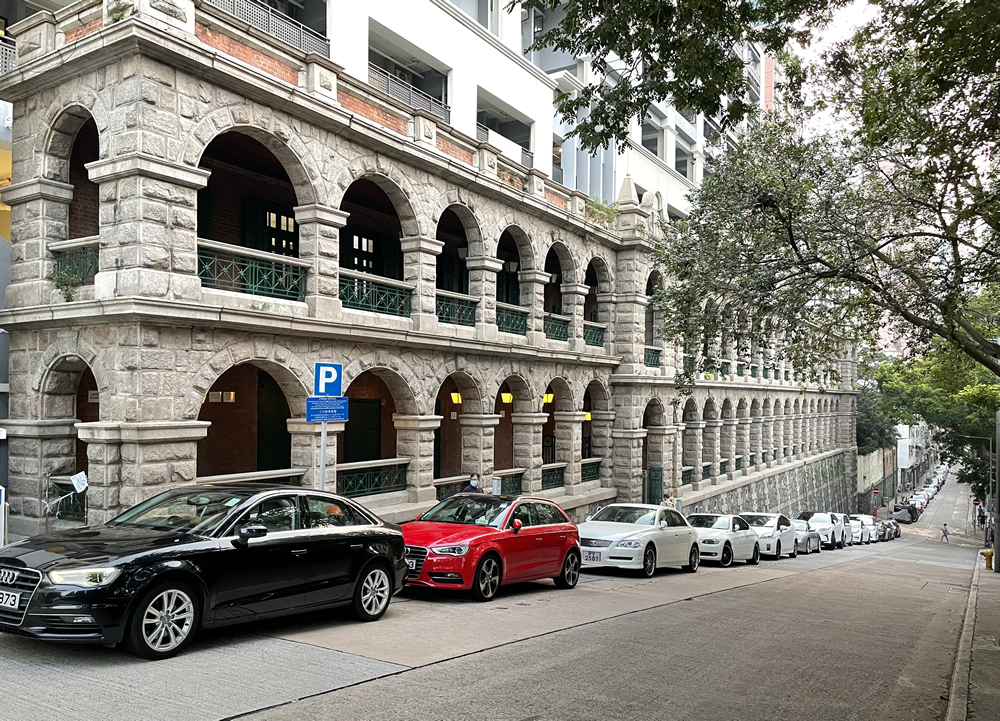
Located at High Street in Sai Ying Pun, the Old Mental Hospital was built in 1892 as quarters for foreign nursing staff. In 1939, the building was converted into a mental hospital until the opening of the Castle Peak Hospital in Tuen Mun in 1961, then it was used as a day treatment centre for psychiatric outpatients. It was left vacant from 1971 up to 2001 when the site was redeveloped into the Sai Ying Pun Community Complex, with the façade of the building preserved intact.
The façade of the Old Mental Hospital is L-shaped in plan and featured the style of Early-Baroque architecture, including a wide arched verandah and retaining walls made of rusticated granite blocks. The façade was declared a monument in 2015.
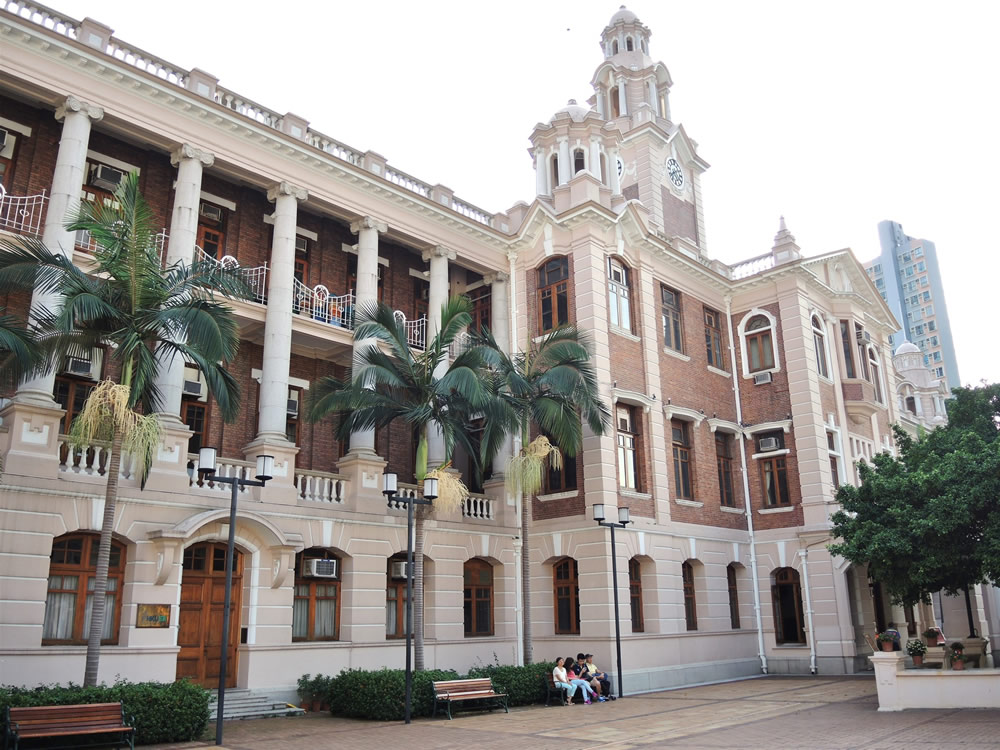
The University of Hong Kong at Pokfulam was established in 1911 and was officially opened in the following year. It is the oldest tertiary education institution in Hong Kong.
Many buildings on the campus of The University of Hong Kong are declared monuments or rated historic buildings. Of them, the Main Building completed in 1912 is the oldest structure. Classical in style, the well-proportioned, 3-storey red-brick Main Building is supported by granite columns of the Ionic order. It is designed symmetrically around the central axis of the clock tower featuring pairs of turrets at both ends of the principal façade . The Exterior of the Main Building was declared a monument in 1984.
Other monuments in the campus include the Exterior of Hung Hing Ying Building, the Exterior of Eliot Hall, the Exterior of Tang Chi Ngong Building, the Exterior of May Hall, the Exterior of Fung Ping Shan Building (now the University Museum and Art Gallery) and the Exterior of University Hall (now a male student dormitory).
Website:
https://hku.hk/
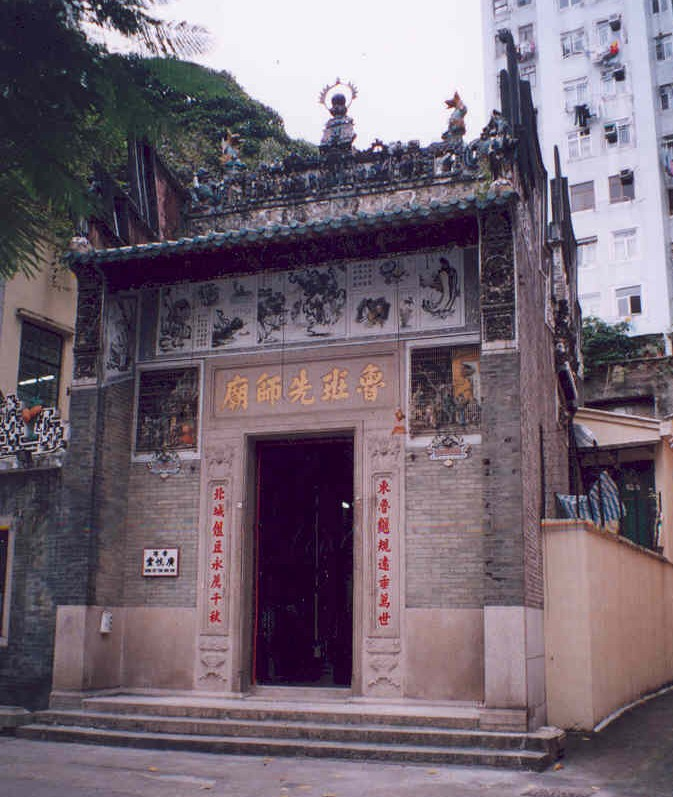
Lo Pan Temple at Ching Lin Terrace in Kennedy Town is the only temple in Hong Kong dedicated to Lo Pan, the patron saint of Chinese workers of the building industry. The Temple was constructed in 1884 by the Contractors’ Guild with donations from people of three trades, namely carpentry, masonry and bricklaying. With 2 courtyards and 3 halls, it features a typical layout but is distinguished by its elaborate parapet walls, ceramic sculptures, plastered reliefs and murals.
Lo Pan Temple was declared a monument in 2024. Free public guided tours are available for visitors.
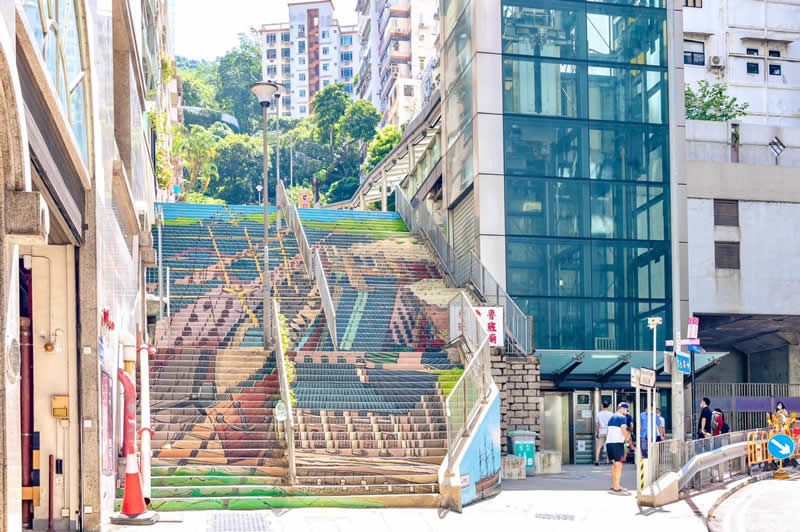
In the 19th century, Sands Street in Kennedy Town served as a "slipway" for ships to go ashore for repairs and for new ships to be launched. Taking the old slipway as the theme, the staircase painting at Sands Street recreates the slipway and its surroundings in the old days. A mural painting on the side of the staircase showing the horizontal perspective of the slipway and a brief history of the site also allow visitors to learn more about the history of Sai Wan.
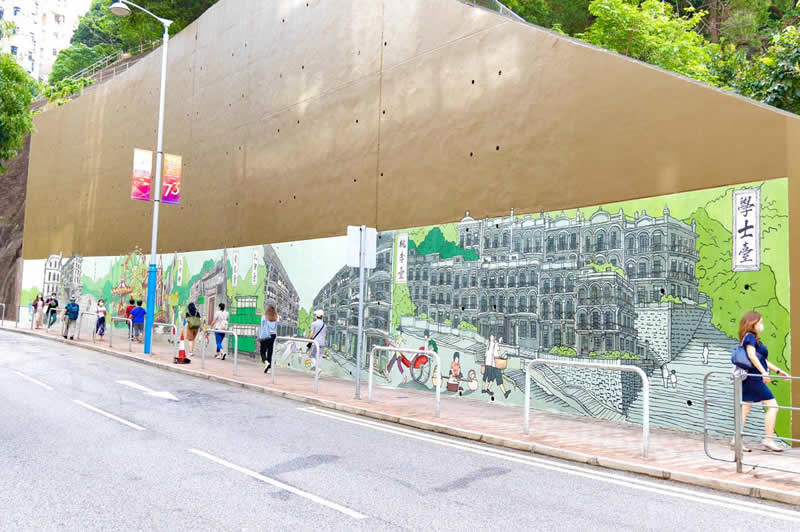
The mural painting at Rock Hill Street in Kennedy Town, taking the history of "Seven Terraces of Sai Wan" as the theme, recreates the architectural features of the then-Seven Terraces and people’s livelihood there back in those days. The Seven Terraces, including Tai Pak Terrace, Hee Wong Terrace, Ching Lin Terrace, To Li Terrace, Hok Sz Terrace, Li Po Lung Terrace and Chi Lan Terrace, were developed by Li Po Lung, son of a rich merchant, Li Sheng. Although most buildings at the Seven Terraces have been demolished or rebuilt, visitors can still have a glimpse into the old days at Sai Wan by appreciating the wall painting.
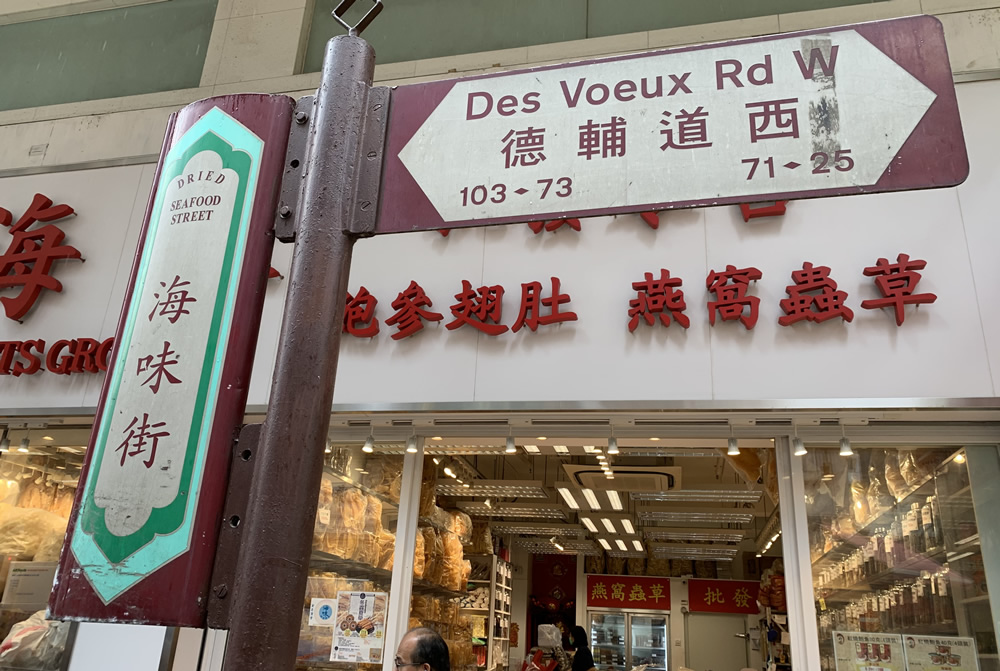
Sai Ying Pun is the well-known trading centre for salted fish and other dried seafood. The section of Des Voeux Road West between Queen Street and Centre Street earns the name of Dried Seafood Street from the cluster of dried seafood shops there. Similarly, Bonham Strand West and Wing Lok Street are collectively called Ginseng and Bird’s Nest Street, and Ko Shing Street is normally called Herbal Medicine Street because of the array of such shops. Visitors can find various dried seafood products and herbal medicine in the area.
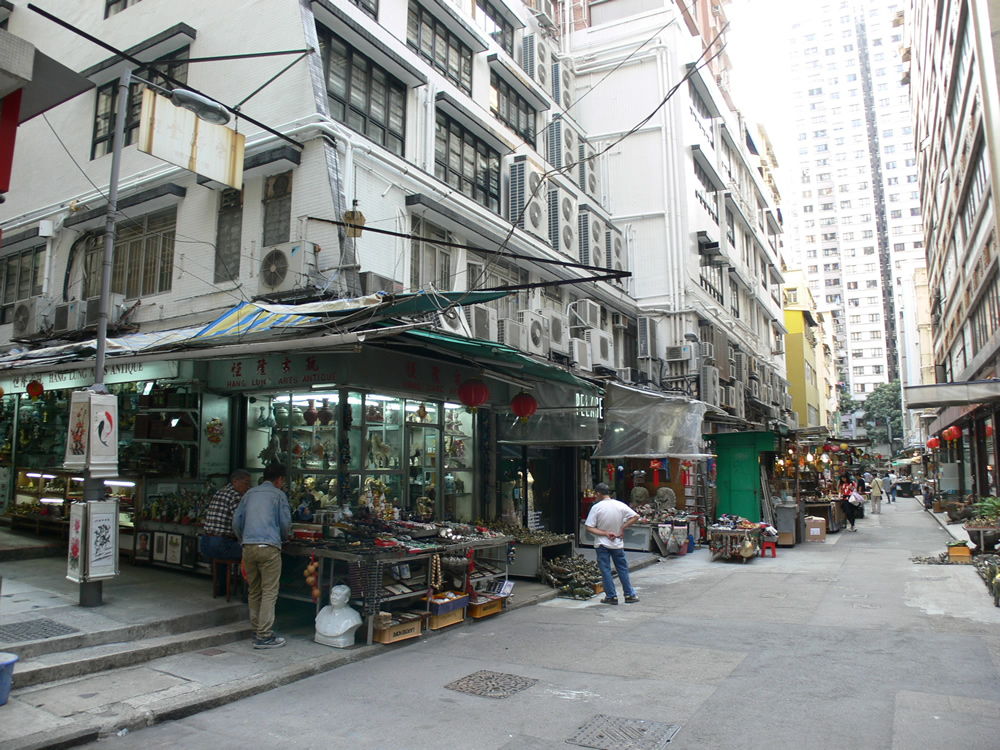
Upper Lascar Row, Lower Lascar Row, Hollywood Road and Lok Ku Road are well-known antique trading centres of Hong Kong. The highlight of Upper Lascar Row is the seemingly endless row of antique stores, offering an eclectic collection of Chinese calligraphy, arts and vintage furniture. It is a treasure hunting place for people who love nostalgic items.
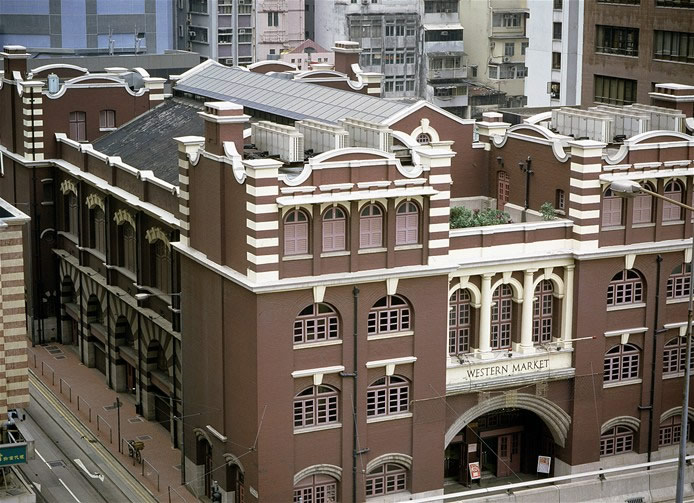
Western Market, situated at Des Voeux Road Central, was originally the old Western Market (North Block) built in 1906. The market originally had a South Block on Queen’s Road Central but the building was demolished in 1980.
Western Market is an Edwardian style building with a red brick exterior and a granite arch over its entrance. The Market ceased operation when Sheung Wan Municipal Building came into service in 1989. Western Market was declared a monument in 1990.
The building was redeveloped in 1991 to become a centre for traditional trades, arts and crafts. It also houses various shops selling handicrafts and fabric, as well as restaurants.
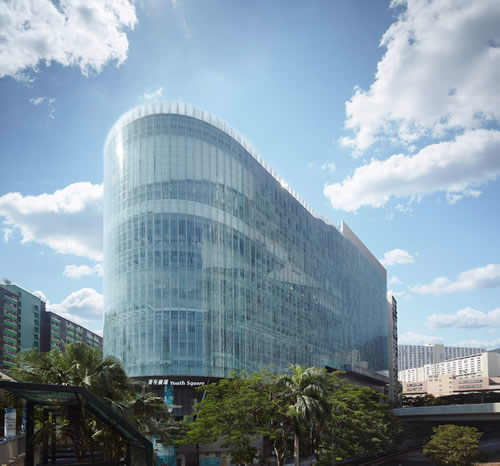
Situated at Chai Wan Road, Youth Square provides a wide range of facilities, such as the Y Theatre, Y Studio, Y Platform and Y Loft, for youth activities including local and overseas exchange programmes, leadership development, performance, conference, exhibition and multi-media production training, etc.
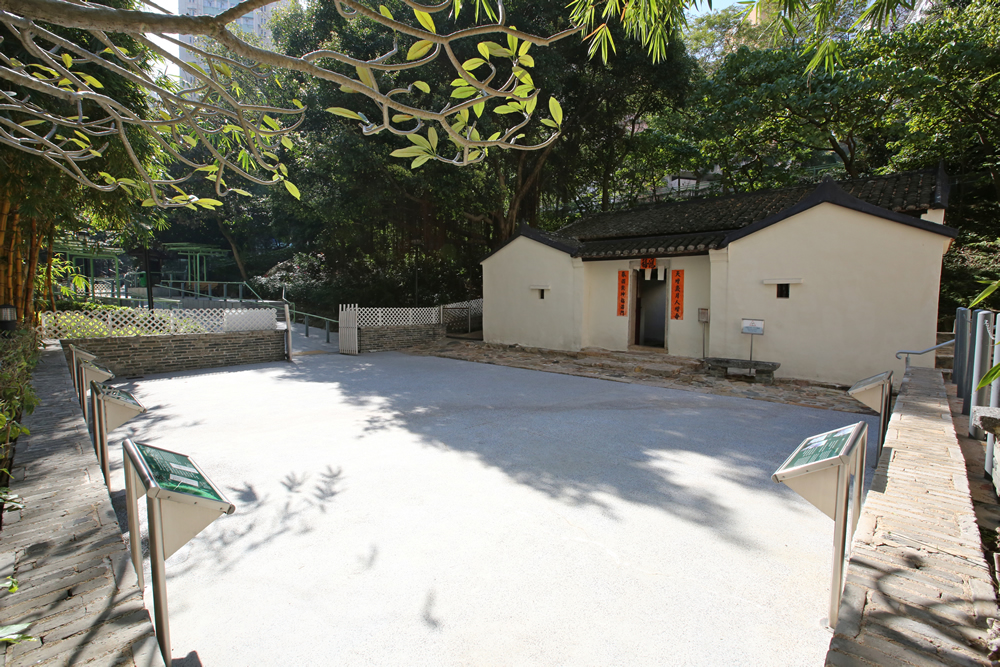
Law Uk Folk Museum at Kut Shing Street in Chai Wan was originally Law Uk, a Hakka village house with a history of over 200 years and named after the original owner, surnamed Law. Law Uk is a typical example of 3-jian (bay), 2-lang (chamber) Hakka vernacular architecture. A light well stands between the front door and the main hall of the house, and is flanked by bedrooms, a kitchen and a storeroom. The forecourt of Law Uk used to be an area for grain and laundry drying, as well as social gatherings. Declared a monument in 1989, Law Uk is the only Hakka village house left intact in Chai Wan.
Upon completion of renovation, the house was opened as Law Uk Folk Museum for display of village furniture and traditional farming implements.
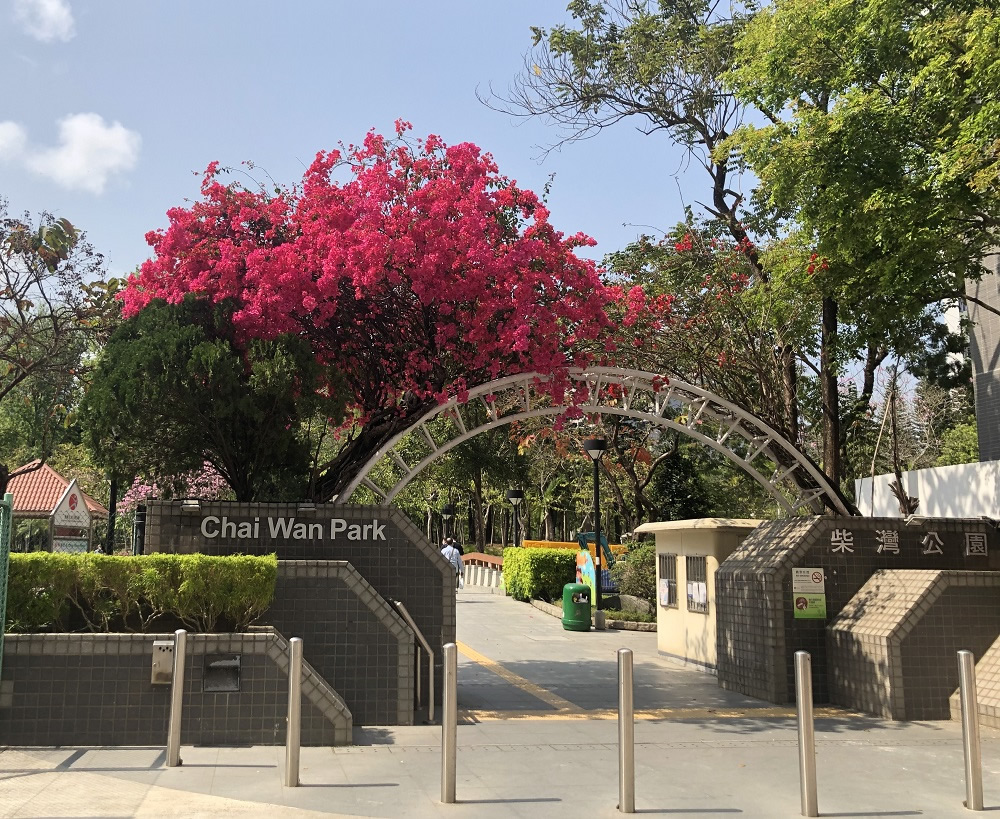
Situated at Tsui Wan Street in Chai Wan, Chai Wan Park measures around 7 ha in size and houses facilities including a cascade, a pond, a model boat pool and 2 old cannons.
The 2 old cannons were unearthed in 1973 during a sea bed excavation project in Chai Wan. It is believed that they were discarded by the barracks near Chai Wan in the old days. The 2 old cannons have been exhibited near a knoll (also known as “Scout Hill”) inside Chai Wan Park since 1985.
.jpg)
Sai Wan War Cemetery is located at Cape Collinson Road in Chai Wan. Local and allied soldiers as well as civilians who sacrificed in the Hong Kong Battle are buried here. Visitors may pay tribute to those who lost their lives in the war.
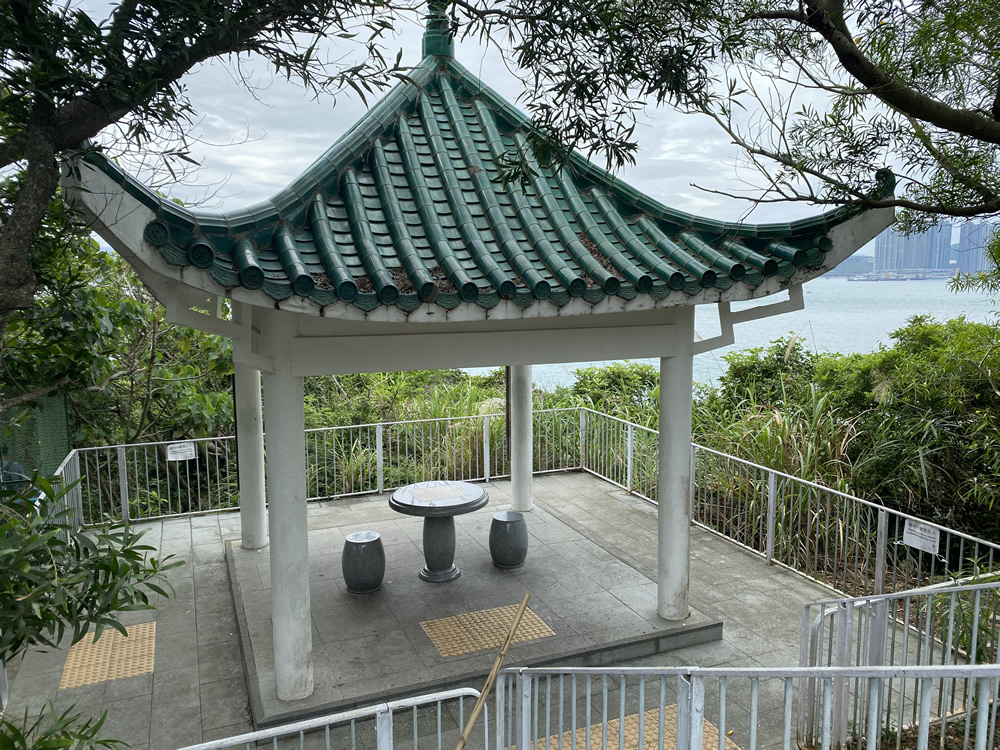
Leaping Dragon Walk is about 1.2 km long lying between the southwest tip of Siu Sai Wan Promenade and Cape Collinson Road, Chai Wan. Along this hiking trail are recreational facilitates such as Leaping Dragon Pavilion, Tidal Melody Paradise, Leafy Shade Paradise and Leaping Dragon Paradise. Embracing the full view of Lei Yue Mun, it is an ideal place for outing.
Hikers may also visit Cap Collinson Path on the way. Starting from Leafy Shade Paradise, the Path is about 450 m long and is close to the shore. It is the place where you can enjoy the unobstructed views of Lei Yue Mun and Tathong Channel, and take a look far into Tung Lung Chau.
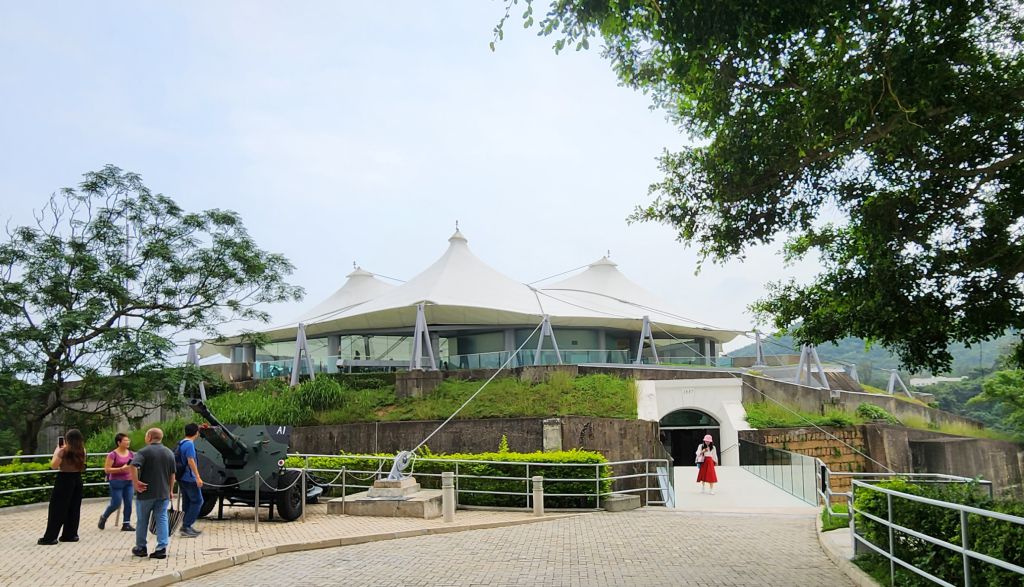
The Hong Kong Museum of the War of Resistance and Coastal Defence, located at Tung Hei Road in Shau Kei Wan, was converted from the Hong Kong Museum of Coastal Defence on 3 September 2024 (the Victory Day of the Chinese People's War of Resistance Against Japanese Aggression) and has a total area of 34 200 sq m. The permanent exhibition showcases Hong Kong’s resistance against the Japanese invasion of China and its close relationship with national coastal defence and military changes from the Tang dynasty to Hong Kong’s return to the Motherland in 1997. There is also a military-themed Historical Trail in the museum. Visitors can experience and enjoy the unique beauty of the built structures embedded in the natural scenery, and immerse themselves in the military and historical ambience of this site through walking the Historical Trail.
Website: https://hk.waranddefence.museum/en/web/mcd/home.html
.jpg)
Eastern District Tourist Trail starts from Shau Kei Wan Tram Terminus and runs along the waterfront at Shau Kei Wan Main Street East before ending at Hong Kong Museum of the War of Resistance and Coastal Defence. There are plenty of distinguished historic and cultural spots along the trail such as Tin Hau Temple, Shau Kei Wan and Tam Kung Temple, Shau Kei Wan which are of exceptional cultural and research values.
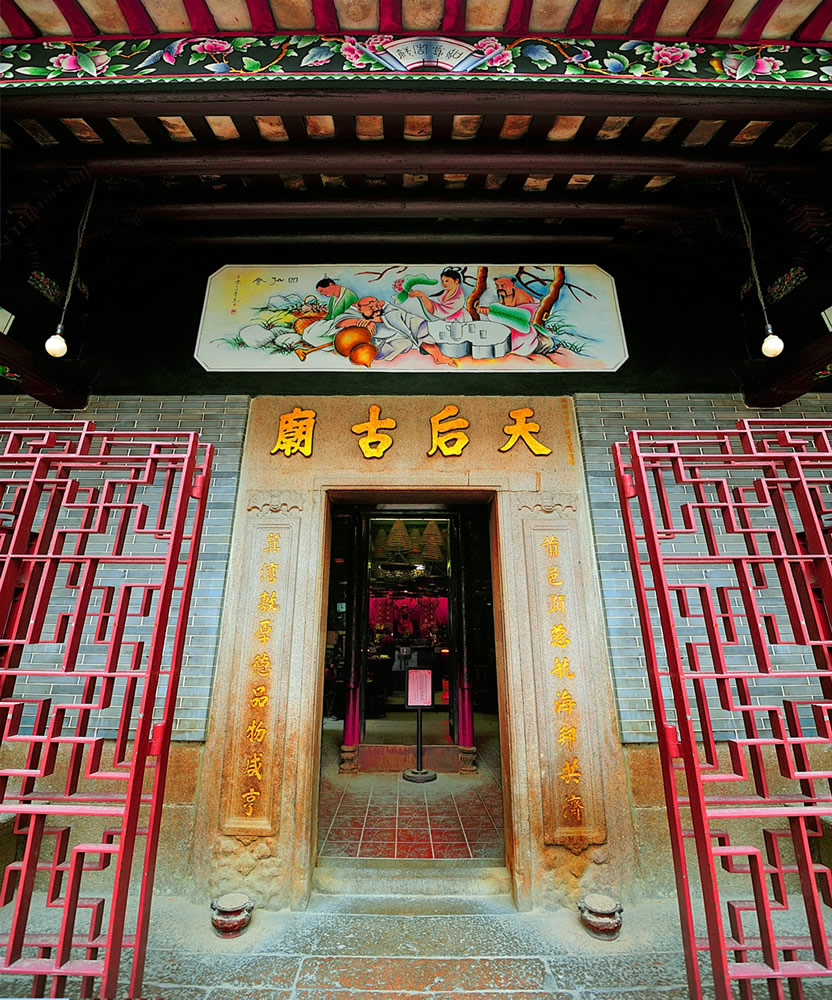
Tin Hau Temple, Shau Kei Wan at Shau Kei Wan Main Street East was built in 1873. The Temple is a 2-hall layout with a courtyard in between. The main hall houses Tin Hau.
Tin Hau, also known as “Matsu”, was said to be a native in Fujian Province called Lam Mak Leung during the Song Dynasty (960 - 1279). According to legend, she had gifted power and saved many people from sea disasters. The seafarers therefore worship Tin Hau and regard her as their patron saint.
Tin Hau Temple, Shau Kei Wan was rated Grade 2 historic building in 2010.
.jpg)
Tam Kung Temple, Shau Kei Wan at Tam Kung Temple Road was built in the 31st year of the Guangxu reign (1905) of the Qing Dynasty. The Temple is one of the oldest Tam Kung Temples in Hong Kong.
According to legend, Tam Kung possessed the power to make accurate weather forecast and cure patients at the age of 13 and became a popular deity. On the 8th day of the 4th lunar month, many worshippers visit the Temple in celebration of Tam Kung Festival
The layout of the Temple is a typical 2-hall vernacular building. The main hall houses Tam Kung. An old temple bell and an altar that date back to the Qing Dynasty are kept in the Temple. Tam Kung Temple, Shau Kei Wan was rated Grade 3 historic building in 2013.
.jpg)
Eastern District Cultural Square is situated at the junction of Tam Kung Temple Road, Tung Hei Road and Oi Lai Street in Shau Kei Wan. Equipped with a covered performance stage and over 2 000 sq m of green space, the Cultural Square is an ideal venue for cultural and recreation activities in the district. Linking up with the Aldrich Bay Promenade, it also provides an unbroken view of Shau Kei Wan Typhoon Shelter.
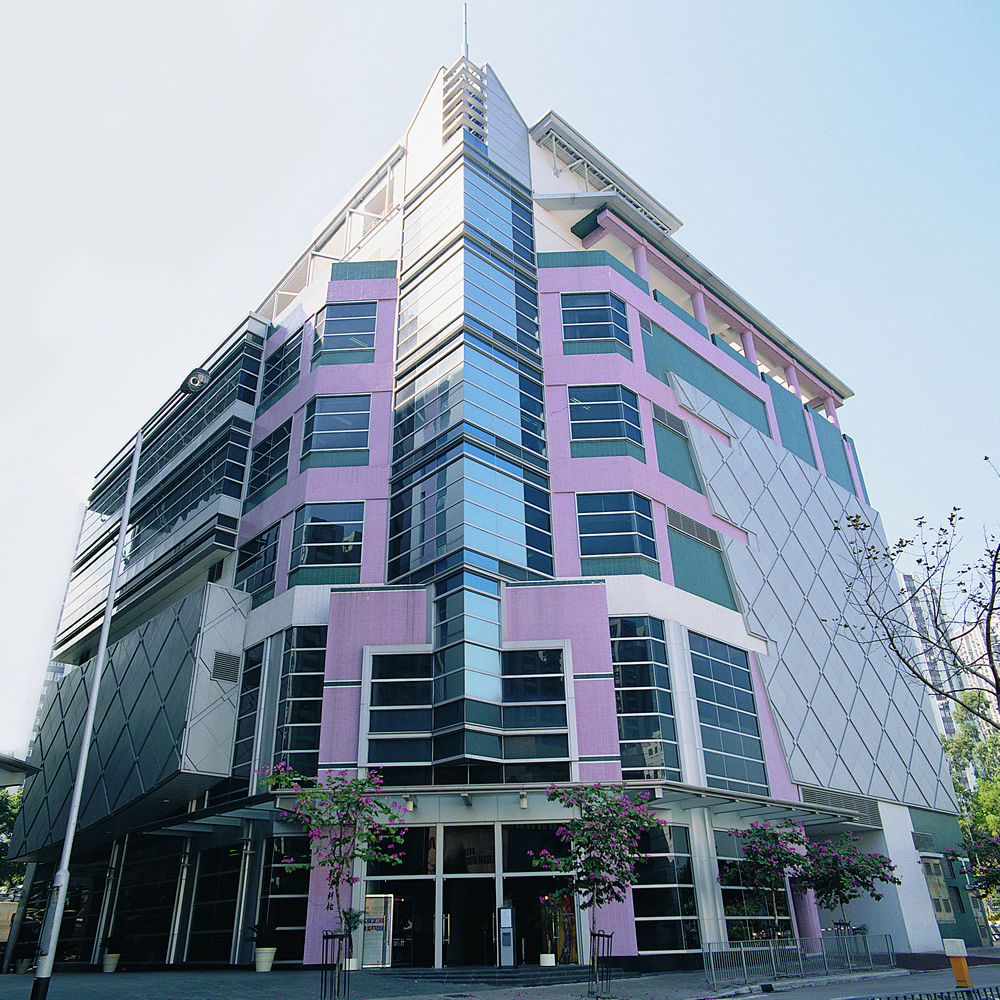
Hong Kong Film Archive, a 5-storey building at Lei King Road in Sai Wan Ho, houses a mini cinema, an exhibition hall, a resource centre, collection vaults and restoration laboratories. The Archive regularly holds film programmes, exhibitions and seminars, etc. to enhance public interest and awareness of Hong Kong’s cinematic treasures.
Website:
https://www.filmarchive.gov.hk/en_US/web/hkfa/home.html
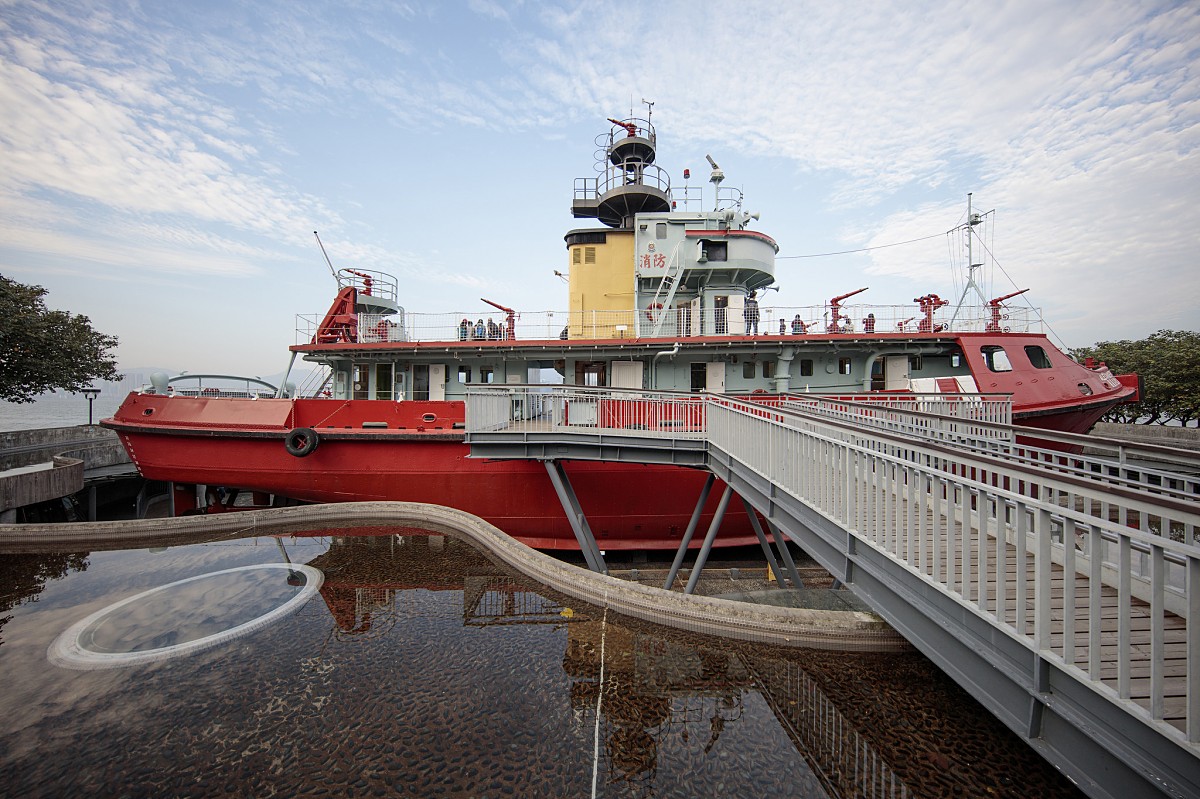
Fireboat Alexander Grantham Exhibition Gallery, with an area of 1 200 sq m, is located inside the Quarry Bay Park. The Gallery showcases a number of firefighting artefacts and offers a wealth of information in multimedia formats, enhancing the visitors’ understanding of marine rescue work in Hong Kong.
Commissioned in 1953, fireboat Alexander Grantham was the flagship of the Hong Kong Fire Services Department’s fireboat team and had responded to various fire alarms and conducted rescue operations in Hong Kong’s waters and along the shoreline. Built in Hong Kong, the fireboat is also a testament to the achievements of Hong Kong shipbuilding in the 1950s. Given its profound historical significance, Hong Kong Museum of History acquired the fireboat after it was decommissioned in 2002 for the Museum’s collection. The Gallery was opened to the public in 2007.
.jpg)
Lying at the foot and on the mountainside of Mount Parker in Quarry Bay, Mount Parker Road Green Trail starts at King’s Road near Quarry Bay Municipal Services Building. Along the Trail are 12 signboards of special botanical, environmental and historical interests, as well as Woodside Biodiversity Education Centre, which was originally named as Woodside (also known as Red House). Visitors may continue their journey by visiting the nearby Quarry Bay Tree Walk and relics of war-time cooking ranges.
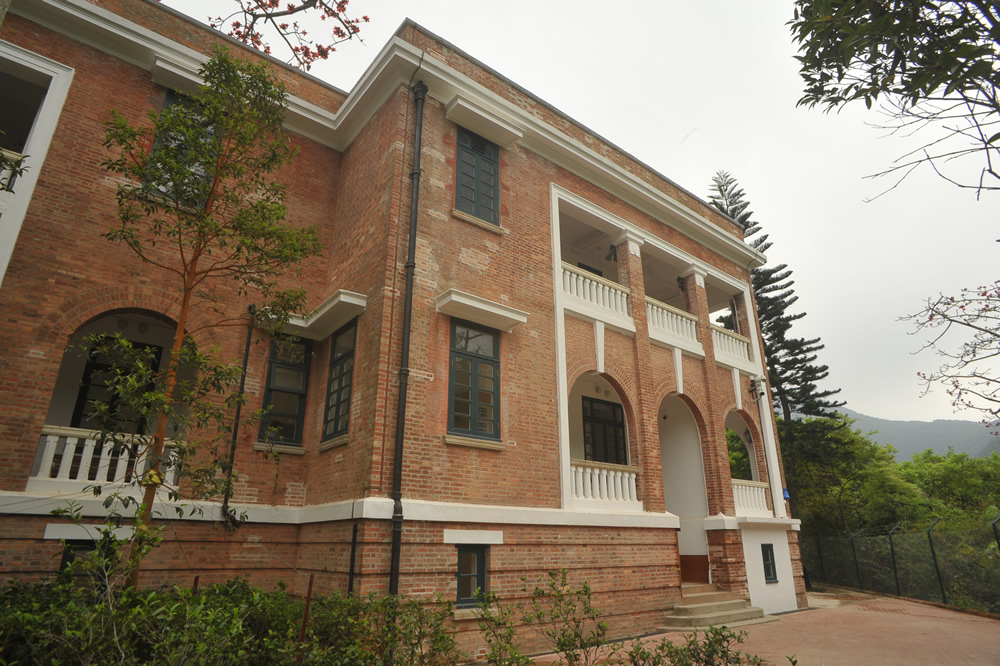
Situated on Mount Parker Road in Quarry Bay, Woodside Biodiversity Education Centre was originally named as Woodside (also known as Red House). Built in the 1920s, the building was initially senior staff quarters of the Taikoo Sugar Refinery. After the closure of the refinery, the building became a Government property in 1976, and was once leased to the Institute of Cultural Affairs. Woodside was rated Grade 2 historic building in 2010 and was revitalised into the 1st biodiversity education centre in Hong Kong in 2012.
With an area of around 3 400 sq m, the Centre has 3 themed exhibition galleries, a nature garden, a resources centre and an activity room, etc. Public seminars, workshops and guided tours, etc. are held regularly. Visitors may also visit the Quarry Bay Tree Walk nearby to appreciate the native tree species.
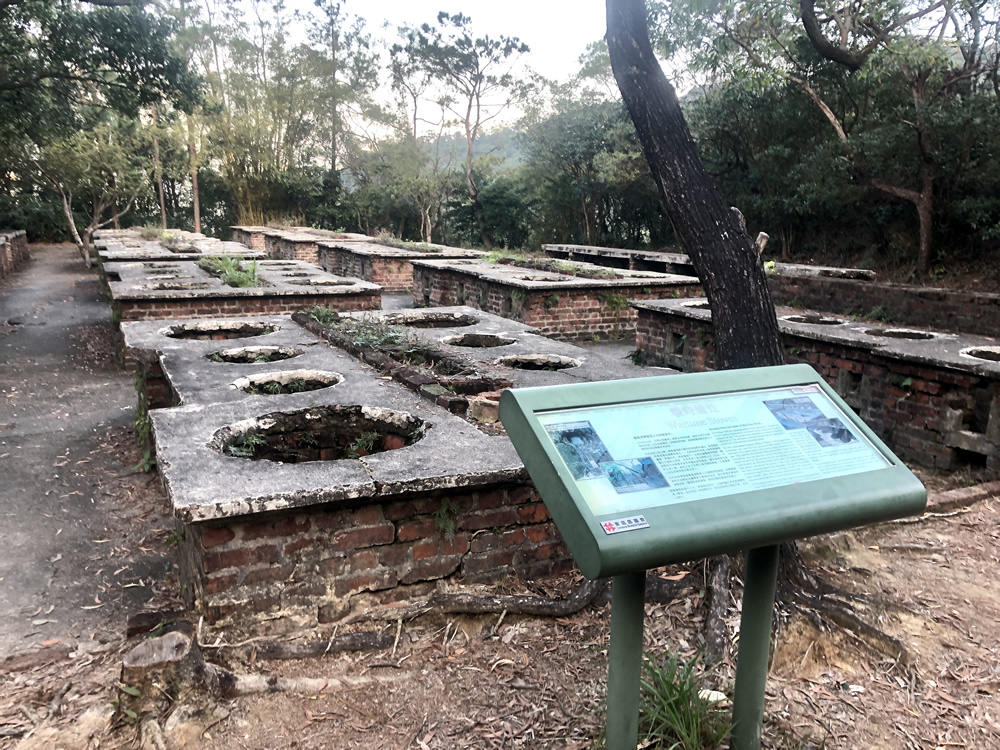
The relics of the war-time cooking ranges near Quarry Bay Tree Walk in Tai Tam Country Park (Quarry Bay Extension) were built by the Government between 1938-1939. They were intended to provide food in anticipation of the outbreak of war. It is said that since Hong Kong fell within 18 days after the start of the Battle of Hong Kong on 8 December 1941, these cooking ranges had never been used.
_(1).jpg)
Tai Tam Country Park (Quarry Bay Extension) lies on the northern edge of Tai Tam Country Park, taking in Mount Parker and the north face of Mount Butler. Offering a sweeping view of Victoria Harbour, this 270-ha green country provides several picnic and barbecue areas, as well as some popular hiking trails such as Sir Cecil’s Ride, Wilson Trail Section 2, Mount Parker Road Green Trail and Quarry Bay Tree Walk. Conveniently placed near Quarry Bay and Sai Wan Ho, this Country Park is a hot spot for morning walk and leisure activities of Eastern District residents.
Website:
https://www.afcd.gov.hk/english/country/cou_vis/cou_vis_cou/cou_vis_cou_tt/cou_vis_cou_tt.html
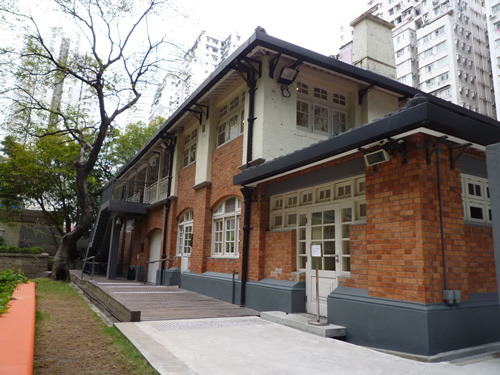
Located at No. 12 Oil Street in North Point, Oi! was originally the clubhouse of the Royal Hong Kong Yacht Club. Built in 1908, the complex consists of a main block and 2 ancillary buildings. The combined use of red bricks and rendering for the façades, prominent chimney stacks and expressed rainwater pipes are features of an architectural style popular in the Edwardian period known as Arts and Crafts. The former clubhouse of the Royal Hong Kong Yacht Club was rated Grade 2 historic building in 2009.
The complex was revitalised into a space for promoting community arts in 2013 – Oi!. Oi!’s Chinese name is related to the Cantonese pronunciation of its address, signifying a starting point from which budding artists realise their dreams, whereas its English name gets it inspiration from the location, Oil Street, conveying a message for people to unlock their creative potential.
In May 2022, Oi! completed an expansion project integrating with an adjacent outdoor space of over 3 000 sq m. The new 2-storey “Oi! Glassie” provides space for art exhibitions and public participation activities. Oi! collaborates with various organisations and artists in organising diversified programmes and activities, and is a place for the community to fuel its creativity and experiment freely and transform everyday life through art.
Website:
https://www.lcsd.gov.hk/CE/Museum/APO/en_US/web/apo/oi.html
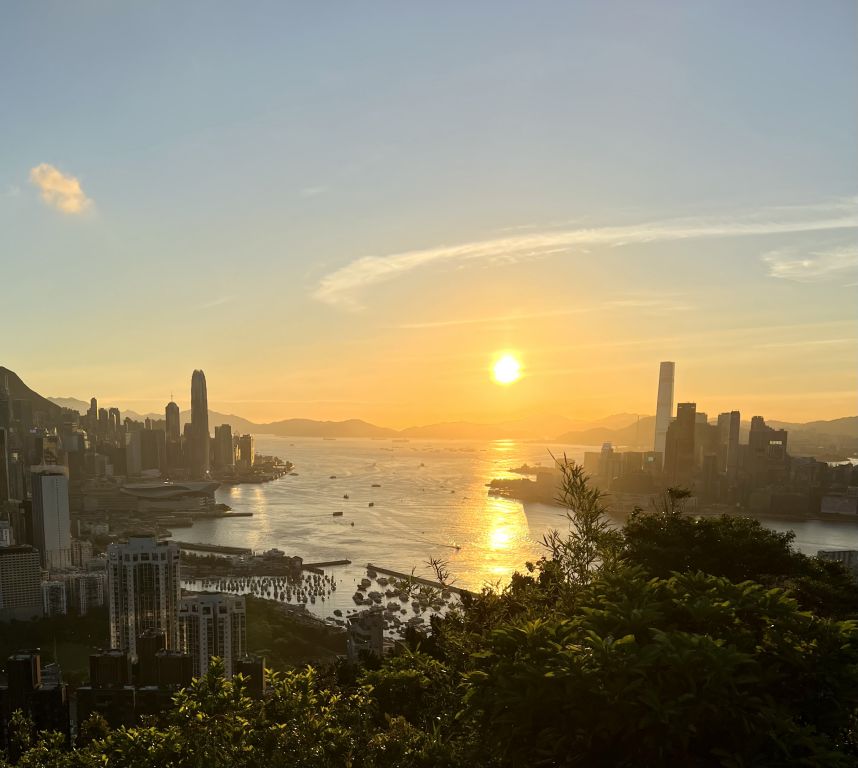
Red Incense Burner Summit is located at Braemar Hill near the Sir Cecil's Ride with a height of about 230 m. It is a popular place for hikers to enjoy the spectacular view of both sides of Victoria Harbour and the beautiful sunset.
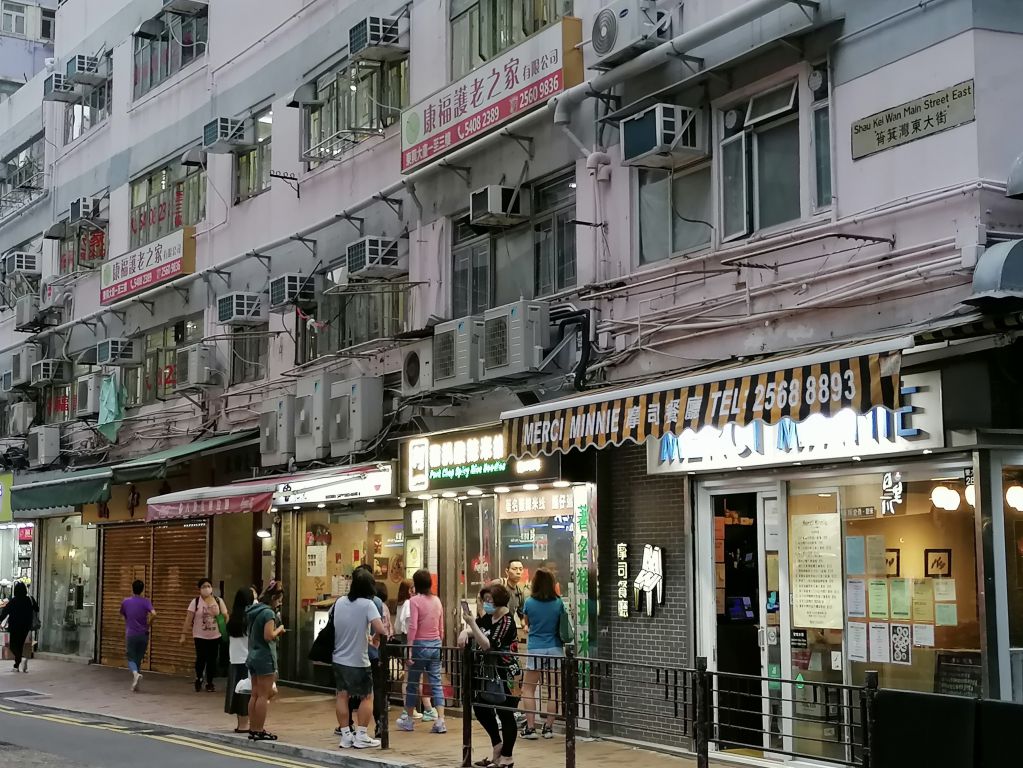
As a famous gourmet street in Hong Kong, Shau Kei Wan Main Street East is filled with an array of restaurants and food stalls. Visitors can indulge themselves in the mouth-watering delicacies of local and international cuisines along the street.
.jpg)
Soho East at Lei King Wan in Sai Wan Ho is famous for the array of restaurants serving a wide range of delicacies and offering the magnificent view of Victoria Harbour. Visitors may also go for a stroll in the nearby Sai Wan Ho Harbour Park and Quarry Bay Park.
.jpg)
Located at Taikoo Shing Road, Cityplaza is one of the large shopping malls on Hong Kong Island. The 6-level mall houses more than 170 shops and restaurants, a cinema and an indoor ice rink. Cityplaza offers great dining, shopping and entertainment experiences, making it a hub for leisure and happiness.
.jpg)
Taikoo Sugar Refinery, which was established in the area around Tong Chong Street nowadays, went into production in 1884. Since then, Quarry Bay gradually developed as one of the industrial centres in Hong Kong.
Due to increasing competition in the industry and other factors, the Refinery was closed in 1973. Industrial buildings on Tong Chong Street have been redeveloped for commercial use. In recent years, a number of chic bars, cafes and restaurants congregate at Tong Chong Street, projecting a relaxed ambience like that of Lan Kwai Fong in Central, thereby earning Tong Chong Street the name of "Little Lan Kwai Fong".
“Tong Chong Street Market” held at G/F of One Taikoo Place is another attraction of Tong Chong Street. It offers unique dining experience by featuring local farmers’ organic produce, creative dishes and latest food and beverage trends, etc.
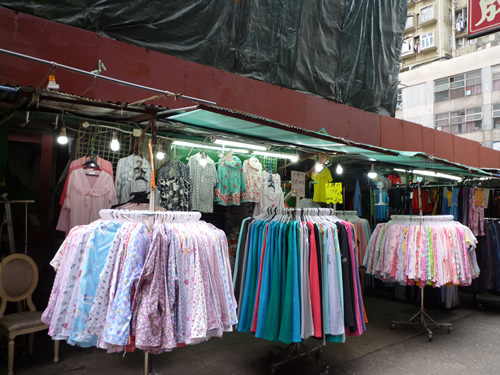
Visitors can find clothing, trinkets and daily necessities at reasonable prices at hawker stalls on Marble Road between Tong Shui Road and Shu Kuk Street. The long and narrow streets there are flanked by old tenement buildings, making the area a spot full of characteristics.
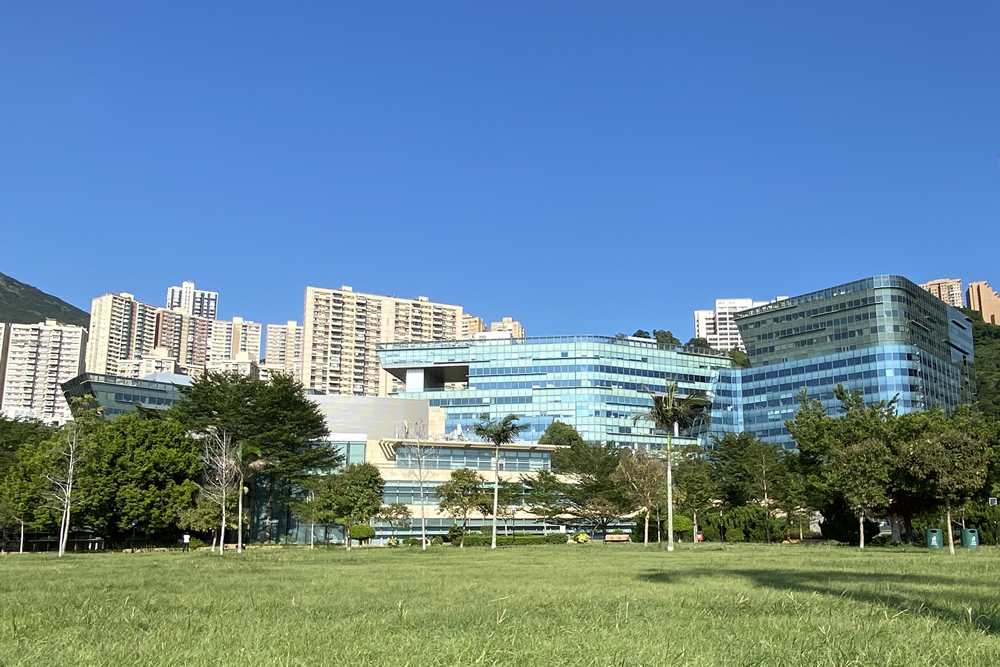
Cyberport at Cyberport Road is a creative digital community. There are 4 office buildings, a hotel, a mall named The Arcade and a waterfront park.
The Arcade is a retail and entertainment complex with a cinema, restaurants, a variety of lifestyle shops and a supermarket. Visitors may also take a walk or have a picnic at the waterfront park.
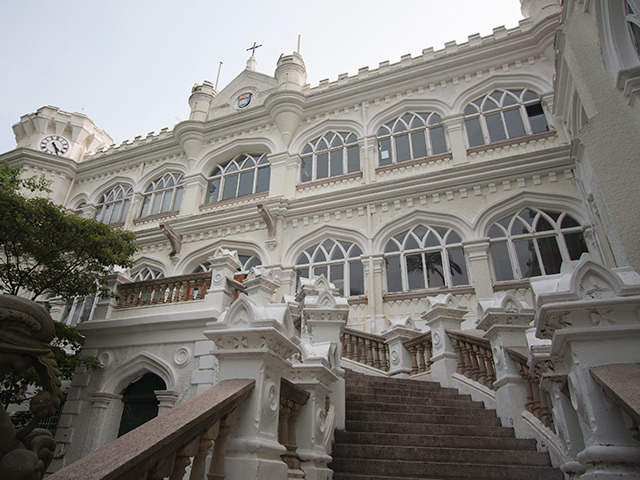
Situated on a verdant hill at Pok Fu Lam Road, University Hall is a charming edifice that blends Tudor, Gothic and Renaissance Revival architectural styles.
It was built in around 1861 by a Scottish businessman, Douglas Lapraik, as his headquarters and residence and named after him as “Douglas Castle”. The French Society of Foreign Missions bought the building in 1894 and renamed it ‘Nazareth’. Later, The University of Hong Kong acquired the building in 1954. Now known as University Hall, the building has served as a hall of residence for male students since 1956.
The Exterior of University Hall was declared a monument in 1995.
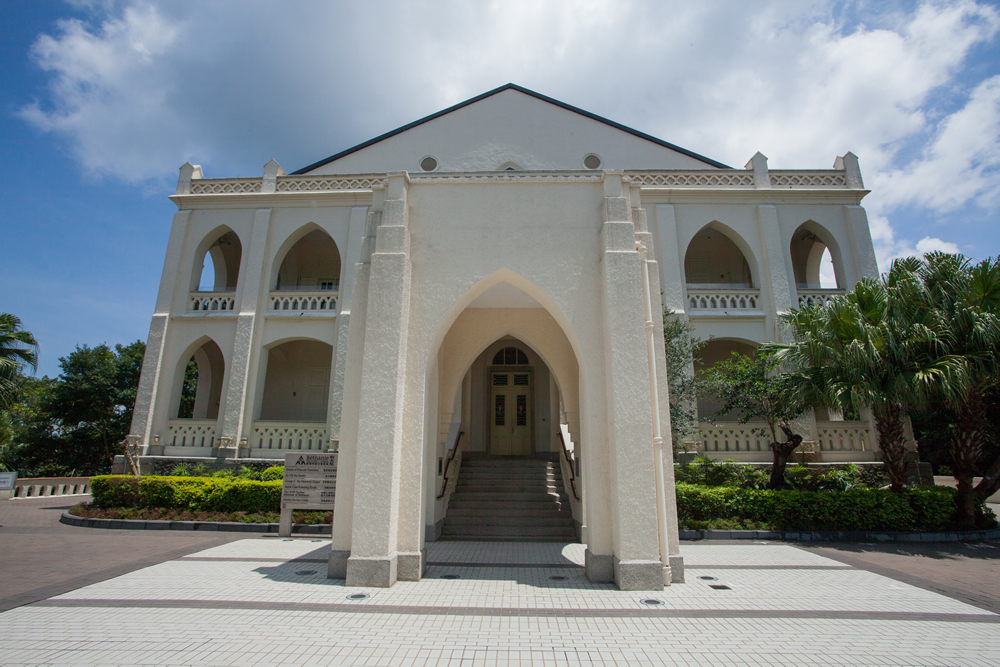
The Béthanie on Pok Fu Lam Road was built by the French Society of Foreign Missions in 1875 as a sanatorium for missionaries. Built in the Neo-gothic style, the Béthanie consists of 3 parts – the chapel, the sanatorium and the service wing.
After its closure in 1974, the premises were taken over by the Government and leased to The University of Hong Kong from 1978 to 1997. After completion of the restoration and conversion works in 2006, the Béthanie has become the campus of the School of Film and Television of the Hong Kong Academy for Performing Arts. Apart from the teaching facilities, the Béthanie Campus now houses 2 performance venues, an exhibition hall, a chapel and a museum.
The Béthanie was declared a monument in 2013.
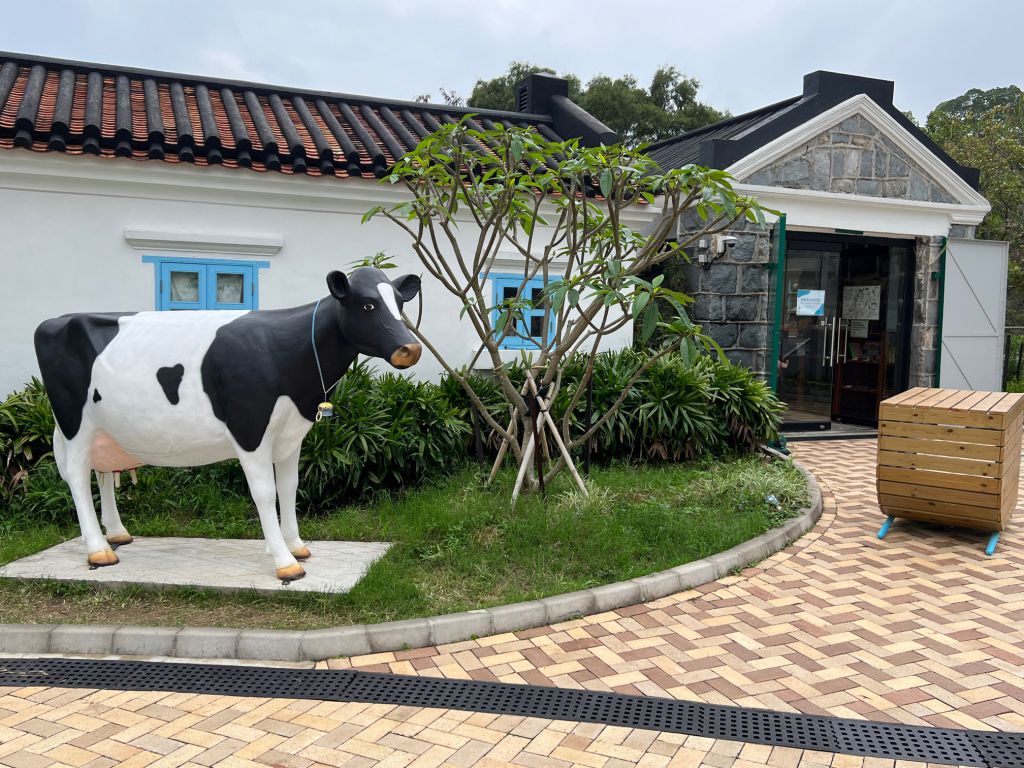
Located at Pok Fu Lam Road, The Pokfulam Farm was formerly the site of the Old Dairy Farm Senior Staff Quarters (“the SSQs”) known as “Braemar”. Built in 1887, the SSQs comprise the Main Building, the Servants’ Quarters and the Garage Block.
The SSQs had been left vacant since 1987. They were subsequently revitalised under the Revitalising Historic Buildings Through Partnership Scheme of the Development Bureau and reopened to the public in 2023. The name of the project “The Pokfulam Farm” using ancient written form of the Chinese name of Pok Fu Lam highlights its long history.
The SSQs were constructed in a simple classical style. The Main Building is a 2-storey building in which the stone walls of the lower level were built with extra thick granite, with circular windows fitted on the walls at regular intervals for ventilation. These granite stone walls act as a plinth to support the upper level. The Servants’ Quarters and the Garage Block are single-storey buildings and their double-layered Chinese pan-and-roll tile roofs are one of the architectural features.
The Pokfulam Farm offers various exhibitions, guided tours and workshops for members of the public to better understand the local community, and culture and history of Pok Fu Lam.
The Pokfulam Farm was accorded Grade 1 historic building in 2009.
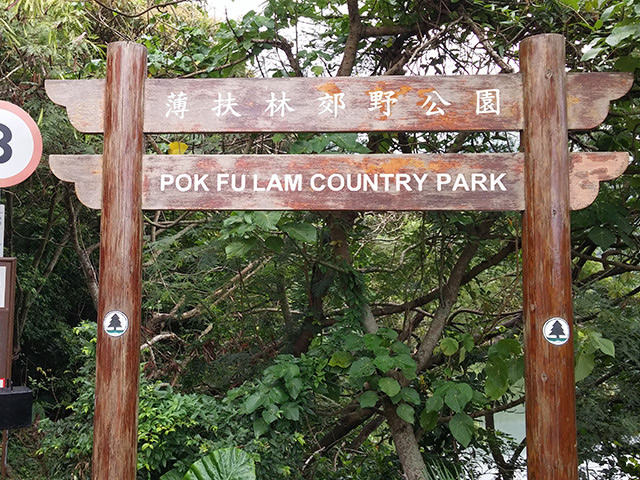
Located in the west of Hong Kong Island, Pok Fu Lam Country Park is a 270 ha sylvan sanctuary encompassing Pok Fu Lam Reservoir. Completed in 1863, the Reservoir is the oldest water storage facility on Hong Kong Island.
The 50 km Hong Kong Trail is divided into 8 sections, with Sections 1 and 2 lie within the boundary of Pok Fu Lam Country Park. Walking along Lugard Road and Harlech Road in Victoria Peak, you can enjoy the spectacular views of Pok Fu Lam Country Park, Victoria Harbour and southern part of Hong Kong Island. The route is particularly popular with weekenders and sightseeing visitors.
Website:
https://www.afcd.gov.hk/english/country/cou_vis/cou_vis_cou/cou_vis_cou_pfl/cou_vis_cou_pfl.html
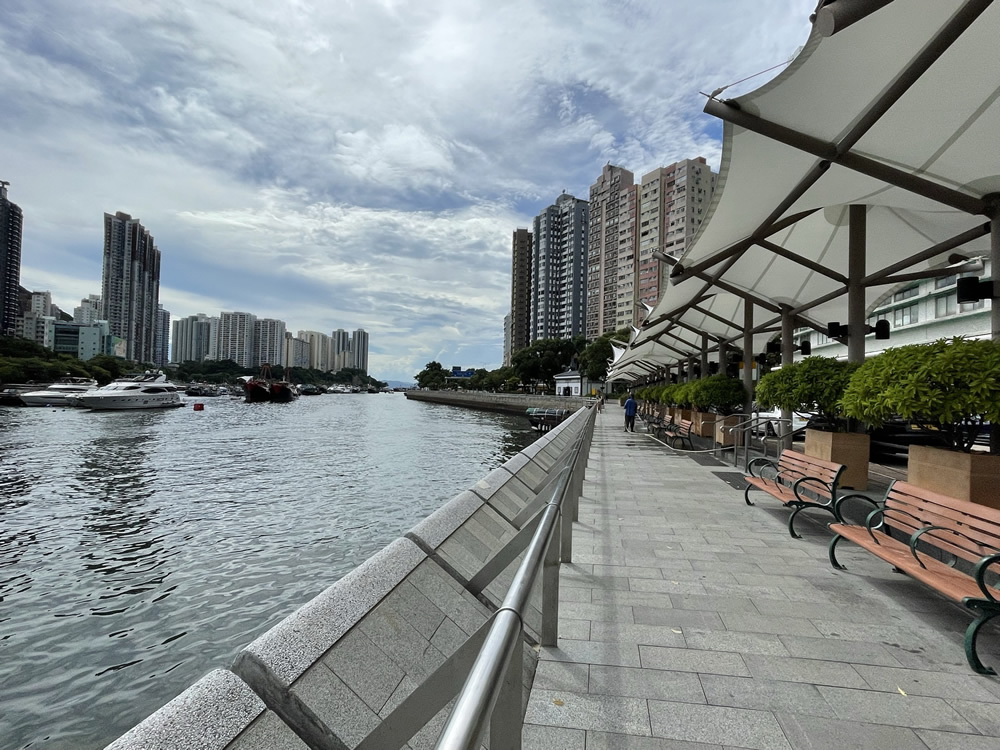
Aberdeen was a traditional fishing village. Many fishermen lived on fishing boats moored in the typhoon shelter. With the decline of traditional fisheries industry, many fishermen have moved to live onshore. Nevertheless, fishing boats are still shuttling back and forth in the harbour from time to time featuring the trace of a fishing port.
Visitors can enjoy the view of Aberdeen Harbour along the Aberdeen Promenade or go for a ride on kaito to Ap Lei Chau, Stanley and Po Toi. The shopping mall in Aberdeen Centre nearby is definitely a dining and shopping spot that cannot be missed.
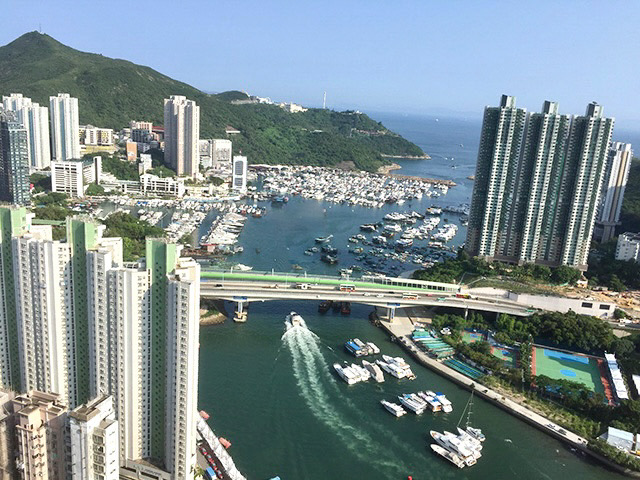
Aberdeen Typhoon Shelter has long been one of the refuges for fishing vessels in times of heavy seas. Apart from stormy weather, boats of various sizes also swarm here during Chinese New Year and traditional festivals, such as Tin Hau Festival. The annual dragon boat race is also held here during the Dragon Boat Festival in the 5th lunar month.

Covering an area of 423 ha at the southern part of Hong Kong Island, Aberdeen Country Park is an ideal place for hiking and outing. A good part of the Country Park was damaged during World War II. The beautiful scenery today is the combined result of post-war reforestation and natural regeneration of woodlands.
Visitors can find several trails and the Aberdeen Tree Centre inside the Country Park. The Tree Centre, the 1st thematic education centre featuring trees and promoting tree conservation in Hong Kong, demonstrates different aspects of tree through thematic exhibition panels, 3D model, computer kiosk, etc. with an aim to enhancing visitors’ knowledge on trees.
Encircled by the dense forests of the Country Park, Aberdeen Reservoir comprises the upper reservoir and the lower reservoir, both built in 1932. Atop the magnificent dam, visitors can enjoy the beautiful scenery of the valley which changes with seasons.
Website:
https://www.afcd.gov.hk/english/country/cou_vis/cou_vis_cou/cou_vis_cou_abe/cou_vis_cou_abe.html
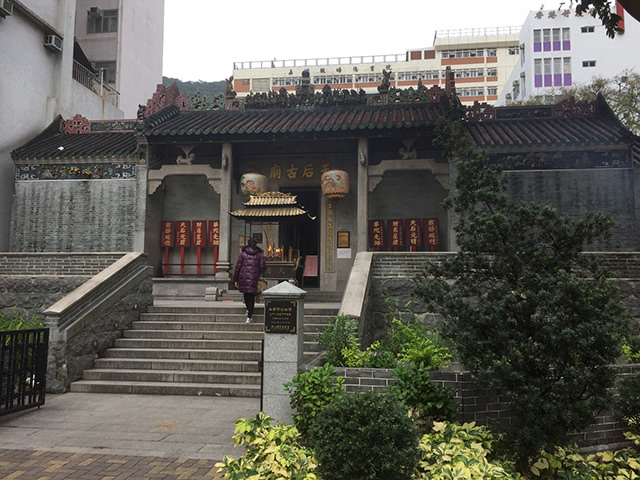
Located at Aberdeen Main Road, Tin Hau Temple in Aberdeen was founded by fishermen of the area in the 1st year of the Xianfeng reign (1851) of the Qing Dynasty. The Temple was originally built near the shore, but is now surrounded by bustling streets as a result of reclamation over the years.
The Temple is dedicated to Tin Hau. Tin Hau, also known as “Matsu”, was said to be a native in Fujian Province called Lam Mak Leung during the Song Dynasty (960 - 1279). According to legend, she had gifted power and saved many people from sea disasters. The seafarers therefore worship Tin Hau and regard her as their patron saint.
The Temple is a 2-hall type building with a courtyard in between. The decoration of pottery figurines of females along the ridge of the roof is very rare amongst Temples. It has preserved a number of historical relics of the Qing Dynasty, including a copper bell cast in the 4th year of the Yongzheng reign (1726) which is said to have been found during fishing on the sea and donated to the Temple by fishermen. Tin Hau Festival falls on the 23rd of the 3rd lunar month when many worshippers flock to the Temple to pay homage to Tin Hau
Tin Hau Temple, Aberdeen was rated as Grade 3 historic building in 2010.
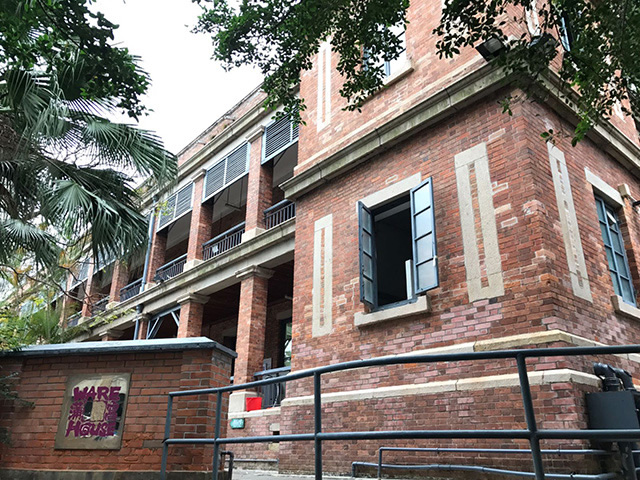
Located at Aberdeen Main Road, the Warehouse was previously the Old Aberdeen Police Station built in 1891. The Old Aberdeen Police Station comprises 3 red-brick buildings, including the 2-storey main building and 2 annex buildings. It was one of the oldest police stations established in the Southern District, and was rated Grade 2 historic building in 2009.
Following commissioning of a new police station in Wong Chuk Hang in 1969, the Old Aberdeen Police Station had been used by various Government departments. The Warehouse moved in the Old Aberdeen Police Station in 1995. It provides activity venues and space dedicated for young people.
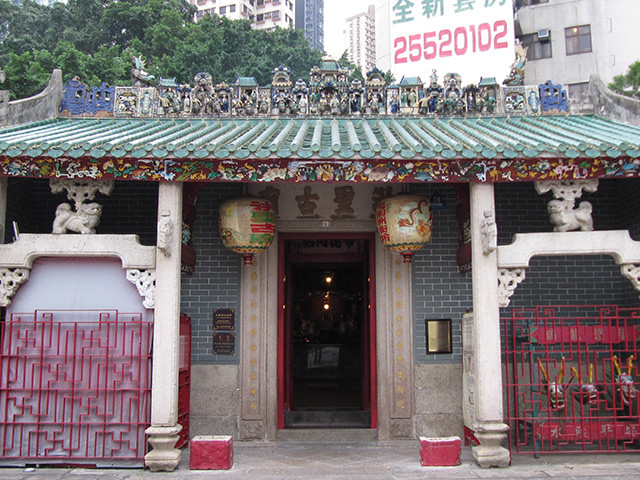
Located at Hung Shing Street in Ap Lei Chau, Hung Shing Temple, Ap Lei Chau is dedicated to Hung Shing. Other deities in the Temple include Kwan Tai, Tai Sui, Man Cheong and Kwun Yum, etc.
Hung Shing, also known as the "God of Southern Sea", is a famous deity in Southern China. Hung Shing was conferred the title of the "King of Kwong Lee" during the Tang Dynasty (618 - 907), and was further honoured with a posthumous title of “King Hung Shing of Kwong Lee” in the Song Dynasty (960 - 1279). Followers worship Hung Shing to pray for safe voyage and good weather.
Ap Lei Chau is a fishing community where villagers used to make their living by shipbuilding, fishing and marine trading. It was said that worshippers believed Hung Shing had saved them many times from marine danger and built the Temple to worship Hung Shing and pray for safe voyage and good harvest. A number of precious historical relics survive in the Temple, such as Shiwan potteries made in the Qing Dynasty and a bell cast in the 38th year of the Qianlong reign (1773) of the Qing Dynasty denoting the completion year of the Temple. The Temple was declared a monument in 2014.
The Temple is one of the very few traditional temples that still retains its original fung shui setting facing the sea. Hung Shing Festival on the 13th day of the 2nd lunar month is one of the major annual events in Ap Lei Chau. Many worshippers flock to the Temple with sacrifices.
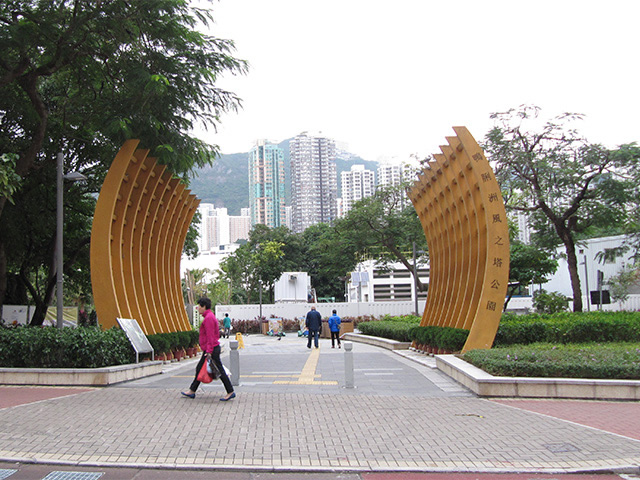
Ap Lei Chau Wind Tower Park at Lee Chi Road, Ap Lei Chau, covers an area of 2.62 ha. Apart from a “Wind Tower” viewing deck and an exhibition gallery, the Park features a multi-purpose concourse for an audience size of 300, an elevated viewing deck and several sitting-out areas for visitors to enjoy the scenery of the Aberdeen Typhoon Shelter.
The historic Shui Yuet Temple, Ap Lei Chau is in the vicinity of the Park. The Temple is dedicated to Kwun Yum. Kwun Yum, originated in India, was a male divinity in the earlier times but evolved to be a gracious female deity. She is also known as a deity of sympathy, compassion and mercy, responding to the pleas of those who are suffering, thus earning her the title of the “Buddhist of Goddess of Mercy”.
Shui Yuet Temple, Ap Lei Chau was rated Grade 3 historic building in 2010.
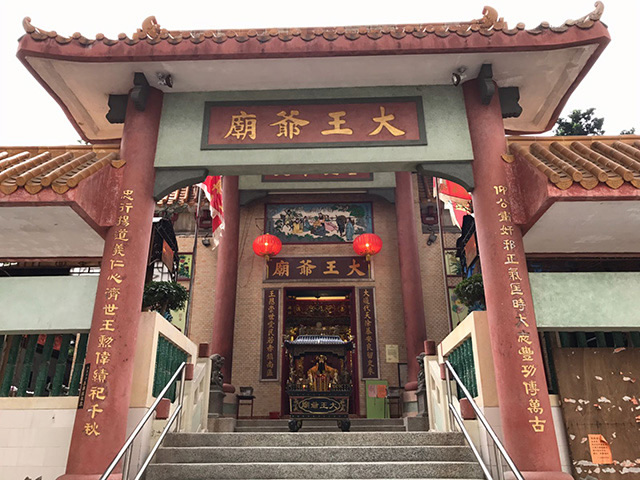
Located at the junction of Heung Yip Road and Nam Long Shan Road in Wong Chuk Hang, Tai Wong Ye Temple, Wong Chuk Hang was rebuilt on this piece of land granted by the Government in 1982, which was said to be the place where the statue of Tai Wong Ye was discovered.
White wall and golden tiles characterise the Temple. The exterior walls of this concrete structure were inlaid with various porcelain pictures expressing religious dedication. The overall architectural style of the Temple is quite modern. In the main hall sits the 2 m statue of Tai Wong Ye. The original statue is placed in a shrine.
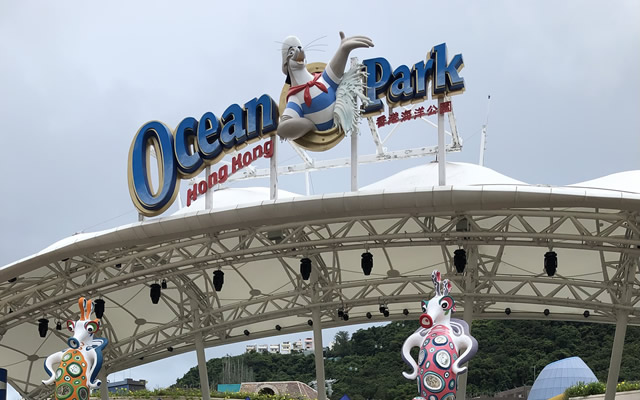
Ocean Park, located at Wong Chuk Hang Road in Aberdeen, is Hong Kong’s premier educational theme park. It covers an area of more than 915 000 sq m and features a diverse selection of animal attractions and thrill rides divided between The Waterfront and The Summit.
The main attractions in The Waterfront include The Grand Aquarium which has a collection of 5 000 fishes from over 400 species, the Giant Panda Adventure and the Hong Kong Jockey Club Sichuan Treasures where you can visit the giant pandas, etc. At The Summit, guests can feel the chill of the North and South Poles in the Polar Adventure, or seek for excitement in the Thrill Mountain.
The Cable Car and The Ocean Express are 2 main transportation moving guests between The Waterfront and The Summit. The 1.5 km long cable car system offering not only just a convenient but also exceptionally scenic route between these 2 areas, with spectacular panoramic views of the southern part of Hong Kong Island and nearby sea area. The Ocean Express offers a fascinating train ride by simulating an underwater journey in a submarine. Creatures of the deep make surprising appearances in the multimedia display along the way.
Opened in September 2021, the Water World Ocean Park includes 27 thrilling attractions in 5 theme zones. The Water World Ocean Park’s architecture and environmentally-conscious design and details encourage visitors to embrace the importance of preserving the natural environment.
Website:
Ocean Park
https://www.oceanpark.com.hk/en
Water World Ocean Park
https://waterworld.oceanpark.com.hk/en/
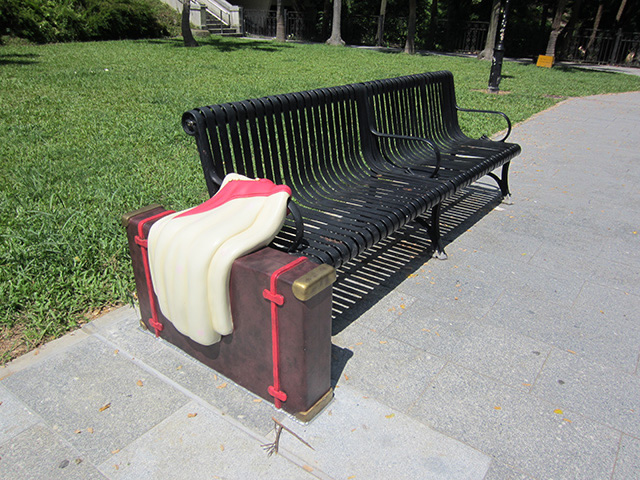
Southern District Literary Trail was established to commemorate 5 notable contemporary Chinese literati, namely Eileen Chang, Hu Shih, Cai Yuanpei, Xiao Hong and Xu Dishan. With reference to their footsteps in Southern District, 5 commemorative landmarks are established for members of the public to appreciate literature from a new perspective.
The 5 landmarks are:
“Eileen Chang’s Hong Kong Journeys” at Repulse Bay Gardens, on the walkway connecting Repulse Bay Road and Beach Road to commemorate Eileen Chang
“Hu Shih’s Tic Tac Toe” at the pavement opposite to St. Stephen’s College at Stanley to commemorate Hu Shih
“Stroll the Past” at Aberdeen Praya Road near the entrance of Aberdeen Chinese Permanent Cemetery to commemorate Cai Yuanpei
“Stray Birds 31” at Repulse Bay Beach to commemorate Xiao Hong
“Plain” at the Victoria Road / Consort Rise Sitting-out Area to commemorate Xu Dishan
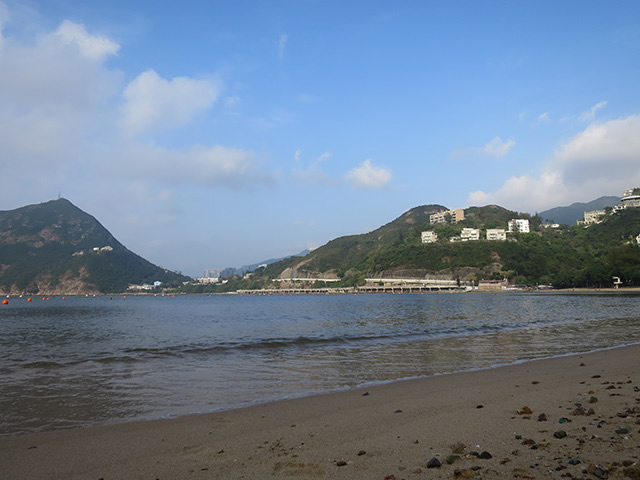
Deep Water Bay is a bay situated at the southern part of Hong Kong Island. Flanked by its headlands is Deep Water Bay Beach, one of the best-liked public beaches in Hong Kong. The waters off the beach is a popular destination among wakeboarders and windsurfers.
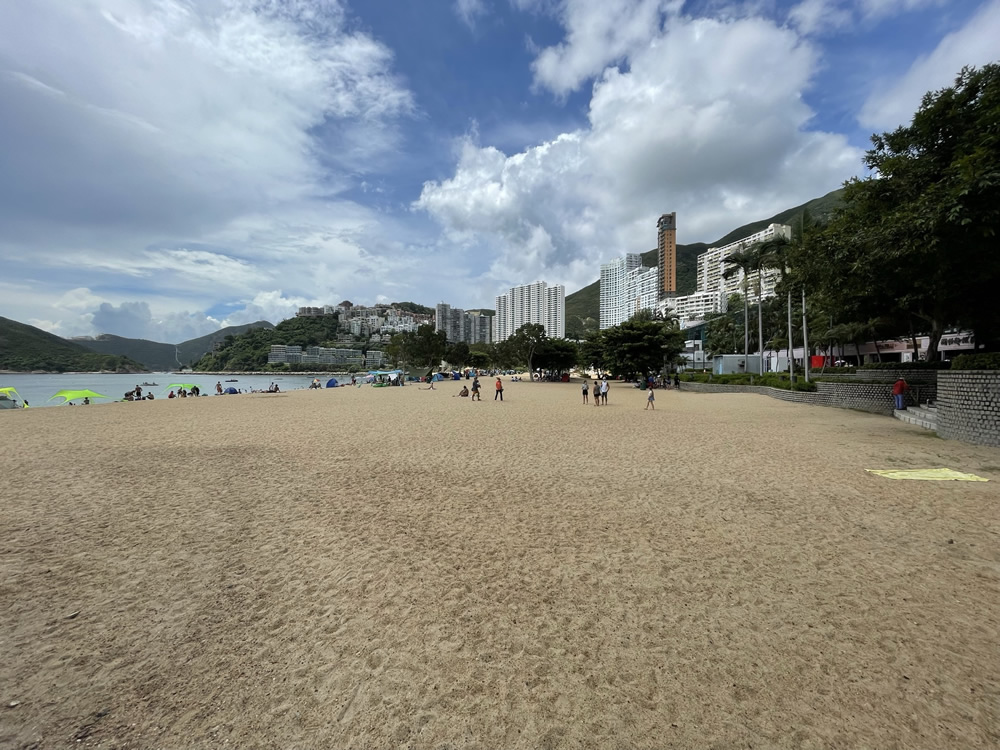
Repulse Bay, located at the southern coast of Hong Kong Island, is a renowned tourist attraction and low density residential area. The wide crescent-shaped Repulse Bay Beach is a popular spot among visitors.
There are many places near the Beach worth visiting, including the traditional Chinese-style Training Headquarters of the Hong Kong Life Saving Society and the picturesque Kwun Yam Shrine with the statues of Kwun Yam and Tin Hau in the east of the Beach. Visitors can also enjoy the beautiful panoramic sea view while shopping or dining in the shopping mall “the pulse”.
Built on the site of the former Repulse Bay Hotel completed in 1920, the Repulse Bay across the Repulse Bay Road is a luxurious residential development built after the hotel was demolished in 1980s. Visitors can find images and artefacts from the Repulse Bay Hotel’s early years in The Repulse Bay Historical Gallery or enjoy a meal at the restaurants inside the mall.
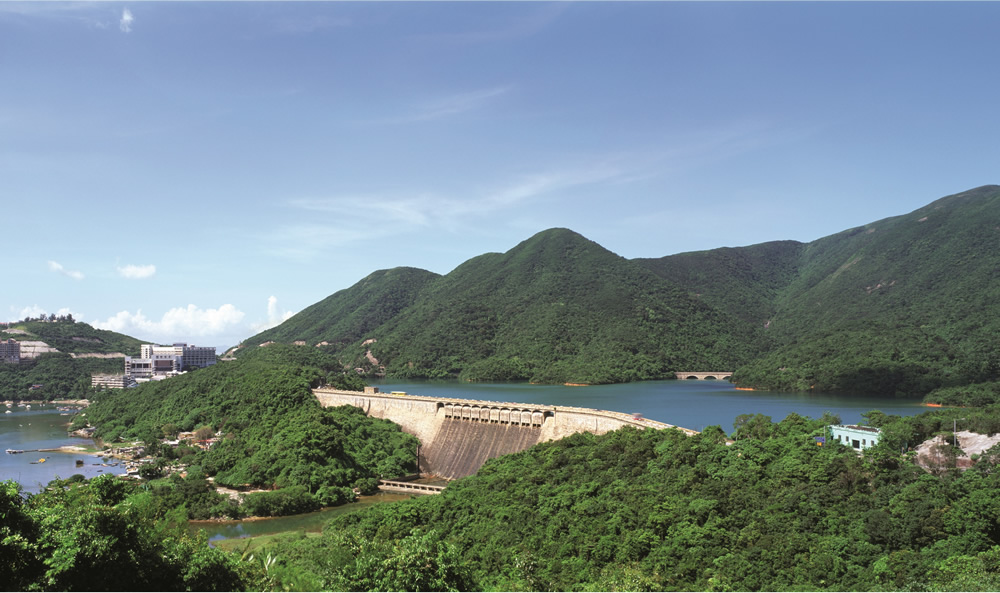
Tai Tam Country Park nestled in the eastern corner of Hong Kong Island. From Jardine's Lookout in the north, it sprawls across the slopes of The Twins to end at the southern border on Stanley Gap Road. The western border lies in Wong Nai Chung Gap, while Tai Tam Road marks its eastern boundary. The park occupies a total area of 1 315 ha, approximately 1/5 of Hong Kong Island’s land area.
Tai Tam Reservoir is located inside the Country Park. The paths around the Reservoir, adorned with flourishing trees and surrounded by beautiful landscapes, are suitable for visitors of all ages. The tracks around Violet Hill, the Twins and Lo Fu Shan are comparatively rougher. In addition, there lies the well-known Sir Cecil's Ride running through Wong Nai Chung Gap and Mount Parker Road.
Website:
https://www.afcd.gov.hk/english/country/cou_vis/cou_vis_cou/cou_vis_cou_tt/cou_vis_cou_tt.html
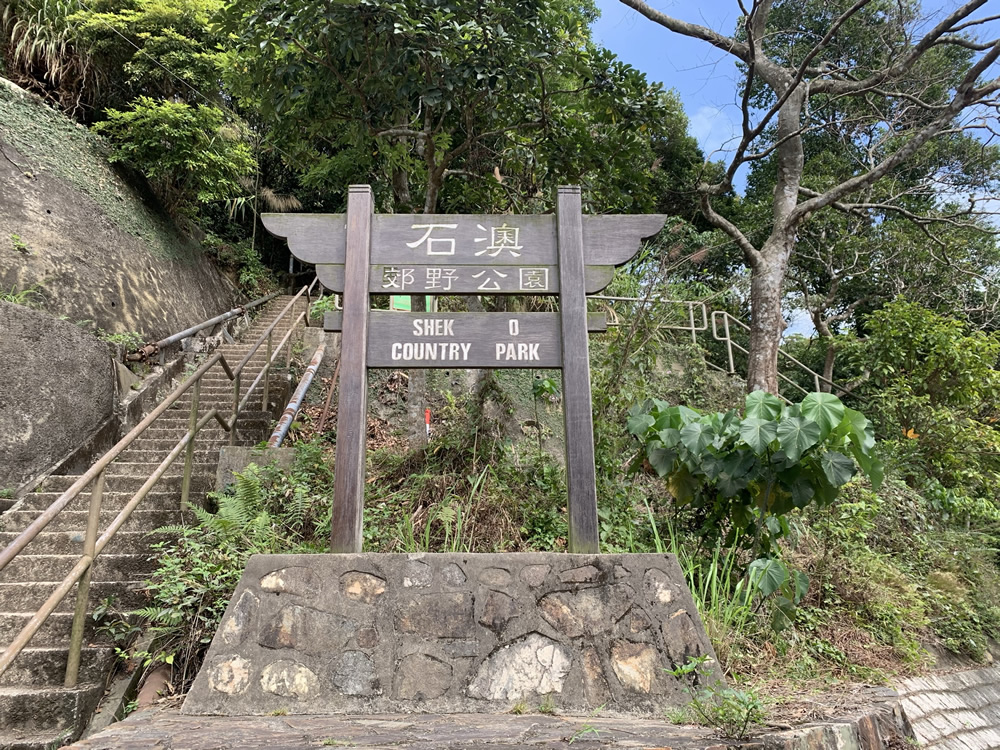
Sitting in the southeastern corner of Hong Kong Island, the 701 ha Shek O Country Park extends along the ridgeline that links Pottinger Peak with Mount Collinson in the north, and crosses Wan Cham Shan and Shek O Peak (Dragon's Back) to reach D'Aguilar Peak in the south.
There are 3 major hiking trails inside the Country Park, namely Sections 7 and 8 of Hong Kong Trail that leads from Tai Tam Road to To Tei Wan and from To Tei Wan to Big Wave Bay respectively; and Pottinger Peak Country Trail that runs from Pottinger Gap in Shek O to Cape Collinson Road. All 3 trails are scenic routes offering stunning vistas of Stanley, Tai Tam, Shek O and outlying islands, as well as the deep indent of Tai Tam Bay and Clear Water Bay. Of them, Dragon’s Back, covered by Section 8 of Hong Kong Trail, was selected “Asia’s Best Urban Hike” by the Time Magazine in 2004.
Website:
https://www.afcd.gov.hk/english/country/cou_vis/cou_vis_cou/cou_vis_cou_so/cou_vis_cou_so.html
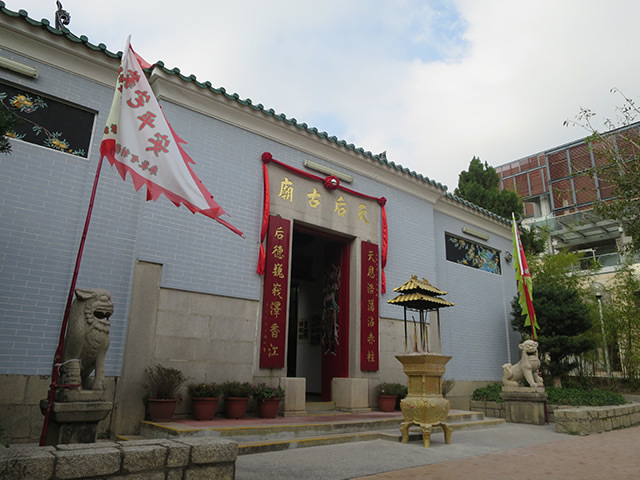
Tin Hau Temple in Stanley, located at Stanley Main Street, was built in 1767. The Temple underwent various restoration with the last one completed in 2002.
Tin Hau, also known as “Matsu”, was said to be a native in Fujian Province called Lam Mak Leung during the Song Dynasty (960 - 1279). According to legend, she had gifted power and saved many people from sea disasters. The seafarers therefore worship Tin Hau and regard her as their patron saint.
Tin Hau Festival falls on the 23rd of the 3rd lunar month when many worshippers flock to the Temple to pay homage to Tin Hau.
_赤柱廣場_Stanley_Plaza.jpg)
Located at Carmel Road in Stanley, Stanley Plaza comprises a large shopping centre, a piazza adjoining the seafront promenade and the historic Murray House.
Murray House was originally situated at Central where the Bank of China Tower now stands. This Victorian-era building was built in 1846 and used as the barracks of the British Forces in Hong Kong and offices of various Government departments. Due to structural problems of the Building and the strong demand for land in Central, Murray House was demolished in 1982. More than 3 000 disassembled components were numbered, and reassembled for rebuilding Murray House at Stanley Plaza in 1998. Although some components of Murray House, such as the ventilation chimneys, were lost during the demolition and replaced with those of similar buildings, the building still retains its original appearance and is one of the landmarks in Stanley.
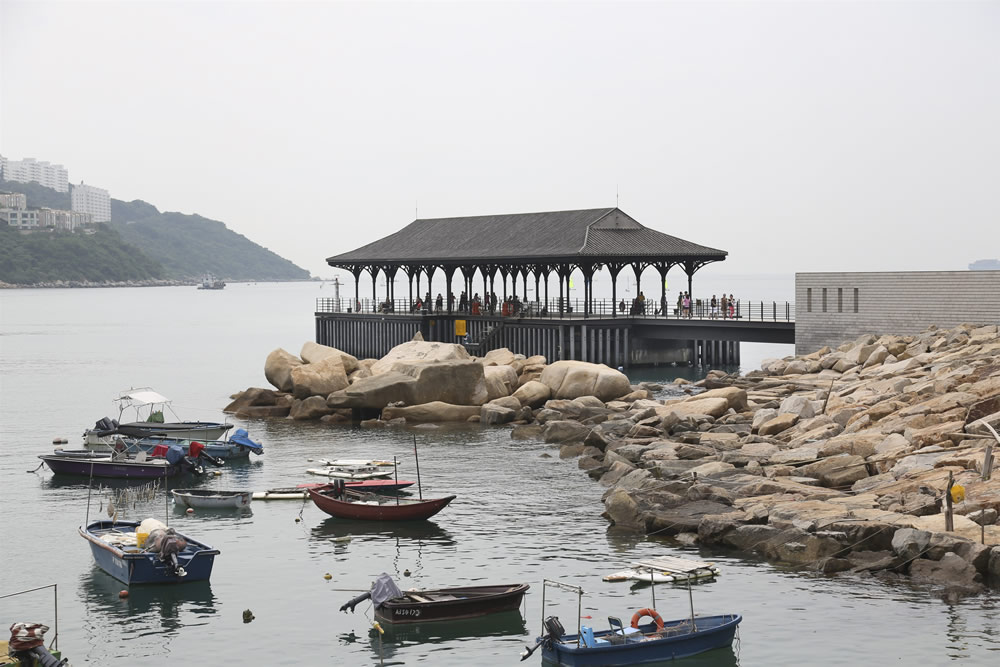
Blake Pier, originally located at Central, was demolished in 1993 due to the Central Reclamation project. The steel pier roof was preserved and once relocated in Wong Tai Sin Morse Park No. 4. In 2005, the Government reinstated the pier roof at the pier next to Murray House in Stanley, and the pier is now Blake Pier at Stanley. Visitors can take kaito ferry service between Stanley and Po Toi there.
The architectural style and historical value of the pier roof is similar to Murray House nearby. Putting back the roof to its original use brings out its heritage value and blends the pier harmoniously with its surroundings.
After visiting Blake Pier at Stanley, what better way to end the day than dining in Murray House or enjoying the beautiful sunset on the Stanley Promenade?
_1.jpg)
Stanley Main Street near the Stanley waterfront is also known as “Bar Street”.
Along Stanley Main Street stand a mix of laid-back eateries that provide spectacular view and various styles of cuisine, from alfresco dining to oriental favourites. You may have a drink with your friends at an open-air cafe or enjoy a pleasurable meal along the coast.
.jpg)
Stanley is located at the southern part of Hong Kong Island. Apart from beautiful beaches, the Stanley Market along Stanley New Street and Stanley Market Road is a famous tourist attraction among local and overseas visitors. There are innumerable shops and stalls in the market offering a huge variety of clothing, souvenirs, handicrafts, art pieces, etc.
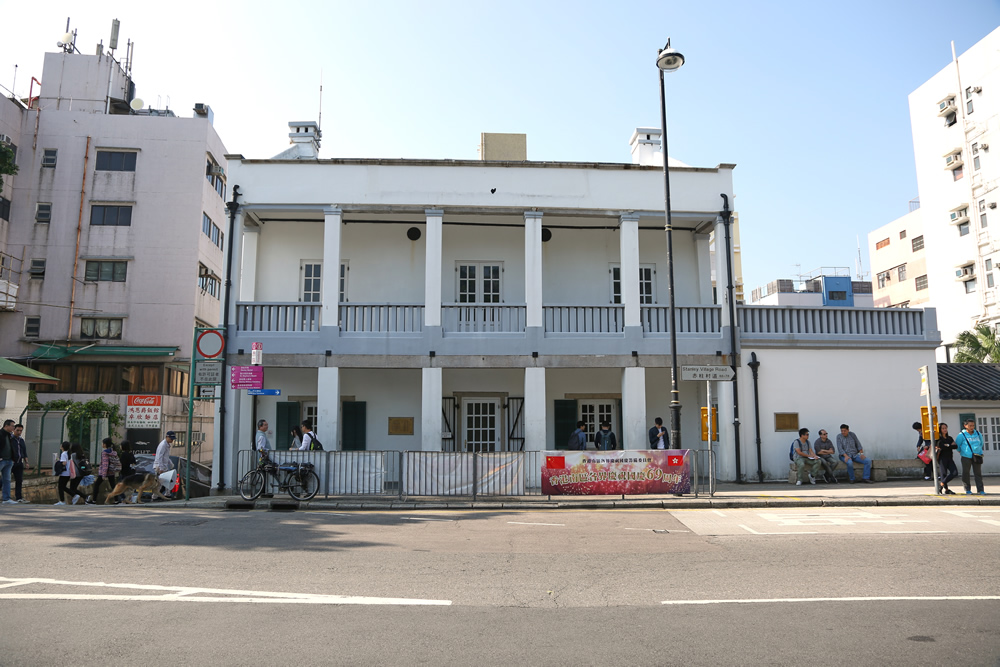
Built in 1859, the Old Stanley Police Station at Stanley Village Road is the oldest surviving police station in Hong Kong. It was declared a monument in 1984.
The Old Stanley Police Station is a simple 2-storey structure. The façade of the building is dominated by colonnaded open verandahs that give the front elevation a classical appearance. The dome-shaped ceiling of the original gunroom constructed in brick and fireplaces can still be seen in the building today.
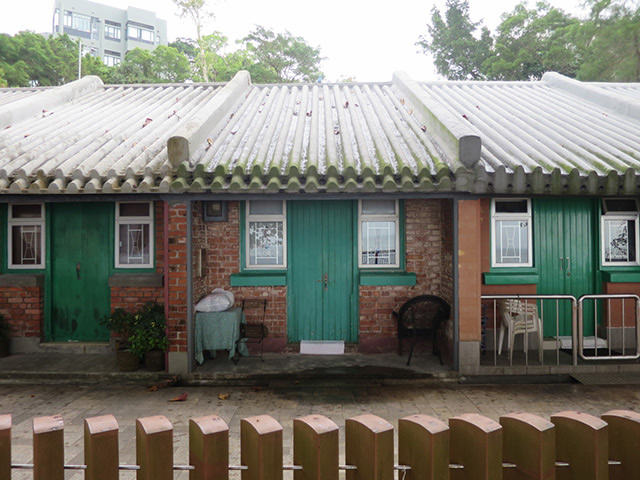
Pat Kan Uk, located at the eastern side of Stanley Bay, is a building compound of 8 houses with distinctive architectural characteristics.
The 8 houses were built in 1930s to rehouse the 8 families originally lived in Wong Ma Kok, which was resumed for the construction of Bluff Head Battery for enhancing coastal defence. The distinctive architectural characteristics of Pak Kan Uk include the use of red bricks, green painted doors and traditional Chinese pitched roof covered with pan-and-roll tiles.
Among the 8 houses, 7 were rated Grade 2 historic buildings in 2011 and 1 was rated Grade 3 historic building in 2012.
There are still residents living in Pat Kan Uk. Visitors are advised not to trespass on the private premises.
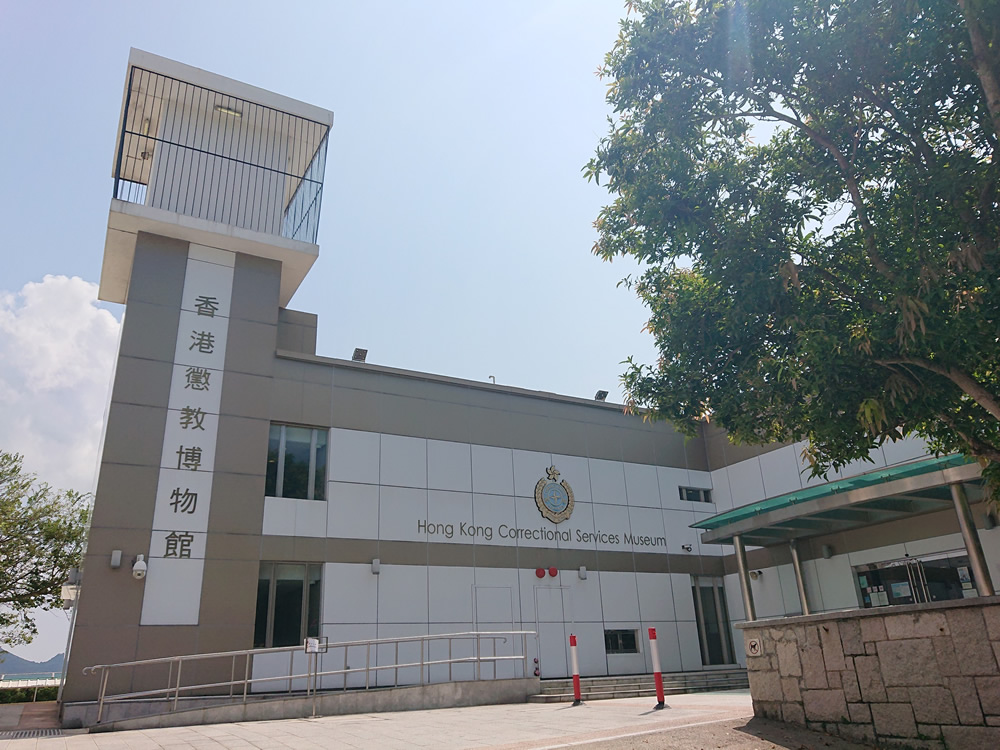
Hong Kong Correctional Services Museum is located at Tung Tau Wan Road in Stanley. The 2-storey museum building comprises 10 galleries with a mock gallows and 2 mock cells. It has a collection of some 600 artefacts detailing the history and development of the penal system in Hong Kong.
There is also a Community Education Experience Centre, based on the theme ‘Home‧Nation‧Corrections’, showcases the Correctional Services Department’s relations with our country and Hong Kong, and introduces the Correctional Services Department’s education programmes for youngsters. Visitors can savour the scenery of Tai Tam Bay at the lookout point outside the Centre.
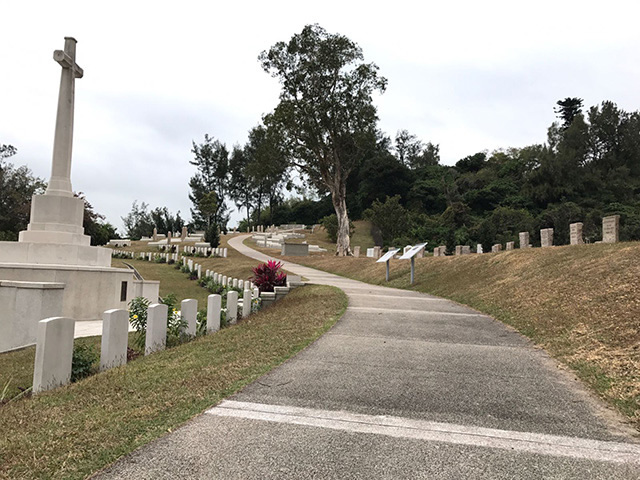
In 1933, the government relocated the graves at the former Stanley Military Cemetery to its present location at Wong Ma Kok Road in Stanley.
The graves at the Cemetery fall into 3 categories, including those for members of the garrison between 1841 and 1870; those for internees during the Japanese Occupation (1941 – 1945); and those for soldiers and civilians who died during the Commonwealth war. The Cemetery was rated Grade 3 historic building in 2010.
Well-known for its tranquil and serene atmosphere created by the landscaped and beautifully kept surroundings, Stanley Military Cemetery is the resting place of soldiers who sacrificed their lives to protect Hong Kong in the early days. Visitors are advised to keep quiet.
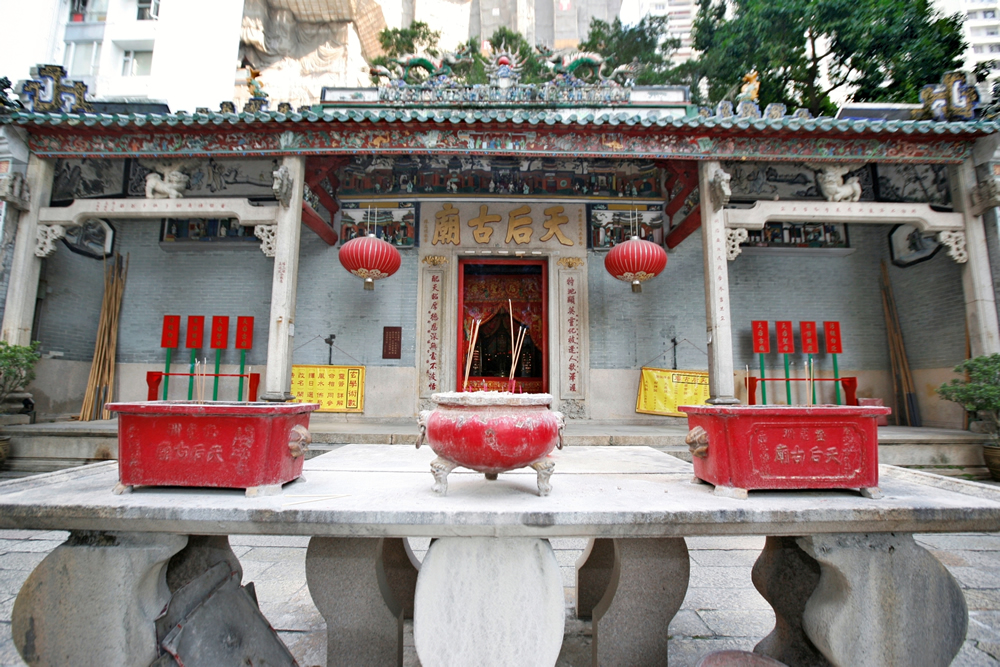
Located at Tin Hau Temple Road, Tin Hau Temple in Causeway Bay is dedicated to Tin Hau. Tin Hau, also known as “Matsu”, was said to be a native in Fujian Province called Lam Mak Leung during the Song Dynasty (960 - 1279). According to legend, she had gifted power and saved many people from sea disasters. The seafarers therefore worship Tin Hau and regard her as their patron saint.
The year when the Temple was built cannot be verified. The oldest relic preserved inside the Temple is a historical bell cast in the 12th year of the Qianlong reign (1747) of the Qing Dynasty. The name plaque above the main entrance and the accompanying pair of couplets, as well as historical plaques, an incense burner and a carved stone offering table, etc. inside the Temple are all dating back to the Qing Dynasty. The Temple is a 2-hall building with 2 side halls. The roof ridges are exquisitely decorated, and the “cut-and-paste shard works” that make up some of the decorations and couplets in the Temple are a rarity in Hong Kong.
Tin Hau Temple in Causeway Bay was declared a monument in 1982.
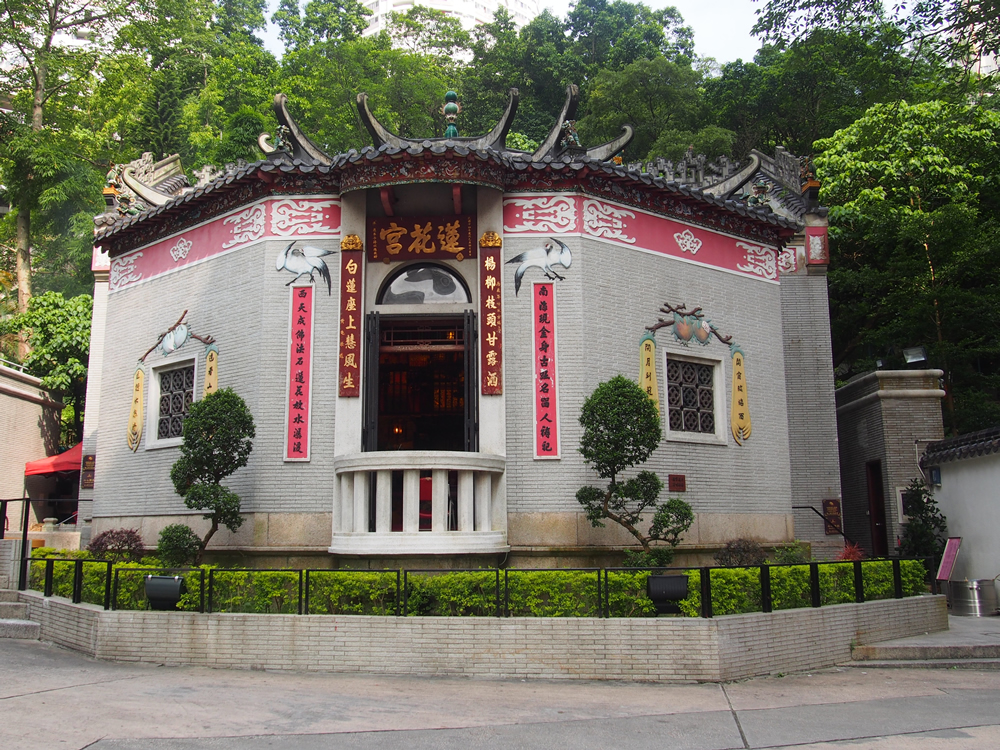
Probably built in the 2nd year of the Tongzhi reign (1863) of the Qing Dynasty, Lin Fa Temple, Tai Hang at Lily Street is dedicated to Kwun Yum.
Kwun Yum, originated in India, was a male divinity in the earlier times but evolved to be a gracious female deity. She is also known as a deity of sympathy, compassion and mercy, responding to the pleas of those who are suffering, thus earning her the title of the “Buddhist of Goddess of Mercy”.
Legend has it that Kwun Yum was once seen appearing on a huge rock inside Lin Fa Temple, Tai Hang. Villagers then built the Temple on the said rock (now known as the “Lotus Rock”) to worship Kwun Yum. The architecture of the Temple is very unique. The front hall with a double-eaves-tended roof is in half-octagonal shape. It is connected to the rectangular main (rear) hall without internal courtyard in-between. Right in the middle of the façade is an arched opening with a balustrade. Access to the Temple is through 2 entrance staircases on left and right ends of the front hall, unlike other traditional Chinese temples with the main entrance in the middle of the façade.
Many worshippers pay tribute to Kwun Yum at Lin Fa Temple, Tai Hang on Kwun Yum Festivals. They also flock to the Temple to "borrow money" from the Goddess during Kwun Yum Treasury Opening Festival (meaning Kwun Yum opens her treasury and lends money to people) on the 26th day of the 1st lunar month, hoping to increase wealth in the year ahead.
Lin Fa Temple, Tai Hang was declared a monument in 2014.
Tai Hang Fire Dragon Heritage Centre is situated at School Street, Tai Hang. The original building, built in 1909 and named "Hung Shing Yi Hok", was destroyed during the Second World War. With donations from residents in the area, the new school building was reconstructed on the same site in 1949, and has been used by different institutions for running schools or educational purposes until 2010 when the building became vacant. Through the Revitalising Historic Buildings Through Partnership Scheme, the building was revitalised into the Tai Hang Fire Dragon Heritage Centre and officially opened in 2022.
The ground floor of the Centre houses an exhibition centre, which provides an interactive demonstration of Tai Hang Fire Dragon Dance with new digital projection technology to showcase the tradition and history of Tai Hang Fire Dragon Dance and the Hakka culture of Tai Hang. The themed restaurant on the first and second floors provides fusion dishes blending traditional Hakka style and modern tastes. The second floor also provides a multi-purpose space for organising a variety of functions and events such as educational workshops, talks and mini-exhibitions, etc.
The existing building was rated Grade 3 historic building in 2010.
.jpg)
Victoria Park at Hing Fat Street, Causeway Bay occupies an area of around 19 ha and offers a wide range of sports facilities such as tennis courts, basketball courts, soccer pitches as well as a swimming pool complex. The central lawn is a famous spot where visitors picnic and relax themselves. The Park is also the venue for the largest Lunar New Year Fair in Hong Kong.
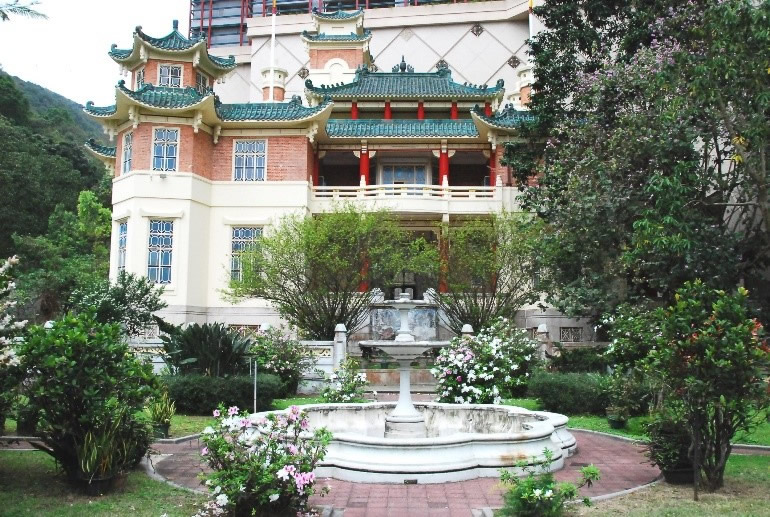
Located at Tai Hang Road, Haw Par Mansion and its private garden were built by Mr Aw Boon Haw in 1936, and named after him and his younger brother Mr Aw Boon Par. The Mansion is one of the few surviving specimens of the Chinese Renaissance style architecture in Hong Kong.
Adjoining the Mansion once stood the famed Tiger Balm Garden which was also completed in 1936 and opened for public enjoyment. The Garden was demolished for redevelopment in the 1990s, and has become part of the collective memories of generations of Hong Kong people. Fortunately, a selected collection of the artefacts and figurines in the Garden have been restored and installed in dedicated locations within the Mansion and its garden.
Haw Par Mansion was rated Grade 1 historic building in 2009.
.jpg)
Jardine Noonday Gun is located at the waterfront of Gloucester Road, Causeway Bay. Every day at noon, a 1-shot salvo is fired from Jardine Noonday Gun as a time signal. This tradition has a history of over a century. In addition, the Gun will also be fired at the last minute on the New Year's Eve, known as “Jardine’s Midnight Gun”, every year.
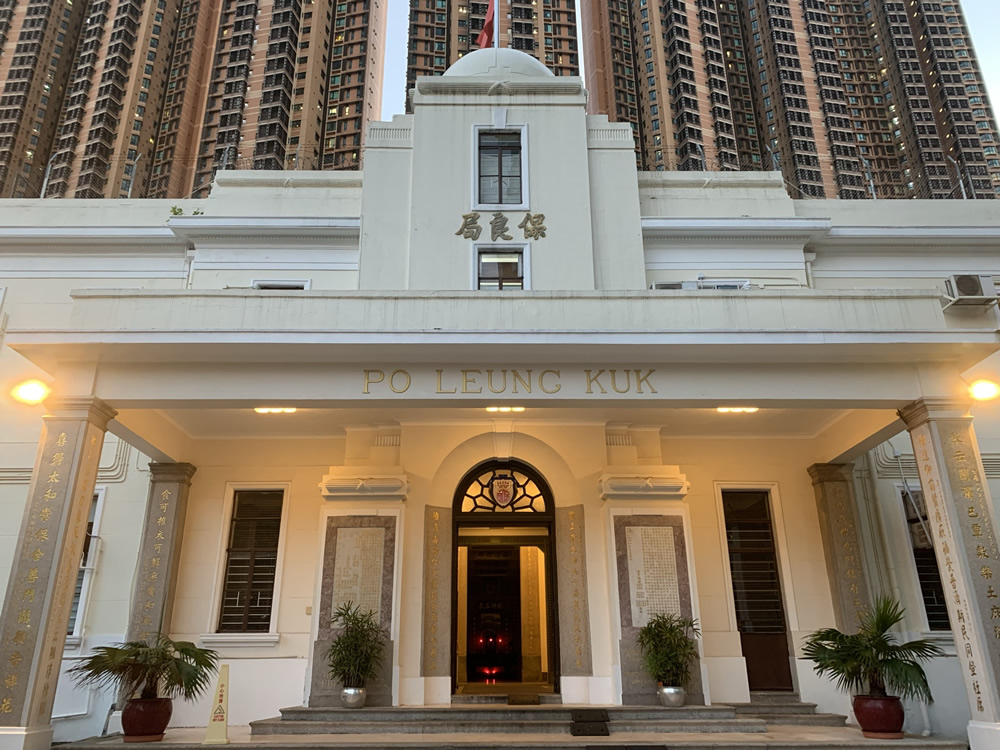
Located in the headquarters of Po Leung Kuk at Leighton Road, Causeway Bay, Po Leung Kuk Museum is dedicated to the collection, compilation, preservation and conservation of Po Leung Kuk’s cultural heritage. Exhibitions and guided tours are held to introduce Po Lueng Kuk’s history and development since its establishment in 1878.
.jpg)
Hong Kong Stadium (formerly known as the Government Stadium) at Eastern Hospital Road, So Kon Po is an excellent and well-equipped venue. Different kinds of games, performances, and community events may be held at the Stadium.
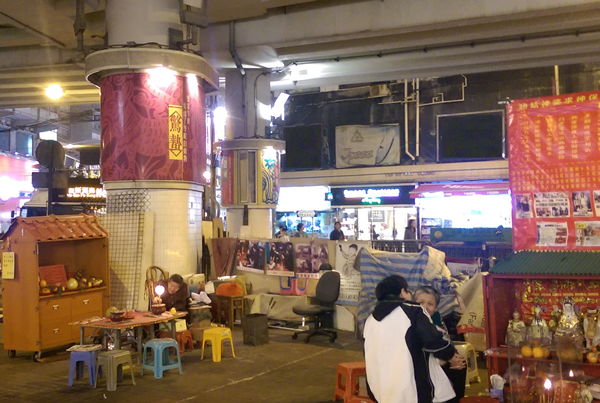
Canal Road Flyover is commonly known as Ngo Keng Kiu. The area underneath the Flyover at the junction of Canal Road West and Hennessy Road is famous for “Petty Person Beating”, a local practice.
It is said that “Petty Person Beating” helps driving away ill luck and welcoming good fortune. The practice of each “Petty Person Beating” practitioner is slightly different, but most would ask the name of the client and the particular objective of beating. Practitioners would write them down on a piece of “petty person paper”, place the paper on a brick and the beat it with an old shoe while chanting specific words. People would also make sacrifice to Bai Hu (white tiger) during Insects Awakening. Practitioners would seal the paper tiger’s mouth by smearing a greasy pork over it so as to avoid gossip and rumours.
The area underneath Ngo Keng Kiu is the most popular place for “Petty Person Beating” in Hong Kong. The spot bustles even more during Insects Awakening in March.
.jpg)
Built in 1845, Happy Valley Racecourse is one of the earliest large-scale constructions in Hong Kong. The 1st horse racing competition in Hong Kong was also held there.
Numerous racing events are staged every year at the Racecourse, attracting countless fans and spectators. Visitors can also drop in the nearby Hong Kong Racing Museum to learn more about the history and anecdotes of horse racing in Hong Kong.
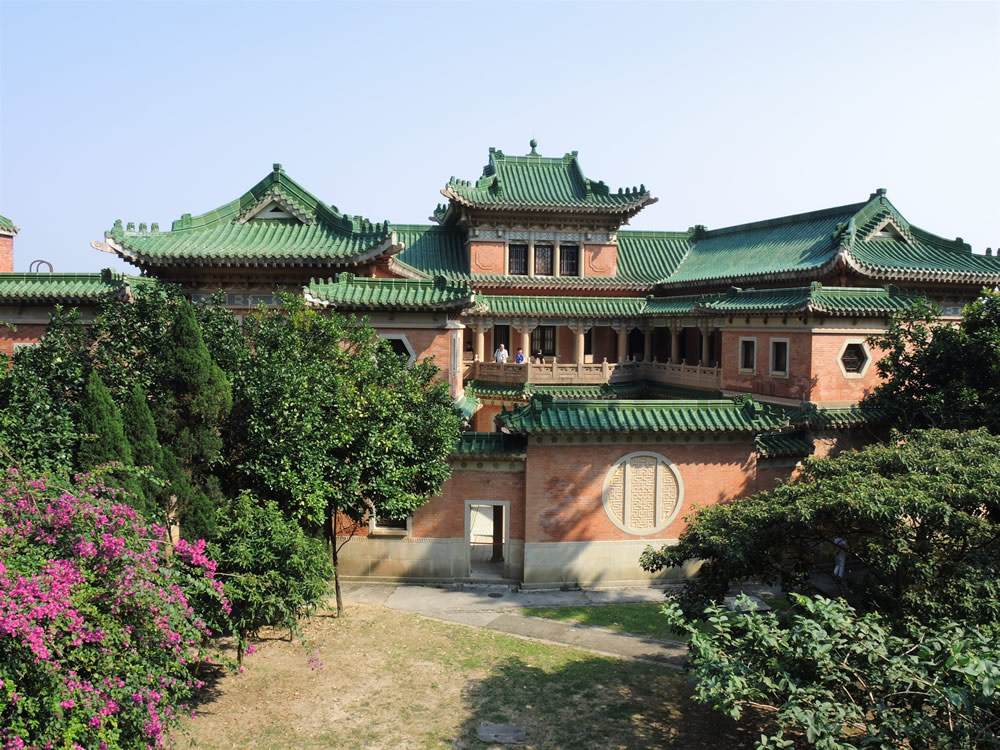
Originally named “Hei Lo”, King Yin Lei at Stubbs Road, Mid-Levels was built in around 1937. The building was renamed as "King Yin Lei" in 1978.
King Yin Lei complex reflects richness and details in Chinese architectural features. The main chamber and its 2 wings have hip-and-gable roofs featuring a full set of traditional Chinese ornaments. External walls of the main building and the annex building are made of distinctively fine red fair-faced brickwork, whilst interior floors are finished with marble tiles, timber floorings and mosaics laid in various patterns. Windows with Chinese pattern metal muntins and grano finished window casings are adopted on the elevations. A grid pattern supporting system is used for the beams of the main halls on various storeys. For the round chamber to the west of the ground floor, a concentric radiating pattern is in place, imitating the coffer ceiling of traditional Chinese palace architecture. The complex also incorporates Western architecture style in terms of structure, material and plan. For instance, reinforced concrete was used to replace the traditional wooden structural roof members.
This historical residence could be most probably defined as an outstanding work of Chinese Renaissance style. Apart from being a popular spot for photography enthusiasts, King Yin Lei has also been featured in films of international renown and local television series. It also represents an earlier phase of Hong Kong history when the upper-class residential area took shape in the Mid-levels.
Kin Yin Lei was declared a monument in 2008. The monument, together with its garden, has been under the ownership of the Government for restoration and adaptive re-use. Since completion of the restoration in 2010, it has been opened to the public from time to time. The monument will be revitalised into a healthy living icon and a learning centre named “King Yin Kei – a Healthy Living Centre based on Pu’er Tea & Traditional Chinese medicine (TCM)” under the Revitalising Historic Buildings Through Partnership Scheme. Prior to the completion of the revitalisation project, visitors can get a glimpse of the exterior of King Yin Lei whilst taking a stroll along Stubbs Road.
Website:
“King Yin Kei – a Healthy Living Centre based on Pu’er Tea & TCM”
https://www.heritage.gov.hk/en/revitalisation-scheme/batch-vi-of-revitalisation-scheme/selection-result/king-yin-lei/index.html
Events and Promotions
https://www.heritage.gov.hk/en/about-us/events-and-promotions/index.html
.jpg)
Woo Cheong Pawn Shop and the 3 adjacent tenement houses at Johnston Road, Wan Chai constitute a row of 4 bays of balcony type tenement buildings forming a continuous façade verandah rarely seen nowadays. It is believed that certain parts of the buildings could date from around 1888. The shophouses were a mixture of Chinese and Western architectural features including high ceilings, light wells, French windows to the balconies, and covered pedestrian arcade formed by the projected balconies and the columns on ground floor.
The buildings were preserved and redeveloped in 2008. The name of the pawn shop previously operated there, “Woo Cheong Pawn Shop”, is preserved and clearly visible.
Woo Cheong Pawn Shop was rated Grade 2 historic building in 2009.
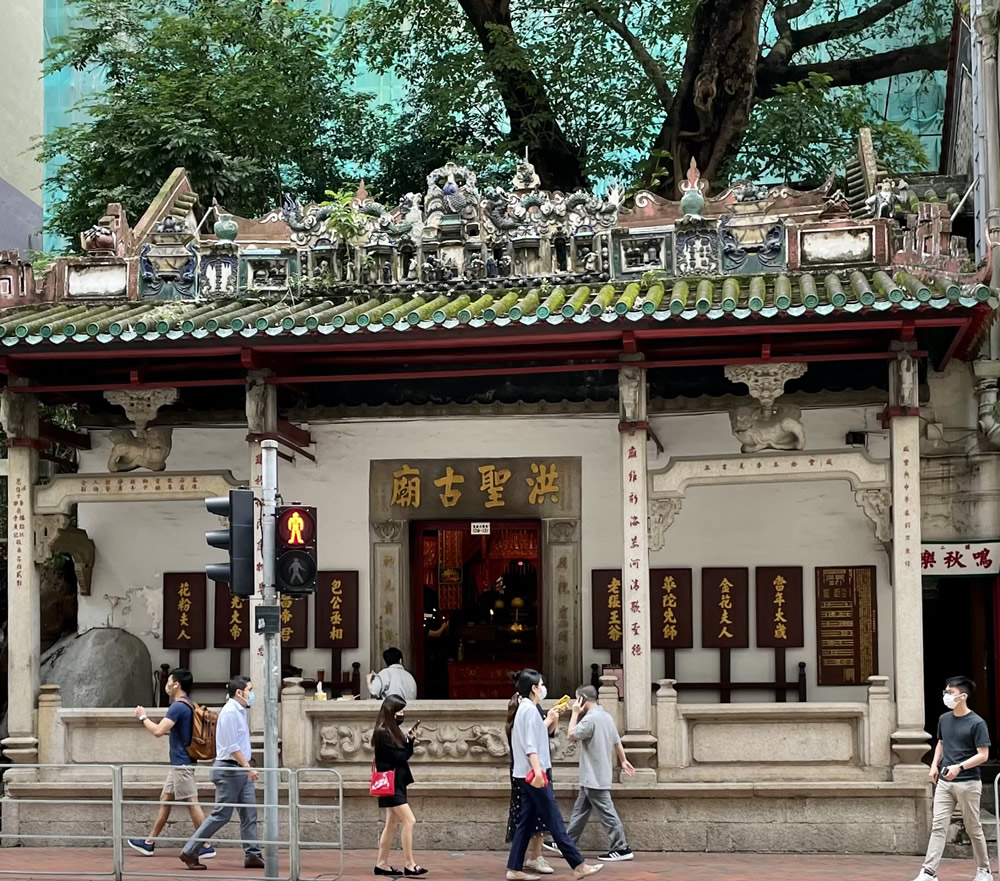
Estimated to have been built between 1847 and 1852, Hung Shing Temple, Wan Chai at Queen’s Road East is simply built on large boulders against the rugged terrain behind, which used to overlook the waterfront. After land reclamation projects for over a century, the Temple is now surrounded by buildings.
Hung Shing, also known as the “God of Southern Sea”, is a famous deity in Southern China. Hung Shing was conferred the title of the "King of Kwong Lee" during the Tang Dynasty (618 - 907) and was further honoured with a posthumous title of “King Hung Shing of Kwong Lee” in the Song Dynasty (960 - 1279). Followers worship Hung Shing to pray for safe voyage and good weather.
Apart from Hung Shing, Kwun Yum, Pau Kung, etc. are also enshrined at the Temple. Many worshippers visit the Temple on the 1st and 15th days of every lunar month and on Kwun Yum Festivals. Hung Shing Temple, Wan Chai was declared a monument in 2026.
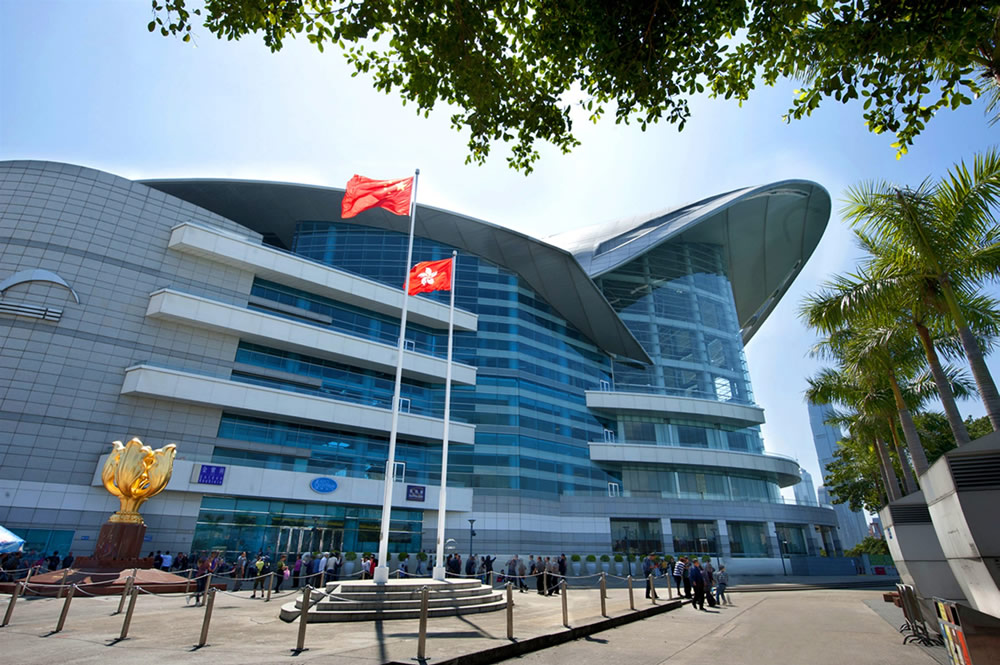
With a unique and majestic appearance, The Hong Kong Convention and Exhibition Centre (“HKCEC”) at Expo Drive, Wan Chai was opened in 1988. In response to the ever rising utilisation rate and increasing demand for exhibition space, HKCEC has undergone several expansions over the years.
Being a premier international convention and exhibition destination, HKCEC covers a total area of 306 000 sq m providing 6 exhibition halls, 2 multi-purpose halls, 2 theatres, 52 meeting rooms and several restaurants, etc.
.jpg)
Situated at Expo Drive East and adjacent to The Hong Kong Convention and Exhibition Centre (HKCEC), Golden Bauhinia Square is where the “Forever Blooming Bauhinia” Sculpture, commonly known as the Golden Bauhinia, stands. The Sculpture was a gift from the Central People’s Government to the Hong Kong Special Administrative Region (HKSAR) to mark the 1997 Handover.
A flag-raising ceremony is held daily at 8:00am at the Square, attracting a large number of citizens and visitors. The flag-raising ceremonies on the National Day and the anniversary of HKSAR's establishment also include playing of the National Anthem by the Police Band, performance by the honour guards formed by disciplined services, a sea parade and a fly-past.
The Reunification Monument at the open area to the north-west of HKCEC blends gracefully with the Golden Bauhinia. It bears inscriptions of the calligraphy of former President Jiang Zemin.
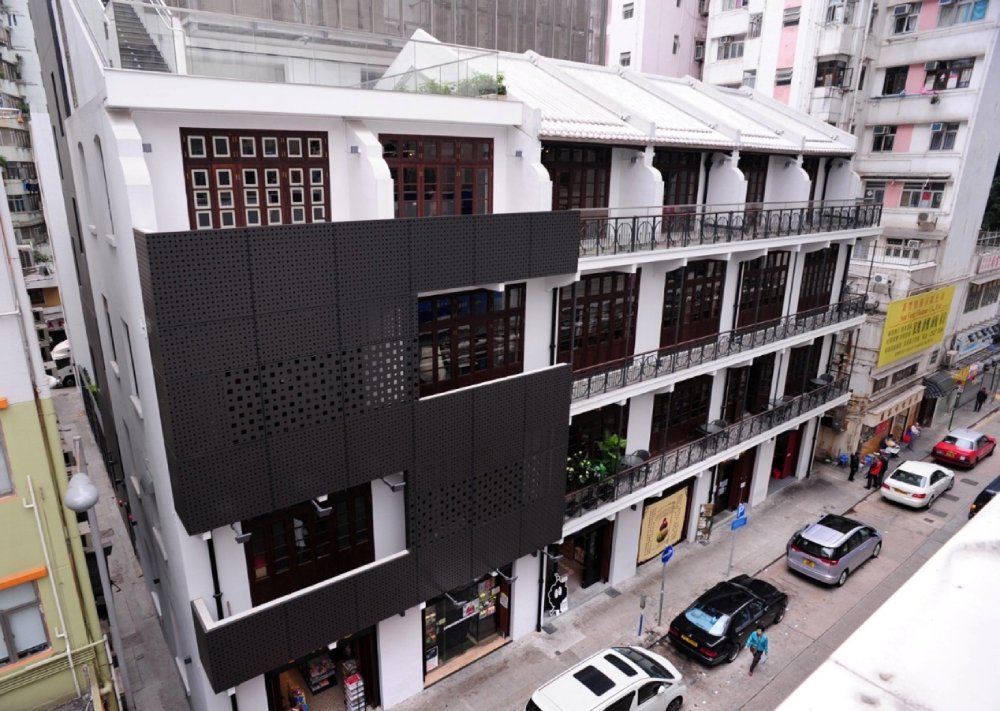
Located at 3/F, 7 Mallory Street, Wan Chai, the Museum of Hong Kong Literature stands as a new landmark, combining literary collections, education, exhibitions, and literary salons. It features permanent exhibition halls, the children's story room, and the Hong Kong literature reading room. Utilizing modern digital technology, it introduces Hong Kong literary works to both the public and visitors, narrating the century-old story of Hong Kong literature and inspiring young locals to engage in literary reading and creation.
7 Mallory Street, the site of the Museum of Hong Kong Literature, was rated Grade 2 historic building in 2009. Originally known as the Green House, this typical four-story Cantonese tenement was built in the 1920s. The revitalized building preserves its original architectural features, such as the red brick walls, Chinese-style pitched roof, wooden staircases, and French windows. The exterior walls have been restored to their early 20th-century black-and-white colour scheme, reviving its historical appearance. At the Museum of Hong Kong Literature, visitors can explore the rich tapestry of Hong Kong's literary heritage. Through modern interdisciplinary arts, the museum breathes new life and vitality into this historic building, offering a deeper, more vibrant literary experience for all who visit.
Website:
https://mhkl.com.hk/zh_hk/
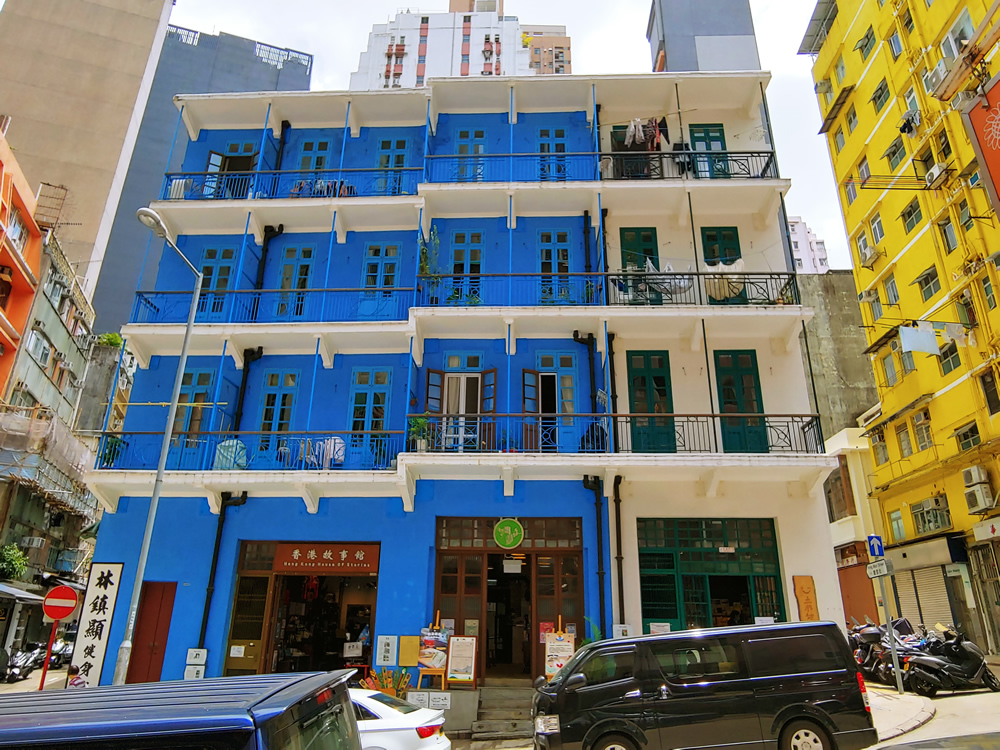
Perched on Stone Nullah Lane, Wan Chai, the Blue House is a 4-storey pre-war shophouse built in the 1920s. With a spacious balcony, upper floors of the building were used as living quarters and the ground floor for commercial use.
During the renovation works carried out by the Government in the 1990s, the external walls of the building were painted blue - thus, the Blue House was born. The Blue House Cluster (BHC), comprising the Blue House and other 2 tenement buildings nearby, won the Award of Excellence of the UNESCO Asia-Pacific Awards for Cultural Heritage Conservation in 2017. The award affirms the “Retain House and Tenant” concept of the revitalisation.
After the revitalisation, BHC retains their original residential purpose housing the old and new tenants, and offers various community and cultural activities such as workshops and guided tours in “House of Stories” to foster community interaction.
The Blue House was rated Grade 1 historic building in 2009.
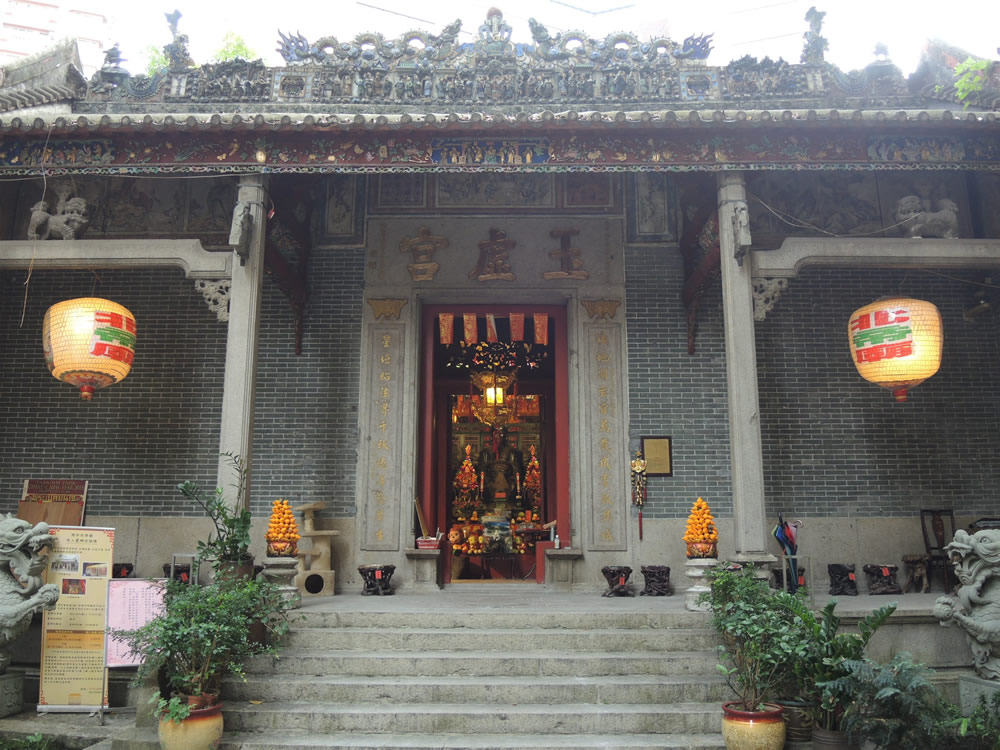
Yuk Hui Temple, Wan Chai at Lung On Street is also known as Pak Tai Temple. It was built in the 2nd year of the Tongzhi reign (1863) of the Qing Dynasty for the worship of Pak Tai. The main temple building is a 2-hall-3-bay structure with an incense pavilion in the centre and annexes to either side. The main building has outstanding architectural features. Exquisite examples of Shiwan ceramic decorations can be found on the main ridge and gable corner walls of the temple’s entrance hall. A bronze statue of Pak Tai cast in the 31st year of the Wanli reign (1603) of the Ming Dynasty is enshrined in the incense pavilion.
Pak Tai, alternatively known as “Zhenwu Celestial Lord” and “Yuen Tin Sheung Tai” (Supreme Emperor of the Dark Heaven), is worshipped for longevity, relief of water-related risks and safe voyage. Legend also has it that Pak Tai defeated the Demon King and was awarded the title of Supreme Emperor of the Dark Heaven. Pak Tai is worshipped for his courage and valour. Many worshippers pay their tribute at the Temple during Pak Tai Festival on the 3rd day of the 3rd lunar month.
Yuk Hui Temple, Wan Chai was declared a monument in 2019.
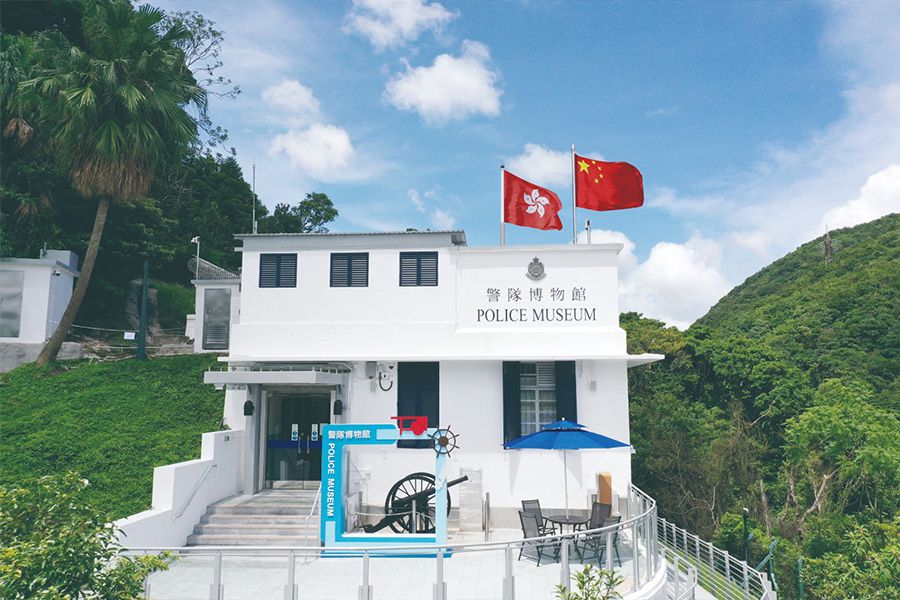
Located at Coombe Road, the Police Museum is formerly the Wan Chai Gap Police Station.
The Museum embarked on a revitalisation project in mid-2020 and was re-opened to the public in September 2022 with a new look. The revitalised Museum features four galleries: the Orientation Gallery, the Thematic Gallery, the Serious Crime Gallery, and the Triad Society Gallery, and has adopted interactive technology and interesting elements, such as video clips, digital photographs and audio guides, to enhance visitors’ understanding of the history, development and daily work of the Hong Kong Police Force. The Museum also offers guided tours provided by retired police officers and civilian staff as docent volunteers to enhance and enrich visitors’ experience.
.jpg)
Stubbs Road Lookout at Stubbs Road, Mid-Levels is a prime location for visitors to marvel at the view of Wan Chai District, Victoria Harbour and Kowloon Peninsula. Visitors will have a complete view of famous spots such as Happy Valley Racecourse, Central Plaza and Hopewell Centre. The view at night is equally enchanting, featuring a myriad of colourful, twinkling lights from numerous buildings.
.jpg)
Located at Harbour Road, Wan Chai, the 78-storey Central Plaza is 374 m to the top of the spire.
At the apex of Central Plaza is LightimeTM, a unique neon tower clock which indicates the time by changing colour(s) in a regular sequence, synchronized to the Hong Kong Observatory clock. LightimeTM consists of 4 neon bands, each representing 15 minutes, that change colour on the quarter hour. A complete hour is signified by the 4 neon bands showing the same colour.
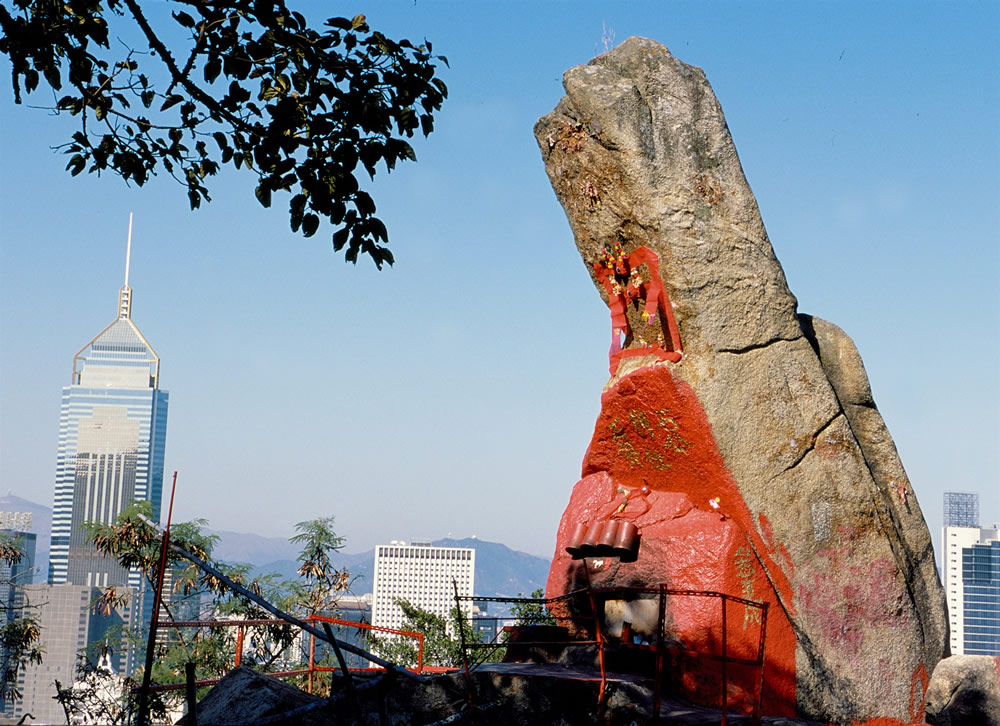
Lovers' Rock lies on the hillside above Bowen Road, Wan Chai. It resembles a stone pen sticking out of a stone base.
It is believed that worshippers’ sincere wishes would come true if they hang a wine bottle on a tree near the Lovers’ Rock. On the 6th, 16th and 26th days of every lunar month, a bunch of men and women wishing for a well-matched spouse come to worship Lovers' Rock.
From where Lovers’ Rock lies, visitors may also enjoy the splendid views of Happy Valley Racecourse, Central Plaza, Hopewell Centre and other famous skyscrapers.
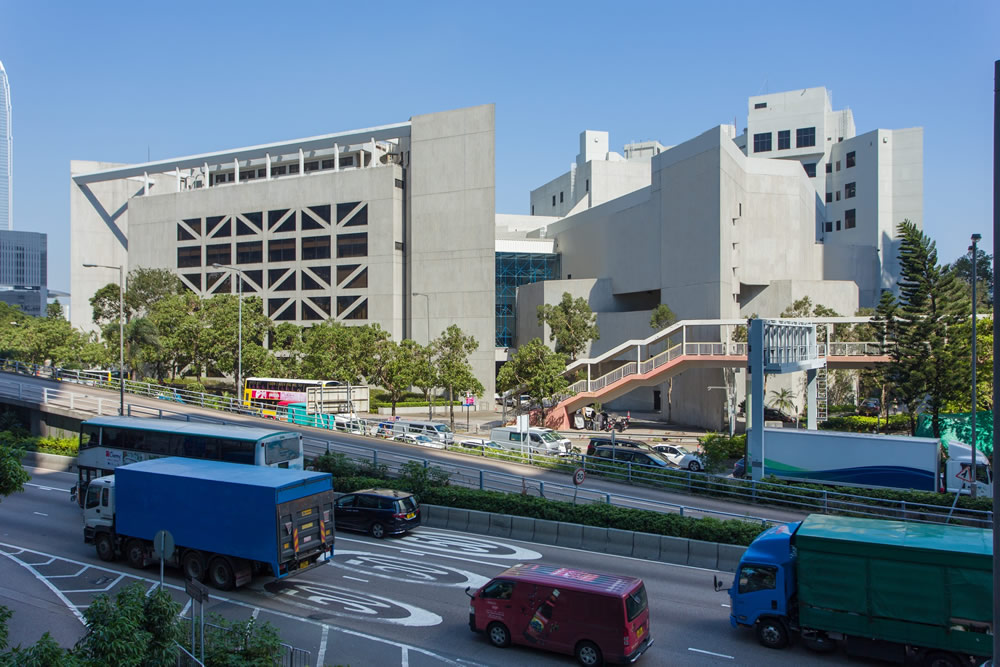
Established in 1984, Hong Kong Academy for Performing Arts at Gloucester Road, Wan Chai provides professional undergraduate education and practice-based postgraduate studies in Chinese opera, dance, drama, film and television, music and theatre and entertainment arts.
The Academy is also one of the major performance venues, where a variety of art exhibitions and programmes are held.
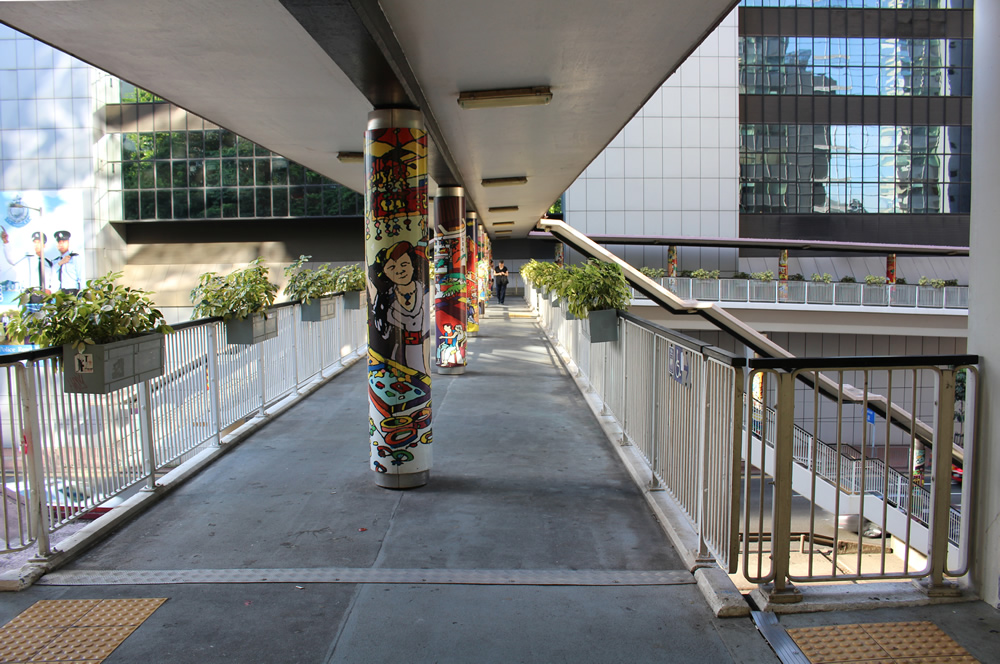
Footbridge Gallery is on the footbridge at the junction of Hennessy Road and Queen's Road East, Wan Chai. The poles of the footbridge are decorated with sticker wallpapers laying out the “50 landscapes of Wan Chai”, viz. 50 most representative old and new landscapes of Wan Chai, made up of the fingerprints of more than 20 000 citizens.
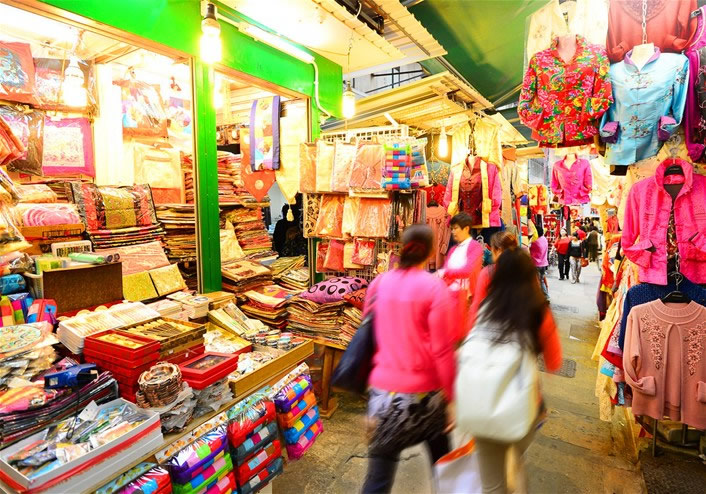
Located in the heart of Causeway Bay, Jardine's Crescent is a roadside bazaar with numerous hawker stalls selling clothes, accessories and daily commodities at affordable prices.
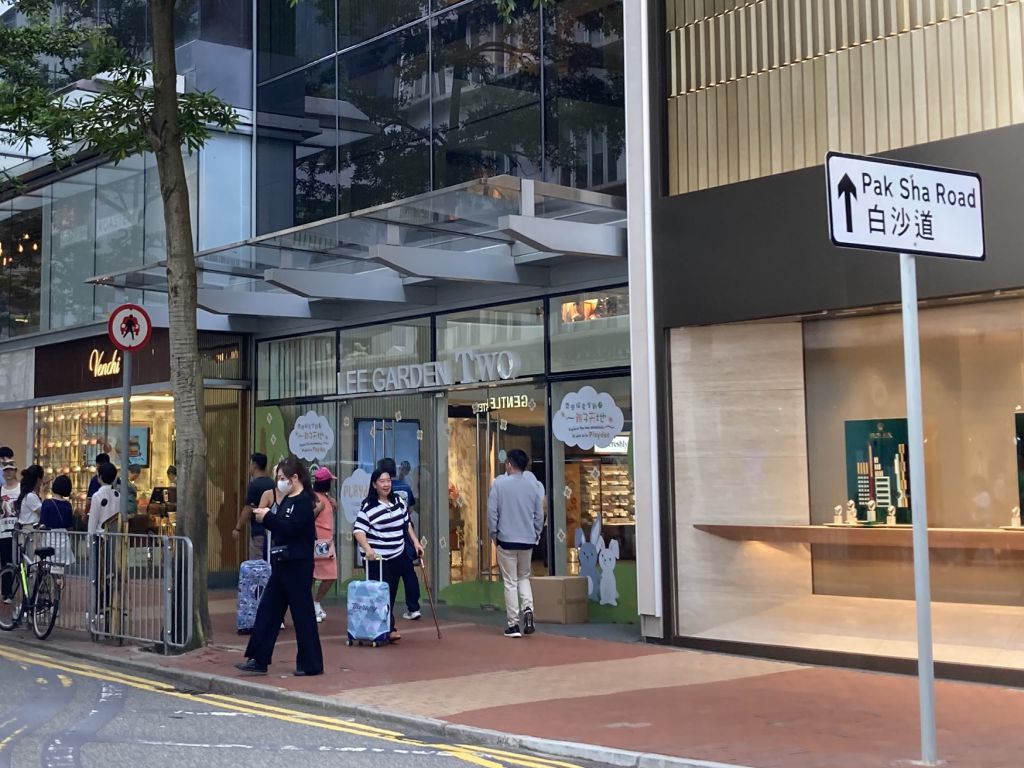
Large-scale shopping malls, department stores are located everywhere in Causeway Bay, including the Lee Gardens, Hysan Place, Times Square, Windsor House, Fashion Walk and SOGO Hong Kong, etc., showcasing the latest trends in fashion and accessories. In addition to stores of all sizes, the area offers a variety of culinary delights, allowing visitors to enjoy leisure, shopping and dining at the same time.
For a distinctive experience of the bustling local street-stall shopping scene, a visit to Tai Yuen Street and Cross Street in Wan Chai is a must-do activity. Here stands numerous hawker stalls offering a wide variety of dried goods, clothing and household products at affordable prices.
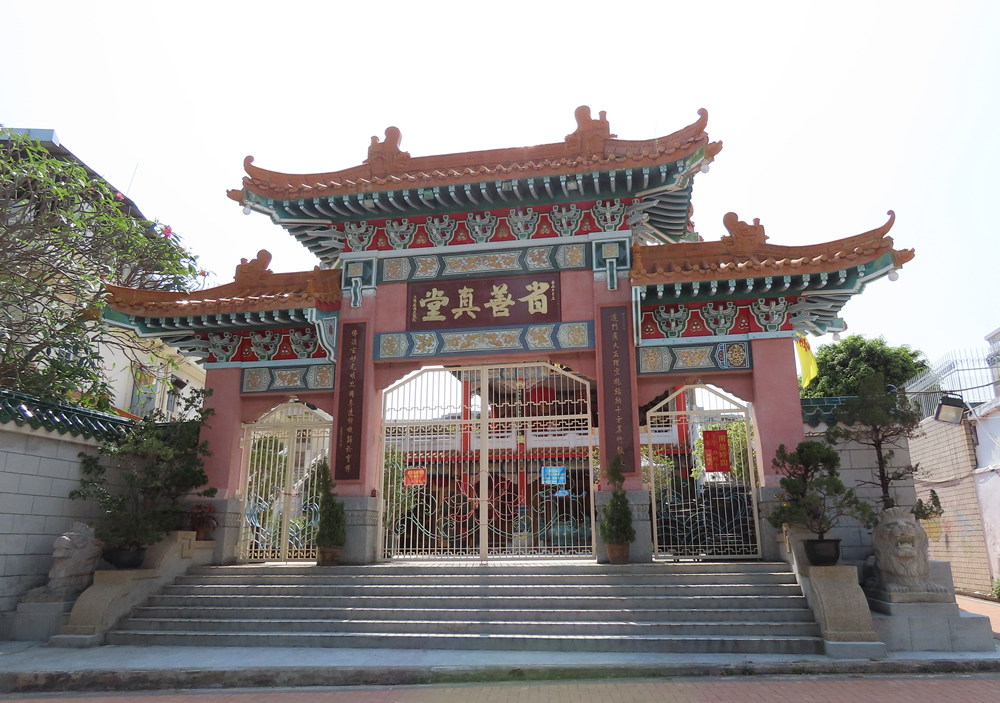
Located at the Rutland Quadrant in Kowloon Tong, Shang Sin Chun Tong was established in 1952. It comprises the Sam Ching Din, Kwun Yum Din, Yun Sun Din, Man Shu Din and Man Cheong Din,etc. With a sizeable garden inside, Shang Sin Chun Tong is also a good place for enjoying the beautiful landscape.
Hong Kong Baptist University is located at Waterloo Road inKowloon Tong. It was formerly Hong Kong Baptist College founded in 1956. In 1994, the college gained university status and was renamed Hong Kong Baptist University.
Opened in 1978, Academic Community Hall at the campus of the University helped relieve the shortage of performing venues in Hong Kong at the time. Over the years, many international and local events have been staged there. The grand staircase leading up to the lobby is the distinctive feature of the Hall’s unique architecture.
Kowloon Walled City Park at Tung Tsing Road in Kowloon City was formerly the site of Kowloon Walled City which was one of the most historic sites in Hong Kong.
Once strategically located at the northeastern corner of Kowloon Peninsula, Kowloon Walled City, a walled garrison-city built with granite slabs and incorporated 6 watchtowers and 4 gateways was constructed by imperial officials of the Qing Dynasty in 1847. The Yamen Building, which was originally the administrative office of the assistant magistrate of Kowloon, is a 3-hall, 2-courtyard structure built of grey bricks with tiled roofs sitting on purlins supported by columns and gable walls. However, the granite slabs of the Walled City were torn down completely during the Japanese Occupation. After World War II, a lot of high-rise tenements built over the Walled City site. Owing to the lack of regulation, the place had become a notorious nest of illegal activities gradually.
After the demolition of Kowloon Walled City in 1994, a park was built on the site. 2 granite plaques bearing the characters "South Gate" and "Kowloon Walled City" of the original South Gate were unearthed during the demolition. Hence, the park was named Kowloon Walled City Park. The Yamen Building was also preserved and restored.
Occupying an area of 31 000 sq m, Kowloon Walled City Park is laid out in the Jiangnan garden style of the early Qing Dynasty, producing a green and peaceful environment studded with Chinese pavilions and ponds. In its centre stands the restored Yamen Building offering visitors a glimpse of the physical appearance of the Walled City in the old days. The Yamen houses an exhibition which shows both the history of the Walled City and the construction process of the Park, together with the display of some relics unearthed in the Walled City. Visitors may soak up the ambience of the remote past whilst enjoying the charming Park.
Remnants of the South Gate and the former Yamen Building of Kowloon Walled City were declared monuments in 1996.
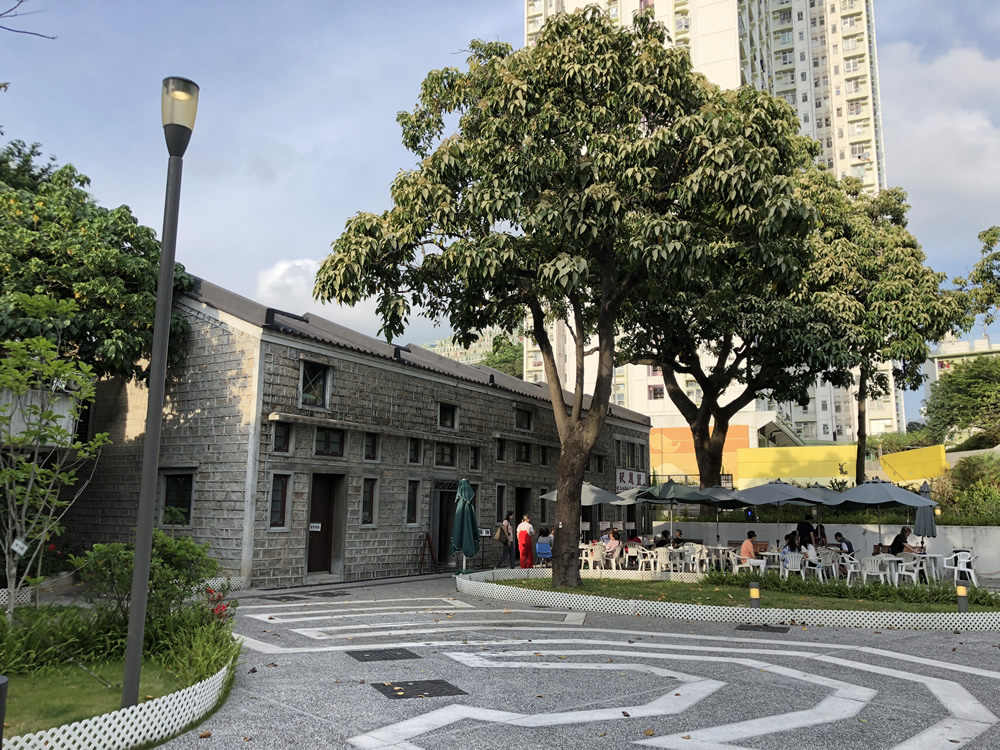
Stone Houses Family Garden at Junction Road in Kowloon was originally the Old House at Nos. 31 - 35 of the former Hau Wong Temple New Village, which were believed to be built between 1945 and 1949. The block of 5 2-storey residential units was mainly constructed of granite blocks and with a pitched roof of timber rafters and clay tiles.
After World War II, the area became a squatter area, known as the Hau Wong Temple New Village, Lai Chi Yuen and Ho Ka Yuen, accommodating a large immigrant population from the Mainland. In the 1950s, a number of film studios were established in the squatter area. After such film studios were moved out in the 1970s, many small-scale factories were established there. Of them, the signboard of a tombstone company named “Nam Yan Kee” remains intact.
Hau Wong Temple New Village was cleared in 2001 and the Old House at Nos. 31 - 35 has become the only remaining structure of the village. In 2015, the Old House was revitalised as the Stone Houses Family Garden, a nostalgic themed cafeteria with an interpretation centre and a visitor information centre, offering catering, exhibitions, guided tours and training classes.
The Old House at Nos. 31 - 35 of the former Hau Wong Temple New Village was rated Grade 3 historic building in 2010.
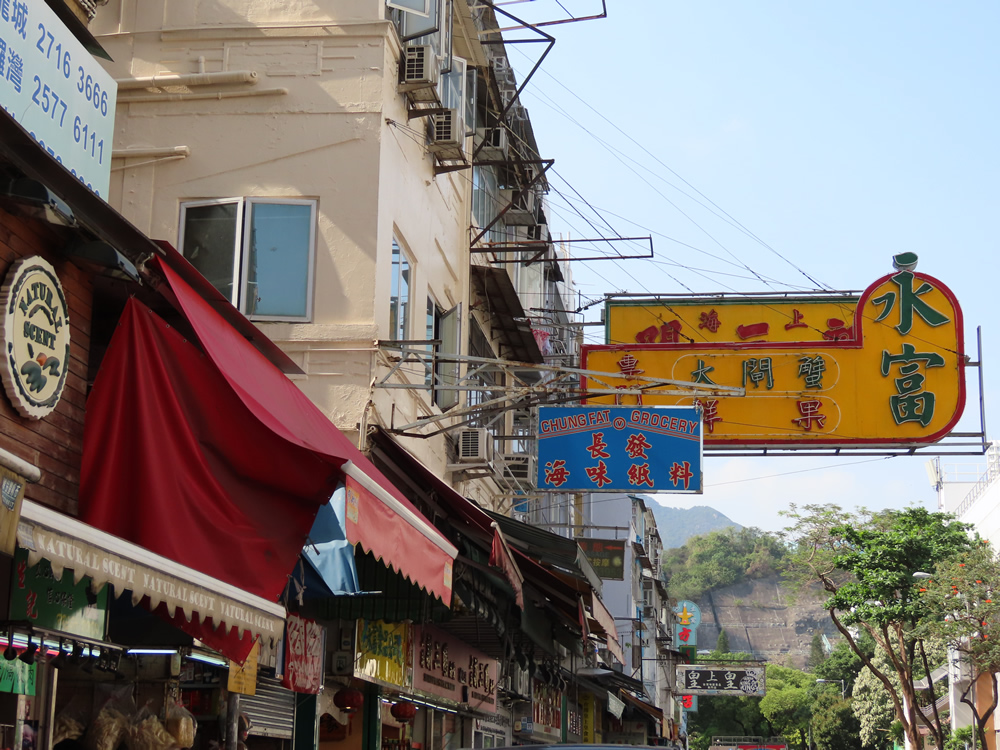
The array of restaurants along the streets surrounded by Junction Road, Carpenter Road and Prince Edward Road West in Kowloon City offers a glut of gastronomic delights, earning the area the name of “Culinary City”. Apart from Cantonese and other Chinese delicacies, you can find Thai, Vietnamese, Japanese and European dishes, dessert corners and chic cafes there. Amongst them, the number of Thai and hot pot restaurants tops the list. “Culinary City” is a dinning hot spot for food lovers and visitors.
Kowloon Tsai Park at Inverness Road in Kowloon City covers an area of about 12 ha providing a variety of recreational facilities.
The Bauhinia Garden, home to about 120 Bauhinia trees, is a key attraction of the Park. Flower lovers flock to the Garden when blossoms burst into magnificent shades of magenta during the flowering period. Other major facilities of the Park include a natural turf soccer pitch, 7-a-side hard-surfaced soccer pitches, artificial turf soccer pitches, basketball courts, a roller skating rink, a jogging track, an elderly fitness corner, a children’s playground, a dog garden, a sports ground and swimming pools, etc.
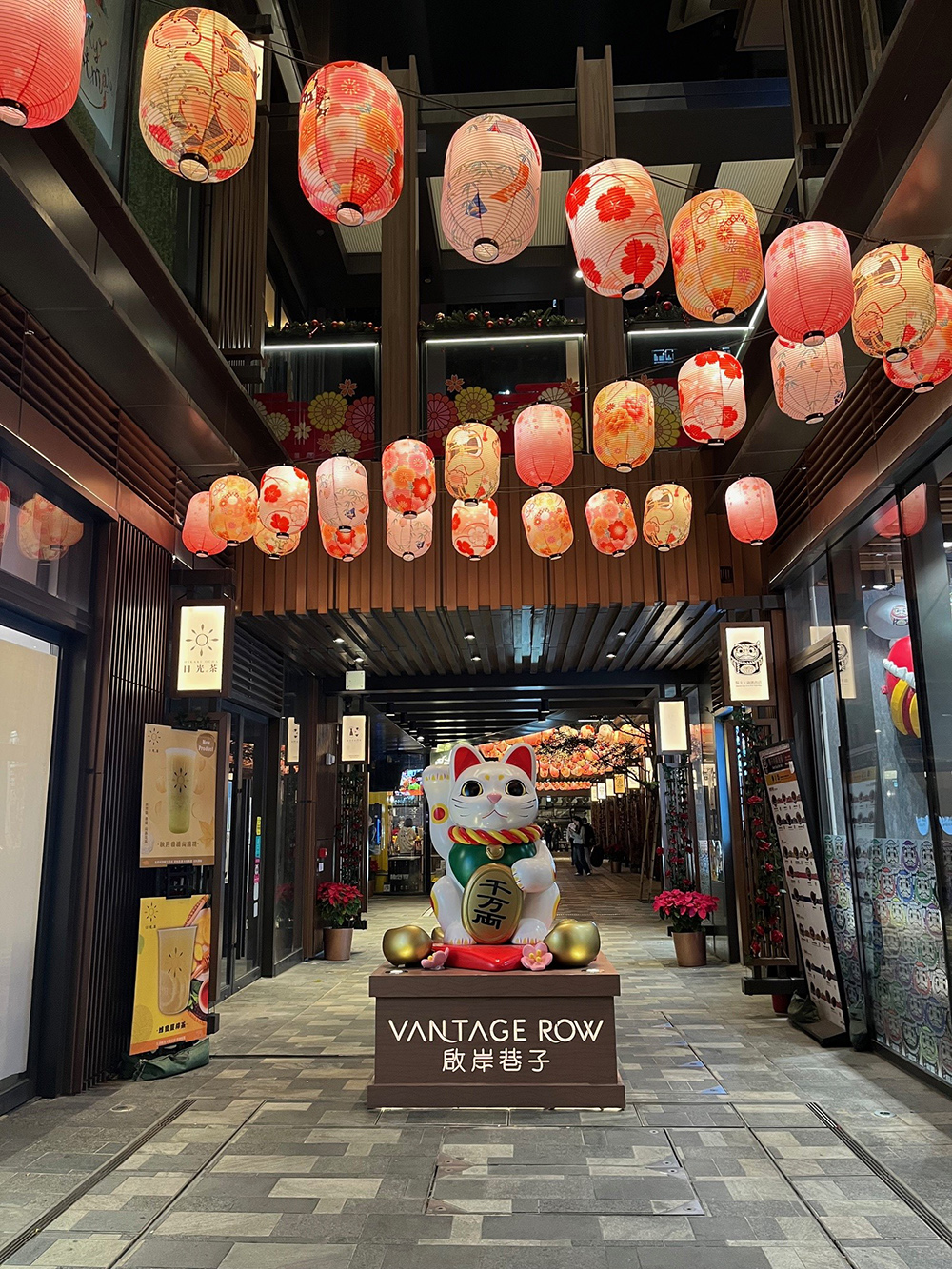
Located at Ma Tau Wai Road, Hung Hom, Vantage Row is a 2-storey shopping mall with an area of over 30,000 sq ft. On the ground floor of the shopping mall is a Japanese-designed food street with restaurants offering both Chinese and foreign cuisines. The small shops on both sides of the food street are decorated with Japanese lanterns, door signs and canvases, making Vantage Row a popular photo spot for visitors.
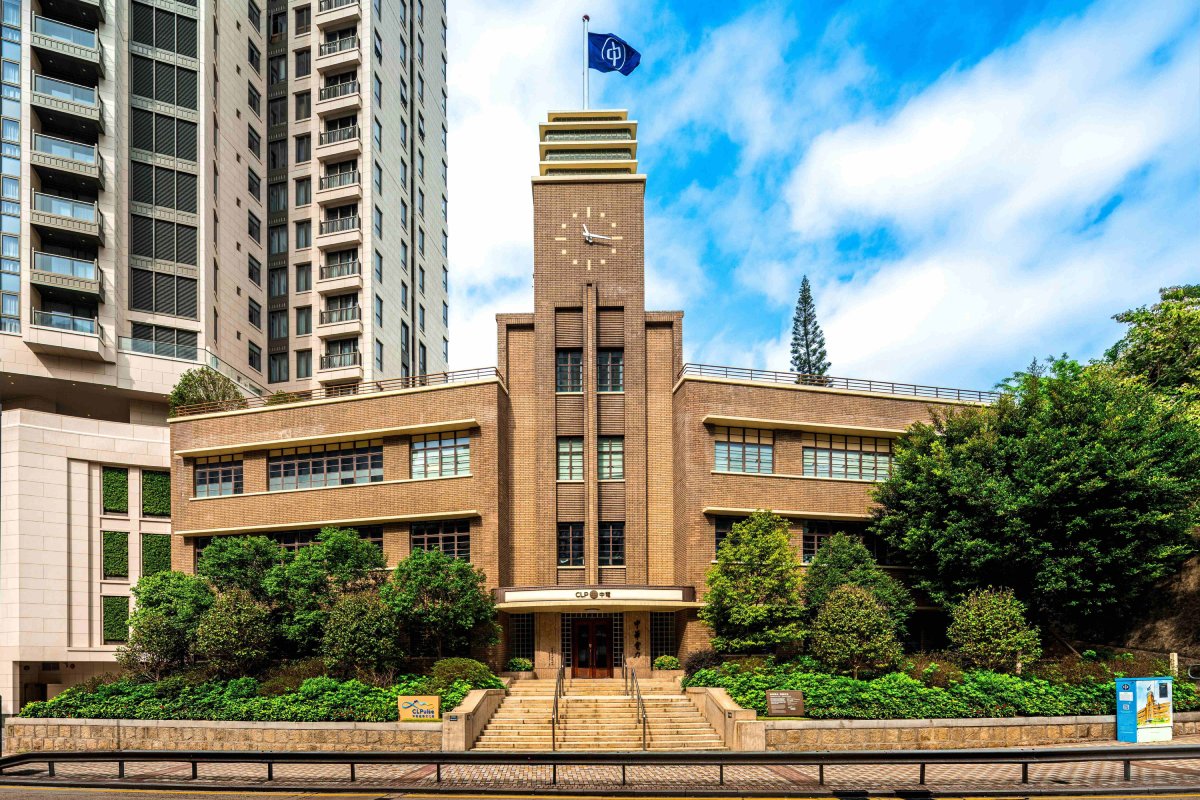
CLP Pulse is located at 147 Argyle Street, Ho Man Tin, Kowloon.
The CLP clock tower was built in 1940 and served as CLP's headquarters for more than seven decades. This magnificent landmark was rated Grade 1 historic building in 2018. Following a revitalisation project, it was transformed into CLP Pulse which promotes heritage, culture and green education.
CLP Pulse has three themed exhibitions. 'ElectriCity' traces the history of Hong Kong's electricity development; 'Our Home ∙ Our History' tells the story of the Kadoorie Family. Both exhibitions showcase the contributions of electricity and the Kadoorie Family to Hong Kong's development. Presented by the Leisure and Cultural Services Department and organised by the Intangible Cultural Heritage Office, 'Living Craftsmanship' introduces eight items of traditional craftsmanship that are part of Hong Kong's intangible cultural heritage.
CLP Pulse offers a wide range of programmes and experiential activities for the public, sustaining its decades-long bond with the Hong Kong community.
CLP Pulse is open to the public on Tuesdays, Wednesdays, and Fridays to Sundays from 10 am to 6 pm, and is closed on Mondays, Thursdays, and public holidays. Admission is free and walk-in visits are welcome.
Website:
www.clpulse.com
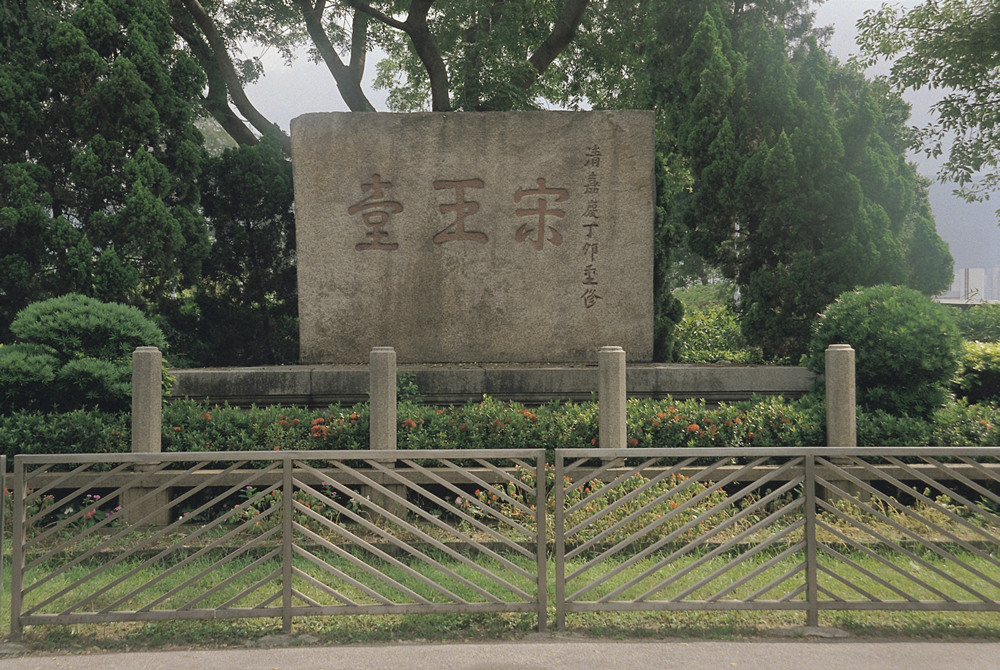
Situated at the junction of Sung Wong Toi Road and Ma Tau Chung Road, Sung Wong Toi Garden is a landmark of great historical significance in Kowloon City District.
It is said that in the final years of the Southern Song Dynasty (1127 - 1279), the last 2 emperors (Emperor Zhao Shi and Emperor Zhao Bing) fled south during the Mongolian invasion and took refuge in Kowloon City area. People inscribed the Chinese characters "Sung Wong Toi" (literally meaning “Terrace of kings of the Song Dynasty”) on a huge rock on the “Sacred Hill”, a hillock once overlooking the coast, to commemorate the visit of the imperial court.
In the 1950s, the “Sacred Hill” was levelled by the Government for the expansion of Kai Tak Hong Kong International Airport. The boulder inscribed with the characters “Sung Wong Toi” was salvaged, and cut into a rectangle shape. Later on, the Government constructed Sung Wong Toi Garden in the vicinity of the “Sacred Hill” and the inscribed boulder has been displayed here since then.
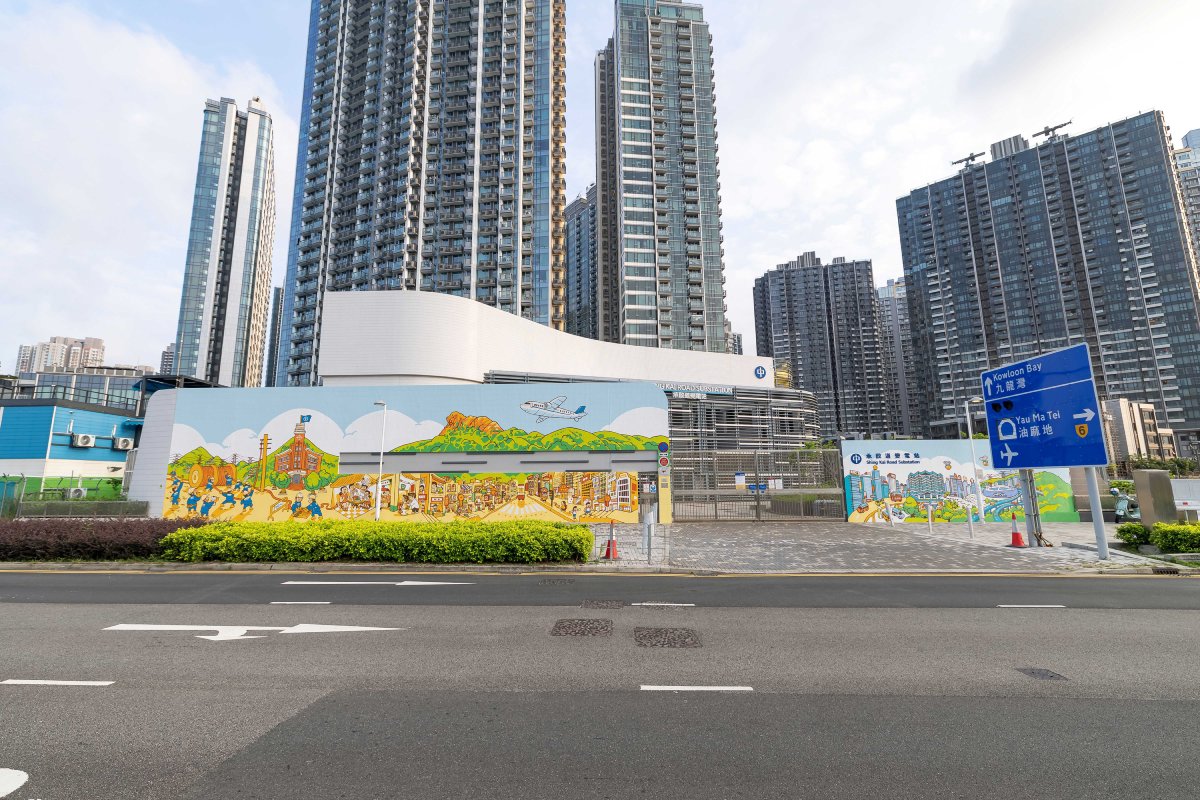
Located in the Kai Tak Development Area, Shing Kai Road Substation is a key power infrastructure supporting the district's development. The building incorporates low-carbon and sustainable design features and has achieved the BEAM Plus New Buildings Platinum Rating.
In 2026, as part of CLP's 125th anniversary celebrations, the Substation underwent a beautification project that transformed its exterior into a large-scale mural showcasing the landmarks, history, culture and community stories of Kowloon City and Kai Tak. The artwork features iconic elements such as Kai Tak Airport, CLP Pulse, and milestones in Hong Kong's electricity development. It also incorporates electric vehicles, renewable energy and smart city initiatives, reflecting CLP's longstanding ties with the community and its vision for a sustainable future.
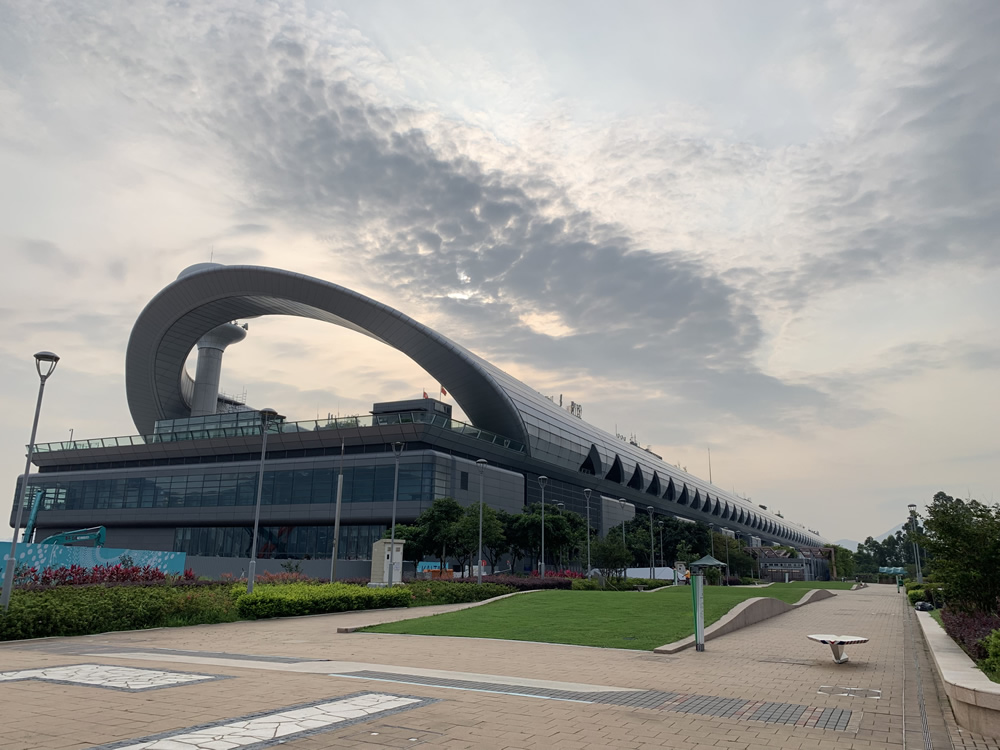
Standing at the end of the runway of the former Kai Tak Hong Kong International Airport, Kai Tak Cruise Terminal is one of the major tourism infrastructures in Hong Kong. The 2 berths of the cruise terminal can accommodate 2 large cruise liners up to 220 000 gross tonnages each simultaneously.
The 3-storey terminal building features terminal and passenger clearance facilities, and ancillary commercial space. Its unique design has made it an iconic landmark in the Victoria Harbour. At the rooftop of the building is Kai Tak Cruise Terminal Park. Occupying an area of approximately 23 000 sq m, the Park is one of the large public rooftop gardens in Hong Kong and is an ideal place to enjoy the spectacular view of the Victoria Harbour.
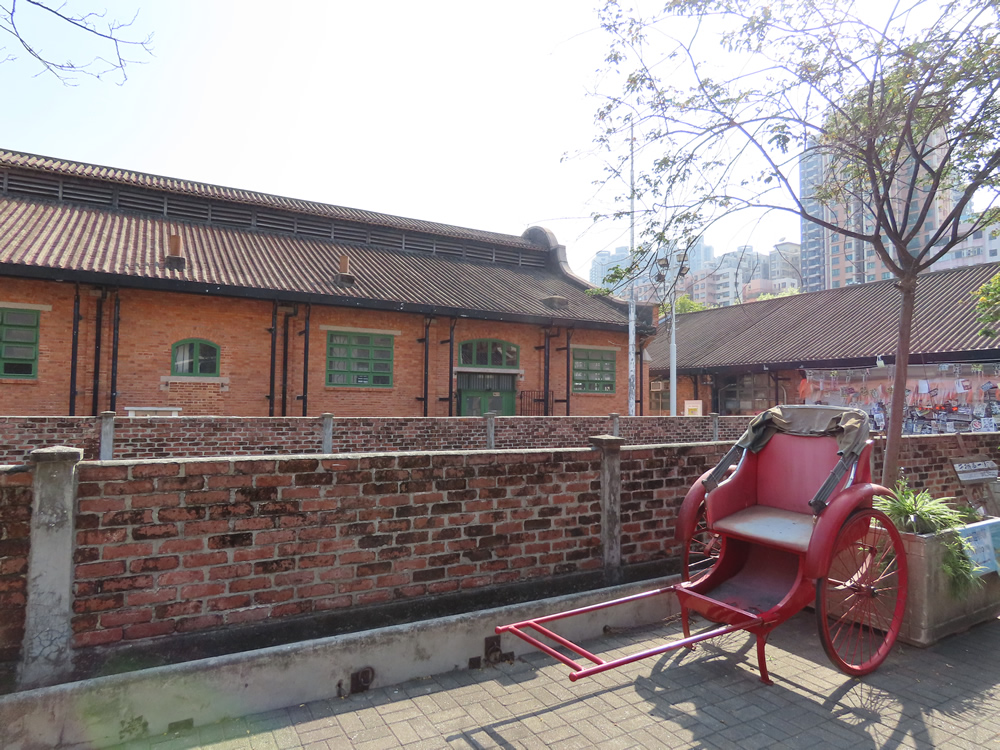
Located at Ma Tau Kok Road in To Kwa Wan, the Ex-Ma Tau Kok Animal Quarantine Depot (commonly known as the Cattle Depot) is the only surviving pre-war slaughterhouse premises in Hong Kong. Constructed in 1908, it provided quarantine service until mid-1999 when Sheung Shui Slaughterhouse commenced operation. The Ex-Ma Tau Kok Animal Quarantine Depot was rated Grade 2 historic building in 2009.
The front portion of the Cattle Depot was renovated and converted into Cattle Depot Artist Village in 2001 to house local artists relocated from the Oil Street Art Village in North Point. The rear portion was revitalised as Cattle Depot Art Park in 2019.
Cattle Depot Artist Village provides units and open space for short-term leasing to individual artists or arts groups. Arts activities such as exhibitions and workshops are held from time to time. Rich in artistic contents aside, the red-brick buildings with tiled roofs, and the well-preserved cement water trenches and metal rings for securing cattle also appeal to many visitors.
Cattle Depot Art Park is a recreational space themed on arts and culture. Valuable heritage features of the Cattle Depot such as feeding troughs and water ponds are preserved in-situ. New facilities are modelled on the architectural features of the Cattle Depot with the infusion of innovative design. For example, metal plates in silhouette of livestock such as cattle and pig are set on the wire fences, and light and shadow shelter is installed with double layers of roofs for air circulation similar to the red-brick buildings in the site plus ceiling cast with laser printing to capture the effect of shadow casted by leaves onto the ground. Visitors can catch a glimpse of the former quarantine depot which supplied hygienic and safe fresh meat to locals.
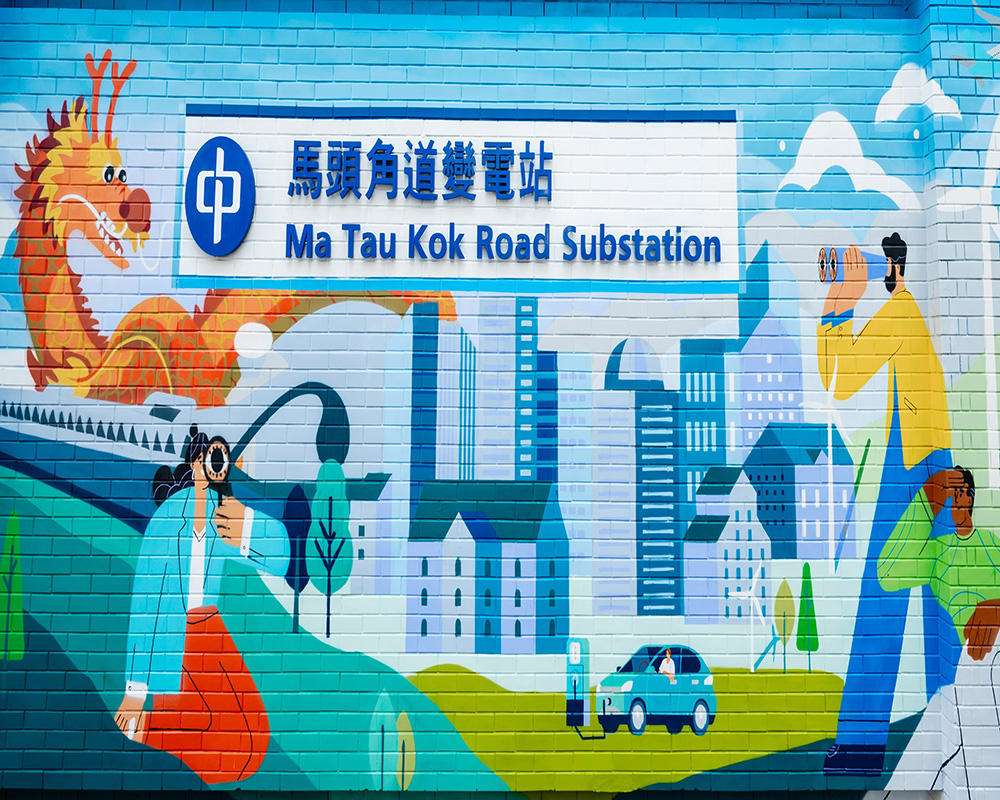
Together with the neighbouring Cattle Depot Artist Village, the beautified Ma Tau Kok Road Substation enriches the district's cultural landscape through art, making the area a distinctive destination for art-inspired photography. Designed by a tertiary graduate, the mural captures the district's landmarks, cultural heritage and community character through the eyes of young people. Drawing on iconic elements such as the collective memory of aircraft flying low over nearby buildings during the Kai Tak Airport era and the Kai Tak Cruise Terminal, the artwork reflects the district's transformation over time. By weaving together scenes from the past, present and future, it offers residents and visitors a glimpse into the unique charm and rich heritage of Kowloon City.
The mural also incorporates wind power, electric vehicles and green landscapes, highlighting the importance of renewable energy and environmental awareness.
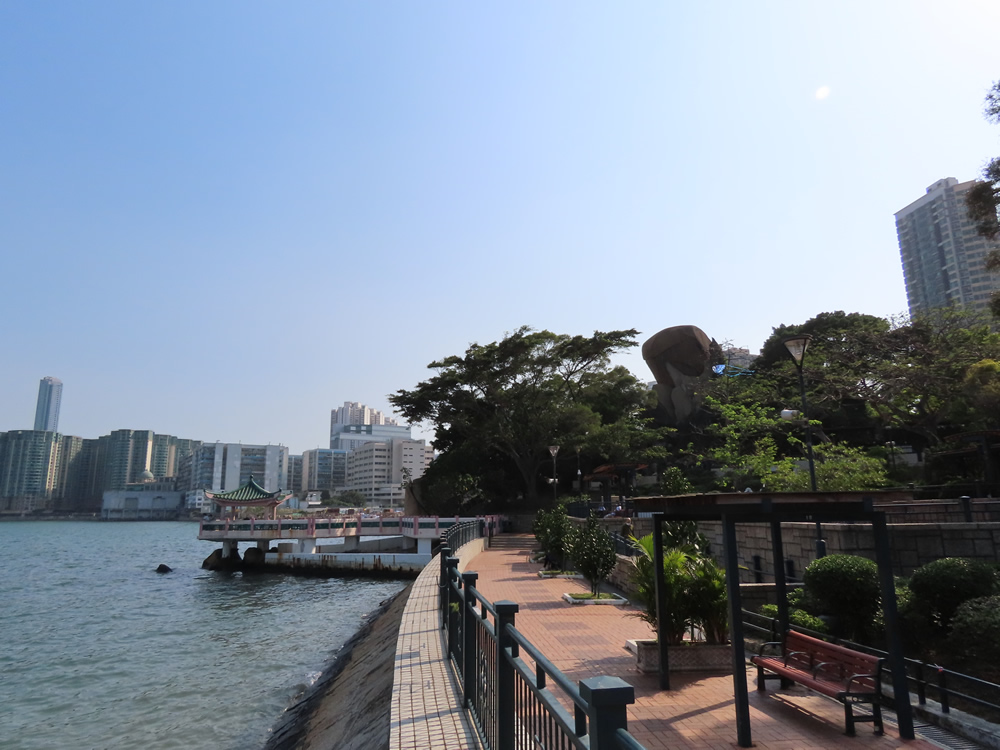
Hoi Sham Park is located at Yuk Yat Street in To Kwa Wan. It used to be an island called “Hoi Sham Island” but has connected with land upon reclamation.
"Hoi Sham Rock" and "Fishtail Rock" are landmarks of the Park. It is believed that “Hoi Sham Rock” will bring couples blissful love and marriage. Besides, “Hoi Sham Pavilion” at the waterfront is well-known for the spectacular sunset view.
Hoi Sham Park Extension has been opened to public since April 2023. The 1.3 ha extension provides a number of recreational facilities to meet the needs of people of all ages, including fitness corners, pavilion and lawn, a children's play area, a children's cycling ground and the promenade, etc.
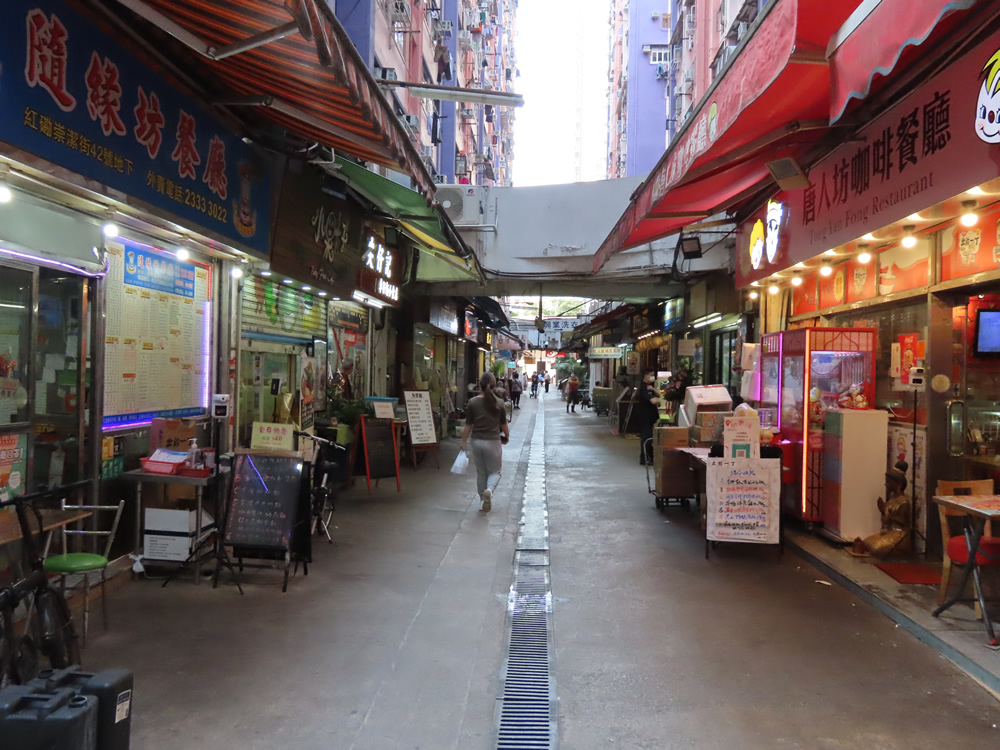
Sung Kit Street in Hung Hom has emerged from an unknown lane to a renowned food plaza. Diners can find restaurants serving a wide variety of cuisines here.
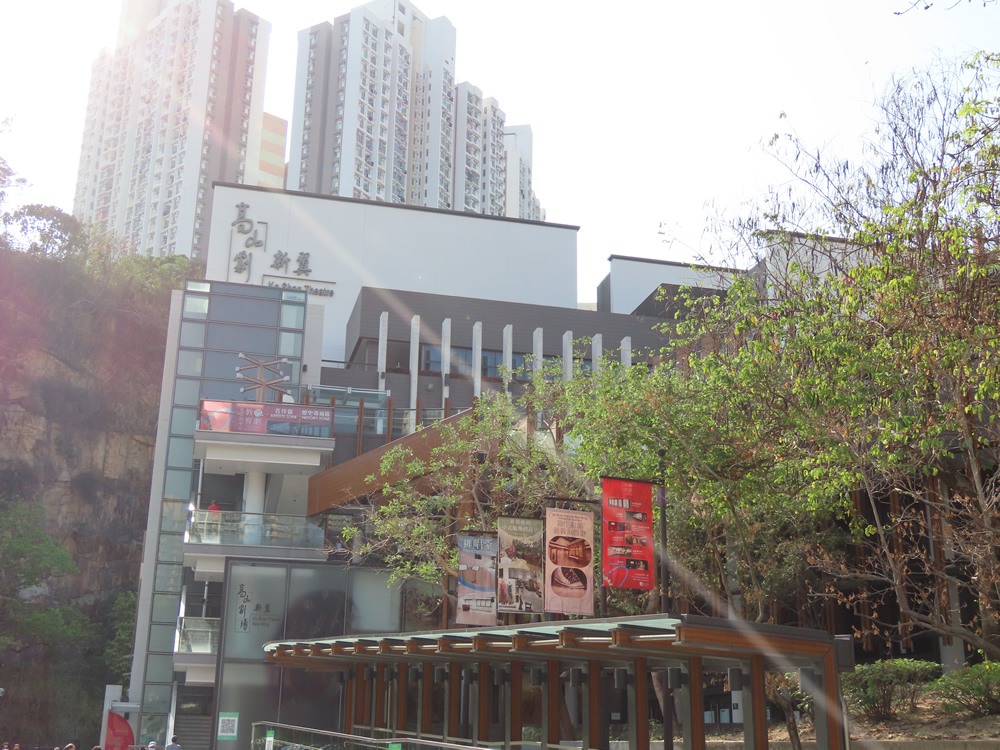
Ko Shan Theatre inside Ko Shan Road Park in Hung Hom, is virtually a "theatre within a park". Opened in 1983, it is an ideal venue for holding community activities, as well as a major venue for Cantonese opera performances.
To further enhance venue options for Cantonese opera performances, the 5-storey Ko Shan Theatre New Wing was opened in 2014. The design and layout of the New Wing are dedicated for Cantonese opera performances. Major facilities include an auditorium with about 600 seats, an exhibition gallery, a function room, rehearsal rooms and singing practice rooms, etc., providing an ideal performing venue for Cantonese opera organisations and other theatrical events by arts and community groups.
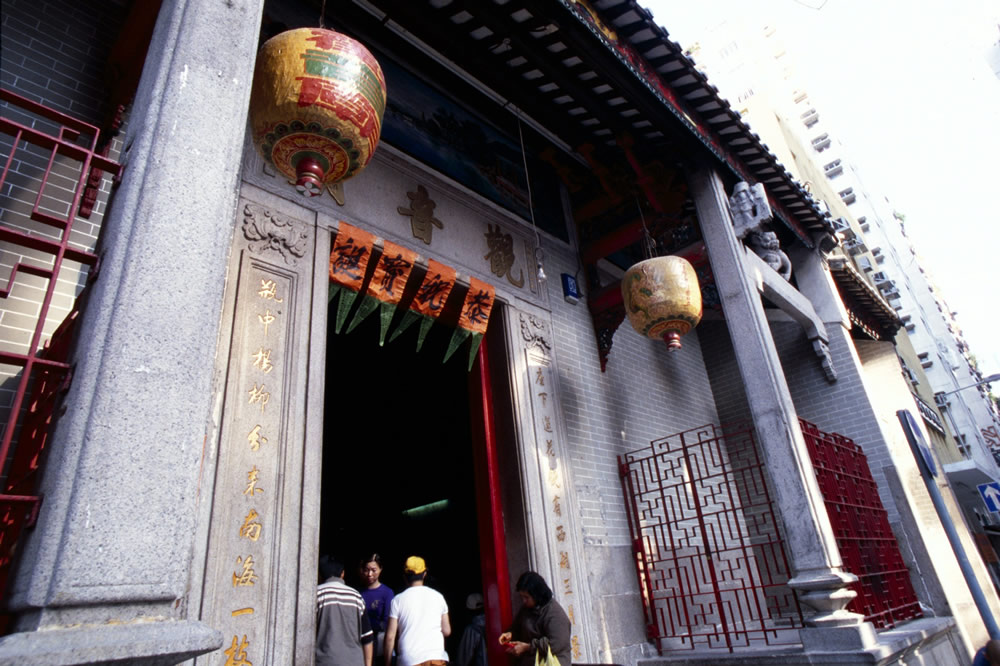
Located at Station Lane, Kwun Yum Temple, Hung Hom was built in the 12th year of the Tongzhi reign (1873) of the Qing Dynasty. Constructed on a 2-hall-1-courtyard plan, the 2 side halls have pitched tiled roofs whilst the roof of the covered courtyard in the middle is in hip-and-gable style. The main ridge is decorated with exquisite plastered carvings and Shiwan ceramics. The Temple is one of the famous Kwun Yum temples in Hong Kong.
Kwun Yum, originated in India, was a male divinity in the earlier times but evolved to be a gracious female deity. She is also known as a deity of sympathy, compassion and mercy, responding to the pleas of those who are suffering, thus earning her the title of the “Buddhist of Goddess of Mercy”.
Many worshippers pay tribute to Kwun Yum at Kwun Yum Temple, Hung Hom on Kwun Yum Festivals. They also flock to the Temple to "borrow money" from the Goddess during Kwun Yum Treasury Opening Festival (meaning Kwun Yum opens her treasury and lends money to people) on the 26th day of the 1st lunar month, hoping to increase wealth in the year ahead. The Temple also rose to fame from a saying that it stood firmly after a bombardment destroying the vast majority of the buildings nearby during World War II. Worshippers believe that it was a miracle of the Goddess.
Kwun Yum Temple, Hung Hom was rated Grade 1 historic building in 2010.
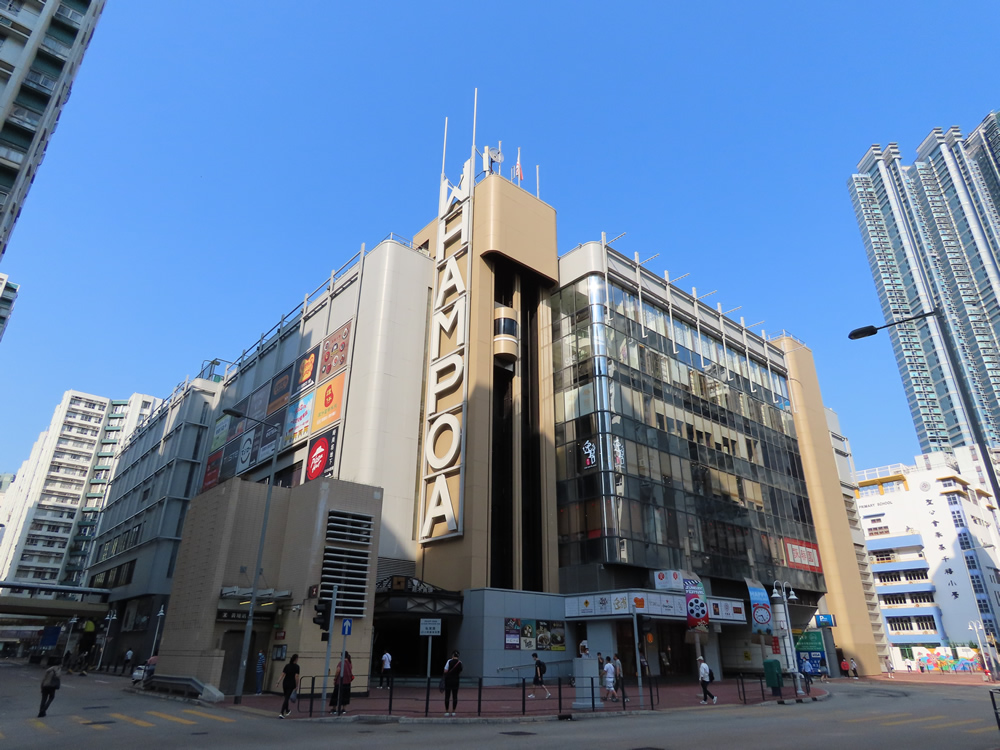
Whampoa Gourmet Place is one of the themed malls in The Whampoa in Hung Hom. Housing many reputable restaurants offering various kind of cuisines, it is the right place for food lovers.
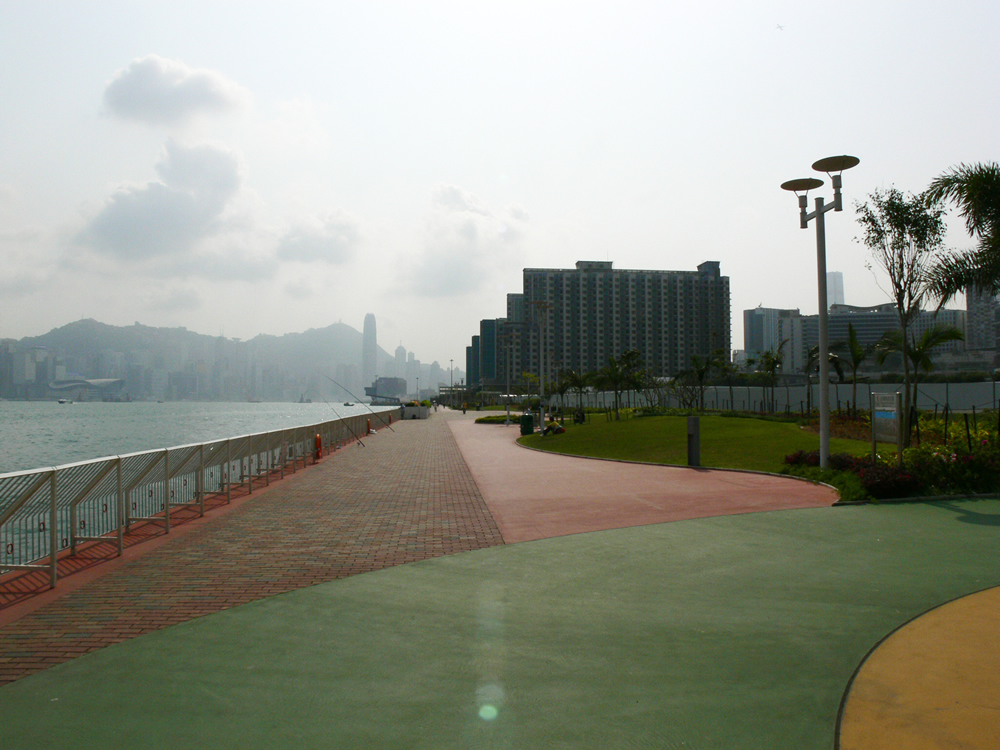
Hung Hom Promenade next to Hung Hom Ferry Pier is linked to Tsim Sha Tsui Promenade Extension. The Promenade connects the harbour frontages of Tsim Sha Tsui and Hung Hom. Visitors can reach Tsim Sha Tsui Promenade and the Avenue of Stars via this section of promenade and the footbridge next to Salisbury Road, and enjoy the magnificent view of the Victoria Harbour along the journey.
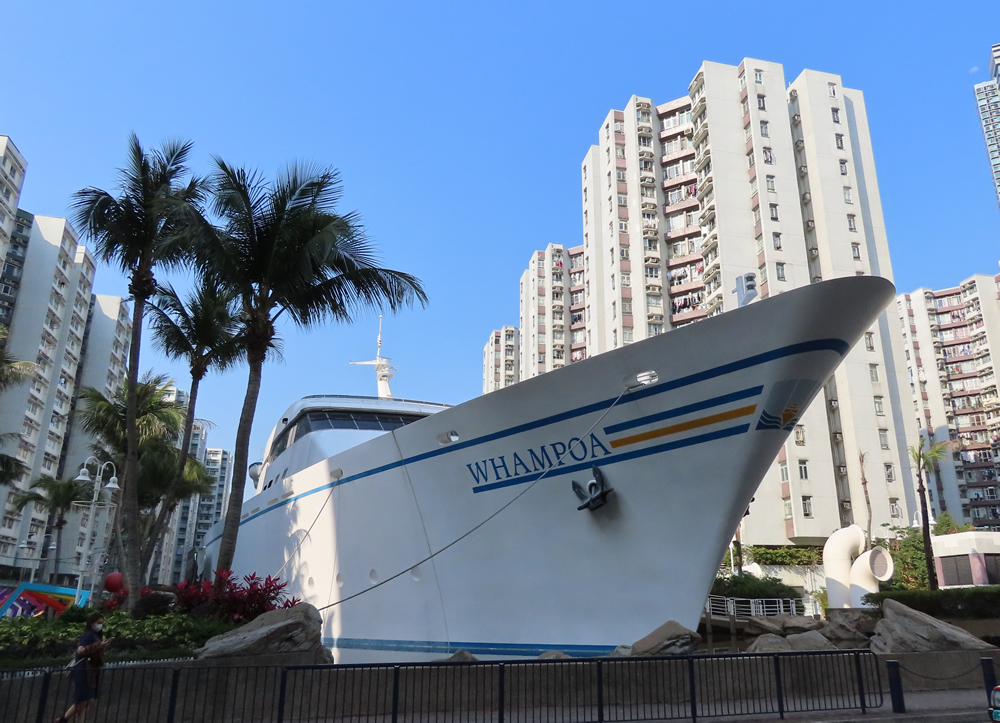
With a cruise liner as the landmark, The Whampoa in Whampoa Garden, Hung Hom comprises a unique combination of themed malls offering an array of shops, restaurants and entertainment facilities. It is one of the large shopping and entertainment centres in Kowloon City District.
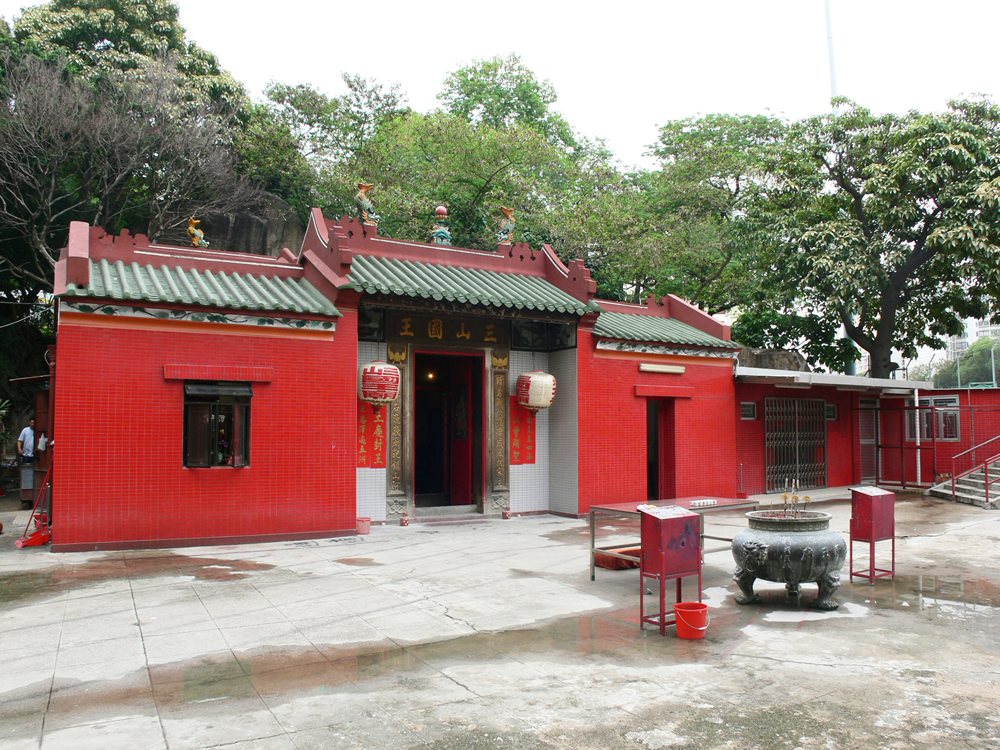
At Ping Shek Estate, you will find Sam Shan Kwok Wong Temple, Ngau Chi Wan. The Temple has red external walls, green tiles, ceramic portraits on the roof and a stone plaque inscribed with 4 Chinese characters “ 三山國王 ” (meaning Kings of 3 Mountains, the English transliteration is Sam Shan Kwok Wong) at the entrance. The exact year of construction of the Temple cannot be ascertained. According to the inscription at the ridge, it is believed that the Temple was rebuilt in 1911.
The belief of Sam Shan Kwok Wong originated from Chaozhou, Guangdong. “Sam Shan” refers to Du Shan, Ming Shan and Jin Shan in Chaozhou. There are many legendary stories about them. Some people said that the mountain deities of these 3 mountains helped Emperor Taizu of the Song Dynasty, Zhao Kuangyin, successfully combat enemies; and Emperor Taizu of the Song Dynasty granted the deities the title of “Kings of 3 Mountains”.
Sam Shan Kwok Wong Temple, Ngau Chi Wan was rated Grade 3 historic building in 2010.
.jpg)
Kowloon Bay Park is located at Kai Lai Road and next to Richland Gardens. There is a novel design cycling ground featuring a stainless steel cycle bridge and a beginners’ cycling area. The cycling ground is an ideal venue to practice cycling.
The Park also provides an artificial turf soccer pitch, a grass soccer and rugby pitch, a children's playground, a Tai Chi garden and a pebble path.
.jpg)
Kai Yip Recreation Centre at Kai Yip Estate in Kowloon Bay is one of the few covered street basketball courts in Hong Kong.
The recreation centre completed a renovation project in 2019. The venue is divided into different zones marked with lines on the ground, including a badminton court and a basketball court. Many facilities have also been added. For example, additional basketball goals at different heights are provided on the walls, creating a “Multiple Splash Shots” challenge zone. Inspirational slogans are placed around the court to cheer the sportsmen up. There are also an additional mini-soccer pitch for Joga 3, a jogging track, a children’s play area and a fitness area that suit different sports lovers.
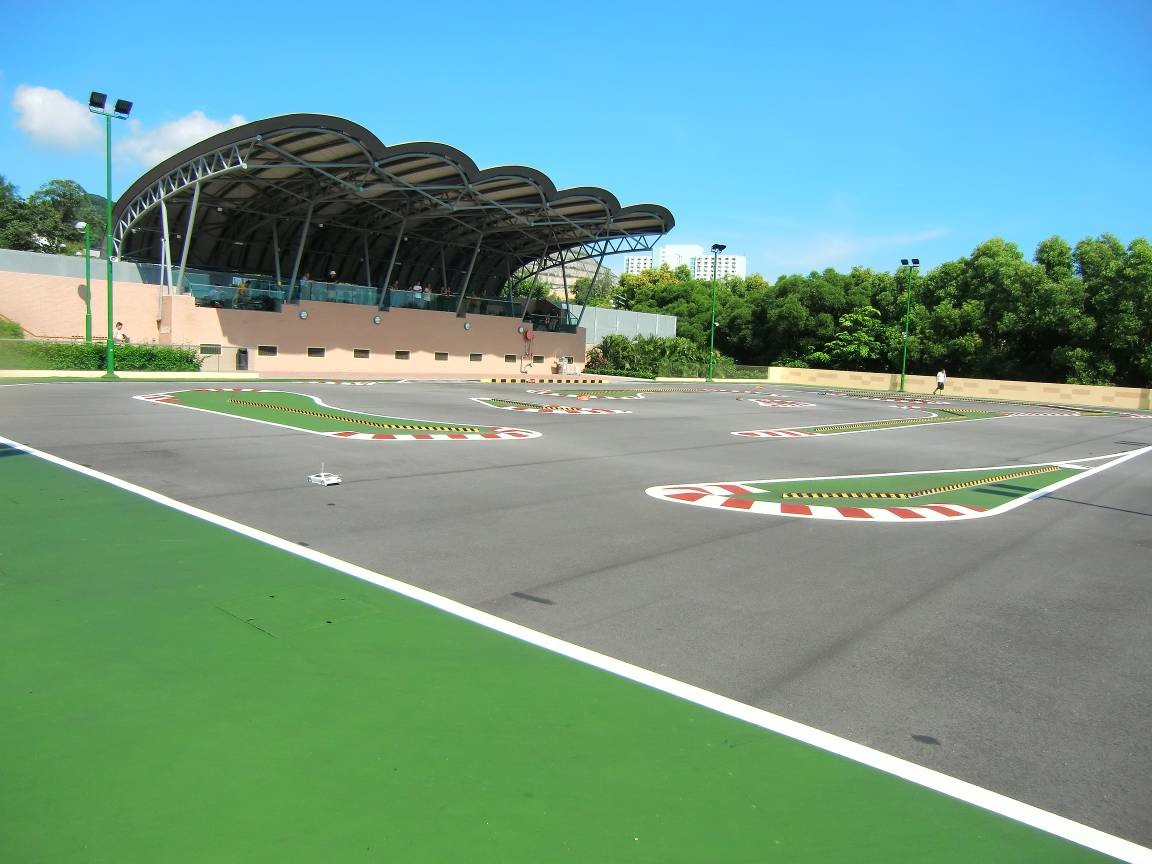
Jordan Valley Park is located at New Clear Water Bay Road, Kwun Tong. Formerly the Jordan Valley Landfill, the Park occupies an area of about 6 ha providing a wide range recreational facilities, and is the largest park in Kwun Tong District. A key attraction of the Park is the radio-controlled model car circuit, which meets the international standards for holding model car racing events. In addition, the extensive central lawn is a leisure and entertainment hotspot for families.
.jpg)
MegaBox on Wan Chiu Road, Kowloon Bay is a shopping, dining and entertainment complex with floor area of 1 100 000 sq ft. It provides an array of shops including home furnishing and accessories, department store, children’s products, electrical and electronic appliances, etc. There are also restaurants offering cuisine from around the world, an Olympic-sized ice rink, cinema and indoor children’s playground. Megabox is a leisure hotspot for families and visitors.
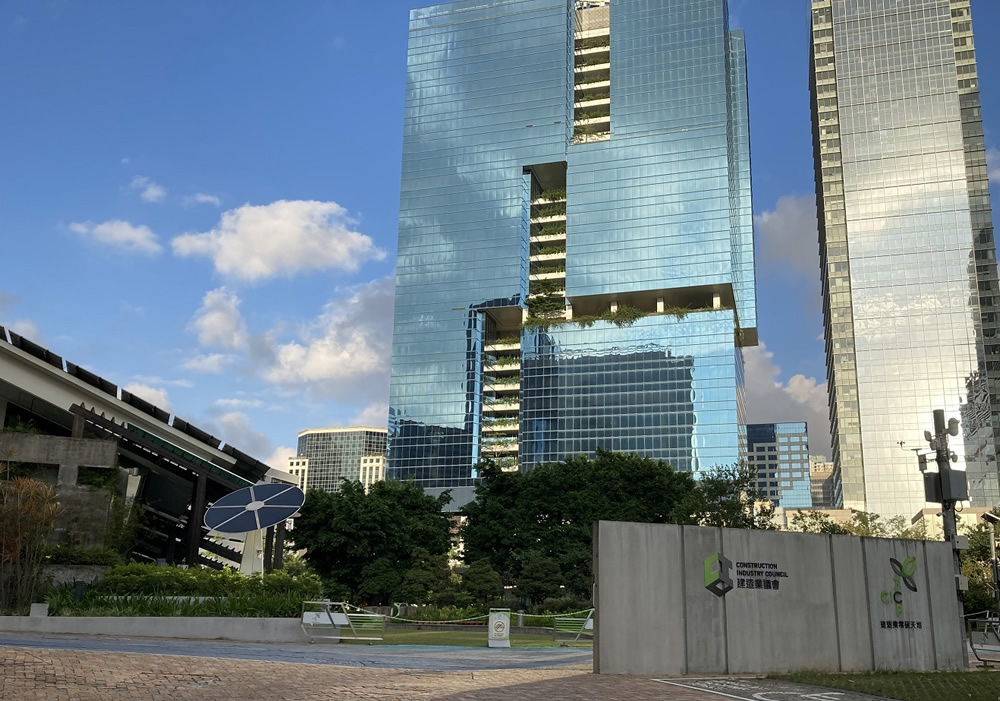
Zero Carbon Park (ZCP) on Sheung Yuet Road is the first zero carbon building in Hong Kong. A collaboration between the Construction Industry Council and the Government, ZCP aims to promote a low-carbon mentality through state-of-the-art eco-building design and technologies. Not only does it serve as a platform for the construction industry to share knowledge and expertise in low/zero carbon building design, but also provides guided ZCP tours and organises education programmes to introduce various green building design features and to raise community awareness of low carbon living.
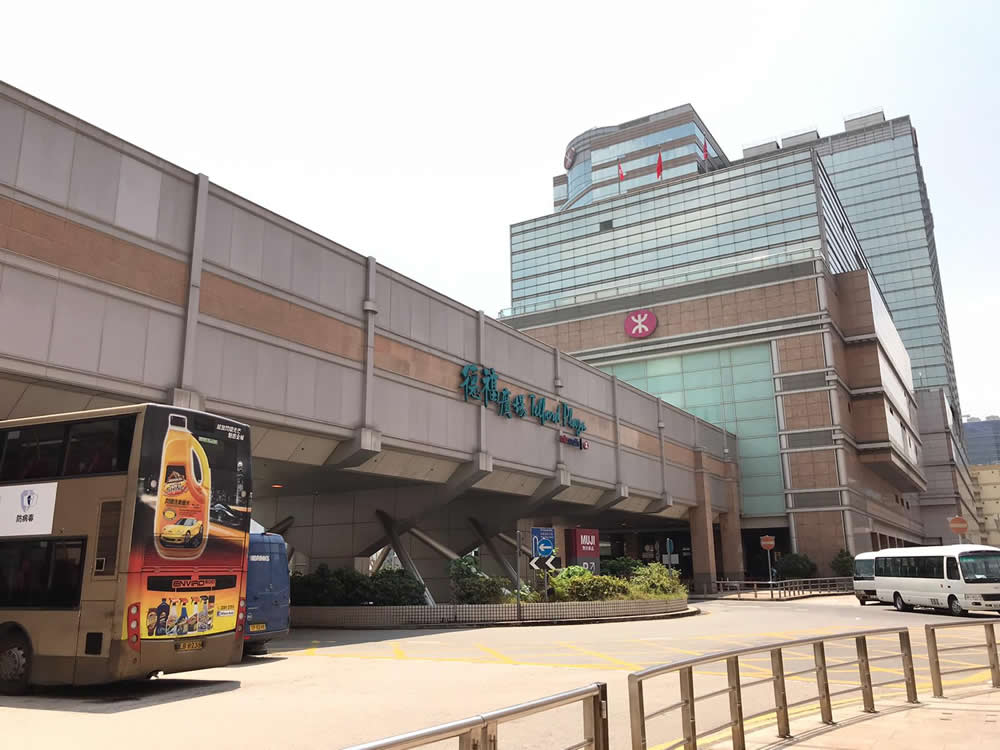
Telford Plaza is a large shopping mall linking Kowloon Bay MTR Station. It is home to many brands including a cinema, department stores, supermarkets, banks, restaurants offer different delicacies, fashion and other retail outlets. Performances and shows of different scales are also staged in the mall from time to time.
_康寧道公園的正門入口_Entrance_of_Hong_Ning_Road_Park.jpg)
A number of leisure and recreation parks are located in Kwun Tong town centre area. Amongst them, Yuet Wah Street Playground and Elegance Road Garden on Ngau Tau Kok Road are in close vicinity of Kwun Tong MTR Station and Ngau Tau Kok MTR Station respectively. Comprising 2 phases, Hong Ning Road Park provides a children’s playground, tennis courts, a soccer pitch and a Chinese style garden. In addition, Kung Lok Road Children Playground not far away from Ngau Tau Kok MTR Station features a cycling ground.
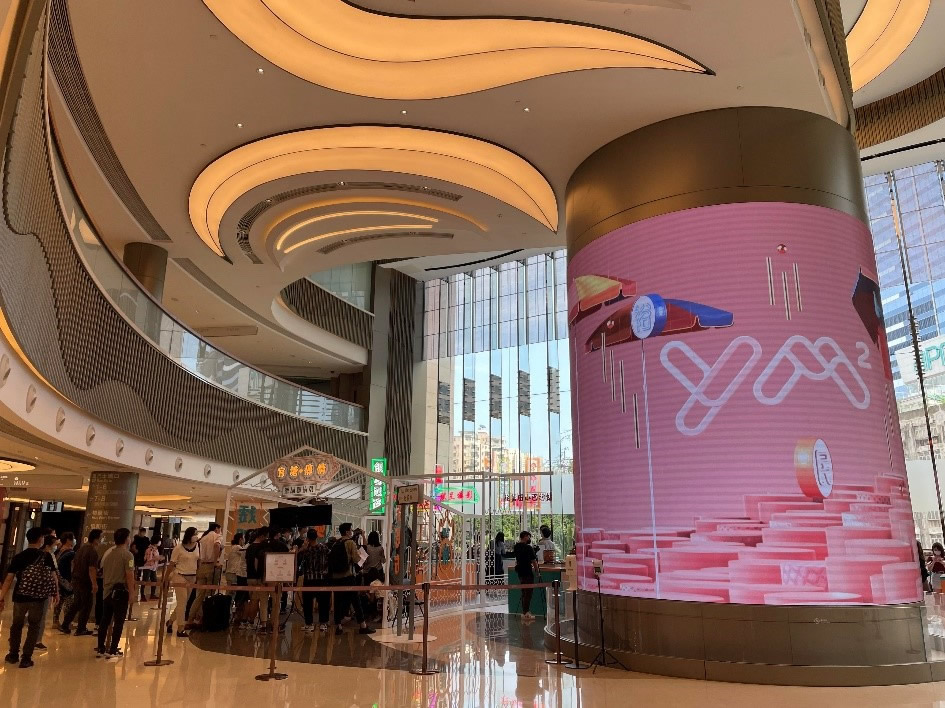
YM2 on Hip Wo Street is one of the key development items of Kwun Tong Town Centre Redevelopment Project.
Apart from providing distinctive leisure, entertainment and dining experiences, the mall also features “Yue Man Lane” and “Yue Man Hawker Bazaar” for former operators in Yue Man Square area to resume their businesses. To preserve the unique community culture in Kwun Tong, an Interactive AR Gallery presenting different scenes of old days with signature silhouettes and AR effects is established in “Yue Man Lane”.
.jpg)
apm, located on Kwun Tong Road and linked with Kwun Tong MTR Station as well as Kwun Tong Town Centre, has a total area of over 600 000 sq ft and is one of the large shopping malls in Kwun Tong District.
The name apm is a combination of “am” and “pm”, meaning that the shopping mall introduces an innovative late night shopping experience to the customers, bringing shoppers the newest and trendiest entertainment and lifestyle any time of the day.
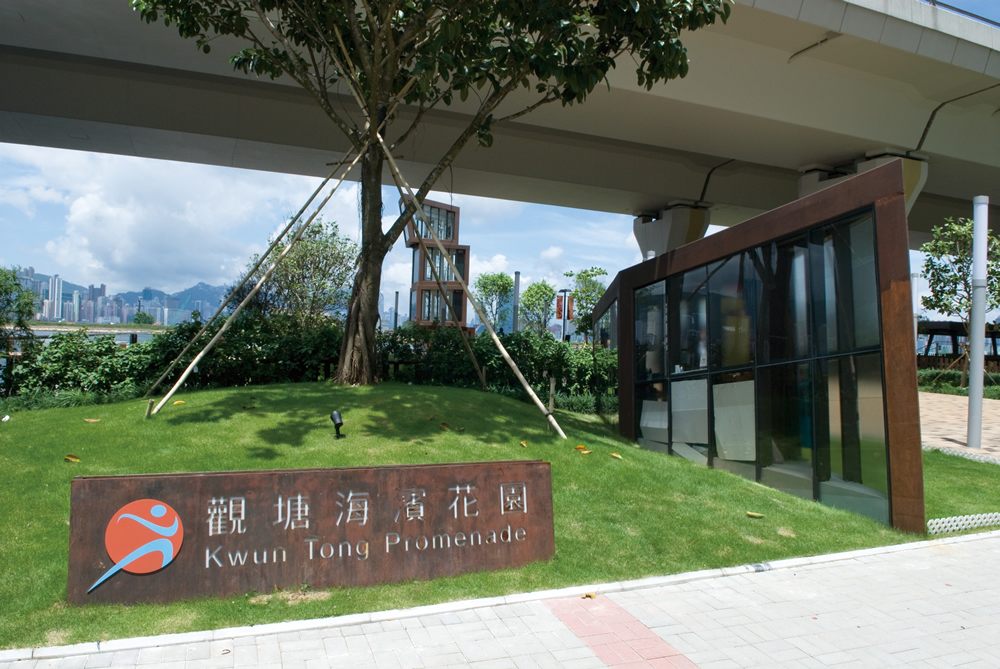
Adjacent to Kwun Tong Bypass, Kwun Tong Promenade is built on the site of the former Kwun Tong Public Cargo Working Area. The Promenade has an area of about 4 ha.
Visitors can get close-up views of Kai Tak Cruise Terminal and Runway Park, splendid night-time views of Hong Kong Island East and the panoramas of Victoria Harbour and Lei Yue Mun along the about 1 km waterfront boardwalk.
Models of mechanical cranes and waste paper bundles inspired by the paper recycling industry are the artistic attractions of the Promenade to evoke memories of the site as a former cargo handling area. There are also music fountains and interactive wet play areas. The music fountains incorporate the presentation of musical masterpieces during performance sessions. The night shows further synchronise the music with kaleidoscopic beams. The interactive wet play zones equipped with sensory devices, through which visitors can interact with water jets of various effects, providing a fresh park-going experience.
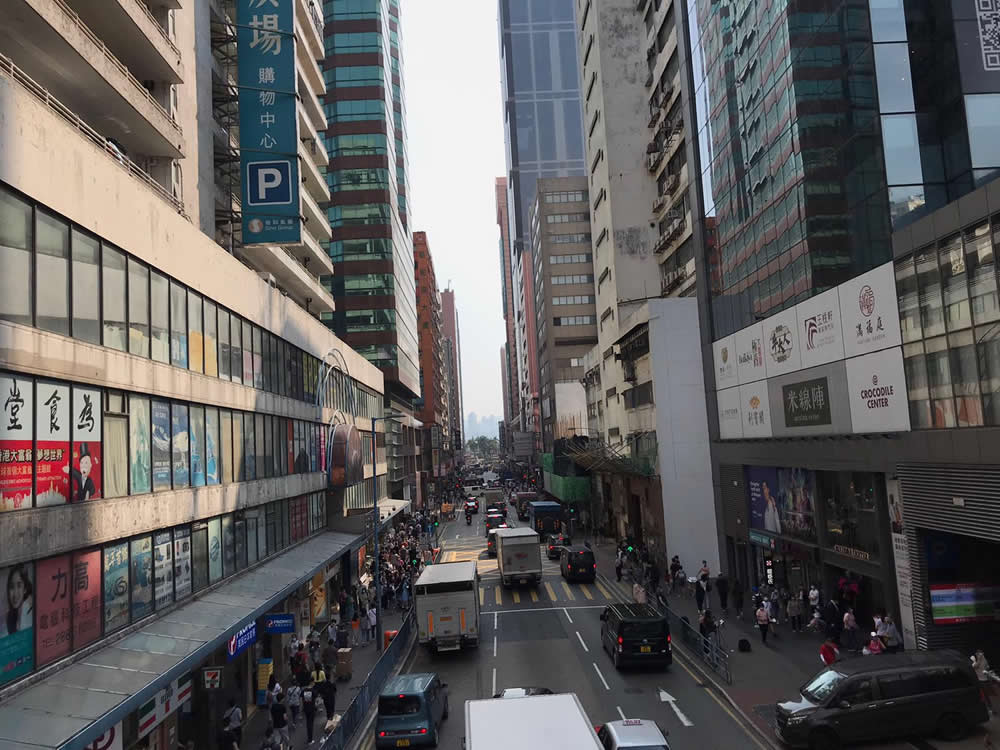
The area southwest of Kwun Tong MTR Station is a busy business area with many industrial and commercial buildings. In the industrial and commercial buildings on Hoi Yuen Road, Shing Yip Street and How Ming Street, there are a large number of shops and warehouses selling all kinds of goods and products, such as fashion, home appliances, stationery, electrical appliances etc. There are also many restaurants for you to take a short break after shopping.
.jpg)
Situated on Tsui Ping Road in Kwun Tong, Hong Kong Public Records Building is the first purpose-built archival facility in Hong Kong. The welcoming public areas of the building include an exhibition hall and a search room equipped with computers for access to the archival collection. The Public Records Office organizes exhibitions, seminars, workshops, visits and other activities every now and then to introduce its holdings and services.
.jpg)
Kwun Tong Tai Wong Ye Temple was originally located in Lok Fu. Owing to community development, it was rebuilt in 1963 at its present site on the hill behind Tsui Ying House of Tsui Ping South Estate. The Temple is solemnly decorated, with its exterior walls inlaid with porcelain pictures of dragon and tiger on the left and right respectively.
The Temple was built to worship Li Man Chung, the ancestor of a loyal general of the Song Dynasty (960 - 1279). It is said that General Li carried the spirit tablet of his ancestor and followed the last emperor of the Song Dynasty, Emperor Zhao Bing, to flee to the south driven by the Mongol troops. The spirit tablet was then placed at Lo Fu Ngam (nowadays Lok Fu). Legend has it that many people had seen the spirit of Li Man Chung and therefore built a temple to worship him. According to the historical book “Old Book of Tang”, there was a senior officer in the Tang Dynasty (618 - 907) called Li Yuan Hong (courtesy name Li Man Chung). However, whether Li Yuan Hong was the Li Man Chung enshrined in the Temple could not be ascertained.
.jpg)
Laguna City is a large private housing estate in Kwun Tong. Laguna Plaza, the shopping centre inside the housing estate, is the place where you can find all kinds of shops, including supermarkets, banks, restaurants and chained-stores.
.jpg)
Atop Lam Tin MTR Station, Sceneway Plaza featuring restaurants, supermarket and shops selling all kinds of products is a large shopping mall in Lam Tin. Conveniently located at Lam Tin Public Transport Interchange, the shopping mall attracts lots of visitors.
.jpg)
Sai Tso Wan Recreation Ground on Sin Fat Road, Kwun Tong is built on the restored Sai Tso Wan Landfill. It comprises a multi-purpose grass pitch for soccer and baseball, batting cages for practicing baseball, a children's playground and a jogging track. The multi-purpose grass pitch is also a standard baseball pitch. You may also visit the environmental gallery to know more about waste management in Hong Kong.
.jpg)
Lam Tin Park on Pik Wan Road was built along the Black Hill and is one of the large-scale parks in Lam Tin.
Alongside the beautiful landscape, a variety of sports and recreational facilities are provided at the Park, such as the outdoor arena, children's playground, picnic sites, fitness trails and so on. Visitors may also overlook the eastern part of the Victoria Harbour and the Kowloon East at the lookout point.
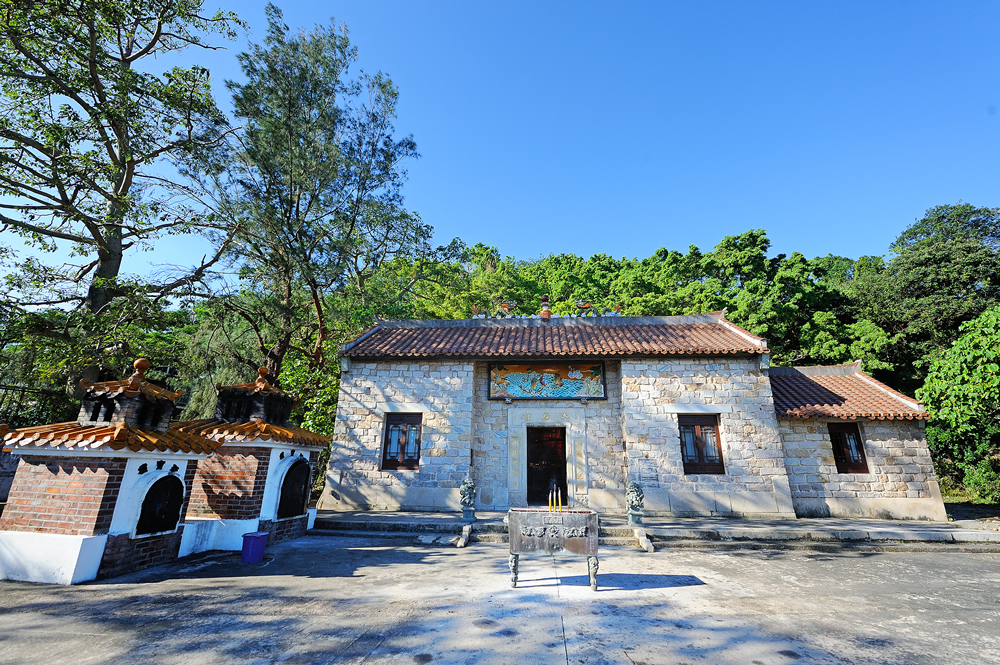
Cha Kwo Ling is located in the south of Laguna City, Kwun Tong. The Cha Kwo Ling Village there has a history of over a century. There are many attractions in Cha Kwo Ling that worth visiting.
The original Tin Hau Temple in Cha Kwo Ling was destroyed by typhoon and rebuilt. However, the temple gave way to district development and was demolished. The current Tin Hau Temple on Cha Kwo Ling Road was erected in 1948. The building is a two-hall-one-courtyard plan of three bays and constructed of granite blocks recalling one’s memory of people in Cha Kwo Ling made a living by quarrying at that time. It has pitched roofs of timber rafters, purlins and brown clay tiles. The main ridge is with a set of ceramic “Two Dragons Competing for a Pearl” for decoration. Tin Hau Temple, Cha Kwo Ling Road was rated Grade 3 historic building in 2010.
“Hop Yee Lung”, a 20 m long dragon boat built in 1958, can be found in Cha Kwo Ling Village. In the old days, dragon boat race during Tuen Ng Festival was a mega event of the village. Many villagers rowed “Hop Yee Lung” and won numerous awards. However, reclamation projects carried out in Cha Kwo Ling area later on made it impossible to launch the dragon boat from the beach and the dragon boat could only stay onshore. Nowadays, villagers of Cha Kwo Ling Village still worship “Hop Yee Lung”.
Law Mansion built around 1900 is also situated at Cha Kwo Ling Village. It is said that the building was constructed by the Laws, one of the groups of earliest settlers of Cha Kwo Ling. As Cha Kwo Ling was rich in granite, the villagers were mostly stonemasons and quarry operators. Constructed of granite blocks, Law Mansion is a 2-storey building with a pitched roof and flush gable end walls. The eaves are decorated with carved mouldings. The building is a historic residence in the district. Law Mansion was rated Grade 3 historic building in 2011.
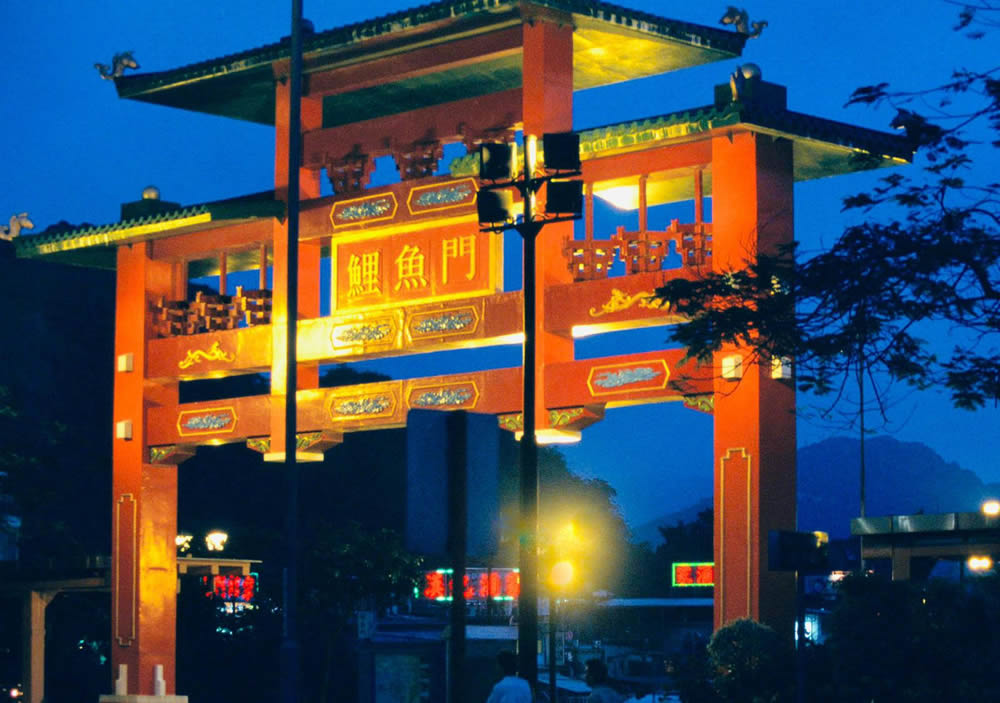
Lei Yue Mun is located at the southeastern corner of Kwun Tong. It is also the name of the channel at the eastern side of Hong Kong.
The 4 villages at Lei Yue Mun are all with a history of over a century. Villagers used to earn their living by farming, fishing and quarrying until the 1960s when they started to operate seafood restaurants. Since then, Lei Yue Mun has become a prominent seafood dining place. The Lei Yue Mun Seafood Bazzar is a popular stop for food lovers with many seafood restaurants to choose from. Diners may buy seafood from the market stalls and bring it to the restaurants for preparation of the dishes according to their preferences.
Apart from savouring a lavish seafood feast, visitors may visit Lei Yue Mun Lighthouse and Lei Yue Mun Tin Hau Temple along the promenade. Lei Yue Mun Lighthouse serves as a lighting and navigation guide for ships crossing Lei Yue Mun channel. It also rewards visitors with a stunning sea view. Lei Yue Mun Tin Hau Temple in Ma Wan Tsuen was first built in the 18th year of the Qianlong reign (1753) of the Qing Dynasty and is still being enshrined by many worshippers. Under the boulders in front of the Temple are 2 antique cannons which are believed to have built for safeguarding Lei Yue Mun Channel. Lei Yue Mun Tin Hau Temple was rated Grade 3 historic building in 2010.
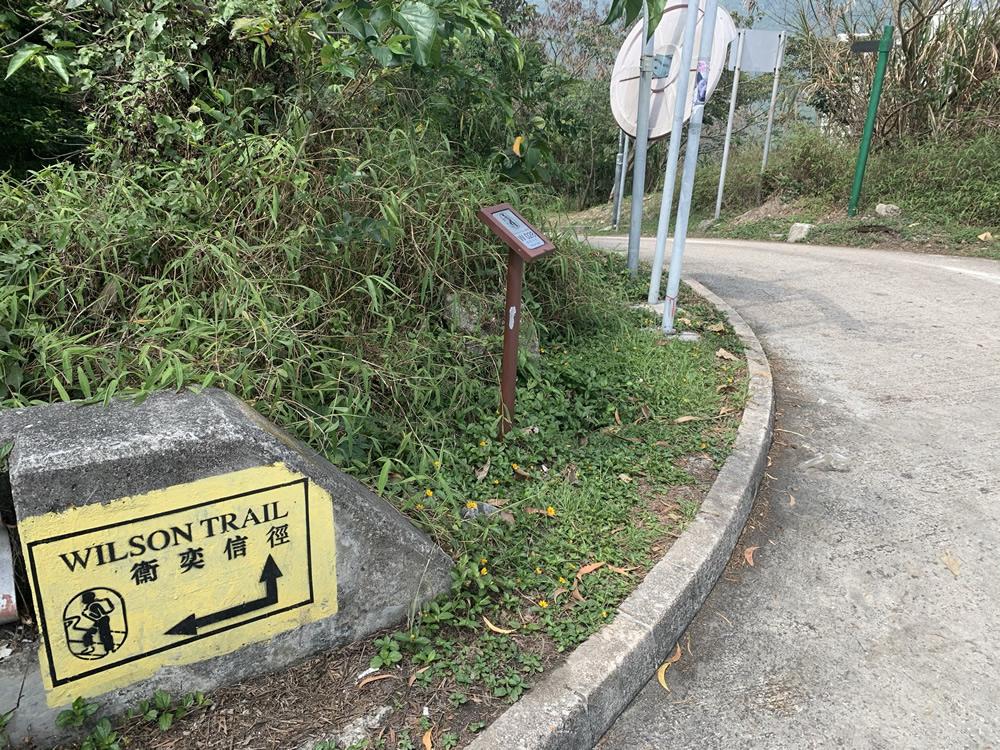
The 78 km Wilson Trail is one of the 4 long-distance hiking trails in Hong Kong. It spreads across Hong Kong Island, Kowloon and the New Territories. The Trail is divided into 10 sections. The first two sections are on Hong Kong Island, beginning at Stanley in the south of Hong Kong Island and completing at Quarry Bay. The Trail starts again from Lam Tin in Kowloon and finishes at Nam Chung in New Territories North. Section 3 runs through Kwun Tong District. Starting from Lam Tin, this section goes around Devil's Peak, reaches Black Hill and passes via Ma Yau Tong to Tseng Lan Shue. Visitors can admire the spectacular and appealing landscapes of Tseung Kwan O and the Victoria Harbour along the trail.
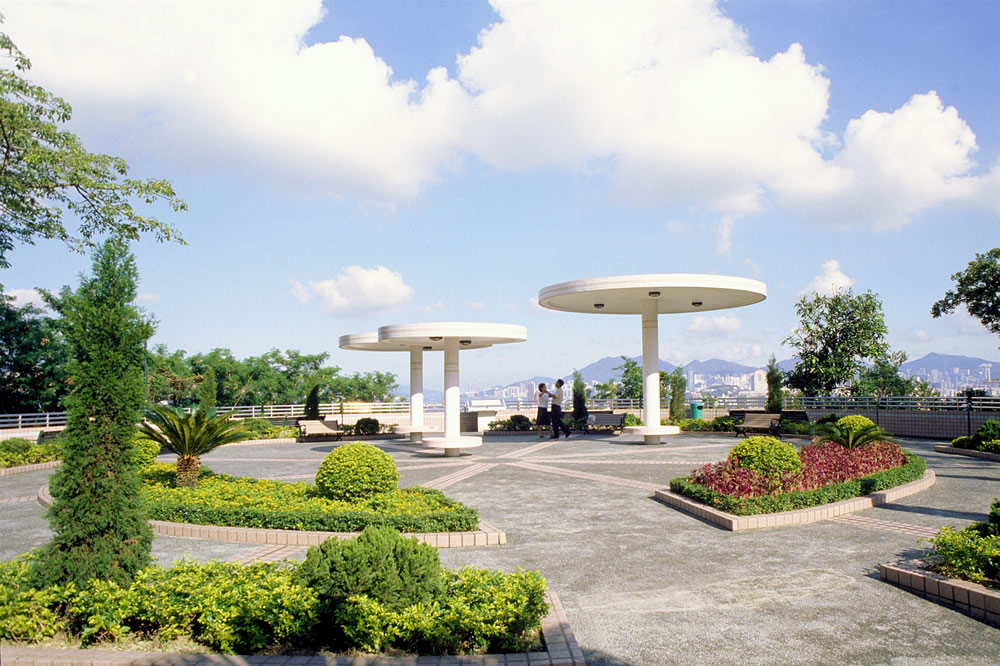
Lung Cheung Road Lookout is located at Lung Cheung Road near the Beacon Heights. You can view the landscape of the Kowloon Peninsula and Victoria Harbour from the lookout.
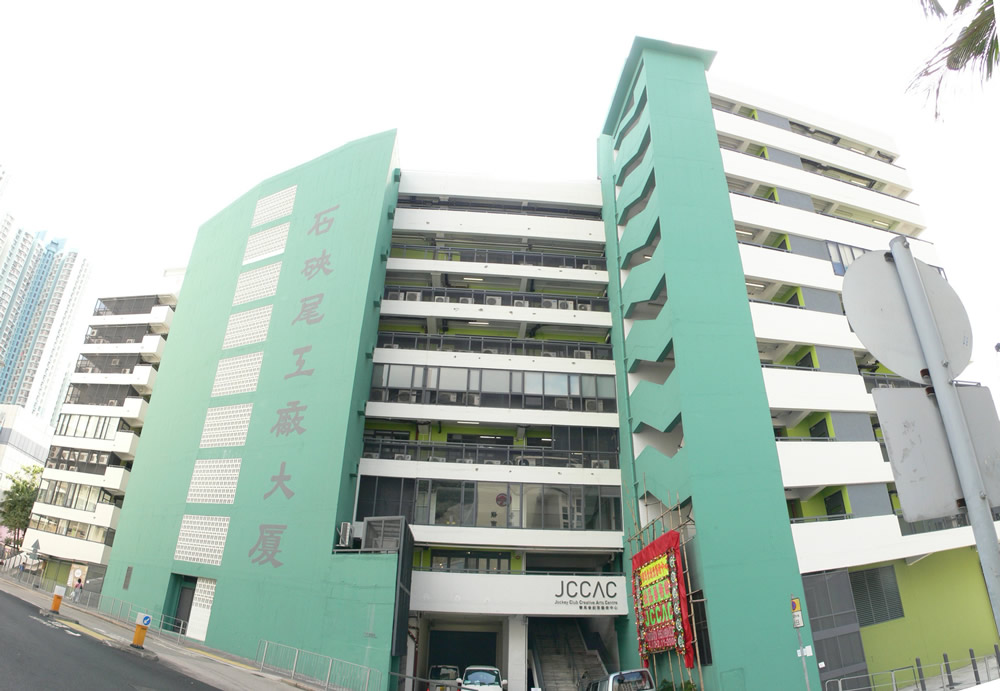
The Jockey Club Creative Arts Centre (JCCAC), located at Pak Tin Street in Shek Kip Mei, is a multi-disciplinary arts centre converted from the former Shek Kip Mei Factory Estate.
With the aim of furthering the development of creative arts in Hong Kong, JCCAC offers a creative environment for artists and organises activities for members of the public. Since its opening in 2008, JCCAC has become one of Hong Kong’s most dynamic and exciting cultural landmarks.
Website:
https://www.jccac.org.hk/
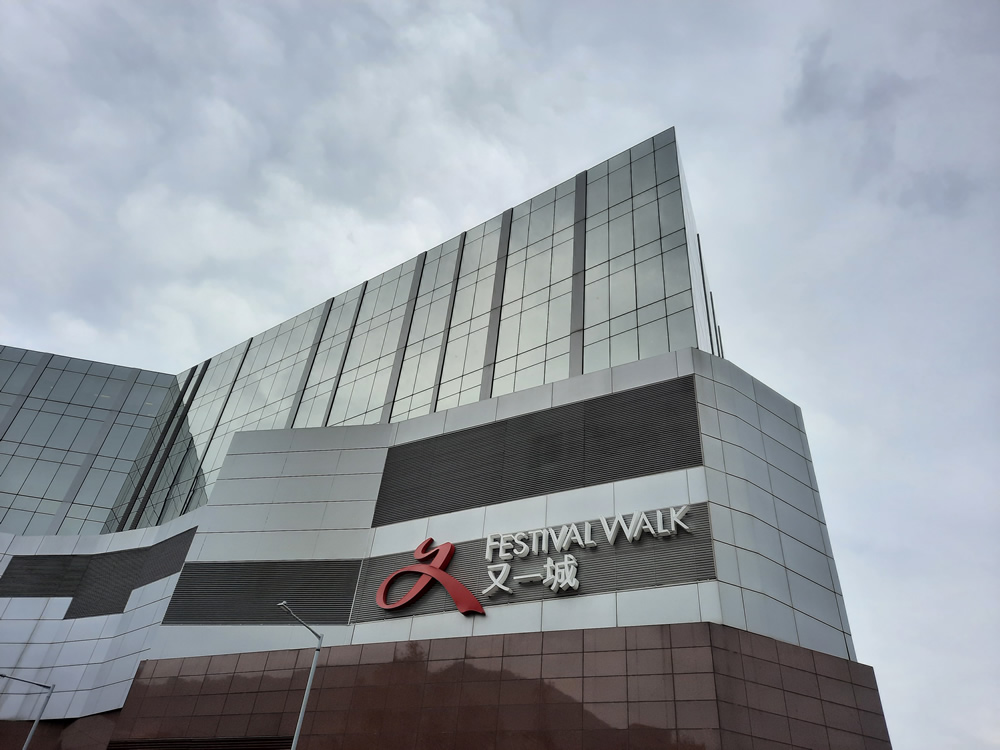
Festival Walk at Tat Chee Avenue in Kowloon Tong and with a direct access to Kowloon Tong MTR Station, is a popular large-scale shopping mall. Its special design combining natural light and open space creates a comfortable shopping environment.
The mall has 7 floors and an area of over 980 000 sq ft. There are over 200 shops and restaurants, a cinema and an indoor ice-skating rink.
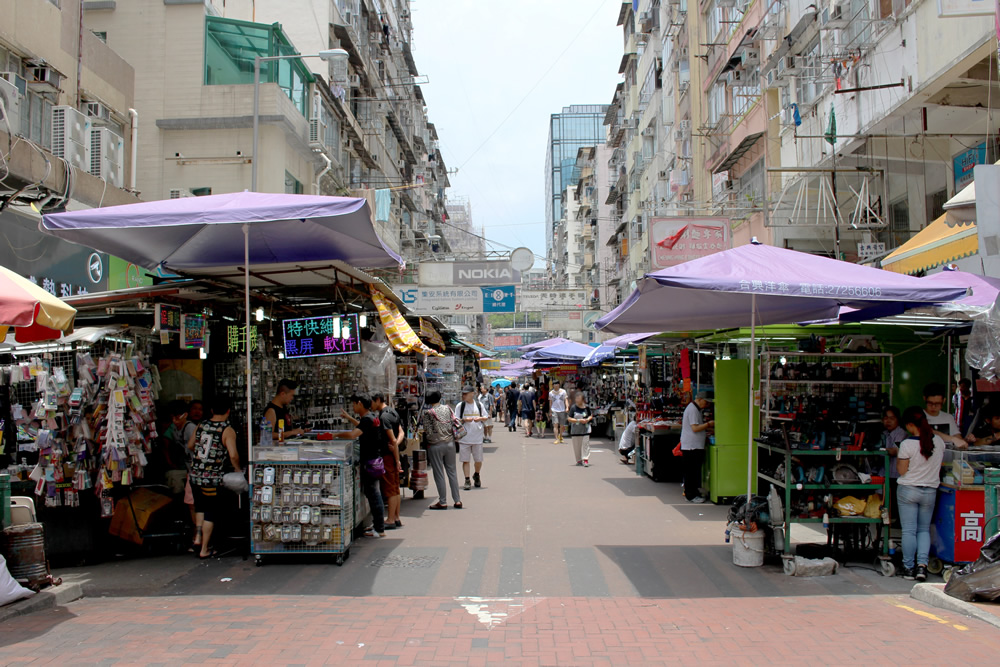
Apliu Street Flea Market is located at the section of Apliu Street between Nam Cheong Street and Kweilin Street. It is famous for the cluster of shops and stalls selling brand new or second-hand electronic parts, electrical appliances, video and audio equipment, etc. You can also find watches, antique clocks and old coins for sale there.
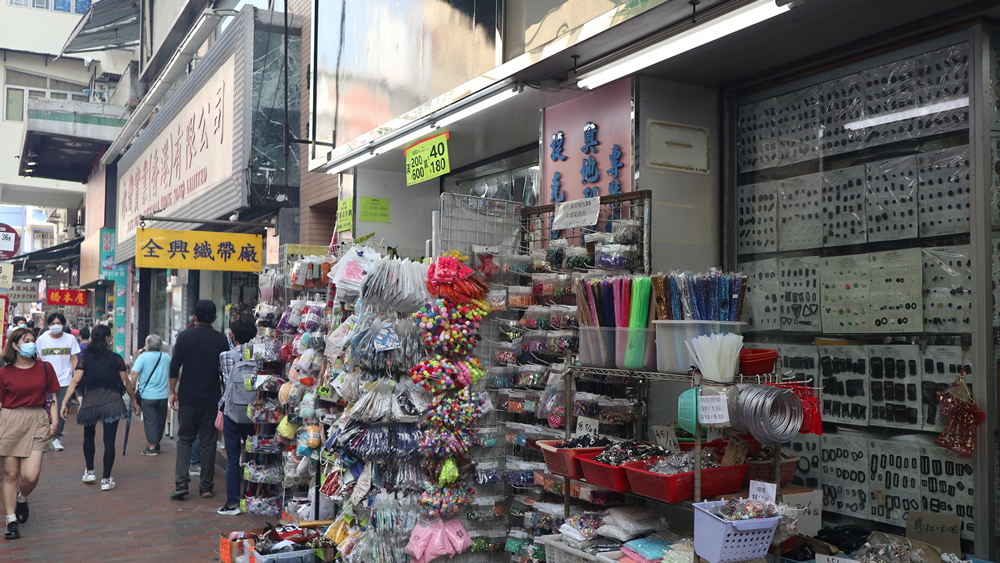
There are a lot of shops selling webbings, zippers, ribbons and buttons in the area around Ki Lung Street and Nam Cheong Street of Sham Shui Po, earning the area the name of Buttons and Laces Street. You can bring home these beautiful accessories for embellishing your clothes, turning them into fancy ones.
A lot of bead shops selling colourful beads of different textures and materials can be found along the nearby Yu Chau Street and its vicinity. The area, also known as Beads Street, is a paradise for hand-made accessories and handicraft lovers.
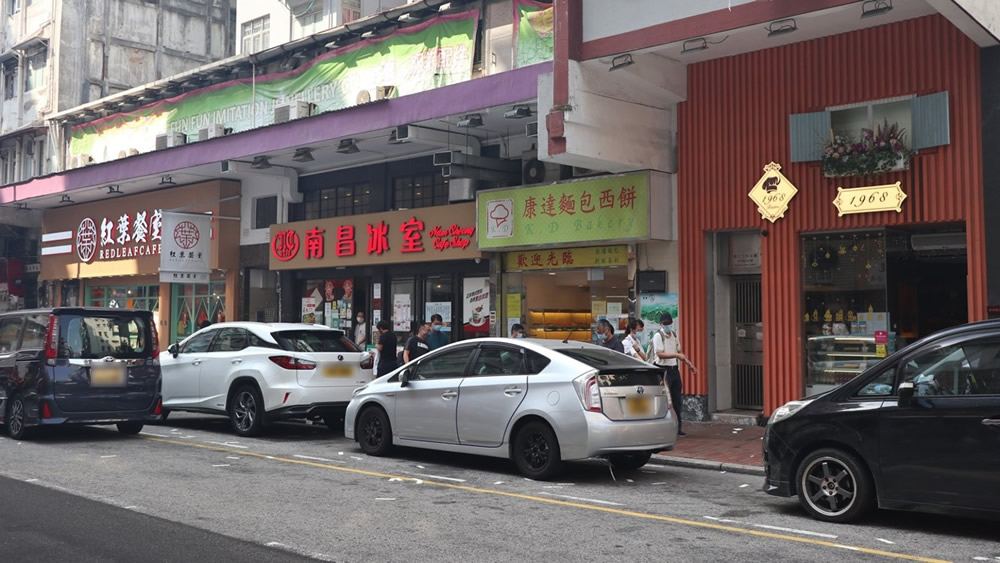
In the area around Pei Ho Street, Fuk Wing Street and Kweilin Street in Sham Shui Po, you can find a vast diversity of eateries offering tasty local cuisines. The famous Kaya toast, corned beef and egg sandwich, pork liver noodles, shrimp roe noodles, traditional Chinese pastries and tofu dessert are just a few items amongst many that cannot be missed.
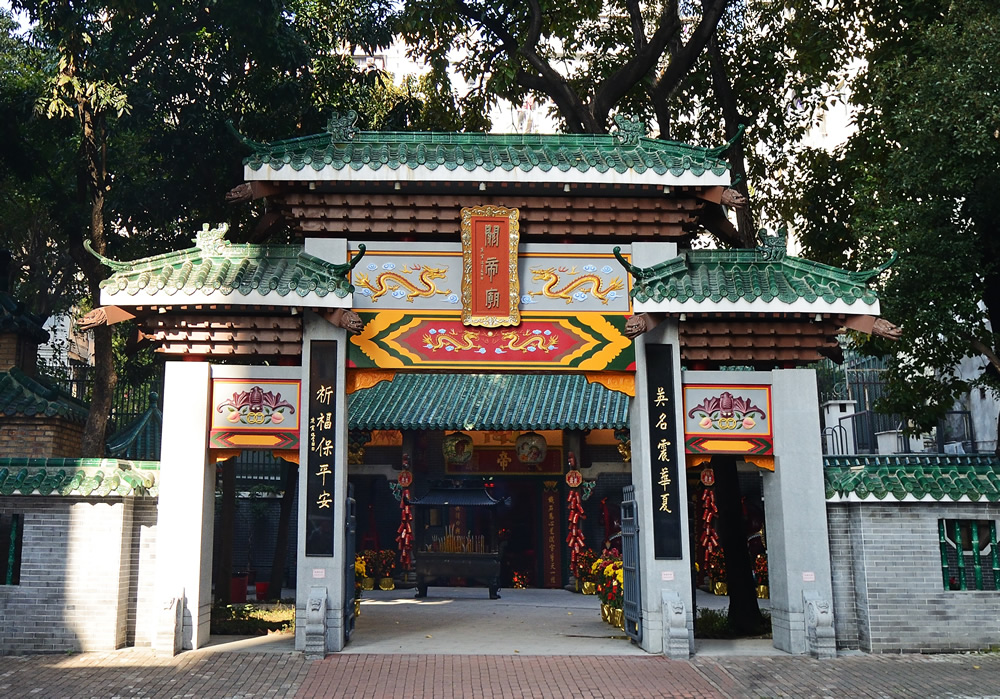
Kwan Tai Temple on Hai Tan Street in Sham Shui Po is also known as Mo Tai Temple and is dedicated to Kwan Tai. According to the inscription of a bronze bell in the Temple, the Temple was built before the 17th year of the Guangxu reign (1891) of the Qing Dynasty.
Kwan Tai refers to Guan Yu (courtesy name Yunchang) who was a famous military general of the State of Shu during the Three Kingdoms period (220 – 280). He was reputed as "the enemy of ten thousand people", and is the paradigm of mightiness, loyalty and righteousness. Kwan Tai is widely glorified and worshipped for his wisdom, trustworthiness, benevolence, righteousness and courage.
An endless stream of followers comes to the Temple on the 24th day of the 6th lunar month to celebrate Kwan Tai Festival.
Kwan Tai Temple, Sham Shui Po was rated Grade 2 historic building in 2009.
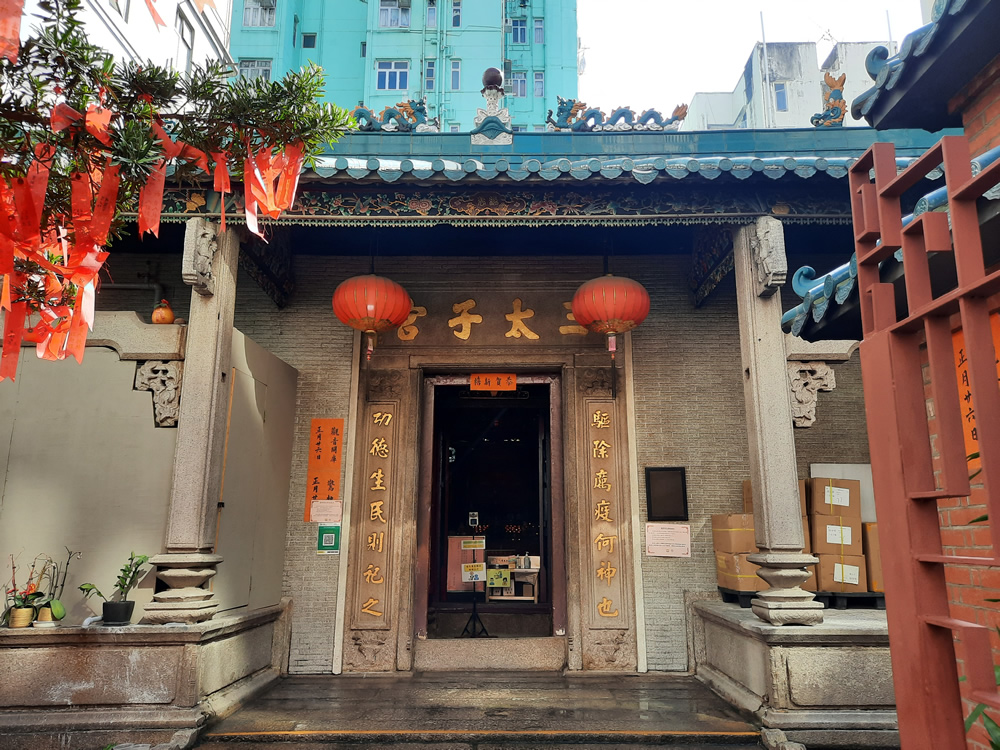
Sam Tai Tsz Temple, Sham Shui Po is located at Yu Chau Street. It is the only temple in Hong Kong mainly dedicated to Sam Tai Tsz (who is better known by the name "Na Cha").
Sam Tai Tsz was the 3rd son of great general Li Jing in Chinese folklore and was known for his ability to overcome demons. As the story goes, in 1894, a plague rapidly spread throughout Hong Kong. People thought those infected were haunted by demons. Residents of Hakka origin in Sham Shui Po brought the statue of Sam Tai Tsz from Huizhou, Guangdong to the district to drive away the evils. After a parade of the statue in the area, the plague was subsided. Residents then built the Temple in 1898 for worshipping Sam Tai Tsz. The Temple is still keeping some cultural relics from the late years of the Qing Dynasty (1644 – 1911), such as bells.
Pak Tai Temple next to Sam Tai Tsz Temple was built by local fishermen in 1920.
Pak Tai, alternatively known as “Zhenwu Celestial Lord” and “Yuen Tin Sheung Tai” (Supreme Emperor of the Dark Heaven), is worshipped for longevity, relief of water-related risks and safe voyage. Legend also has it that Pak Tai defeated the Demon King and was awarded the title of Supreme Emperor of the Dark Heaven.
Sam Tai Tsz Temple and Pak Tai Temple, Sham Shui Po were rated Grade 2 and Grade 3 historic buildings in 2009 and 2010 respectively.
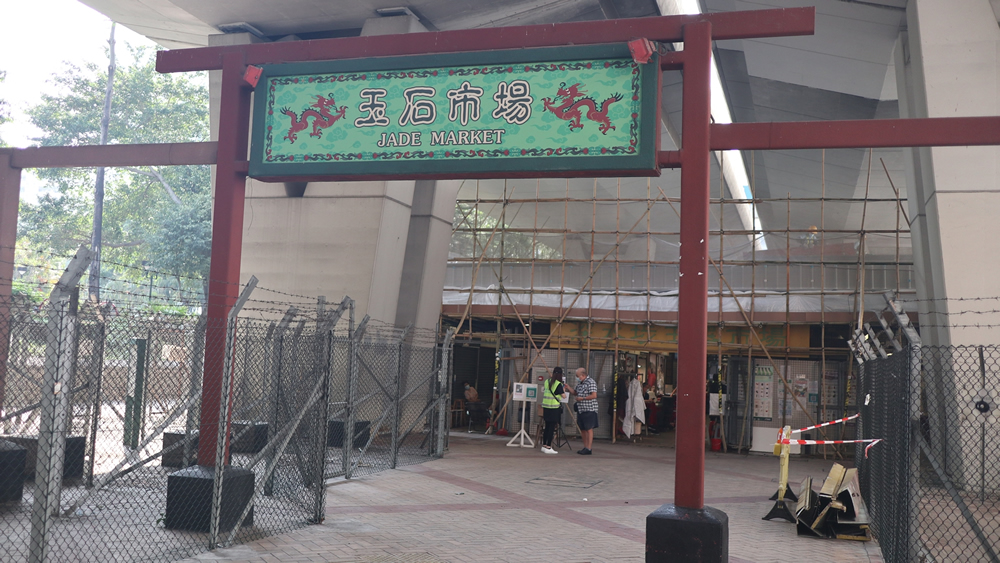
Tung Chau Street Jade Market, located inside Tung Chau Street Temporary Market in Sham Shui Po, has over a hundred stalls. The Market is a jade trade hub and is frequented by jade traders and jade lovers.
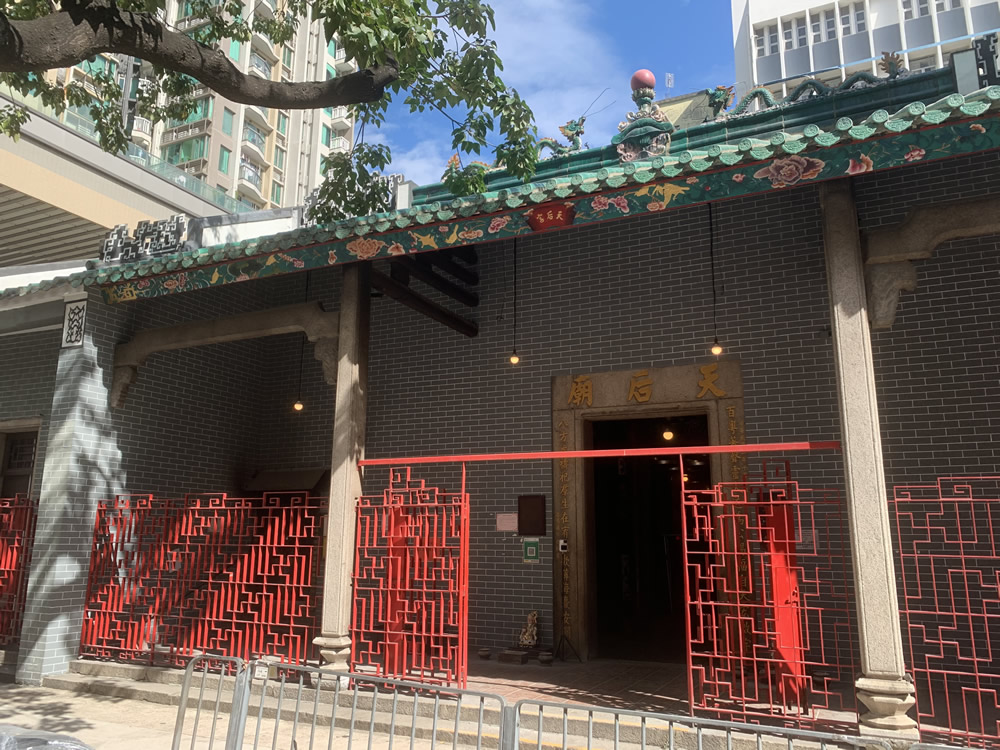
Tin Hau Temple, Sham Shui Po is located at Yee Kuk Street. Sham Shui Po was formerly a bay where many fishing boats berthed. The fishermen believed that Tin Hau has the power to keep them safe on the sea and built this Temple in the 27th year of the Guangxu reign (1901) of the Qing Dynasty to worship Tin Hau. The Temple originally faced the sea but is now tucked in the midst of high-rise buildings due to urban development.
Tin Hau, also known as “Matsu”, was said to be a native in Fujian Province called Lam Mak Leung during the Song Dynasty (960 - 1279). According to legend, she had gifted power and saved many people from sea disasters. The seafarers therefore worship Tin Hau and regard her as their patron saint.
Tin Hau Temple, Sham Shui Po was rated Grade 3 historic building in 2010.
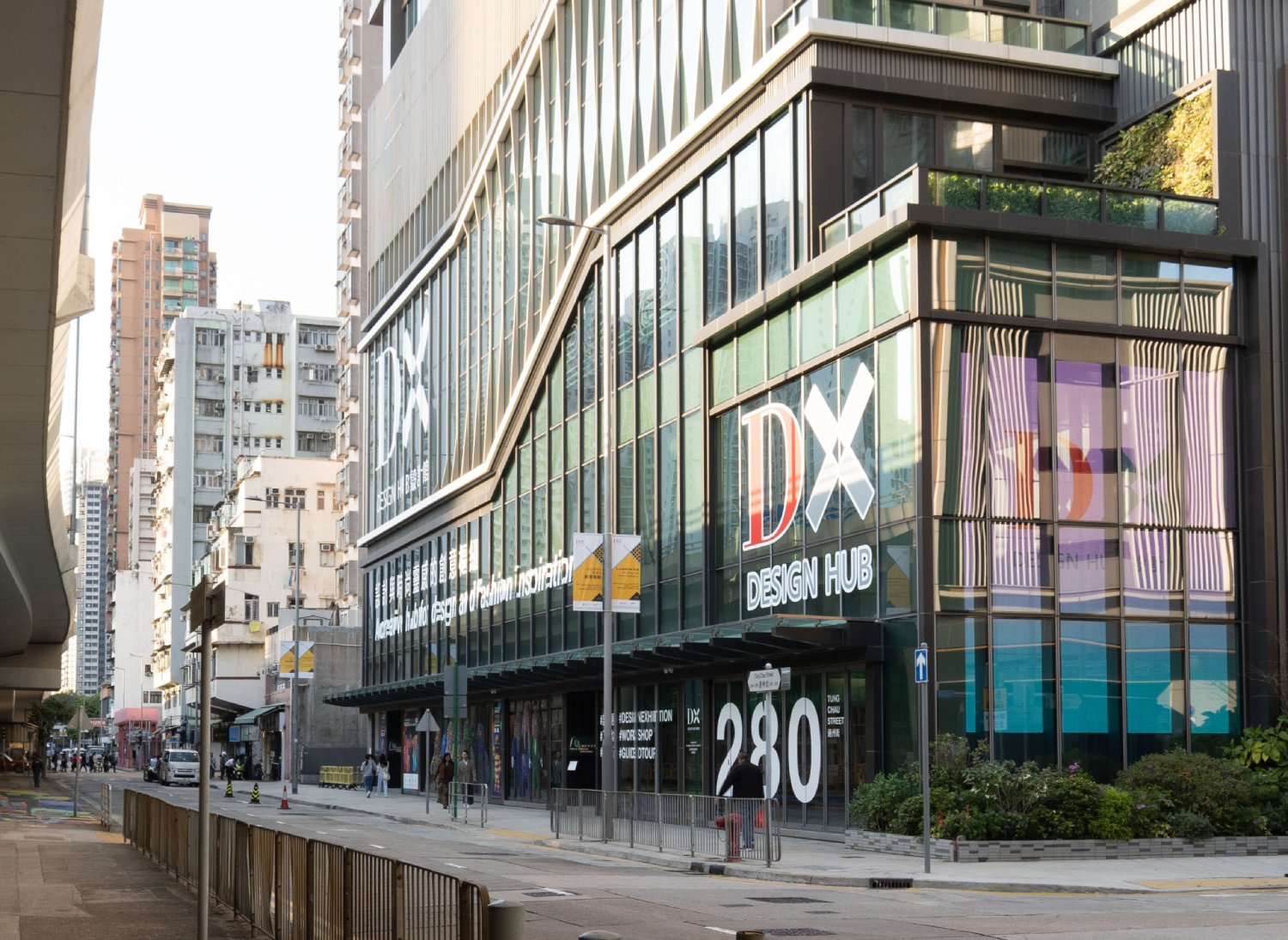
DX design hub, located at Tung Chau Street in Sham Shui Po, is a creative landmark operated by Hong Kong Design Centre. The 5-storey facility is constructed by the Urban Renewal Authority, with strategy formulation, coordination and supervision by the Cultural and Creative Industries Development Agency, dedicated to providing enriching design experiences to the public and offering creative talents and fashion designers opportunities to showcase their talents.
The hub features several specialised zones, including The Fashion-Pop, The Square, The Gallery, The Annex, The Box, The Steps, The Lounge, Library (books and materials), etc. These spaces accommodate exhibitions, design workshops, cultural talks and forums.
Beyond serving as a space for nurturing creativity, the DX design hub acts as a vital platform connecting designers with the community. Through various interdisciplinary fashion and design-related activities, it showcases the power of design and Hong Kong's creative prowess, making it an essential destination for experiencing the city's creative pulse.
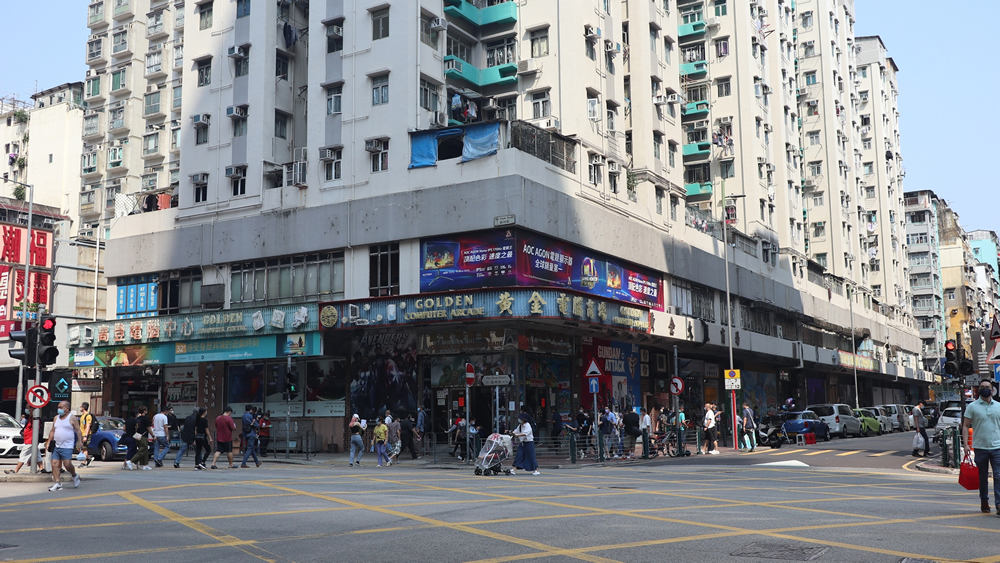
The Golden Computer Arcade, Golden Computer Centre, New Capital Computer Plaza and Wonder Building Shopping Centre at Fuk Wa Street and Fuk Wing Street in Sham Shui Po are shopping malls specialised in selling computer products. With all kinds of computer hardware and software and accessories of the latest models for sale, these malls have enjoyed a high reputation and have become the preferred place to buy computer products in Hong Kong.
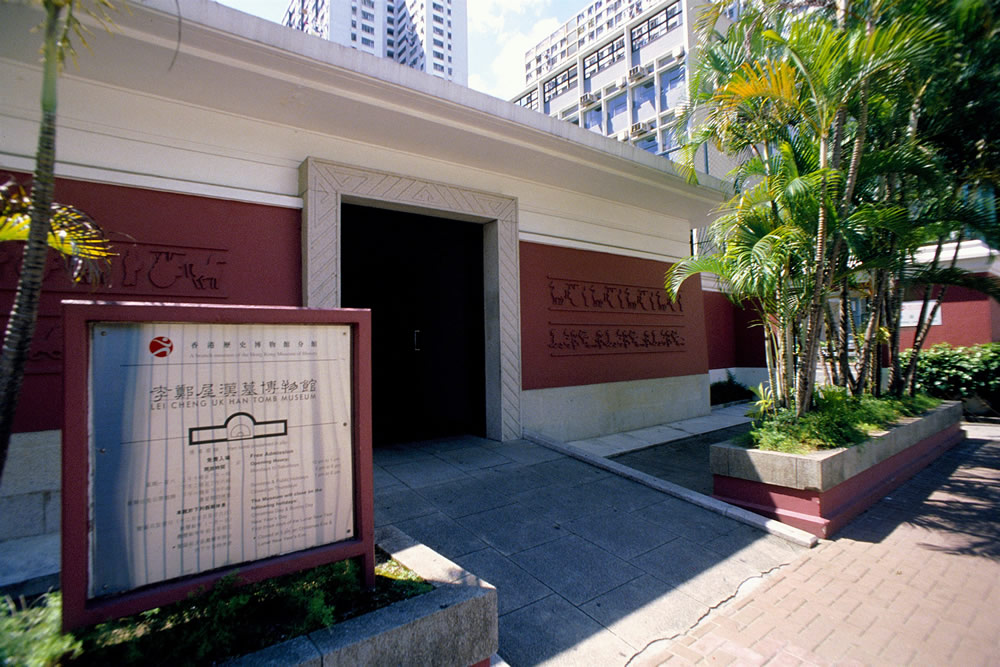
Lei Cheng Uk Han Tomb Museum is located at Tonkin Street in Sham Shui Po.
Lei Cheng Uk Han Tomb was discovered in 1955 when the Government was levelling a hill slope at the north end of Tonkin Street for the construction of Lei Cheng Uk Estate. The structure of the tomb, inscriptions on the tomb bricks and tomb finds suggest that the tomb was built in the Eastern Han Dynasty (25 -220). Archaeologists unearthed 58 burial objects from the tomb, including 50 pottery and 8 bronze objects. The Han Tomb was declared a monument in 1988.
Apart from displaying the pottery and bronze objects excavated from the tomb, the Museum also stages an exhibition introducing the tomb and the discovery of it.
Han Garden is next to Lei Cheng Uk Han Tomb Museum. Designed in the style of a Han Dynasty garden featuring classical pavilions and bridges with a pond surrounded by trees, the Garden is a leisure spot of the residents.
The Dragon Centre at Yen Chow Street in Sham Shui Po is a large-scale shopping mall with 9 levels and a total area of around 840 000 sq ft. It won the Certificate of Merit awarded by The Hong Kong Institute of Architects in 1994 for its unique design.
The Dragon Centre houses over 700 shops. On the 8th and 9th floors are a real snow skating rink and an indoor playground respectively, making the mall a good place for families to have fun together.
The section of Cheung Sha Wan Road between Yen Chow Street and Wong Chuk Street is also known as “Fashion Street”. There you can find a dazzling array of fashions in rich and colourful styles. While some shops are specialised in fashion wholesale, most of the shops also do retail.
Dialogue in the Dark Jockey Club Dialogue Experience Place is housed in D2 Place One at Cheung Yee Street in Cheung Sha Wan. It provides “Dark” and “Silence” experiential activities to promote social inclusion. In the “Dialogue in the Dark” experience, visually impaired guides will lead sighted participants to go through a journey with complete darkness, facilitating the latter to experience the world from a new perspective on senses.
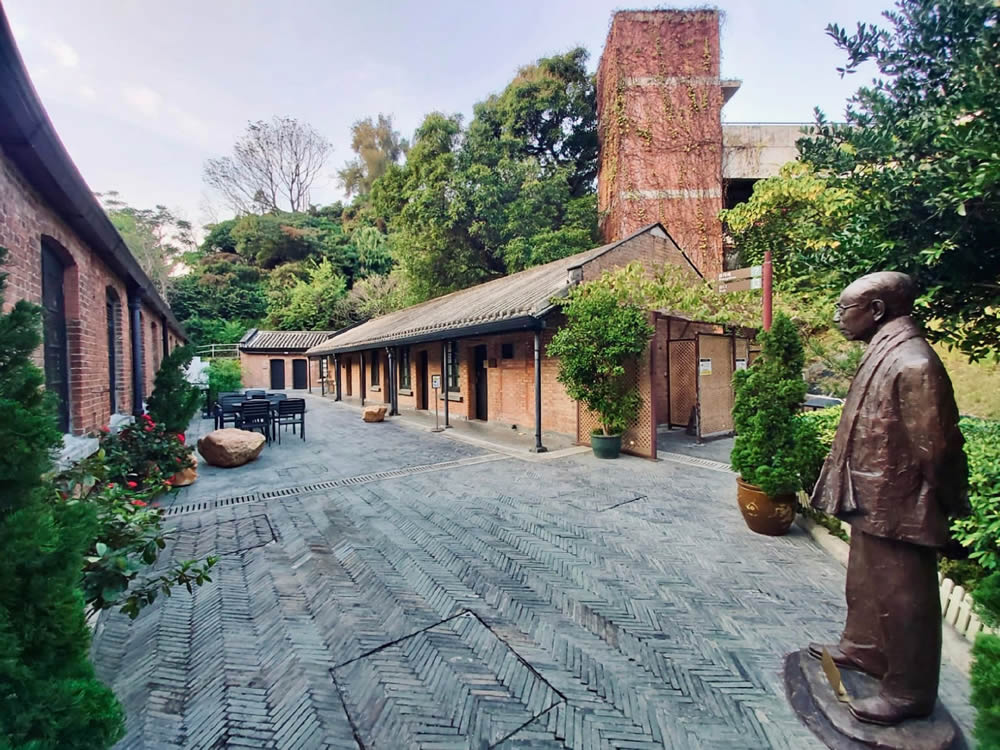
Jao Tsung-I Academy, revitalised from the former Lai Chi Kok Hospital, is located at Castle Peak Road in Mei Foo. With a history of over a hundred years, the site was once a customs station, dwellings for Chinese labourers, a quarantine station, a prison, a hospital for infectious diseases and a psychiatric rehabilitation centre. The former Lai Chi Kok Hospital was rated Grade 3 historic building in 2010.
Jao Tsung-I Academy is divided into 3 zones: Low, Middle, and High Zones. The Gallery, Heritage Hall, the pond “Light and Shadow”, bronze statue of Professor Jao Tsung-I, etc. are located in the Low Zone; the exhibition halls, resource centre & café, restaurant, theatre, lecture hall & activity rooms form the Middle Zone; and the Heritage Lodge occupies the High Zone. Visitors can enjoy tranquillity in an environment with a strong cultural atmosphere.
Website:
https://www.jtia.hk/en/
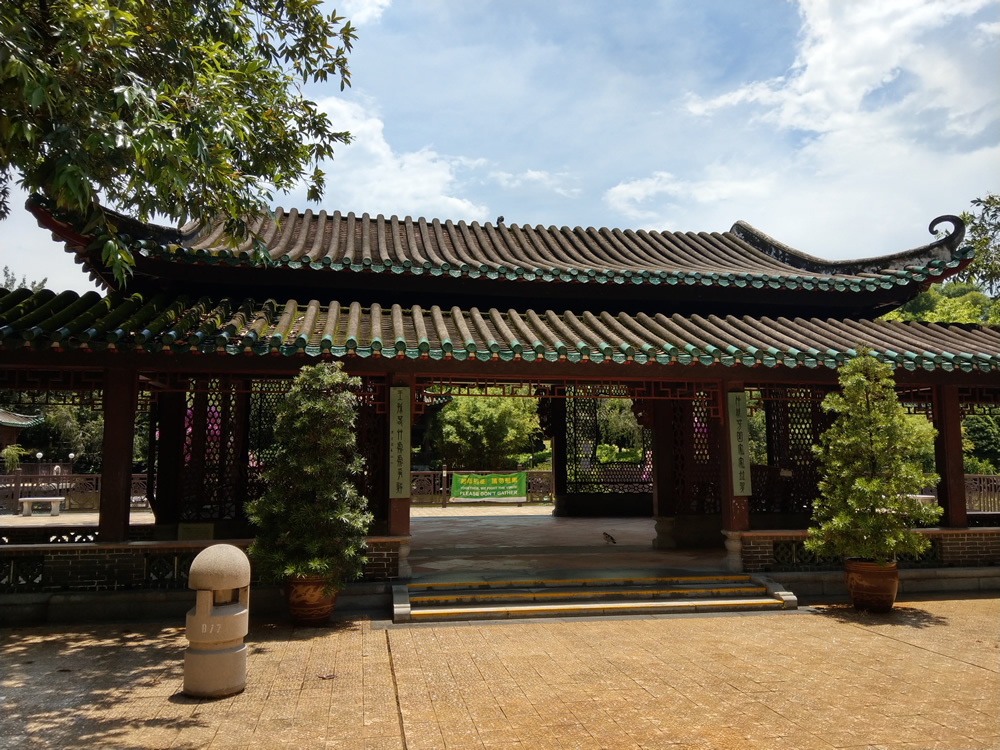
Lingnan Garden is a Chinese-style garden inside Lai Chi Kok Park. It has an area of 12 500 sq m with about 2 600 sq m covered with water features. As the Garden is located at Lai Chi Kok, and lichee (“Lai Chi” literally means lichee) is a famous fruit of Lingnan, the Garden is built in classical Lingnan style.
The Garden is divided into 10 scenic spots. The architectural structures radiate in all directions from the pond at the centre. The Lingnan-style garden features the traditional layout of yards and winding corridors. The architectural ornaments, including pottery sculpture, tile and plaster decoration, stone carving and woodwork, etc. are all in Lingnan style, whilst the rockery is made of stones mainly from Tai Hu in Yingde. The colourful optical fibre light festooning the eaves from the Eastern Gate to the corridor-type bridge adds charm to the Garden at nighttime.
Website:
https://www.lcsd.gov.hk/en/parks/lckp/intro/specialties.html
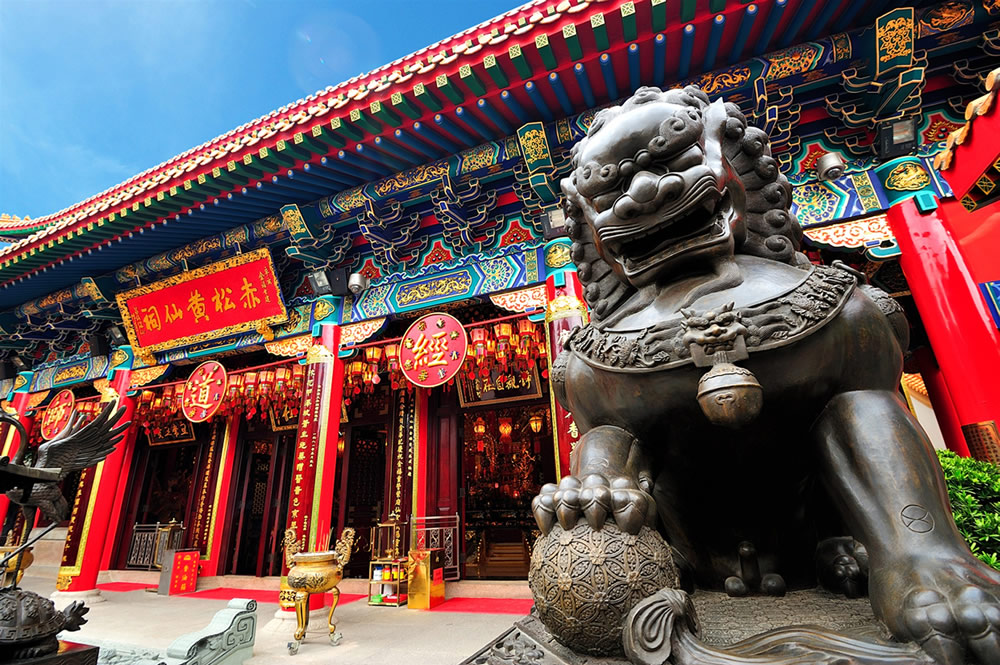
Wong Tai Sin Temple at Chuk Yuen Village in Wong Tai Sin is dedicated to the worship of “Tsik Chung Wong Tai Sin” and is one of Hong Kong's most renowned temples.
Wong Tai Sin, originally called Wong Cho Ping, was said to be born in around 328. He became a deity after practicing the Tao for 40 years. As he attained the Tao on Tsik Chung Hill in Zhejiang Province, he was also known as “Tsik Chung Wong Tai Sin”. In 1915, a Taoist priest Liang Yan Am brought the sacred portrait of Wong Tai Sin from Guangdong to Hong Kong, followed by the establishment of Sik Sik Yuen, a religious charitable organization, and Wong Tai Sin Temple in 1921. The Temple has been open to the public since 1956.
Wong Tai Sin Belief and Customs in Hong Kong highlights the concept of “answering whatever he is asked for”. Wong Tai Sin Temple is said to always give accurate predictions. Therefore, the Temple is crowded with faithful worshippers and visitors round the year. The Temple bustles more on the Lunar New Year's Day. Lots of worshippers would even flock to the Temple before midnight on the Lunar New Year Eve to make the 1st incense offering (which symbolizes the greatest share of luck and lucky omen) to express their devout intentions and pray for good fortune in the New Year.
Following unveiling of the “Tiandi Zhongling” Arch of the Temple in 1969, the Government officially named the area where Wong Tai Sin Temple and its neighboring areas were located as Wong Tai Sin District. The Temple has also become a venue where Taoist weddings can be held and recognized by the Government since 1997.
Wong Tai Sin Temple was rated Grade 1 historic building in 2010. In 2014, Wong Tai Sin Belief and Customs in Hong Kong was named a national intangible cultural heritage.
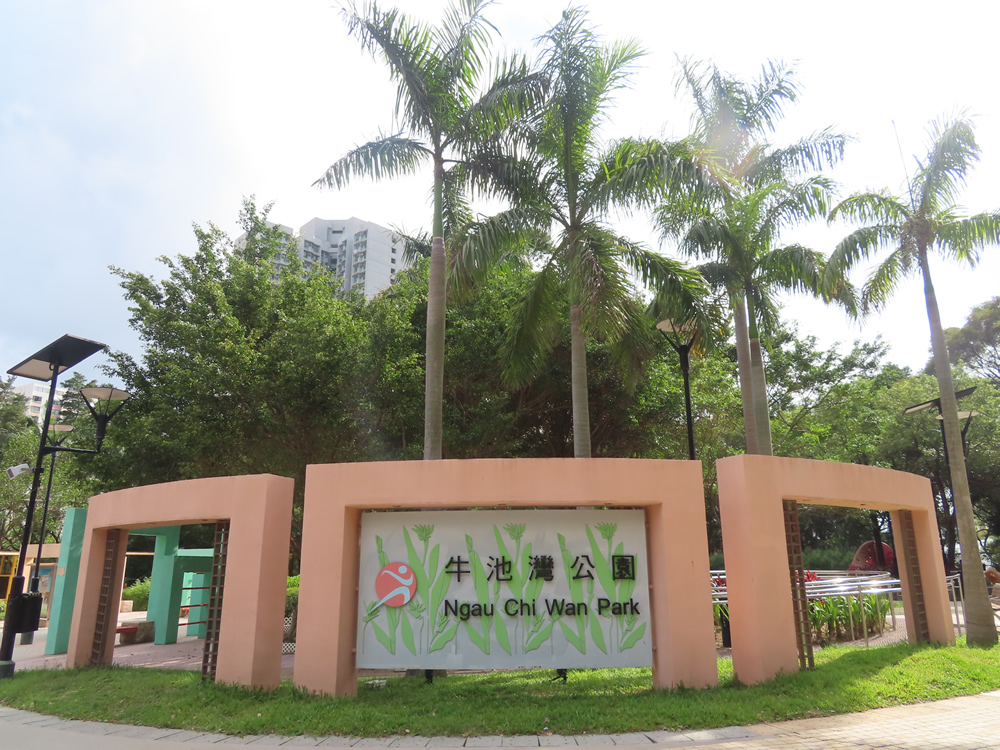
Ngau Chi Wan Park at Fung Shing Street covers an area of about 4 ha. Themed on nature and greening, its design embodies environmental protection features such as solar devices.
The Park consists of 1 platform on the east side and 3 platforms on the west side of Fung Shing Street. The eastern platform features a natural turf archery range, whilst a herb garden is at the lower platform on the western side of the Park. The Park also provides an array of facilities, including a basketball court, jogging tracks, elderly fitness corners, fitness stations, a Tai Chi garden, children’s play areas, a maze garden and a rocky pool with buffalo sculptures, etc.
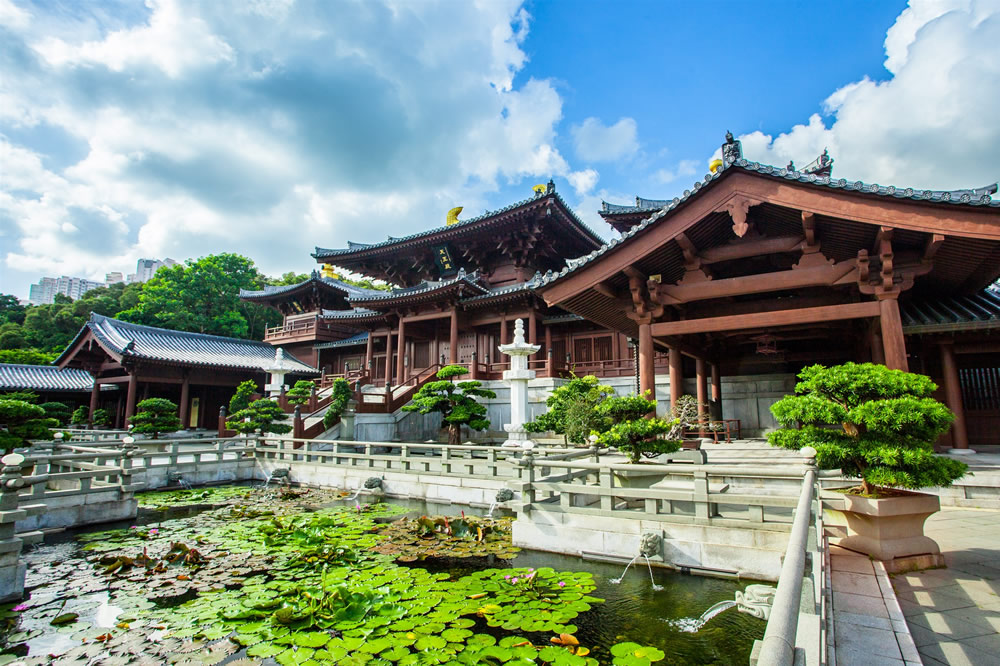
Located at Chi Lin Road in Diamond Hill, Chi Lin Nunnery was founded in 1934 by Ven. Kok Yat and Ven. Wai Um, and expanded into a “conglin” (Buddhist monastery) exclusively for nuns to pursue their religious practice in 1948.
The site of Chi Lin Nunnery was previously a mansion donated by a Buddhist. In 1994, the Nunnery commenced a redevelopment project which is based mainly on the layout of traditional Chinese “7 halls monastery” design. The design layout is derived from the “Amitayurdhyana Sutra Transformation Painting” in Cave 172 in Mogao Grottoes, Dunhuang. Applying traditional hand-craft construction methods and techniques, the completed Tang-style timber monastic complex was open to the public in 2000.
The Nunnery consists of more than 20 individual timber structures from the Main Gate to the Ten Thousand Buddhas Pagoda built along the hill-slope. Having a “3 entrances and 3 courtyards” layout and typical Chinese house-courtyard buildings, the timber structures lie symmetrically on both side of the Nunnery’s central axis. The 1st courtyard has “2 towers and 1 hall” as the backdrop. Surrounding covered corridors link the east gate, west gate and Main Gate. At the centre of the spacious courtyard are 4 symmetrically balanced lotus ponds. Together with the Hall of Celestial Kings, the 1st courtyard recreates the artistic concept of the “Amitayurdhyana Sutra Transformation Painting”. The 2nd courtyard houses the Main Hall which design is modelled upon the timber structure of the East Main Hall of Foguang Temple in Wutai Mountain in the Mainland built in the Tang Dynasty (618 - 907). It is a place for religious activities. The Dharma Hall, Scripture Library and Dining Hall stand in the 3rd courtyard. The 5-storey Ten Thousand Buddhas Pagoda built on the northeast hillside is a 7-storey double eaved square pagoda looking from the outside. The pyramid roof and the spire atop are all architectural features of a traditional Tang-style square pagoda.
Situated at Fung Tak Road to the south of Chi Lin Nunnery, Nan Lian Garden was open to the public in 2006. Built in the Tang-style, the 3.5 ha Garden is adorned with timber structures, studded with clusters of bizarre rocks and planted with lots of old and valuable trees.
Looking at the monastic complex from the layout, proportion, aesthetics and robustness of the structures, Chi Lin Nunnery follows strictly the rules of construction of traditional architecture in the Tang Dynasty. The structures of the Nunnery complement the landscape of the adjoining Nan Lian Garden to form a comprehensive system that display fully the unique artistic expressions of architecture in the Tang Dynasty.
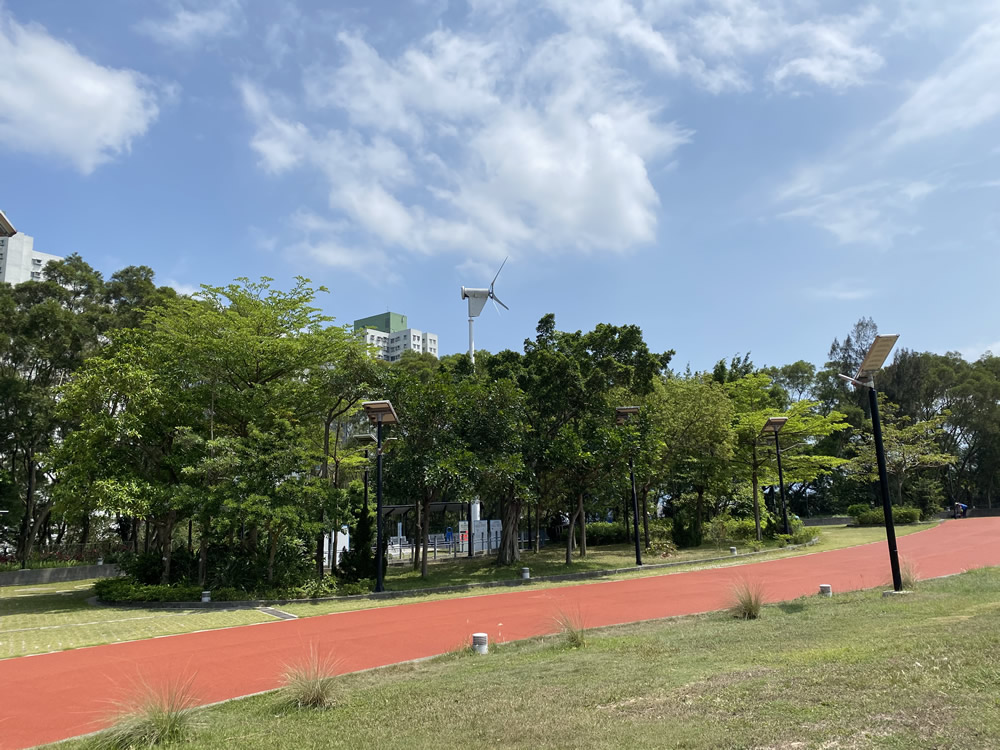
Occupying an area of about 9 ha, Po Kong Village Road Park at Po Kong Village Road in Diamond Hill offers a wide range of leisure facilities including an artificial turf pitch, cricket practice areas, a cycling area and an elevated cycling track of about 1 km in length, a jogging trail, fitness corners, a SkatePark, children’s playgrounds and an amphitheatre, etc.
A special feature of the Park is the “Renewable Energy Zone”, where exhibition panels on the wind power, photovoltaic and solar power renewable energy systems installed in the Park are displayed to promote the notion of environmental protection.
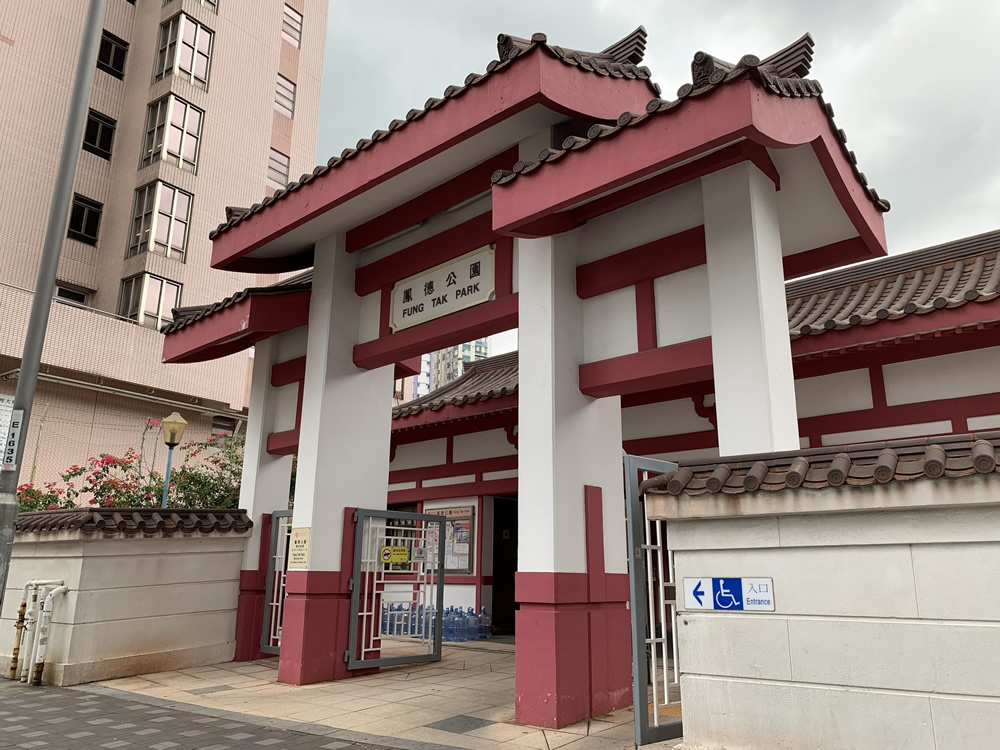
Fung Tak Park at Fung Tak Road in Wong Tai Sin occupies an area of about 1.1 ha. The design of its recreational and leisure facilities is themed on the famous Chinese mythology novel, Journey to the West. The 4 major parts of the Park, namely the "Monkey King’s Paradise", "Crystal Palace", "Five Fingers Mountain" and "Flame Mountain" featuring selected episodes of the novel provide visitors an extraordinary park-going experience.
Website:
https://www.lcsd.gov.hk/clpss/en/webApp/Facility/Details.do?ftid=55&did=16
Morse Park comprises Park Nos. 1 to 4, Morse Park Sports Centre and Morse Park Swimming Pool. Covering an area of about 16 ha, it is the largest park in Wong Tai Sin District.
Morse Park provides a wide variety of leisure and recreational facilities. Apart from the sports centre and swimming pool, there are artificial turf and hard-surface soccer pitches, natural turf gateball courts, basketball courts, tennis courts, a skateboard ground, elderly fitness corners and children’s playgrounds. Park Nos. 1, 2 and 3 house Tai Chi garden, Palm Garden and Butterfly Corner respectively, whilst Park No. 4 provides an amphitheatre which is a popular place for cultural and community events in the district.
At the corner of Park No. 2 lies Wong Tai Sin Cultural Garden, a Chinese culture-themed garden. The western-style Main Square and the Chinese-style Stage at the park entrance at Tung Tau Tsuen Road contrast finely with each other. The Tai Chi Square located at the entrance at Tai Tung Street is decorated with the symbols of the Eight Trigrams and the logo of Tai Chi on the ground of the Chess Garden. The 2 entrances in “square” and “round” shapes respectively are carefully designed to signify the cosmological concept of a dome-like firmament covering the square earth in ancient China. These 2 scenic spots and a central open area, in the shape of the Chinese character “人” (human beings), denote the spirit of pursuing the unity and harmony of “sky, earth and human beings” in traditional Chinese culture.
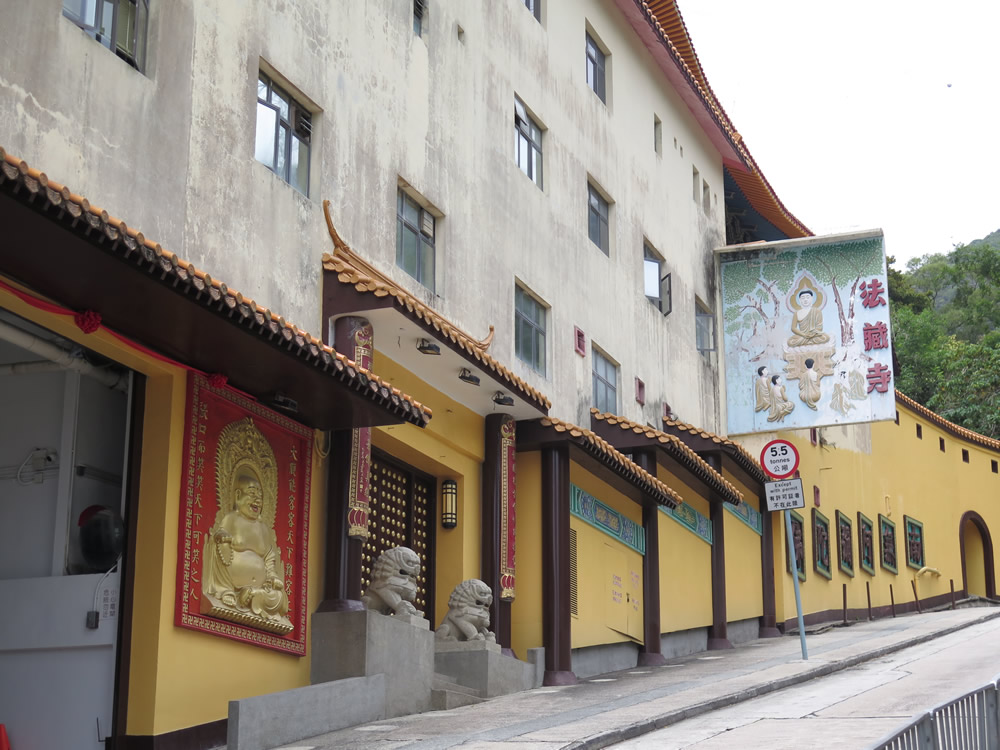
Fat Jong Temple is a Buddhist temple located at Shatin Pass Road in Tsz Wan Shan, near the east foothill of the Lion Rock. Founded in 1948, the Temple underwent a reconstruction project in the 1980s. The Temple is a 3-hall structure comprising Heng Ha Din, Tin Wong Din, Hall of Skanda Bodhisattva, Tai Hung Po Din, Kwun Yum Din and Ka Lam Din, etc., housing a company of giant Buddhist statues. Located in the urban area, Fat Jong Temple is often crowded with dedicated worshippers.
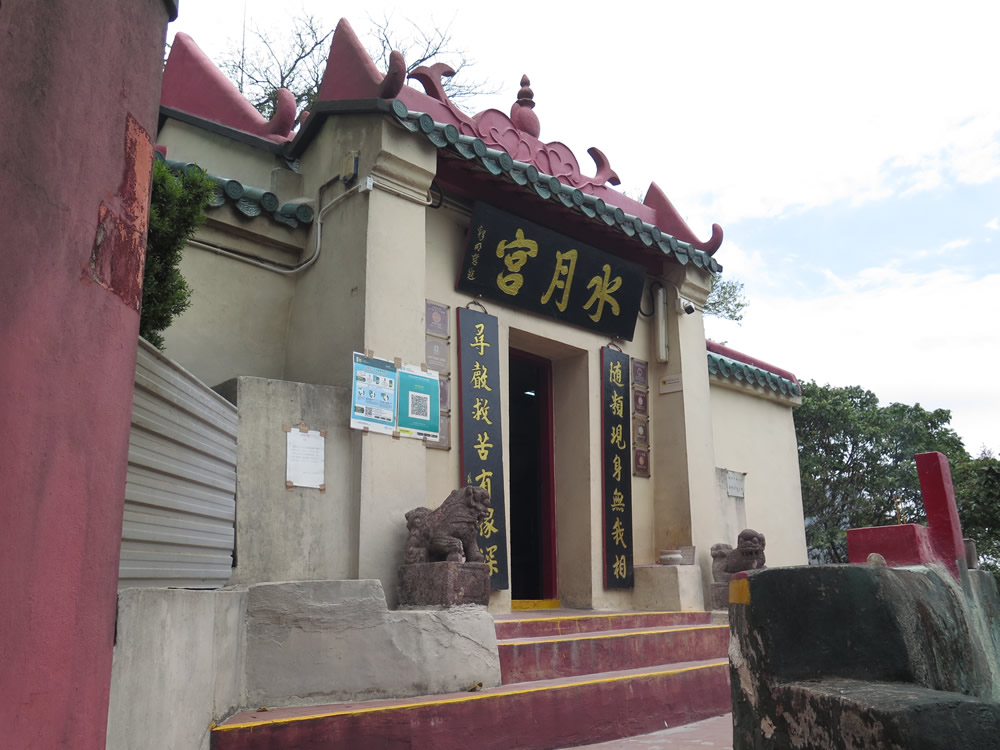
Built in the 3rd year of the Xianfeng reign (1853) of the Qing Dynasty, Kwun Yum Temple at Shatin Pass Road, Tsz Wan Shan has a history of over 150 years. The Temple underwent restoration and expansion projects between 1970s and 1990s.
Apart from Shui Yue Gong (Water Moon Palace) which is dedicated for the worship of Kwun Yum, and Tai Hung Po Din housing Sakyamuni Buddha, Medicine Buddha and Amitabha Buddha, at the back of the Temple are Lover’s Rock and Treasure Reflection Rock which attract many visitors praying for marriage and good fortune.
Kwun Yum, originated in India, was a male divinity in the earlier times but evolved to be a gracious female deity. She is also known as a deity of sympathy, compassion and mercy, responding to the pleas of those who are suffering, thus earning her the title of the “Buddhist of Goddess of Mercy”.
Many worshippers pay tribute to Kwun Yum at Kwun Yum Temple, Tsz Wan Shan on Kwun Yum Festivals. They also flock to the Temple to "borrow money" from the Goddess during Kwun Yum Treasury Opening Festival (meaning Kwun Yum opens her treasury and lends money to people) on the 26th day of the 1st lunar month, hoping to increase wealth in the year ahead.
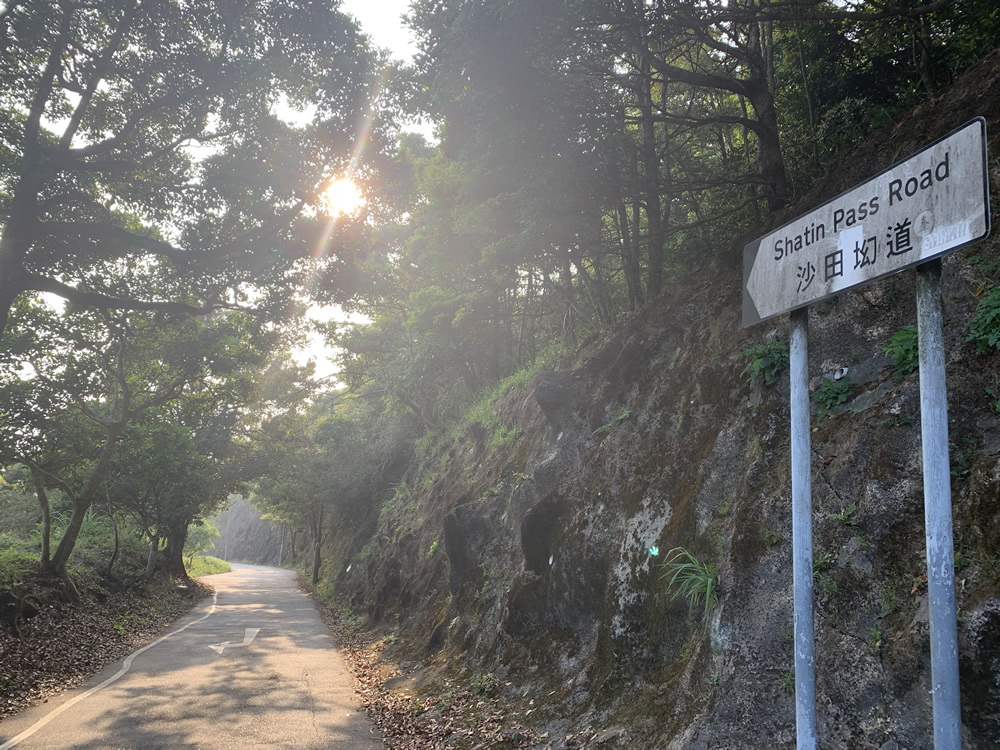
Shatin Pass Road (Hiking Trail), with a length of about 7 km, starts near Choi Hung Road and ends at its junction with Jat’s Incline and Fei Ngo Shan Road. It meets Section 5 of the Wilson Trail and part of it overlaps with both Section 4 of the Wilson Trail and Section 5 of the MacLehose Trail. Visitors can enjoy the marvelous views on the journey via Kwun Yum Temple and Lover’s Rock and Treasure Reflection Rock behind it in Tsz Wan Shan and the Shatin Pass Lion Pavilion. At Jat’s Incline Parking Viewpoint where the hiking trail meets Jat's Incline, visitors will have a panoramic view of Kowloon Peninsula, Lei Yue Mun, the Victoria Harbour and Hong Kong Island.
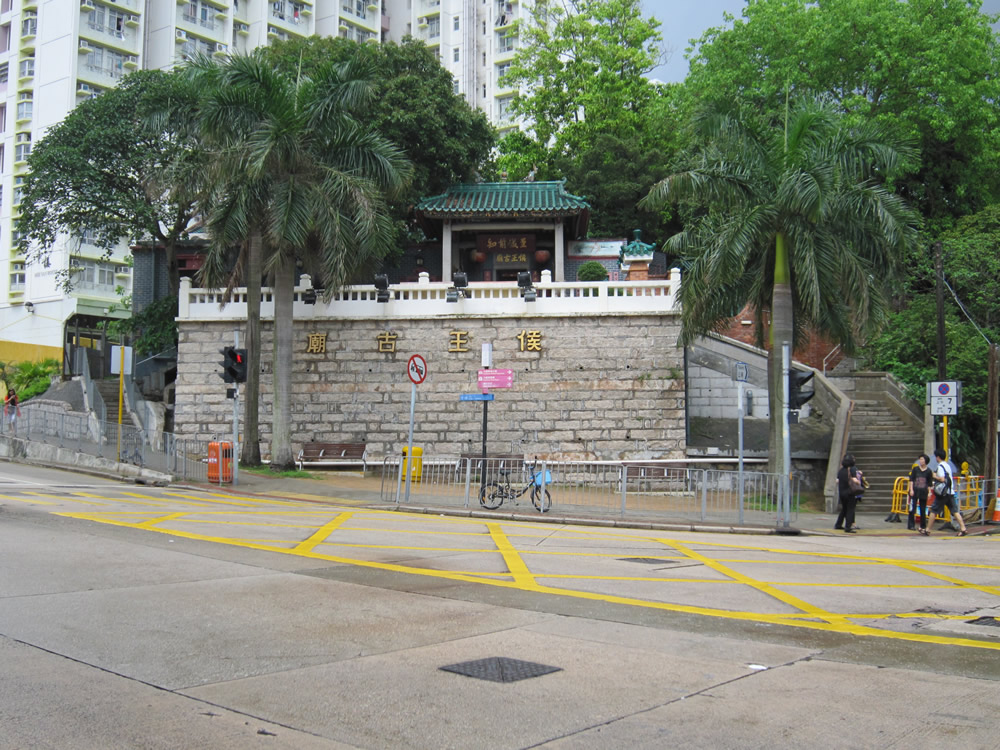
Hau Wong Temple, Kowloon City is located at the junction of Junction Road and Tung Tau Tsuen Road in Wong Tai Sin District. The exact year of construction of the Temple cannot be ascertained. From the oldest relic of the Temple, an iron bell cast in the 8th year of the Yongzheng reign (1730) of the Qing Dynasty, it is believed that the Temple was probably built in 1730 or earlier.
The Temple is dedicated for the worship of Hau Wong. According to legend, Hau Wong refers to Yeung Leung Jit, a loyal and courageous general of the Southern Song Dynasty (1127 - 1279). It is said that Yeung protected the last 2 emperors of the Southern Song Dynasty, namely Emperor Zhao Shi and Emperor Zhao Bing, to flee south during the Mongolian invasion. After his death, people built Hau Wong Temple to commemorate him.
The Temple stands on a masonry terrace and houses many relics such as a stone tablet engraved in the 9th year of the Xianfeng reign (1859) of the Qing Dynasty, an old incense burner and timber plaques. A separate pavilion with a hip-and-gable roof supported by fine granite columns and wooden brackets stands in front of the temple building. The stepped gables of the rear hall are built in the style known as “5 peaks pay tribute to heaven”, a very rare design that is seldom found in Hong Kong.
Hau Wong Temple, Kowloon City was declared a monument in 2014.
Occupying an area of about 5 ha, Lion Rock Park at Chuk Yuen Road houses facilities such as a barbecue site, a baseball court, an archery range, children’s play area, etc. Winding the way up the trail near the barbecue site, visitors can have a closer look of the 495 m high Lion Rock which resembles a lion sitting regally.
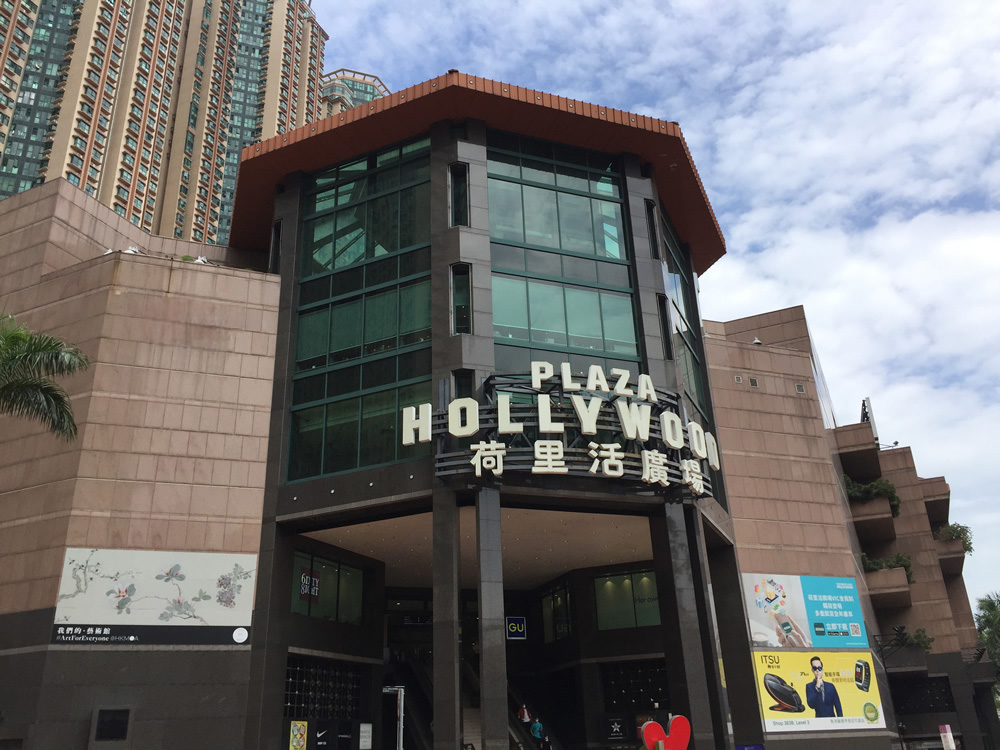
Situated at Lung Poon Street in Diamond Hill, the 4-storey Plaza Hollywood houses over 200 shops and restaurants offering various kinds of popular items and cuisines. Lots of functions and exhibitions are staged at the Star Atrium at the centre of 1/F, which occupies an area of about 10 000 sq ft with a 25 m high ceiling that encompasses a stained-glass canopy.
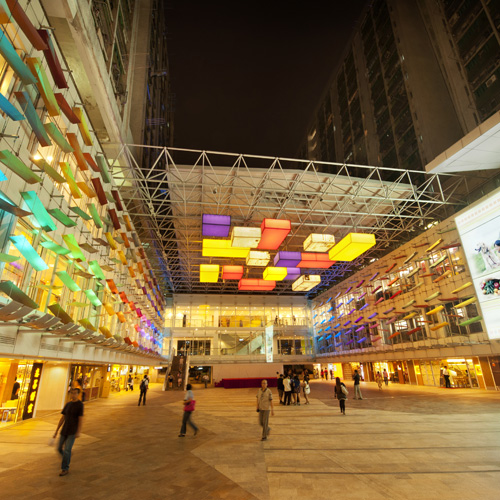
Lok Fu Place at Junction Road in Wang Tau Hom is one of the major shopping malls in Wong Tai Sin District. With a total internal floor area of around 390 000 sq ft dividing into Zone A and Zone B, Lok Fu Place offers a large-scale department store, a fresh market, as well as an array of shops and restaurants to cater for different needs.
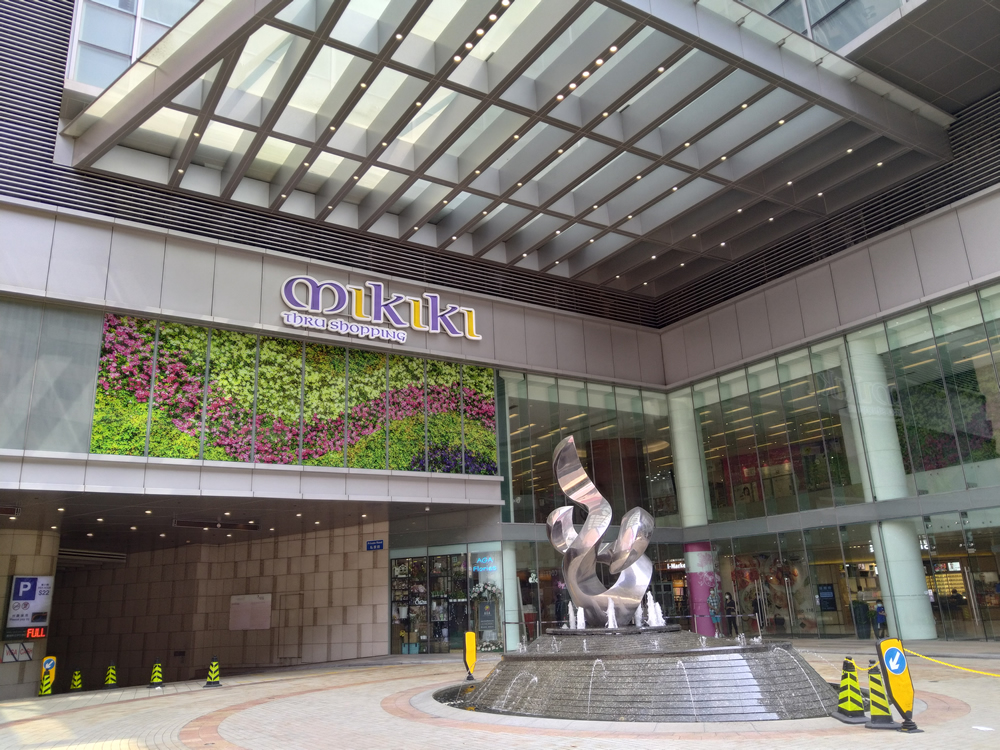
Mikiki at Prince Edward Road East in San Po Kong is one of the major shopping malls in Wong Tai Sin District. The 3-storey shopping mall with a total floor area of 210 000 sq ft provides about 100 shops and restaurants. Apart from the comprehensive ancillary transport facilities nearby, there is also a footbridge spanning across Prince Edward Road East connecting the mall with Kai Tak Development Area.
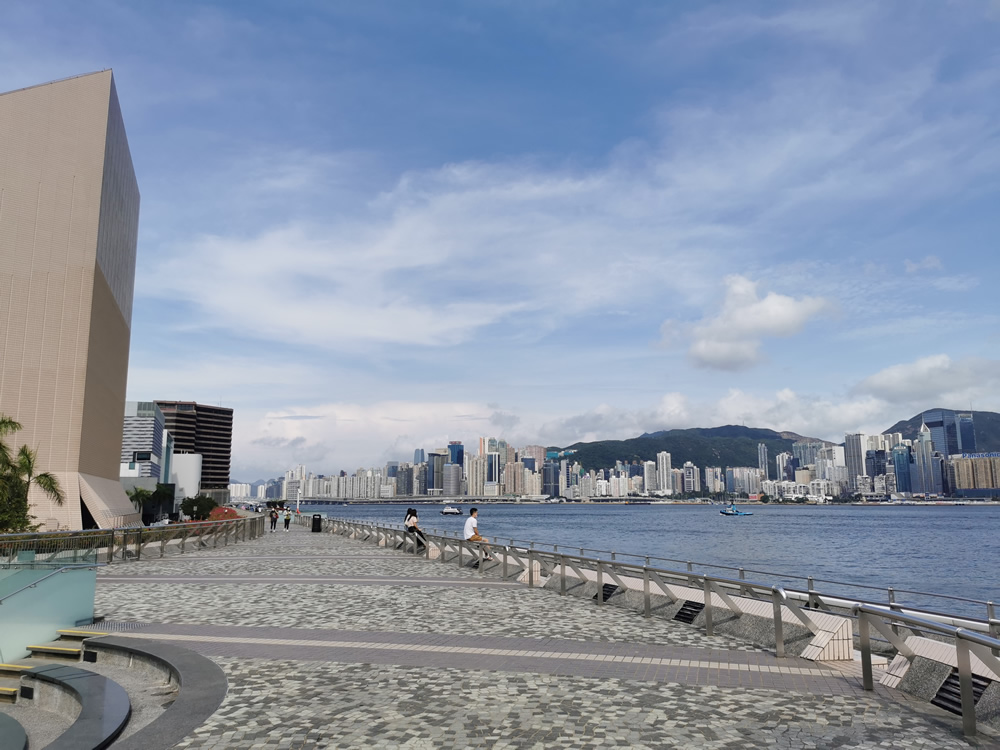
Stretching from Star Ferry Pier in Tsim Sha Tsui to Kin Wan Street in Hung Hom, Tsim Sha Tsui Promenade provides an unobstructed and stunning view of the Victoria Harbour. The Promenade is a tourist attraction that cannot be missed and a hot spot among photography enthusiasts.
Besides, many local residents and visitors cluster at the Promenade to watch the firework displays over the night sky of the Victoria Harbour during festivals.
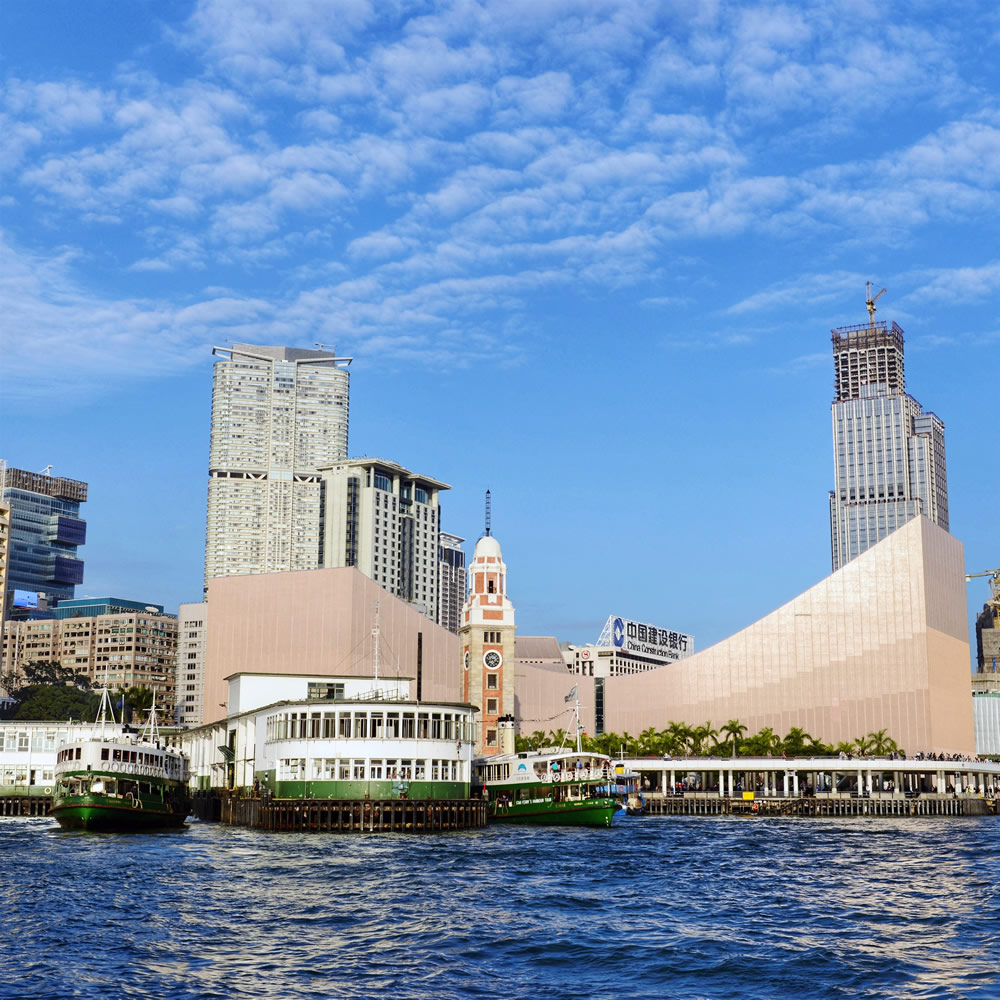
The Star Ferry traces its origins to the “Kowloon Ferry Company” established in 1880. In 1888, the ferry ran every 40 minutes to 1 hour from Pedders Wharf at Central and Kowloon Point (i.e. junction of Canton Road and Salisbury Road nowadays) at Tsim Sha Tsui, except for Mondays and Fridays to enable the ferry's coaling. Established in 1898, the Star Ferry Company Limited acquired all ferries, and derived its name from the ferries which all bore the word "Star".
Over the past century or so, the green and white ferries of the Star Ferry have been shuttling between Hong Kong Island and Kowloon every day. Going onboard a ferry from the Star Ferry Pier in Tsim Sha Tsui (Kowloon Point Ferry Piers at Salisbury Road), Central (Central Pier No. 7) or Wan Chai (Wan Chai Ferry Pier at Convention Avenue), passengers can enjoy the magnificent view of the Victoria Harbour and the picturesque Hong Kong skyline. The ferry crossing was named as one of the "50 Places of a Lifetime".
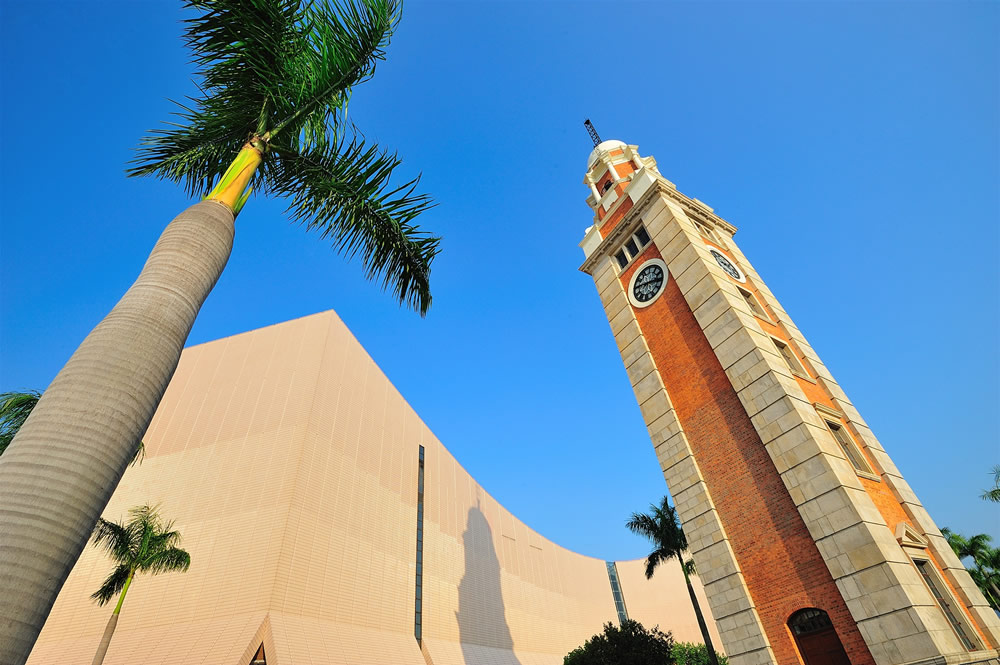
Located next to Star Ferry Pier in Tsim Sha Tsui, the Former Kowloon-Canton Railway Clock Tower constructed in 1915 was part of the former Railway Terminus at Tsim Sha Tsui. Built in Edwardian Classical Revival style, the Clock Tower stands 44 m and is surmounted by a 7-m lightning rod.
Upon relocation of the railway terminus to Hung Hom in 1975, the terminal building in Tsim Sha Tsui was demolished, with only the Clock Tower retained. The Clock Tower has then become a landmark in Tsim Sha Tsui. It was declared a monument in 1990.
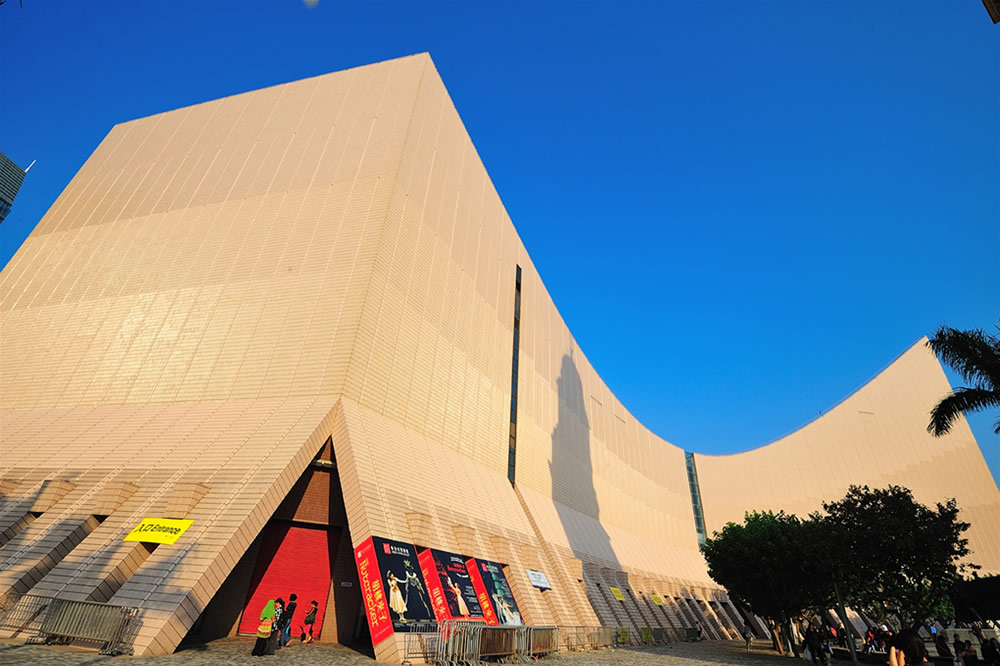
Hong Kong Cultural Centre at Salisbury Road, Tsim Sha Tsui near Star Ferry Pier and the Former Kowloon-Canton Railway Clock Tower is easily recognisable by its distinctive sloped form. The Cultural Centre and the neighbouring Hong Kong Museum of Art and Hong Kong Space Museum form a focal point of culture, arts and discovery.
The Cultural Centre has a Concert Hall, a Grand Theatre and a Studio Theatre. The oval-shaped Concert Hall with a seating capacity of around 2 000 is an ideal venue for a wide variety of music performances. With over 1 700 seats, the Grand Theatre is dedicated for large-scale theatrical spectaculars. World-class musicals such as "Phantom of the Opera" and "Les Miserable" have both been staged here. Designated for small-scale innovative dance and theatre productions, the Studio Theatre is equipped with versatile seating formats accommodating 300 to 500 audience. The Cultural Centre also has an Exhibition Gallery as well as rehearsal and function rooms.
Guided tours are available for visitors who want to know more about the Cultural Centre, its facilities and the decorative works of art. Besides, the Hong Kong Cultural Centre Piazza is a popular location for staging outdoor exhibitions, festive activities, competitions and performances.
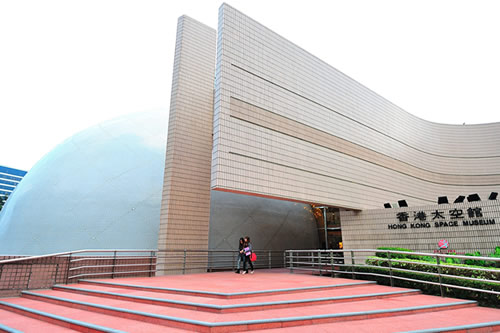
Located at Salisbury Road in Tsim Sha Tsui and next to Hong Kong Cultural Centre and Hong Kong Museum of Art, Hong Kong Space Museum is a planetarium for the popularization of astronomy and space science. The unique egg-shaped dome structure renders it one of the most famous landmarks in Hong Kong.
The Space Theatre at the east wing houses a hemispherical projection dome with a diameter of 23 m for displaying sky shows, OMNIMAX films and 3D Dome Shows. The Museum is the 1st planetarium in the world to possess a fully automatic control system at its Space Theatre.
There are also 2 permanent exhibition halls with exhibits introducing astronomy and space science in an engaging way.
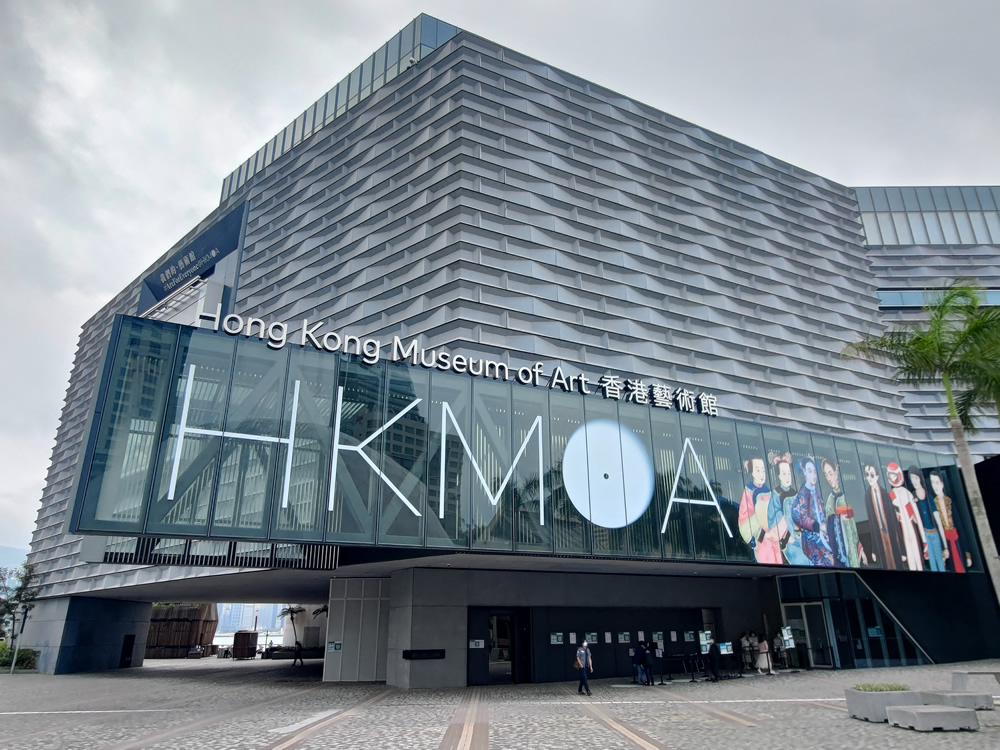
Established in 1962, Hong Kong Museum of Art was first set up in City Hall High Block in Central. It was relocated to its present location next to Hong Kong Cultural Centre in Tsim Sha Tsui in 1991, and completed a major renovation and expansion in 2019.
With modern architectural features, the Museum has 12 galleries spreading across 10 000 sq m.
The Museum is now custodian of an art collection of over 17 000 items, including Chinese antiquities, Chinese painting and calligraphy, China trade art as well as modern and Hong Kong art. Amongst them, the Hong Kong Art Gallery exhibits works of local artists in charting the development of Hong Kong’s art scene. In addition, Wu Guanzhong Art Gallery, Chinese Painting and Calligraphy Gallery and Chih Lo Lou Gallery of Chinese Painting and Calligraphy are also “not-to-be-missed” treasure chests of art.
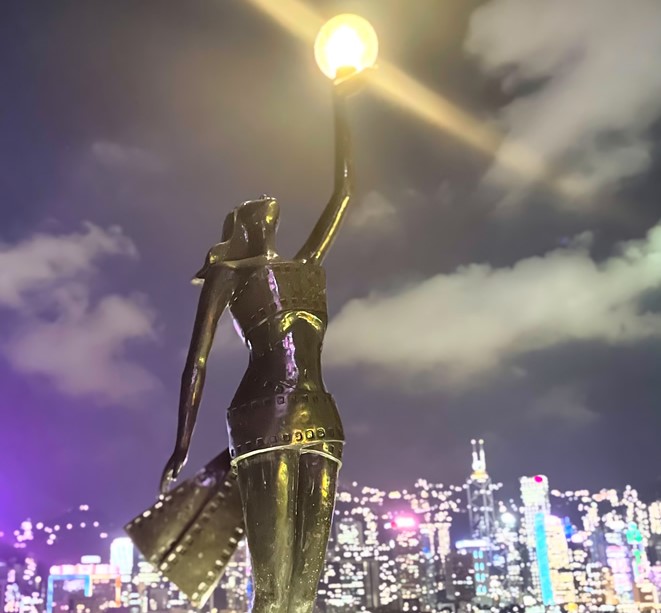
The Avenue of Stars themed on Hong Kong movies was launched in 2004, and was reopened in 2019 after renovation. More than a hundred newly designed celebrity handprints are now meticulously set into the wooden handrails for tourists to view easily. Visitors can check out the stars’ biographies and their selected movie clips by scanning the quick response (QR) codes with smartphones.
Besides the brand new statue of Mcdull, the Hong Kong Film Art Association statue and the star statues are decorated with flowing-water features that, in concert with the soft light, perfectly echo Bruce Lee’s philosophy of “Be like water” in Tao of Jeet Kune Do, and Anita Mui’s “Life Written in Water”. Visitors can even take a photo and interact with these 2 superstars using augmented reality (AR) technology.
The dazzling movie elements are also resonating with the Victoria Harbour view. Together with the widespread use of innovative and eco-friendly design, the Avenue of Stars is an international sustainable-designed promenade.
Located at Minden Row in Tsim Sha Tsui, the Signal Hill was opened up in 1981 as the Signal Hill Garden. Inside the garden is the Signal Tower, which was built by the Hong Kong Observatory in 1907 to house a time-ball apparatus previously located in the nearby Round House of the Former Marine Police Headquarters. The time-ball signalled accurate time daily to the mariners and the public until it ceased service in 1933.
The 4-storey Signal Tower was built to a heavy Classical Baroque design incorporating popular Edwardian decorative features of the time, which combined red brickwork with contrasting lighter colour stone architectural features. It is also a square-shaped building with elegant chamfered corners, as compared to the usual square corners. The brickwork is in "English Bond" of specially made red bricks, while the stonework is of carved local granite.
The Signal Tower was declared a monument in 2015.
Located on Salisbury Road in Tsim Sha Tsui, K11 MUSEA is a cultural-retail landmark on the Victoria harbourfront of Hong Kong. Inspired by "A Muse by the Sea", K11 MUSEA is designed to enrich customers' lives through the power of creativity, culture and innovation, and its commitment to incubating the local cultural scene with a world-class rotation of art events, collaborations, experiences and workshops throughout the year.
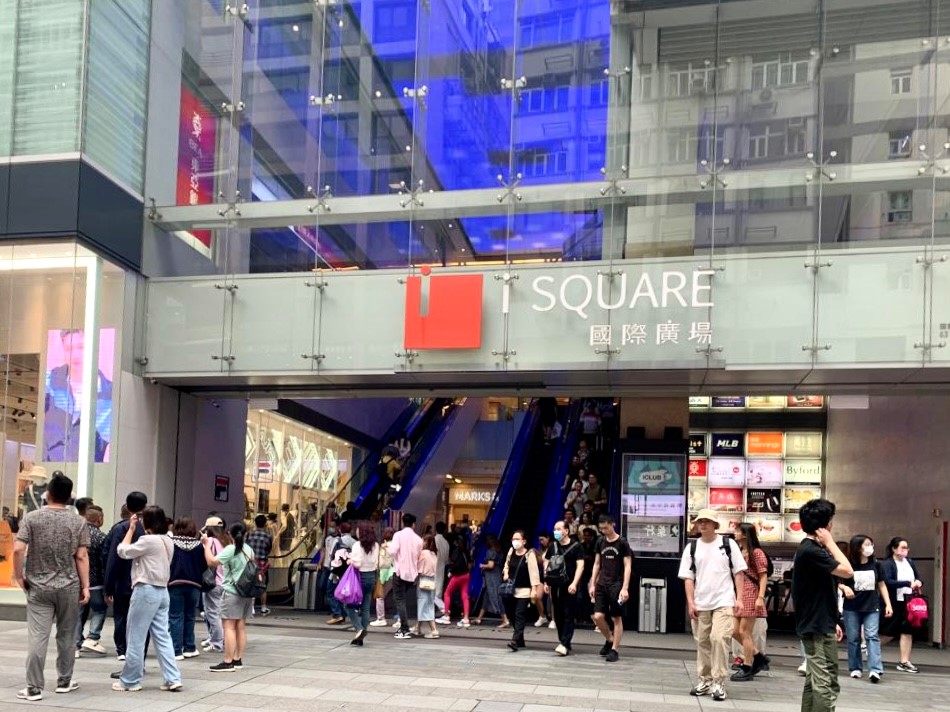
Located at the junction of Nathan Road and Peking Road in Tsim Sha Tsui, iSQUARE is an entertainment and shopping complex directly connected to the Tsim Sha Tsui MTR station. The 31-storey iSQUARE, with a total area of approximately 56 000 sq m, features a supermarket, a cinema, and a wide range of stores and restaurants. The high floors of the iSQUARE are home to a host of multi-national fine-dining restaurants, offering customers the opportunity to savour international cuisines while enjoying the stunning view of the Victoria Harbour.
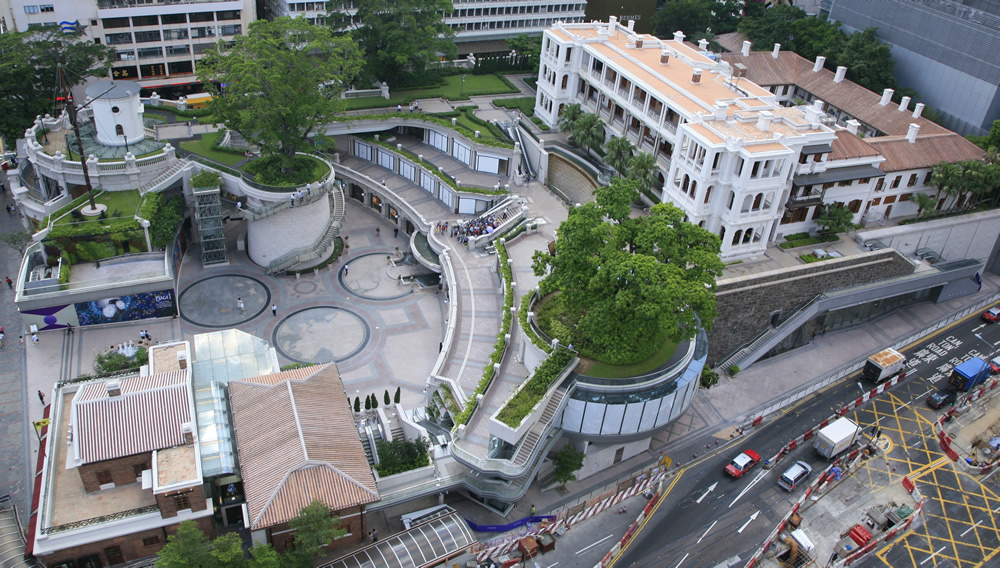
1881 Heritage at Canton Road in Tsim Sha Tsui is the Former Marine Police Headquarters completed in 1884 and is one of the oldest surviving government buildings in Hong Kong. Declared a monument in 1994, the compound comprises the Main Building, the Stable Block and the Signal Tower. The compound was renamed 1881 Heritage upon completion of the revitalisation project in 2009 and has become one of the cultural and shopping landmarks in Hong Kong.
Located at Canton Road, Tsim Sha Tsui and next to the Star Ferry Pier, Harbour City is composed of 5 featured shopping zones, including the Ocean Terminal, the Marco Polo Hongkong Hotel Arcade, the Ocean Centre, the Gateway Arcade and Star House.
Harbour City is a one-stop shopping paradise with over 450 shops and restaurants, an art gallery, a cinema and an observatory deck. It also houses 2 hotels and a cruise terminal. Canton Road, where the Harbour City is located, is also a hub of flagship stores of world-famous brands.
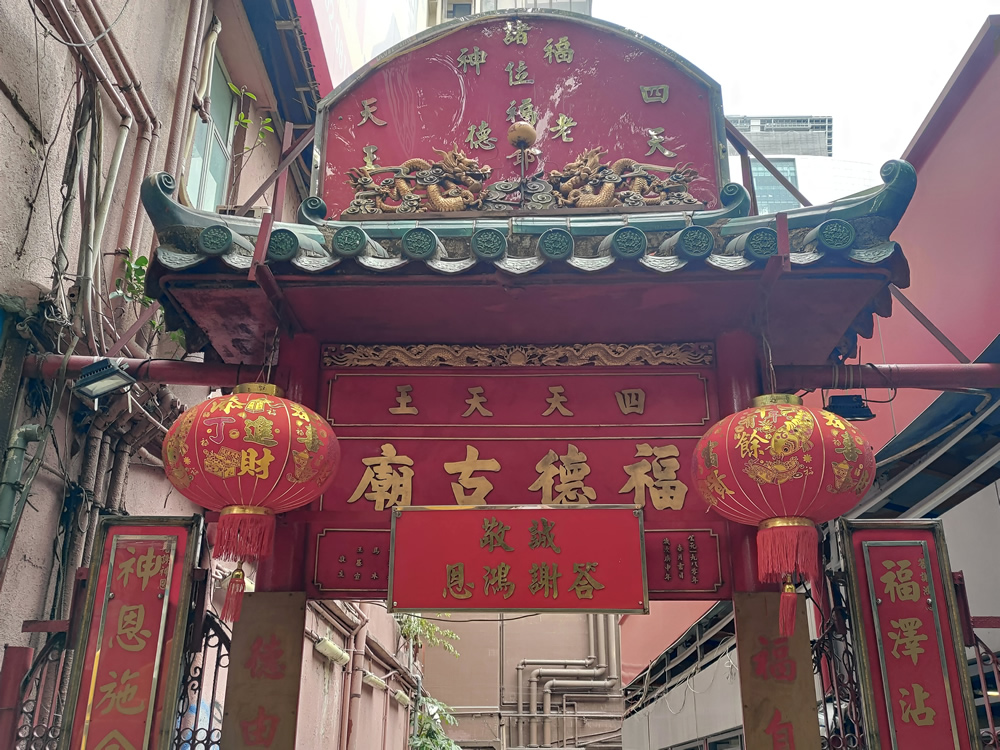
Located at Haiphong Road, Fook Tak Temple, Tsim Sha Tsui was built in 1900 for the worship of Fook Tak Pak Kung, the Earth God.
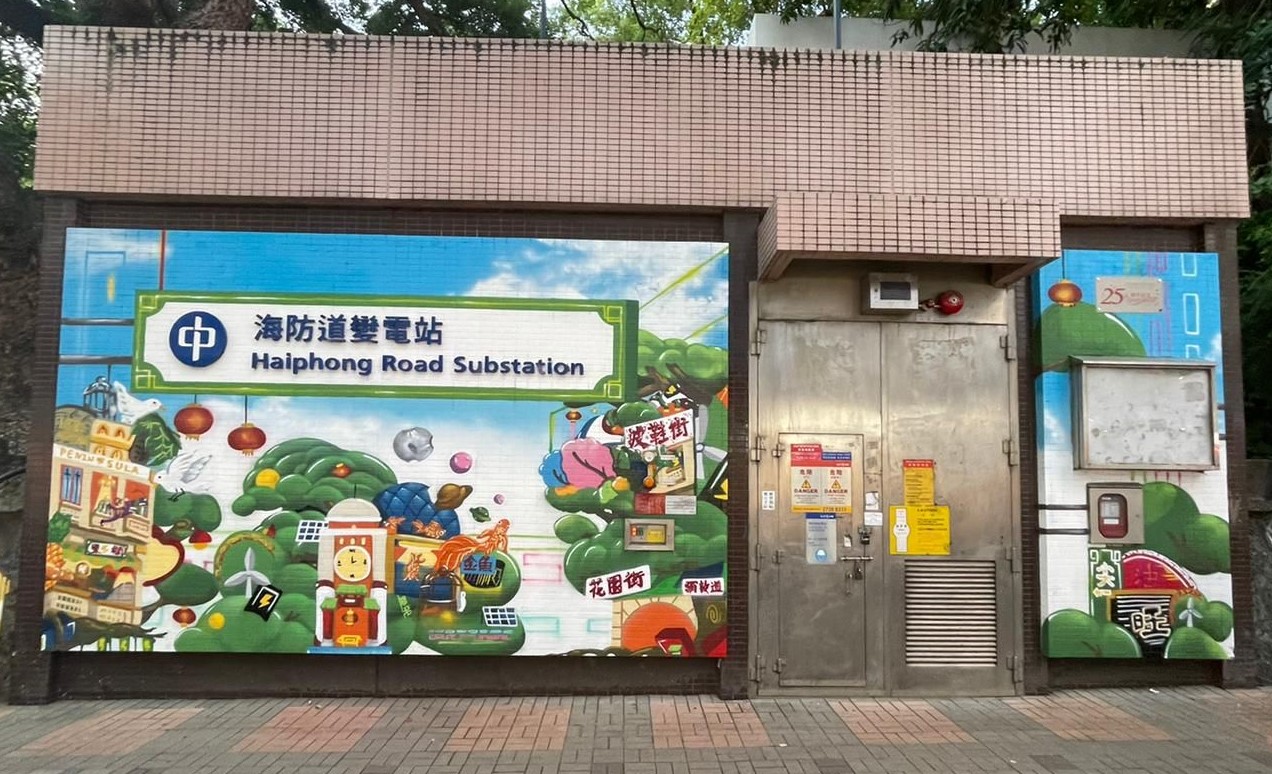
Haiphong Road Substation is CLP's first beautified substation. The mural incorporates several well-known landmarks, including the Former Kowloon-Canton Railway Terminus Clock Tower, Tung Choi Street (Goldfish Market) and Sneaker Street. Neon signs further evoke the distinctive streetscape of Nathan Road, a thoroughfare that connects the district's vibrant neighbourhoods.
Through its blend of local landmarks and familiar street scenes, the mural showcases the unique characteristics and urban culture of Yau Tsim Mong. It also reflects CLP's long-standing connection and support for the development of this lively district over the years.
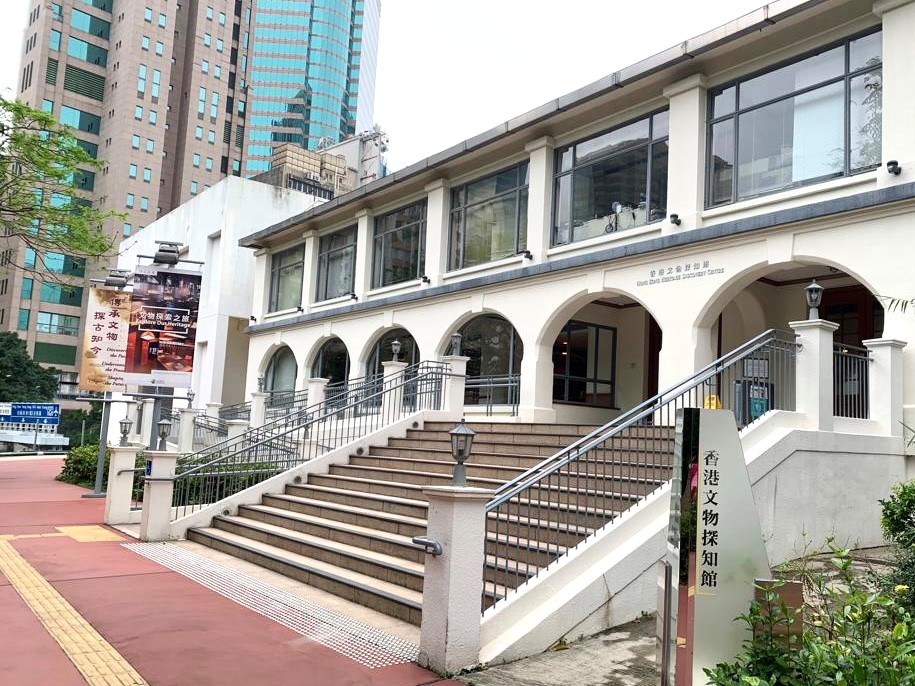
Located at Kowloon Park in Tsim Sha Tsui, once the site of the British Army's Whitfield Barracks, the Hong Kong Heritage Discovery Centre is housed in two old barrack blocks, S61 and S62. The two blocks were previously used as the temporary premises of the Hong Kong Museum of History, and were subsequently converted into the Hong Kong Heritage Discovery Centre and opened to the public in 2005.
Blocks S61 and S62 are a pair of two-storey Victorian military blocks featured with pitched tarred Chinese tiled roofs and deep flattened arch colonnaded verandahs at each elevation. Commenced in 2003, the restoration works aim to restore blocks to their original appearance while also converting them into a building with modern facilities. Works include adding an outdoor cafeteria to the forecourt to provide a feeling of comfort and space and converting the front elevation of the exhibition hall into a glass curtain wall to create a spacious and welcoming atmosphere inside the foyer.
At present, the Hong Kong Heritage Discovery Centre is mainly used for heritage publicity and educational activities. Major facilities include exhibition galleries, a lecture hall, activity rooms, a conference room and a reference library. The Hong Kong Heritage Discovery Centre organises a variety of educational activities from time to time to enable the public to gain a better insight into Hong Kong’s heritage.
The former Whitfield Barracks Blocks S61 and S62 were rated Grade 1 historic buildings in 2009.
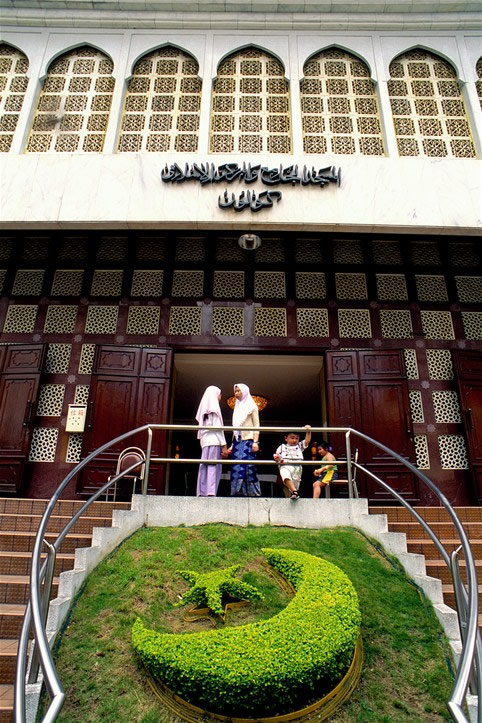
The Kowloon Masjid and Islamic Centre was originally a worshipping place for the British Garrison's Indian Muslim troops built near the former Whitfield Barracks (now Kowloon Park) in 1896. In 1980, due to the building structure construction works of the MTR, the mosque was demolished and rebuilt in situ. The new mosque was opened in 1984.
The 4-storey Kowloon Masjid and Islamic Centre, occupying an area of 1 500 sq m, was completed with traditional Islamic design with marble finishing, peach-shaped dome and high minarets at the 4 corners. Being the largest mosque in Hong Kong, it can accommodate a congregation of about 3 500 worshippers.
Kowloon Park is a green haven at the centre of Tsim Sha Tsui.
With a total area of 13.3 ha, the Park features various theme gardens, the Bird Lake, the Aviary, a totem pole, the Tree Walk, indoor and outdoor swimming pools, etc. Stalls providing arts and crafts items are set up in the Arts Fun Fair at the Loggia every Sunday and public holiday afternoon.
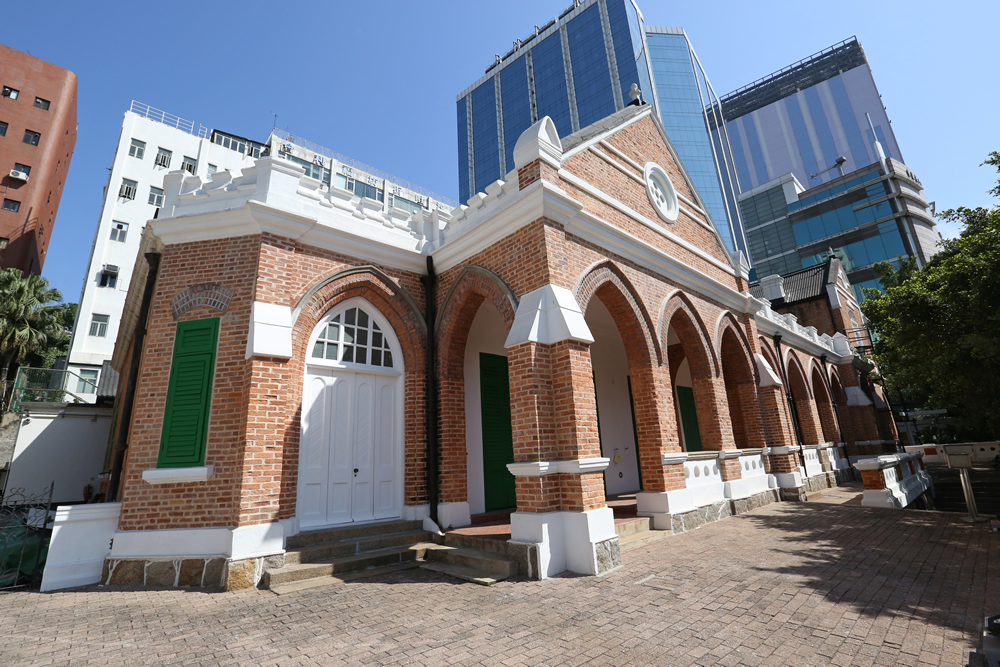
Built in 1902, the Former Kowloon British School at Nathan Road, Tsim Sha Tsui is the oldest surviving school building constructed for the children of foreign residents in Hong Kong. The design of this typical Victorian building was modified to suit the local climate with the addition of wide verandas, high ceilings and pitched roofs.
The Former Kowloon British School was declared a monument in 1991. It now houses the Antiquities and Monuments Office. Free public guided tours are available for visitors.
Website:
https://www.amo.gov.hk/en/visitor-centre/docent-services/groups/fkbs-1883-building/index.html
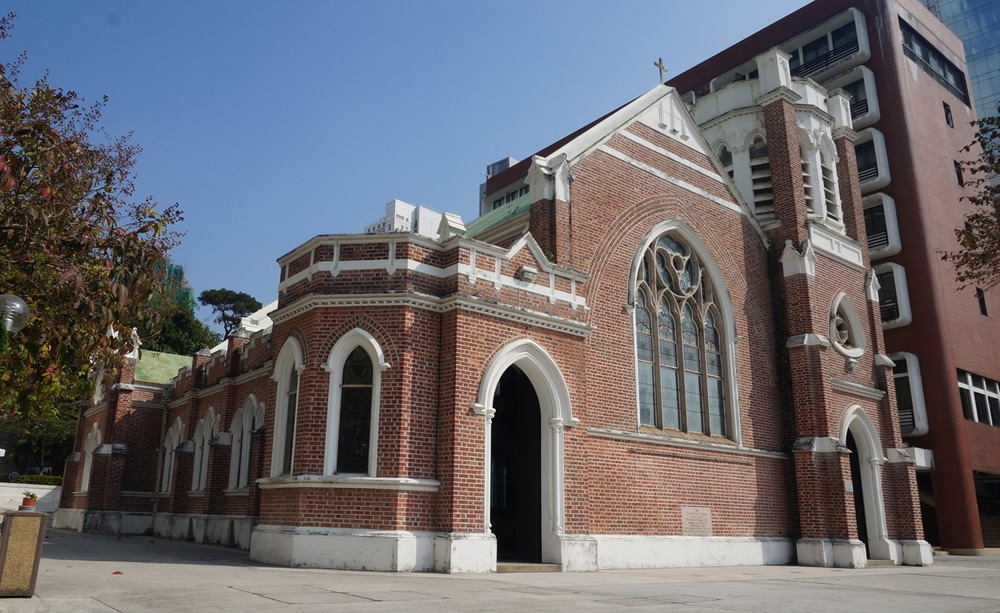
Founded in 1906 at Nathan Road in Tsim Sha Tsui, St Andrew's Church is the oldest Protestant church in Kowloon.
A typical Gothic Revival architecture with red brick façades, the main building is cruciform on plan with a single bell tower decorated by colourful stained glass windows at front right. It has had a number of extensions, including the construction of the old Vicarage in 1909, the Amah’s Quarters and the Caretakers’ Quarters in around 1910, and the Christian Centre in 1978.
In 2006, the “UNESCO Asia-Pacific Awards for Cultural Heritage Conservation” awarded the Church an Award of Merit. In order to provide additional space for contemporary facilities, the historic Church started another expansion in 2012 and the Life Centre was open in 2015.
St Andrew's Church was rated Grade 1 historic building in 2019.
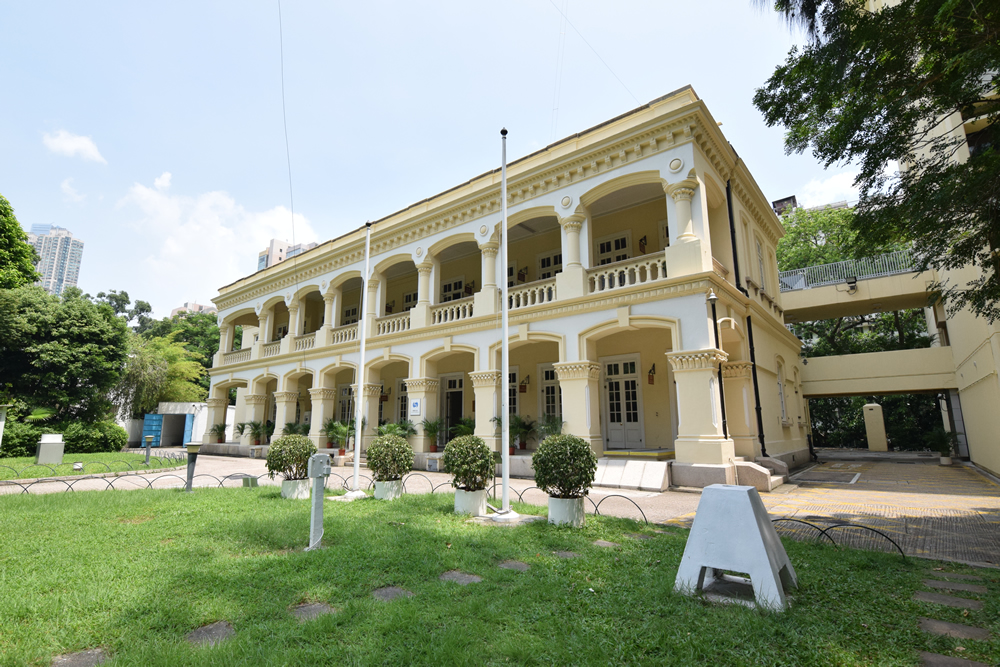
Hong Kong Observatory was established in 1883 and its 1883 Building stands on the small hill at Nathan Road in Tsim Sha Tsui, facing Kowloon Park. Early operations of the Observatory included meteorological and magnetic observations, a time service based on astronomical observations and a tropical cyclone warning service. Since the commencement of regular meteorological observations in 1884, the Observatory has been responsible for monitoring and forecasting weather of Hong Kong.
Built in Victorian-Colonial style, the 1883 Building of Hong Kong Observatory is a rectangular 2-storey plastered brick structure characterised by arched windows and long verandas. The 1883 Building was declared a monument in 1984. Free public guided tours are available for visitors.
Website:
https://www.amo.gov.hk/en/visitor-centre/docent-services/groups/fkbs-1883-building/index.html
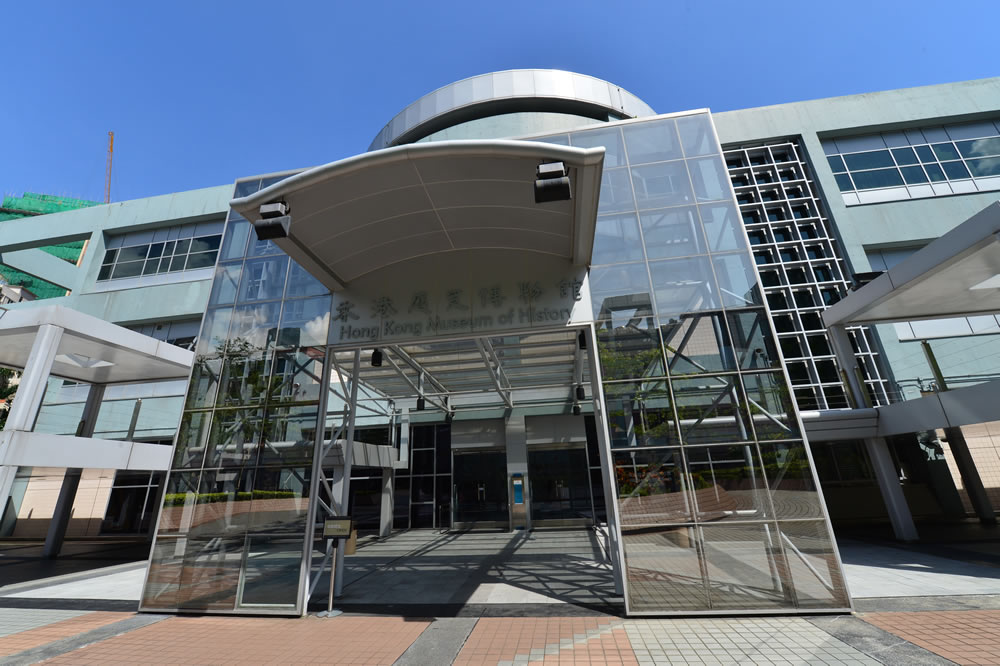
The Hong Kong Museum of History traces its origins to the City Hall Art Gallery and Museum, which was established in 1962. In 1969, it was renamed the City Museum and Art Gallery, and in 1975 it was split into the Hong Kong Museum of Art and the Hong Kong Museum of History. The latter was relocated from its temporary accommodation in Kowloon Park to the present premises on Chatham Road South, Tsim Sha Tsui, in July 1998.
The Hong Kong Museum of History has a gross floor area of 17 500 sq m. This modern museum building includes about 8 000 sq m of exhibition space, together with supporting facilities such as a lecture hall and activity rooms. It is dedicated to public education and to promoting the history of Hong Kong, our country, and the world.
"The Hong Kong Story" permanent exhibition, the Museum's signature exhibition, brings together more than 2 800 valuable exhibits. With a broad historical perspective, it takes visitors on a journey through time, tracing the roots of ancient civilisation from the Chinese Mainland and Hong Kong’s development into a world-renowned metropolis.
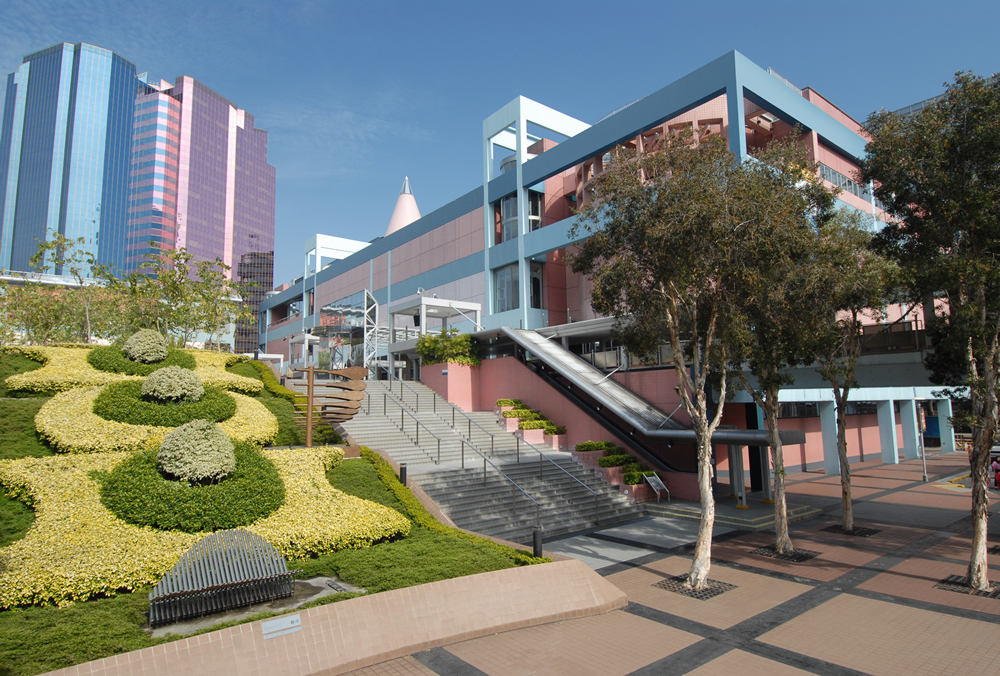
Hong Kong Science Museum at Science Museum Road, Tsim Sha Tsui was opened in 1991.
The 4-storey Museum houses about 500 exhibits in the permanent exhibition area, covering a wide range of science and technology topics such as light, sound, motion, electricity and magnetism, mathematics, life science, biodiversity, environmental protection, transportation, telecommunication, food science, home technology, etc. There are Children's Gallery and Prototype Zone as well. About 70% of the exhibits are participatory, offering a fascinating adventure for visitors to explore exhibits in their own way and experience the fun of discovery learning.
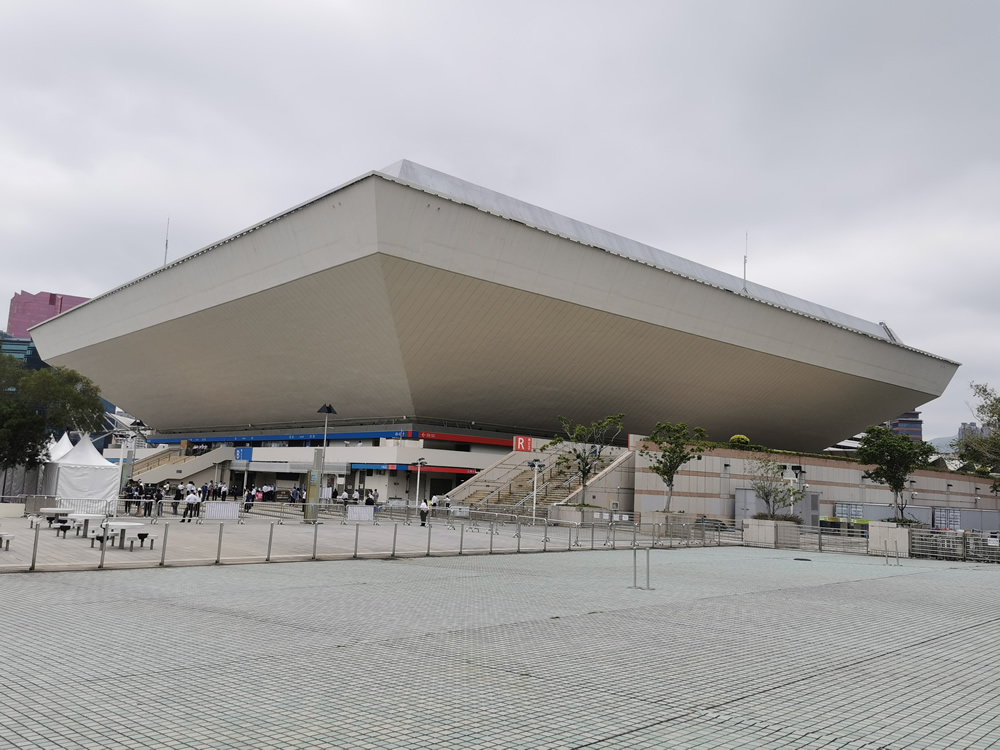
Since its opening in 1983, the Hong Kong Coliseum has all along been one of the most popular multipurpose indoor venues in Hong Kong for international sports events, spectacular entertainment programmes, pop concerts and conventions.
With an imposing design, the Coliseum is shaped like an inverted pyramid, creating a maximum column-free space out of the 1 600 sq m arena, providing an unobstructed view of the arena for over 12 500 audience.
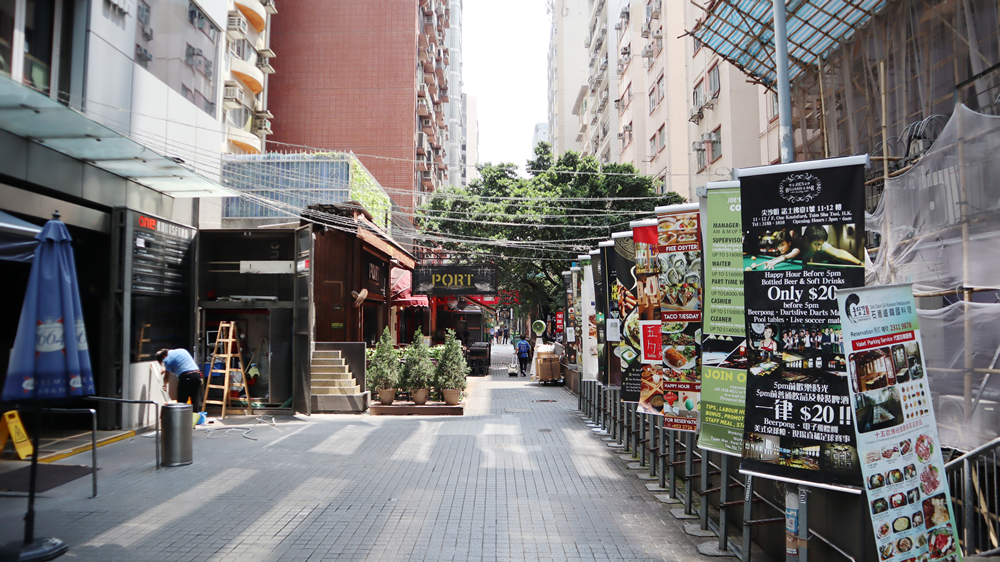
Situated at the small hill next to Hong Kong Observatory, Knutsford Terrace in Tsim Sha Tsui is well-known for its featured bars, pubs and restaurants. As “Kowloon’s answer to Lan Kwai Fong", Knutsford Terrace, with a pool of global eateries, is an enchanting place for romantic dating and gathering with friends.
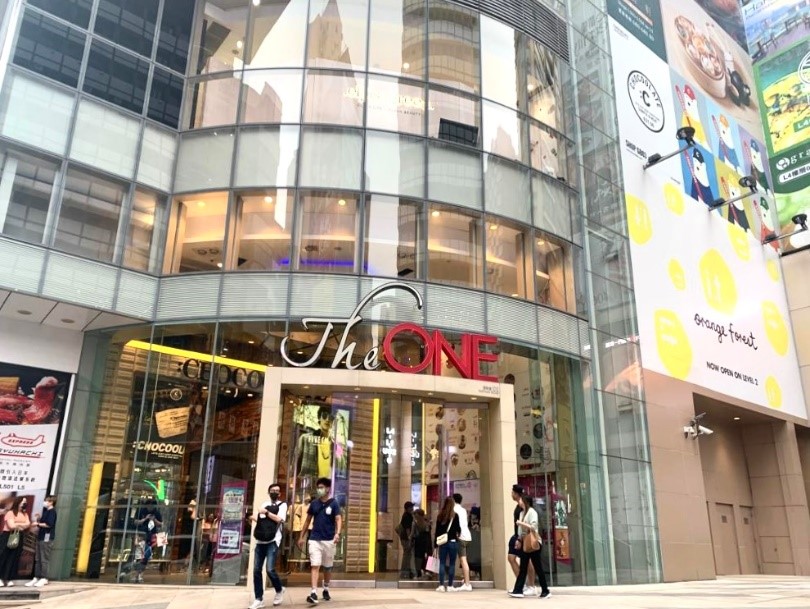
The ONE at Nathan Road, Tsim Sha Tsui is one of the hot spots for tourists and large-scale shopping malls in the district.
The 23-storey The ONE has a total area of over 400 000 sq ft and houses more than 130 shops including retail stores, restaurants and entertainment venues, providing an ideal platform for holding exhibitions, performances and events.
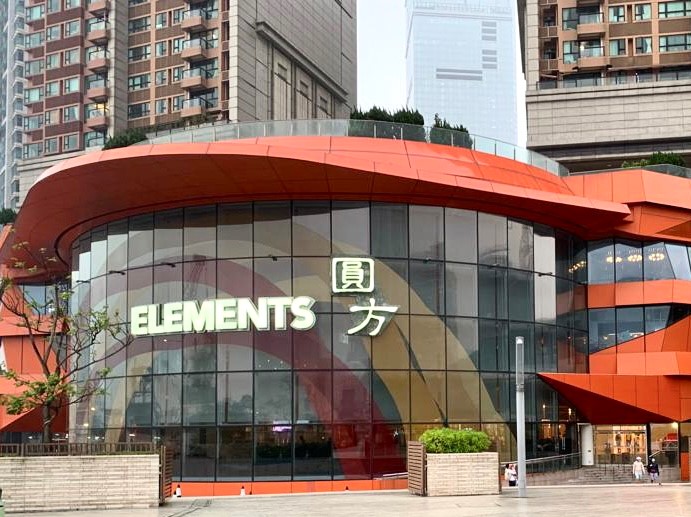
Located on top of the Kowloon MTR Station, ELEMENTS is a 4-storey shopping mall with a total area of 1 000 000 sq ft. It is divided into 5 zones based on the theme of the five Chinese elements of metal, wood, water, fire and earth. A large shopping mall in the West Kowloon District offering famous brands of fashion, jewellery and accessories, it also houses a skating rink, a cinema and a range of restaurants from all over the world.
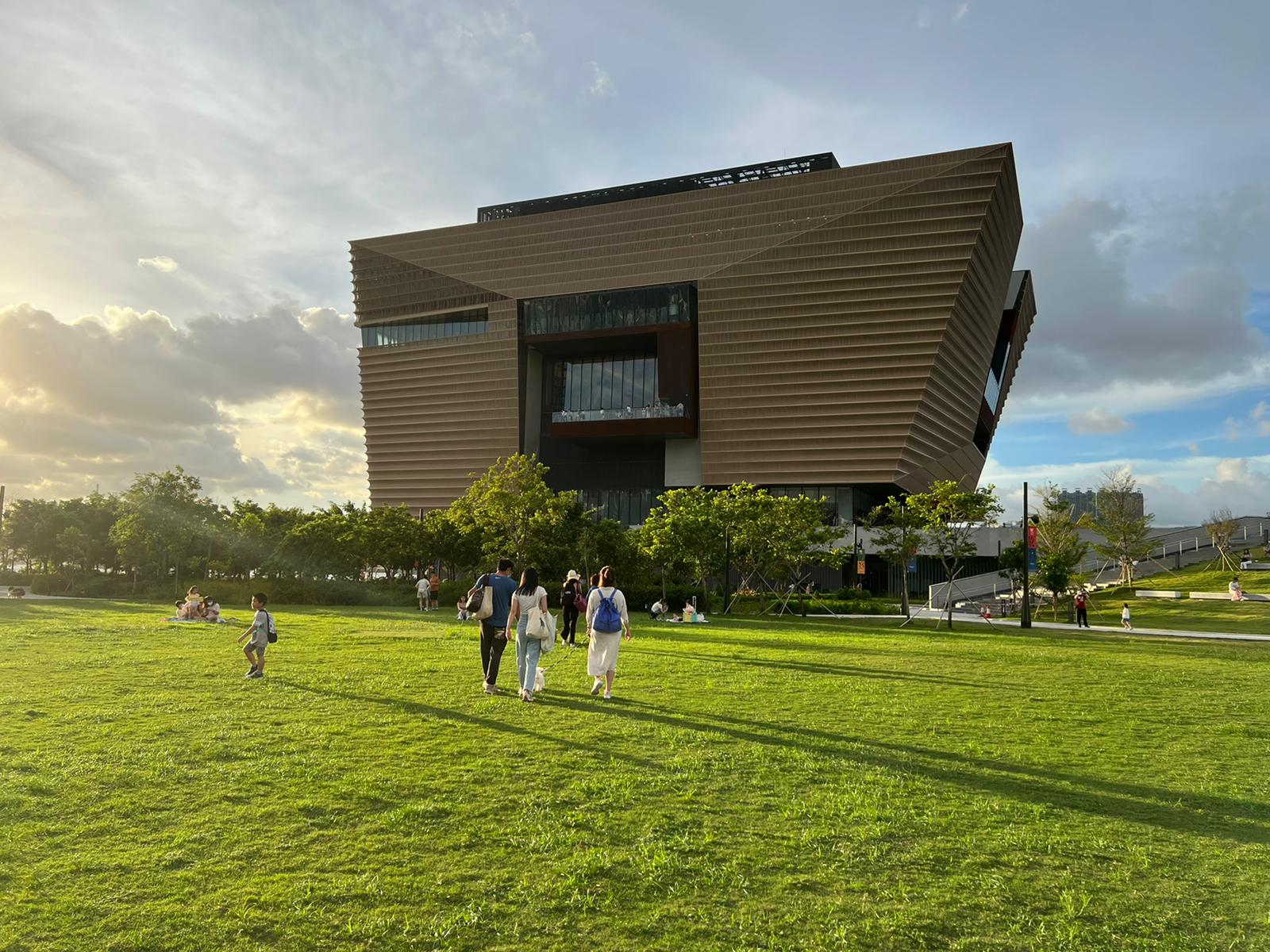
West Kowloon Cultural District (WKCD) is located at the southern tip of West Kowloon Reclamation Area with an area of 40 ha. It is one of the world’s largest cultural quarters, blending together arts, education and public space.
WKCD provides 23 ha of open space including the Art Park and a continuous waterfront promenade. Other facilities that are in use include Xiqu Centre (a world-class venue for staging traditional Chinese art form of xiqu), Freespace (venues for multi-genre performances and events promoting boundary-pushing collaborations), M+ (a museum of visual culture encompassing 20th and 21st century visual art, design and architecture, and moving image from Hong Kong, the Mainland, Asia and beyond), the Hong Kong Palace Museum (HKPM) and the Competition Pavilion, etc. M+ is one of the largest museums of modern and contemporary visual culture in the world. On the other hand, HKPM provides 7 800 sq m of gallery space, introducing aspects of the fascinating history and culture of the Palace Museum, with exceptional works from its collection, such as painting, calligraphy, the decorative arts, and rare books.
Together with the Lyric Theatre Complex which is expected to be completed in 2025, WKCD will become a vibrant arts and cultural hub for supporting and promoting arts and cultural development in Hong Kong.
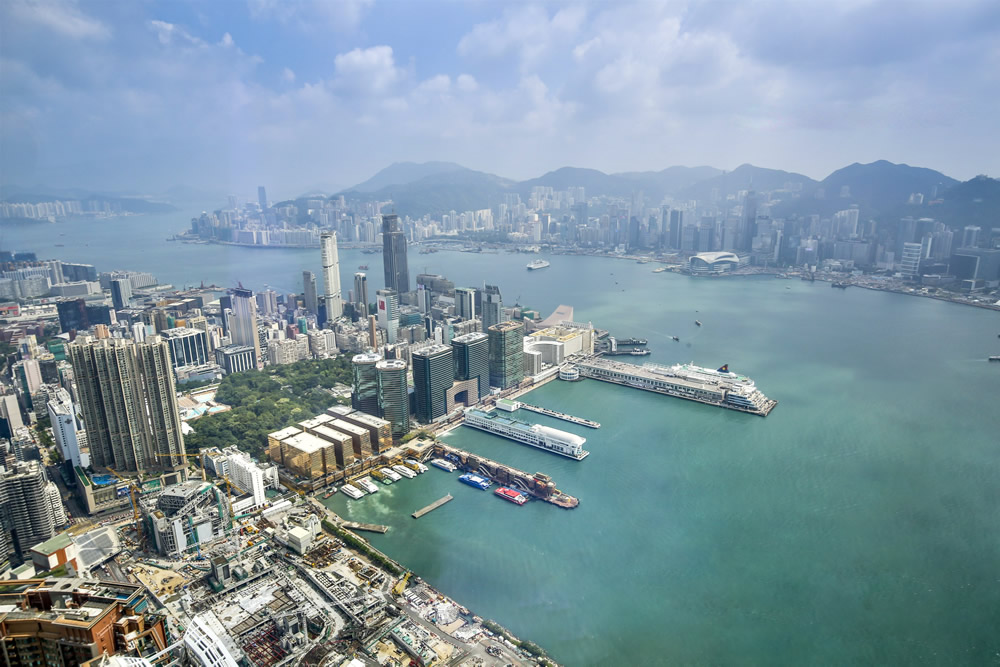
Located on the 100th floor of the International Commerce Centre, Austin Road West, sky100 Hong Kong Observation Deck is the highest indoor observation deck in Hong Kong. Apart from enjoying the superb 360-degree panoramic view of the Victoria Harbour, visitors can gain a better understanding of the history and culture of Hong Kong through various multimedia exhibits there.
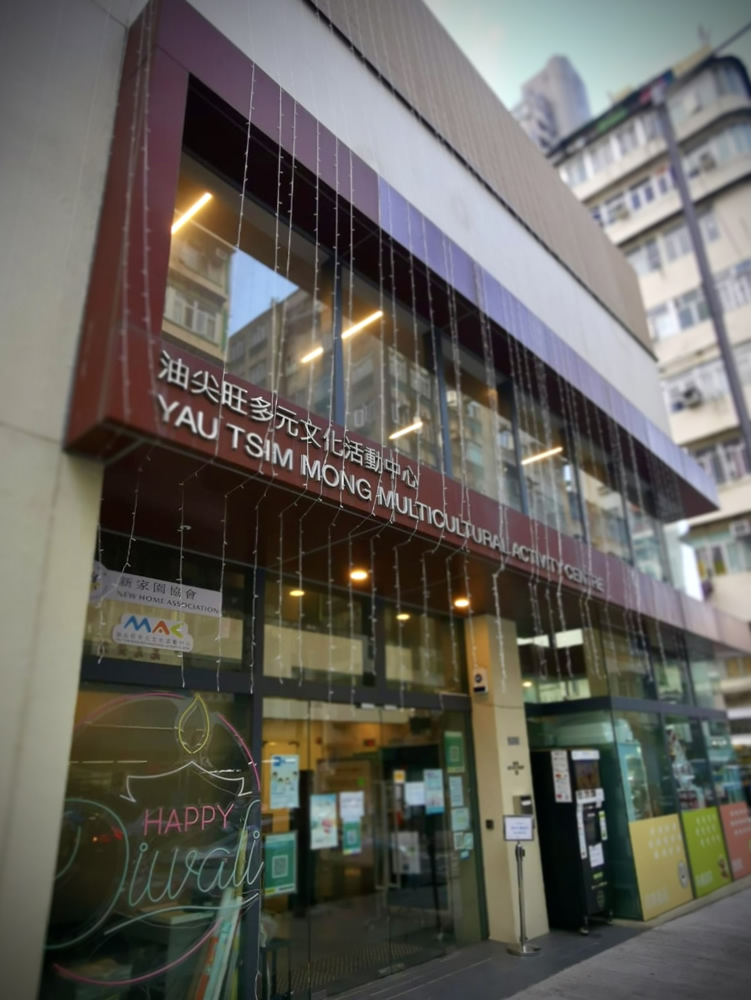
Situated at Battery Street in Jordan, Yau Tsim Mong Multicultural Activity Centre provides multi-purpose facilities for organisations and residents of Yau Tsim Mong District. It also strives to provide various activities and services that highlight the district’s multicultural characteristics and enhance social integration, such as employment training, afterschool care support services, translation services and cultural exchange exhibitions.
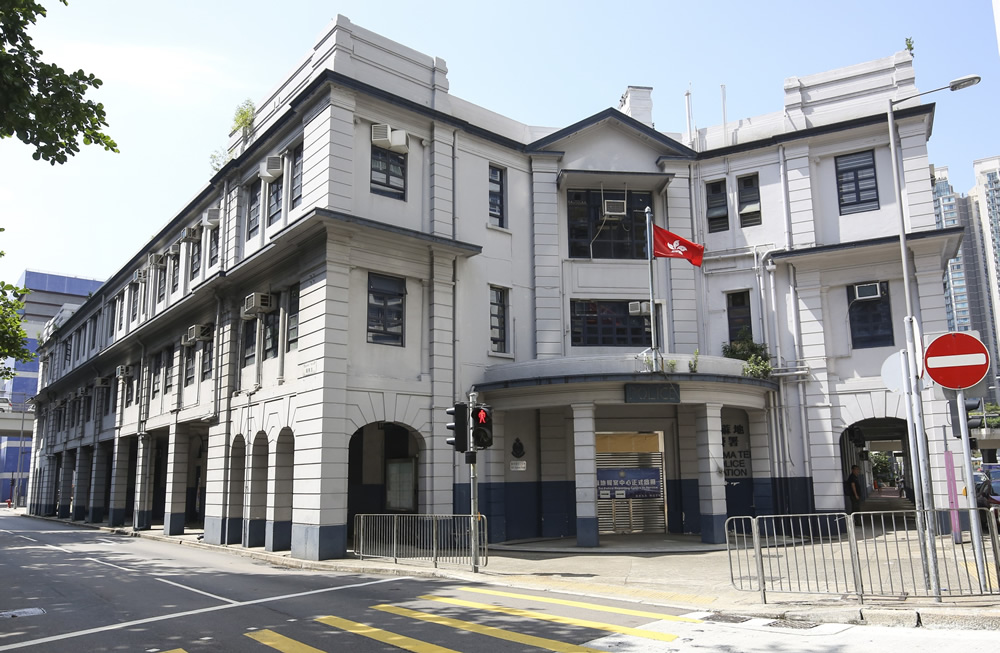
Built at the current site at Canton Road in 1922, the Former Yau Ma Tei Police Station is an Edwardian architecture and one of the few remaining pre-war police station buildings in Hong Kong. The Former Yau Ma Tei Police Station was rated Grade 2 historic building in 2009.
The Yau Ma Tei Police Station was relocated to the new police station building at No. 3 Yau Cheung Road, Yau Ma Tei in 2016.
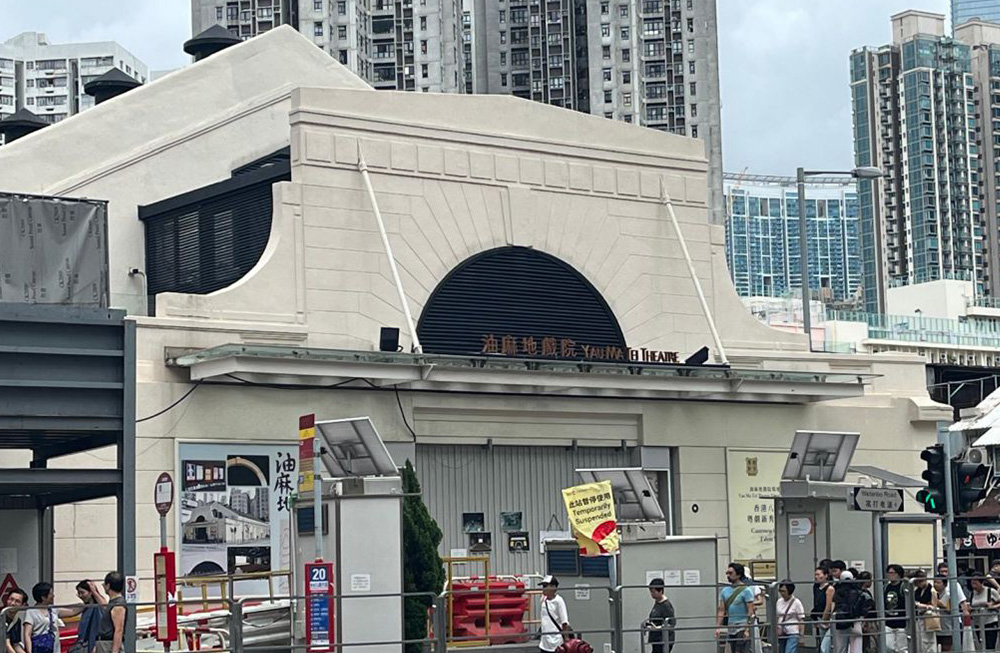
Built in 1930, Yau Ma Tei Theatre at Waterloo Road is the only surviving pre-World War II theatre in urban area. Its characteristic features include the two pillars at the front entrance, the Chinese pitched roof, the Art Deco façade and Dutch gable walls, the steel trusses and timber purlins for roof support, and the original proscenium and interior walls of the stage. Yau Ma Tei Theatre ceased operation in 1998 and was accorded as Grade 2 historic building in 2009.
Built in 1895, the Red Brick Building was formerly the Engineer’s Office of the old Pumping Station of the Water Supplies Department on Shanghai Street. It is the oldest surviving building of a water pumping station in the territory. After the water pumping station ceased operation in 1911, various buildings in the complex were either demolished or converted for other purposes, with the exception of the Red Brick Building. Its special features include the red brick façade, cast iron rainwater pipes, cast iron hopper heads, arched verandahs and granite coping stones, knee stones, skew corbels, and pad stones to gable. The former Pumping Station of the Water Supplies Department was rated Grade 1 historic building in 2009.
For the preservation, promotion and development of Cantonese opera, the Yau Ma Tei Theatre and the Red Brick Building, both graded historic buildings, have been revitalised as a territory-wide performing arts venue named Yau Ma Tei Theatre. Officially opened in 2012, the venue is designated for promoting Chinese opera activities, in particular Cantonese opera. The venue is equipped with performing and rehearsal facilities to encourage and support the budding and upcoming Cantonese opera troupes.
The Yau Ma Tei Theatre was temporarily closed from 2022 onwards in connection with the Phase 2 construction and is expected to be re-opened in 2026.
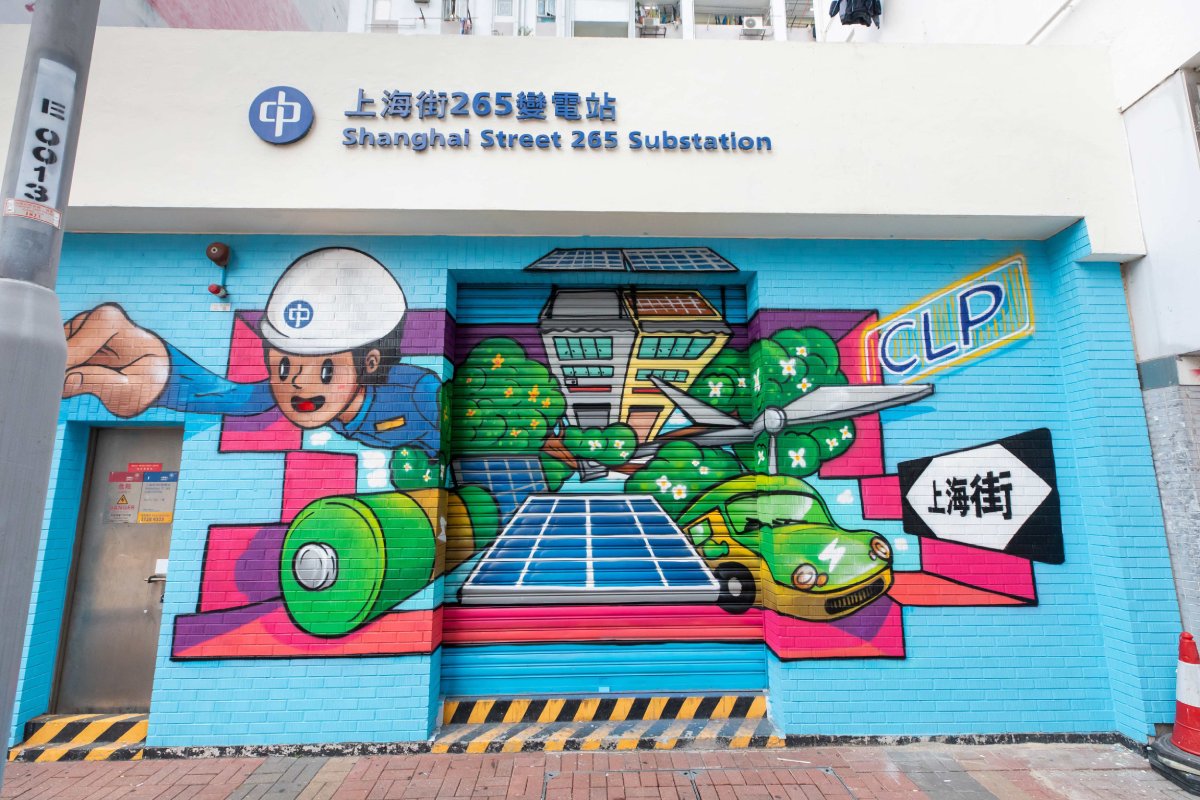
Shanghai Street 265 Substation is another beautified substation in the district. Centred on an engineer, the mural illustrates the close relationship between electricity and everyday life, from illuminating homes to powering the dazzling nightscape that has long characterised Mong Kok.
The artwork also incorporates solar panels, wind turbines and electric vehicles, reflecting the city's progress towards a low-carbon future. It further highlights CLP's long-standing support for the district's development and its enduring connection with this vibrant community.
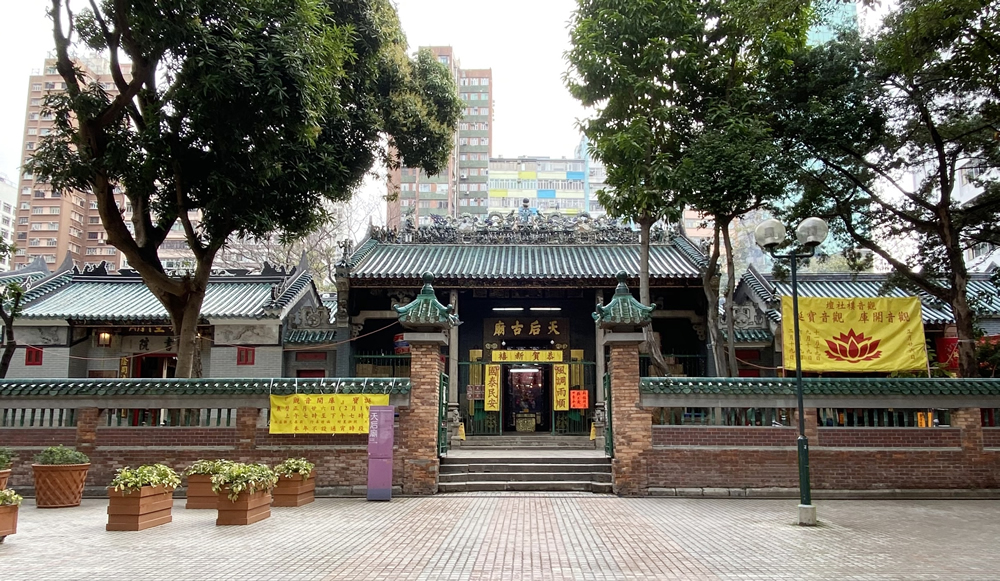
Tin Hau Temple, Yau Ma Tei is located at Temple Street near Public Square Street, commonly known as "Yung Shu Tau". It replaced an earlier Tin Hau Temple probably built in 1865 at around the junction of today’s Pak Hoi Street and Temple Street, and was rebuilt at its present site in 1878. A large number of precious historic relics are kept in the Temple. They are valuable assets to the studies of the history and social development of Yau Ma Tei area.
The Temple is dedicated to Tin Hau. Tin Hau, also known as “Matsu”, was said to be a native in Fujian Province called Lam Mak Leung during the Song Dynasty (960 - 1279). According to legend, she had gifted power and saved many people from sea disasters. The seafarers therefore worship Tin Hau and regard her as their patron saint.
The Temple and the 4 adjoining buildings, namely Kung Sor, Fook Tak Tsz and the 2 Shu Yuen form the Temple Compound which is the largest surviving Tin Hau Temple Compound in Kowloon. The Temple Compound was declared a monument in 2020.
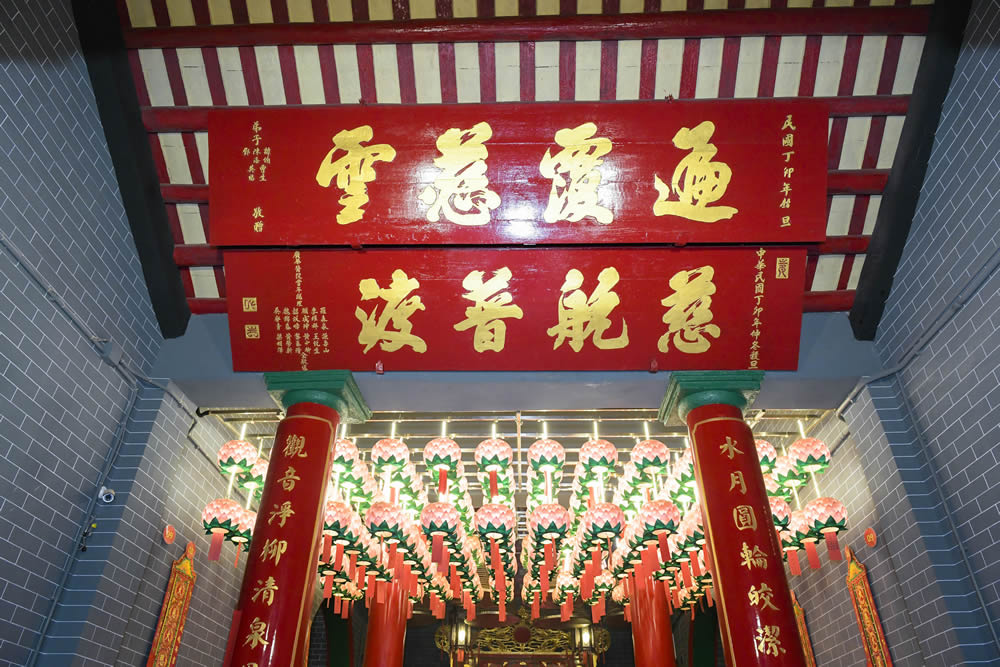
Shui Yuet Kung, Shan Tung Street is dedicated to Kwun Yum. Kwun Yum, originated in India, was a male divinity in the earlier times but evolved to be a gracious female deity. She is also known as a deity of sympathy, compassion and mercy, hearing the pleas of those who are suffering, thus earning her the title of “Buddhist of Goddess of Mercy”.
Many worshippers pay tribute to Kwun Yum at Shui Yuet Kung, Shan Tung Street on Kwun Yum Festivals. They also flock to the Temple to "borrow money" from the Goddess during Kwun Yum Treasury Opening Festival (meaning Kwun Yum opens her treasury and lends money to people) on the 26th day of the 1st lunar month, hoping to increase wealth in the year ahead.
The Temple was originally located at the junction of Waterloo Road and Argyle Street, and was relocated to the present site in 1927. A temple bell with the 10th year of the Guangxu reign (1884) of the Qing Dynasty inscribed is kept inside the Temple. The Temple was rated Grade 3 historic building in 2010.
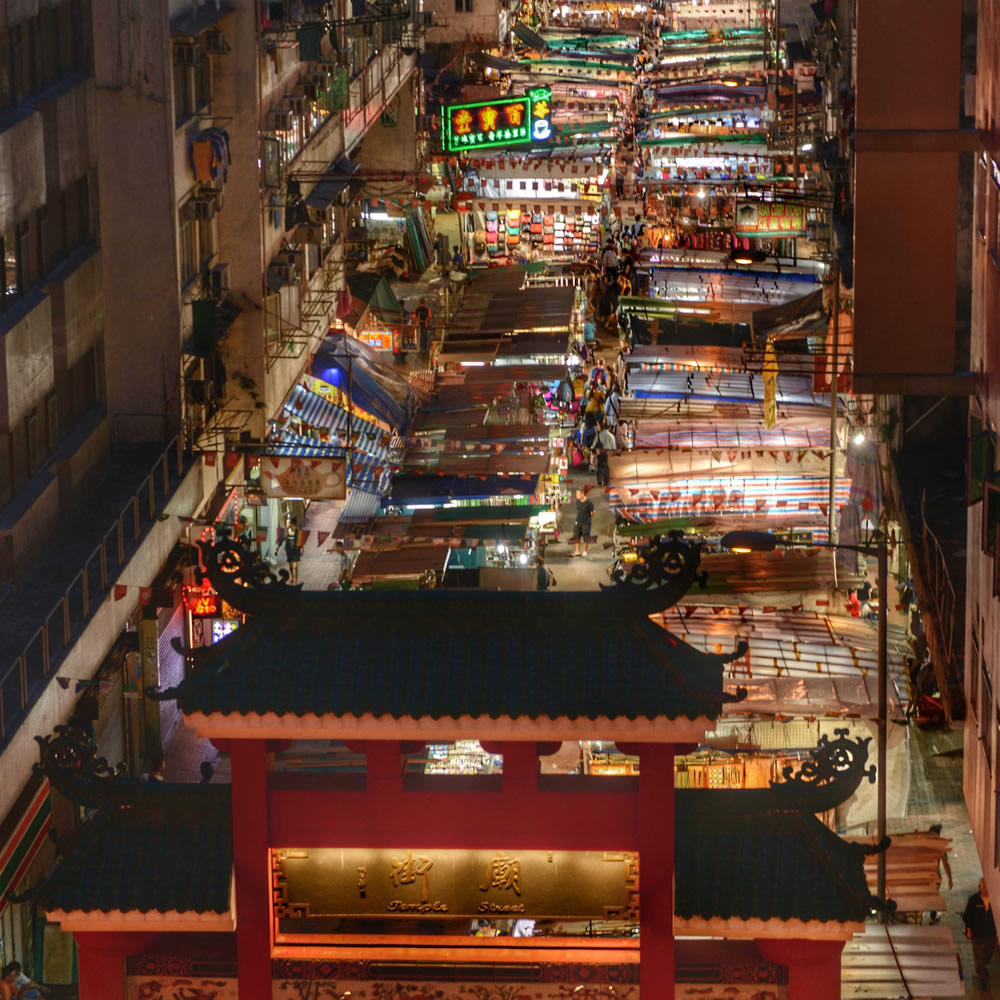
Temple Street is named after Tin Hau Temple, Yau Ma Tei. It is also known as "Men's Street" as the clientele of most stalls are men. The street market comes alive after 7:00 p.m. There are many good bargains, including clothing, handbags, compact discs and watches, etc.
Temple Street is also famous for its food stalls, where all sorts of seafood and local delicacies can be found. The food variety, affordable prices and bustling atmosphere attract abundant visitors all year round.
Along the section of Temple Street under the flyover of West Kowloon Corridor, fortune-tellers and professional chess players huddle beside their lamps. An area near Public Square Street, which is commonly known as "Yung Shu Tau", stands some booths staging Cantonese operas or Cantonese and Western pop songs.
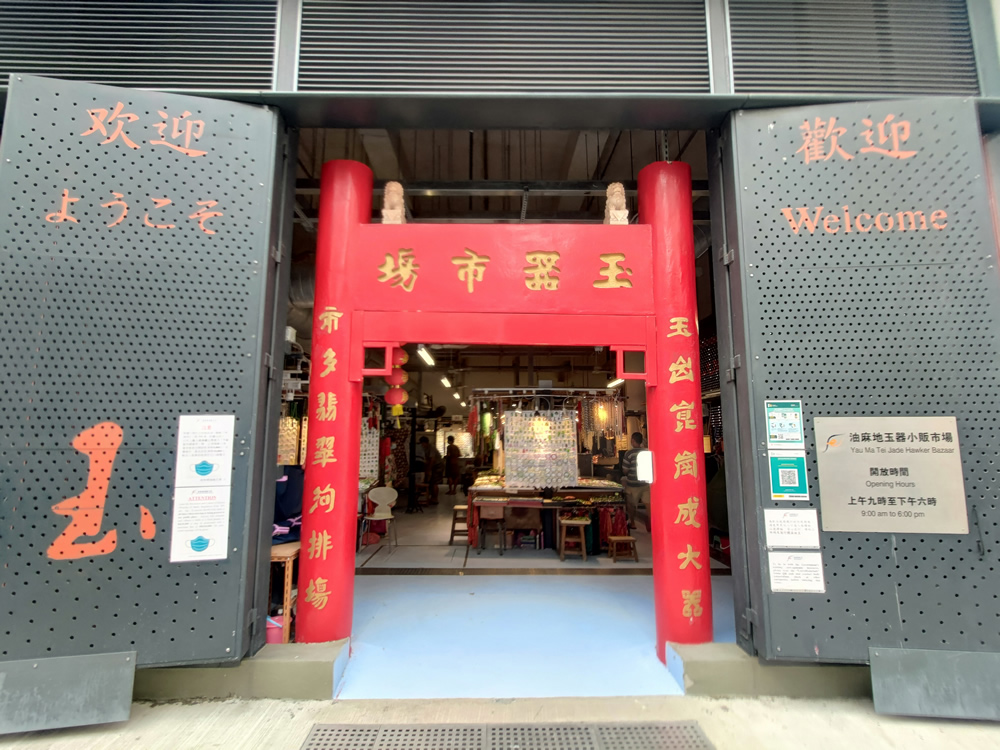
Jade Market was set up in 1984 and relocated to No. 251 Shanghai Street, Yau Ma Tei in November 2020. It is a great place to buy jadewares. Apart from jadeware trading, the Market also gathers some letter-writers offering a wide range of services, including Chinese calligraphy, letter-writing in English and Chinese, and completion of application forms and tax returns. They are among the few remaining operators of this ancient trade in Hong Kong.
The section of Canton Road between Kansu Street and Jordan Road near Jade Market is commonly known as “Jade Street” where visitors can find high quality jade products and ornaments, as well as jade and gemstone identification services.
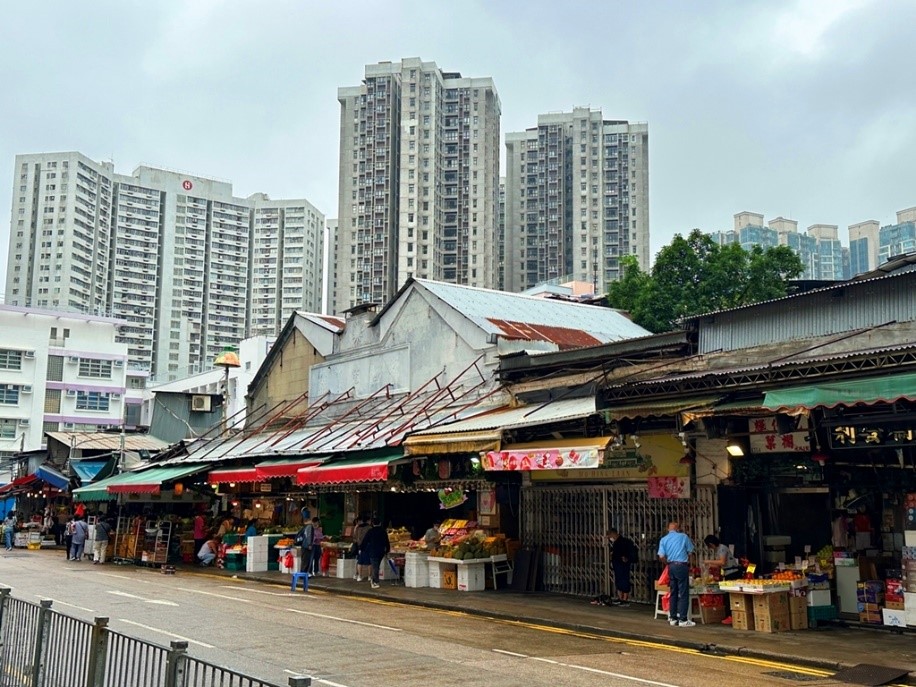
Located in the area enclosed by Waterloo Road, Reclamation Street and Shek Lung Street, Yau Ma Tei Wholesale Fruit Market was built in 1913 and was originally known as the Government Vegetables Market selling vegetables and fruits. Fish traders then joined in the 1930s. In 1952, considering the increasing volume of fruit wholesaling and the insufficient space for the fruit stalls, the government redeveloped the vegetable section at Shek Lung Street and converted it into 16 fruit stalls. With the opening of the Cheung Sha Wan Wholesale Vegetable Market and the Cheung Sha Wan Temporary Wholesale Poultry Market in 1965, the vegetable and fish wholesale stalls moved out and only fruit wholesalers remained in operation. The market was then renamed as Yau Ma Tei Fruit Market.
Yau Ma Tei Wholesale Fruit Market consists of a rectangular site packed with market stalls and shophouses of one to two storeys high. They were largely built of bricks or stones with covered pedestrian walkways or arcades formed by projecting balconies of upper floors. The use of Dutch Colonial gables and pediments and the carvings of traders’ brand names on pediments or tablets of the gables are highlights of the Fruit Market.
Yau Ma Tei Wholesale Fruit Market was rated Grade 2 historic building in 2009.
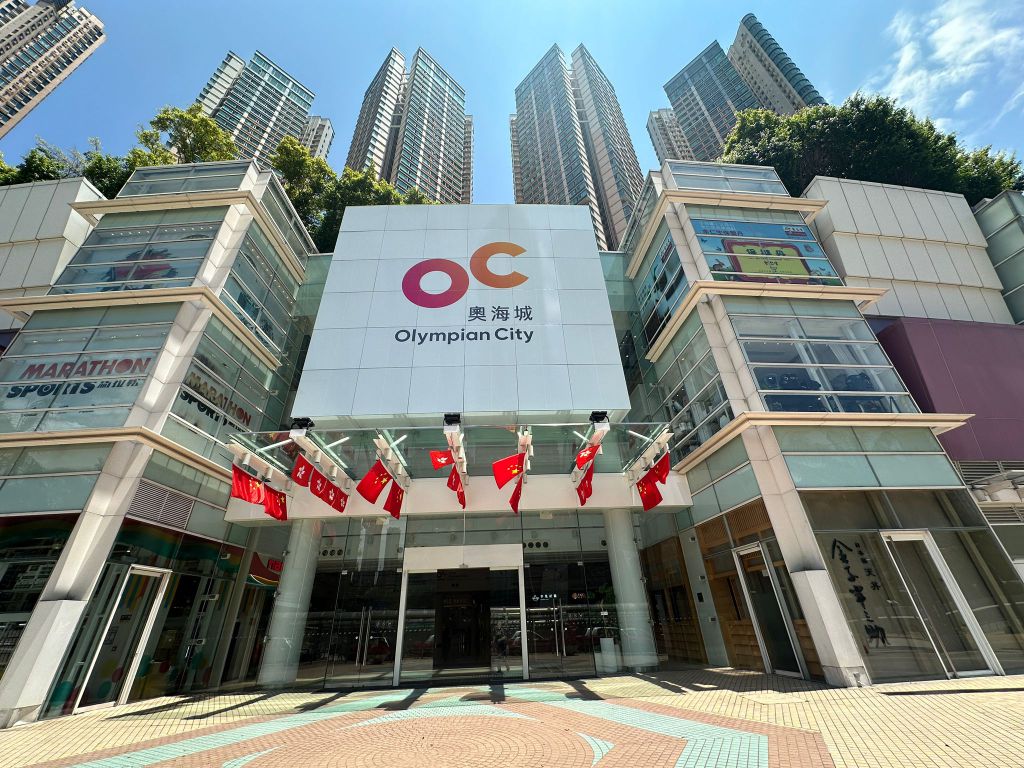
Olympian City is adjacent to the Olympic MTR station. With a total area of 800 000 sq ft and over 300 stores and restaurants, it is one of the major shopping malls in the West Kowloon District.
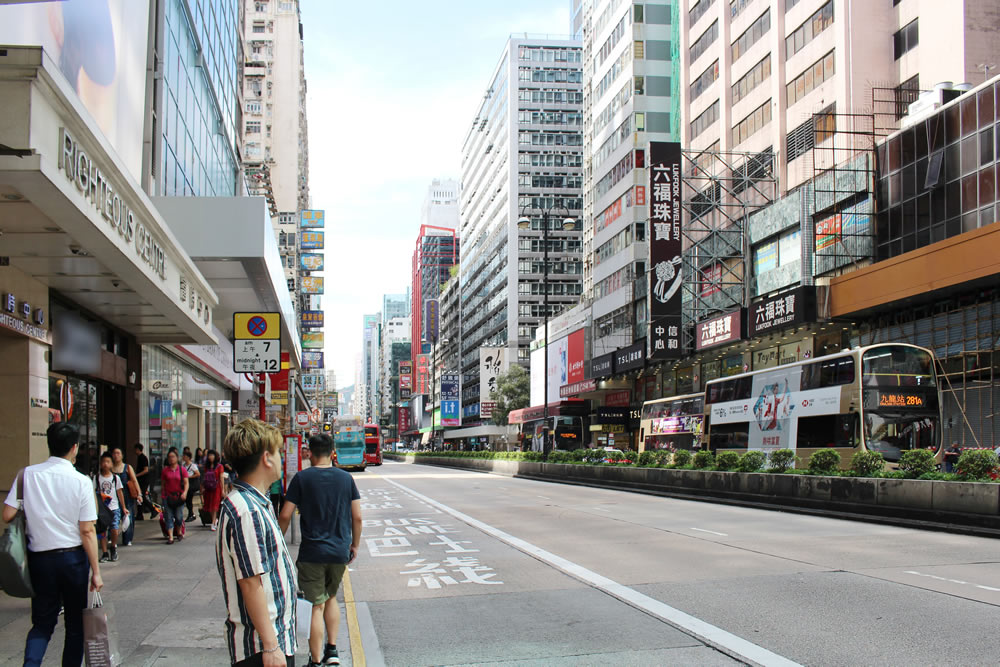
Nathan Road, one of the major roads on the Kowloon Peninsula, extends from the waterfront of Tsim Sha Tsui to Boundary Street. Being the oldest road on the Kowloon Peninsula, it was first built in 1860 and named "Robinson Road". It was rebuilt and renamed "Nathan Road" in 1909.
In over a century's time, high-rise commercial and residential buildings stretch along the road. The section between Mong Kok and Tsim Sha Tsui has become a prosperous shopping area, adorned with lights from a myriad of shops and hotels at night and thronged with visitors.
Located at the junction of Shantung Street and Sai Yeung Choi Street South in Mong Kok, Sim City offers a wide range of stores selling computer accessories, photographic and audio-visual equipment, etc., making it very convenient for customers to explore and purchase what they need.
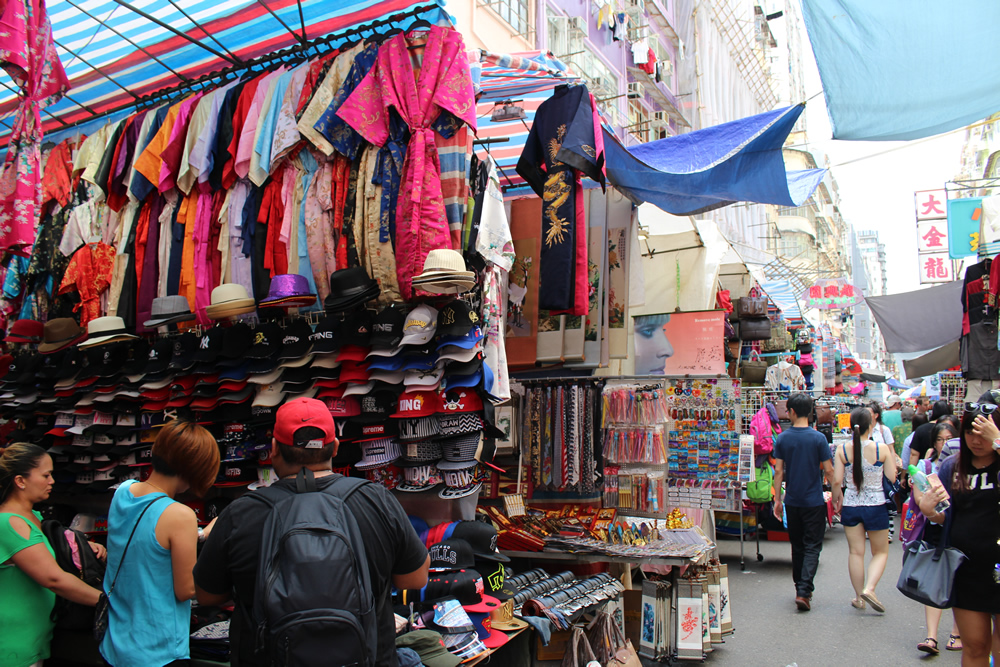
Ladies' Market refers to the section of Tung Choi Street between Argyle Street and Dundas Street in Mong Kok and is a popular shopping place for both locals and tourists. The Market gets its name from being a place selling fashionable ladies' clothing in the early days. Renowned for good bargains, you can find budget items of clothing, watches, handbags, cosmetics, accessories, household products and toys there.
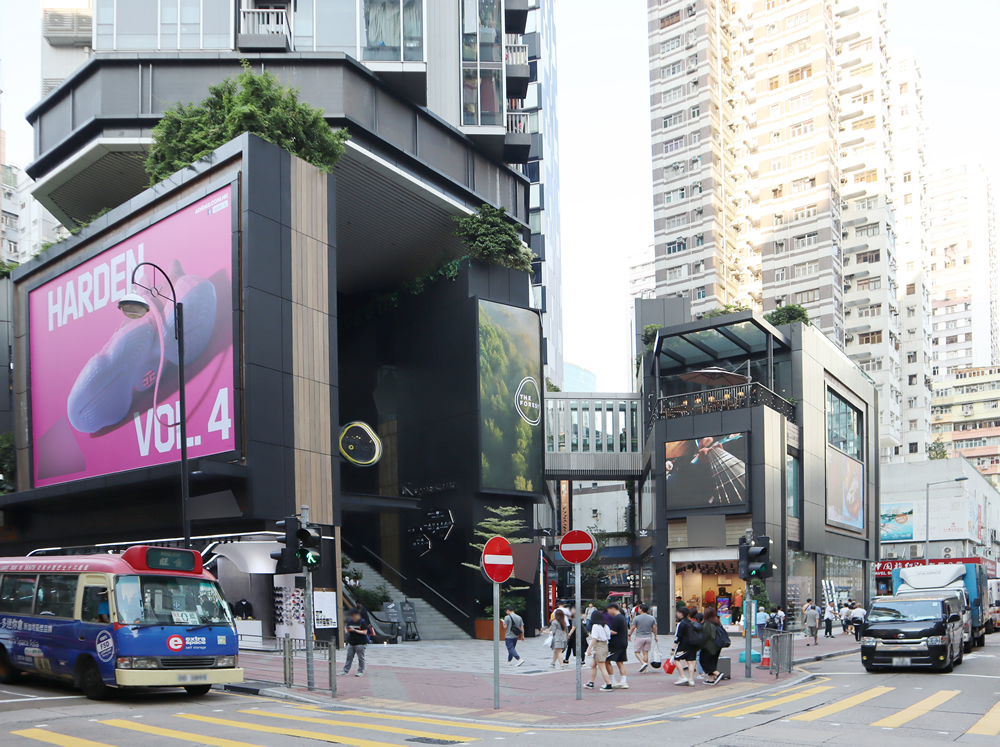
“Sneaker Street” in Mong Kok refers to the section of Fa Yuen Street between Dundas Street and Argyle Street. Here a lot of sports shops offer a great variety of stylish sports shoes and items, including limited or special edition sneakers, attracting a continuous stream of visitors throughout the year.
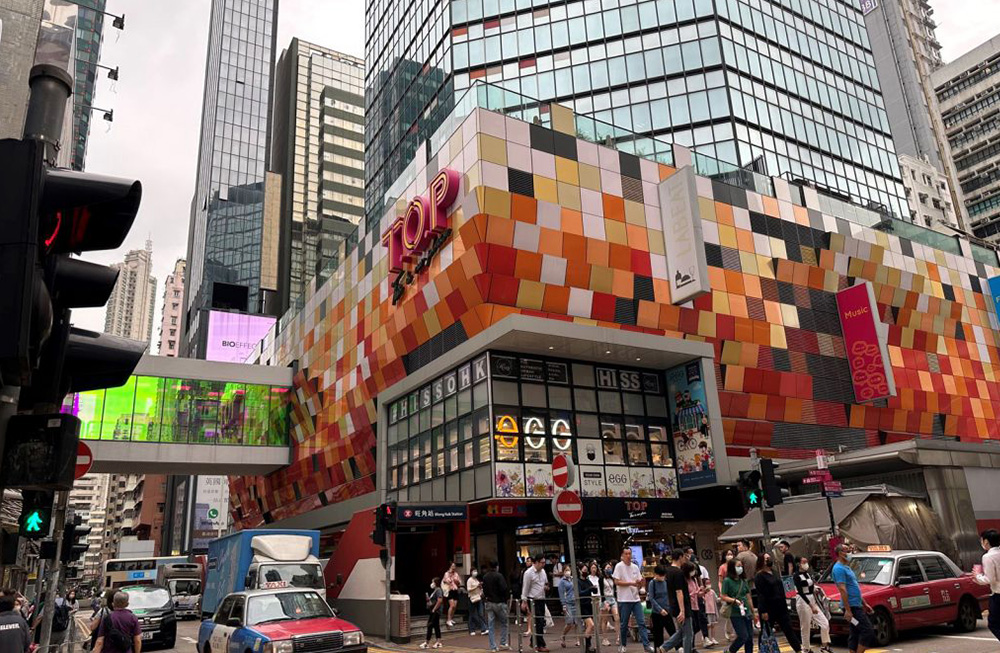
T.O.P This is Our Place is a mixed-use commercial complex comprising an office building and a shopping mall connecting to the Mong Kok MTR Station. The mall operates under the “New Retail” concept and introduces a variety of brands, new concept retail chain stores, branded limited edition stores and a shared retail platform. The office building provides a wide range of services including medical, beauty, healthcare, business centres, etc., all in one place.
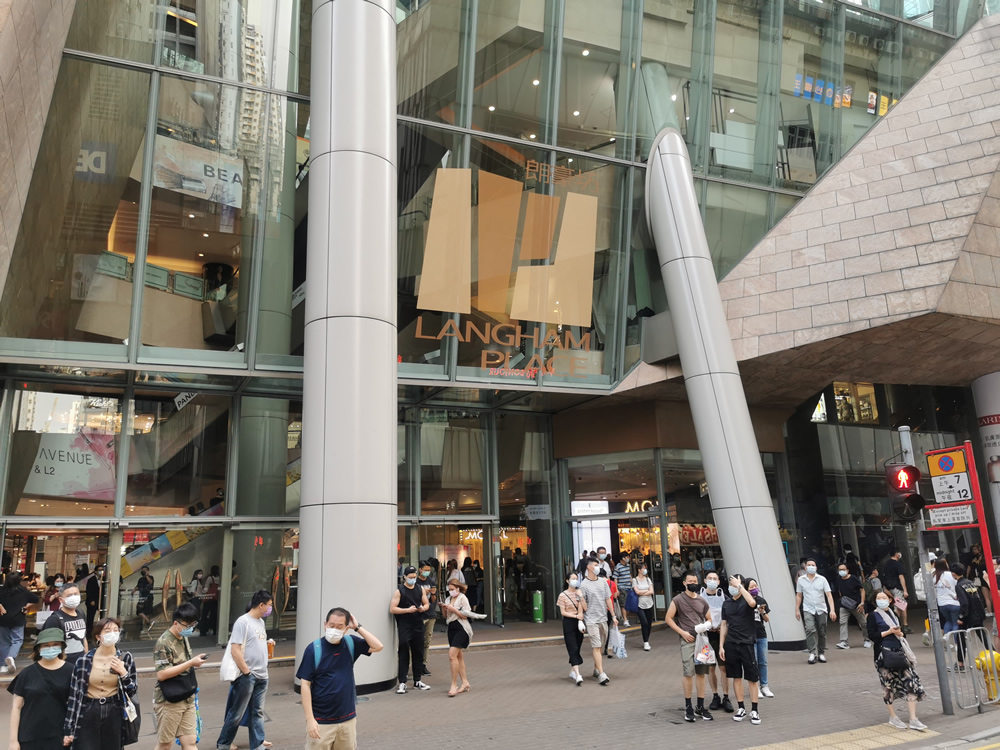
Located at Argyle Street, the centre of Mong Kok, Langham Place comprises 3 key components, namely a 60-level office tower, a hotel, and a 15-level Langham Place Mall with a wide selection of around 200 shops, restaurants and entertainment facilities. The Digital Sky and Xpresscalators in the Grand Atrium are the most fascinating attractions of the Mall.
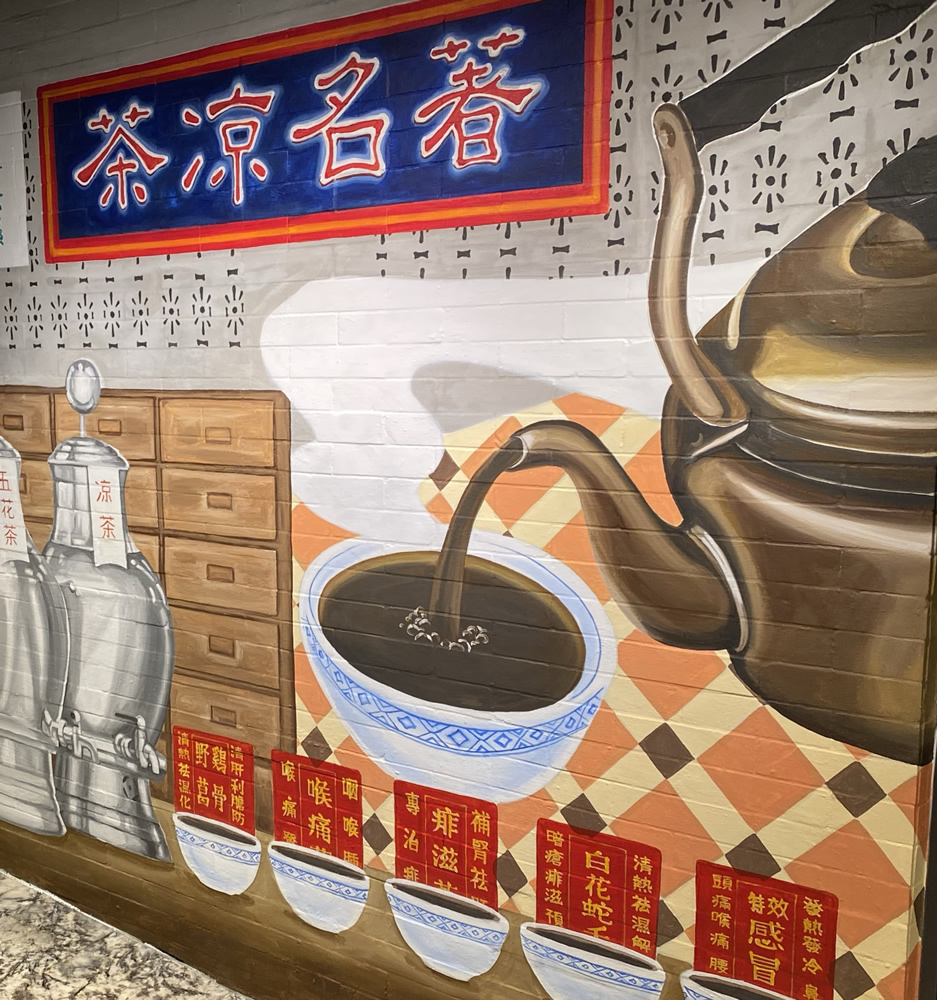
618 Shanghai Street comprises a cluster of 14 buildings of 3 to 6 storeys, mainly built from brick walls, stone plaques and wood, at nos. 600 to 626 Shanghai Street, Mong Kok. Among the buildings, 10 balcony-type tenement houses of 3- to 4-storey were built in 1920-1926 and were rated Grade 2 historic buildings in 2010. The remaining 4 post-war reinforced concrete buildings each of 6-storey were built in 1963-1964.
Balcony-type tenement buildings (Ke lau) were typical shophouses, with the upper floors used as living quarters and the ground floor for commercial use, combining the architectural features of shophouses in Southern China with Western shopping arcades. Such balcony-type tenement buildings were popular in Guangdong and Hong Kong from the end of the 19th century till the early post-war period, forming a key feature of commercial streets in Hong Kong at that time.
618 Shanghai Street is a preservation-revitalisation project offering a variety of local lifestyle shops and restaurants. It also offers venues for community events at the ground lobby and a multipurpose room.
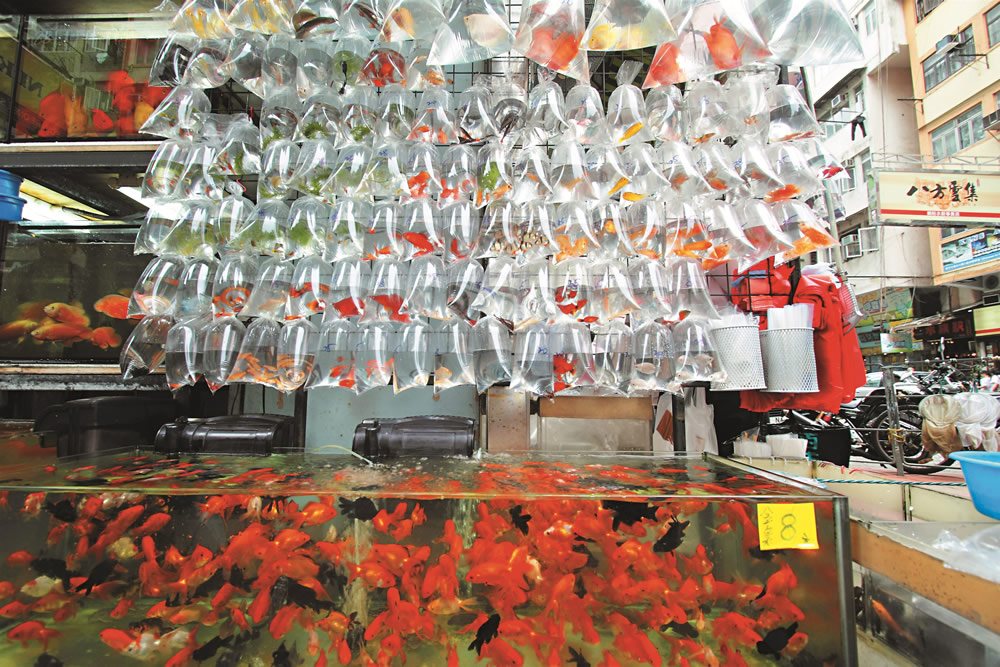
Goldfish Street is the section of Tung Choi Street between Mong Kok Road and Nullah Road in Mong Kok. It is lined with many aquariums and pet shops selling a wide variety of ornamental fish and aquarium products, as well as pet products and pets such as cats, dogs, lizards, tortoises and frogs. The Goldfish Street is a hot spot to shop ornamental fishes, aquarium accessories and pets.
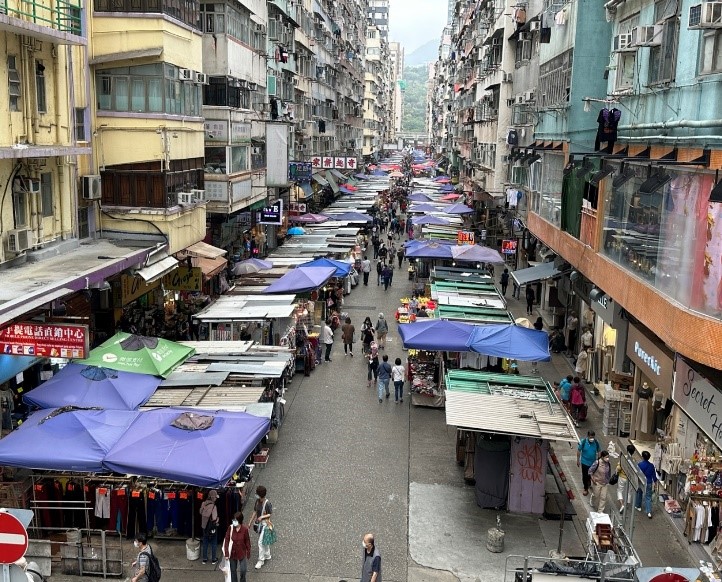
Fa Yuen Street Market Stalls are located along the section of Fa Yuen Street between Mong Kok Road and Prince Edward Road West in Kowloon. There are stalls on both sides of the street selling clothes, groceries, vegetables, fruits, etc. at affordable prices, attracting visitors of different ages to visit and shop.
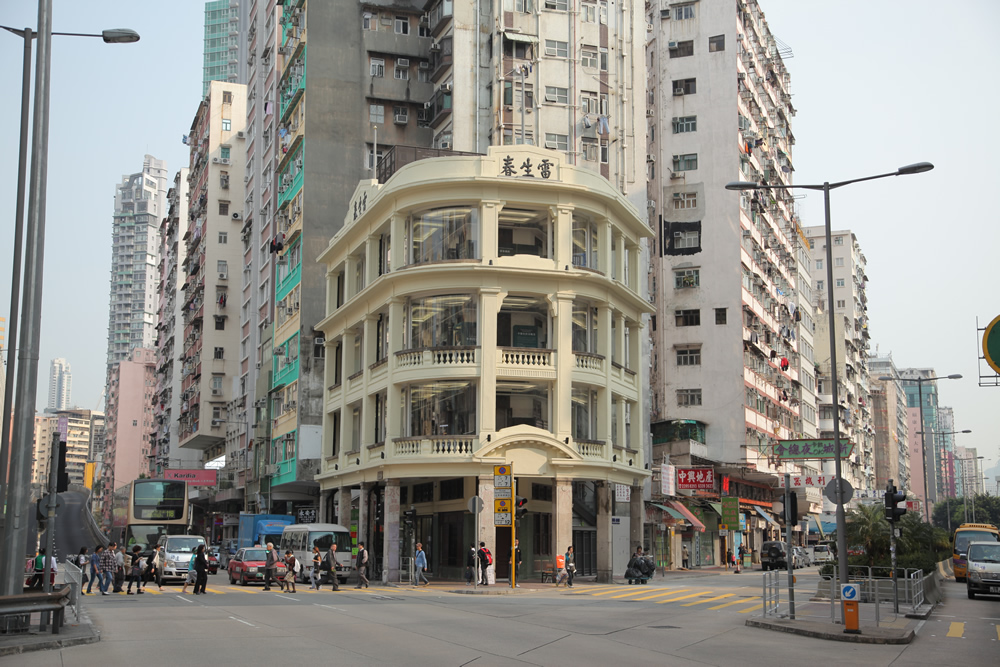
Standing at the junction of Tong Mi Road and Lai Chi Kok Road in Mong Kok, Lui Seng Chun was designed and built by architect W.H. Bourne and completed in around 1931. The ground floor of the 4-storey building was occupied by a Chinese bone-setter and herbalist medicine shop named "Lui Seng Chun", while the upper floors were residential accommodation.
Lui Seng Chun features a mixing of the sweeping horizontal lines of Streamline Modern (Art Deco) with robust classical elements. It has a square-shaped frame and a row of decorative balustrades in front. Besides, the deep verandahs constructed over the pedestrian walkway together with the stone plaque marked with the name of the medicine shop installed atop the building illustrate the local community life, economic activities and architectural merits of the past.
In 2012, revitalisation of Lui Seng Chun completed and the “Hong Kong Baptist University School of Chinese Medicine - Lui Seng Chun” commenced operation. There are a herbal tea shop and display areas on the ground floor, whilst the upper floors are dedicated to the Chinese medicine healthcare centre. The display areas on the ground floor are open to the public and free guided tours to other floors are available by registration.
Lui Seng Chun was declared a monument in 2022.
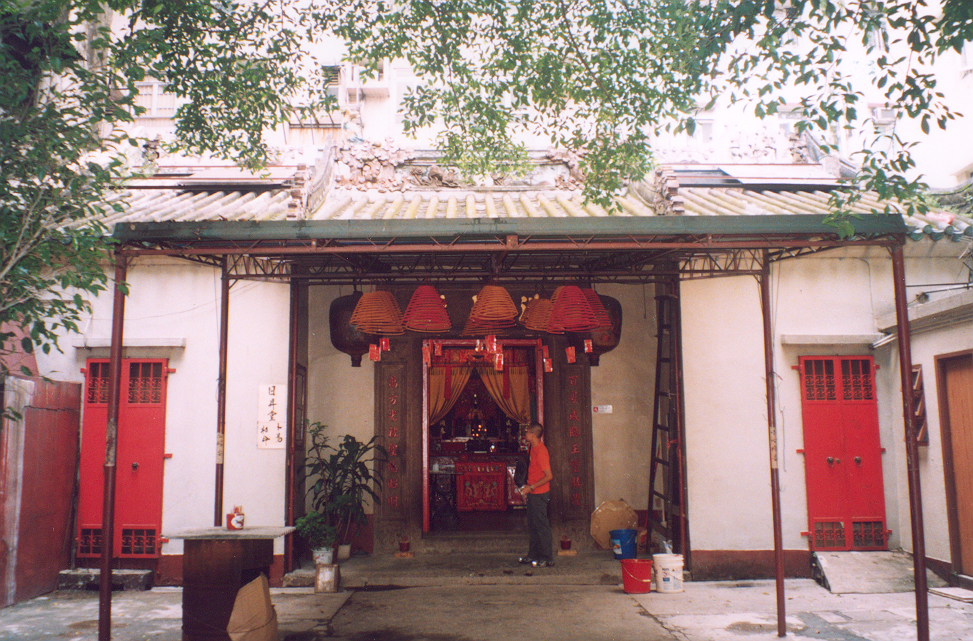
Hung Shing Temple, Tai Kok Tsui was originally a temple in Fuk Chuen Village located at the intersection of the Boundary Street and Tai Kok Tsui Road. In 1928, the Government re-developed Fuk Chuen Village and in 1930, the Temple was relocated to the present site in Fuk Tsun Street which was named after the Village.
A bronze bell engraved with the 7th year of the Guangxu reign (1881) of the Qing Dynasty and the laid down stone in 1930 are placed inside the Temple. Apart from the God of the Sea "Hung Shing", Wong Tai Sin, Kwun Yum, God of the Earth, Pak Tai, etc. are also worshipped inside the Temple.
Hung Shing, also known as the "God of Southern Sea", is a famous deity in Southern China. Hung Shing was conferred the title of the "King of Kwong Lee" during the Tang Dynasty (618 - 907) and was further honoured with a posthumous title of “King Hung Shing of Kwong Lee” in the Song Dynasty (960 - 1279). Followers worship Hung Shing to pray for safe voyage and good weather.
The Temple was rated Grade 3 historic building in 2010.
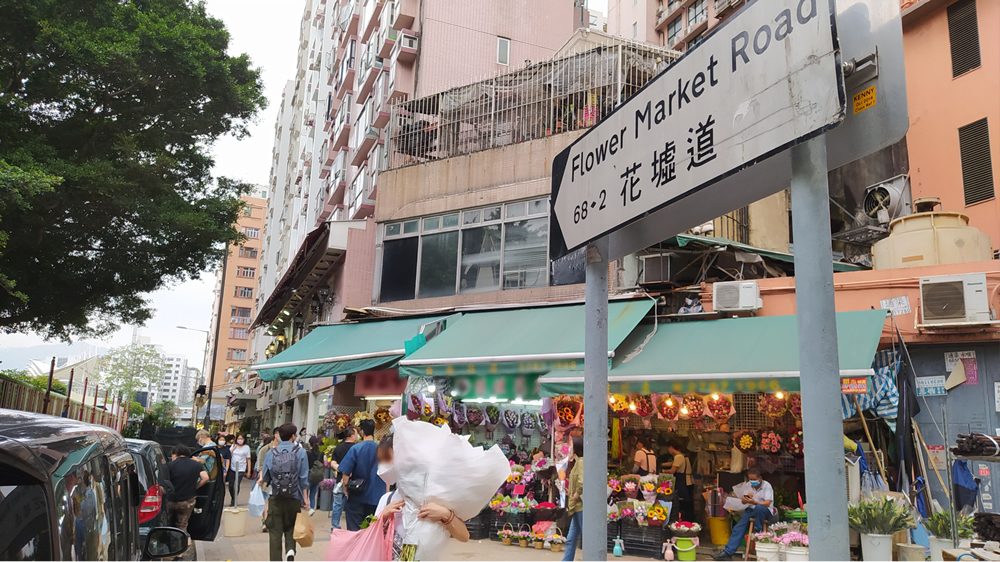
Flower Market in the vicinity of Flower Market Road, Yuen Po Street, Prince Edward Road West, Yuen Ngai Street and Sai Yee Street in Mong Kok originated in the 1940s. Over the years, Flower Market has developed from an on-street trading place to shop operations.
Flower Market houses more than 100 retail and wholesale shops offering an abundance of local and exotic blossoms, houseplants, garden supplies, etc. It is definitely a "must-see" attraction for flower lovers and gardening enthusiasts.
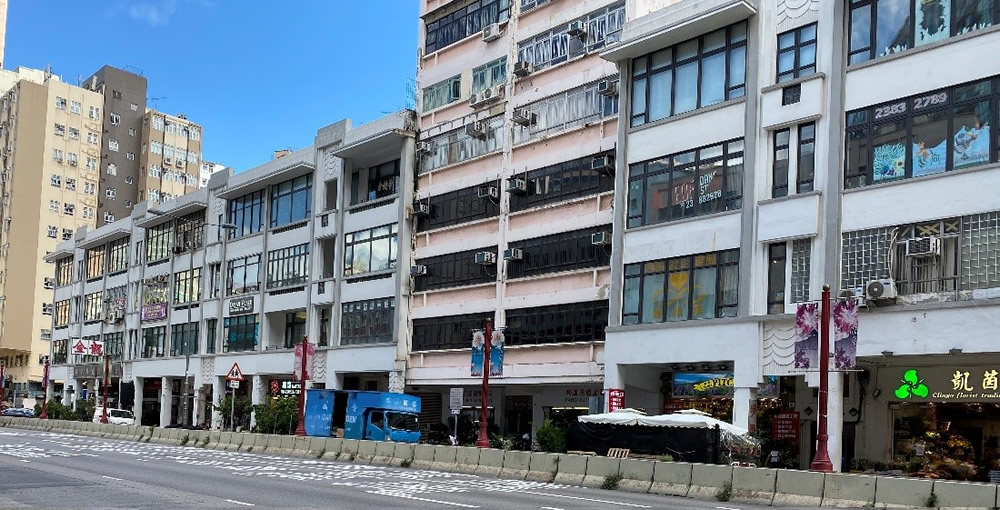
Located at Flower Market in Mong Kok, nos. 190-220 Prince Edward Road West were previously a cluster of 16 pre-war buildings built in the early 1930s by a Belgian construction company. Middle-class families were the targets of these so-called "Modern Flats".
Some of the buildings were demolished and redeveloped after the war, leaving only 10 buildings at nos. 190-204 and 210-212 Prince Edward Road West. The surviving building cluster, rated Grade 2 historic buildings in 2010, has been revitalised for commercial and cultural uses with the original architectural style and major architectural features preserved.
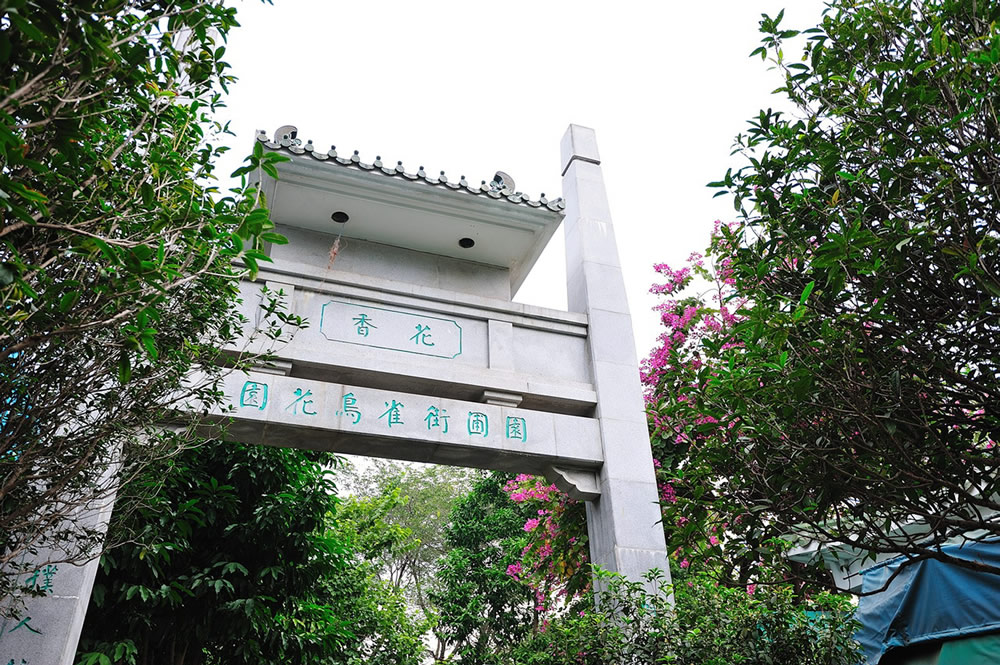
“Bird Street” was originally situated at Hong Lok Street in Mong Kok. It was once famous for its proliferation of stalls selling pet birds but was demolished due to urban development. In order to preserve the characteristics and spirit of “Bird Street”, the Government built Yuen Po Street Bird Garden in Yuen Po Street.
Yuen Po Street Bird Garden is a Chinese-style theme park, occupying an area of around 3 000 sq m. About 70 stores selling various kinds of pet birds, bird seeds and related products are provided in the Garden as an attraction to bird fanciers and tourists alike.
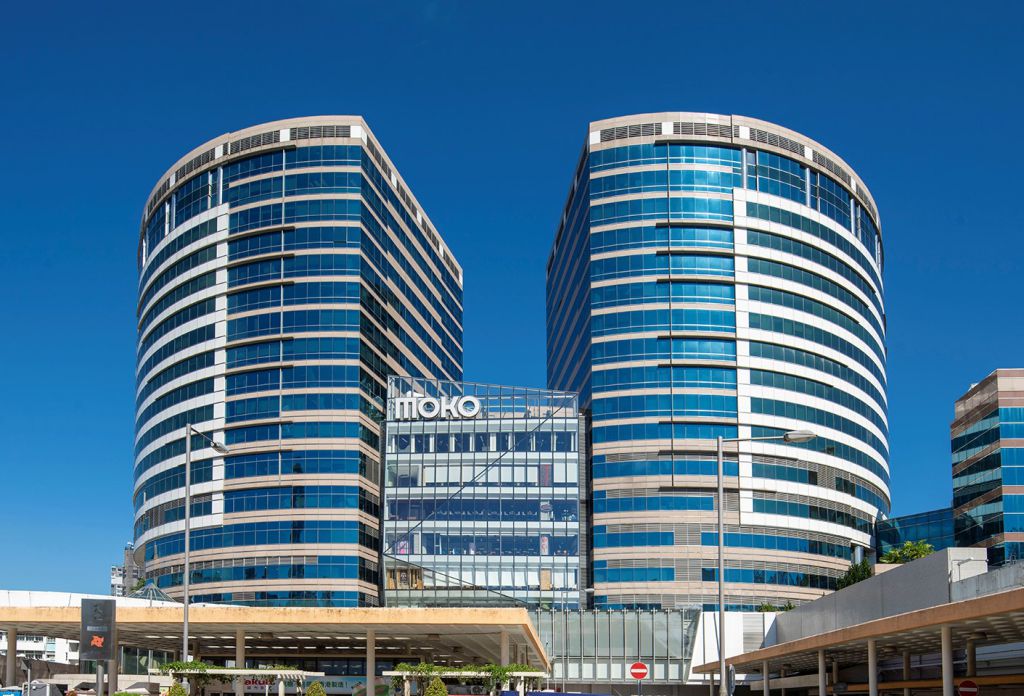
Located next to the Mong Kok East MTR Station, MOKO is a large shopping mall in Mong Kok which is easily accessible by public transport. The mall offers a diverse mix of shops and restaurants, as well as a cinema and an outdoor open space, providing customers with a one-stop shopping and entertainment experience.
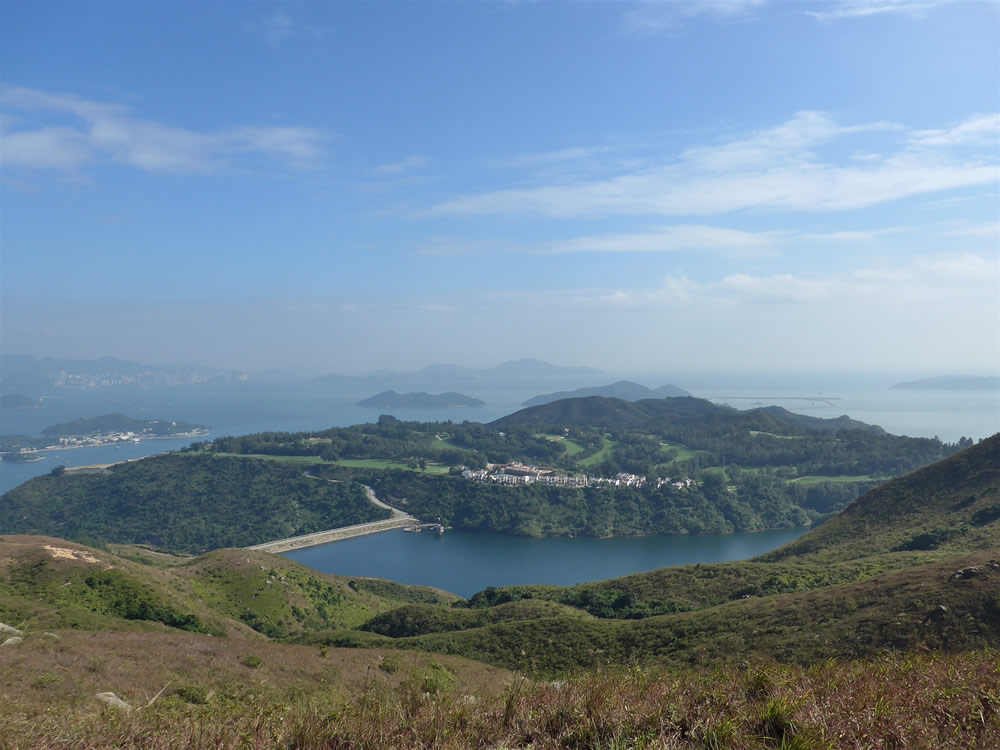
Occupying an area of about 148 sq km, Lantau Island in the southwest of Hong Kong is the largest island in the territory. Archaeological remains suggest that Fu Tei Wan on Chek Lap Kok was inhabited by early settlers around the Middle Neolithic period (c. 4000 – 2500 BC). This major outlying island has 47 settlements, headed by Mui Wo, Tung Chung and Tai O. Of them, Tung Chung has developed into a new town in recent years.
The northern part of Lantau Island houses a number of key infrastructures, including the Hong Kong International Airport at Chek Lap Kok, Hong Kong-Zhuhai-Macao Bridge, the comprehensive transportation network connecting the Hong Kong International Airport and Hong Kong-Zhuhai-Macao Bridge with other districts of Hong Kong, as well as the cable car ropeway system linking Tung Chung New Town and Ngong Ping.
Nevertheless, more than half of Lantau Island comes within the protected realm of Lantau South Country Park, Lantau North Country Park and Lantau North (Extension) Country Park with many fascinating attractions. Set amidst the rolling slopes of Lantau Peak and Sunset Peak, the complex circuitry of village paths constructed several centuries ago has become traditional paths frequented by hikers nowadays. The 70-km Lantau Trail traverses Lantau South Country Park and Lantau North Country Park is the premier choice for hikers to challenge their stamina. Beginning in Mui Wo, it snakes across the uplands for a full circle to end also in Mui Wo, giving a great diversity of natural vistas along the way.
What’s more, there are also nice beaches like Silvermine Bay Beach, Pui O Beach, Cheung Sha Beach and Tong Fuk Beach etc., as well as campsites and barbecue areas lying in the woodland and along the waterfront.
A number of monuments and historic buildings can be found on Lantau Island. For example, Fan Lau Fort, Tung Chung Fort, Hau Wong Temple at Tung Chung, Rock Carving at Shek Pik, Yeung Hau Temple at Tai O, etc. Besides, The Big Buddha (also known as the Tian Tan Buddha and Giant Buddha), Po Lin Monastery, Wisdom Path and Tai O stilted houses are the must-go tourist spots on the island.
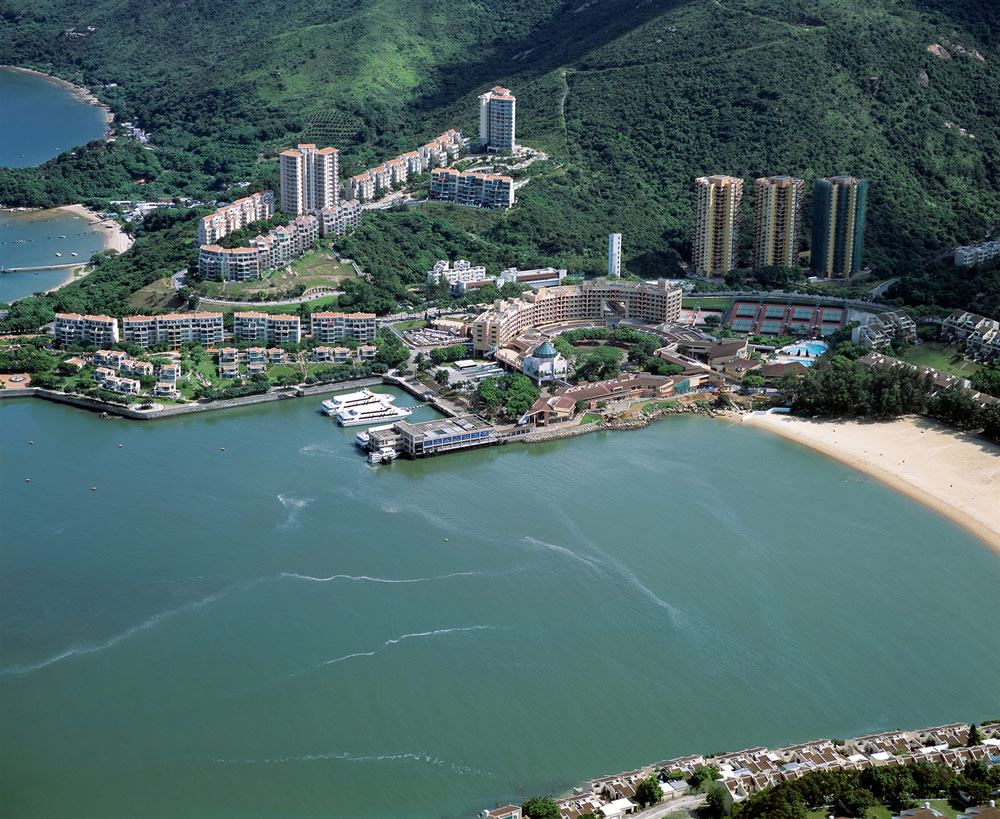
Sitting on the northeastern coast of Lantau Island, Discovery Bay is a diversified community blending Chinese and Western cultures.
Apart from the shopping mall, there are a number of restaurants along the tranquil seashore serving international cuisine. The Central Park, Tai Pak Beach and Love Lock Promenade near the seaside are popular attractions in the area. In addition, bazaars will be held from time to time at the DB Plaza where you can find unique products by artists, craftsmen and designers.
The hiking route from Discovery Bay Pier to Mui Wo via Nim Shue Wan and Trappist Haven Monastery offers visitors the panoramic views of Hong Kong Disneyland Resort, Peng Chau and Hei Ling Chau.
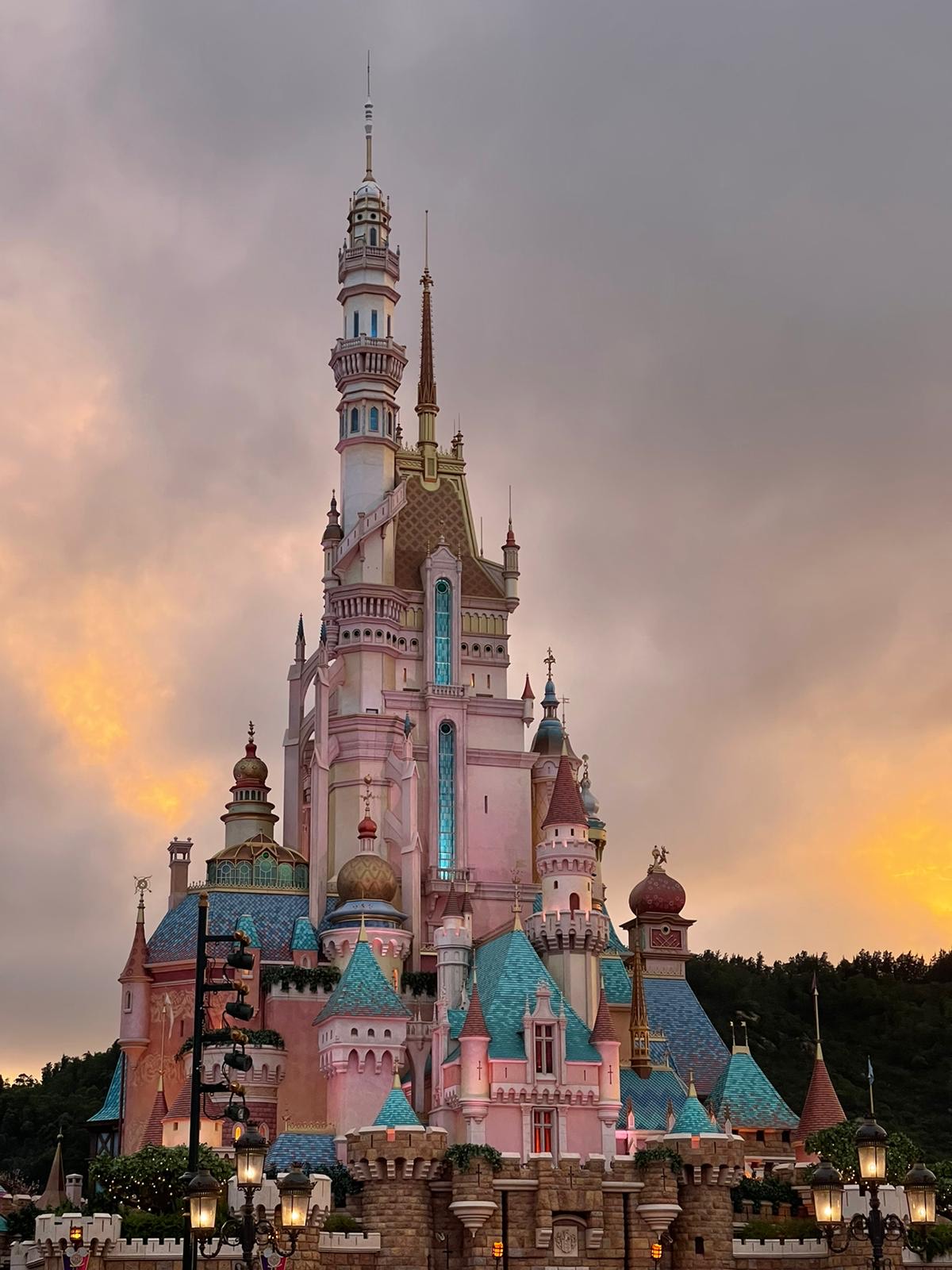
Occupying an area of 126 ha in North Lantau, Hong Kong Disneyland Resort is a world-class family entertainment destination, and is one of the important tourism infrastructures in Hong Kong.
Taking MTR Disneyland Resort Line from Sunny Bay MTR Station will direct you to Hong Kong Disneyland Resort. Once getting on the Disneyland Resort Line, a magical journey starts with the joyful atmosphere of the theme park filled by the specially designed train compartments and Disneyland Resort MTR Station.
Taking pictures in front of the fountain featuring Disney’s signature cartoon characters at the entrance tops the list of must-do things. Going through the nostalgic American town of Main Street USA, the glamorous castle at Fantasyland, which is the landmark of the theme park, catches every visitor’s eyes. Thrill rides offering different degrees of excitement, themed performances and musicals, theaters etc. scatter in other different themed lands: Tomorrowland highlighting space technology and adventure, Adventureland offering unique jungle adventure experiences, Toy Story Land featuring a colourful and childlike world, Grizzly Gulch giving distinctive exploration of abandoned towns in western USA, Mystic Point filling with the explorer’s collectibles and the “Frozen” themed land, World of Frozen. Disney characters pop up different parts of the theme park to greet and take photos with visitors.
Catering facilities offering various choices of eateries are available at all lands of the theme park. The parades and fireworks show on selective dates are definitely items on the list of must-do things to be completed. After all adventure missions, you may also take a break at the 3 themed hotels of the Resort and gain a comprehensive experience of Disney’s fairy tale fantasy world.
Hong Kong Disneyland Resort is a must-see attraction for inbound tourists and a place associated with fond memories of families.
Covering an area of about 30 ha, Inspiration Lake Recreation Centre is situated next to Hong Kong Disneyland Resort in North Lantau. The 12-ha Inspiration Lake is the signature feature of the Recreation Centre. This man-made lake has shimmering water, water feature composited with many sprinklers, and man-made waterfalls. Visitors can rent pedal boats and surrey bikes at Boat Centre for touring around the lake.
Besides, there is a 4-ha arboretum which acquires a wide variety of native and introduced species of plants. Also, the gazebos are ideal locations for taking pictures. Other facilities in the Recreation Centre include children playground and jogging track with fitness stations.
With pleasant views and recreation facilities, Inspiration Lake Recreation Centre is a wonderful attraction for family outing.
Website:
https://www.hongkongdisneyland.com/destinations/inspiration-lake-recreation-centre/
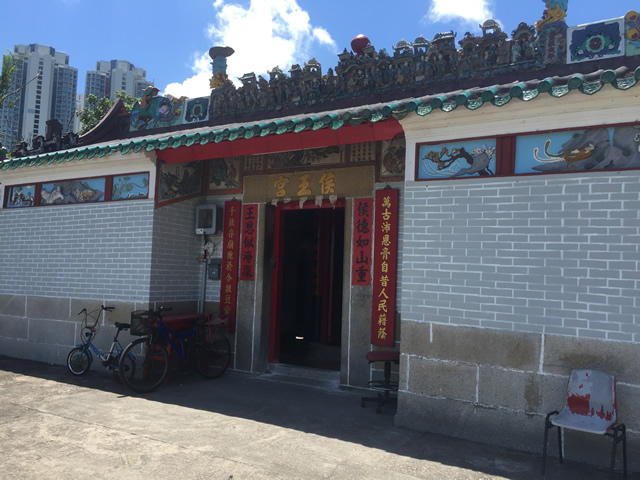
Hau Wong Temple at Sha Tsui Tau in Tung Chung is dedicated to Hau Wong. According to legend, Hau Wong refers to Yeung Leung Jit, a loyal and courageous general of the Southern Song Dynasty (1127 - 1279). It is said that Yeung protected the last 2 emperors of the Southern Song Dynasty, namely Emperor Zhao Shi and Emperor Zhao Bing, to flee to the south during the Mongolian invasion. After his death, people built Hau Wong Temple to commemorate Yeung. An old bell cast with the 30th year of the Qianlong reign (1765) of the Qing Dynasty suggests that the Temple might have been built in that year.
Hau Wong Temple, Tung Chung, was rated Grade 2 historic building in 2010.
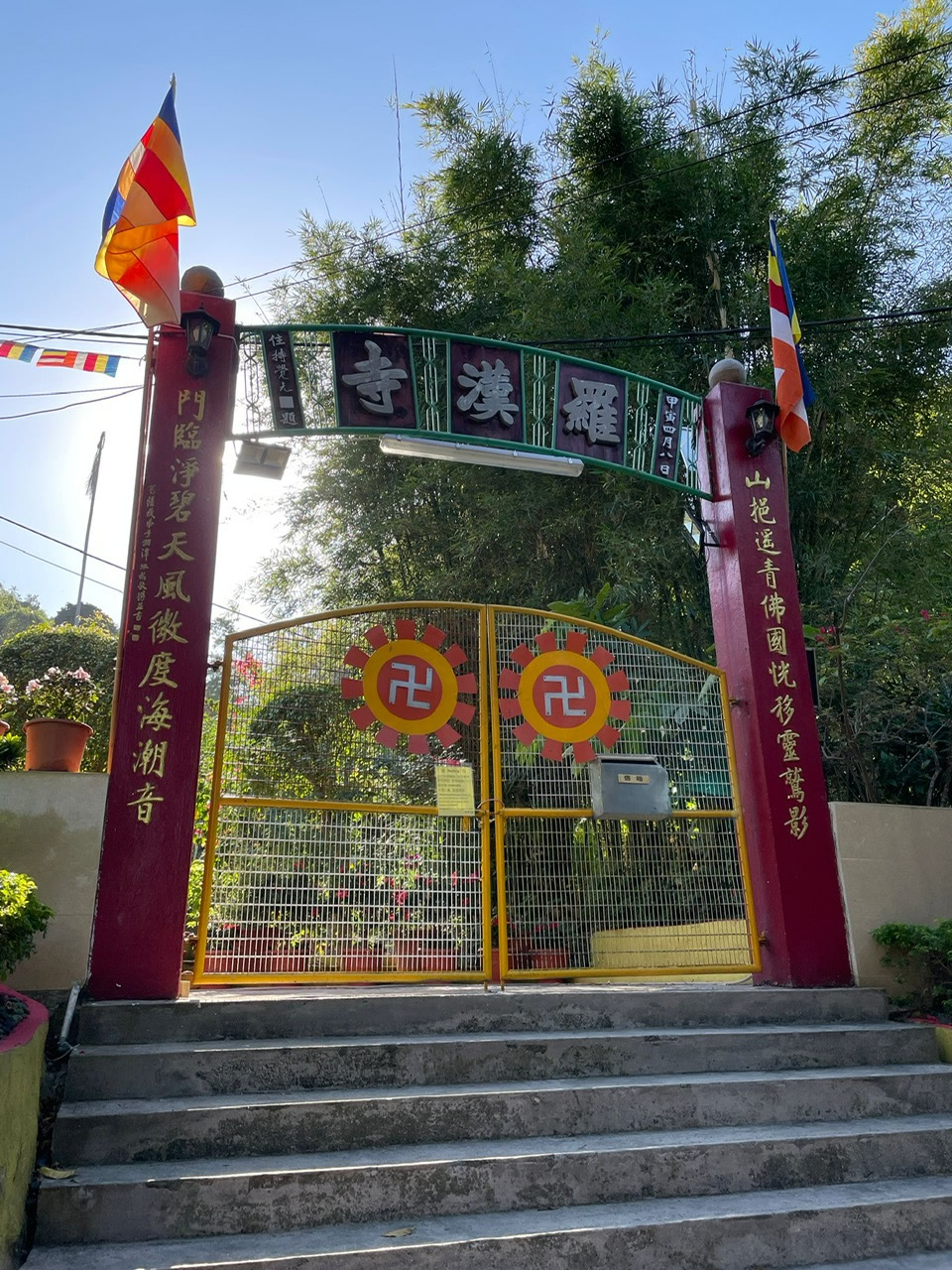
Lo Hon Monastery is located at Shek Mun Kap. It is said that in 1926, a monk from Guangdong practised meditation in a cave called “Lo Hon Cave” here. In 1974, some worshippers built Lo Hon Monastery in the area. Apart from Tai Hung Po Din, Kwun Yum Din and Hall of Kshitigarbha, there are also Lo Hon Spring and Lo Hon Cave.
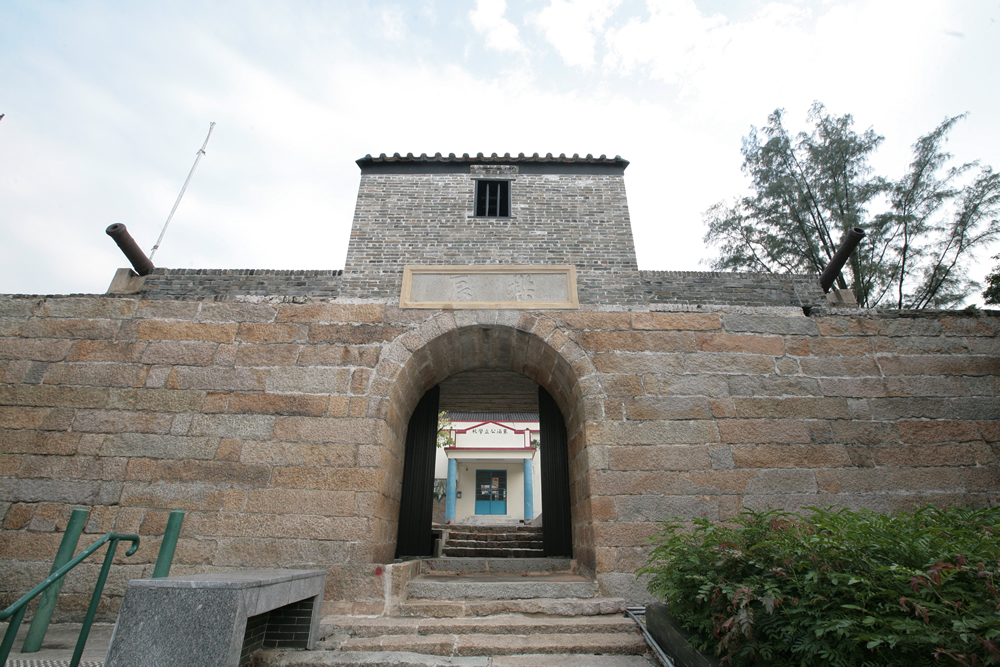
The carved granite slab above the entrance of Tung Chung Fort casting with the 12th year of Daoguang reign (1832) of the Qing Dynasty suggests that the Fort might have built in that year. It was built for defending against the intrusion of pirates along the coastal area. The Fort was later used as a police station, and then occupied by Wa Ying College, Tung Chung Rural Committee and the Public Primary School of Tung Chung. Today, there are 6 old canons remaining on the Fort, witnessing Hong Kong's old days of instability.
Tung Chung Fort was declared a monument in 1979.
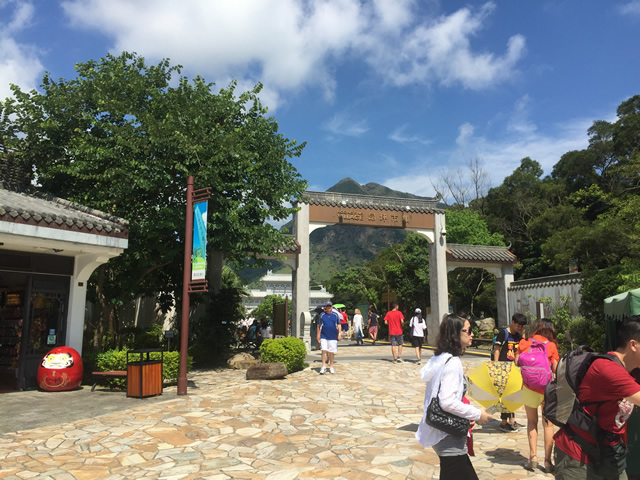
Ngong Ping 360 cable car connects downtown Tung Chung and Ngong Ping on Lantau Island. The 5.7-km cable car adopts a safe and reliable bi-cable ropeway. The journey begins from Tung Chung, crossing Tung Chung Bay to reach the angle station on Airport Island, passing by the Hong Kong Link Road of Hong Kong-Zhuhai-Macau Bridge and turning 60 degrees towards North Lantau. You will be greeted with the vistas of the extensive South China Sea and the rolling greens of North Lantau Country Park.
Adjacent to Ngong Ping 360 cable car terminal is Ngong Ping Village. Rich in Chinese culture, the Village combines entertainment, shopping and the two themed attractions of “Motion 360” and “Walking with Buddha”. It is a popular tourist spot where you can start the journey to Po Lin Monastery and The Big Buddha (also known as Tian Tan Buddha and Giant Buddha).
Website:
https://www.np360.com.hk/en/
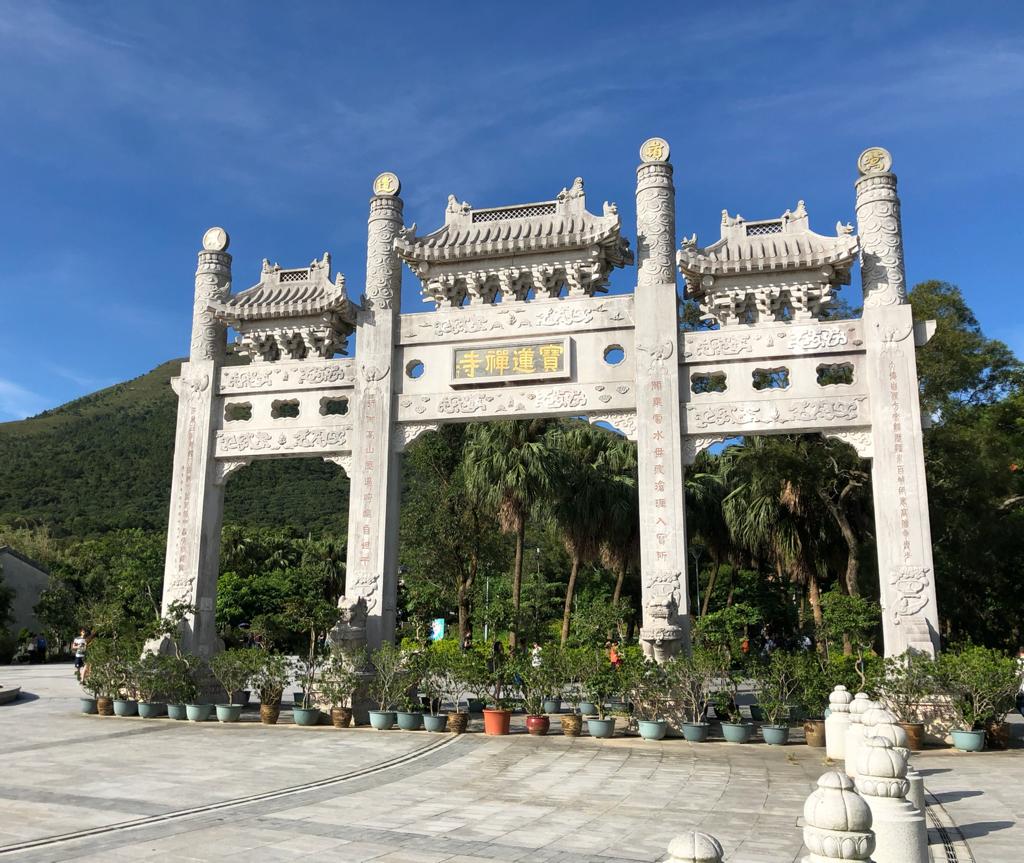
Po Lin Monastery at Ngong Ping was known as the “Big Thatched Hut” in the early days. It was established by Venerables Da Yue, Dun Xiu and Yue Ming from Jiangsu Province in 1906. In 1924, the “Big Thatched Hut” was renamed Po Lin Monastery.
The massive Po Lin Monastery has a specific architectural layout with major buildings constructed along the central axis facing southwest. Starting from San Men (Mountain Gate) visitors will be led up to Hall of Skanda Bodhisattva, Main Shrine Hall of Buddha, and Grand Hall of Ten Thousand Buddhas. Bell Tower and Drum Tower, Meditation Hall, Dining Hall and Sangha Hall are standing in symmetrical arrangements on the flanks. These edifices combine to form an orderly monastery complex. On the south side of the axis are Po Lin Hall and the facility for ceremonial and religious activities. Po Lin Monastery is a centre for advancing Buddhism and a platform for promoting Chinese culture, sculptural art and landscape gardening; and is the most well-known Buddhist monastery in Hong Kong.
The Big Buddha (also known as Tian Tan Buddha and Giant Buddha) sits solemnly atop the peak of Mount Muk Yue in front of Po Lin Monastery. The majestic status seated south and facing north, was modelled after Siddhartha who achieved enlightenment under the Bodhi tree. Cast with 250 tonnes of bronze, the statue’s body is 26.4 m tall and 34 m in total measuring from the lotus throne and the base. The Big Buddha is the largest outdoor Buddha statue of this type in the world. Inside the pedestal is a 3-storey exhibition hall presenting a number of invaluable Buddhist items, including Buddha’s relic. Climbing up 268 steps to reach the pedestal, visitors can worship the Buddha and enjoy the views of Lantau Island and South China Sea. Since the opening of the Big Buddha in 1993, Ngong Ping has become one of the most popular tourist attractions in Hong Kong.
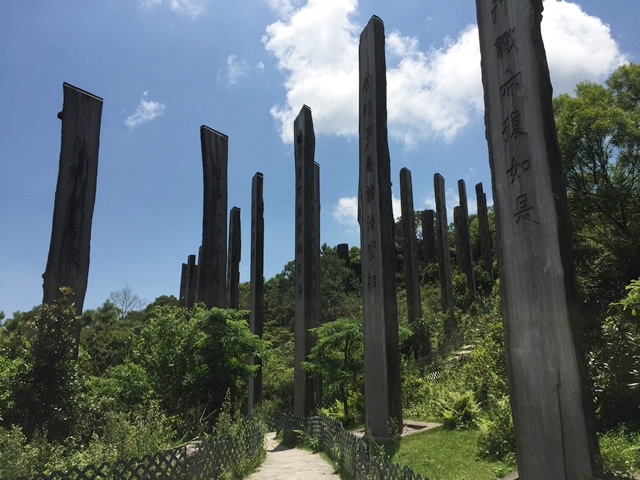
The full name of Heart Sutra is “Prajna Paramita Hrdaya Sutra”. Written in a simple and concise manner with only 260 words, Heart Sutra delivers a truly profound message, and is a treasured text revered by Confucians, Buddhists and Taoists alike. To promote the philosophy of Heart Sutra, Professor Jao Tsung I, a renowned sinologist, completed the calligraphy of Heart Sutra and dedicated it to the people of Hong Kong in 2002. The Government displayed the calligraphy in the form of a large-scale outdoor wood inscription display near the Big Buddha, Po Lin Monastery and Ngong Ping 360 terminal at Ngong Ping on Lantau Island.
Professor Jao’s calligraphy has been carved onto 38 timber columns of 8 m to 10 m in height reminiscent of bamboo tiles (zhujian) used for writing in ancient times. Named “Wisdom Path” in English, the Chinese name of the display derived from such unique design, with literal meaning of “Hear Sutra written on bamboo tiles”. The timber columns have been arranged to correspond to the topography, and in a figure-of-eight configuration (i.e. the symbol of infinity "∞") symbolising infinity. The column at the highest point of the slope is left blank to suggest the concept of "emptiness" (Sunyata), a key theme of Heart Sutra.
To calligraphy lovers and Buddhist, Wisdom Path is a spot that cannot be missed. The tranquillity of the natural environment of the site would also enable visitors to appreciate the masterpiece which combines art and philosophy.
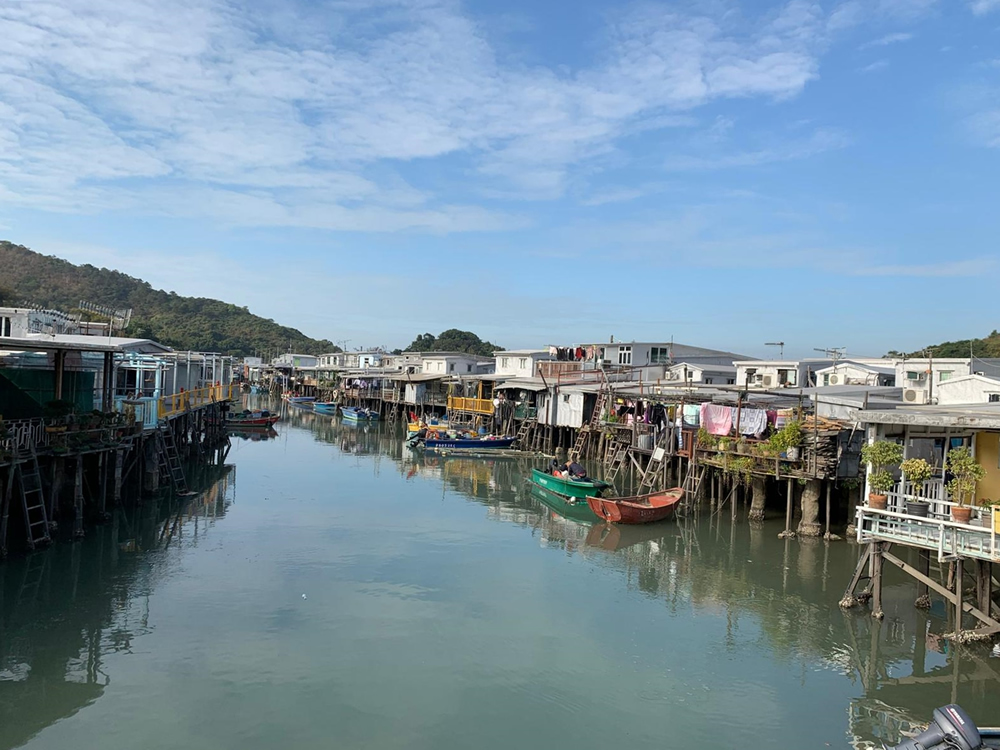
Located at the western part of Lantau Island, Tai O has unique culture and heritage, quaint fishing village character and natural environment and is one of the most popular tourist spots on the island.
Renowned for its fishing village scenery, Tai O has retained most of its historical settings such as waterways, stilted houses and fishing boats. Of them, huts built on stilts in narrow river channels are the most distinctive characteristic of Tai O, attracting many local and overseas visitors.
Fishing industry aside, Tai O is also famous for the production of shrimp paste and salted fish. Besides, Tai O once occupied a prominent position in the salt manufacturing industry. However, the saltpans ceased operation in the late 1960s.
What’s more, the Tai O Dragon Boat Water Parade is an activity that visitors can’t miss. On the 4th day of the 5th lunar month every year, locals row their dragon boats to visit 4 temples in Tai O, where they receive statues of Yeung Hau, Tin Hau, Kwan Tai and Hung Shing for worship. On the following day, the deity statues are put on sacred sampans towed by dragon boats to parade through Tai O’s waters. Apart from having been inscribed onto the Representative List of the Intangible Cultural Heritage of Hong Kong, the activity was also inscribed onto the 3rd national list of intangible cultural heritage in 2011.
Tai O Heritage Hotel was formerly the Old Tai O Police Station which was built on a small knoll next to the old Tai O Ferry Pier at Shek Tsai Po in 1902. In 1996, the police station ceased operation. The buildings were later revitalised as a boutique hotel which opened the doors to visitors in 2012.
The 2-storey hotel has 9 rooms and suites with fascinating seaview, as well as a glass-roofed open view restaurant. In addition, the former report room has been converted into the Heritage Interpretation Centre displaying historic items of the police station.
The Old Tai O Police Station was rated Grade 2 historic building in 2009.
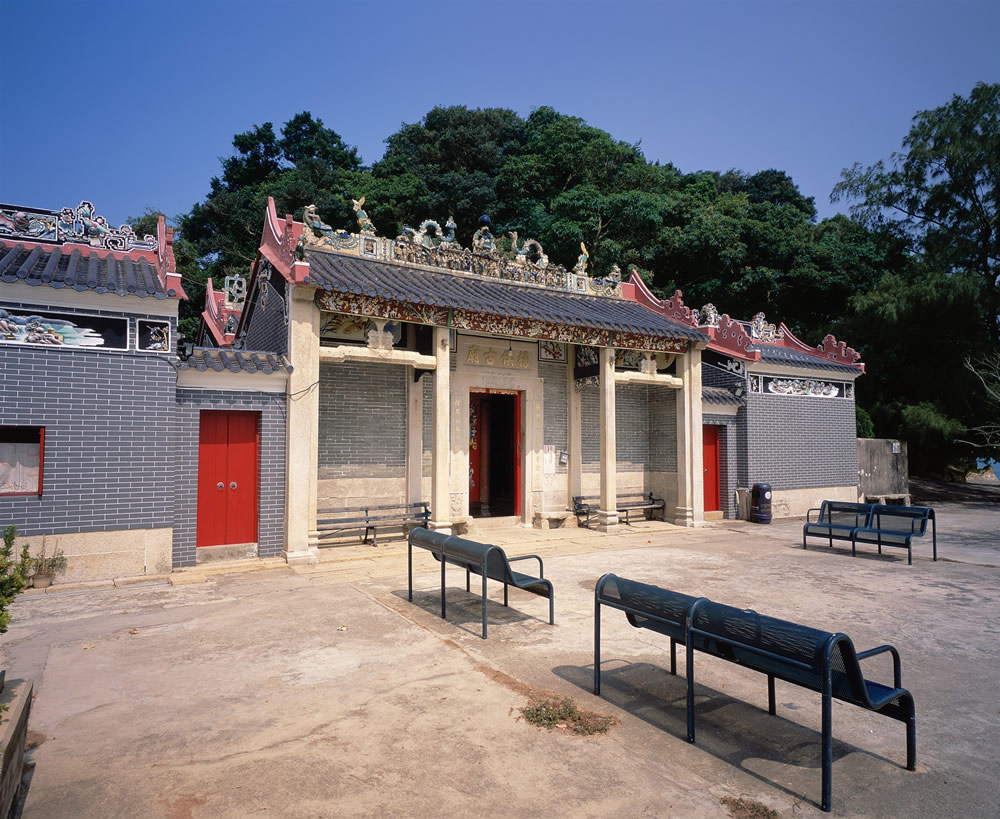
Yeung Hau Temple at Po Chue Tam in Tai O was probably built in 1699 or earlier with reference to an iron bell cast in the 38th year of Kangxi reign (1699) of the Qing Dynasty. It was declared a monument in 2017.
The Temple is dedicated to the worship of Hau Wong. According to legend, Hau Wong refers to Yeung Leung Jit, a loyal and courageous general of the Southern Song Dynasty (1127 - 1279). It is said that Yeung protected the last 2 emperors of the Southern Song Dynasty, namely Emperor Zhao Shi and Emperor Zhao Bing, to flee to the south during the Mongolian invasion. After his death, people built Yeung Hau Temple to commemorate Yeung. The Temple is also popular for its strong association with Tai O Dragon Boat Water Parade held during Tuen Ng Festival when the deity statue of Yeung Hau is invited to participate in the water parade and related ceremonies.
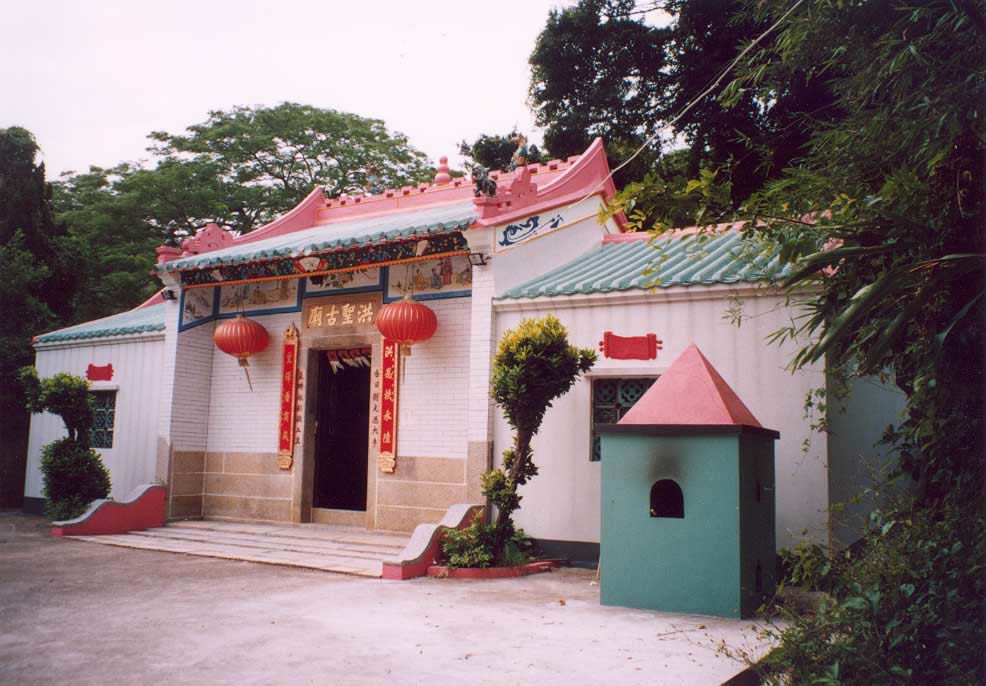
Hung Shing Temple at Shek Tsai Po Street of Tai O was built in the 11th year of the Qianlong reign (1746) of the Qing Dynasty for the worship of Hung Shing. The wall friezes above the doorway of the Temple are with flower and landscape motifs and the Eight Immortals.
Hung Shing, also known as the "God of Southern Sea", is a famous deity in Southern China. During the Tang Dynasty (618 - 907), Hung Shing was conferred the title of the "King of Kwong Lee" and was honoured with a posthumous title of “King Hung Shing of Kwong Lee” in the Song Dynasty (960 - 1279). Followers worship Hung Shing to pray for safe voyage and good weather.
The Temple is also popular for its strong association with Tai O Dragon Boat Water Parade held during Tuen Ng Festival when the deity statue of Hung Shing is invited to participate in the water parade and related ceremonies.
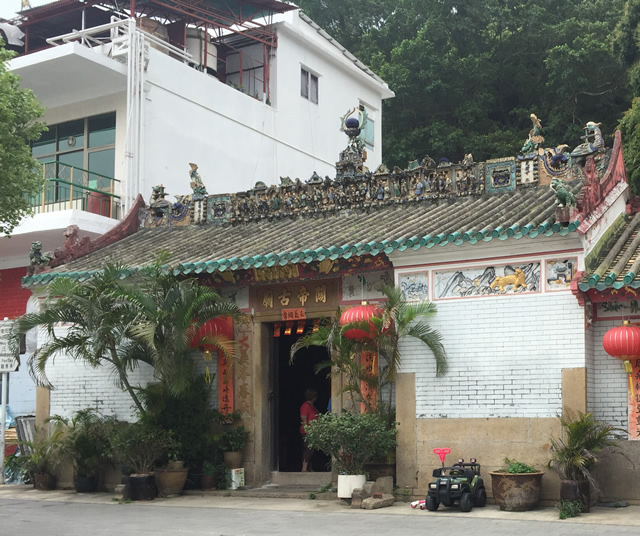
Tai O Kwan Tai Old Temple on Kat Hing Back Street of Tai O was originally built in the Hongzhi reign (1488 - 1505) of the Ming Dynasty. It was rebuilt in situ in the 6th year of the Qianlong (1741) reign of the Qing Dynasty. The main ridge of the Temple is with Shiwan ceramics including characters of Yeung’s Military Family.
The Temple is dedicated to the worship of Kwan Tai. Kwan Tai refers to Guan Yu (courtesy name Yunchang) who was a famous military general of the State of Shu during the Three Kingdoms period (220 – 280). He was reputed as "the enemy of ten thousand people", and is the paradigm of mightiness, loyalty and righteousness. Kwan Tai is widely glorified and worshipped for his wisdom, trustworthiness, benevolence, righteousness and courage.
The Temple is also popular for its strong association with Tai O Dragon Boat Water Parade during Tuen Ng Festival when the deity statue of Kwan Tai is invited to participate in the water parade and related ceremonies.
Tai O Kwan Tai Old Temple was rated Grade 2 historic building in 2010.
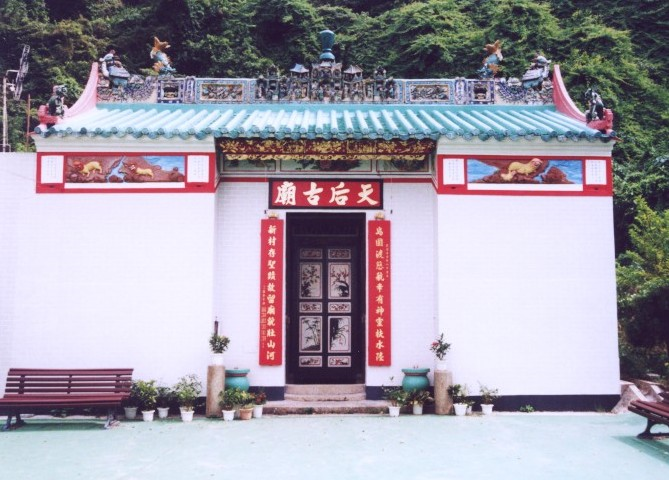
Tai O San Tsuen Tin Hau Temple at San Tsuen in Tai O was built in the early Qing Dynasty (1644 - 1911). The Temple was sited to have a view of the salt pans and paddy fields in the old days. It was built with a two-hall-one-courtyard plan, with side chambers to both sides of the halls. The roof ridge of the entrance hall is decorated with exquisite ceramic figurines produced by Junyu, a famous brand name of the contemporary Shiwan ceramics industry, and is the oldest example of work by Junyu identified in Hong Kong. According to stone inscriptions in the Temple, the Temple underwent renovations in the 18th year of the Daoguang (1838) reign and 21st year of the Guangxu (1895) reign of the Qing Dynasty, as well as 2019. The Temple was rated Grade 2 historic buildings in 2019.
Tin Hau, also known as “Matsu”, was said to be a native in Fujian Province called Lam Mak Leung during the Song Dynasty (960 - 1279). According to legend, she had gifted power and saved many people from sea disasters. The seafarers therefore worship Tin Hau and regard her as their patron saint.
The Temple is also popular for its strong association with Tai O Dragon Boat Water Parade during Tuen Ng Festival when the deity statue of Tin Hau is invited to participate in the water parade and related ceremonies.
_1658408515.jpg)
There are several beaches on southern Lantau Island which have clear water, fine powdery sand and away from the hustle. From east to west are Pui O Beach, Lower Cheung Sha Beach, Upper Cheung Sha Beach and Tong Fuk Beach.
Apart from comprehensive beach facilities, these beaches each have their unique characteristics: Pui O Campsite in close proximity to Pui O Beach is an ideal place for camping; restaurants and coffee shops near Lower Cheung Sha Beach offer visitors a captivating blend of beautiful scenery and cuisine; holiday houses and hotels neighbouring Tong Fuk Beach offer alternative accommodation options for visitors. Besides, Upper Cheung Sha Beach and Lower Cheung Sha Beach stretching 3 km are definitely the first choice for beachgoers to cool off during summer.
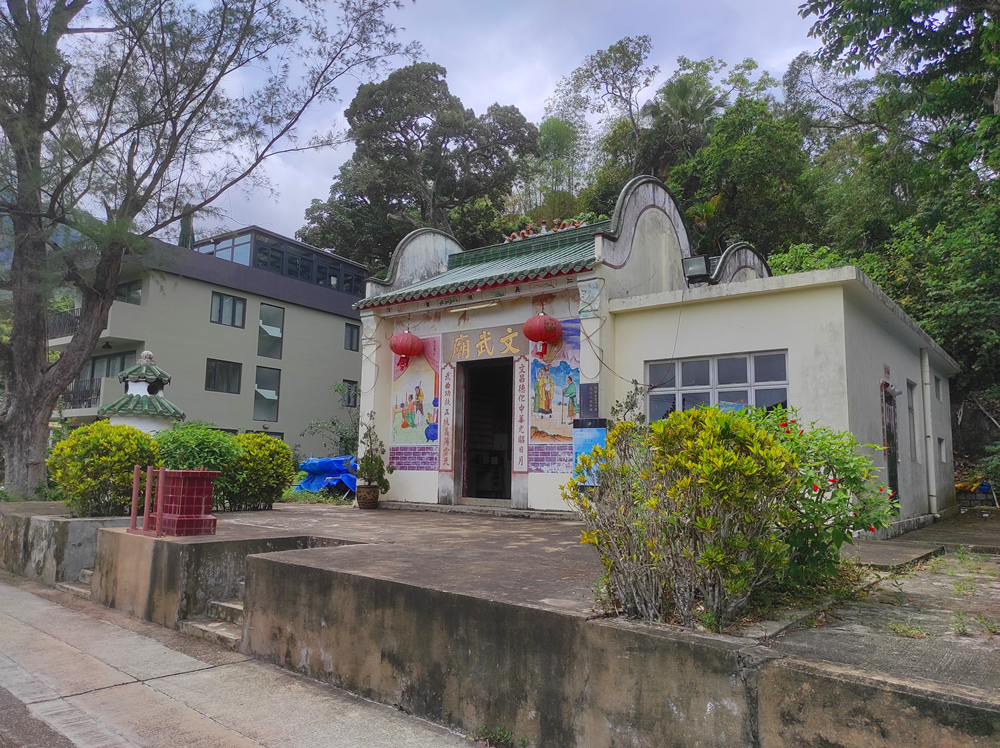
Mui Wo Man Mo Temple at Pak Ngan Heung is said to have first built in the Wanli reign (1573 - 1620) of the Ming Dynasty and is the oldest temple in Mui Wo. Despite restoration projects completed in the 27th year of the Guangxu reign (1901) of the Qing Dynasty and in 1960, the structure of the Temple is retained.
Mui Wo Man Mo Temple enshrines the gods Man Cheong (God of Literature) and Kwan Tai (God of Martial Arts). Legend has it that Man Cheong, also known as “Wen Chang Celestial Lord” and “Wenquxing”, governs knowledge and studies and therefore many students and examination candidates pay homage to him. He is also a figure representing filial piety. Kwan Tai refers to Guan Yu (courtesy name Yunchang) who was a famous military general of the State of Shu during the Three Kingdoms period (220 – 280). He was reputed as "the enemy of ten thousand people", and is the paradigm of mightiness, loyalty and righteousness. Kwan Tai is widely glorified and worshipped for his wisdom, trustworthiness, benevolence, righteousness and courage.
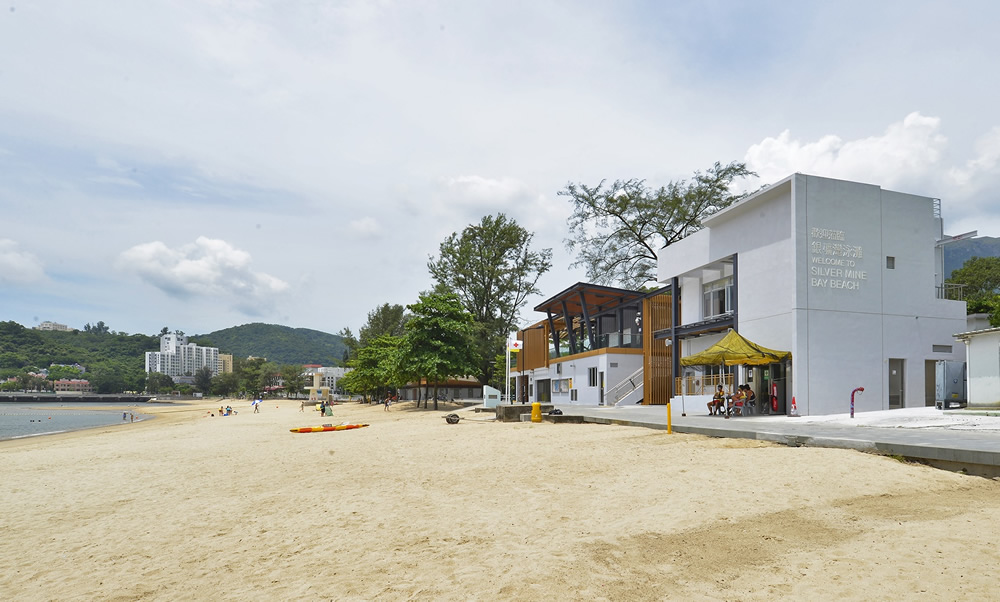
Featuring beautiful scenery, Silvermine Bay Beach at Mui Wo of Lantau Island is surrounded by hotels and restaurants offering various choices to visitors. The renovated beach building together with a BBQ pit area, a light refreshment kiosk and a viewing deck provide more comprehensive facilities for holiday makers.
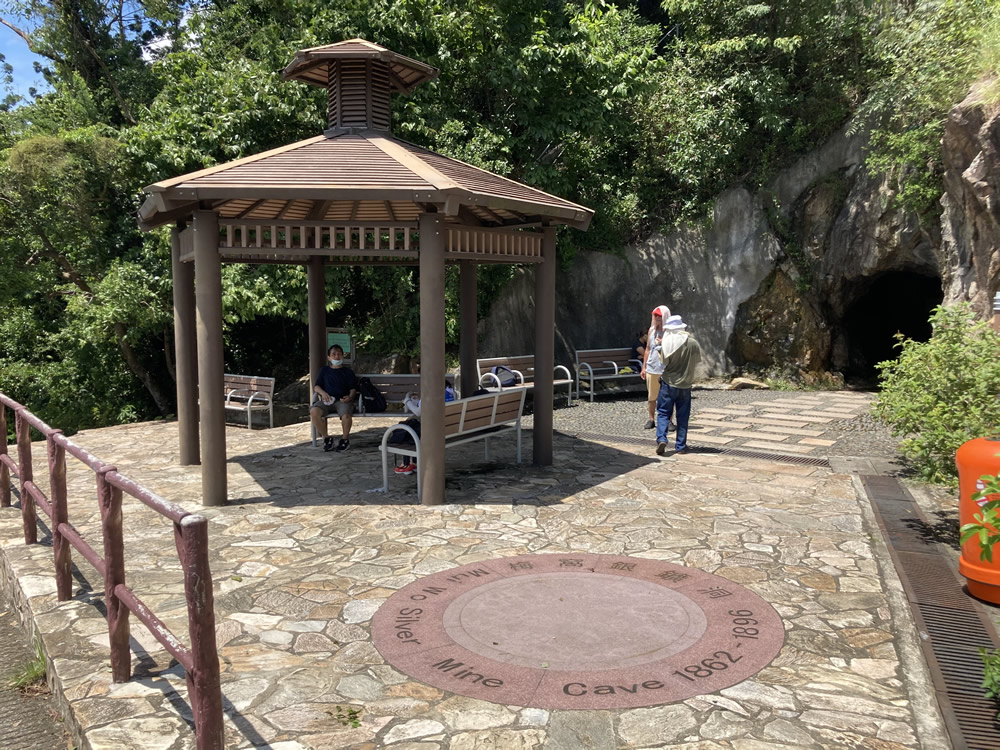
Silvermine Cave is located on the hill at Silvermine Bay in Mui Wo. Silver mining activities were carried out there in mid to late 19th century but stopped later because of the low silver content.
The upper and lower Silvermine Waterfalls run beneath Silvermine Cave. Visitors can take a rest and view the beautiful waterfalls at the Chinese-style pavilion in the Silver Mine Bay Waterfall Garden adjacent to the waterfalls.
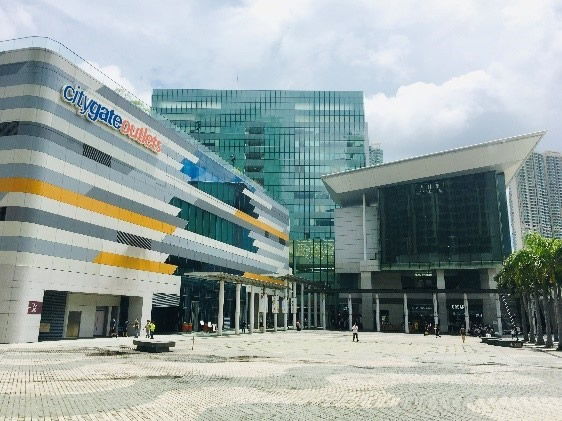
Citygate Outlets is in close proximity to Tung Chung MTR Station and Ngong Ping 360 terminal at Tung Chung. A leading outlet in Hong Kong, the mall features more than a hundred world-renowned premium brands, as well as numerous dining hotspots and leisure facilities.
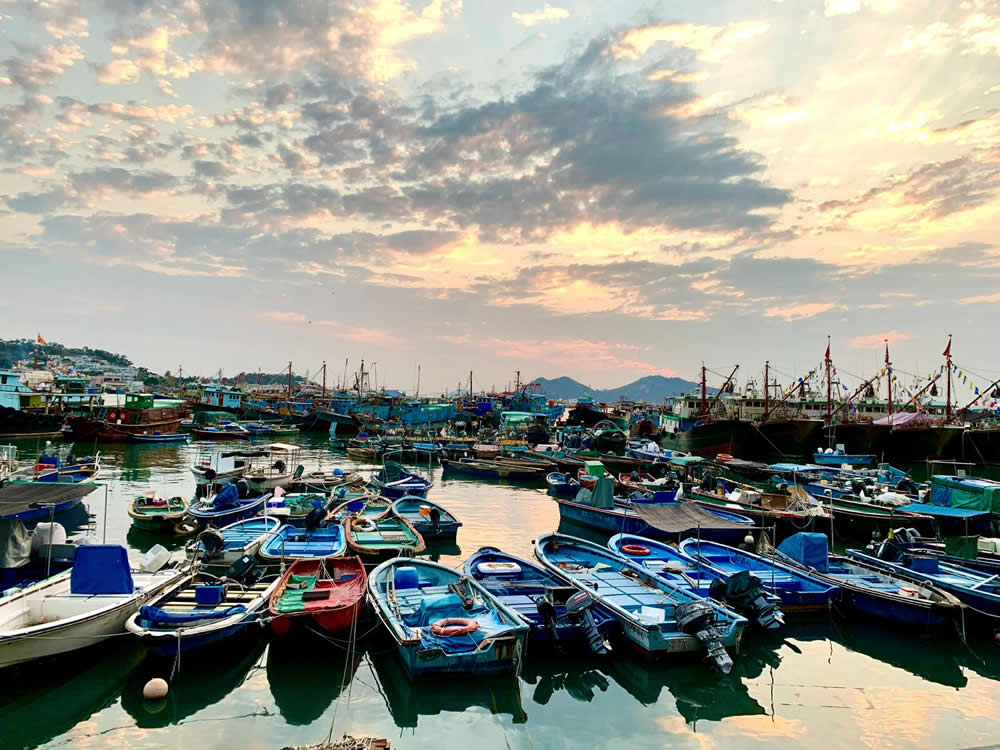
Cheung Chau is a small dumbbell-shape island of 2.44 sq km southwest of Hong Kong Island.
A bone arrowhead excavated from Po Yue Wan in the southeastern side of the small island shows that human activities on the island dated back to Late Neolithic period (c. 2500 – 1500 BC). At the southeastern end of the tombolo forming the island are Cheung Chau Rock Carvings. The Rock Carvings consist of 2 groups of similar design with several carved lines surrounding small depression, matching the design of carvings on ancient bronze artefacts, suggesting that the Rock Carvings might be engraved during the Bronze Age (c. 1500 - 221 BC). Cheung Chau Rock Carvings were declared monuments in 1982.
Being a natural fishing port, fisheries industry on the island was very prosperous as early as the Ming Dynasty (1368 – 1644). The prosperity of the island was evidenced by the establishment of a market during the Qianlong reign (1736 – 1795) of the Qing Dynasty.
Owing to the decline of the fisheries industry and economic transformation, few islanders are engaged in the fisheries industry nowadays. Cheung Chau is still a vibrant and thriving community with many restaurants and holiday houses, which are magnets for holiday makers. During Cheung Chau Jiao Festival held on the 8th day of the 4th lunar month each year, thousands of local and overseas visitors enjoy the parade of floating colours, Chinese operas and the Bun Scrambling Competition held at midnight. Apart from having been inscribed into the Representative List of the Intangible Cultural Heritage of Hong Kong, Cheung Chau Jiao Festival was also inscribed onto the 3rd national list of intangible cultural heritage in 2011.
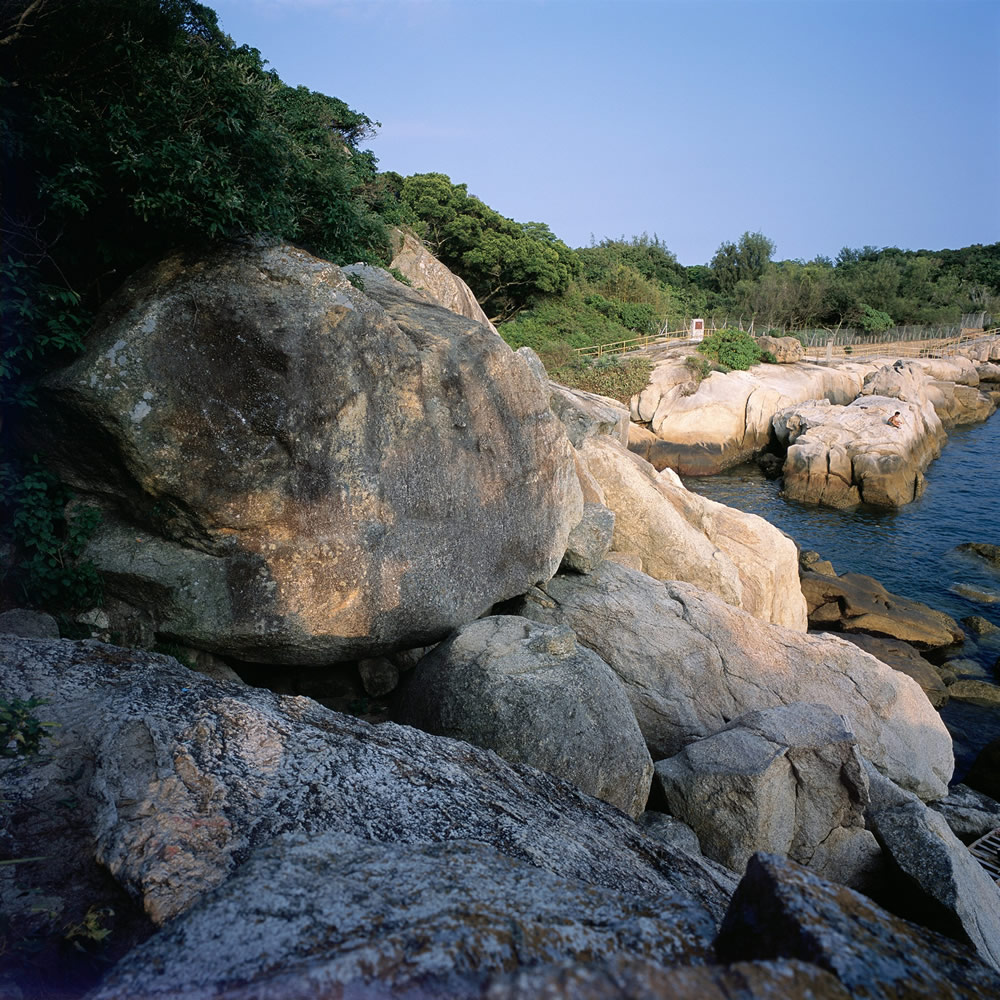
Cheung Po Tsai Cave is located at the southwestern corner of Cheung Chau. Legend has it that during the Qing Dynasty (1644 – 1911), the cave is one of the spots where the infamous pirate Cheung Po Tsai had hidden himself and his treasure. Visitors entering the Cave must exercise extra care as the entrances can only accommodate 1 person and it is completely dark inside.
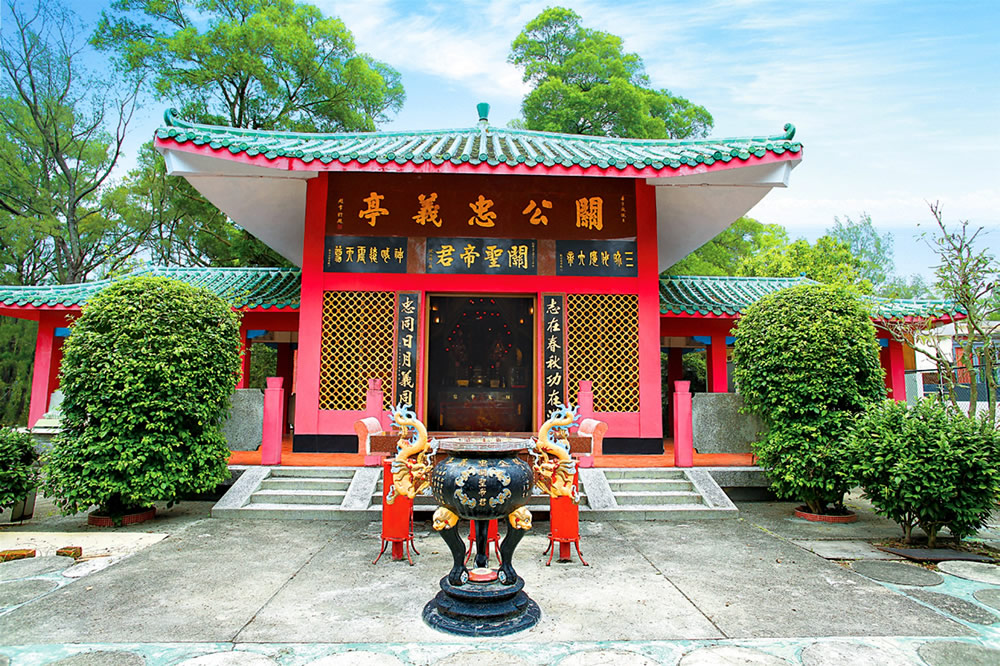
Located at Kwun Yam Wan Road in Cheung Chau, Kwan Kung Pavilion was built in 1973. Adopting a pavilion outlook, this traditional temple is called “pavilion” instead of “temple”. The roof of this red-colour pavilion is made of cyan glazed roof tiles. An incense burner stands in front of the temple.
The temple is dedicated to Kwan Tai. Kwan Tai refers to Guan Yu (courtesy name Yunchang) who was a famous military general of the State of Shu during the Three Kingdoms period (220 – 280). He was reputed as "the enemy of ten thousand people", and is the paradigm of mightiness, loyalty and righteousness. Kwan Tai is widely glorified and worshipped for his wisdom, trustworthiness, benevolence, righteousness and courage.
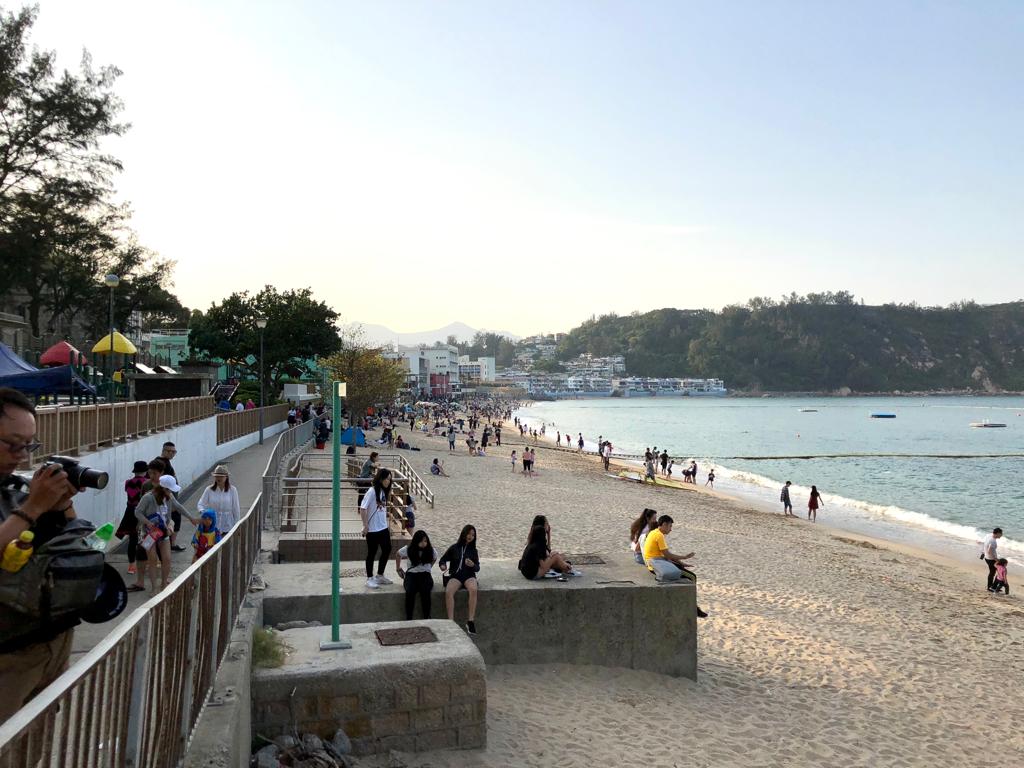
Tung Wan and Kwun Yam Wan on the eastern side of Cheung Chau are the two beaches on the island, and are very popular among holiday visitors. Kwun Yam Wan is also the home base of Hong Kong's first Olympic medallist (and a gold medallist), windsurfer Ms Lee Lai Shan. A range of water sports facilities are offered by Cheung Chau Windsurfing Centre there.
_2_1661395816_2_1661745704.jpg)
Yuk Hui Temple on Pak She Street in Cheung Chau is also known as Pak Tai Temple since it is dedicated to Pak Tai. Pak Tai, alternatively known as “Zhenwu Celestial Lord” and “Yuen Tin Sheung Tai” (Supreme Emperor of the Dark Heaven), is worshipped for longevity, relief of water-related risks and safe voyage. Legend also has it that Pak Tai defeated the Demon King and was awarded the title of Supreme Emperor of the Dark Heaven.
It is said that a plague broke out in Cheung Chau in the 42nd year of Qianlong reign (1777) of the Qing Dynasty. Some islanders carried an image of the deity from Huiyang County to the island to suppress the plague, bringing health and prosperity to the island thereafter. Yuk Hui Temple was thus built in the 48th year of the same reign (1783) for the worship of Pak Tai. Yuk Hui Temple has all along been a religious centre of Cheung Chau. The internationally famous Cheung Chau Jiao Festival (also known as the “Bun Festival”) is held right in front of the Temple on the 8th day of the 4th lunar month every year. The deity statue of Pak Tai and Tin Hau of Pak She Tin Hau Temple will be carried on armchairs marching through major sheets on the island.
Yuk Hui Temple, Cheung Chau was rated Grade 1 historic building in 2010.
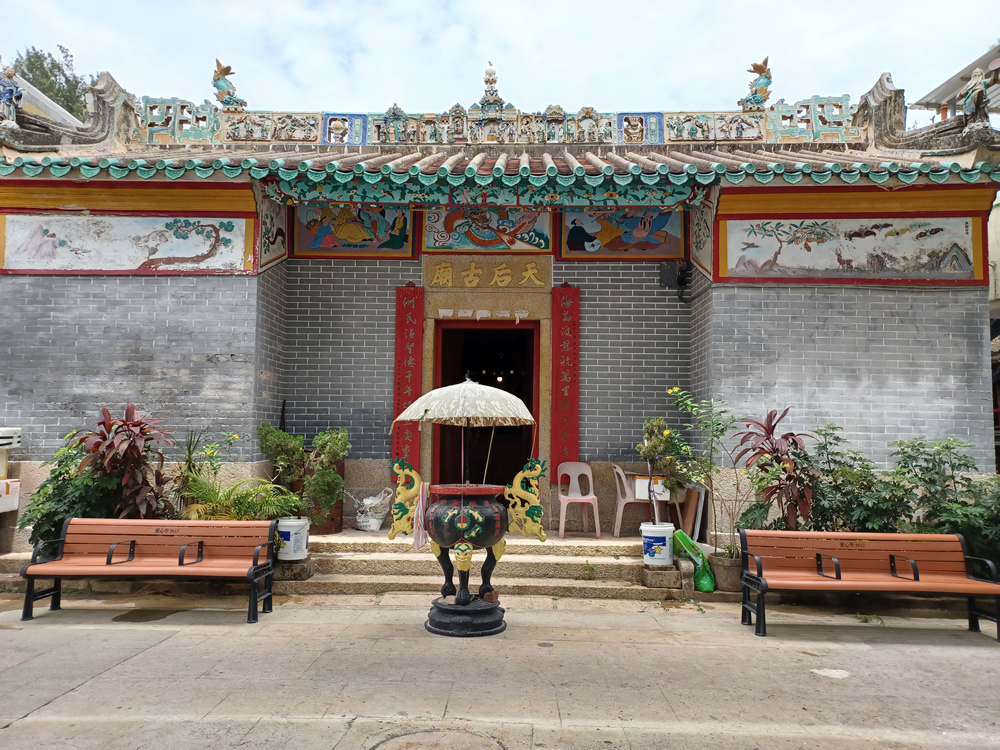
Pak She Tin Hau Temple is located to the north of Yuk Hui Temple. A bronze bell of the Temple inscribed with the 32nd year of the Qianlong reign (1767) of the Qing Dynasty is an evidence of the long history of the Temple.
Tin Hau, also known as “Matsu”, was said to be a native in Fujian Province called Lam Mak Leung during the Song Dynasty (960 - 1279). According to legend, she had gifted power and saved many people from sea disasters. The seafarers therefore worship Tin Hau and regard her as their patron saint.
Religious ceremonies are held at Pak She Tin Hau Temple during Cheung Chau Jiao Festival (also known as the “Bun Festival”) held on the 8th day of the 4th lunar month every year. Tin Hau and Pak Tai of Yuk Hui Temple in Cheung Chau will be carried on armchairs marching through major streets on the island.
Pak She Tin Hau Temple, Cheung Chau was rated Grade 2 historic building in 2010.
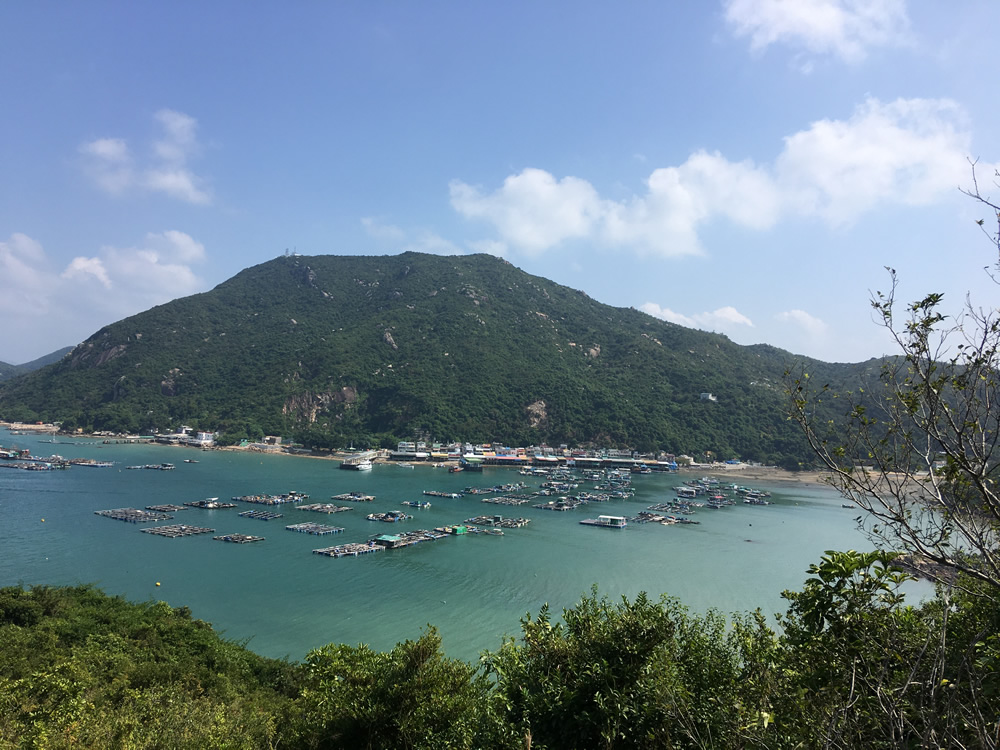
Located in the southwest of Hong Kong, Lamma Island with an area of 13.85 sq km is the third largest island in the territory after Lantau Island and Hong Kong Island.
Lamma Island provides a significant reference for archaeological studies of Hong Kong. Archaeological remains suggest that the island was inhabited by early settlers during the Middle Neolithic period (c. 4000 – 2500 BC). Specifically, many archaeological remains from the Bronze Age (c. 1500 – 221 BC) have been excavated at Sham Wan, Tai Wan, Yung Shue Wan and Lo So Shing. Besides, the Sham Wan Site of Special Scientific Interest is the only known nesting site for globally-endangered green turtles (Chelonia mydas) in Hong Kong.
Yung Shue Wan is where the bulk of Lamma's population is concentrated, followed by Sok Kwu Wan. A 7-km hiking trail linking up these two popular places for seafood dining is a route suitable for all ages.
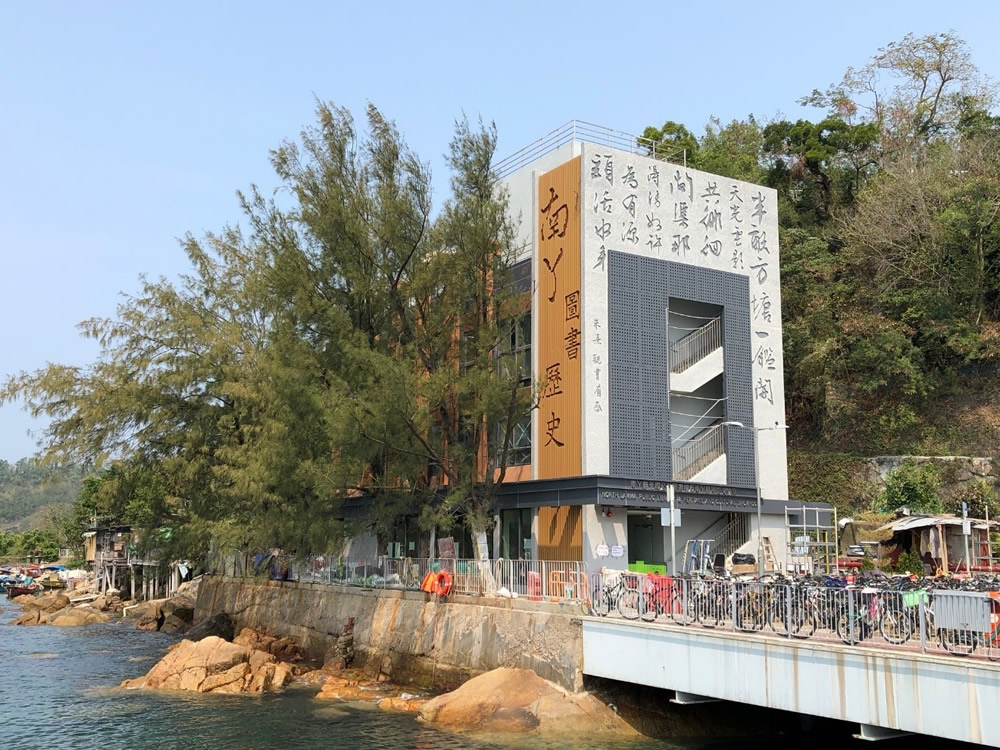
North Lamma Public Library cum Heritage and Cultural Showroom, Lamma Island is next to Yung Shue Wan Pier. Adopting the concept of “Reading a book on Lamma by the sea”, the building has a concrete feature wall with poetry in Chinese calligraphy like a book cover and timber slates as the book spine.
The Heritage and Cultural Showroom on ground floor of the building showcases archaeological finds and historical objects as well as videos about the history and culture of Lamma Island and changes in residents' lives. The library on the first and second floors provides window seats chime with the concept of “reading by the sea”, offering a pleasant and diversified reading environment.
Yung Shue Wan Main Street is one of the busiest places on Lamma Island. Lined with stores selling artefacts and local food, seafood restaurants, pubs, bars and cafes, this main street in Yung Shue Wan offers a unique exotic atmosphere.
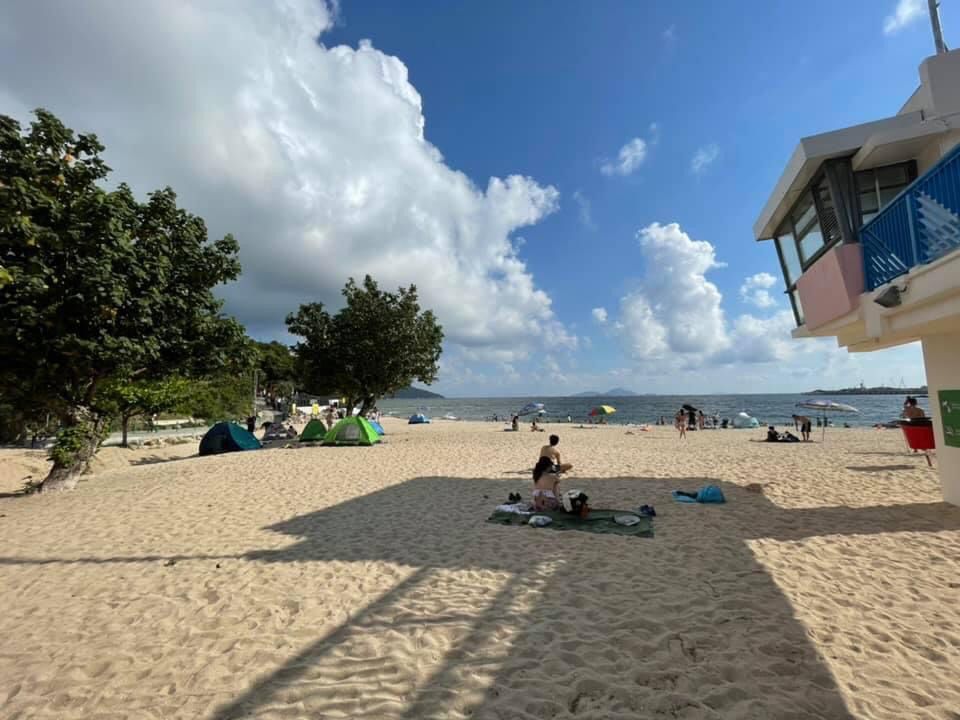
Located in the southeast of Yung Shue Wan of Lamma Island, Hung Shing Ye Beach is a popular beach and place for enjoying the stunning sunset view. Visitors can climb up to Lamma Island Lookout Pavilion south of the Beach to enjoy the superb view of the island and the Lamma Power Station or continue the journey to Sok Kwu Wan via the hiking trail.
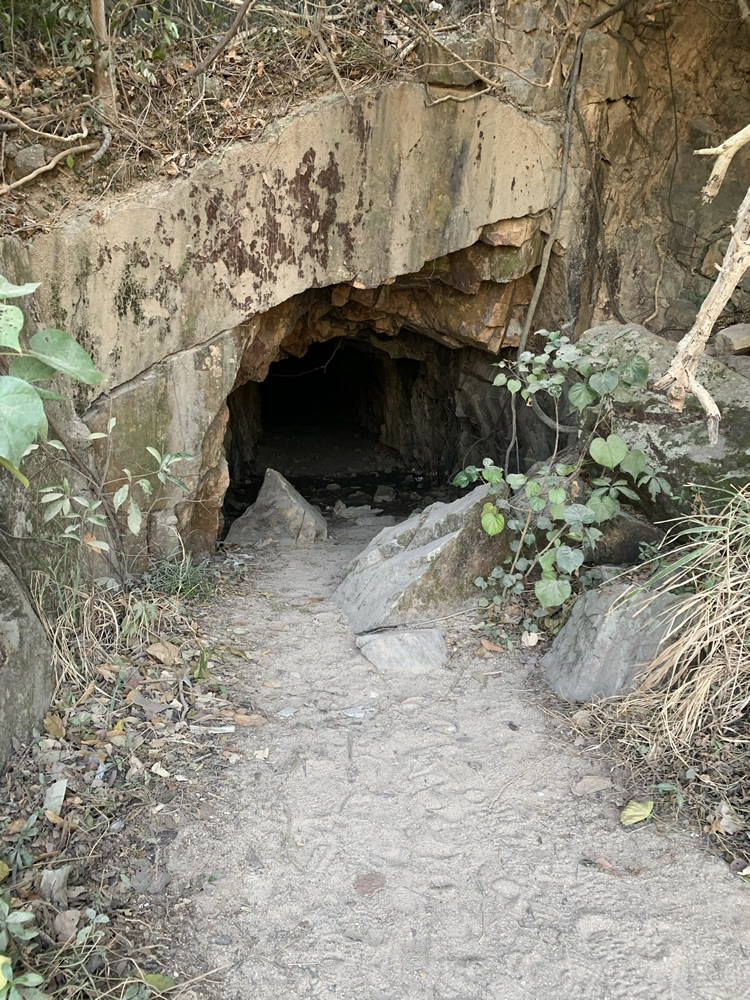
Kamikaze Cave is situated along the waterfront between Lo So Shing and Sok Kwu Wan of Lamma Island. It is said that the Cave was constructed during World War II by the Japanese army to house a flotilla of motorboats for launching a suicidal attack on the Allies’ warships when they passed by. However, the war ended prior to the completion of the work.
On the way to Kamikaze Cave, visitors can also visit the Lo So Shing Beach.
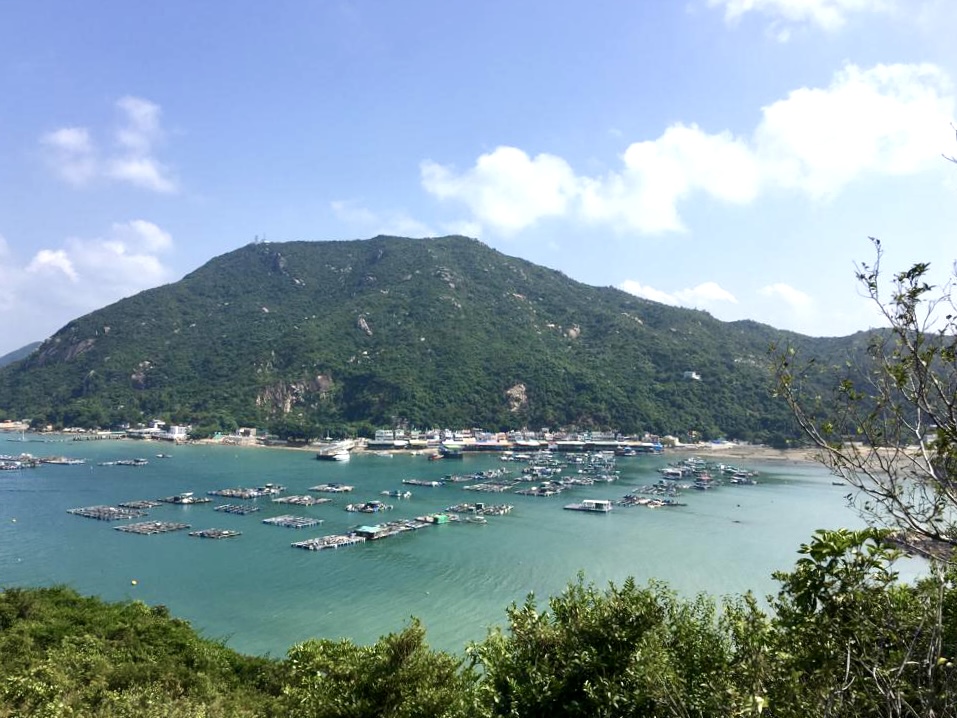
Sok Kwu Wan Fish Rafts is one of the major fish culture zones in Hong Kong and reminiscence of Hong Kong's early days as a fishing port. Lamma Fisherfolk’s Village there displays photos of local fishermen's daily lives and fishing utensils, showcasing the local fisherfolk culture and the development of fishing industry in Hong Kong.
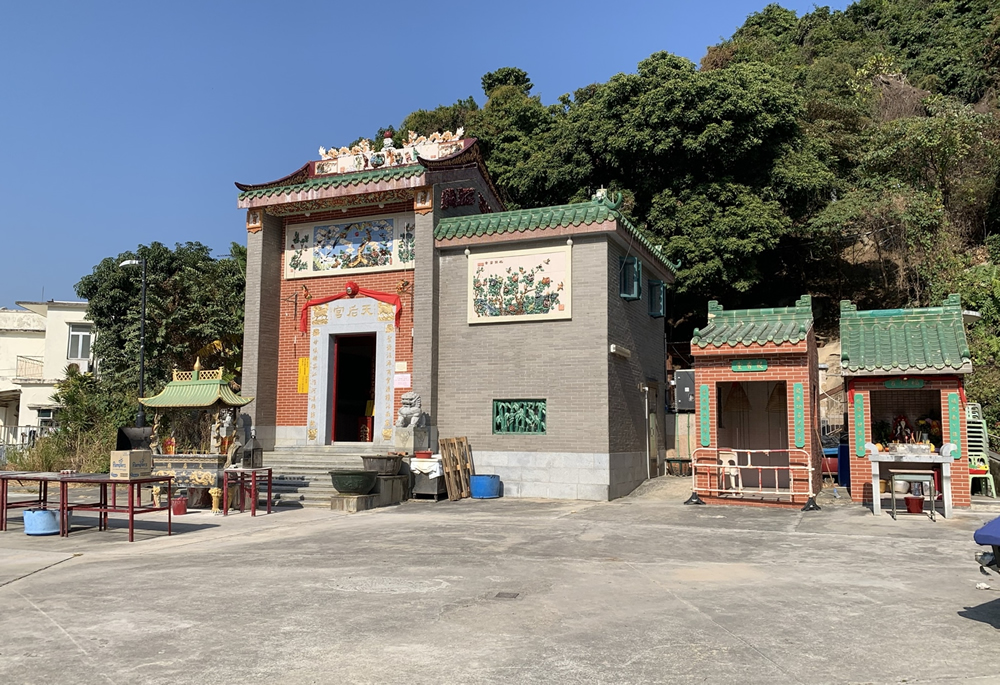
Sok Kwu Wan Tin Hau Temple is located at Sok Kwu Wan Village of Lamma Island.
Tin Hau, also known as “Matsu”, was said to be a native in Fujian Province called Lam Mak Leung during the Song Dynasty (960 - 1279). According to legend, she had gifted power and saved many people from sea disasters. The seafarers therefore worship Tin Hau and regard her as their patron saint.
According to the incense burner cast in the 6th year of the Daoguang reign (1826) of the Qing Dynasty, and a bell cast in the 21st year of the Guangxu reign (1895) of the Qing Dynasty in the Temple, it is believed that the Temple was constructed between 1826 and 1895. The Temple was destroyed by a fire in 2004, and fortunately, restoration was completed with donations by the warm-hearted worshippers and villagers. Today, the Temple is frequented by both worshippers and visitors.
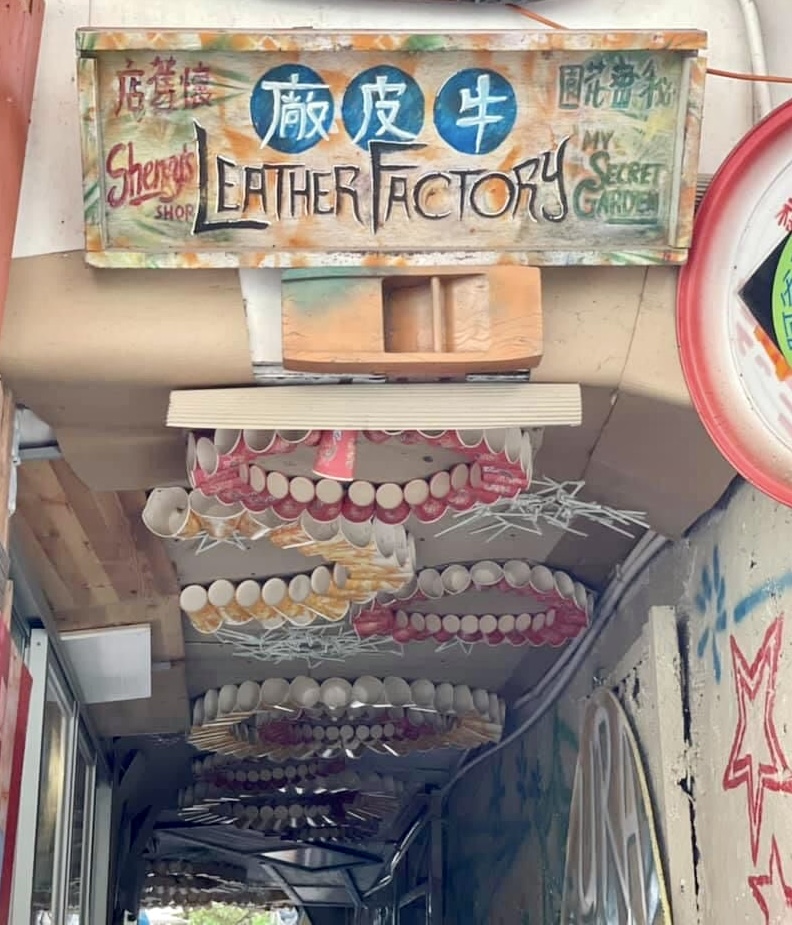
Peng Chau is a small island of less than 1 sq km and with flat terrain west of Hong Kong Island. The small market town on the island has retained its old appearance. Strolling leisurely along the town, you can see traditional tilted houses, stores and restaurants serving seafood.
There are two abandoned leather factories on the island which were probably established before 1936. Of them, Fook Yuen Leather Factory had ceased operation during the Japanese Occupation (1941 - 1945). Although it re-started business after the war, its business dropped gradually due to the introduction of plastic-leather and the factory eventually closed down. In recent years, Fook Yuen Leather Factory was revitalised as an arts space and has become a popular attraction on the island. Leather Factory was rated Grade 3 historic building in 2010.
Amongst various temples on this small island, Tin Hau Temple on Wing On Street and Lung Mo Temple on Chi Yan Street are the most popular ones. Built in the 57th year of the Qianlong reign (1792) of the Qing Dynasty, Tin Hau Temple, Peng Chau was rated Grade 2 historic building in 2010. A 5 ft long fish bone dedicated by fishermen to Tin Hau, praying for propitious wind and rain, is housed there. Lung Mo Temple, Peng Chau, built in the early 1970s, is dedicated to the worship of Lung Mo, one of the Goddesses of Sea. A “Dragon Bed” inside the Temple is believed to bestow children and good luck to those who touch it.
Departing from Wing On Street and going southbound up the stairs along Peng Chau Family Walk, you will reach Fung Ping Pavilion on Finger Hill - the highest point on the island. There you can enjoy the splendid views of Tsing Ma Bridge and Hong Kong Disneyland Resort, as well as the beautiful scenery of nearby islands.
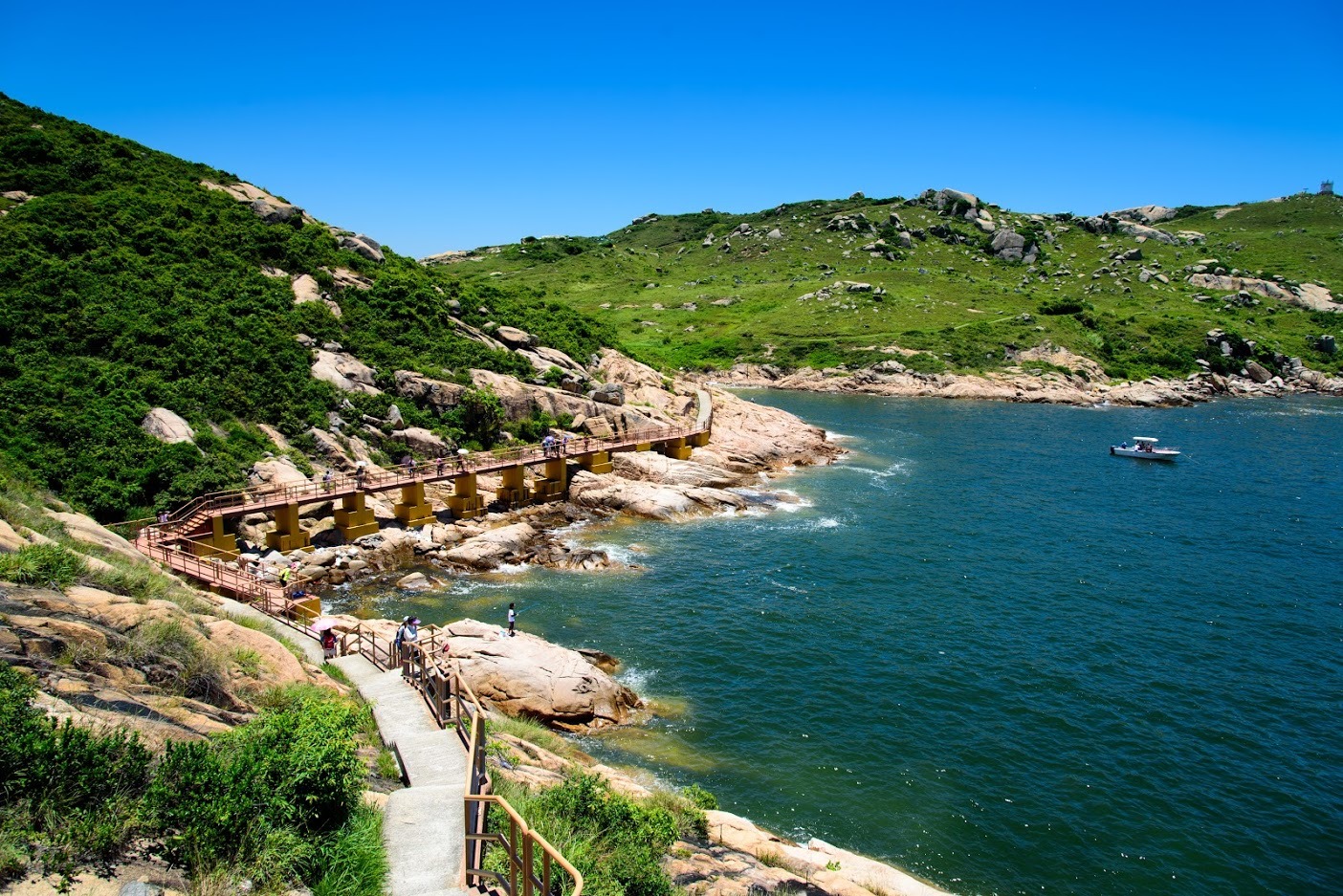
Po Toi is the southern-most part of Hong Kong. Many vantage points on this 3.69 sq km island offer extensive and breath-taking vista.
There are lots of interesting rock formations on the island such as Monk Rock, Coffin Rock, Buddha’s Palm Cliff and Tortorise Rock. Following the path down a flight of stairs to the shore, visitors can take their time on the way to admire rock carvings which have a history of several thousand years. Rock Carvings on Po Toi was declared a monument in 1979.
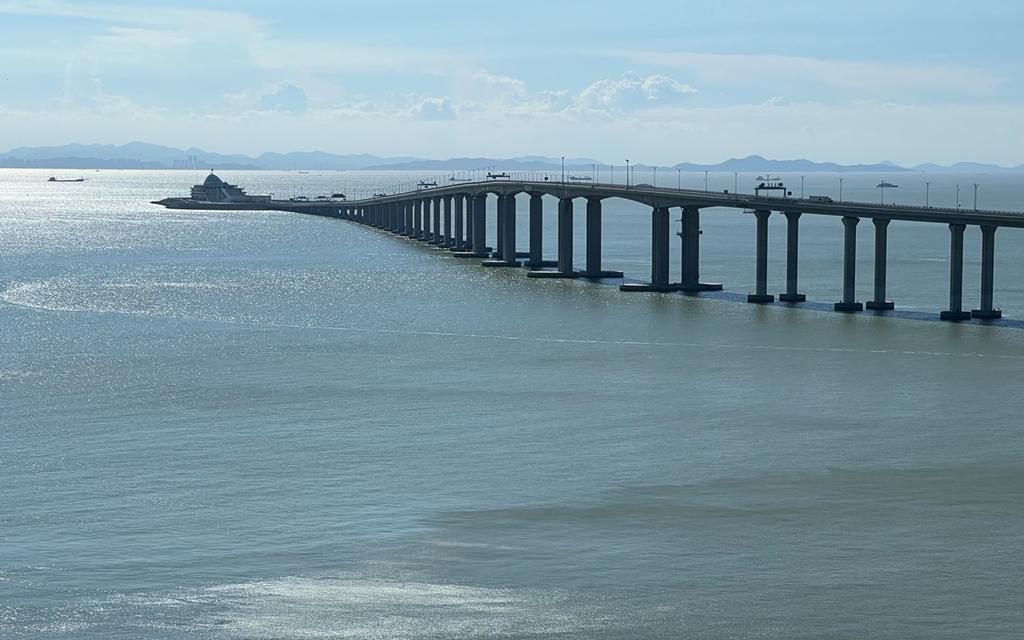
The 55-km Hong Kong-Zhuhai-Macao Bridge, comprising the 12-km Hong Kong Link Road, 29.6-km Main Bridge and 13.4-km Zhuhai Link Road, is the longest bridge-cum-tunnel sea crossing in the world. Commissioned in October 2018, the Bridge substantially reduces the land travelling time between Hong Kong, Zhuhai and Macao, and offers a splendid sea view along the way.
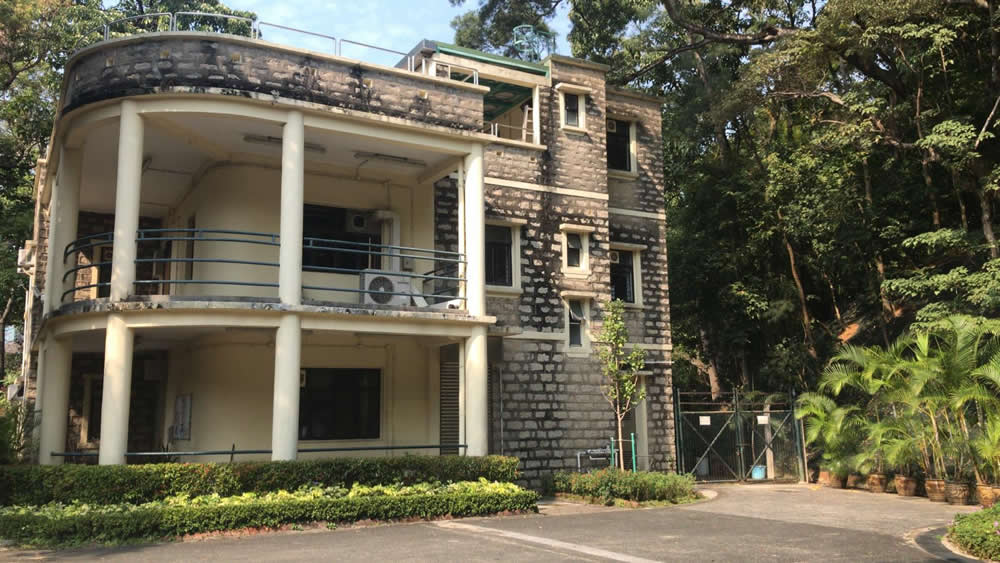
Central Kwai Chung Park, located at San Kwai Street, Kwai Chung, is extensively planted with vegetation and verdant trees. Occupying an area of about 10 ha on the hillside with beautiful natural scenery in the surroundings, the Park is well patronized by morning walkers.
The Park was formerly the site of Shui Fung Dairy Farm and Leung Fat Dairy Farm which were the only farms in the New Territories in the 1950s. In 1980s, the 2 dairy farms ceased operation and the plot of land occupied was surrendered to the Government. The area was subsequently redeveloped into Central Kwai Chung Park, with only the Stone House retained and used as the park office.
Stone House is the only surviving building of Shui Fung Dairy Farm. Built in around 1950, this 2-storey modernist style building has a flat roof terrace and is a composition of rectangles. It has curved building façade, deep veranda and simple and slender round columns. The staircase finished with terrazzo connecting the 2 floors is still intact. Stone House was used as a holiday villa and residence of the family of the dairy farm owner.
Stone House bears witness to the dramatic changes in Kwai Chung District as it was developed from an agricultural area to an industrial and residential district. Stone House was rated Grade 2 historic building in 2022.
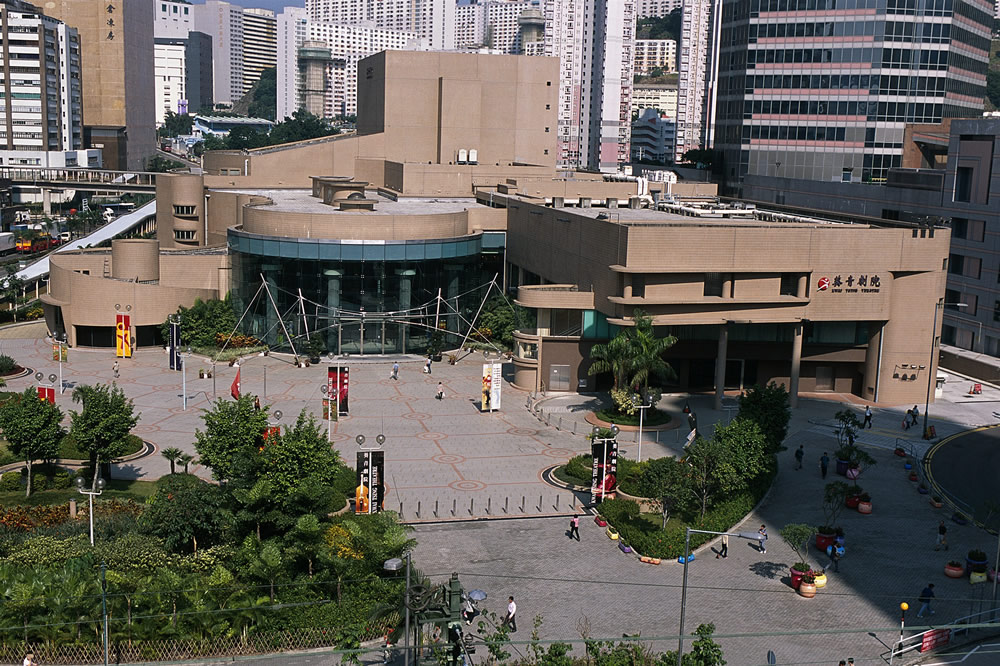
Kwai Tsing Theatre is situated next to Kwai Fong MTR Station and bus terminus. It houses an auditorium with around 900 seats, a black box theatre, a dance studio, a lecture room, a rehearsal room, an open-air plaza and catering facilities.
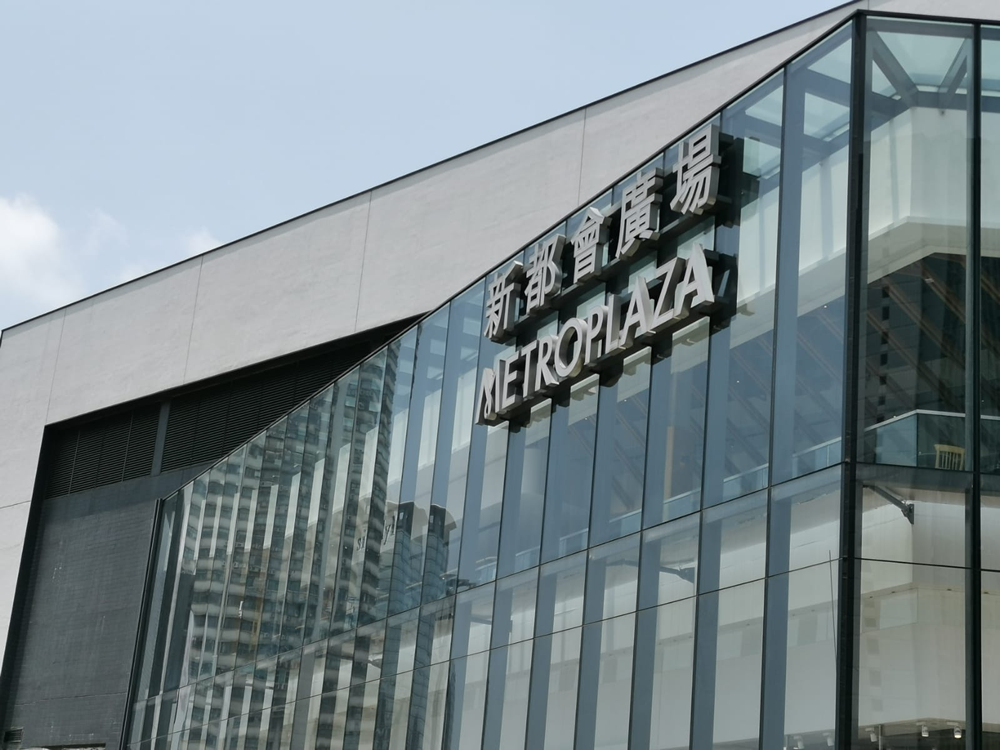
Metroplaza is the focal point of commercial, shopping and entertainment activities in Kwai Tsing District. Connecting Exit E of Kwai Fong MTR Station with a covered footbridge, the Plaza covers an area of 540 000 sq ft and houses a variety of shops and eateries, as well as entertainment facilities like cinema and Fun Park.
There is also a footbridge in the Plaza linking the mall with the next-door Kwai Chung Plaza which accommodates a large number of shops selling a vast range of products, and snack shops offering refreshment of different styles.
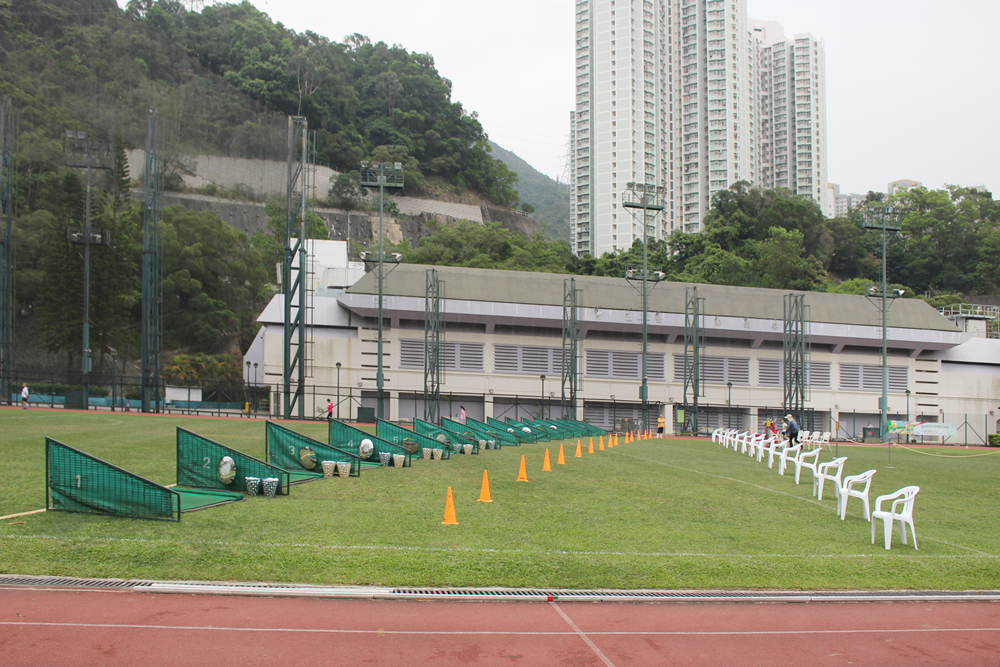
Wo Yi Hop Road Golf Driving Range is located at 298 Wo Yi Hop Road, Kwai Chung. The venue is equipped with 15 driving bays for hiring by individuals and groups. Besides, golf training courses at different levels and fun days are held for the promotion of golf sports.
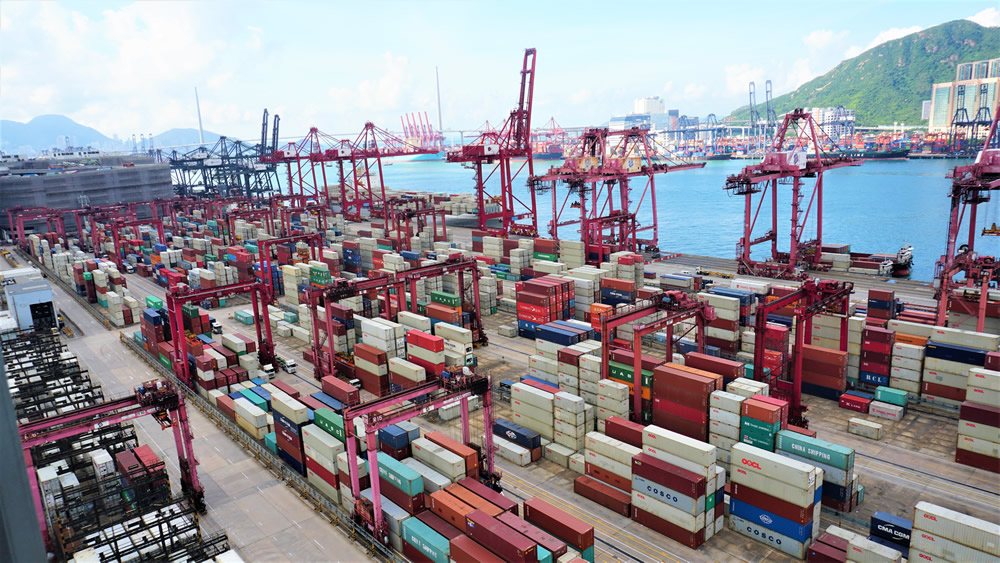
Kwai Tsing Container Terminals is one of the world's busiest container terminals. Visitors can enjoy the great view of the Terminals along the section of Lai King Hill Road from Lai King MTR Station to Cho Yiu Chuen.
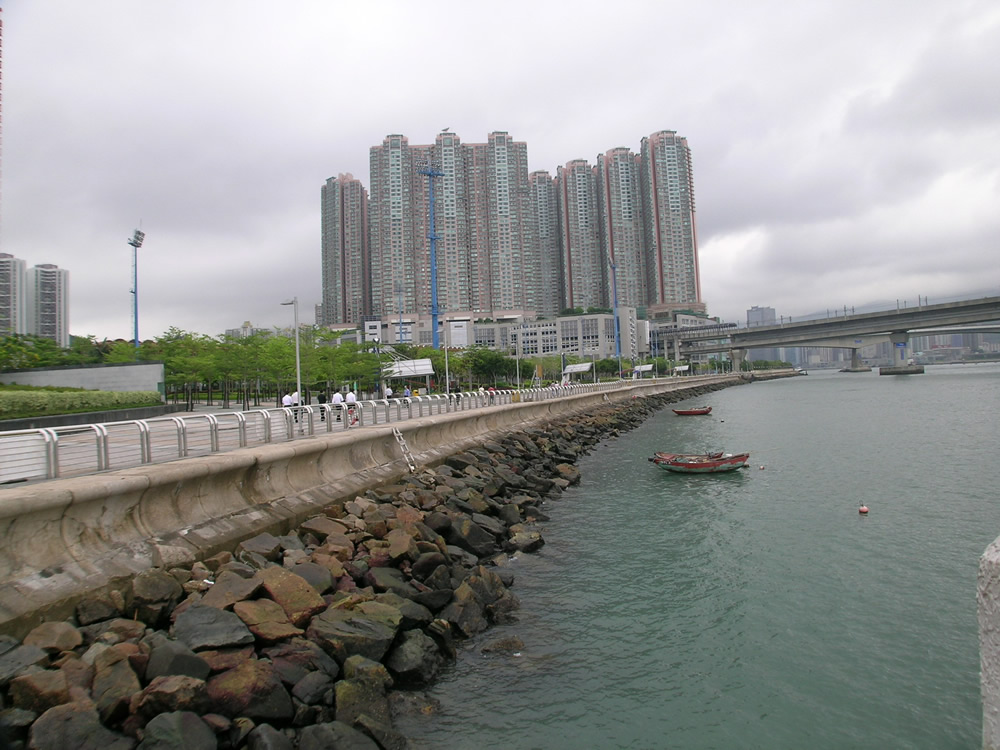
Tsing Yi Promenade is located along the northeastern waterfront of Tsing Yi Island facing the Rambler Channel. It is about 1.6 km long and covers an area of about 6.3 ha. Facilities include an amphitheatre with covered spectator stand, an amenity lawn and a variety of fitness and recreational facilities. Visitors may take a stroll to enjoy the scenery along the Promenade.
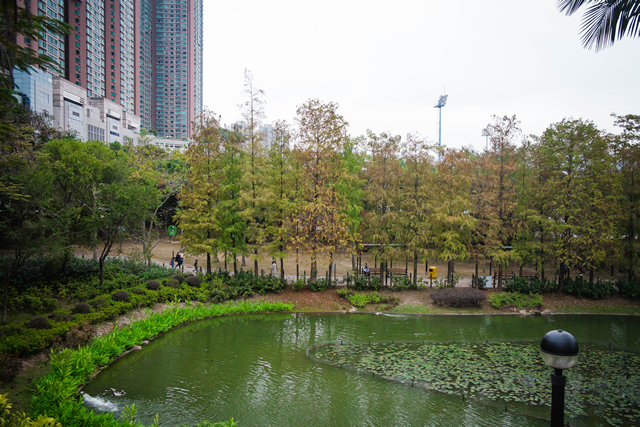
Tsing Yi Park covers an area of about 7 ha. Facilities include 7-a-side hard surfaced soccer pitch, a basketball court, tennis courts, children's play areas, quali-walk paths, elderly fitness corner, Tai Chi garden, lookout pavilion, amphitheatre, large waterfall, ornamental lakes, large amenity lawn, etc.

Tsing Yi Northeast Park is built along the northern coast of Tsing Yi Island and linked with Tsing Yi Promenade. Covering an area of about 5.8 ha, the Park provides a wide range of recreational facilities designed for people of different age groups, including a 11-a-side artificial turf soccer pitch with a spectator stand, basketball-cum-volleyball courts, a gateball court, a cycling track, a cycling track for children, a skateboard arena, children's play areas, a walking tiles, a piazza, a waterfront promenade, a jogging trail with fitness stations, a fitness corner for elderly and a landscaped area.
Maritime Square is located above Tsing Yi MTR Station. The shopping mall has an area of over 58 000 sq ft and houses more than 100 shops, supermarkets, restaurants, cinema and other leisure facilities.
The interior design of Maritime Square is inspired by the beauty of the ocean and the features of “Treasure Island”, giving visitors an experience like travelling on a luxury ocean liner. The mall is truly a paradise for dining, shopping and entertainment. Visitors can also enjoy the relaxed ambience of the 50 000 sq ft green balcony and roof garden in Maritime Square 2.
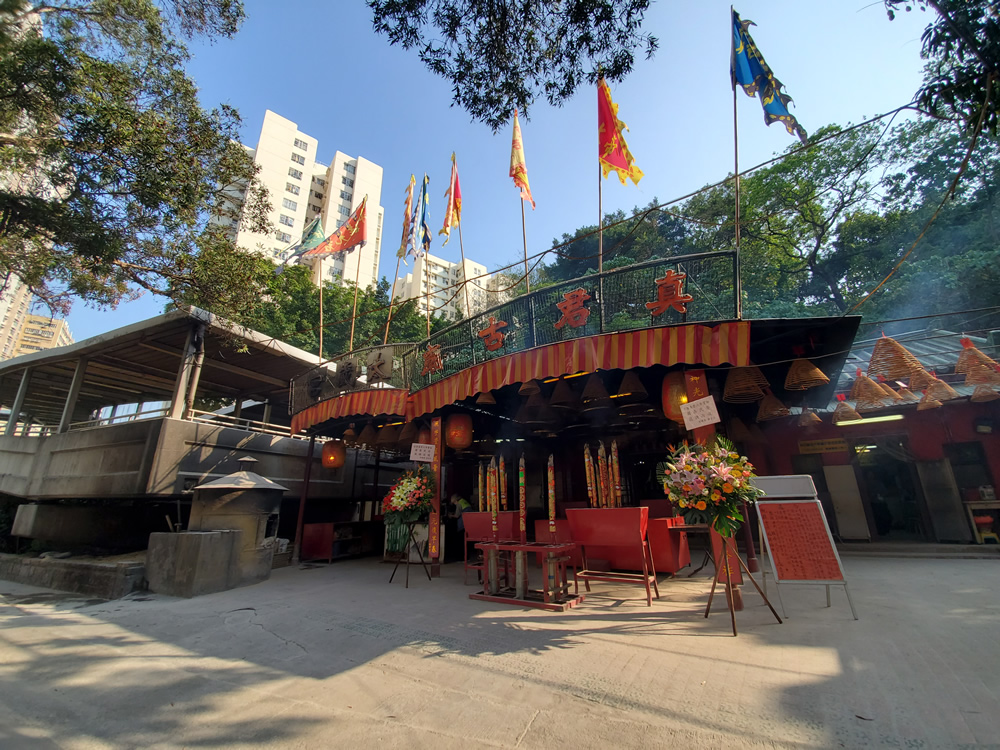
The Temple is dedicated to "Chun Kwan". Legend has it that Chun Kwan was a commoner surnamed Ng who helped the local government combat pirates in Guangdong area during the Southern Song Dynasty (1127 - 1279). After his death, the Emperor bestowed on him the title "Chun Kwan" to commemorate his heroic act, and people started to worship him as a god. The original Chun Kwan Temple was built in around the 1900s near the waterfront of Tsing Yi Island. It was relocated to the present site at Fung Shue Wo Road in the 1980s.
Chun Kwan Emperor Festival is held from the 12th to 16th days of the 3rd lunar month every year, during which traditional Cantonese opera performances are staged.
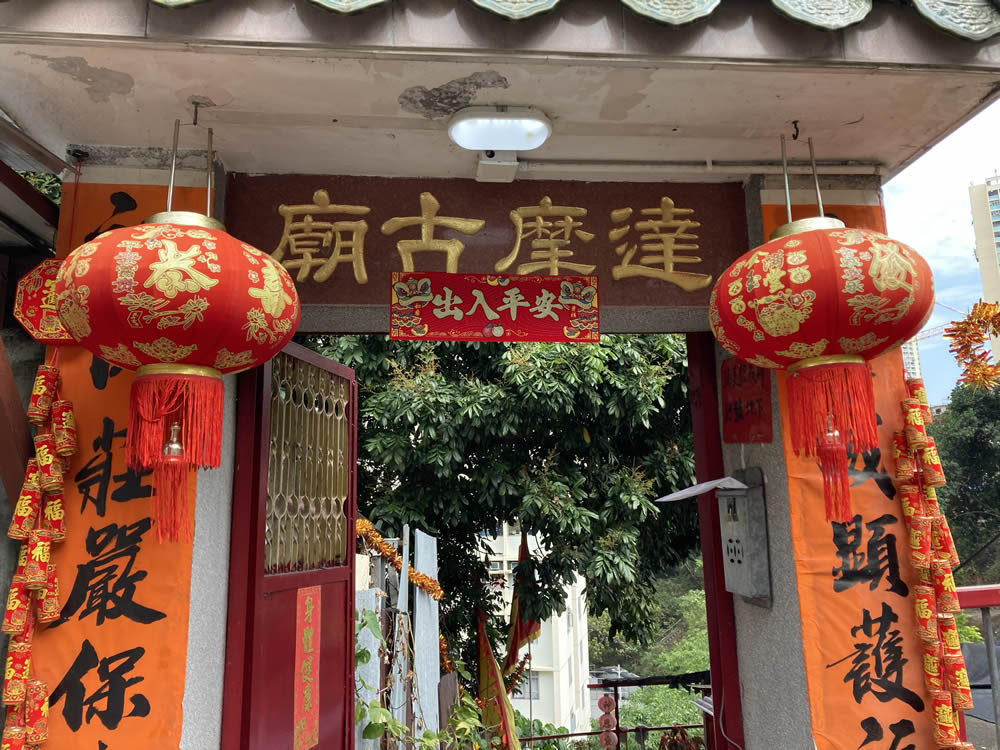
Tat Mor’s native home was said to be ancient India. He brought Buddhism to China in the Northern and Southern Dynasties (420 - 589). After Tat Mor's death, worshippers honoured him with the title “Tat Mor Cho Sze” (meaning the master).
In the 1950s when Tsing Yi Island had not yet been developed, some migrants from Hoi Fung and Luk Fung built the Temple in Tsing Yi Lutheran New Village. Worshippers would visit the Temple and pay respect to Tat Mor on Tat Mor’s birthday which falls on the 5th day of the 10th lunar month.
The area around Liu To Valley on Tsing Yi Island is embraced by picturesque scenery. It is a popular spot for morning hikers and visitors. The Trail overlooks Tsing Ma Bridge, Ting Kau Bridge and developments in Tsing Yi West. Hikers may also take a rest in pavilions along the Trail.
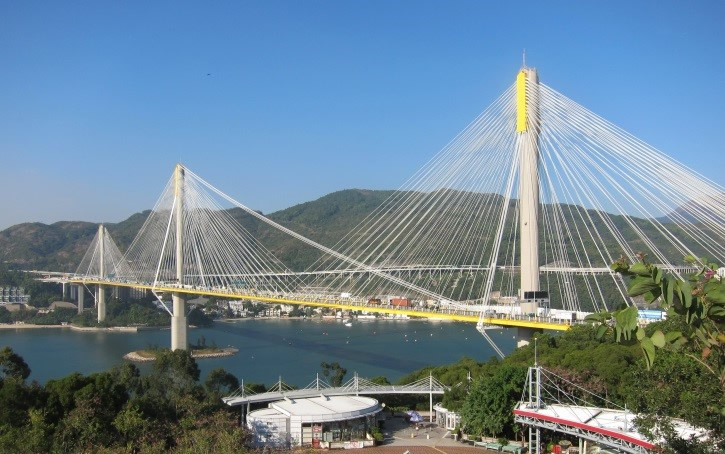
Lantau Link Viewing Platform is located at the northwest corner of Tsing Yi Island. From here, you can enjoy a magnificent panoramic view of the western part of Lantau Link, the northern part of Ting Kau Bridge and the Ma Wan Channel.
Facilities available at the attraction include an elevated platform, the outdoor exhibits of components of Tsing Ma Bridge and Ting Kau Bridge, as well as a Visitors Centre where videos, pictures, photos and models detailing the construction of Lantau Link and Ting Kau Bridge are displayed.
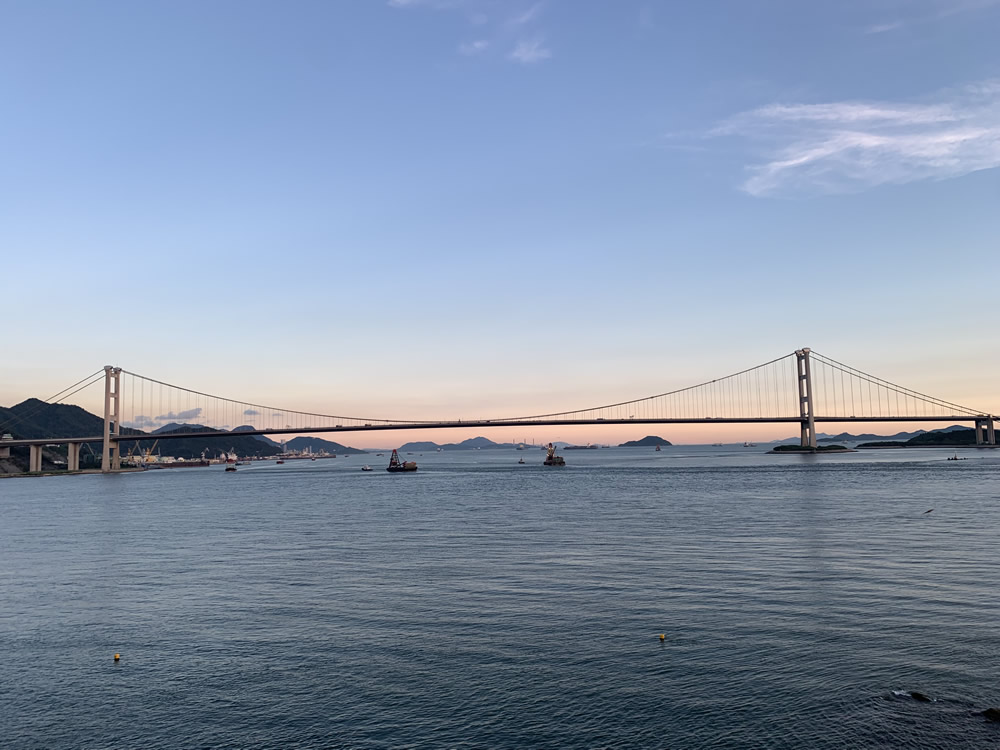
Tsing Ma Bridge, linking Tsing Yi Island to Ma Wan Island, has an overall bridge length of 2 160 m with a main span of 1 377 m. It was once the world’s longest suspension bridge carrying both road and rail traffic.
Under normal conditions, traffic uses the dual three-lane carriageway on the upper deck. The lower deck's sheltered carriageway is used only in bad weather or in emergencies. Tsing Ma Bridge is part of Lantau Link which also comprises Kap Shui Mun Bridge and Ma Wan Viaduct. Lantau Link is a vital component of the transport network connecting the urban area, the Hong Kong International Airport and Lantau Island.
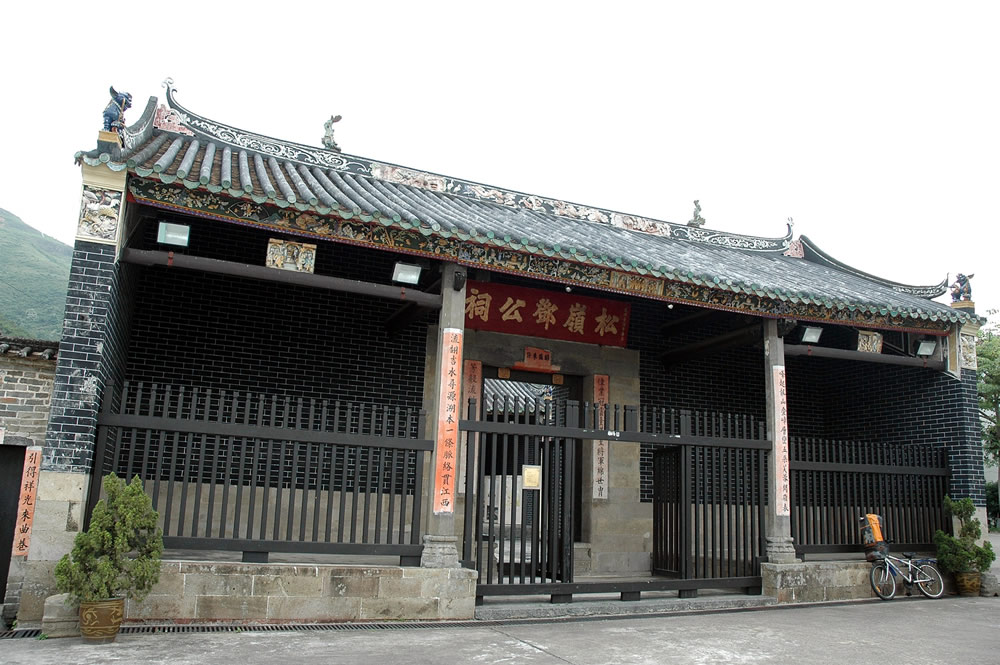
Lung Yeuk Tau Heritage Trail is situated in Fanling. Linking up the built heritage sites, including Tang Chung Ling Ancestral Hall, Lung Yeuk Tau Tin Hau Temple, Leung Yeuk Tau Lo Wai, and Shek Lo, etc. the 2.6 km Trail provides an opportunity for visitors to learn more about the traditional life in the area of Lung Yeuk Tau in Fanling.
Lung Yeuk Tau derives its name from the nearby mountain range Lung Yeuk Ling. The Tang clan living there trace their descent back to a princess of the Southern Song Dynasty (1127 - 1279). When the princess took refuge to the south in the early Southern Song Dynasty, she was married to Tang Wai Kap of Kam Tin. The descendants of her eldest son moved to Lung Yeuk Tau in the 14th century and gradually developed “5 Wais (walled villages) and 6 Tsuens (villages)” there.
Many traditional Chinese buildings and structures in Lung Yeuk Tau have been preserved in their original state, demonstrating the history and life of early inhabitants in the New Territories.
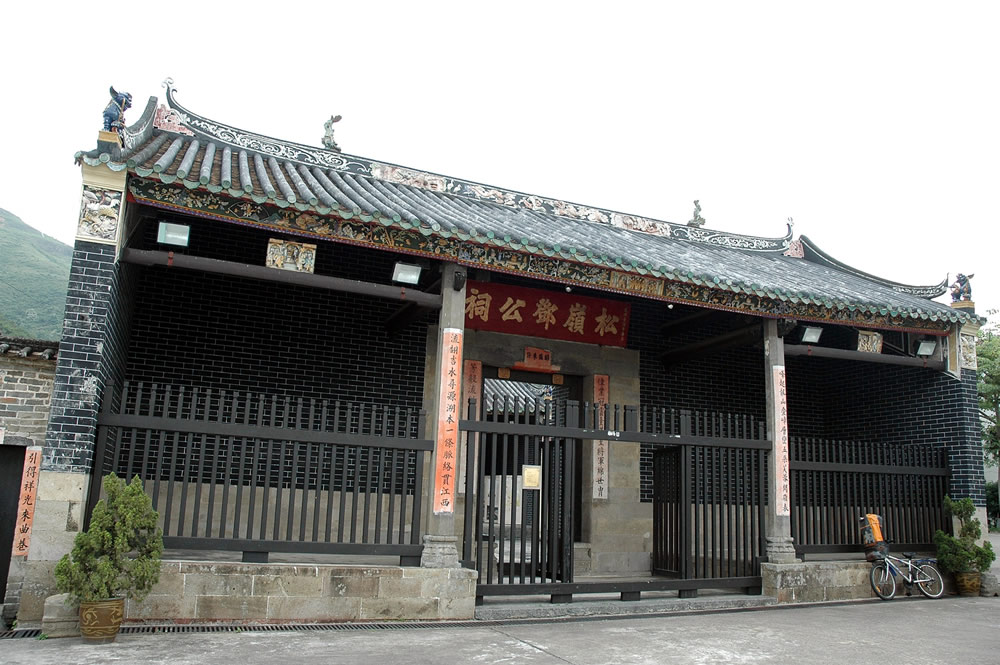
Situated east of Lo Wai in Lung Yeuk Tau of Fanling, Tang Chung Ling Ancestral Hall was built by the Tang clan in around 1525 in memory of the founding ancestor Tang Chung Ling, and to serve as the main ancestral hall of the clan. Tang Chung Ling Ancestral Hall is one of the largest ancestral halls in Hong Kong.
The ancestral hall is a 3-hall building with 2 spacious internal courtyards. "Dong chung" (the screen doors that prevent evil spirits from entering) is placed in the central hall. The rear hall is divided into 3 bays. The central bay houses the soul tablets of the ancestors of the clan including that of the Song princess and her husband Tang Wai Kap, whose posthumous title was Junma (husband of an imperial relative). The soul tablet of the royal couple is distinguished from the others by the elaborately carved dragon’s head that adorns it. The bay on the right is dedicated to ancestors who made significant contributions to the clan or those who achieved a high rank at the imperial court. The bay on the left is dedicated to virtuous members of the clan.
The whole building is exquisitely decorated with fine wood carvings, elaborate plaster mouldings, ceramic sculptures and murals of auspicious Chinese motifs, reflecting the superb craftsmanship in the past.
After completion of a full restoration in 1992, Tang Chung Ling Ancestral Hall was declared a monument in 1997.
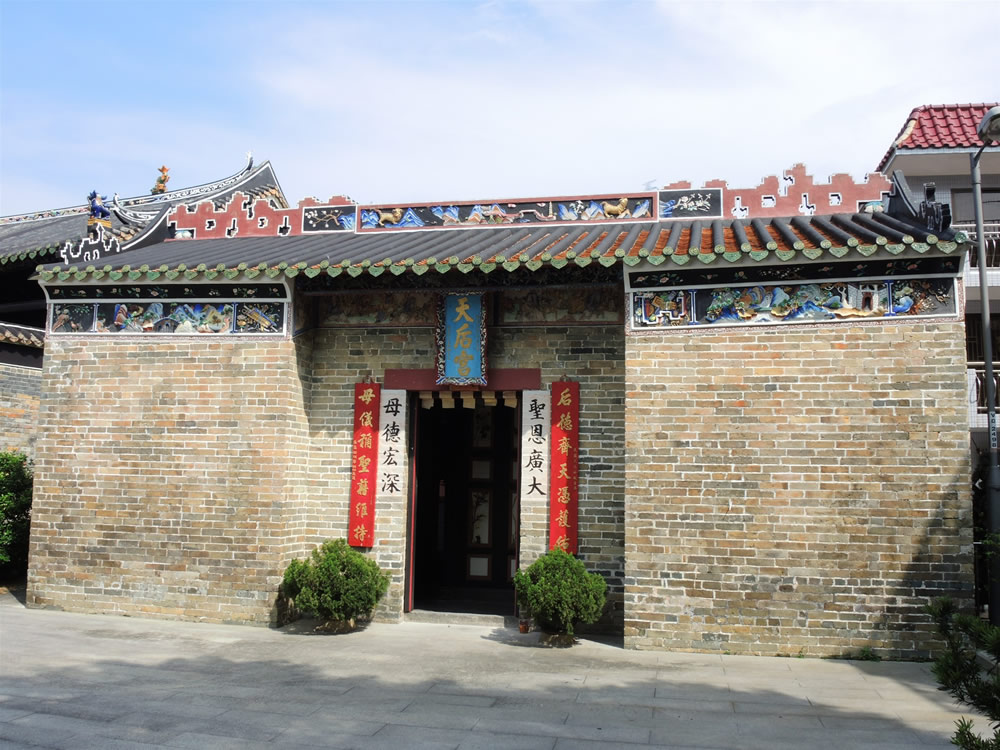
Lung Yeuk Tau Tin Hau Temple in Fanling is situated between Tang Chung Ling Ancestral Hall and Lo Wai. Its year of construction is unknown.
The Temple is a traditional 2-hall, 3-bay building with a central courtyard. It is built of grey bricks and has timber-framed tiled roofs. The façade is exquisitely decorated with plaster mouldings and murals of auspicious motifs and folklore. The main hall of the Temple is dedicated to Tin Hau and her guards, Chin Lei Ngan (whose is believed to be able to see things thousand miles away) and Shun Fung Yi (whose is said to be able to hear sounds as far away as from heaven). Dedicated to To Tei (the Earth God), the right chamber has 2 historic bells, one of which was cast in the 34th year of the Kangxi reign (1695) of the Qing Dynasty as a gift from the Tang clan to thank Tin Hau for adopting their sons. The other one was cast in the 39th year of the Kangxi reign (1700) as an offering to Tin Hau for blessing the young men of the clan when they travelled to the city for taking the provincial examinations.
Tin Hau, also known as “Matsu”, was said to be a native in Fujian Province called Lam Mak Leung during the Song Dynasty (960 - 1279). According to legend, she had gifted power and saved many people from sea disasters. The seafarers therefore worship Tin Hau and regard her as their patron saint.
Lung Yeuk Tau Tin Hau Temple, Fanling was declared a monument in 2002.
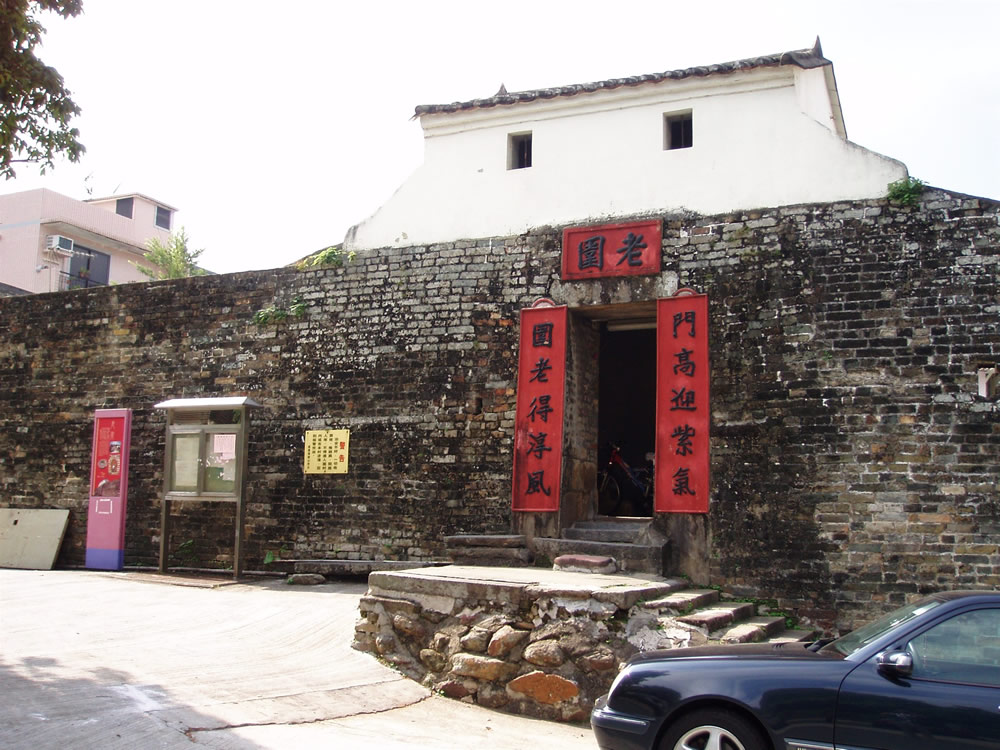
Situated in the west of Tang Chung Ling Ancestral Hall, Lo Wai in Lung Yeuk Tau was the 1st walled village among the renowned “5 Wais (walled villages) and 6 Tsuens (villages)” built by the Tang clan, whose ancestors branched out from the main Tang settlement in Kam Tin in the 14th century.
Built on a small hill, Lo Wai is enclosed by brick walls on 4 sides. The original village entrance faced north, but was relocated to face east in order to achieve better fung shui. The narrow entrance was meant to facilitate the defence of the village. Next to the entrance is a well which used to be the water supply for the village. Houses inside the village are arranged orderly. Raised platforms were built on the enclosing walls to serve as watchtowers. Although the village has undergone several renovations, the village walls and layout remain intact.
The entrance tower and enclosing walls of Lo Wai were declared monuments in 1997. A comprehensive restoration of the entrance tower and enclosing walls was completed in 1998.
To avoid disturbance to the residents, the interior of Lo Wai is not open to the public.
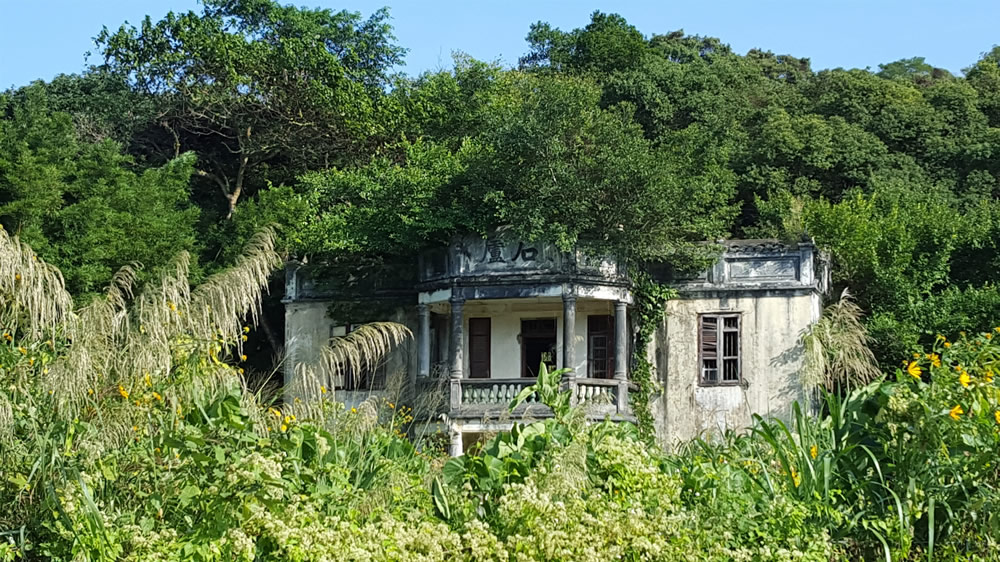
Shek Lo is situated east of Tsung Kyam Church in Lung Yeuk Tau in Fanling. It was built in 1924 by Mr Tsui Yan Sau, the founder of Wah Yan College on Hong Kong Island and in Kowloon.
The 2-storey Shek Lo comprising a main building and an annex block is an integration of Chinese and Western architectural styles. Despite its colonial characteristics, the building has a traditional Chinese pitched roof supported on wooden purlins and battens and is covered by Chinese clay tiles. The courtyard and room layout resembles that of traditional Chinese residences. Located in the middle of the roof parapet is a semi-circular pediment engraved with the characters "Shek Lo".
The main building and annex of Shek Lo were rated Grade 1 historic buildings in 2011.
Shek Lo is a private property and is not open to the public.
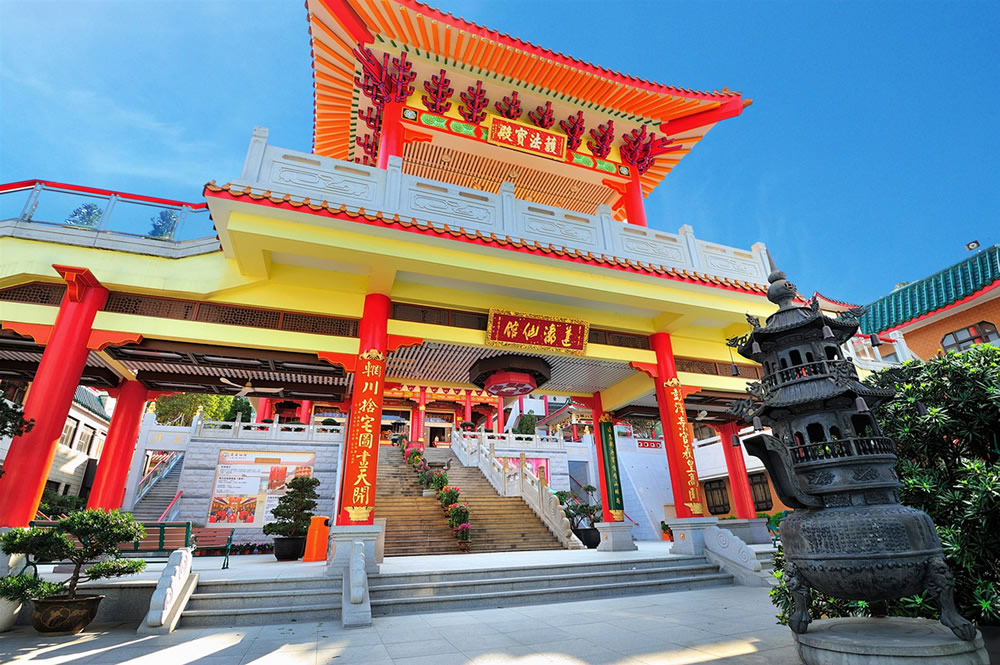
Sitting on the hillside at Pak Wo Road beside Fanling MTR Station, Fung Ying Seen Koon established in 1929 is one of the major Taoist temples in Hong Kong.
Constructed along the hillside, the layout of Fung Ying Seen Koon adopted the traditional Chinese architectural concept of building the important structures on the central axis, to be surrounded by temples. The "Wall Tao Te Ching" behind the Grand Temple shows the religious belief, health preservation, and Taoist philosophy. Visitors can have a panoramic view of Fanling from the garden of Fung Ying Seen Koon.
Website:
https://www.fysk.org/
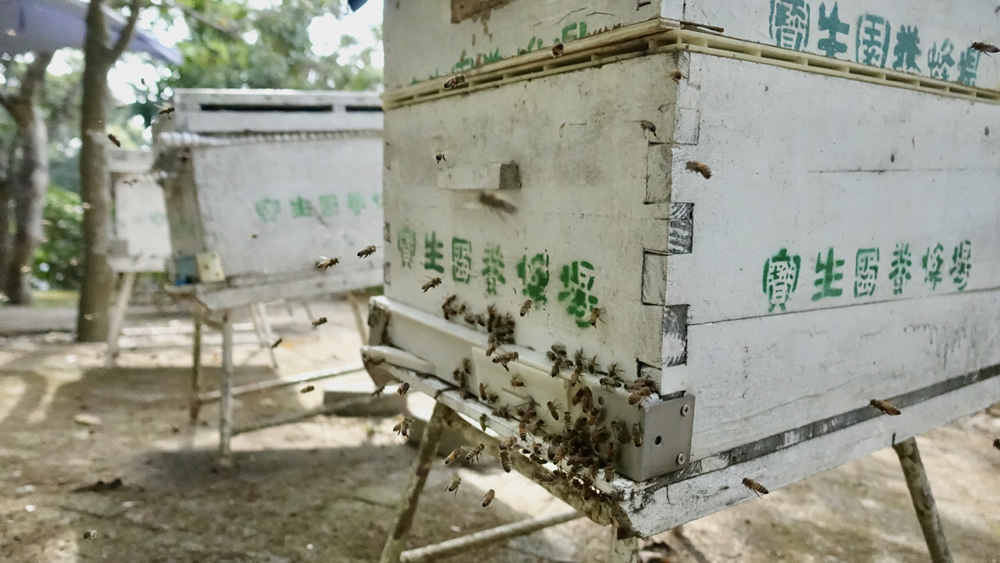
Po Sang Yuen Bee Farm at Wu Tip Shan Road in Fanling has over 90 years of history. It produces various types of honey and provides guided tours introducing the processes of beekeeping and honey production.
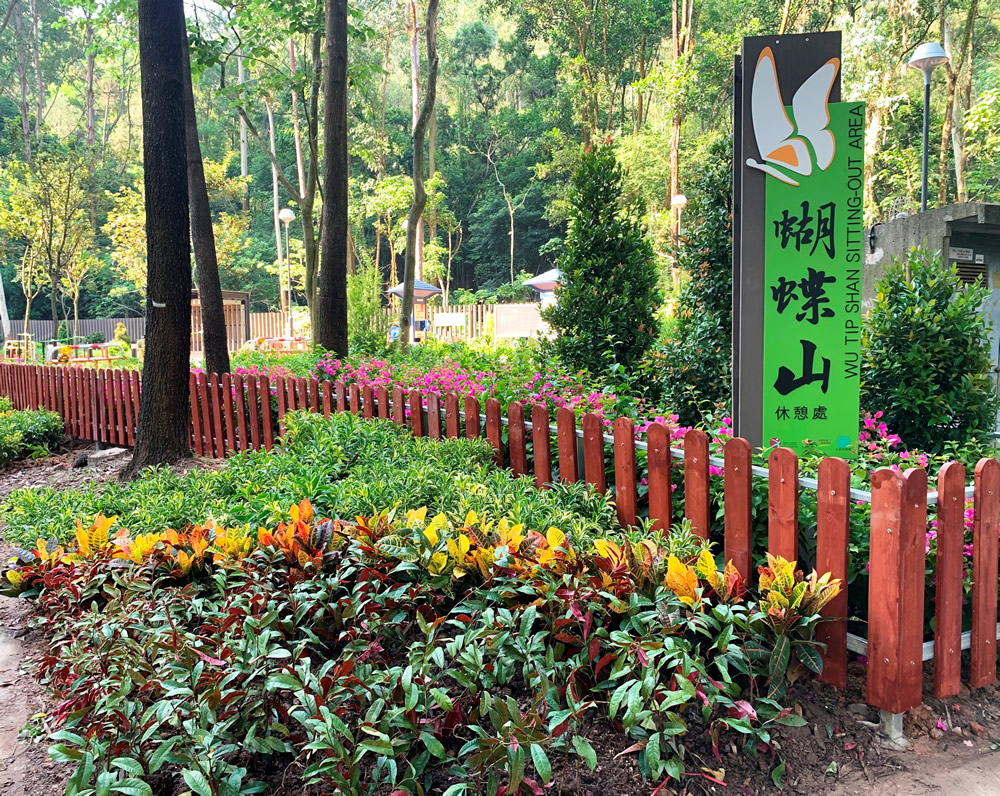
Wu Tip Shan and Wa Mei Shan are widely regarded as the green lungs of urban Fanling in North District. Their proximity to the Fanling town centre have made the hiking trail there a popular destination for morning exercise and hiking for locals and visitors. The trail is also near Fung Ying Seen Koon and Hong Kong Kun Chung Temple, a Buddhist temple. The 3 km trail, with viewing platform and sitting-out area, takes around 1.5 to 2 hours to finish and is perfect for family outings.
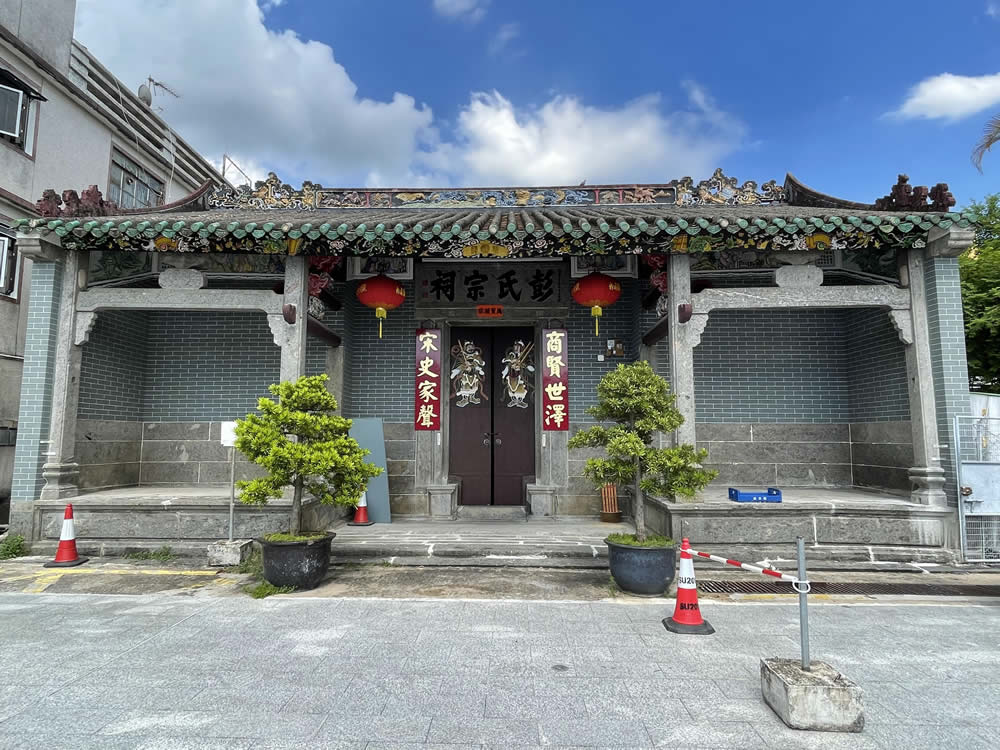
Pang Ancestral Hall, also named Tai Tak Tong, is located at Fanling Wai. Believed to have first built in the early years of Wanli reign (1573 – 1620) of the Ming Dynasty, the ancestral hall was rebuilt in 1884 (the 10th year of Guangxu reign of the Qing Dynasty). It is a 1-storey 2-hall building embellished with wood carvings, granite columns, ceramic figures, wall paintings, etc.
Pang Ancestral Hall was rated Grade 1 historic building in 2009.
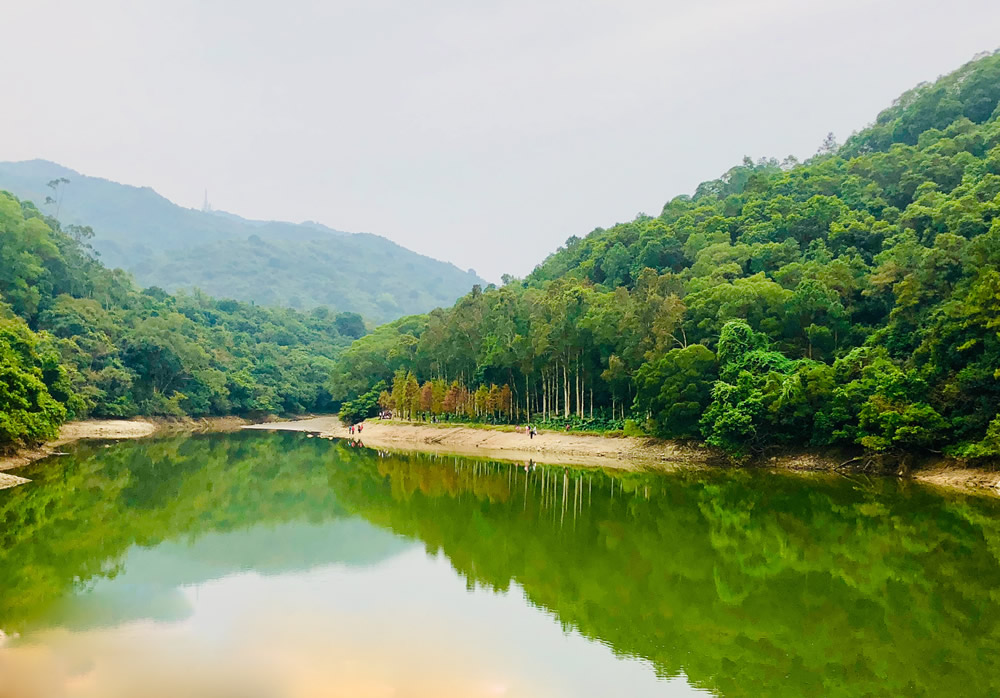
Located at the western part of Pak Sin Leng Country Park, Lau Shui Heung Reservoir is an irrigation reservoir with a capacity of about 170 000 cubic meters. The Reservoir is one of the reservoirs in Hong Kong with a "mirror of the sky" and beautiful red leaves. There is a 4.4 km Lau Shiu Hueng Hiking Trail which starting and ending points are close to the reservoir and takes about 2 hours to complete.
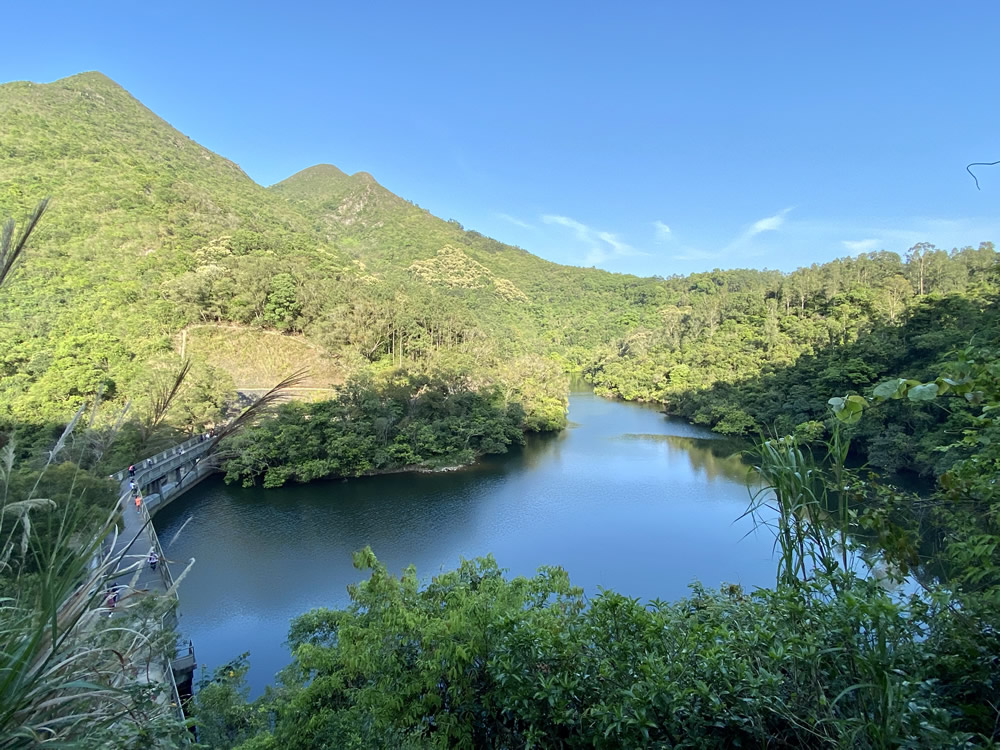
Hok Tau Reservoir is located at the western part of Pat Sin Leng Country Park and is so named for its proximity to Hok Tau Wai. With a capacity of about 180 000 cubic meters, this crescent-shaped reservoir is for irrigation purpose.
Hok Tau Reservoir Family Walk, a hiking trail of about 2.5 km taking about an hour to complete, goes around the Reservoir. The Reservoir is surrounded by tranquil scenery with dense vegetation. Experimental woodlands and camping, barbecue and picnic sites are adjacent to the Reservoir, making it an ideal place for a day out in the countryside.
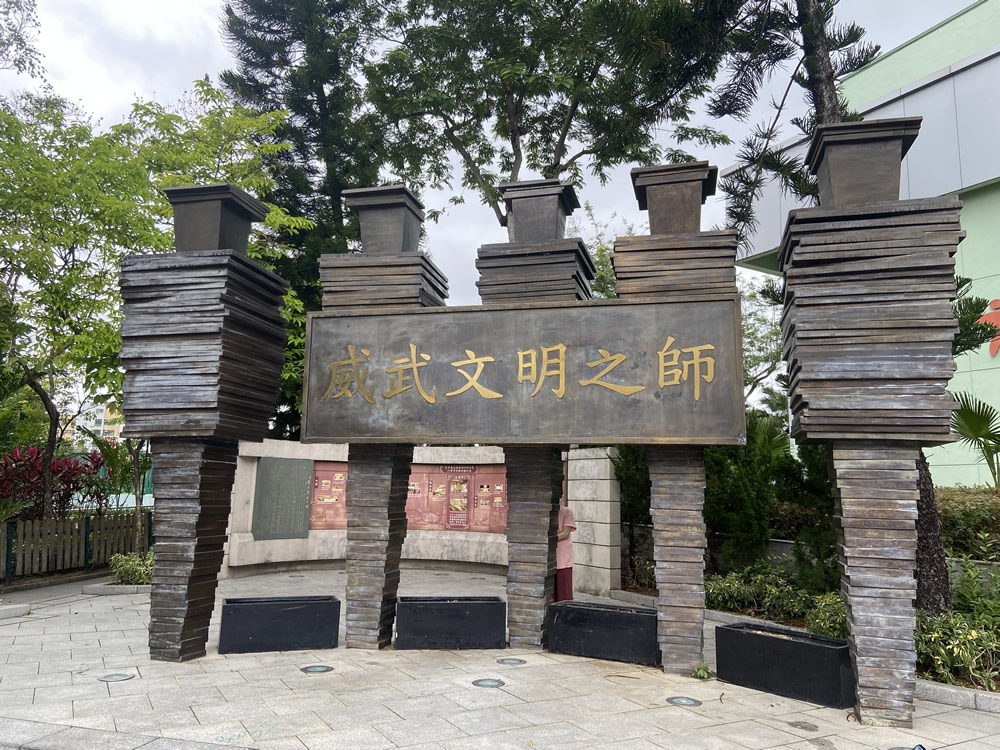
Reunification Garden is located at Jockey Club Road in Sheung Shui. Opened in 2009, the Garden was built to commemorate the historic moment when the People’s Liberation Army passed by the Jockey Club Road upon their arrival to Hong Kong on 1st July 1997, the date of Hong Kong’s return to the Motherland. Commemorative items include a plaque presented to the garrison, sculptures of soldiers, as well as photos depicting the events in the New Territories celebrating Hong Kong’s return to the Motherland.
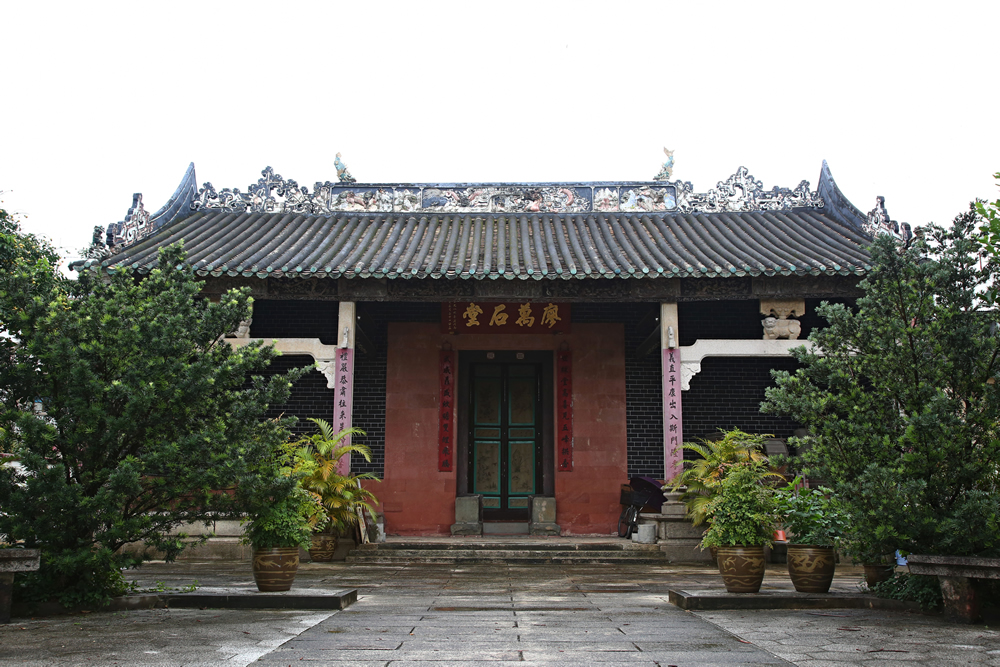
Located in Mun Hau Tsuen in Sheung Shui, Liu Man Shek Tong Ancestral Hall was built by the Liu clan in 1751, and is one of Hong Kong's biggest ancestral halls. The name “Man Shek”, which literally means 10 000 shi (a measurement unit for grain), dates back to the Song Dynasty (960 - 1279). It is said that the clan's ancestor Liu Kong and his 4 sons were all senior government officials, earning an annual salary of 10 000 shi in total. Their descendants hence named the ancestral hall “Liu Man Shek Tong” in their honour.
Liu Man Shek Tong Ancestral Hall is a typical 3-hall, 2-courtyard building, richly embellished with plaster mouldings, wood carvings and murals with auspicious motifs and pictures.
The ancestral hall was converted into Fung Kai School in 1932 to provide modern education until the school moved to its current premises at Jockey Club Road in Sheung Shui in 1974.
Liu Man Shek Tong Ancestral Hall was declared a monument in 1985. It underwent several restorations and the latest one was completed in 2016.
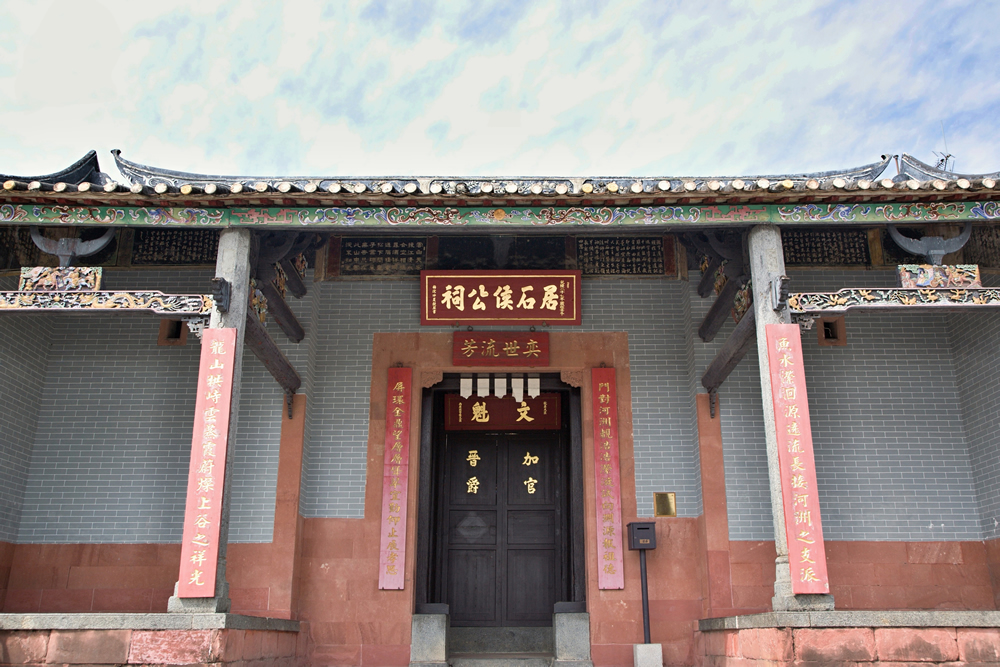
Situated in Ho Sheung Heung of Sheung Shui, Hau Ku Shek Ancestral Hall was built in late Ming Dynasty (1368 - 1644). According to the genealogy of the Hau clan, the ancestral hall was built to commemorate Hau Ku Shek, the 17th generation ancestor of the Hau clan.
Hau Ku Shek Ancestral Hall adopts the traditional 3-hall, 2-courtyard style. There is a side chamber on each side of the front courtyard and in the middle hall is an altar which houses the ancestral tablets. The 2-storey rear hall was once used as a village school. Nowadays, the ancestral hall is still used by the Hau clan for worshipping their ancestors and holding traditional ceremonies. It is also a gathering and meeting place for the clan.
Hau Ku Shek Ancestral hall was declared a monument in 2003.
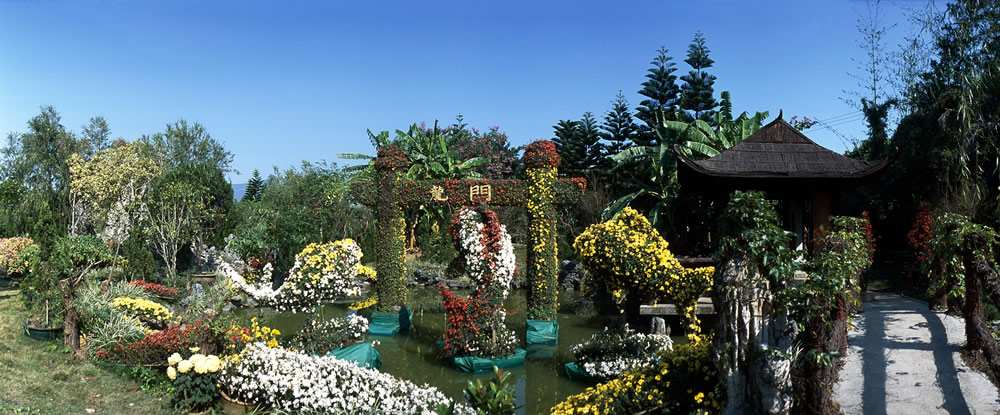
Wun Chuen Sin Koon at Ping Che Road of Ta Kwu Ling is a Taoist temple. Its beautiful landscape is interspersed with lotus ponds, traditional bridges, miniature gardens and exquisite carvings. A wonderful luck basin in the temple expels tiny water droplets and sometimes forms a mini spring when its handles are rubbed. Lotus and chrysanthemum shows are held in summer and winter respectively, attracting many visitors.
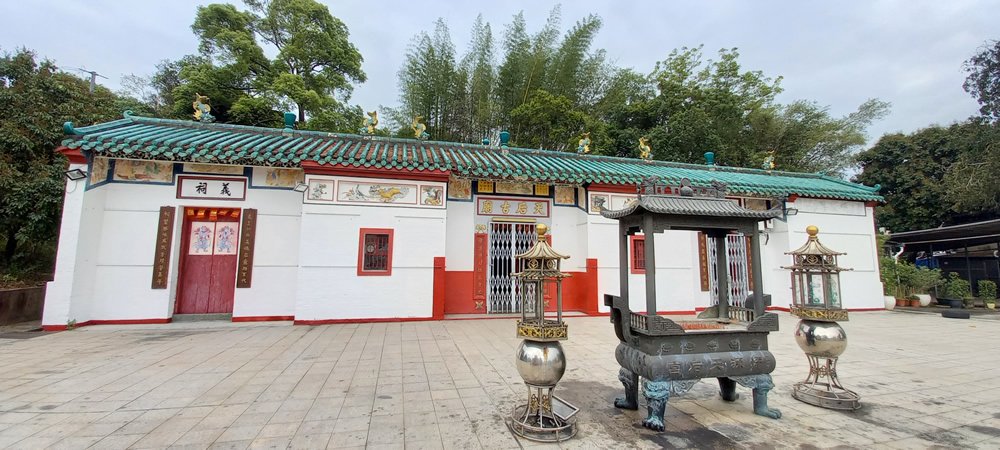
Ping Yuen Tin Hau Temple is situated at Ping Che Village in Ta Kwu Ling. The construction year of the Temple is unknown. A bell in the Temple was inscribed with the 21st year of Qianlong reign (1756) of the Qing Dynasty, supporting that the Temple was built in or before that year. Ping Yuen Communal Hall and Sing Ping She Memorial Hall are on the right and left sides of the Temple respectively.
Tin Hau, also known as “Matsu”, was said to be a native in Fujian Province called Lam Mak Leung during the Song Dynasty (960 - 1279). According to legend, she had gifted power and saved many people from sea disasters. The seafarers therefore worship Tin Hau and regard her as their patron saint.
Every year, neighbouring villages join together to hold traditional ceremonies to celebrate Tin Hau Festival (the 23rd day of the 3rd lunar month). The celebration activities last for a few days and one of the items is the staging of Cantonese opera performances.
Ping Yuen Tin Hau Temple, Ta Kwu Ling was rated Grade 3 historic building in 2010.
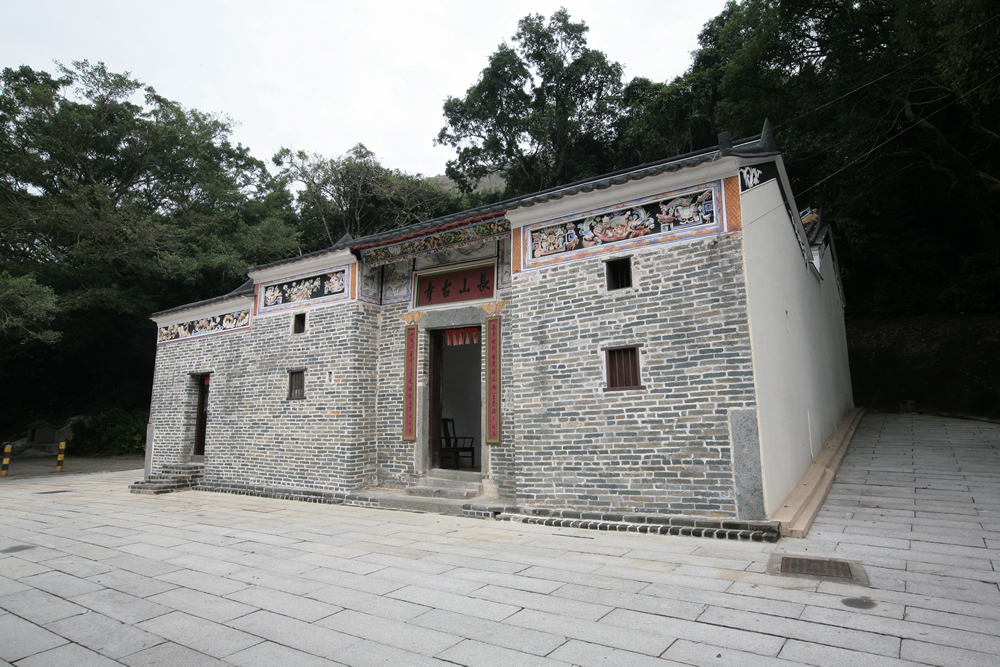
Situated at Miu Keng of Wo Keng Shan in Ping Che of Fanling, Cheung Shan Monastery (formerly called Cheung Sang Nunnery) was built in around 1789. Since Miu Keng was the halfway point on the route to Shenzhen via Sha Tau Kok in the past, the monastery was once a rest stop for travelers.
Cheung Shan Monastery is a 2-hall structure, with the rear hall approximately 1 m higher than the front hall. The external and internal parts of the Monastery are decorated with exquisite plaster mouldings. Buddha, Kwun Yum (Goddess of Mercy) and Tei Chong Wong (Guardian of the Earth) are worshipped there.
After a full restoration in 1997, Cheung Shan Monastery was declared a monument in 1998.
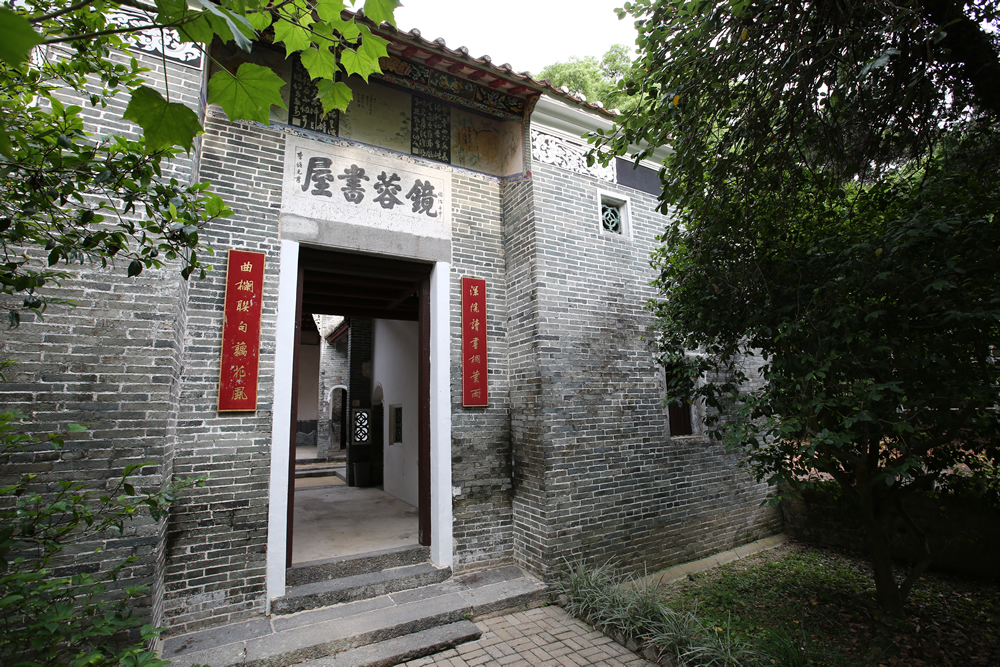
Kang Yung Study Hall in Sheung Wo Hang Village of Sha Tau Kok was built by the Li clan in the early years of the Qing Dynasty (1644 – 1911) and was originally established as a private school, catering for students in the area. It was later converted into a primary school which was closed when the last group of students departed in the summer of 1986.
The architecture of the Study Hall is simple but functional. This 2-hall building has a rectangular layout with cocklofts, providing both classrooms and quarters. The external walls are made of grey bricks and the internal partitions are made of unfired mud-bricks and rammed earth.
Kang Yung Study Hall was declared a monument in 1991. A full restoration was completed in 1993.
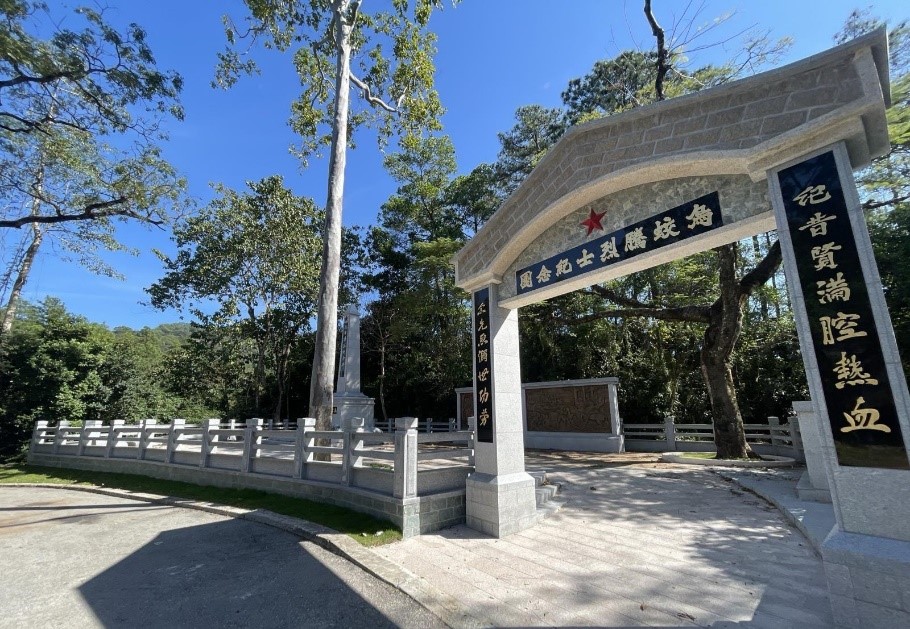
The Cenotaph, located in Wu Kau Tang Martyrs Memorial Garden at Bride’s Pool Road, is a memorial to honour the Hong Kong Independent Battalion of the Dongjiang Column, an anti-Japanese aggression guerrilla force, and the Wu Kau Tang villagers who sacrificed themselves to defend Hong Kong against the Japanese invaders during Japanese occupation of Hong Kong from 1941 to 1945.
It is a local customs for the Wu Kau Tang rural community to pay their respects to the martyrs on the 16th day of the 8th lunar month, the day on which the then village representative was tortured to death by the Japanese invaders in 1942.
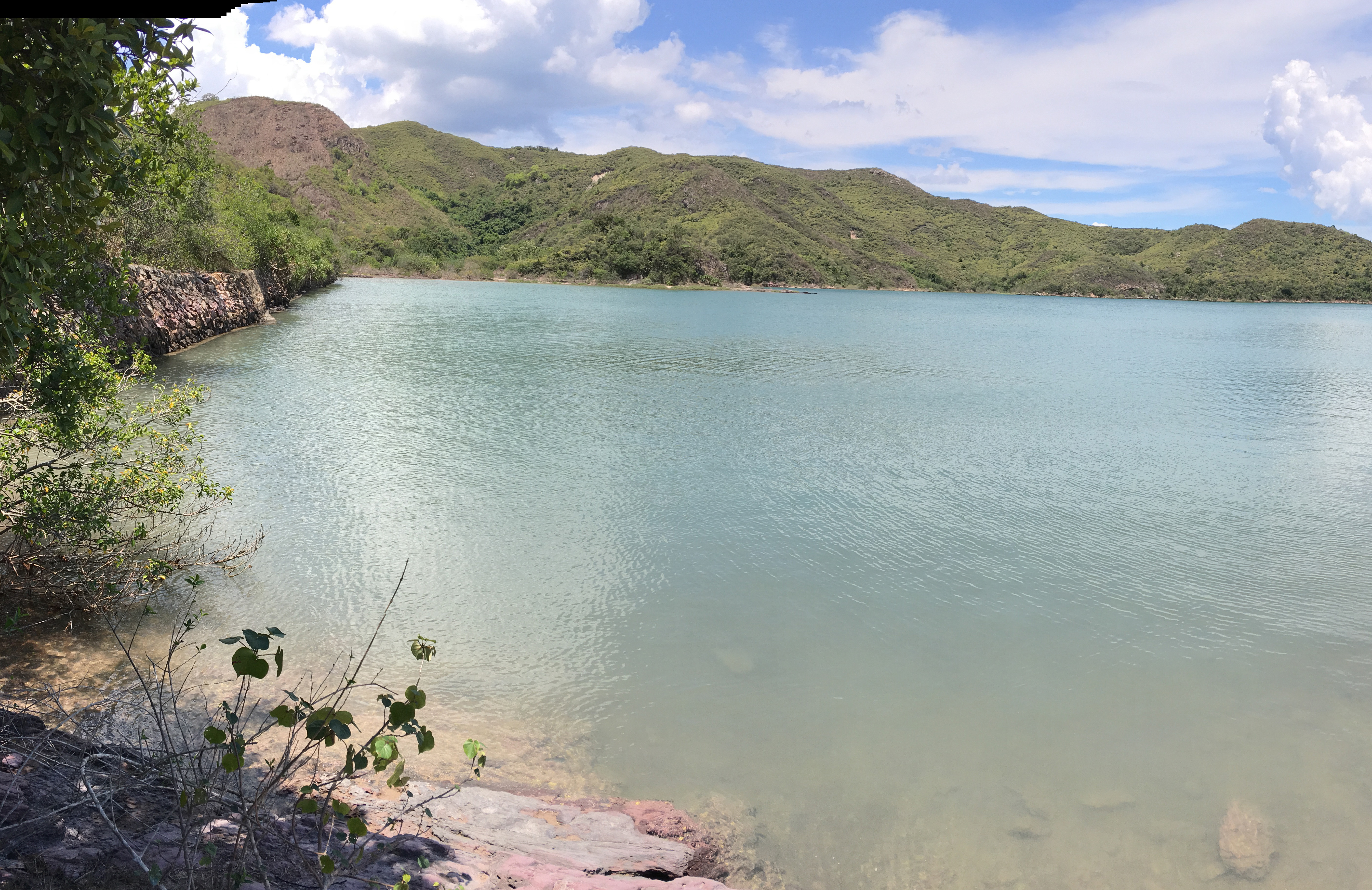
Yan Chau Tong Marine Park is located on the northeast coast of Plover Cove Country Park, and is part of the Northeast New Territories Sedimentary Rock Region of Hong Kong UNESCO Global Geopark. The total sea area of this Marine Park is about 680 ha and is made up of two portions. The 1st portion at Yan Chau Tong (Double Haven) is bounded by the water mark along the coastline of the mainland in the west including Sam A Tsuen and that of Double Island in the east. The 2nd portion is located next to Lai Chi Wo and bounded by the line linking Chung Wan Tsui and the northern tip of Kau Lo Tau.
Mangroves and seagrass bed, acting as nursery grounds for marine lives, are the two important ecological habitats in Yan Chau Tong Marine Park. The beautiful scenery created by the wide variety of landforms, such as bays, projecting headlands, peninsulas, rock cliffs, sand pits, mudflat and rocky shores, has earned the Marine Park the name of “Little Guilin of Hong Kong”.
In addition to roaming Yan Chau Tong Marine Park by self-arranged boats, visitors can also visit Sam A Tsuen and Lai Chi Wo via Double Haven Country Trail.
Website:
https://www.afcd.gov.hk/english/country/cou_vis/cou_vis_mar/cou_vis_mar_des/cou_vis_mar_des_yan.html
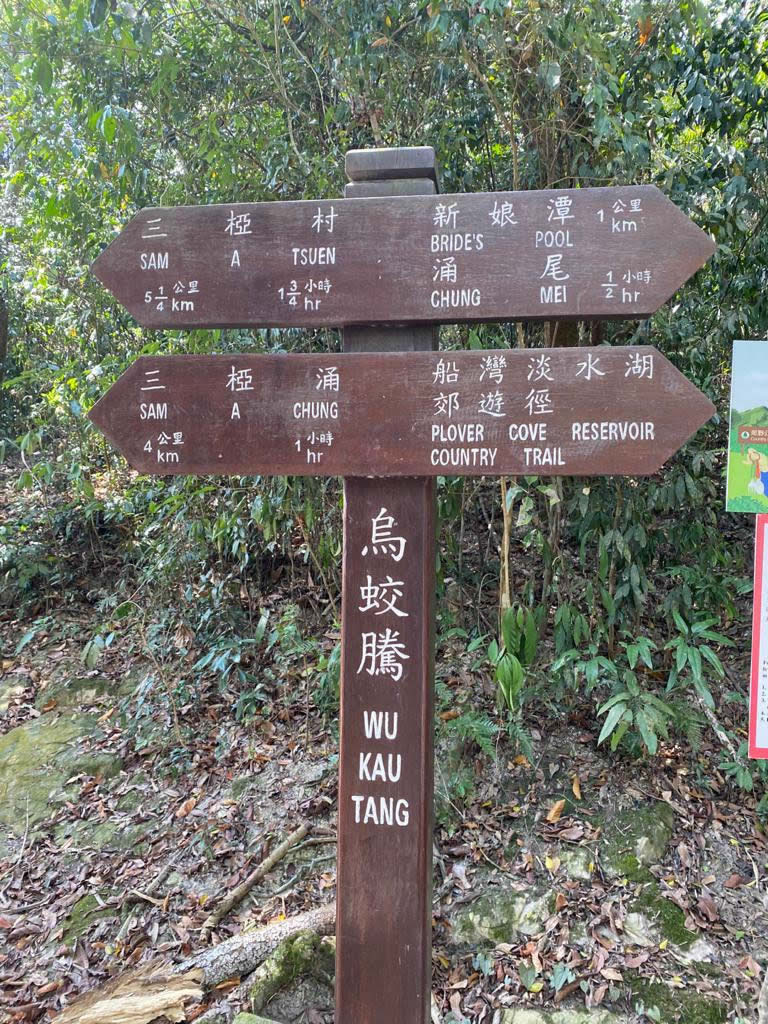
Double Haven Country Trail (from Wu Kau Tang to Lai Chi Wo) is around 8 km and takes about 2.5 to 3 hours to finish. The Trail is recommended for those with some hiking experience.
The Trail connects Wu Kau Tang, Kau Tam Tso, Sheung Miu Tin, Ha Miu Tin, Sam A Chung, Sam A Tsuen and Lai Chi Wo. Apart from its majestic views, it also has high ecological value, whereby hikers can find various plants and insects along the way. Lai Chi Wo Village is a Hakka village with over 300 years of history. The village houses, arranged in 9 rows, are built in alignment with the gradient of the hills. Protected by brick walls, the village faces Double Haven with a feng shui woodland at its back. During low tides, visitors can find fiddler crabs and mudskippers in the mangroves and mudflat areas near Lai Chi Wo. When taking a walk along the nature trail, visitors can also hear birds twitter in the trees.
Siu Ying Story Room at Lai Chi Wo was established in the expansion building of the former Siu Ying School. The exhibition mainly comes from the oral history of villagers and the historical materials they donated. Arranged in 4 themes, namely history of Hing Chun Alliance and the 7 villages, Siu Ying School, Tai Ping Ching Chiu and farming and trade, the exhibition presents the heritage and different lifestyles of the region and reproduces the rural communities in bygone days.
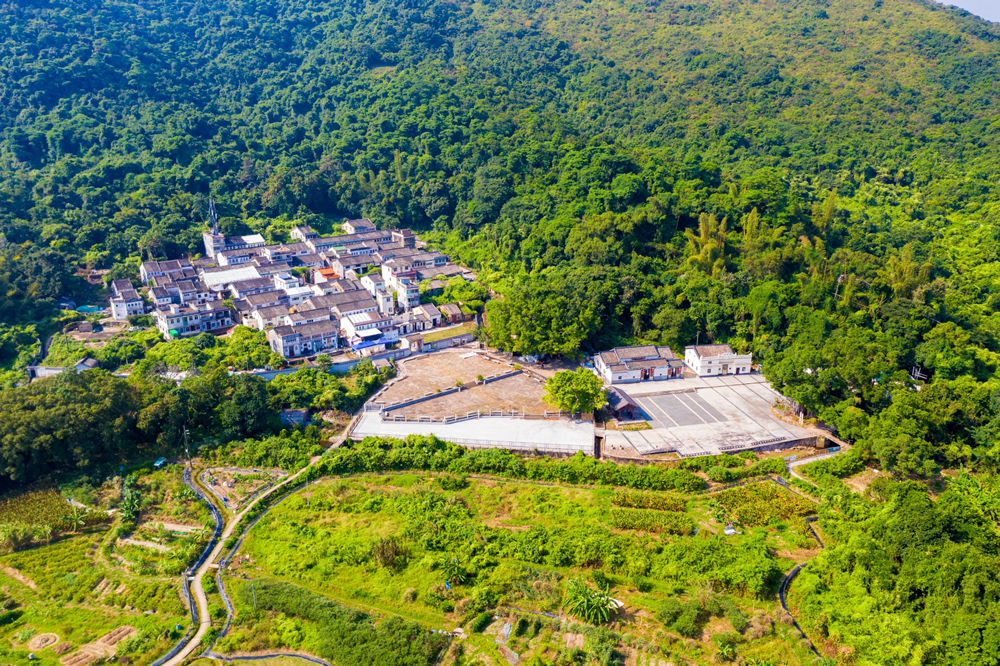
Lai Chi Wo Village is one of the largest and best-preserved Hakka villages in the northeast New Territories. Built over 300 years ago according to traditional geomancy rules, there are a dense fung shui woodland and a fung shui wall behind and fronting the Village respectively, which are believed to help retain wealth and keep out evil spirits. More than 200 houses, constructed mainly of blue bricks and mud bricks, are laying out with 3 longitudinal and 9 horizontal rows progressively up the hill. Some of the houses have been conserved and restored to form the “Hakka Life Experience Village @ Lai Chi Wo”, providing accommodation and experiential learning programmes at village houses with a view to enhancing the public’s understanding on the history of Lai Chi Wo Village and Hakka cultural tradition.
Lai Chi Wo Story Room at Lai Chi Wo Village was developed from the oral history narrated by locals of the 7 Hing Chun Alliance villages and their donated heritage relics. The exhibition is arranged under 4 main themes, namely the lifestyle of culture of the Hing Chun Alliance, traditional medicine and medicinal herbs, traditional marriage and Hakka folk songs, showcasing the ethnic Hakka heritage of the Hing Chun Alliance and the villagers’ modest but colourful lives in the past.
Website:
Hakka Life Experience Village at Lai Chi Wo
https://lcwhakkalife.wixsite.com/hakkalifeprogram
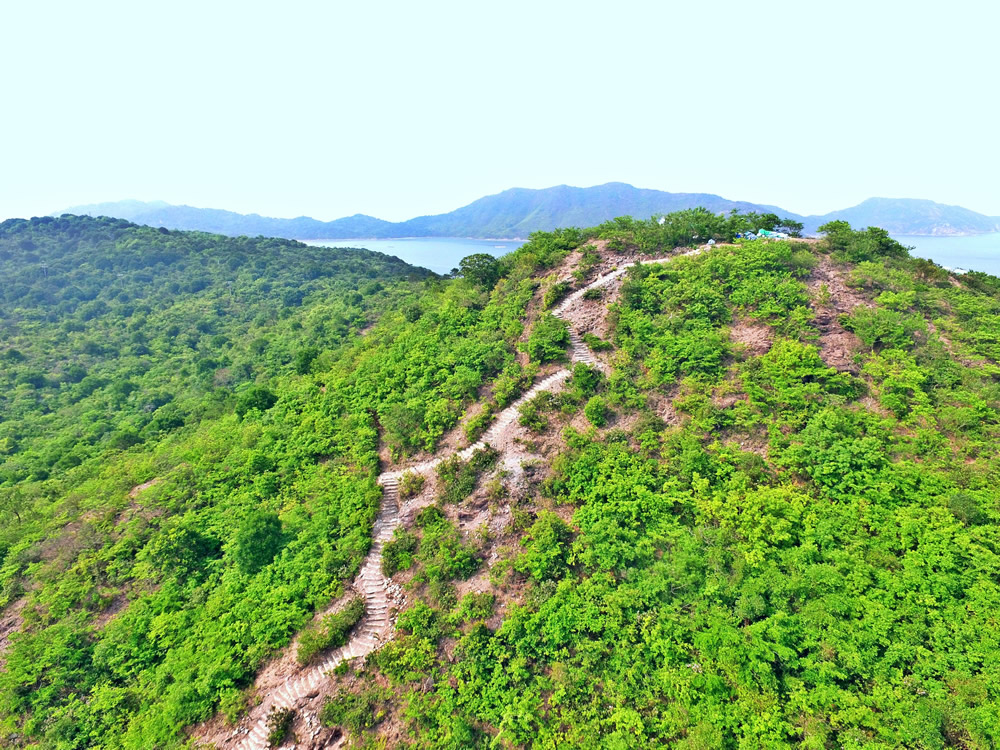
Kat O Country Trail on Kat O is around 3.2 km and takes about 1.5 to 2 hours to complete. The Trail is recommended for those with some hiking experience.
Starting from the pier on the island, the Trail passes through Kat O Geoheritage Centre, Kat O Tin Hau Temple, Kat O Story Room and a viewing lookout. Hikers can enjoy the magnificent views of Double Haven along the Trail.
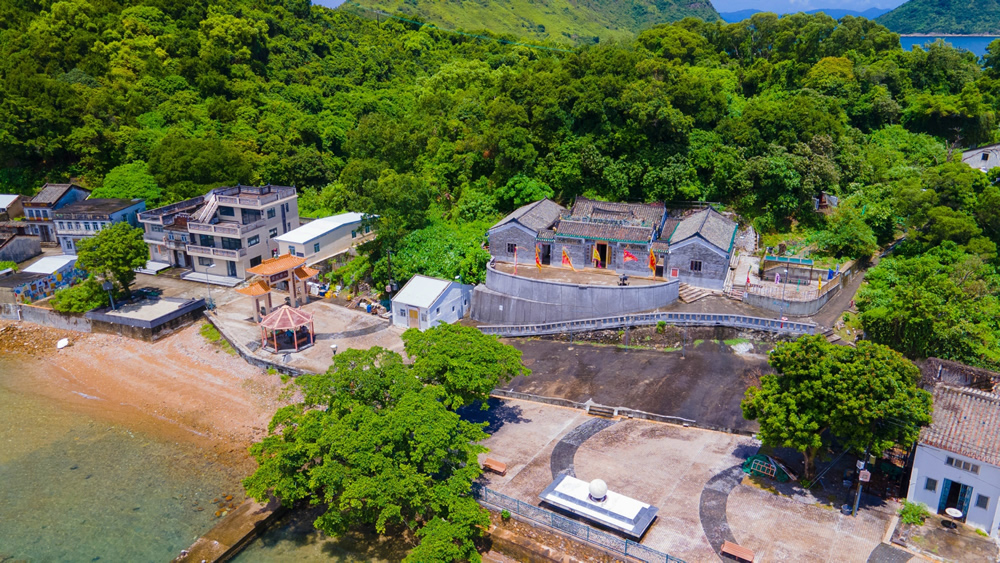
Kat O Tin Hau Temple at Sai O of Kat O is built along the hillside. It is beautifully embellished with elaborately crafted statues. The main hall houses Tin Hau with her 2 guards Chin Lei Ngan (whose is believed to be able to see things thousand miles away) and Shun Fung Yi (whose is said to be able to hear sounds as far away as from heaven) on both sides. The temple bell was inscribed with the 28th year of the Qianlong reign (1763) of the Qing Dynasty, proving that the Temple has a history of more than 250 years. Kat O Tin Hau Temple was rated Grade 3 historic building in 2010.
Tin Hau, also known as “Matsu”, was said to be a native in Fujian Province called Lam Mak Leung during the Song Dynasty (960 - 1279). According to legend, she had gifted power and saved many people from sea disasters. The seafarers therefore worship Tin Hau and regard her as their patron saint.
Every year, worshipers flock to the Temple on Tin Hau Festival (the 23rd day of the 3rd lunar month) to pray for peace and prosperity.
Located next to Kat O Tin Hau Temple, the Kat O Story Room covers the heritage, history, stories and customs of Kat O.
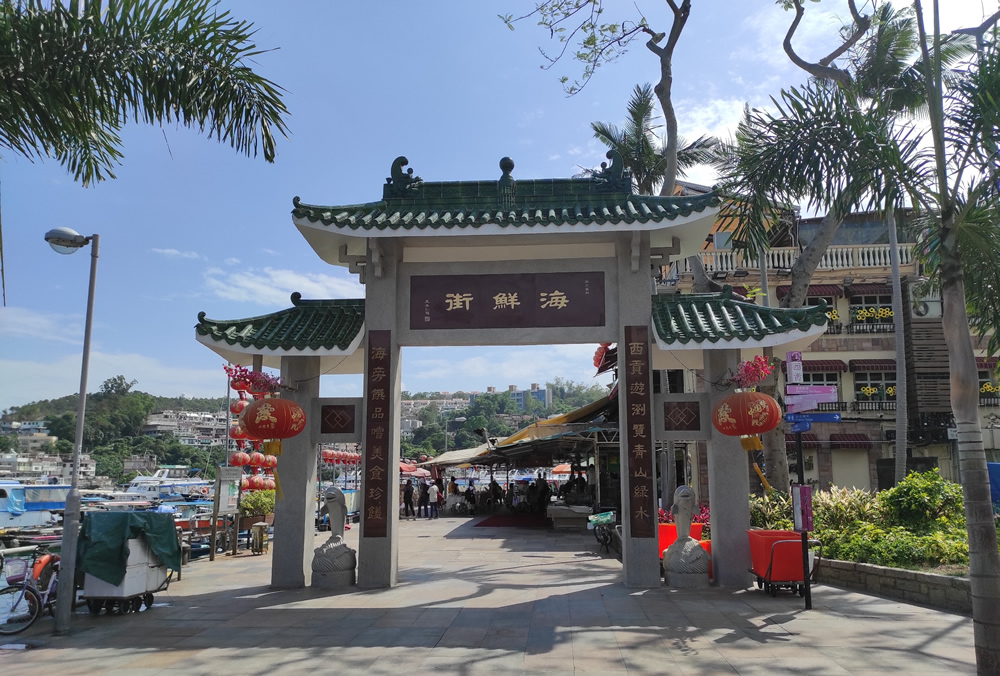
Sai Kung Market began its development as a market place gathering fishermen and villagers about 100 years ago. Nowadays, Sai Kung Market has developed into a scenic tourist spot.
Sai Kung Hoi Pong Square near the waterfront stands an array of featured shops. Visitors can experience the small town's tranquility by visiting handicrafts and antiques shops, or relaxing in a coffee shop or a bar. Hire sampans to go catching cuttlefish or for leisure trips to the islets is another attraction. The next spot could be Tin Hau Temple and Hip Tin Temple at Po Tung Road, which were rated Grade 2 historic buildings in 2009. There visitors may appreciate the harmonious combination of traditional fishing village and western living style.
Also, along the waterfront are many seafood restaurants, earning its name "Seafood Street". Visitors may choose seafood right away from the fish tanks outside the restaurants, indulge in the mouthwatering delicacies and enjoy the holiday mood and beautiful waterfront scenery.
.jpg)
Located at Tui Min Hoi Area in Sai Kung, Sai Kung Outdoor Recreation Centre offers well-furnished dormitories and day camp services. Facilities include a swimming pool, roller-skating rink, rope course, games hall, sport climbing wall, barbeque site and an archery range, etc. The Centre is a pleasant retreat where you can relax and enjoy the tranquility of the countryside.
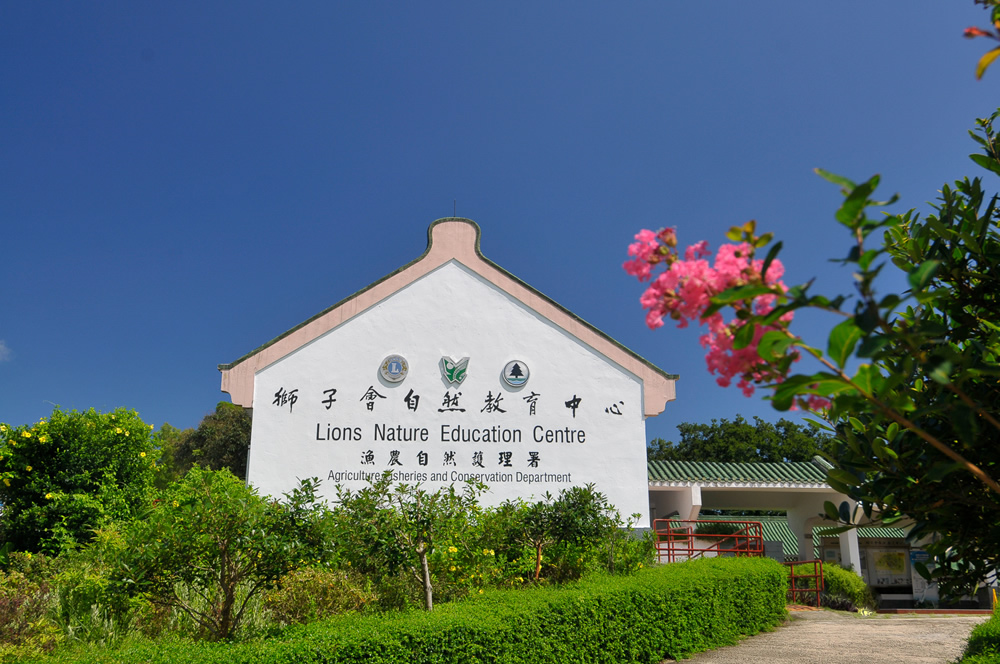
Situated at Tsiu Hang Special Area in Sai Kung, Lions Nature Education Centre takes up around 16 ha of land and consists of 5 exhibition halls plus several outdoor featured zones. The Centre provides nature education, field studies and eco-tours, and is a fascinating place equally suitable for all ages.
.jpg)
Hebe Haven, also known as Pak Sha Wan, is a natural haven in the central of Sai Kung Peninsula. There are some yacht clubs and the Pak Sha Wan T.W.C Sea Activity Centre, dotting the waters with pleasure boats and yachts and making the place a hot spot for water spots. Visitors can also enjoy international dishes and the magnificent seaview at restaurants along the shore.
Hebe Haven also has a Kwun Yam Temple. The Temple attracts lots of worshippers all the year round. On the birthday of Kwun Yam on the 19th day of the 6th lunar month, Chinese opera performances are staged to entertain the Goddess, generating a strong festive atmosphere.
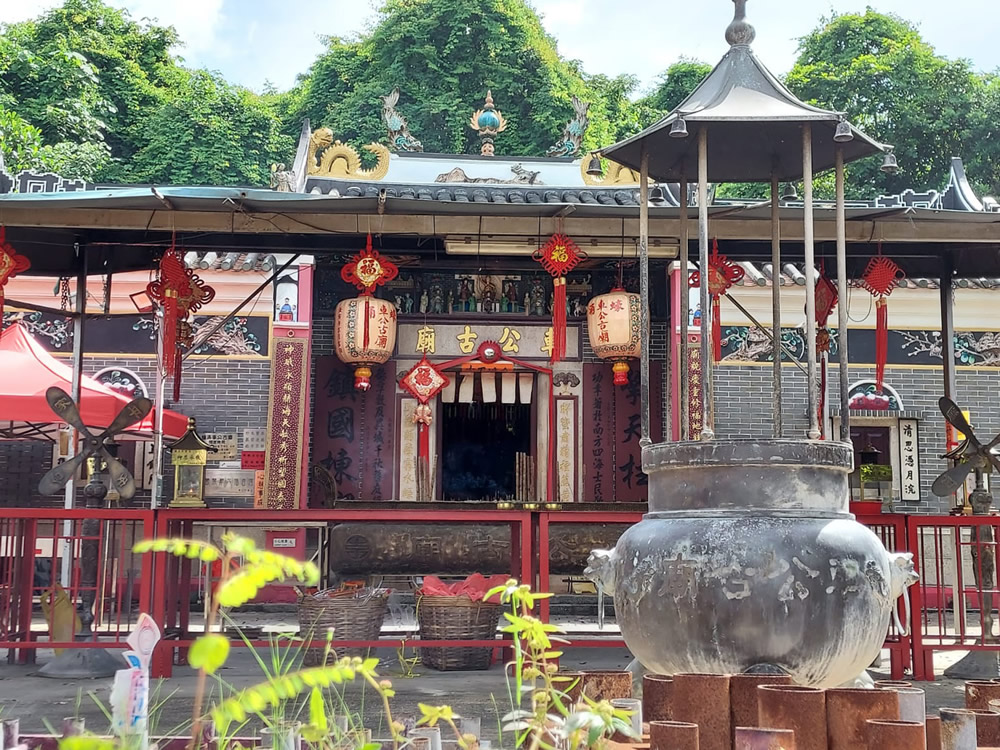
Situated on the bank of Ho Chung River, Che Kung Temple is said to have a history of over 400 years and is the oldest one of the 2 Che Kung temples in Hong Kong. It was rated Grade 1 historic building in 2009. The other Che Kung temple is located at Che Kung Miu Road in Sha Tin.
Che Kung Temple at Ho Chung is dedicated to Che Kung (General Che) who was said to be a great general in the Southern Song Dynasty (1127 - 1279) and was honoured by the emperor for his great merits in suppressing a rebellion in the southern part of China. Legend has it that Che Kung protected Emperor Zhao Bing when the latter fled to the south before the fall of the Southern Song Dynasty. People began to worship Che Kung after his death for his loyalty and bravery.
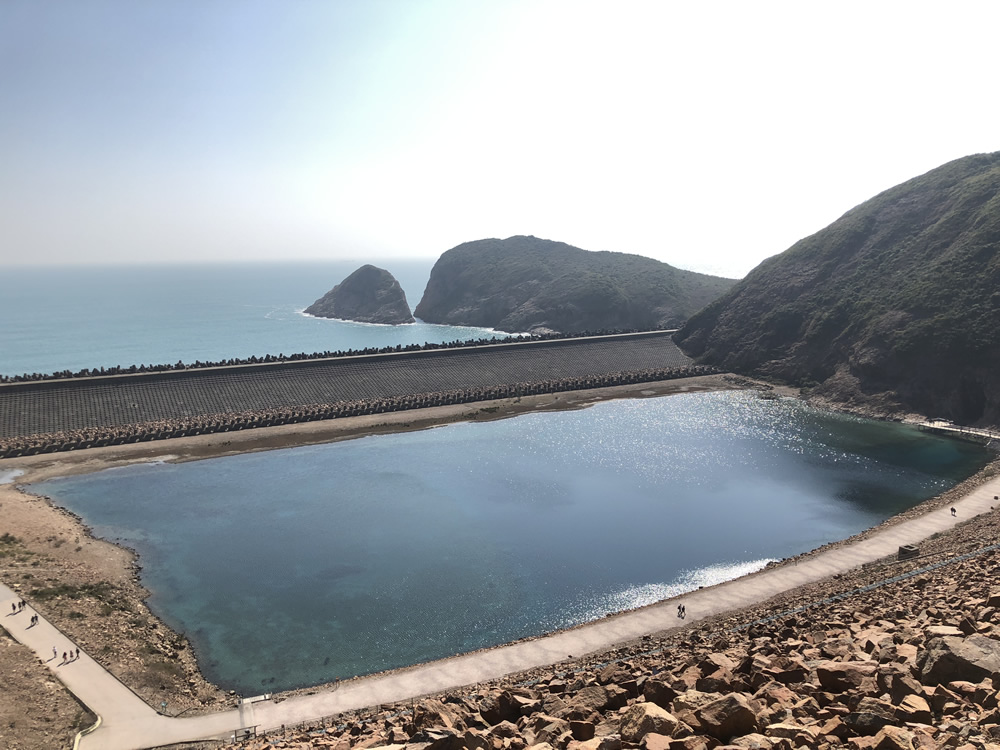
With a total area of about 7 500 ha, Sai Kung Country Park comprises Sai Kung East Country Park and Sai Kung West Country Park. The country park offers a wide choice of country trails and walks of different levels for leisure, as well as visitor centres introducing the park’s attractions and the concept of conservation.
Sai Kung East Country Park occupies a vast area of east Sai Kung Peninsula and High Island, and has the largest number of bays and coves among all country parks. Popular leisure destinations include High Island Reservoir, Po Pin Chau, Luk Wu, Chek Keng, Wong Shek, etc.
Sai Kung West Country Park lies in the wild country in the western part of Sai Kung Peninsula. Except for a few remote villages, the entire region that extends from Pak Tam Au to Yung Shue O is encompassed within the country park. Popular leisure destinations include Wong Chuk Wan, Tai Mong Tsai, Pak Tam Chung, Yung Shue O, Lai Chi Chong, etc. Of them, visitors can enjoy barbecue and the spectacular view of Inner Port Shelter at Tai Mong Tsai Barbecue Area at the same time.
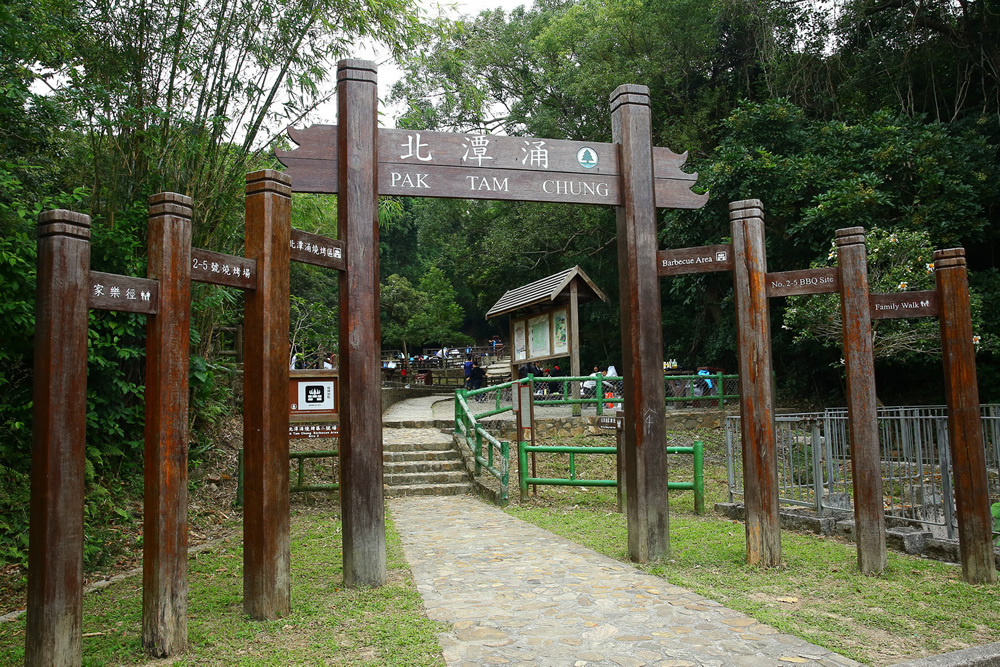
Situated at the east of Tai Tun, Pak Tam Chung stands the Sai Kung Country Park Visitor Centre, and is also the starting point of 2 famous hiking trails - Pak Tam Chung Nature Trail and MacLehose Trail.
Along the 1-km Pak Tam Chung Nature Trail that starts at Tai Mong Tsai Road, Pak Tam Chung and ends at the entrance to the Sheung Yiu Family Walk, hikers may observe the mud banks and mangroves, and pass through Sheung Yiu Folk Museum.
The 100-km MacLehose Trail is the 1st long-distance hiking trail in Hong Kong. It starts at Pak Tam Chung in Sai Kung, traversing 8 country parks from east to west, and ends at Tuen Mun. The Trail is divided into 10 sections, with the following 4 sections run through Sai Kung District:
| Start Point | End Point | |
| Section 1 | Pak Tam Chung | Long Ke |
| Section 2 | Long Ke | Pak Tam Au |
| Section 3 | Pak Tam Au | Kei Ling Ha |
| Section 4 | Kei Ling Ha | Tate's Cairn |
Each section of the Trail embraces unique magnificent natural scenery making it having been named as one of the “World’s 20 Dream Trails” by the National Geographic magazine.
.jpg)
Situated beside Tai Mong Tsai Road in Tsam Chuk Wan, Sai Kung, the Memorial Monument for Sai Kung Martyrs during World War II (the Monument) was completed and open to the public in 1989.
Funded by donations raised by a group of veterans of the Hong Kong Independent Battalion of the Dongjiang Column and residents in Sai Kung, the creation of the Monument is dedicated to the martyrs who sacrificed their lives for Hong Kong and the Motherland during the War of Resistance against Japanese Aggression. The title inscribed on the Monument bears the calligraphy of Tsang Sang, former Commander of the Dongjiang Column. Other commemorative monuments include a “Pai Lau” (memorial archway), a memorial pavilion for the martyrs, stone tablets, etc. The Monument is surrounded by stone railings that form an arch. The stone railings consist of 13 stone sculptures resembling flaming torches and adorned with 14 small stone lions in various poses, giving the structure a majestic presence. The front of the Monument is embedded with gravestone inscriptions recounting the three years and eight months of resistance against Japanese invasion by the guerrilla force of the Hong Kong Independent Battalion.
In 2020, the Monument was incorporated into the “List of State Facilities and Sites Marking the War of Resistance Against Japanese Aggression” (the third of its kind).
.jpg)
Yim Tin Tsai is a small island near Kau Sai Chau and Sharp Island in Inner Port Shelter.
The history of Yim Tin Tsai can be traced back 3 centuries, when the ancestors of the villagers moved from Guan Lan to Yim Tin in the Mainland, and then from Yim Tin they came to the island where they made a living by salt-making and fishing. The name Yim Tin Tsai denoted the importance of salt-making as the pillar of economy of the island in the early days.
In 1864, Catholic missionaries started preaching there and built St. Joseph’s Chapel in 1890. Yim Tin Tsai became one of the very few Hakka villages with rich Catholic characteristics. St Joseph’s Chapel was rated Grade 2 historic building in 2010.
Since the 1960s, villagers have moved off the island to study or work, leaving the island uninhabited. In recent years, villagers have established “The Salt and Light Preservation Centre” to restore saltpans and village houses, and conduct conservation and education programmes promoting religious culture ecology and simple life experience. Visitors may visit saltpans, Yim Tin Tsai Heritage Exhibition Centre, the restored St Joseph’s Chapel, etc. The revitalization projects of St Joseph’s Chapel and saltpans respectively received an Award of Merit in 2005 and Award of Distinction in 2015 recognized by the UNSECO Asia-Pacific Awards for Cultural Heritage Conservation.
__2_1661745315.jpg)
Sharp Island, also known as Kiu Tsui, is situated in Port Shelter of Sai Kung and opposite to Sai Kung Town Centre by 2 km. It is one of the geosites of the Hong Kong UNESCO Global Park lying within the Sai Kung Volcanic Rock Region. The island and 7 other islands nearby form Kiu Tsui Country Park.
Sharp Island is a lovely island of great natural beauty and geoheritage. Begins at the beach, the Sharp Island Geo Trail stretches across a tombolo towards the opposite islet, Kiu Tau. The tombolo is a 200 m natural sand levee made up of sediments transported and deposited by wind and waves, appearing above water only at low tide. Scattered on the beaches of the tombolo are dozens of quartz monzonite boulders. Weathered and eroded to different degrees, these boulders have unique “pineapple bun”-like cracks.
Sharp Island has 2 beaches, namely Kiu Tsui Beach and Hap Mun Bay (Half Moon Bay) Beach, both offering barbeque pits, changing rooms, etc. There are also coral sites on both the eastern and western sides of the island, dominated by fragile coral species such as Pavona sp. and Platygyra sp.
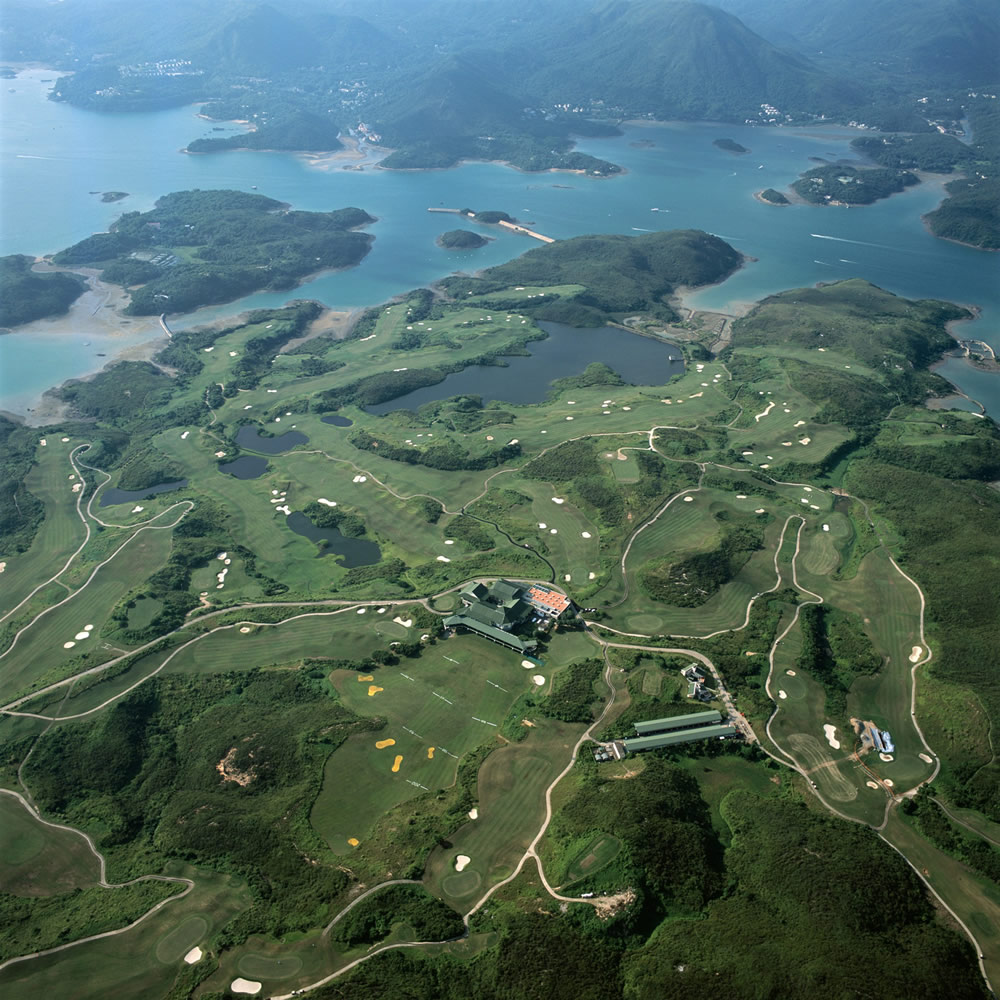
Located at Kau Sai Chau in Sai Kung with sweeping seaview, Jockey Club Kau Sai Chau Public Golf Course is the only public golfing facility in Hong Kong.
The Golf Course offers 3 18-hole golf courses, a 60-bay floodlit driving range, short game practice area, a golf shop and restaurants. Training programmes from the complete beginner to advanced golfers are offered at the Instruction Centre. 7-day advance booking for the golf courses is required.
Website
https://www.kscgolf.org.hk/eng/
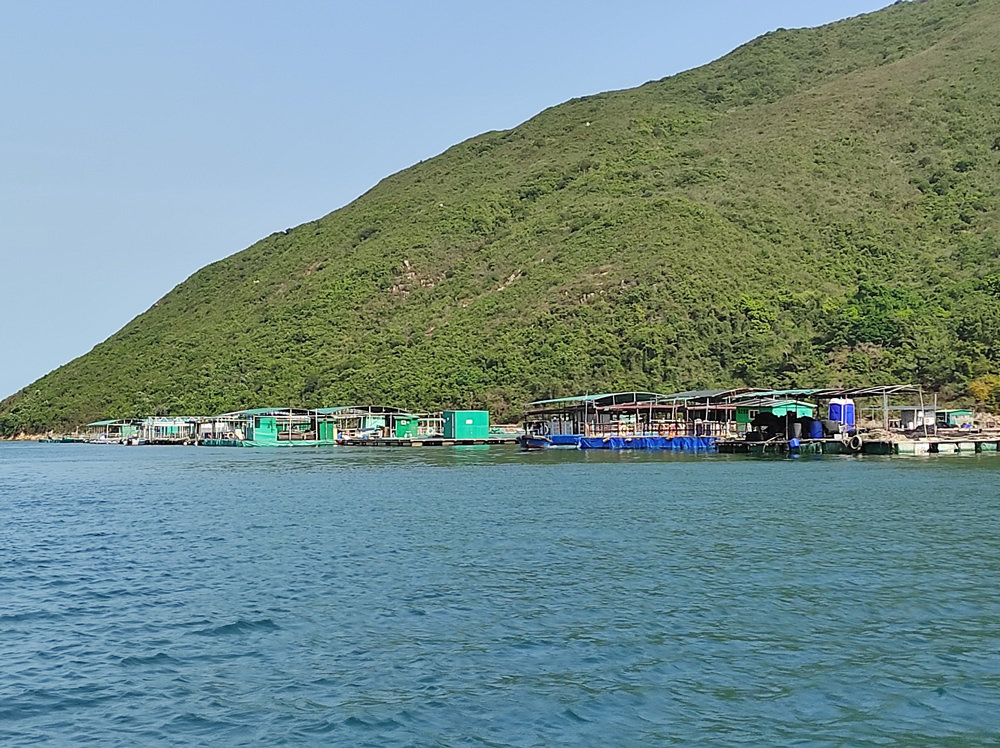
Several mariculture rafts within Kai Sai Chau Fish Culture Zone are allowed to offer recreational fishing. Advance booking with the mariculture rafts concerned is required.
Jin Island, also known as Tiu Chung Chau (literally translated as “Hanging Bell Island”), is located at the south of Kau Sai Chau, Sai Kung.
Eroded by waves, the headland at the southern part of the island was separated from the main rock and formed a sea stack called “Tiu Chung Rock” which is also called “Goldfish waves the tail” given its crooked shape. The erosion continues to create a 30 m high sea arch called “Tiu Chung Arch” which shape resembles a bell in temple.
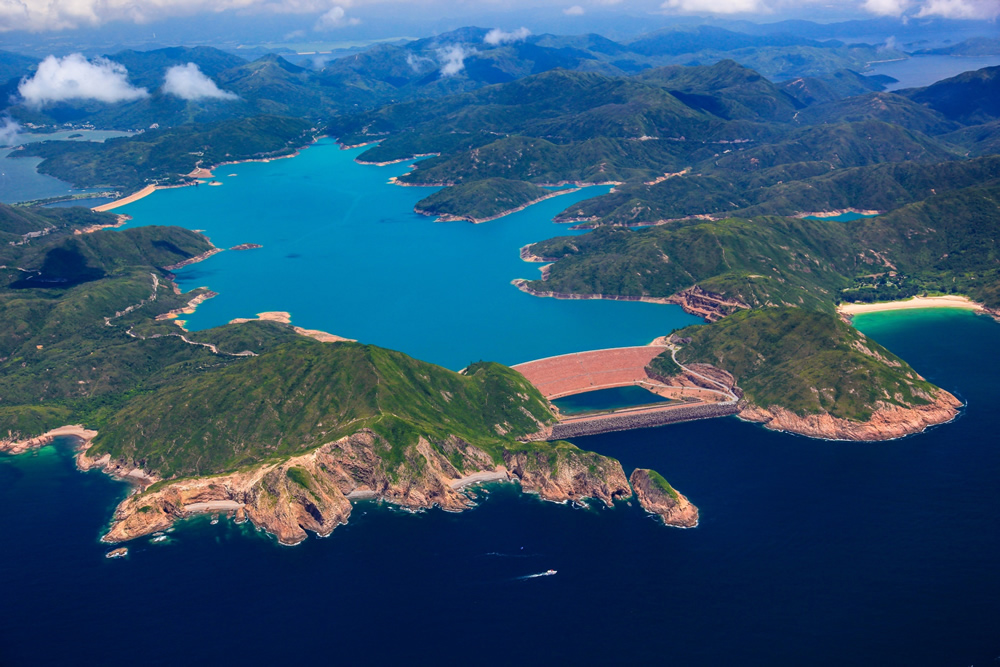
High Island, also known as “Leung Shuen Wan Chau”, was originally the 4th largest island in Hong Kong. Upon construction of High Island Reservoir, it was connected with Sai Kung Peninsula, and has been called High Island since then.
The waters nearby the High Island pier has been designated as a fish culture zone. Several seafood restaurants along the shore offer delicious seafood dishes. There are 4 villages, including Tung A, Pak A, Pak Lap Villages and Sha Kiu Tau on the island. The villagers were mainly Hakkas, and some boat dwellers moved onshore. Nowadays, the villages have become attractions to hikers and boat trippers.
The Tin Hau Temple on the Island was built in the 6th year of Qianlong (1741) reign of the Qing Dynasty. A bell in the temple has the date inscribed on it. Tin Hau Festival is celebrated every 2 years, during which a marine parade will be held. The Temple was rated Grade 3 historic building in 2010.
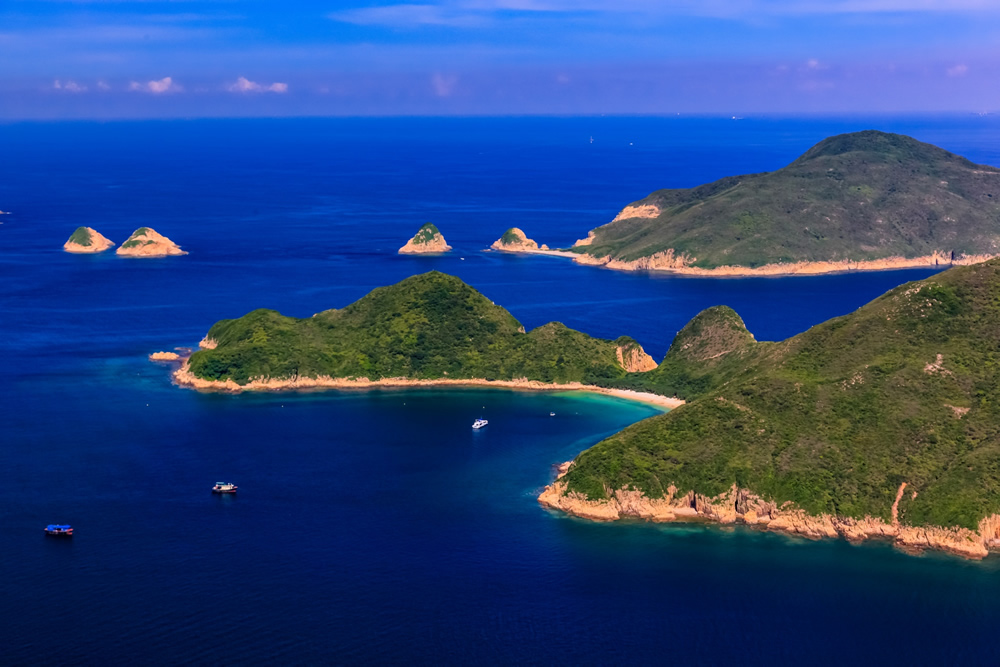
Located in the southeast of Rocky Harbour, Bluff Island is part of the Ung Kong Group Geo-Area in the Sai Kung Volcanic Rock Region of Hong Kong UNESCO Global Geopark.
Viewed from above, Bluff Island looks like a tortoise with outstretched claws. Rising up all around are tiers of rhyolite. In the southeast of the Island lies the 140 m high sea cliff which is the highest one in Hong Kong, and in the south is the Candle Cave, a famous sea arch with a height of 24 m. Renowned for its diving sites, the Island is a magnet for divers.
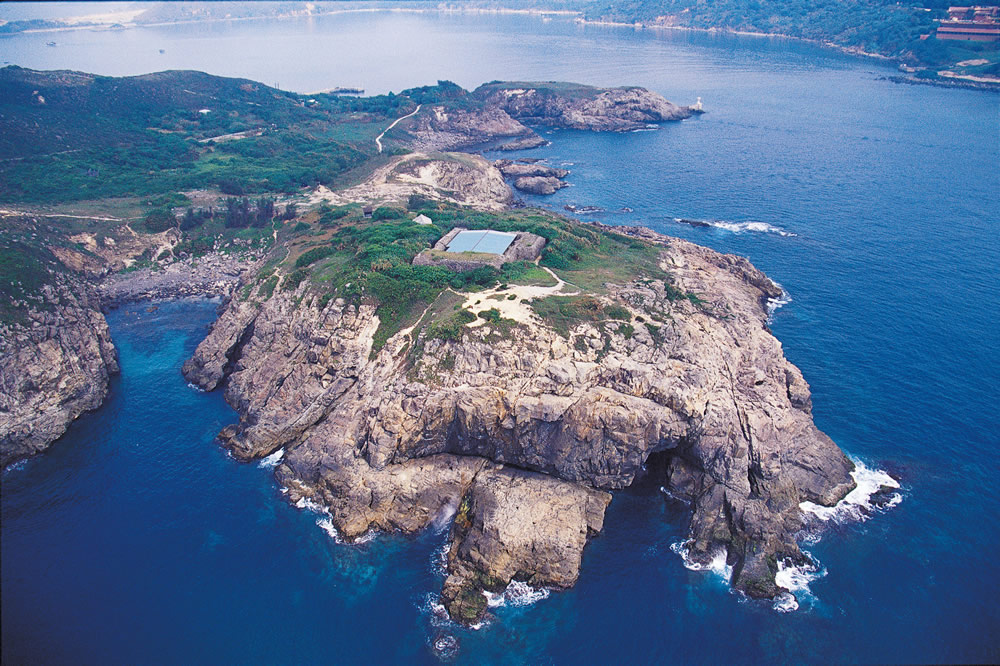
Tung Lung Chau is an island off the southern tip of Clear Water Bay Peninsula.
Tung Lung Fort at the northeastern nib of the small island guarding against the pirates in the past evidenced Tung Lung Chau’s previous strategic military position. On the northwestern side of Tung Lung Chau lies the earliest recorded and largest in-situ rock carving in Hong Kong, measuring 1.8 m by 2.4 m. The rock carving and Tung Lung Fort were declared monuments in 1979 and 1980 respectively.
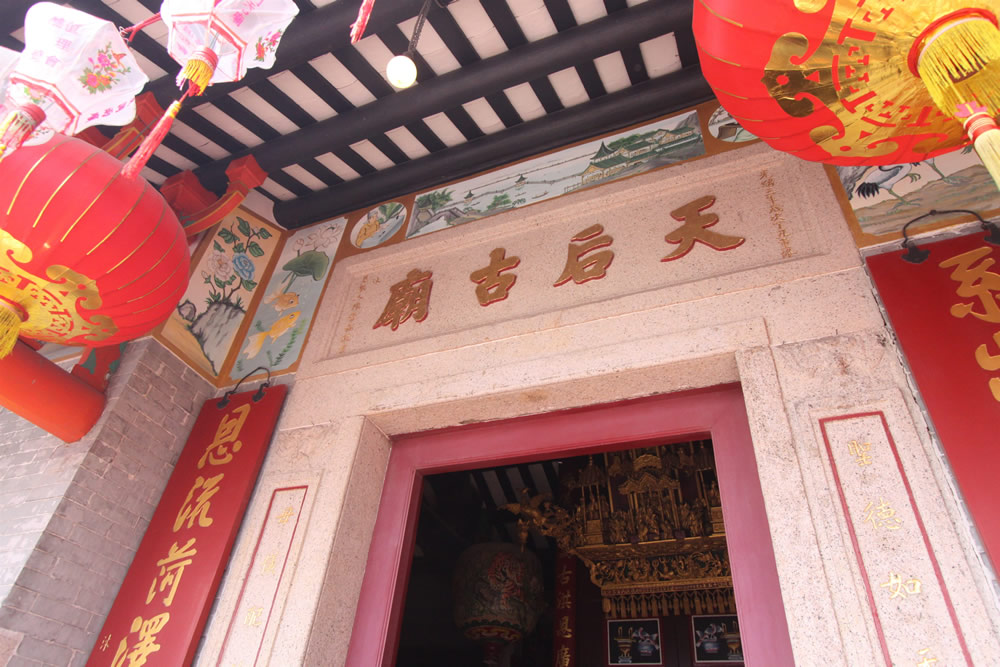
Located at Joss House Bay at Tai Au Mun Road of Clear Water Bay in Sai Kung, Tin Hau Temple, Joss House Bay is said to have built in the 2nd year of the Hsienshun reign (1266) of the Southern Song Dynasty and is the oldest one among all existing Tin Hau temples in the coastal areas of Guangdong. Being the largest Tin Hau temple in Hong Kong, worshippers usually called it "Tai Miu" which means the "Great Temple".
The Temple is beautifully decorated and has lots of historical relics such as a ceremonial pot and a copper bell which were respectively made in the 4th year of Jiaqing (1804) reign and the 20th year of Daoguang (1840) reign of the Qing Dynasty. The Temple was declared a monument in 2023.
The Temple is dedicated to Tin Hau, also known as “Matsu”, who was said to be a native in Fujian Province called Lam Mak Leung during the Song Dynasty (960 - 1279). According to legend, she had gifted power and saved many people from sea disasters. The seafarers therefore worship Tin Hau and regard her as their patron saint.
During the Tin Hau Festival on the 23rd day of the 3rd lunar month, thousands of worshippers throng the Temple to pay tribute to Tin Hau. They also go to the annex hall to fumble under the quilt on Tin Hau’s Dragon Bed for grabbing good luck, which they believe will bring babies to the family, health and fortune.
There is a large rock near the Temple. The date marked on the inscription carved on the rock is the cyclical year of jiaxu of Hsienshun reign, i.e. the 10th year of Hsienshun reign (1274) of the Southern Song Dynasty, making this the oldest dated inscription to have been found in Hong Kong. The inscription also relates the history of the Temple. The Rock Inscription at Joss House Bay was declared a monument in 1979.
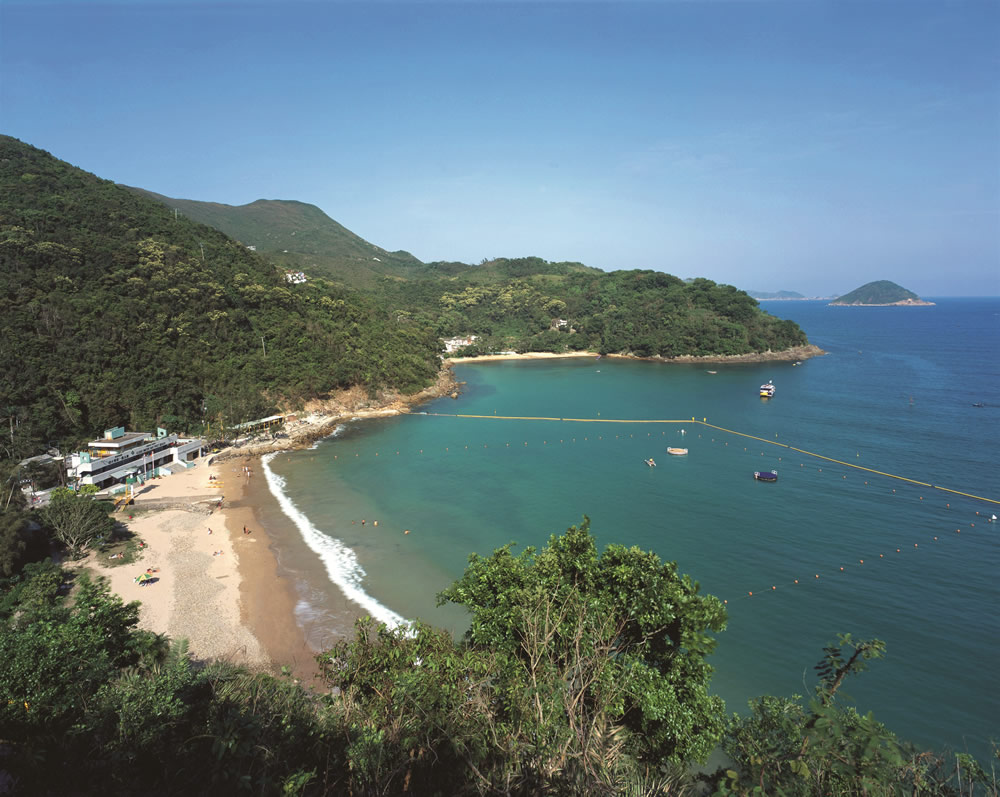
Located on the Clear Water Bay Peninsula, the Clear Water Bay 1st Beach and 2nd Beach are renowned for their good water quality and beautiful scenery. Comprehensive facilities such as changing rooms, shower facilities and BBQ pits or refreshment kiosk, etc. are provided.
_1661822584.jpg)
The 615-ha Clearwater Bay Country Park extends eastwards to the hillocks around Lung Ha Wan and encompasses Hang Hau to the undulating mountain range that screens Joss House Bay.
Both High Junk Peak (one of the 4 treacherous peaks in Hong Kong) and Tai Leng Tung with extraordinary landforms crafted by sea waves lie in Clearwater Bay Country Park. Amongst several country trails and walks in the Country Park, the 1.2 km Clearwater Bay Tree Walks in Tai Hang Tun is an ideal family walk. The Tai Hang Tun area is also a popular destination for barbecue, picnic and kite flying.
Apart from the abundant natural resources and ecology, historic sites such as the rock carving at Lung Ha Wan and Tin Hau Temple, Joss House Bay, which were respectively declared a monument in 1983 and rated Grade 1 historic building in 2010, are also attractions of Clearwater Bay Country Park.
Website:
https://www.afcd.gov.hk/english/country/cou_vis/cou_vis_cou/cou_vis_cou_cwb/cou_vis_cou_cwb.html
.jpg)
Located at Tseung Kwan O South, Tseung Kwan O Waterfront Park, stretches from Tseung Kwan O town centre to Tiu Keng Leng. It offers a magnificent sea view of Tseung Kwan O, Lei Yue Mun and Chai Wan on Hong Kong Island. Cycle track and cycle parking areas are also provided around the Park.
Website:
https://www.lcsd.gov.hk/en/healthy/route/route-10.html
.jpg)
Found in 2007, the Hong Kong Design Institute (HKDI) aims to nurture emerging design talents. Opened in 2010, the current campus at King Ling Road, Tseung Kwan O, is themed as a floating white sheet and was designed by French architects Coldéfy & Associés. The escalator with vertical rise of 25.75 m connecting 1st and 7th floors is one of the features of the campus.
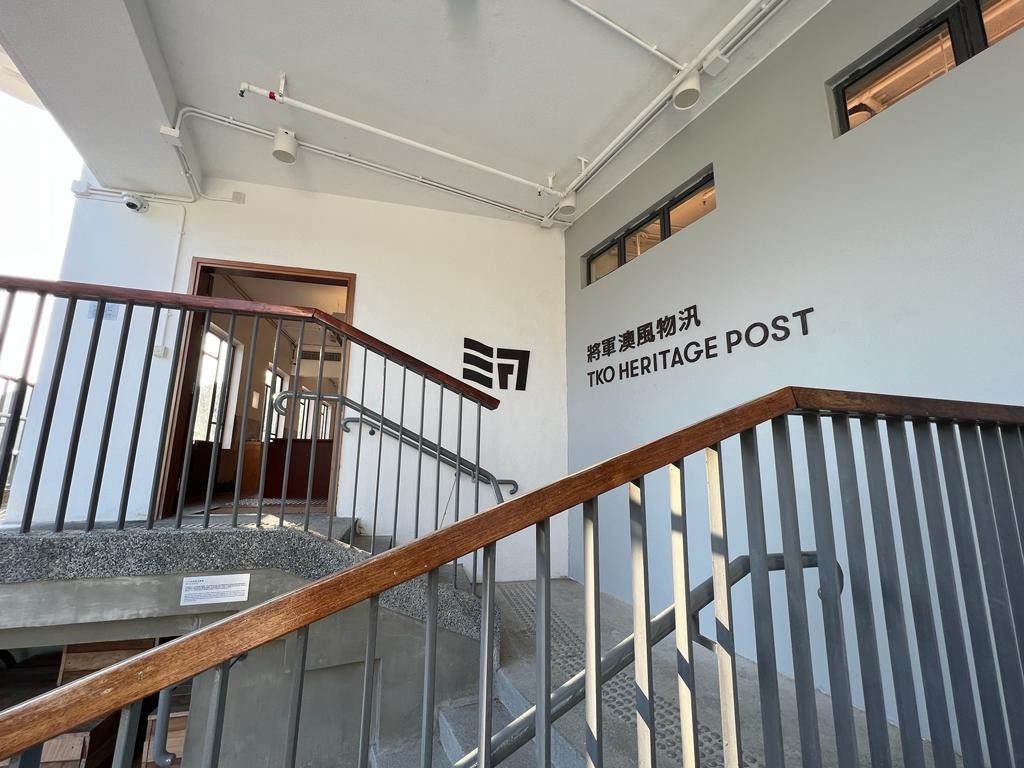
TKO Heritage Post and Innspired Heritage at Po Lam Road South in Tseung Kwan O were formerly Tiu Keng Leng Police Station and staff quarters. After restoration and improvement works, they were revitalised into a heritage information centre and hostel. The heritage information centre records the daily life of the residents of Tiu Keng Leng in the past and is open to the public free of charge. TKO Heritage Post also organises different workshops and activities, and sells light refreshments at a cafe. Innspired Heritage offers a number of guest rooms for public and group reservations. Hostel guests can step away from the hustle and bustle of city life and get close to nature.
Enquiry:
tkohp@hohcs.org.hk and
innspiredheritage@hohcs.org.hk
.jpg)
Hong Kong Velodrome at Po Hong Road, Tseung Kwan O, is the first-ever local indoor cycling facility that meets the standards of the International Cycling Union. Apart from a 250-m wooden cycling track for international games, there are a multi-purpose arena that can be converted into 8 badminton courts, 2 basketball courts or 2 volleyball courts, as well as activity rooms, dance room, table tennis rooms, etc. A variety of recreation and sports programmes are offered every month.
Outside the Velodrome is the 5.3-ha Hong Kong Velodrome Park. The Park features an extensive lawn and artificial lakes, as well as leisure and sports facilities including a skatepark, a sport climbing wall, a jogging track, a model boat pool, children’s play areas, an amphitheatre etc. attracting lots of visitors.
Website:
Hong Kong Velodrome
https://www.lcsd.gov.hk/en/hkv/index.html
Hong Kong Velodrome Park
https://www.lcsd.gov.hk/en/parks/vdp/index.html
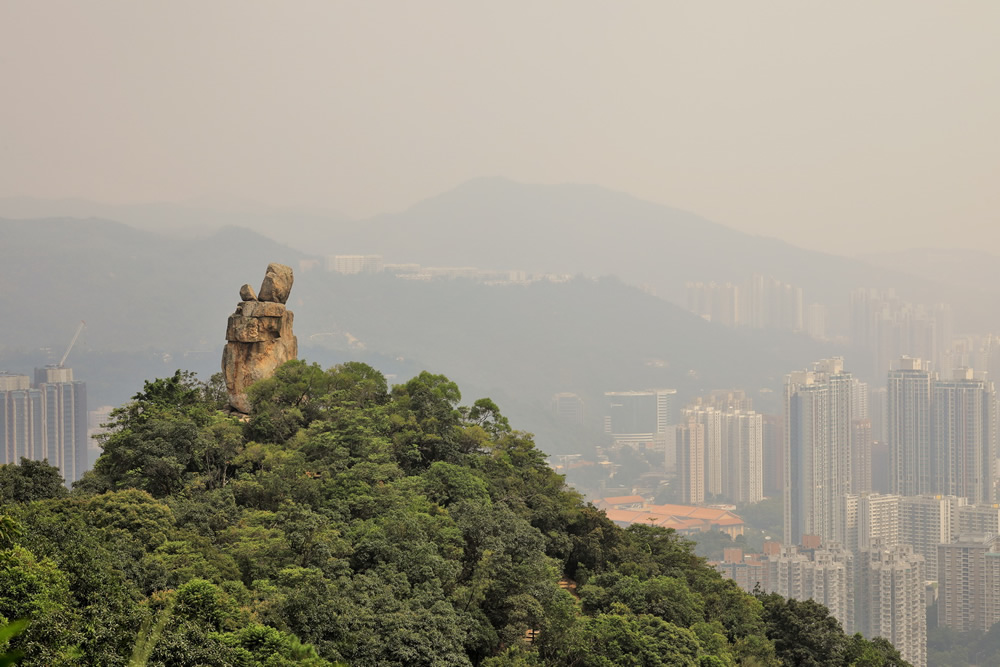
Amah Rock on a hilltop in southwest Sha Tin is approximately 15 m in height. The rock's shape looks like a woman carrying a baby on her back. The poignant story behind has been passed on from generation to generation in Sha Tin. Legend has it that a woman whose husband had one day sailed out to sea to fish but never returned. Since then, the woman with her baby on her back waited, on the hilltop day after day for her husband's return. One day, a sudden thunderstorm swept through and turned the woman and her baby into the now well-known Amah Rock.
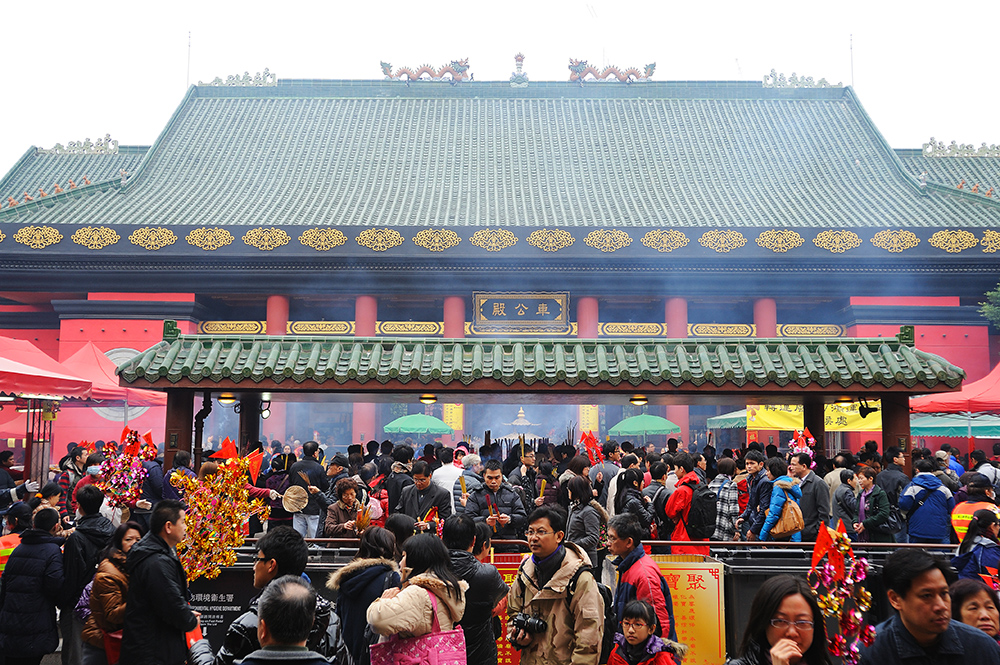
Sha Tin Che Kung Temple at Che Kung Miu Road was built in honour of Che Kung (General Che). Che Kung was said to be a great general in the Southern Song Dynasty (1127 - 1279) who was honoured by the emperor for his great merits in suppressing a rebellion in the southern part of China. Legend has it that Che Kung protected Emperor Zhao Bing when the latter fled to the south before the fall of the Southern Song Dynasty. People began to worship Che Kung after his death for his loyalty and bravery.
Che Kung Festival falls on the 2nd day of the Chinese New Year. As it is said that people are prone to quarrels on the 3rd day of Chinese New Year and paying New Year calls is not recommended, a lot of people visit the Temple on these 2 days of the Chinese New Year, worshipping Che Kung and swirling the wind spinner for good fortune.
The Temple was rated Grade 2 historic building in 2009.
Website:
https://www.ctc.org.hk/en/temple/%e6%b2%99%e7%94%b0%e8%bb%8a%e5%85%ac%e5%bb%9f/
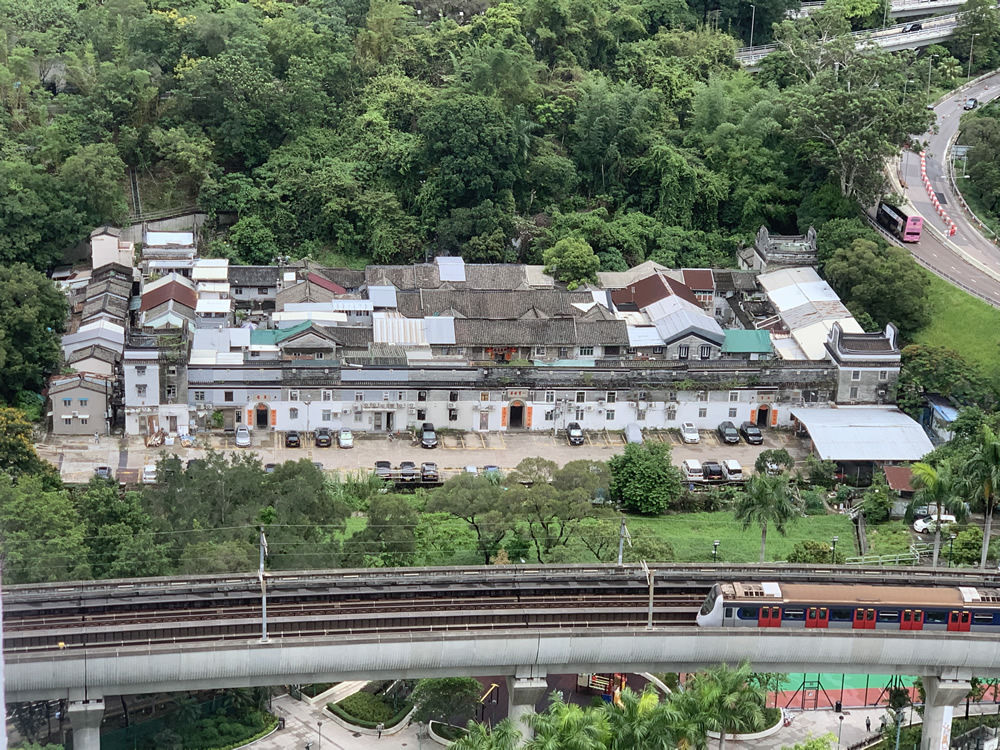
Tsang Tai Uk is located to the south of Pok Hong Estate in Sha Tin. Originally constructed in 1848, Tsang Tai Uk is one of the best-preserved Hakka fortified villages in Hong Kong constructed with granite, grey bricks and solid timber.
Tsang Tai Uk consists of 3 rows of houses arranged to form a rectangle. All the houses are interlinked by passages and small courtyards. Embrasures and loopholes were arranged orderly on the fortified walls and defensive towers were built at the 4 corners to ward off enemies. The main or ceremonial entrance in the middle leads to the ancestral hall in the innermost row of houses, where ceremonies take place. In the old days, villagers winnowed and dried their harvest in the massive courtyard in front of the village.
Tsang Tai Uk was rated Grade 1 historic building in 2009.
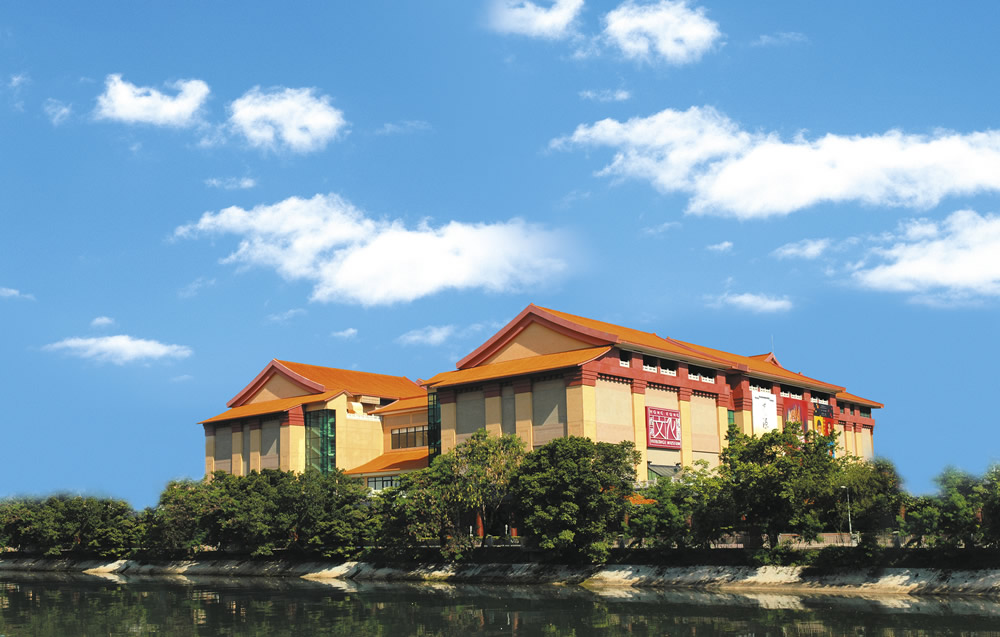
Situated in Tai Wai, Hong Kong Heritage Museum is a large museum in Hong Kong.
The Museum houses 12 exhibition galleries. Of them, Hong Kong Pop 60+, the Jin Yong Gallery, the Cantonese Opera Heritage Hall, the T.T. Tsui Gallery of Chinese Art, the Chao Shao-an Gallery and the Children’s Discovery Gallery are permanent galleries.
Website:
https://www.heritagemuseum.gov.hk/en_US/web/hm/highlights.html
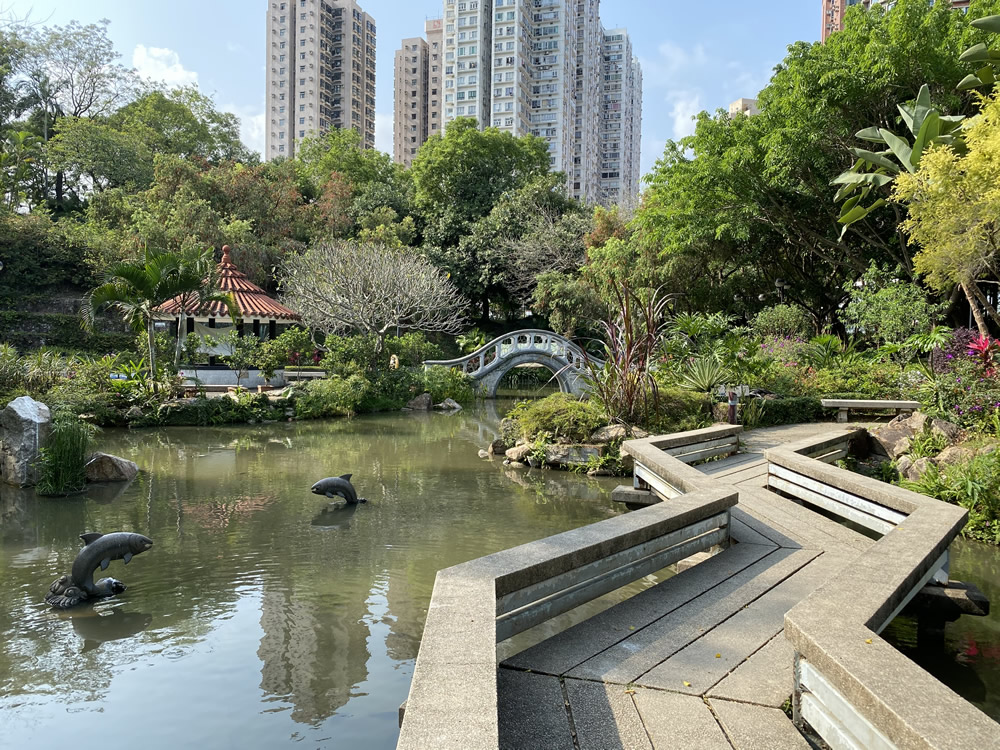
Sha Tin Park covers an area of about 8 ha along Shing Mun River in the town centre of Sha Tin. The Park consists of gardens of distinctive styles, growing around 110 000 plants of over 400 species inside. Other facilities include children playgrounds, an amphitheatre, a viewing terrace and a bike kiosk.
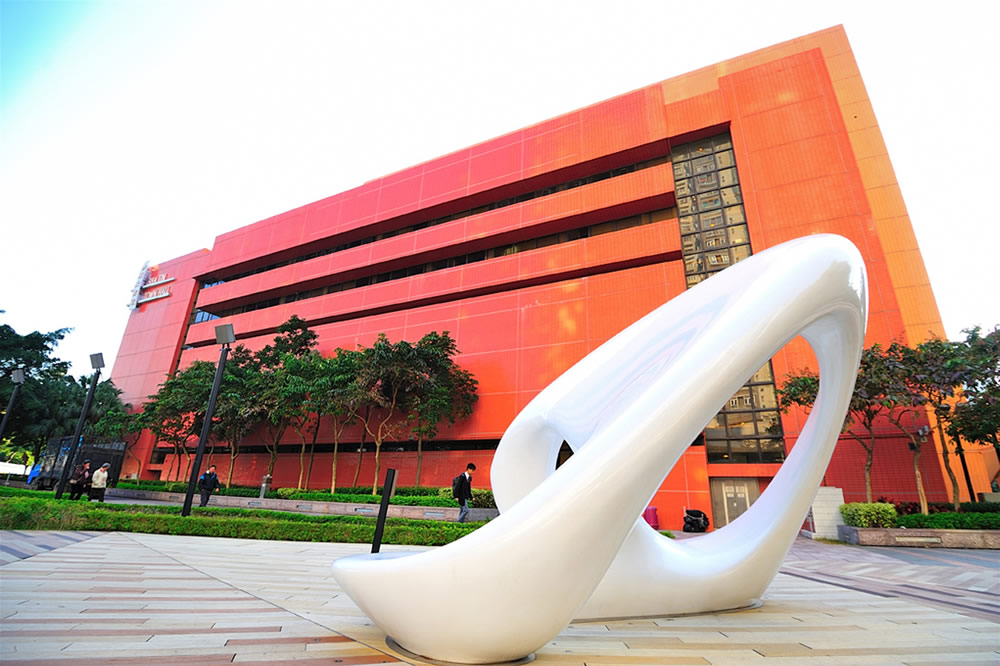
Located in the town centre of Sha Tin, Sha Tin Town Hall is the heart of culture in the east of the New Territories. The Town Hall consists of a 1 372-seat auditorium, a 300-seat cultural activities hall, a 378 sq m exhibition gallery, a dance studio, a music studio and lecture rooms, etc.
Next to Sha Tin Town Hall is City Art Square. It is one of Hong Kong’s largest collections of public arts, displaying sculptures and public art installations designed and created by 19 renowned artists and designers.
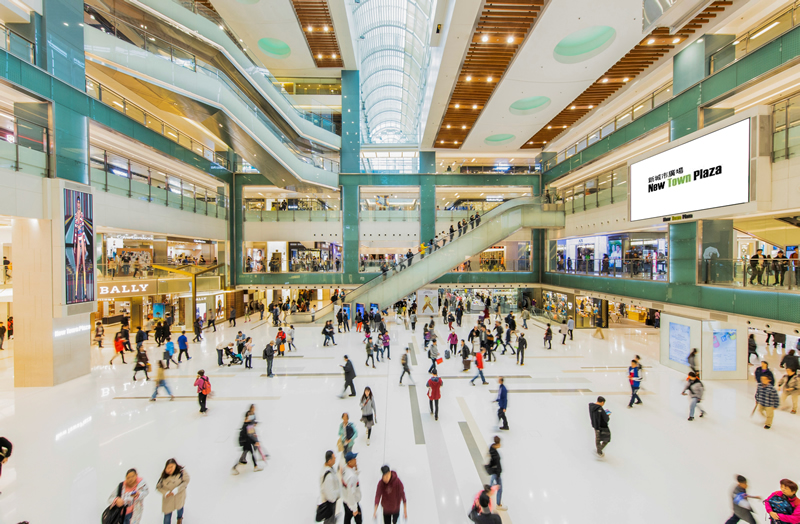
Located in the Sha Tin town centre and adjacent to Sha Tin MTR Station, New Town Plaza takes up 2 million sq ft housing over 350 shops and over 50 restaurants. The grand complex also offers a wide array of outdoor facilities, including Dino Park, Snoopy’s World and Pets Park. Dino Park, a 35 000 sq ft park, features a wide range of 14 energy-busting play facilities for children.
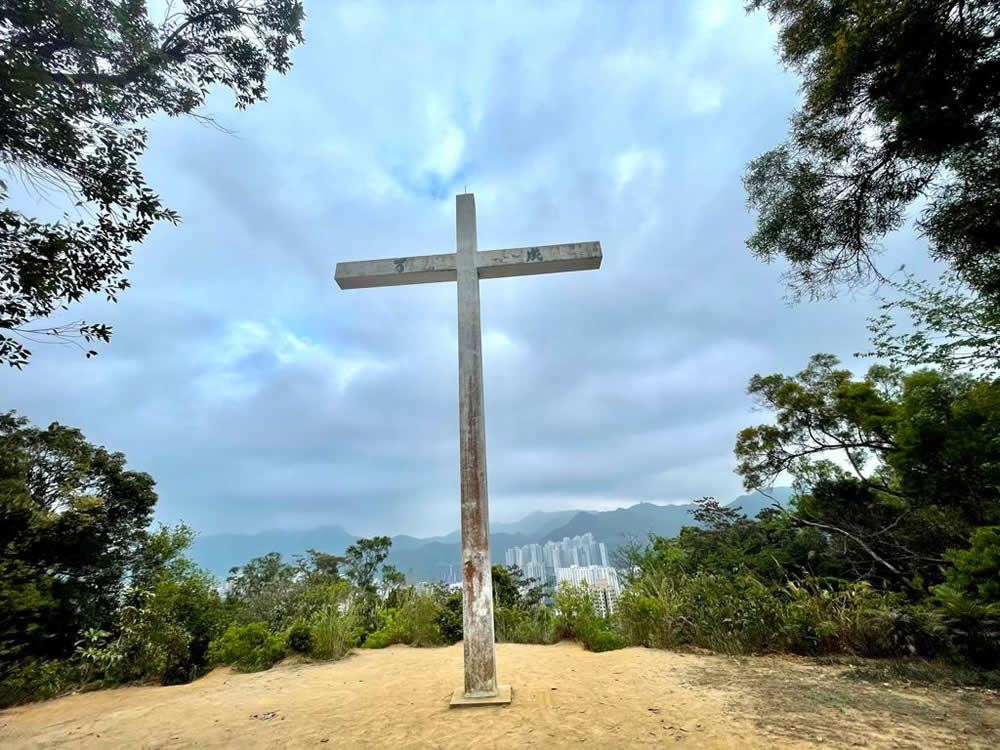
Tao Fung Shan Christian Centre is situated at Tao Fung Shan, Sha Tin. It was established by a Norwegian evangelist Dr. Karl L. Reichelt in 1930. The temple-like buildings such as the Chapel, the map of the whole Tao Fung Shan and the bible stories inscribed on the colourful porcelain in the Centre are in Chinese style. A 12-m high cross standing to the east of the Centre is the hallmark of the Centre.
Website:
https://tfscc.org/en/
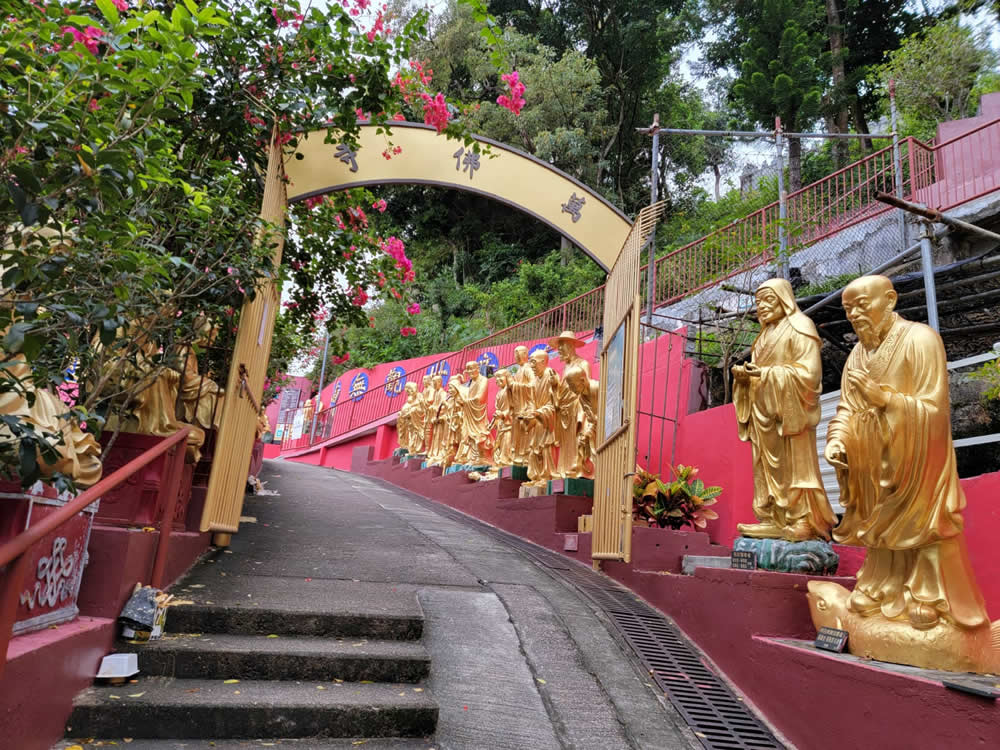
Ten Thousand Buddhas Monastery (Man Fat Tsz) housing more than 12 000 Buddha statues is located at Man Fat Shan in Sha Tin. Founded by Master Yuet Kai in 1949, the Monastery consists of Man Fat Din, Kwun Yum Din, Cundi Din, Yuk Wong Din, Man Fat Pagoda, Guanyin Pavilion, Skanda Pavilion and the 18 Arhat’s Corridor, etc. Man Fat Din and Man Fat Pagoda were rated Grade 3 historic buildings in 2010.
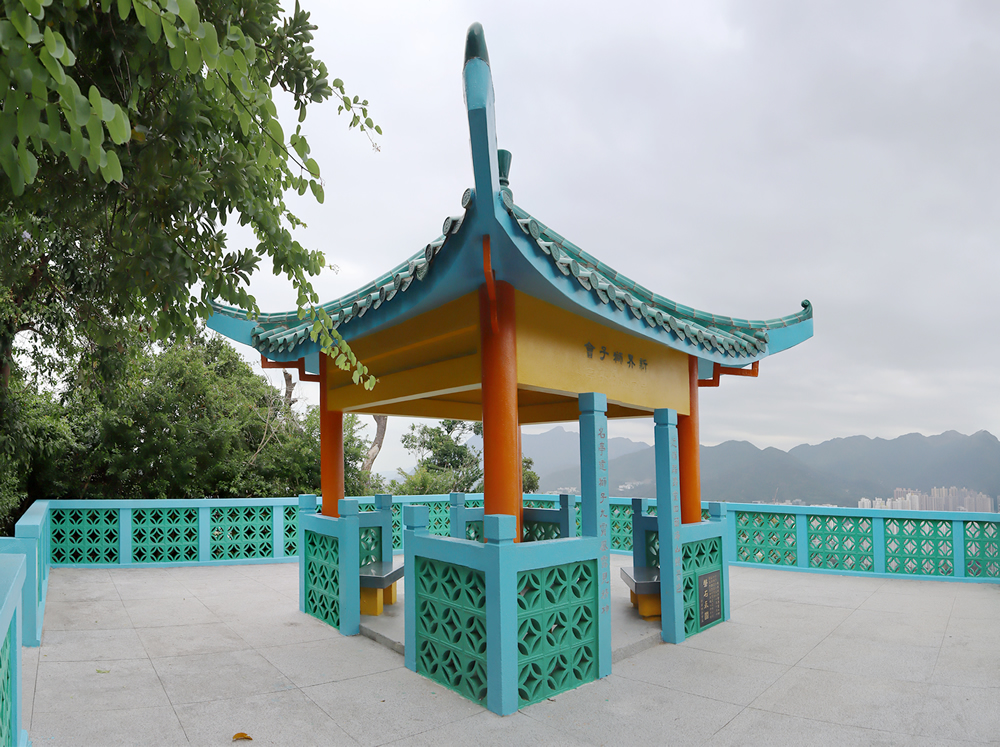
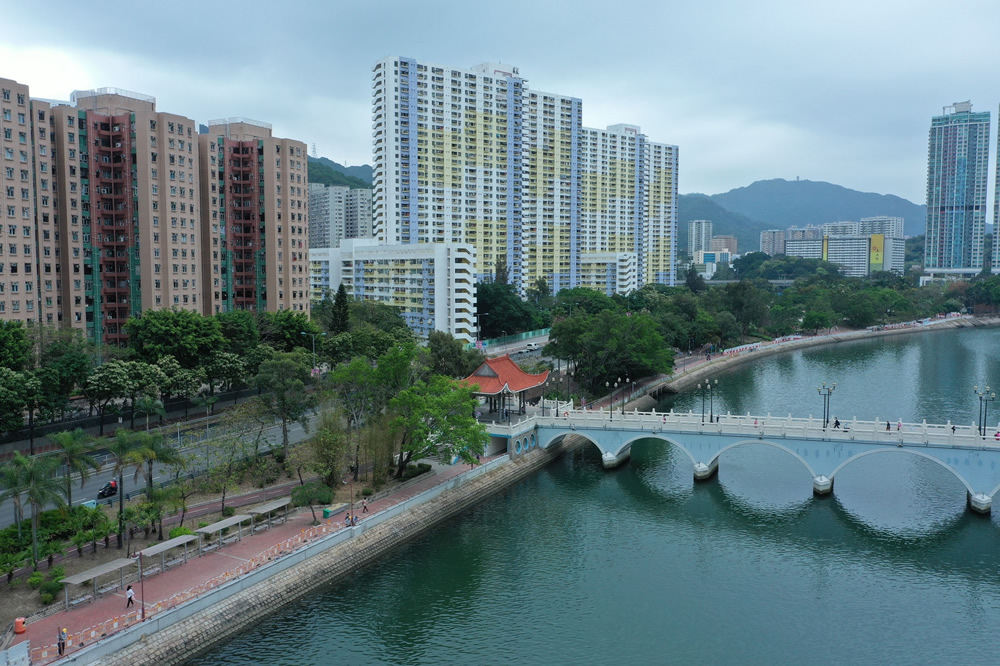
Shing Mun River flows through Sha Tin District. Apart from enjoying the lovely view of the river along the walking trail and the board walk along the promenade, cyclists can also enjoy the ride from the cycling tracks along the promenade linking Tai Po. During festival seasons, the beautiful lighting of bridges over Shing Mun River and along the promenade is a can’t-be-missed attraction. Besides, dragon boat races are also held there during the Dragon Boat Festival (also known as the Tuen Ng Festival).
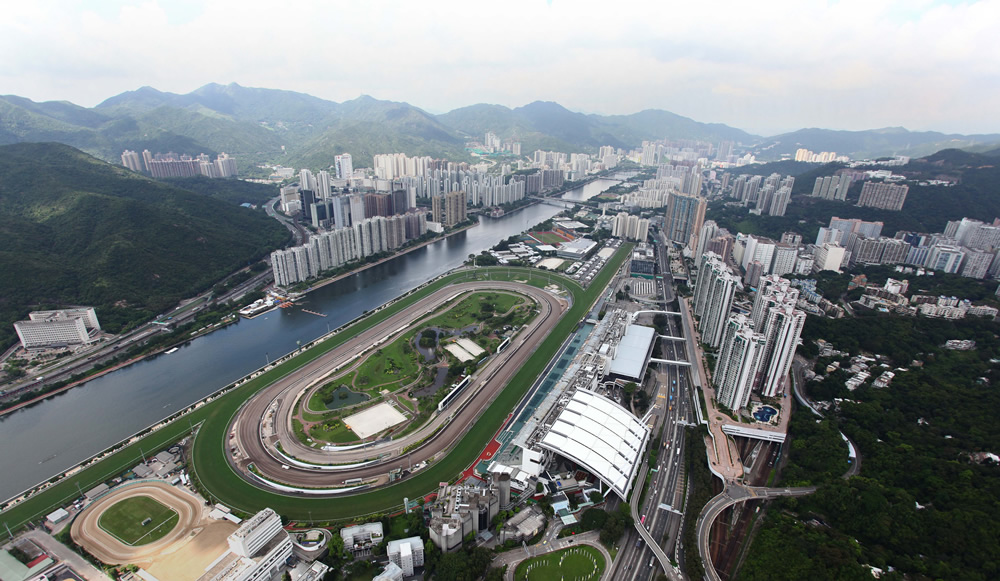
Sha Tin Racecourse, completed in 1978, is located at the north bank of Shing Mun River. As one of the world's finest racetracks, Sha Tin Racecourse can accommodate more than 83 000 spectators and is the venue for many local and international races.

The 3.2-km-long Ma On Shan Promenade overlooks Sha Tin Hoi and offers a magnificent view of the peaks of Pat Sin Leng, featuring a panorama of the sea and the sky.
The Promenade also offers a wide array of facilities, such as fitness stations, a jogging trail and a bougainvillea garden. In order to promote environmental awareness, wind turbines providing electricity to some of the floor lightings as well as solar and wind hybrid lamps without carbon dioxide emission are installed in the Promenade.
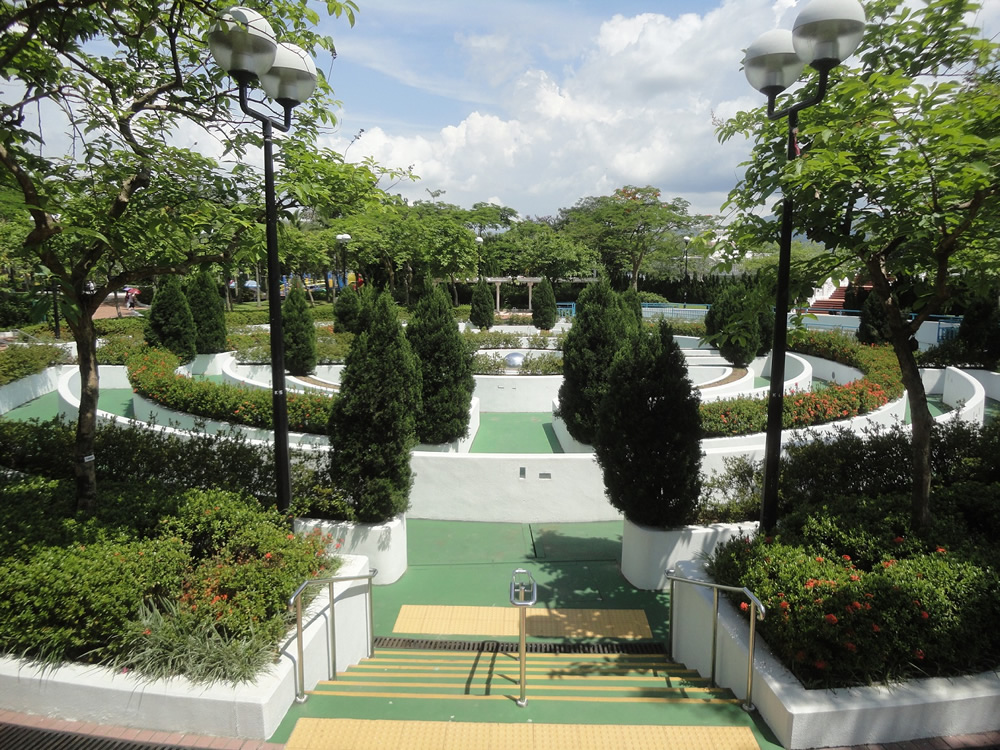
Situated at Ma On Shan town centre and adjacent to the Ma On Shan Promenade, Ma On Shan Park offers visitors a panoramic harbour view to the horizon.
The Park has a total area of 5.5 ha containing a wide variety of facilities including a mining history display area, a conservation corner, a maze garden, play equipment for all children and a marine plaza, etc.
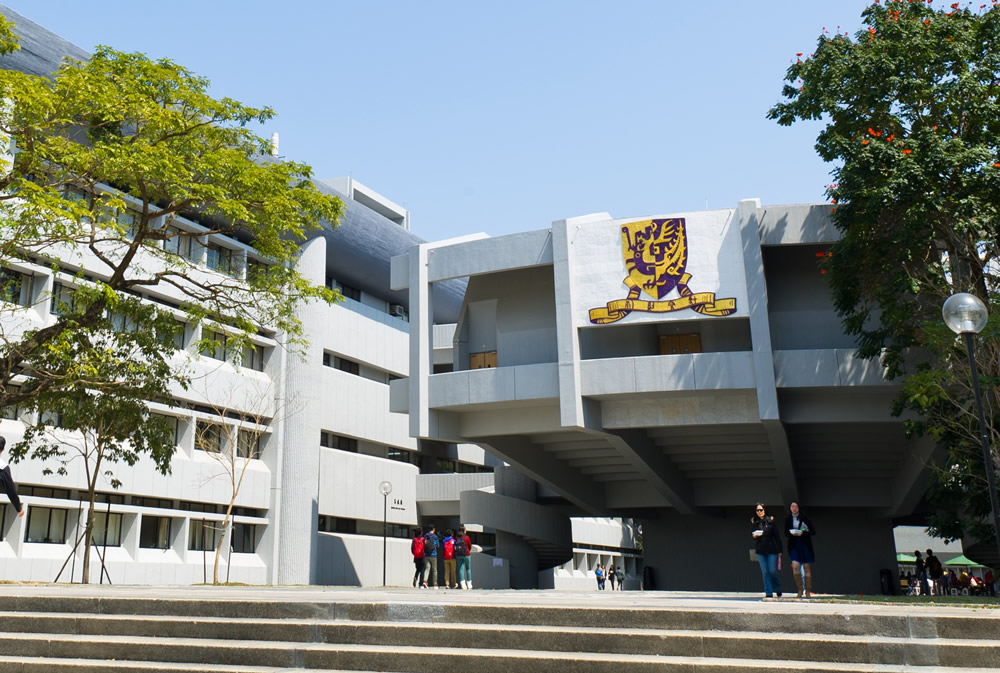
Founded in 1963, The Chinese University of Hong Kong is located in Sha Tin. The 137-ha campus overlooking Tolo Harbour is one of the greenest campus in Hong Kong. The University houses a range of facilities, such as colleges, teaching complexes, libraries, music halls, art museum, swimming pool, sports fields and water sports centre.
The Art Museum of The Chinese University of Hong Kong at the University Hall is a part of the University’s Institute of Chinese Studies. It is a teaching museum cum research centre on Chinese art and archaeology. The Art Museum organises exhibitions and displays its collection acquired from around the world regularly.
Website:
https://www.cuhk.edu.hk/english/index.html (The Chinese University of Hong Kong)
http://www.artmuseum.cuhk.edu.hk/en/ (The Chinese University of Hong Kong Art Museum)
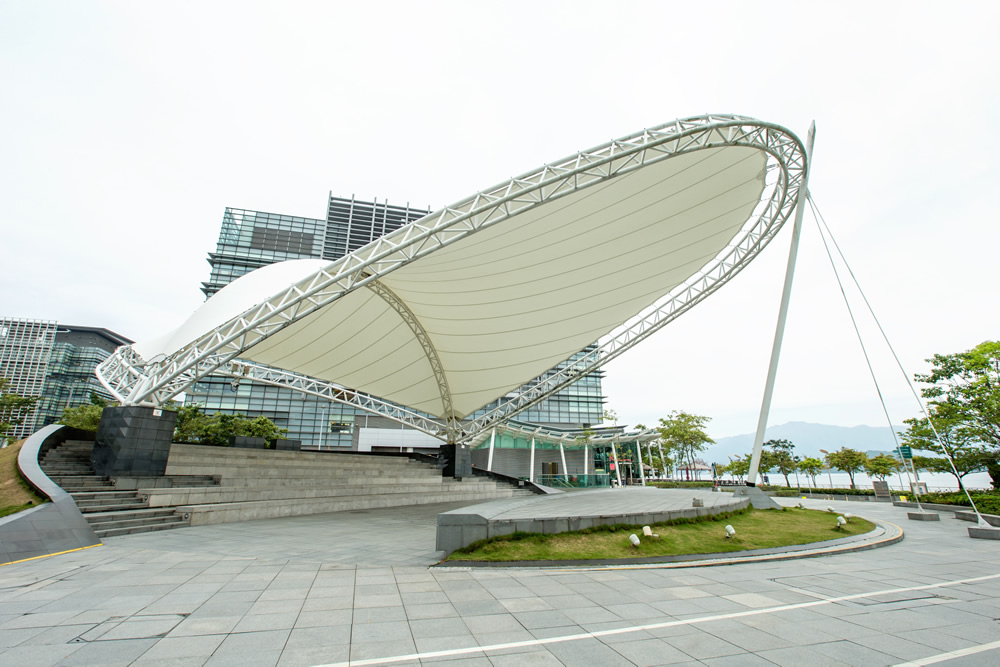
Occupying an area of 22 ha in Pak Shek Kok, the Hong Kong Science Park (“HKSP”) is Hong Kong's flagship technology infrastructure, providing one-stop facilities and services supporting the development of innovation and technology.
HKSP is more than just a workplace. It is a vibrant community with lots of leisure facilities including the Grand Plaza, an amphitheatre and a wide variety of shops and catering premises. Amongst them, Charles K. Kao Auditorium, known as the “Golden Egg”, is the landmark and symbol of HKSP. Adjacent to Pak Shek Kok Promenade and the magnificent Tolo Harbour waterfront, HKSP is also a rest stop for cyclists riding between Sha Tin and Tai Po, and is an ideal place for family leisure activities.
Website:
https://www.hkstp.org/
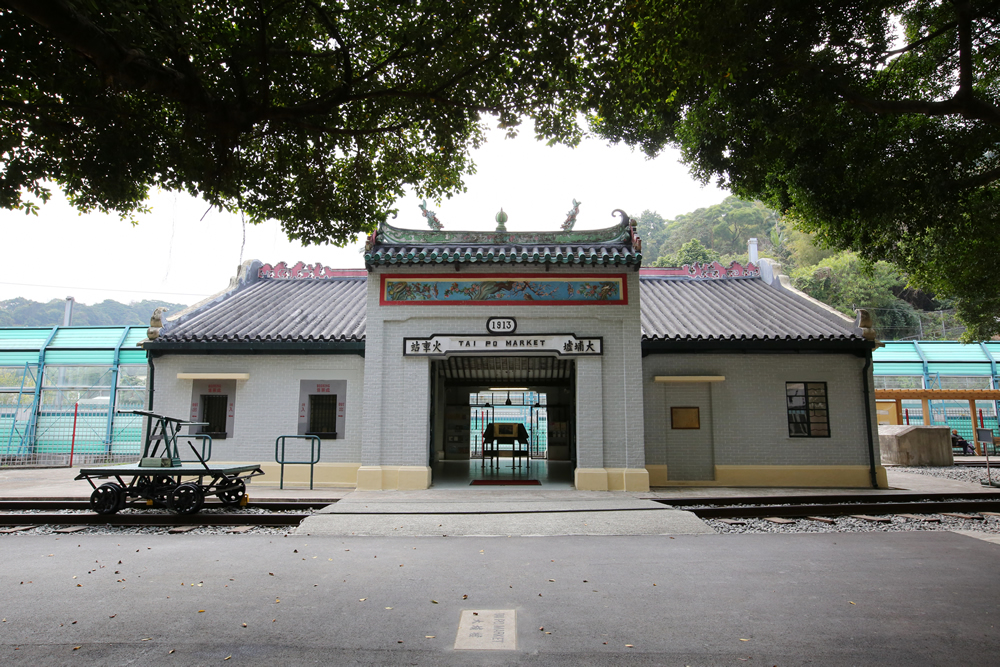
Situated at Shung Tak Street in Tai Po, Hong Kong Railway Museum is converted from the Old Tai Po Market Railway Station. Erected in 1913, the station building features the pitched roof of traditional Chinese building.
The Old Tai Po Market Railway Station was declared a monument in 1984. It was refurbished as an open-air museum and open to the public in 1985. Exploring the history of railway transportation in Hong Kong, the Museum features the historic station building and other railway facilities. It also showcases a narrow gauge steam locomotive, a diesel electric engine and 6 historical coaches.
Website:
https://www.heritagemuseum.gov.hk/en_US/web/hm/museums/railway.html
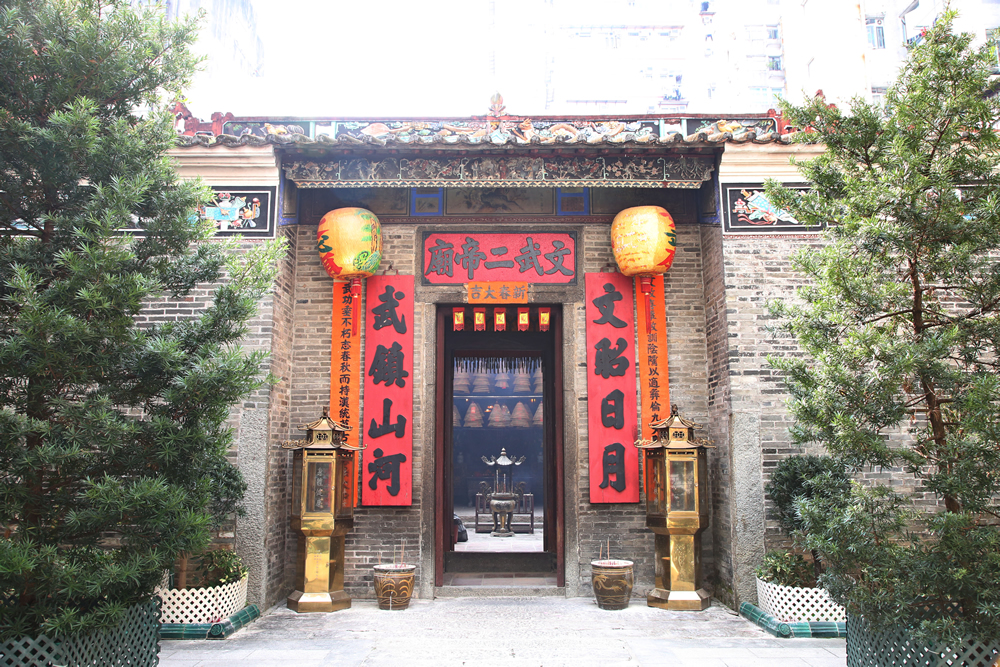
Located at Fu Shin Street in Tai Po, Man Mo Temple was open in 1892. The Temple was once a venue for meetings, arbitration and worship in Tai Wo Market Town. It is a 2-hall, 1-courtyard structure built of grey bricks. Both its ridges and façade are decorated with fine plaster mouldings, and there is an exquisitely crafted wooden fascia board above the main entrance. The Temple was declared a monument in 1984.
The Temple enshrines the gods Man Cheong (God of Literature) and Kwan Tai (God of Martial Arts). Legend has it that Man Cheong, also known as “Wen Chang Celestial Lord” and “Wenquxing”, governs knowledge and studies and therefore many students and examination candidates pay homage to him. He is also a figure representing filial piety. Kwan Tai refers to Guan Yu (courtesy name Yunchang) who was a famous military general of the State of Shu during the Three Kingdoms period (220 - 280). He was reputed as "the enemy of ten thousand people", and is the paradigm of mightiness, loyalty and righteousness. Kwan Tai is widely glorified and worshipped for his wisdom, trustworthiness, benevolence, righteousness and courage.
After visiting the Temple, visitors may stop by Fu Shin Street where rural produce and traditional food items can easily be found, giving them a glimpse of the prosperity of the old Tai Wo Market.
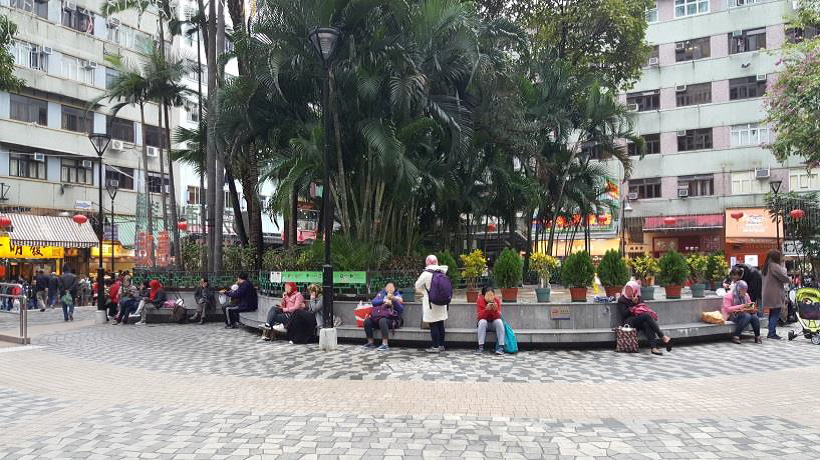
4 busy lanes in Tai Po, namely Kwong Fuk Lane, Tai Wing Lane, Tai Kwong Lane and Tai Ming Lane, are arranged as a square with a garden inside. The square they form together is known as Tai Ming Lane Square. It is a meeting place for the residents of Tai Po District with many shops and eateries around.
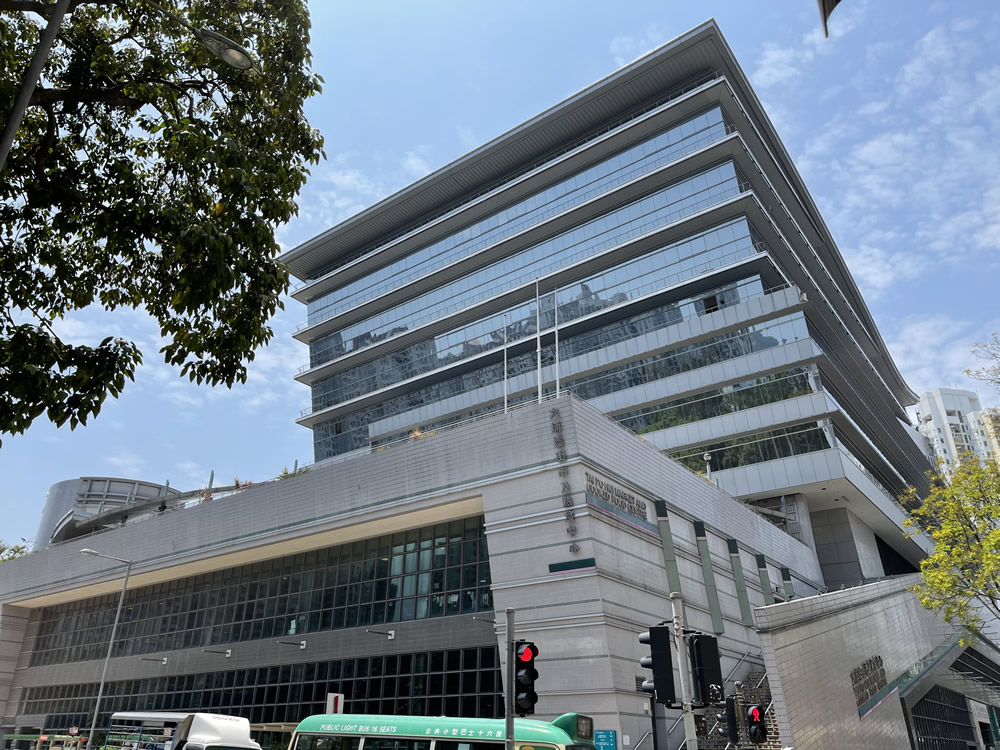
Tai Po Hui Market and Cooked Food Centre is a modern Hong Kong-style market. Given its large-scale and comfortable shopping environment, the Market has become a popular place for people from Tai Po as well as other districts for shopping and dining.
Amongst some 250 stalls on the ground and 1st floors offering a wide range of food and non-food commodities, the Market is renowned for the wide variety of seafood offered there. The cooked food centre on the 2nd floor houses 40 stalls providing different delicacies.
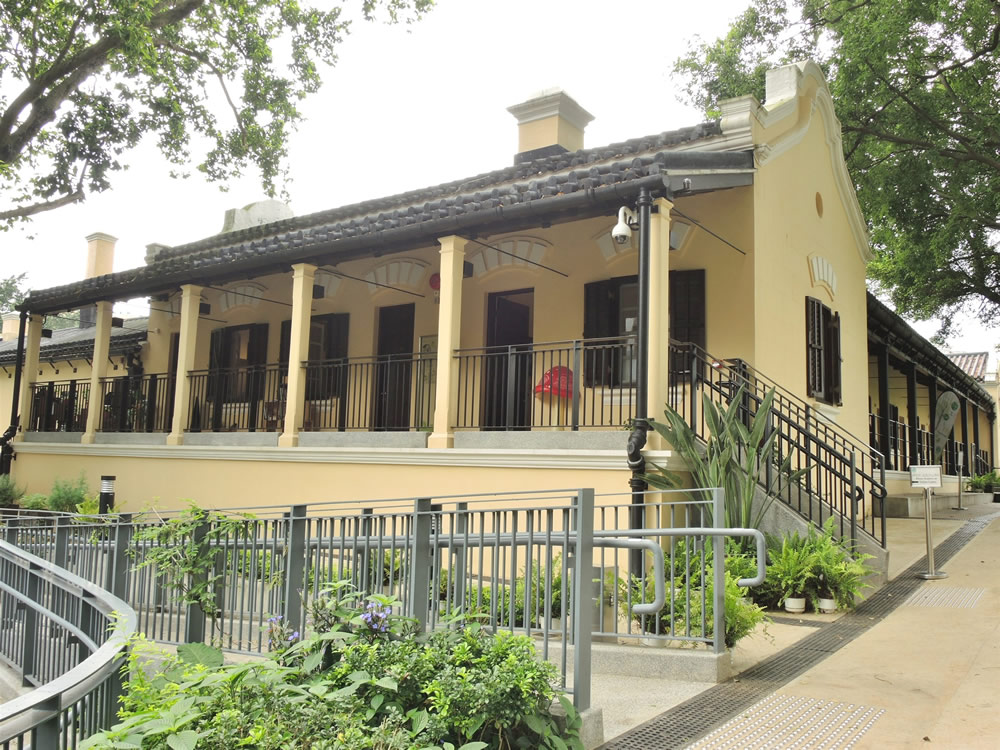
Located on a small hill at Wan Tau Kok Lane in Tai Po, the Green Hub was previously the Old Tai Po Police Station. The Old Tai Po Police Station, built in 1899, was the 1st police station and the Police Headquarters in the New Territories. It was also used as various offices of the Hong Kong Police Force until 1987.
In 2010, Kadoorie Farm and Botanic Garden revitalised the Old Tai Po Police Station into the Green Hub with a view to promoting sustainable living and integrated conservation. The report room, retention cell and armoury of the Old Tai Po Police Station have been developed into a Heritage Display to illustrate the history and architectural characteristics of the police station. A Heritage Trail has been set up to connect the significant historical, architectural and ecological features of the site.
The Old Tai Po Police Station was declared a monument in 2021.
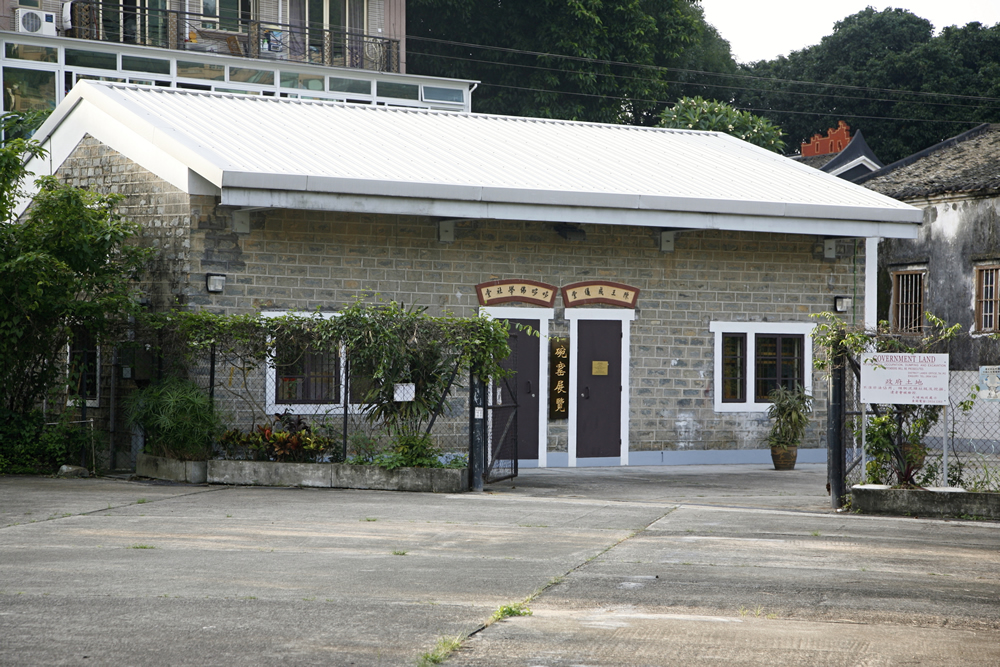
Wun Yiu in Tai Po is the only kiln site that produced porcelain in underglaze blue found in Hong Kong. Part of the area where kiln remains were discovered was declared a monument in 1983. The Wun Yiu Exhibition in Sheung Wun Yiu Village introduces the history and archaeological discoveries of Wun Yiu, and displays the archaeological finds of the Ming and Qing dynasties.
Fan Sin Temple at Sheung Wun Yiu Village in Tai Po has a history of over 200 years. Declared a monument in 1999, it is the only temple that enshrines Fan Tai Sin Sze, the patron saint of potters, in Hong Kong.
Website:
Wun Yiu Exhibition
https://www.amo.gov.hk/en/historic-buildings/monuments/new-territories/monuments_20/index.html
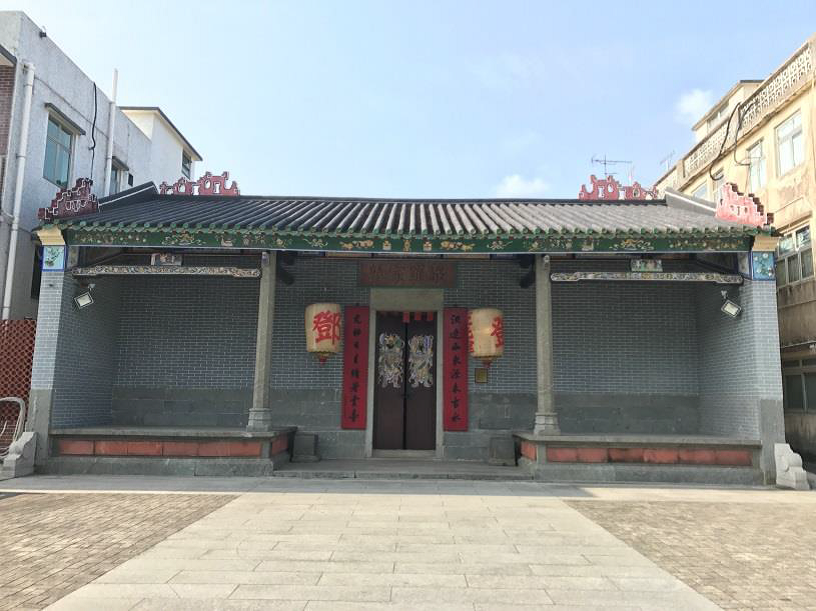
Located at Tai Po Tau Tsuen, King Law Ka Shuk is the ancestral hall of the Tang clan in Tai Po Tau. It was once used as a study hall, and still serves as a venue for clan members to hold meetings and traditional functions. It is believed that the Tang clan constructed this traditional 3-hall, 2-courtyard building in the Ming Dynasty (1368 – 1644).
King Law Ka Shuk was declared a monument in 1998. The full restoration of King Law Ka Shuk was completed in 2001. The restoration project won the Award of Merit of UNESCO Asia-Pacific Heritage Awards for Culture Heritage Conservation in the same year.
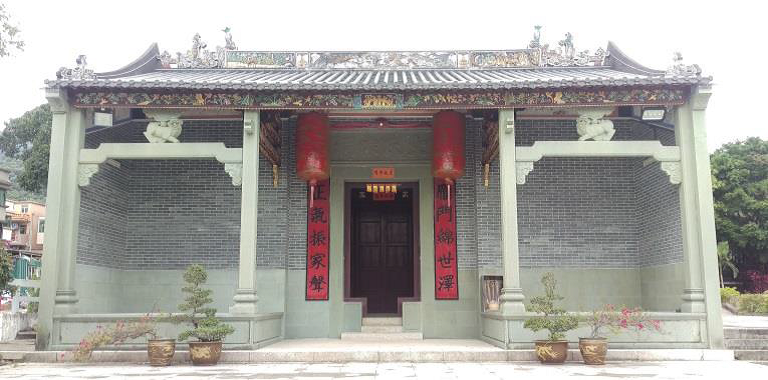
Tai Hang is the settlement of the Man clan, who are the descendants of Man Tin Cheung, a renowned patriotic general in the Song Dynasty (960 - 1279). Fui Sha Wai in Tai Hang is the most intact walled village in Tai Po District. The enclosing walls, entrance gate and corner watch towers were constructed of grey bricks. The enclosing walls and Ngai Yuen Tong, a family ancestral hall, were rated Grade 3 historic buildings in 2010.
Man Shan Park next to the Man Ancestral Hall in Tai Hang was built to commemorate Man Tin Cheung, the ancestor of the Man clan in Tai Hang.
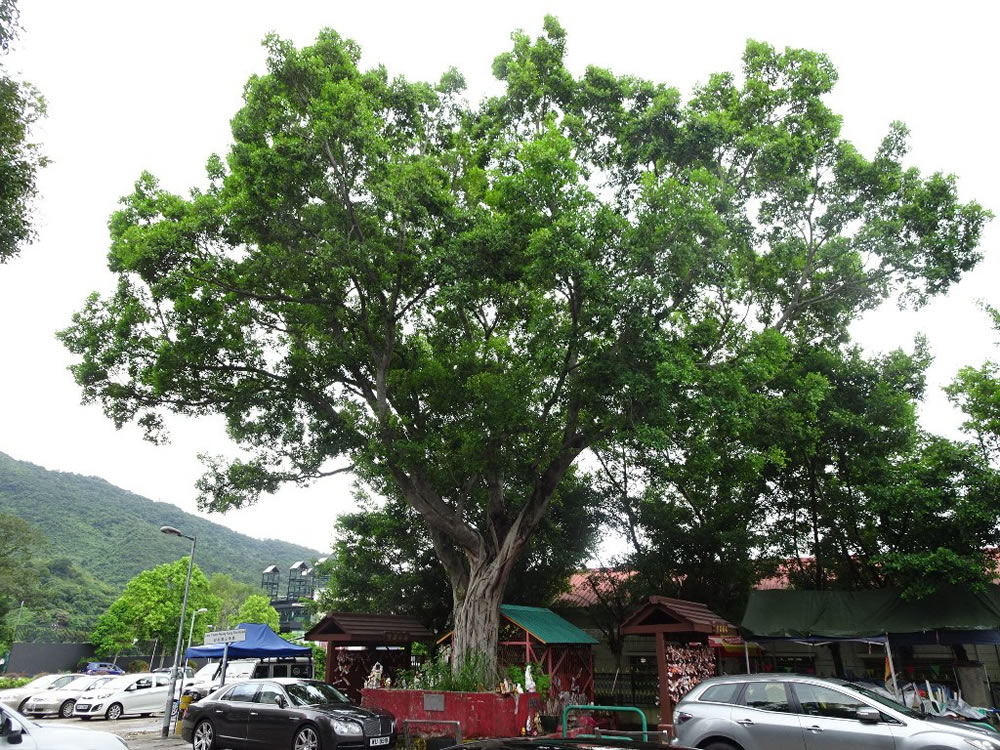
The 2 banyan trees at Fong Ma Po Village, Lam Tsuen are known as the "Wishing Trees". People used to write their wishes on wishing placards and throw the placards together with tangerines onto the Wishing Trees to make wishes during Chinese New Year. Later, wishing placards were tied onto the wooden racks nearby in order to conserve the trees.
Villagers of Lam Tsuen established the Lam Tsuen Wishing Square next to the Wishing Trees and installed a 25 ft high replica of the Wishing Trees there for visitors to recall the custom of throwing wishing placards. To promote this wishing culture and tradition, promotional events have been organised annually during Chinese New Year since 2005. This has gradually evolved to become the Hong Kong Well-wishing Festival, attracting lots of visitors.
Nearby the Lam Tsuen Wishing Trees is Tin Hau Temple in Fong Ma Po, which was rated Grade 2 historic building in 2010.
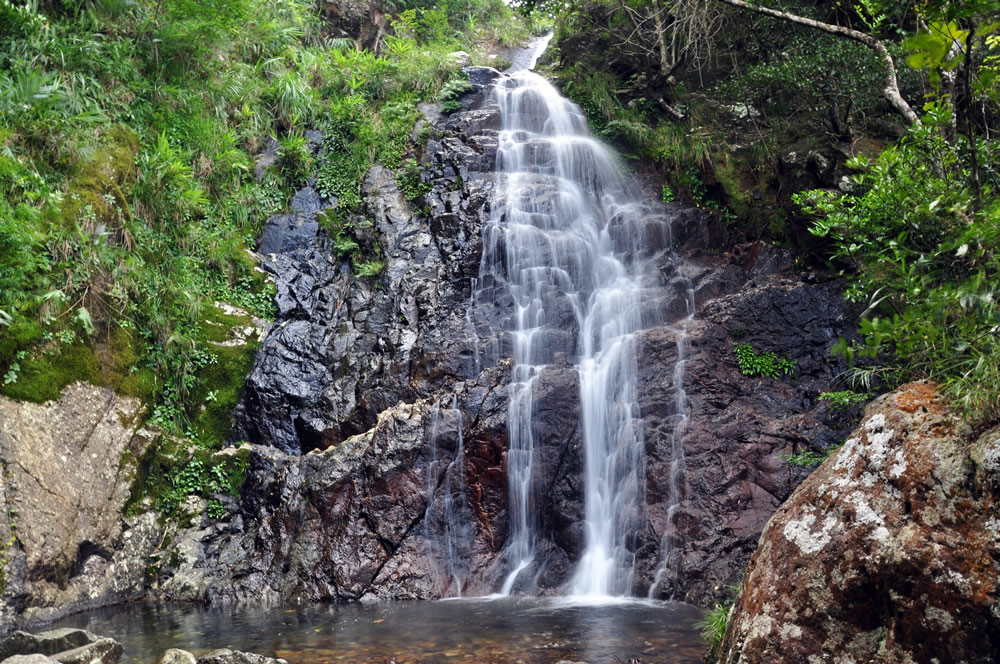
Ng Tung Chai Waterfalls lie in the northern foothills of Hong Kong’s highest mountain - Tai Mo Shan. With a drop of 35 m, the Main Fall is the highest waterfall in Hong Kong. The thick woodlands and the nice scenery nearby the waterfalls make the area a popular place for photography enthusiasts.
On the way to the waterfalls, you will find Man Tak Yuen, a Taoist temple with traditional Chinese architectural features.
Kadoorie Farm and Botanic Garden (KFBG), with a total area of 148 ha, is located on the northern slopes of Hong Kong's highest mountain - Tai Mo Shan. KFBG was established in 1956 to provide agricultural aid to farmers in need of support to help enhance their self-reliance.
Today, KFBG has been transformed into a conservation and education centre striving to raise awareness of ecological and sustainability issues. Theme gardens, vegetable terraces and various conservation and educational facilities are established to provide leisure and educational experience to the public.
Website:
https://www.kfbg.org/en/
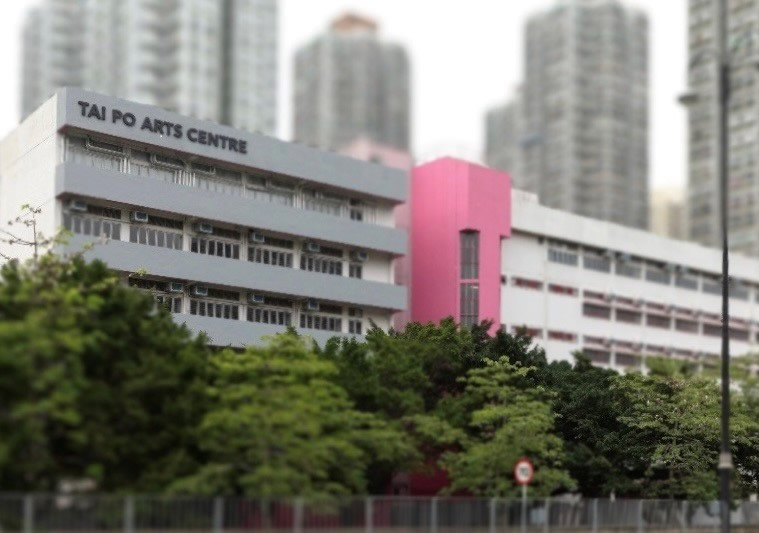
Located at On Pong Road in Tai Po, Tai Po Arts Centre (TPAC) was retrofitted from the former Tai Po Government Secondary School and open in 2019.
The arts studios of TPAC house different performing arts groups and creative arts practitioners, facilitating the further development of arts and culture in Hong Kong, and in particular, Tai Po District.
Apart from participating in activities organised by the arts group in TPAC, organisations and individuals may hire the Black Box, White Box, dance studio and music rooms for rehearsals, performance, seminars, exhibitions, etc. There is also an Arts Information Centre serving as a reference library for the general public to access arts materials of local arts activities.
Website:
https://tpac.hk/en
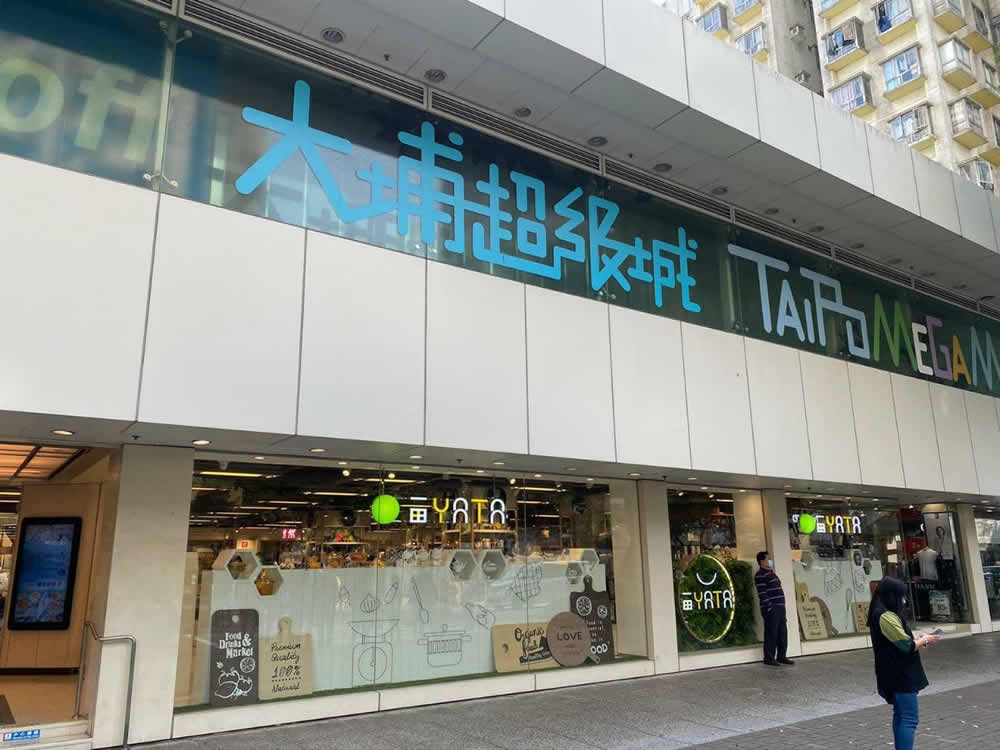
There are a number of shopping malls connected by footbridges on both sides of Lam Tsuen River in Tai Po. The malls offer a full range of products and services.
Of them, Tai Po Mega Mall is the largest shopping centre in Tai Po. Comprising 5 distinctive zones, the Mall provides a diversified mix of famous retailers, a department store and restaurants.
In other malls like Tai Po Plaza, Fortune Plaza and Plover Cove Shopping Arcade, visitors may encounter another kind of shopping experience offered by a variety of small stores and food outlets.
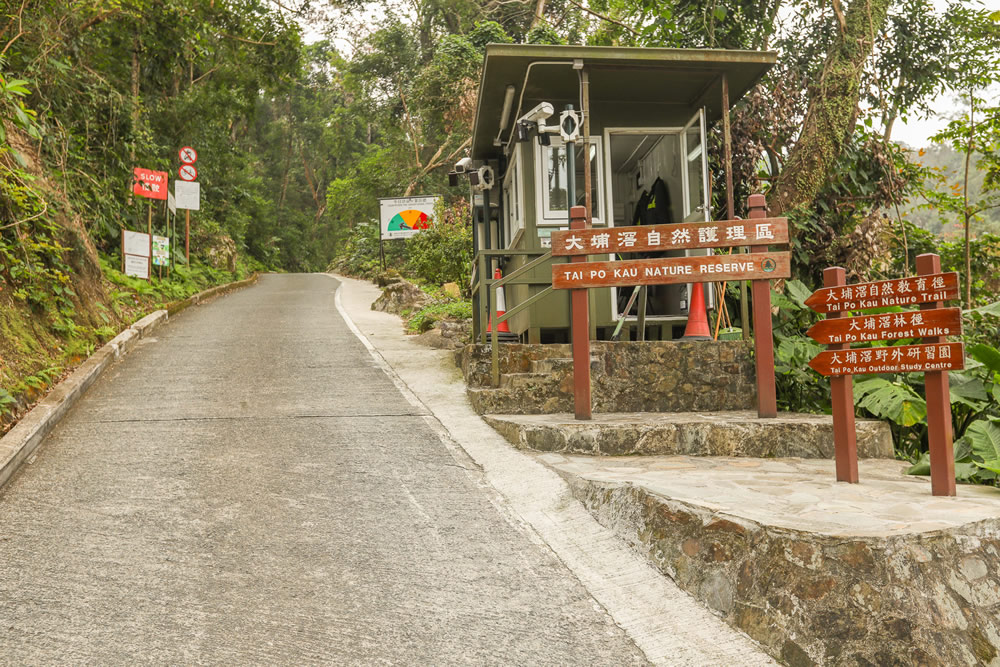
Tai Po Kau Nature Reserve, with a total area of 460 ha, is heavily wooded with more than 100 species of trees. There are 4 colour-coded walks built in quiet and unspoiled surroundings, and a Nature Trail introducing different species of plants and trees. This Nature Reserve is also an ideal place for bird and butterfly watching.
Website:
https://www.afcd.gov.hk/english/country/cou_vis/cou_vis_cou/cou_vis_tpk/cou_vis_cou_tpk.html
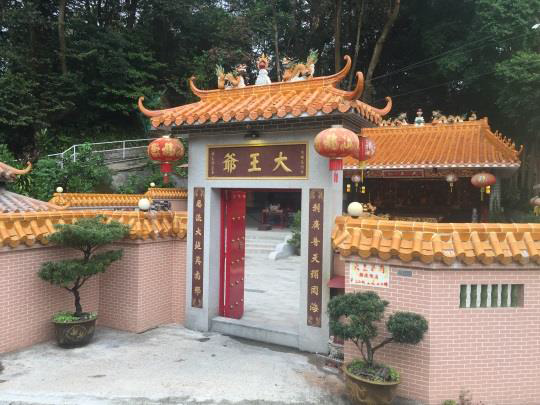
Tai Wong Yeh Temple, Yuen Chau Tsai is located at Yuen Chau Tsai in Tai Po. Tai Wong Yeh is worshipped by fishermen in Yuen Chau Tsai. For the 10 days starting from the 6th day of the 5th lunar month each year, Cantonese operas are staged to celebrate the Tai Wong Yeh Festival which is a major event for both local fishermen and residents.
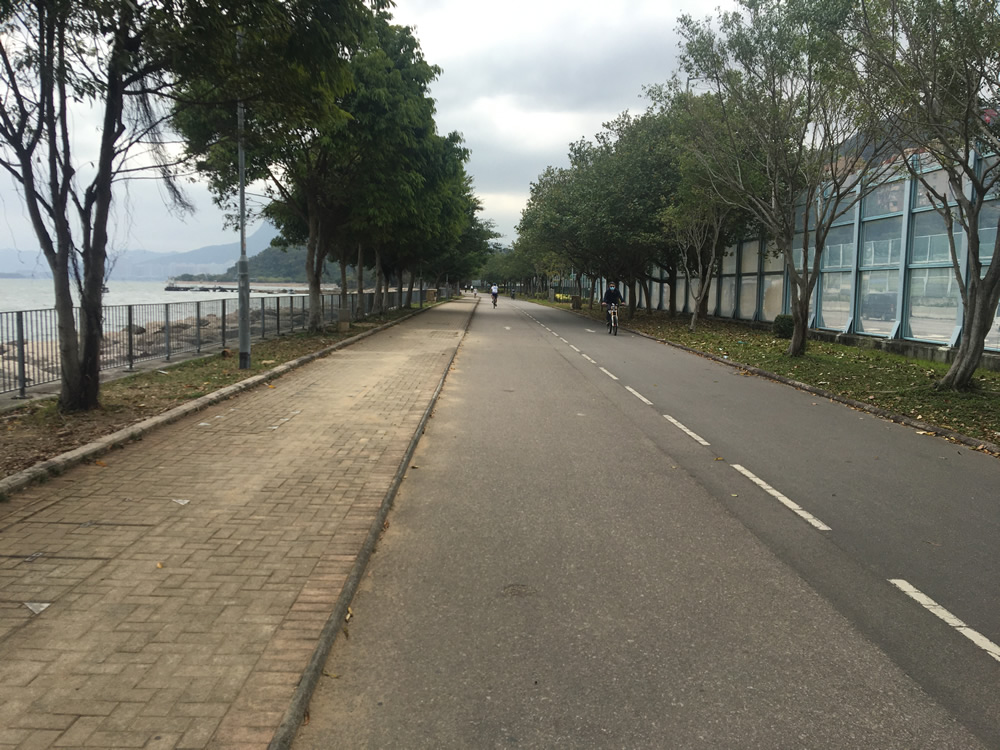
Tolo Harbour Cycling Track runs from the riverside of Shing Mun River in Sha Tin to Yuen Chau Tsai in Tai Po via the Hong Kong Science Park, and extends to Tai Mei Tuk via Tai Po Waterfront Park.
To begin the journey, visitors can bring their own bicycle or rent one in either Sha Tin or Tai Po. Along the cycling track, they can enjoy the beautiful scenery of Tolo Harbour, as well as Pat Sin Leng and the dam of Plover Cove Reservoir.
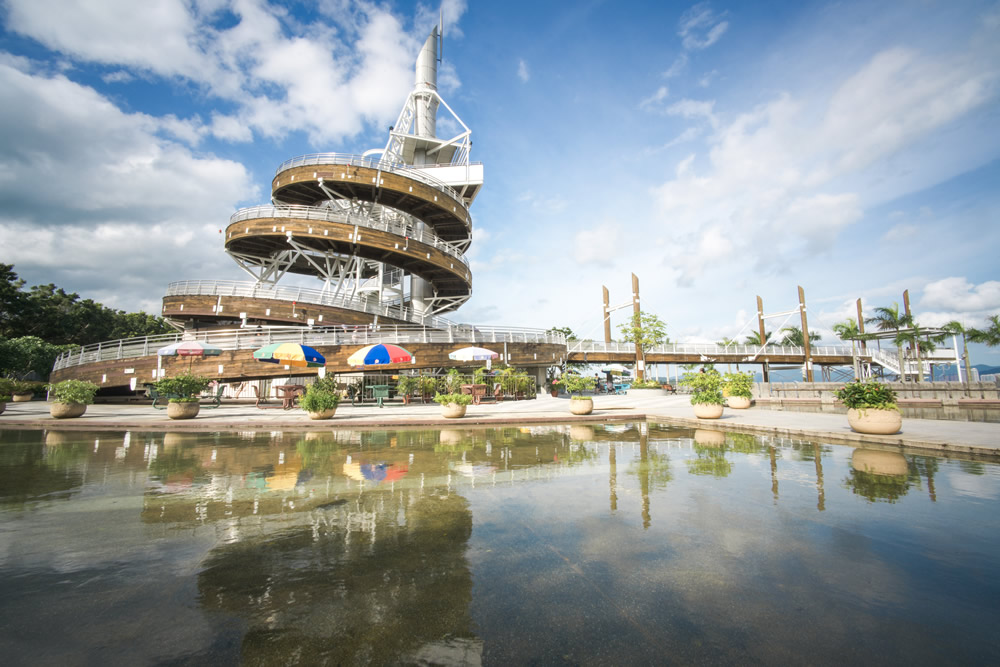
Tai Po Waterfront Park occupies an area of 22 ha. The annual dragon boat race in Tai Po District is held at its promenade.
The Park provides a wide range of facilities, including Insect House, a kite-flying area, a cycling track, a model boat pool, various theme gardens and an amphitheatre. Visitors may also enjoy a panoramic view of Tai Po waterfront and Tolo Harbour at Spiral Lookout Tower in the Park.
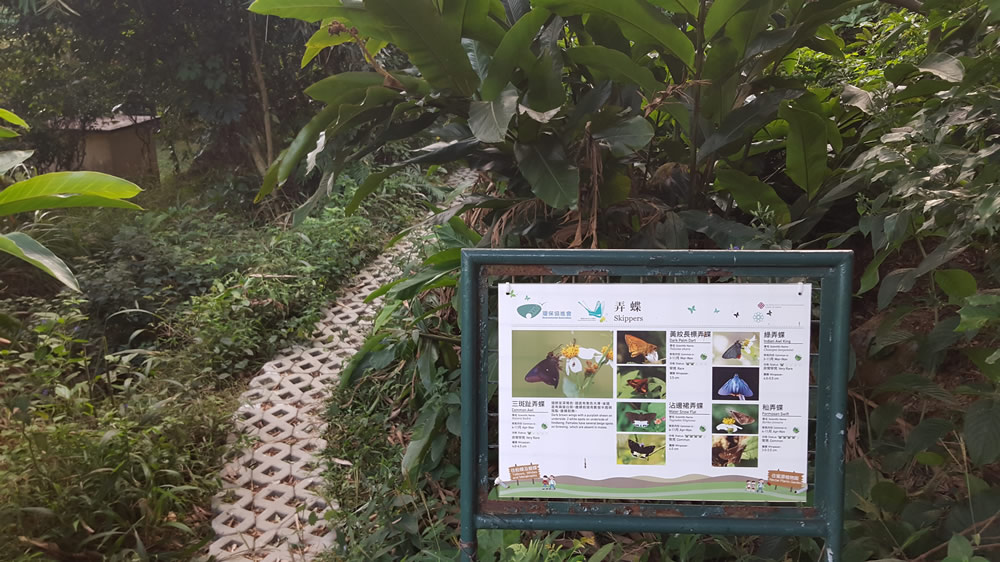
Fung Yuen Butterfly Reserve is situated at Fung Yuen Village in Tai Po. It is a renowned location for butterfly watching in Hong Kong. There are over 200 species of butterfly in Fung Yuen including over 130 species that are not commonly seen or very rare in Hong Kong.
Website:
https://fungyuen.org/en/
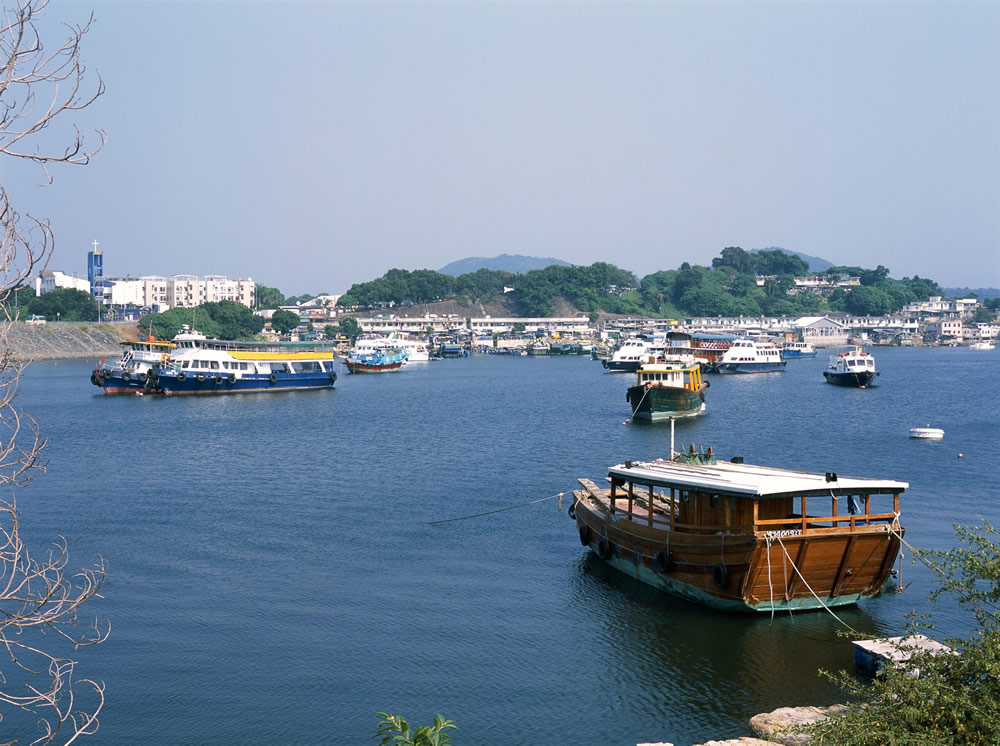
Sam Mun Tsai is a fishing village. With the use of advanced technology, some villagers raise various species of fish in rafts there.
From Sam Mun Tsai, visitors can enjoy the magnificent view of the dam of Plover Cove Reservoir across the sea. They can also visit Tai Po Geoheritage Centre which introduces the geology, culture, history and ecology of the area around Sam Mun Tsai and exhibits rock specimens.
In just around 30 to 40 minutes’ walk from Sam Mun Tsai via a footpath and a tombolo, you will reach Ma Shi Chau which is part of the Northeast New Territories Sedimentary Rock Region of the Hong Kong UNESCO Global Geopark. Ma Shi Chau is also known as the “Outdoor Geological Museum”. The 1.5 km Ma Shi Chau Nature Trail running along the southeastern shore features the sedimentary rock formations and various geological features on the island.
Website:
Hong Kong UNESCO Global Geopark
https://www.geopark.gov.hk/en/discover/attractions/ma-shi-chau
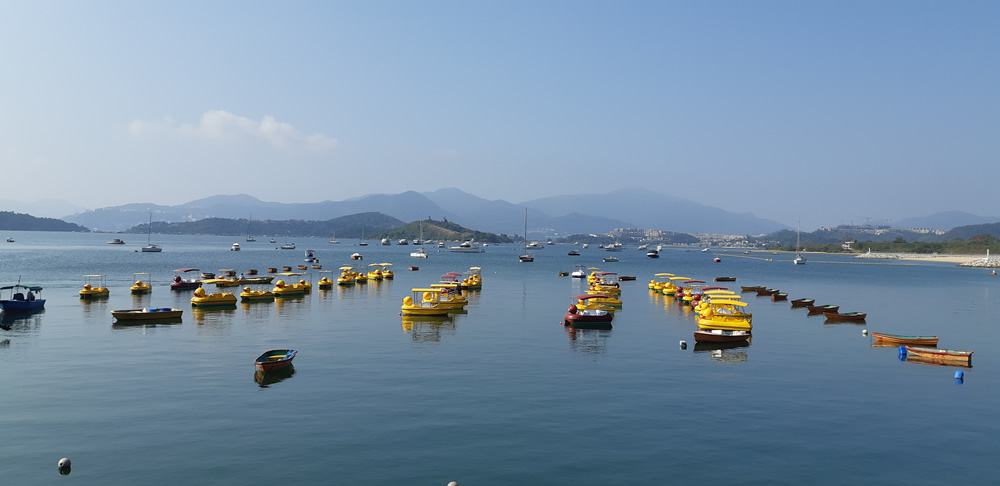
Located next to Plover Cove Reservoir and at the foot of Pat Sin Leng, Tai Mei Tuk is a favourite leisure spot for local residents. Visitors may have a barbecue, fly kites, go cycling or fishing. Other facilities include Tai Mei Tuk Family Walk, a water sports centre and a youth hostel. Visitors can also spoil themselves with cuisines in different styles offered at cafes and restaurants along Ting Kok Road.
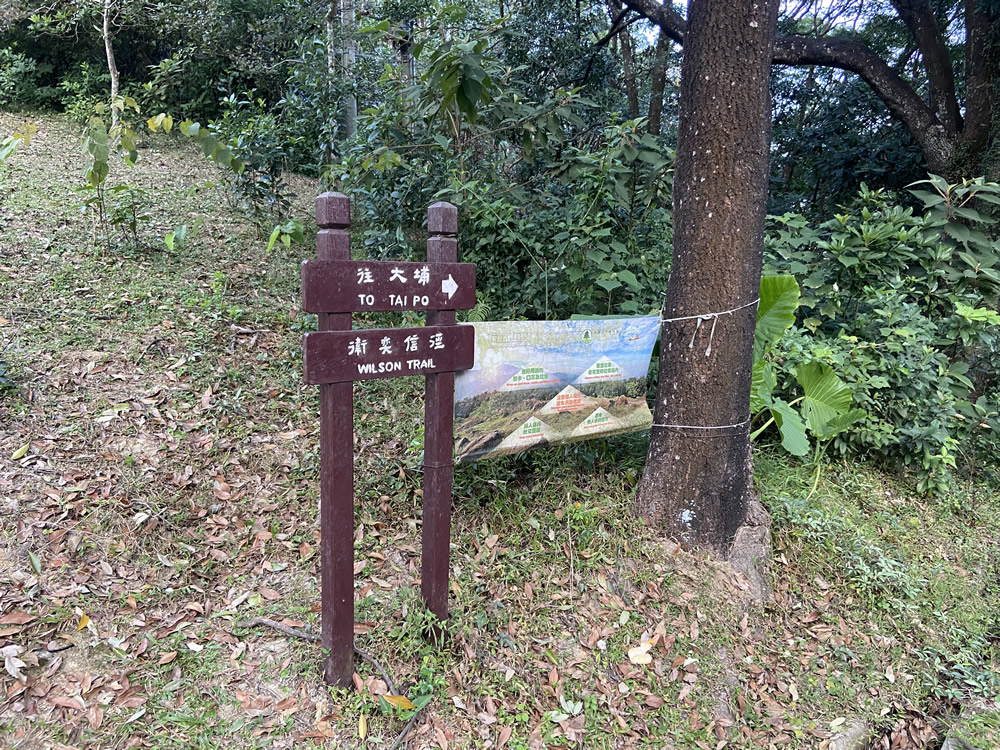
The 78 km Wilson Trail is one of the 4 long-distance hiking trails in Hong Kong. It spreads across Hong Kong Island, Kowloon and the New Territories. The Trail is divided into 10 sections. The first two sections are on Hong Kong Island, beginning at Stanley in the south of Hong Kong Island and completing at Quarry Bay. The Trail starts again from Lam Tin in Kowloon and finishes at Nam Chung in New Territories North. Amongst the 10 sections of Wilson Trail, the following 4 sections run through Tai Po:
| Start Point | End Point | |
| Section 7 | Shing Mun Reservoir (Main Dam) | Yuen Tun Ha |
| Section 8 | Yuen Tun Ha | Peak of Cloudy Hill |
| Section 9 | Peak of Cloudy Hill | Hsien Ku Fung of Pak Sin Leng |
| Section 10 | Hsien Ku Fung of Pak Sin Leng | Nam Chung |
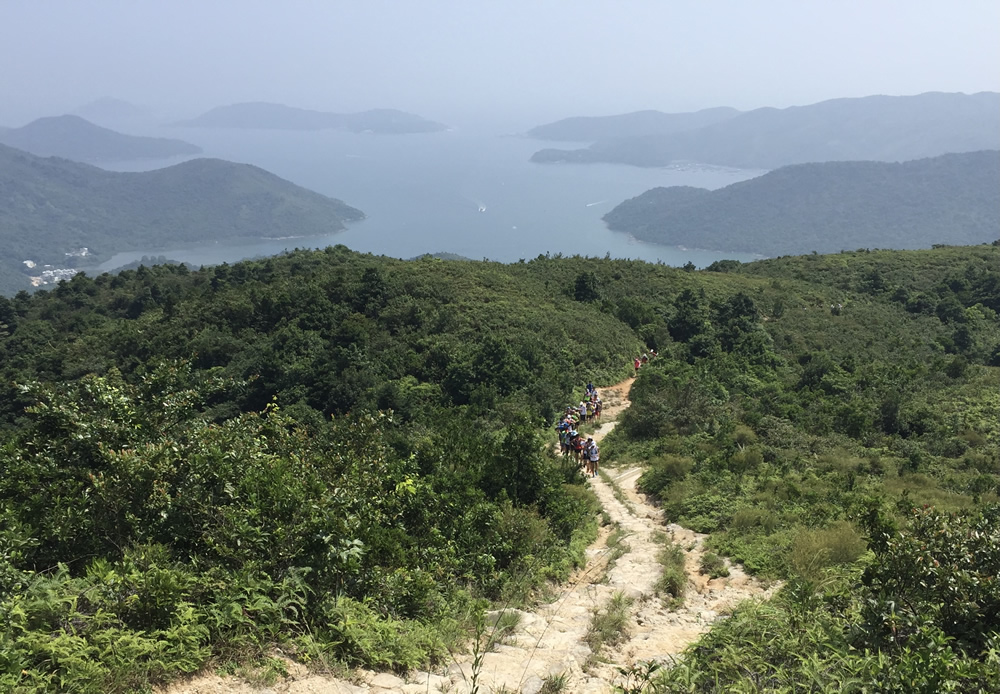
The 100 km MacLehose Trail is the 1st long-distance hiking trail in Hong Kong. It starts at Pak Tam Chung in Sai Kung, traversing 8 country parks from east to west, and ends at Tuen Mun. The Trail is divided into 10 sections. Of them, the following 4 sections run through Tai Po:
| Start Point | End Point | |
| Section 2 | Long Ke | Pak Tam Au |
| Section 3 | Pak Tam Au | Kei Ling Ha |
| Section 4 | Kei Ling Ha | Tate's Cairn |
| Section 8 | Lead Mine Pass | Route Twisk |
Each section of MacLehose Trail embraces unique magnificent natural scenery making it having been selected as one of the world’s 20 dream trails by the National Geographic magazine.
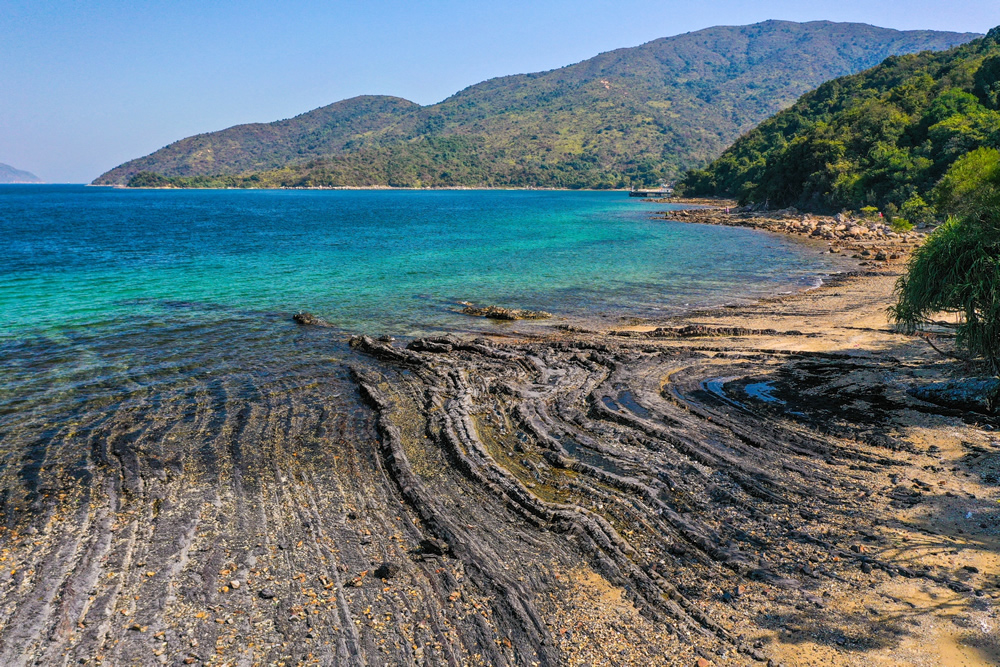
Lai Chi Chong is situated on the southeastern shore of Tolo Channel. It is part of the Northeast New Territories Sedimentary Rock Region of the Hong Kong UNESCO Global Geopark. On the foreshore near the Lai Chi Chong pier, there is an uneven stratum of volcanic ash sedimentary rock, which is an ideal location for geological study.
Lai Chi Chong is also an ideal site for stargazing. The Caritas Jockey Club Siu Tong Camp there provides a pleasant camping environment for stargazers.
Website:
Hong Kong UNESCO Global Geopark
https://www.geopark.gov.hk/en/discover/attractions/lai-chi-chong
Caritas Jockey Club Siu Tong Camp
https://www.caritas.org.hk/en/service/camp
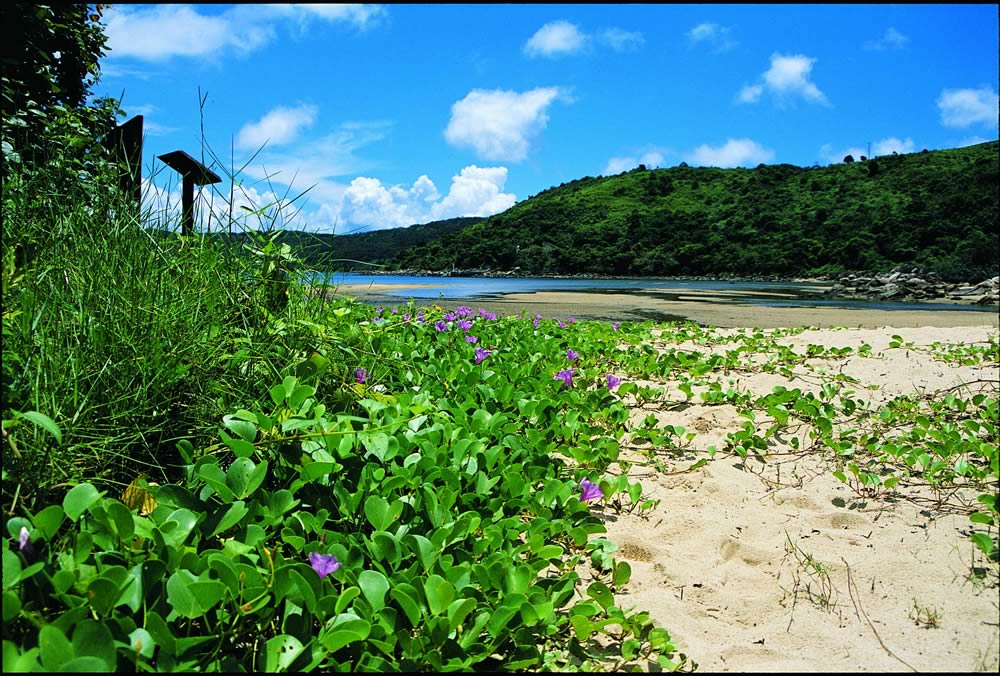
Hoi Ha Wan Marine Park, located at the northern part of Sai Kung West Country Park, contains over 60 stony coral species, more than 120 species of coral associated fishes and a wide variety of marine animals that are of high scientific interest. It is also a spot for SCUBA diving for enjoying the breathtaking views with corals and colourful fishes. The Jockey Club HSBC WWF Hong Kong Hoi Ha Marine Life Centre located inside the Marine Park offers eco visits for visitors to appreciate the valuable marine resources.
Visitors may also visit the remnants of lime kiln in Hoi Ha Village, which were used for refining lime from either oyster shells or coral skeletons for construction and agricultural uses in the old days.
Website:
Hoi Ha Wan Marine Park
https://www.afcd.gov.hk/english/country/cou_vis/cou_vis_mar/cou_vis_mar_des/cou_vis_mar_des_hoi.html
Jockey Club HSBC WWF Hong Kong Hoi Ha Marine Life Centre
https://www.wwf.org.hk/en/oceans/booking/
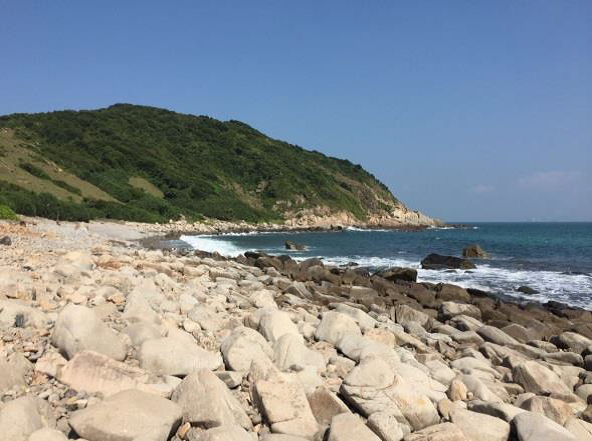
Tap Mun, also known as Grass Island, is an island situated at the northeast of Tolo Channel. Facing the Mirs Bay in the east, the island is an ideal place for watching sunrise.
Tap Mun features a variety of attractions, such as Tin Hau Temple, Lung Keng Kan, Balanced Rock, etc. Visitors can enjoy local tastes at seafood restaurants on Tap Mun Hoi Pong Street and buy local dried seafood in the stalls nearby the pier.
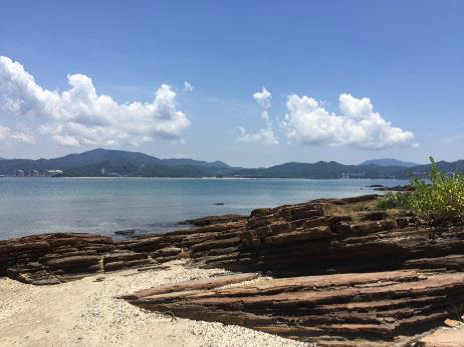
Tung Ping Chau is an island situated at Mirs Bay of the northeastern waters in Hong Kong and is part of the Northeast New Territories Sedimentary Rock Region of the Hong Kong UNESCO Global Geopark. It has the youngest rocks in Hong Kong and is famous for its fine laminated and colourful sedimentary rocks. Famous landforms include Lung Lok Shui, Kang Lau Shek and Cham Keng Chau, etc.
The waters surrounding Tung Ping Chau are also designated as the Tung Ping Chau Marine Park, which is the habitat of 65 species of stony coral, over 130 species of reef associated fishes and more than 200 species of marine invertebrates.
Website:
Hong Kong UNESCO Global Geopark
https://www.geopark.gov.hk/en/discover/attractions/tung-ping-chau
Tung Ping Chau Marine Park
https://www.afcd.gov.hk/english/country/cou_vis/cou_vis_mar/cou_vis_mar_des/cou_vis_mar_des_tun.html
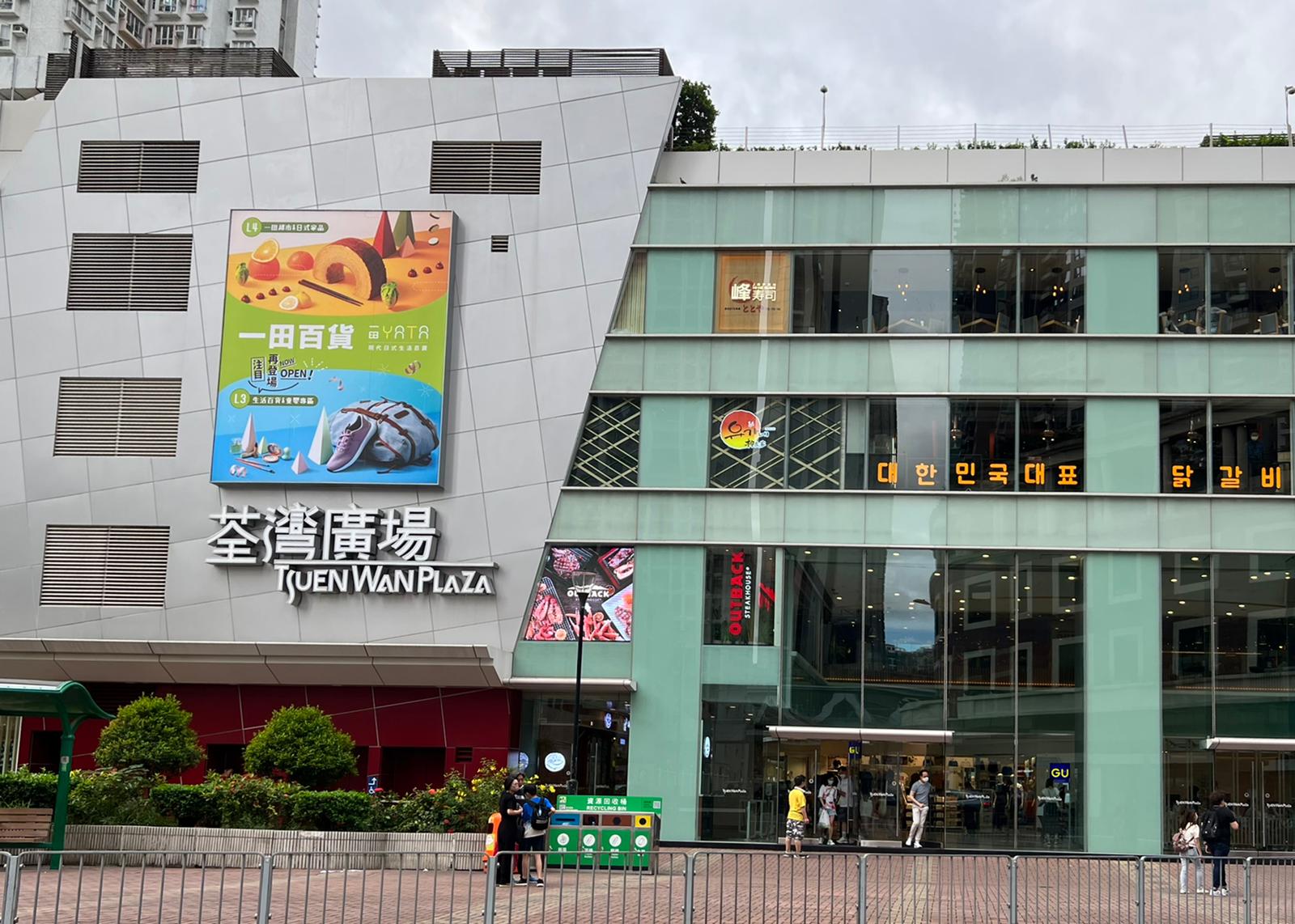
Tsuen Wan Plaza is situated at Tai Pa Street, Tsuen Wan where Tsuen Wan West MTR Station is just steps away. With an area of 580 000 sq ft, the Plaza offers a diverse mix of shops and restaurants, as well as a cinema.
The Plaza also features a 23 000 sq ft outdoor garden with children’s playground at the podium on the 5/F, making it a hot spot for families to have fun together.
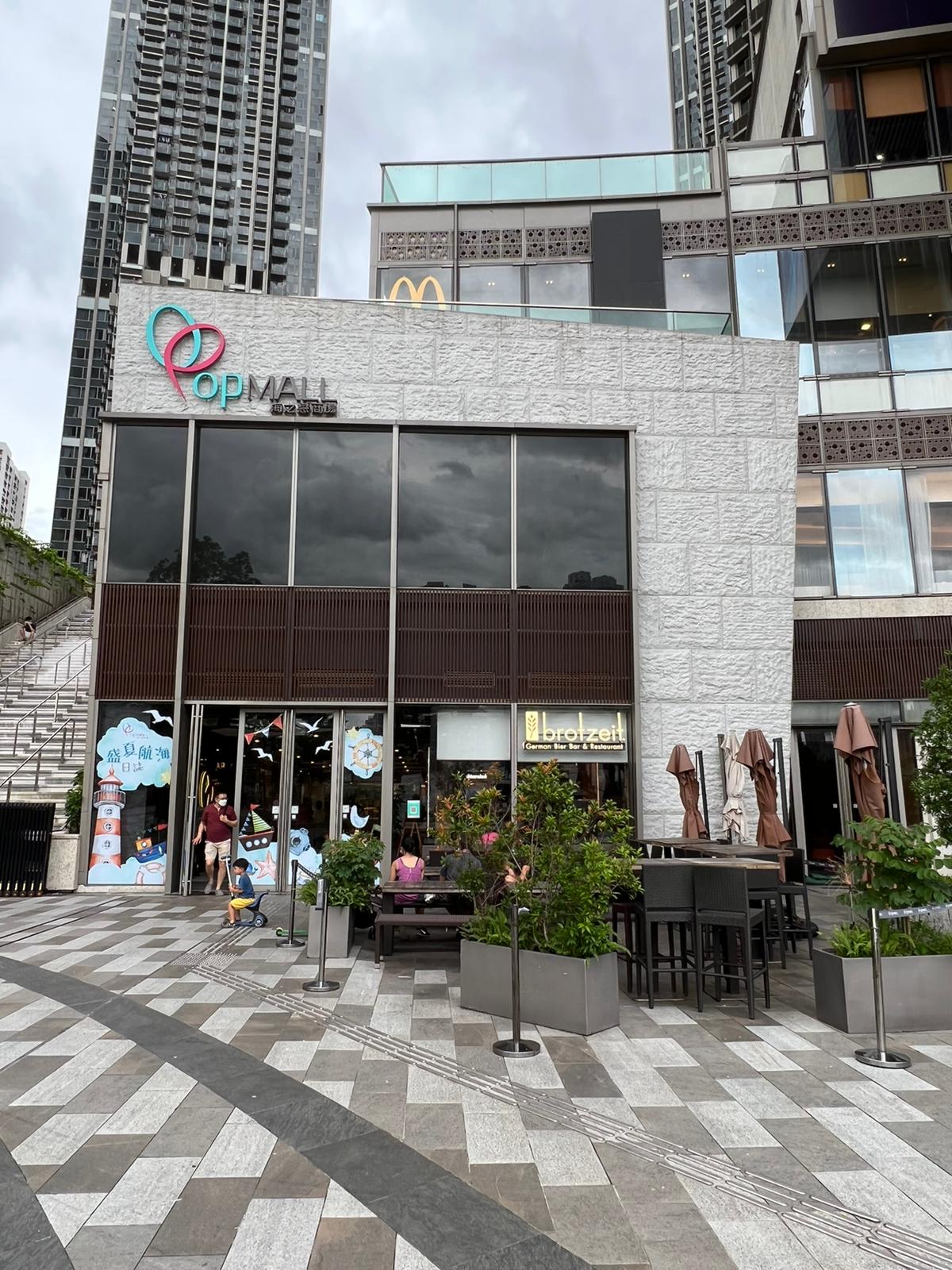
Located at Tai Ho Road in Tsuen Wan, OP Mall is a large-scale harbourside shopping mall in Tsuen Wan West conveniently connected to Tsuen Wan West MTR Station.
With a wide selection of restaurants and shops, the 4-storey shopping mall covering an area of 430 000 sq ft brings the visitors an unique entertainment experience and an array of delights in various styles. Visitors may also enjoy the vista of Rambler Channel at Tsuen Wan Promenade and go cycling along the cycle track next to the mall.
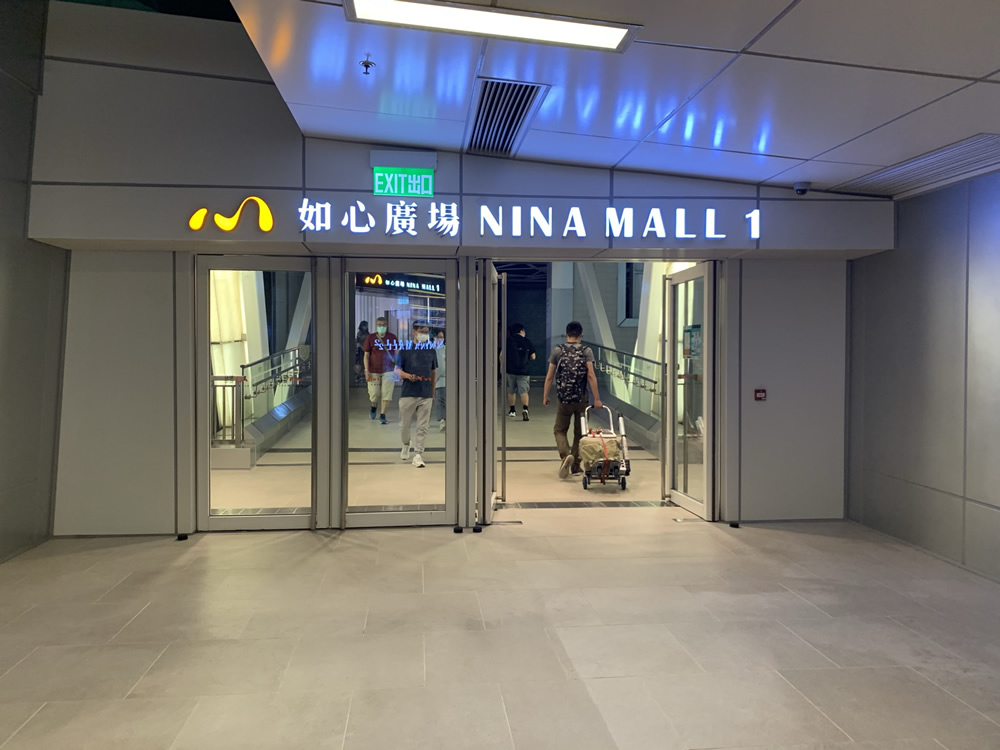
Situated in the hustling and bustling Tsuen Wan West, Nina Mall 1 & 2 incorporating Nina Hotel Tsuen Wan West and Nina Park – Wood Fossil Garden, forms an iconic attraction for shopping, dining and leisure. Occupying a total area of 270 000 sq ft, Nina Mall 1 & 2 house over 20 food and beverage outlets and a variety of shops.
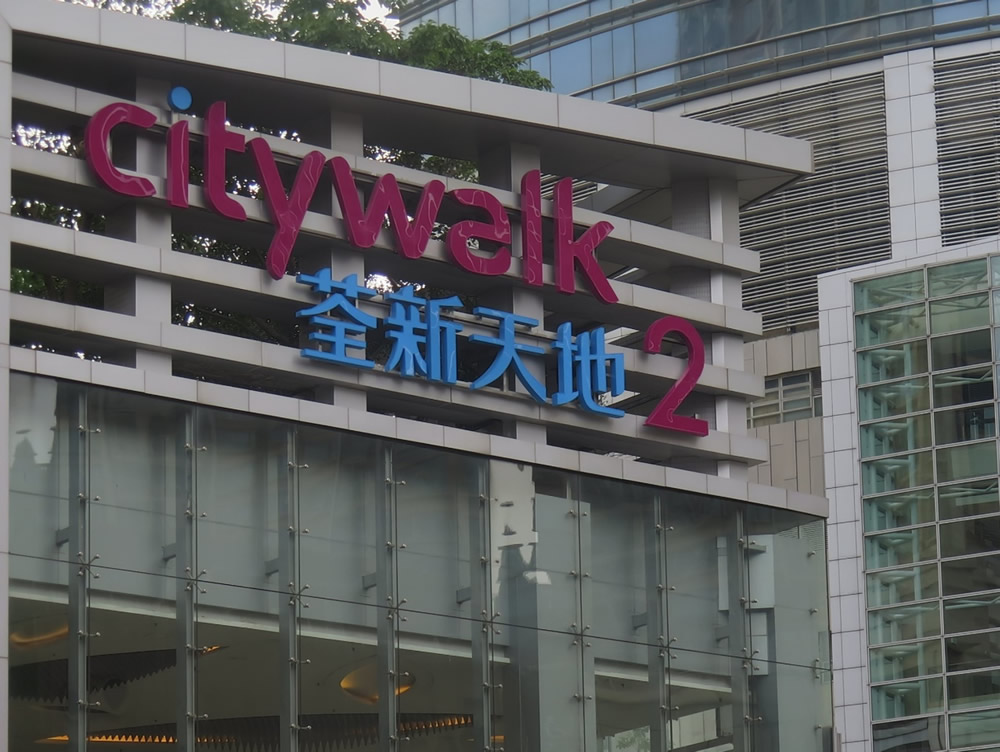
Located at Yeung Uk Road, Citywalk, comprising 2 phases, is one of the large-scale shopping malls in Tsuen Wan District. The 40 000 sq ft Citywalk Piazza and 7 000 sq ft Vertical Garden qualified the mall as Hong Kong’s first “Green Shopping Mall”. The mall and the Citywalk Piazza cover an area of 500 000 sq ft, with around 200 retailers and restaurants.
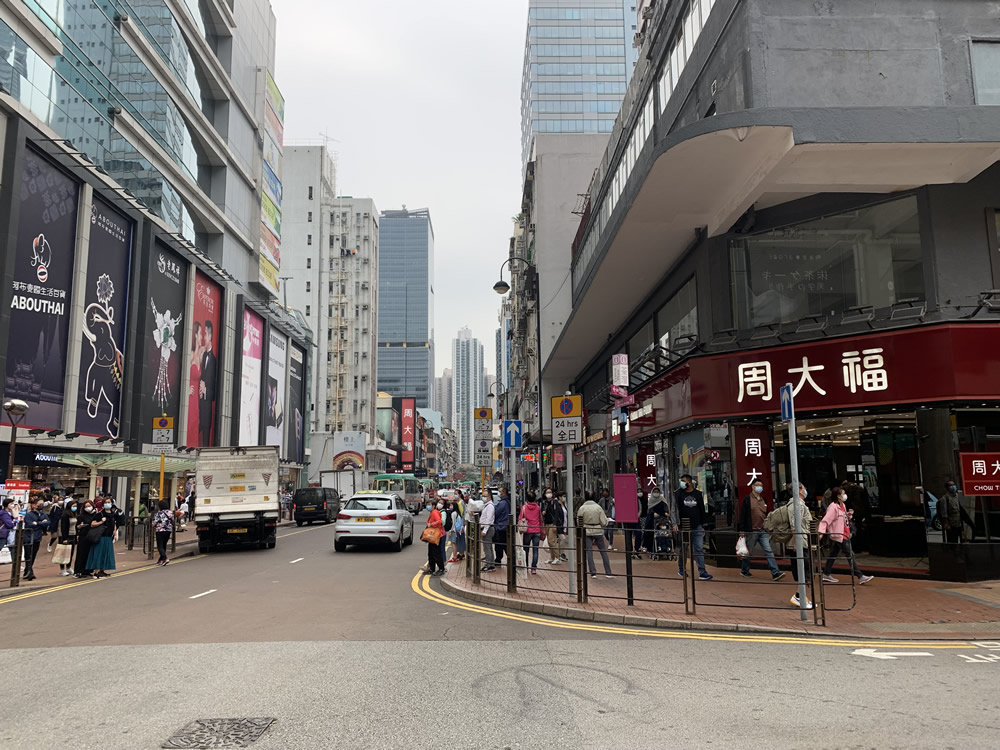
Located at the town centre of Tsuen Wan, Tsuen Wan Jewellery and Goldsmith Square consists of Chung On Street, Chuen Lung Street, Sha Tsui Road and Tsuen Wan Market Street. It is home to a number of jewellery and goldsmith shops offering a whole range of ornaments and accessories.
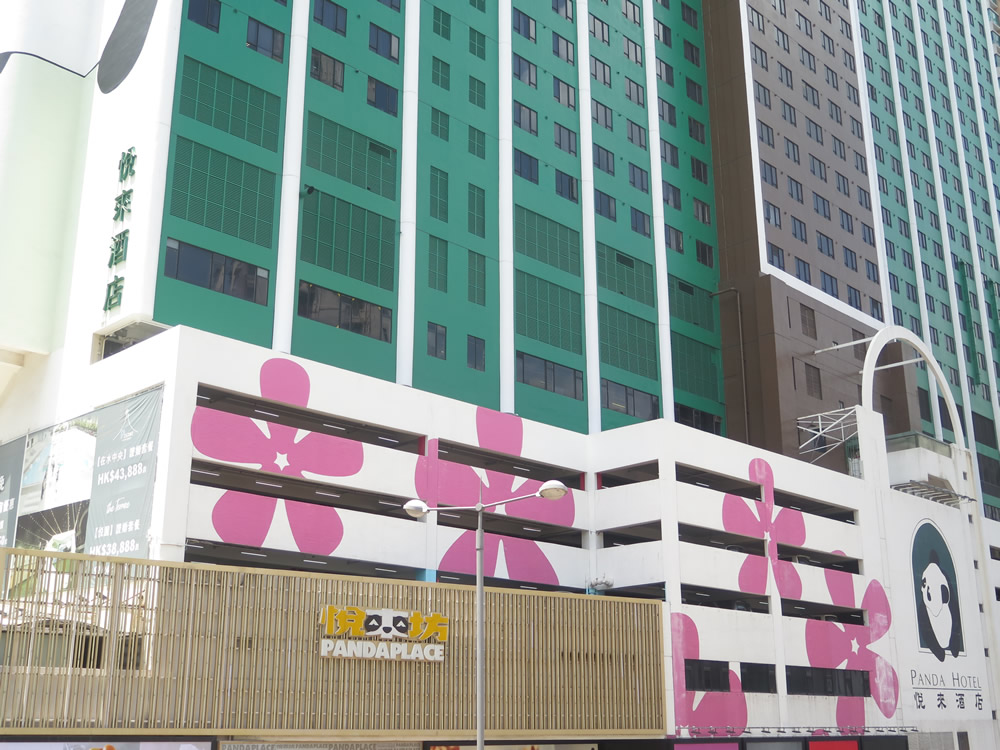
Panda Place is strategically located beneath Panda Hotel in the heart of Tsuen Wan, and is one of the landmarks of Tsuen Wan.
Panda Place is a shopping mall gathering various restaurants and shops, including large department store and supermarket. The mall is in close vicinity of Tai Wo Hau MTR Station, and with footbridge network connecting to Tsuen Wan MTR Station.
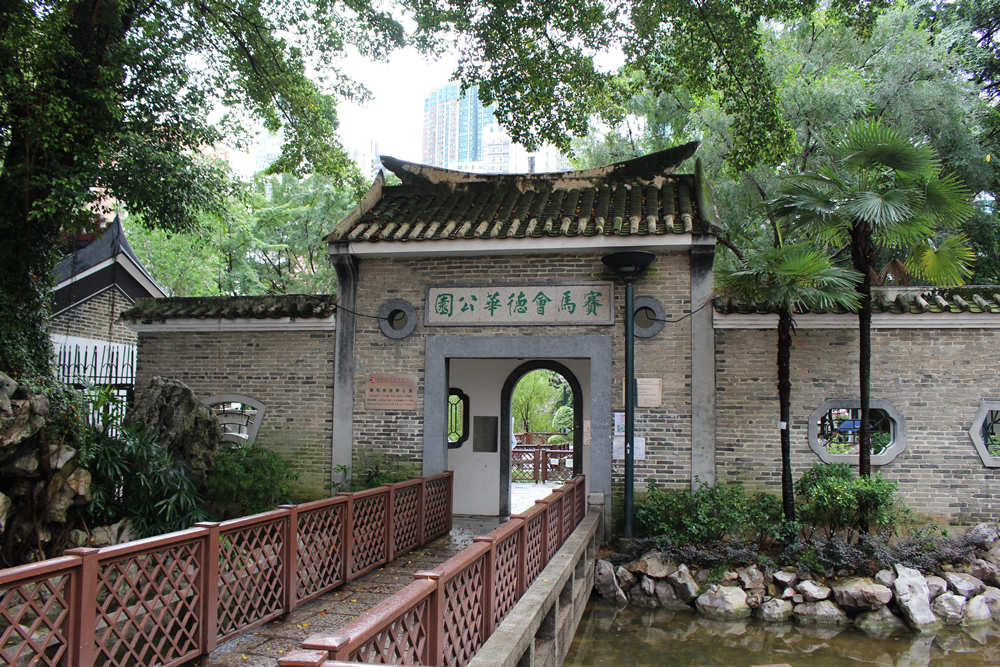
Jockey Club Tak Wah Park is located at the town centre of Tsuen Wan and is in close proximity to Yan Chai Hospital.
The Park is developed on the old site of Hoi Pa Village in Tsuen Wan. Among the retained buildings of Hoi Pa Village, the Old House was declared a monument in 1986, while Chan Yi Cheung Ancestral Hall and Old House of the Former Hoi Pa Tsuen were rated Grade 3 historic buildings in 2010. Other facilities include the "Camellia Garden", the “Herb Garden”, a children's playground, rock mountains made from Taihu rock, ornamental lakes, stone bridge, pavilion, etc.
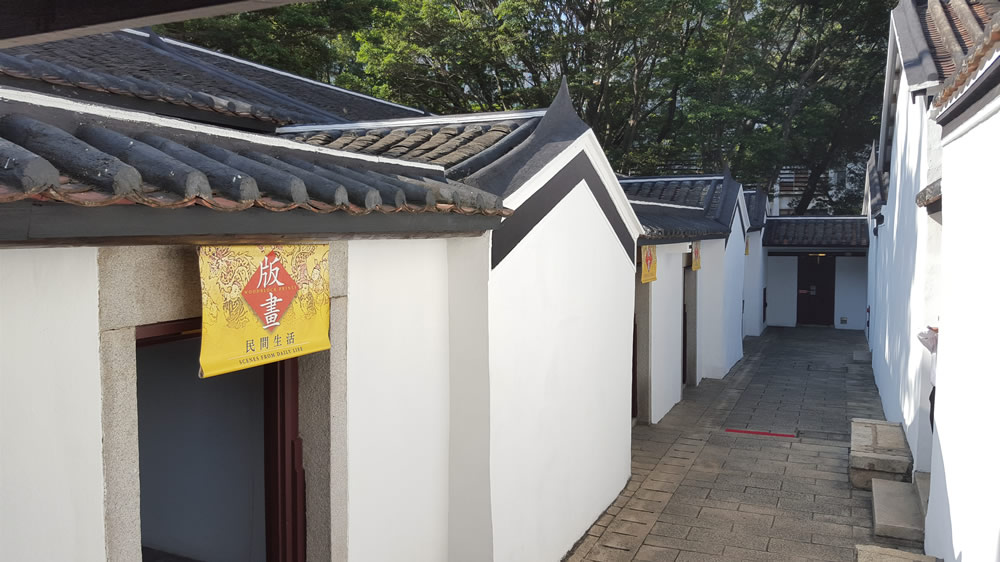
Sam Tung Uk Museum at Kwu Uk Lane, Tsuen Wan was declared a monument in 1981.
Sam Tung Uk was originally a Hakka walled village with over 200 years of history. In the 1970s, the village was relocated elsewhere because of the construction of the Tsuen Wan MTR Station. In order to preserve the village-type structures and relics that reveal the past rural life, the Government converted the village houses into a museum in 1987. Since June 2016, the "Hong Kong Intangible Cultural Heritage Centre" has been set up there with an aim to enhancing the public's understanding and awareness of intangible cultural heritage through educational and promotional activities.
D.PARK is located at the town centre of Tsuen Wan and is a large-scale paternity mall in the district. The three-storey shopping mall covers an area of 630 000 sq ft with around 140 shops, cinema and restaurants.
8½ is located at CDW Building with 2 minutes’ walking distance from D.PARK. It has an area of 270 000 sq ft housing large-scale furniture and homeware shops, restaurants, a supermarket and other shops.
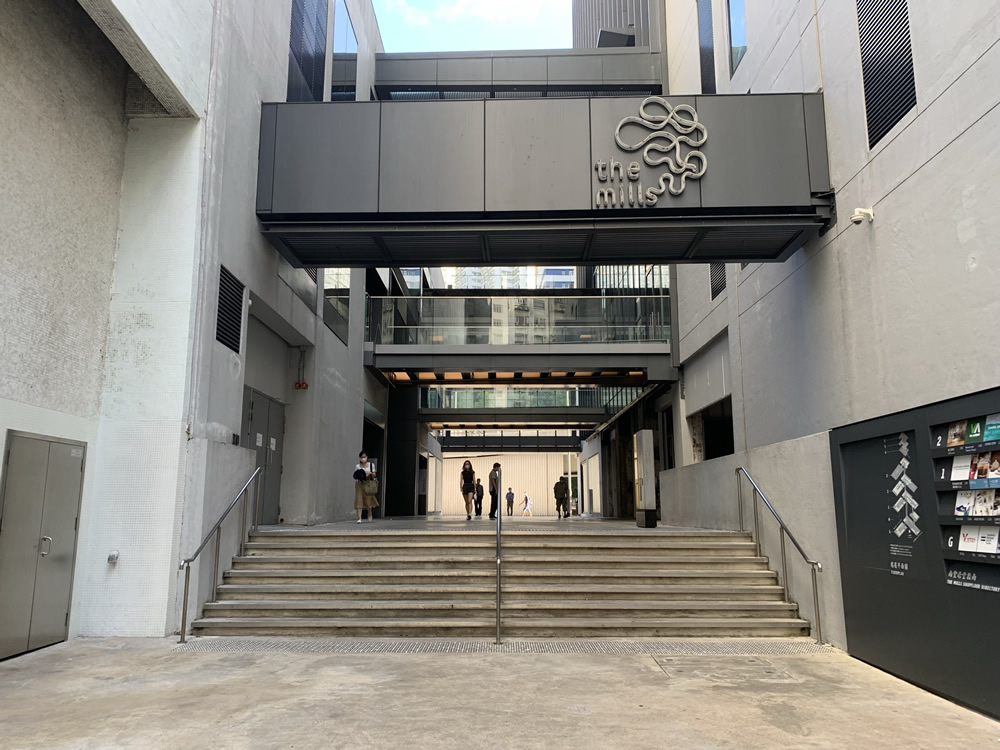
The Mills was once a textile factory. After a revitalisation project completed in 2018, it now houses the Centre for Heritage, Arts and Textile, retail shops and leisure area. It also provides co-working space and experience shop for techstyle startups and strategic partners.
Website:
https://www.themills.com.hk/en/
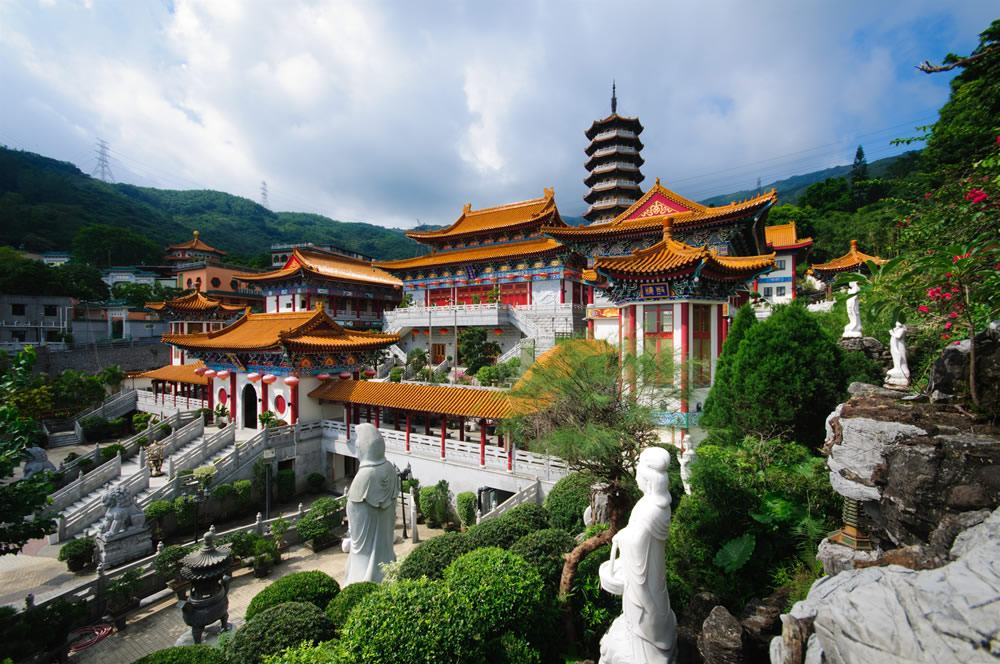
Western Monastery is situated at Lo Wai Village, the oldest village in Tsuen Wan, backed by Tai Mo Shan and facing Sam Dip Tam in the front. The Monastery was first built in 1970 by the Venerable Wing Sing. With an area of nearly 200 000 sq ft, the Monastery consists of a number of pseudo-Chinese palatial architectures including the Tai Hung Po Din, Tin Wong Din, Man Fat Pagoda, Tripitaka Library, dining hall, etc.
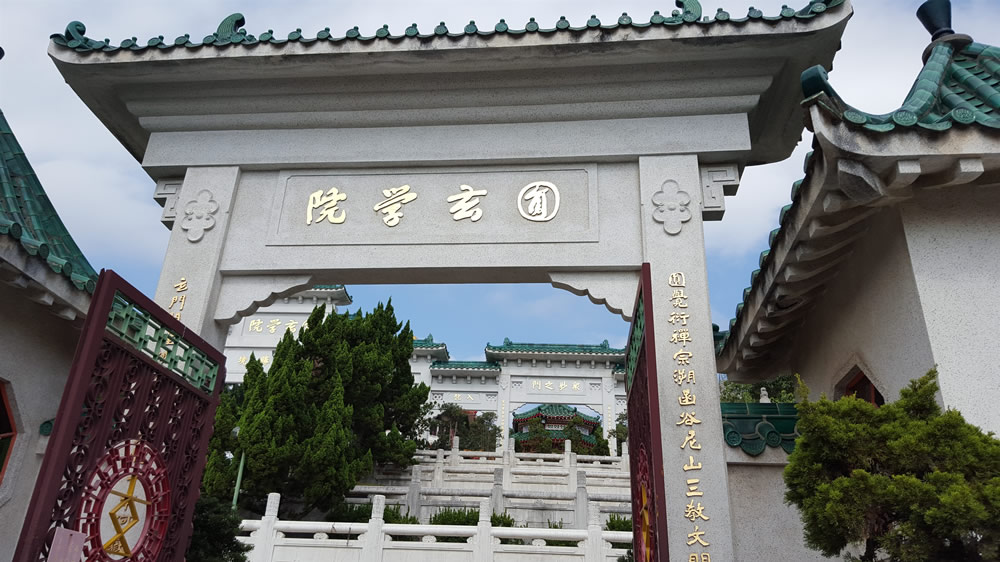
First built in 1950, Yuen Yuen Institute is situated in a tranquil and beautiful environment at Sam Dip Tam. The Institute sanctifies three religions, namely, Confucianism, Buddhism and Taoism. The whole area is interspersed with temples and halls, Chinese pavilions, dining hall, etc. Apart from worshipping and sightseeing, visitors may also enjoy delicious vegetarian dishes served in a picturesque place.
Website:
http://www.yuenyuen.org.hk/
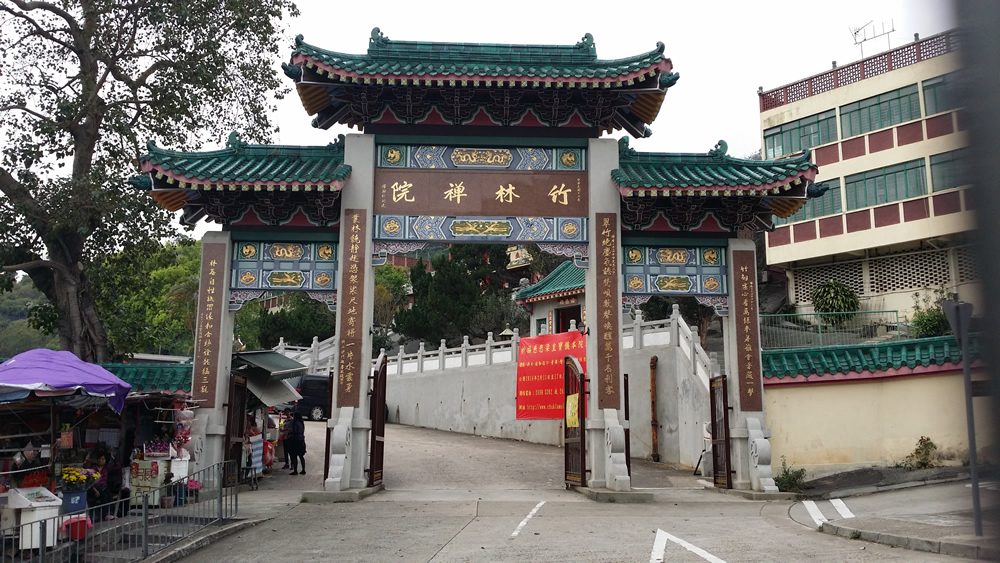
Chuk Lam Sim Yuen in Fu Yung Shan, Tsuen Wan was built by Monk Yung Chau. It is said that the Kshitigarbha Buddha ordered Monk Yung Chau thrice to construct a monastery on the auspicious land he had seen in his dreams. Monk Yung Chau and his followers searched Hong Kong for this piece of auspicious land. Finally, they came to Fu Yung Shan and started building the monastery there. In 1982, the construction of Chuk Lam Sim Yuen was completed.
Chuk Lam Sim Yuen covers an area of more than 400 000 sq ft and is comprised of Tin Wong Din, Tai Hung Po Din, Kwun Yum Din, Hall of Kshitigarbha, Tripitaka Library, etc. Chuk Lam Sim Yuen was rated Grade 2 historic building in 2009.
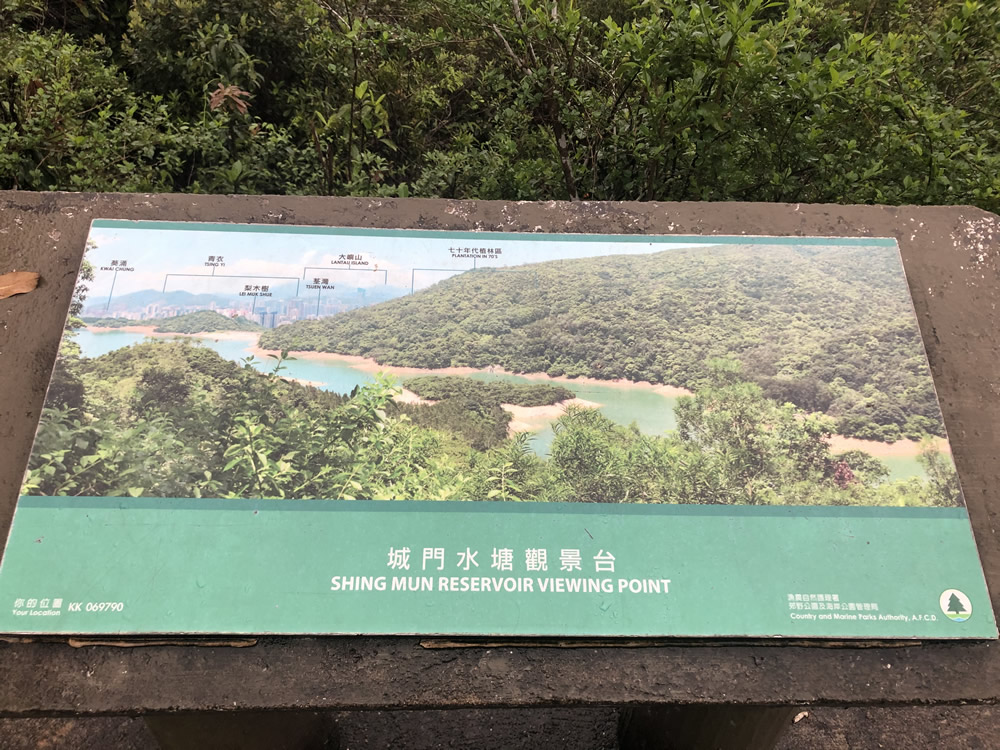
Shing Mun Country Park covers a total area of 1 400 ha stretching from Lead Mine Pass in the north, to the Shing Mun Road in the south, and from Tai Mo Shan in the west, to Grassy Hill and Needle Hill in the east. Shing Mun Reservoir, situated at the foot of the southeastern slopes of Tai Mo Shan, has long been popular with picnickers and hikers.
Apart from enjoying the barbeque and camping facilities, visitors can also tour around the hiking trails running through the Country Park, including the Pineapple Dam Nature Trail, MacLehose Trail (Section 7) and Wilson Trail (Section 7); and visit Shing Mun Redoubt and other relics of World War II including trenches, tunnels and pillboxes on the way from MacLehose Trail (Section 6) at Shing Mun Country Park to Kam Shan Country Park.
Shing Mun Redoubt was rated Grade 2 historic building in 2009.
Website:
https://www.afcd.gov.hk/english/country/cou_vis/cou_vis_cou/cou_vis_cou_sm/cou_vis_cou_sm.html
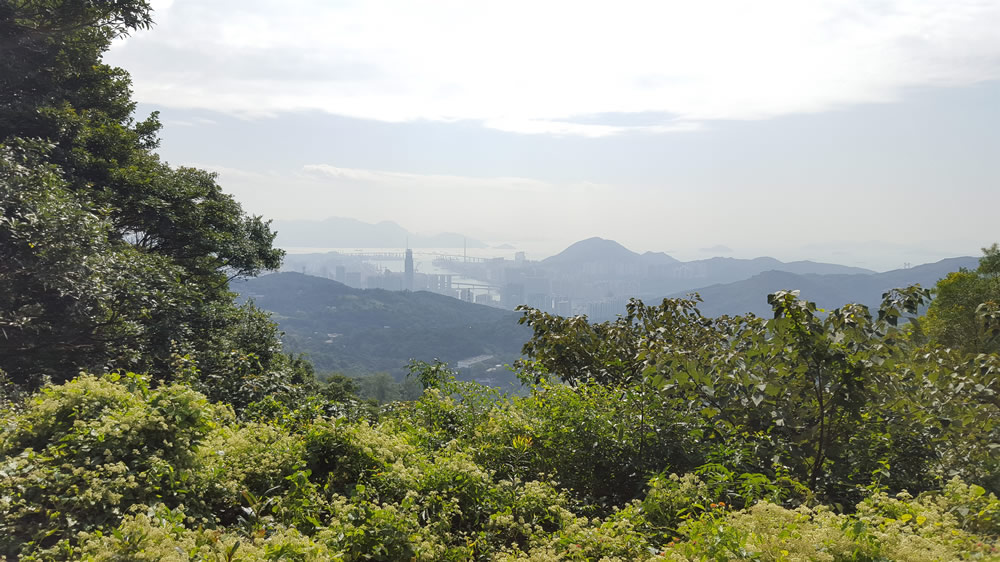
Standing 957 m, Tai Mo Shan is Hong Kong's highest peak. Enveloping this massif is 1 440 ha of natural territory, designated as Tai Mo Shan Country Park. The Country Park borders Tai Po Kau Nature Reserve in the east and Shing Mun Country Park in the south. To the west is Route Twisk and Tai Lam Country Park just beyond the highway. To the north is the old valley of Lam Tsuen. It is a popular destination for hiking and barbecue.
There are various hiking routes across the Country Park, including Chuen Lung Family Walk, Lung Mun Country Trail, MacLehose Trail (Section 8), Rotary Park Nature Trail, Tai Mo Shan Family Walk, Twisk Nature Trail.
At Tai Mo Shan Lookout, visitors can enjoy the spectacular panoramic view of almost the entire Northern and Western New Territories and even Shekou and Shenzhen.
Website:
https://www.afcd.gov.hk/english/country/cou_vis/cou_vis_cou/cou_vis_cou_tms/cou_vis_cou_tms.html
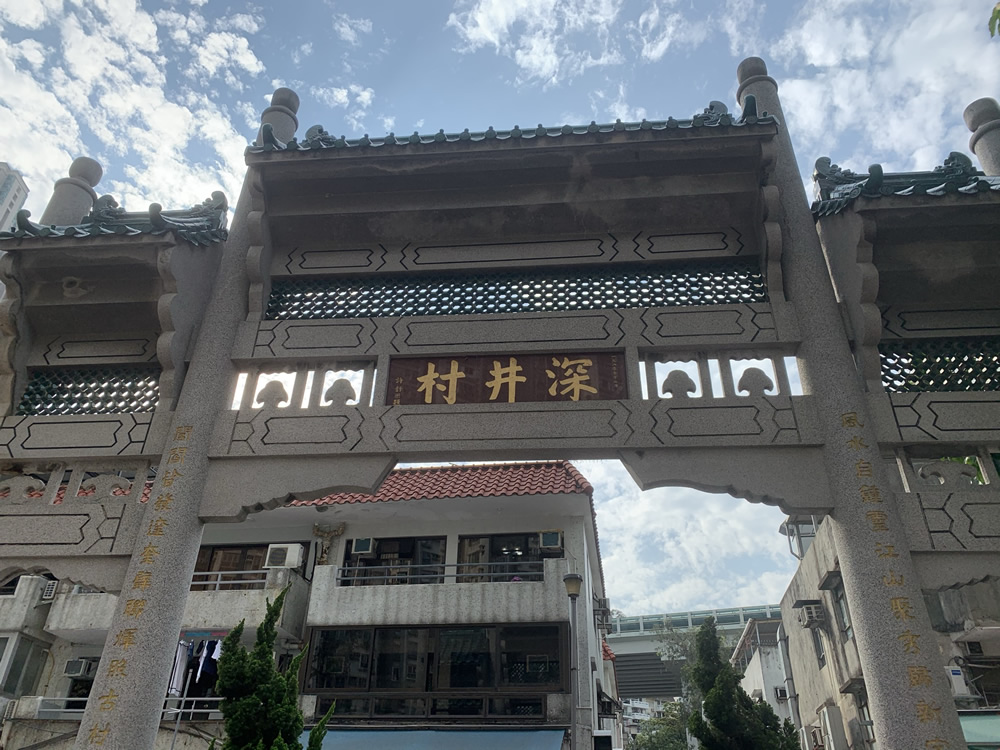
Sham Tseng, situated at the western part of Tsuen Wan, used to be a rural area. It has been transformed into a residential area and a popular tourist spot for dining. A cluster of restaurants serving various international and local cuisines can be found in the area, with roast goose being the most famous one. Restaurants are packed with diners during holidays.
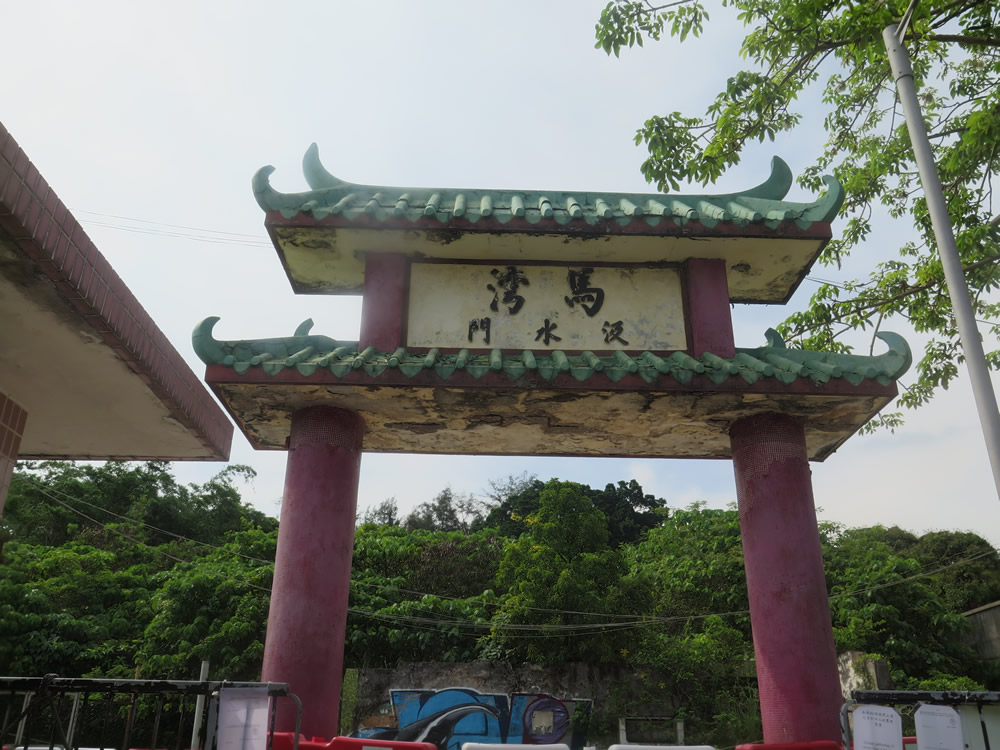
Ma Wan is an island lying off the northern coast of Lantau Island. Tin Liu, with more than 250 years of history, is the oldest indigenous village on the island. In the past, inhabitants of Ma Wan were mainly fishermen and farmers but only a minority of them are now mariculturists. In Ma Wan, you can find some well-known historical relics. Of them, the archaeological excavation at Tung Wan Tsai North was chosen as one of the "Ten Most Significant New Archaeological Discoveries in China in 1997".
Located near Noah’s Ark Hong Kong, Ma Wan Park is a nature garden combining the themes of nature education, art and love. The Park was built on hillside and has preserved thousands of native trees, and houses attractions such as Golden Mean Plaza, Sweet Garden, Rainbow Wall, Hilltop Lookout, Adventure Journey and Heritage Center.
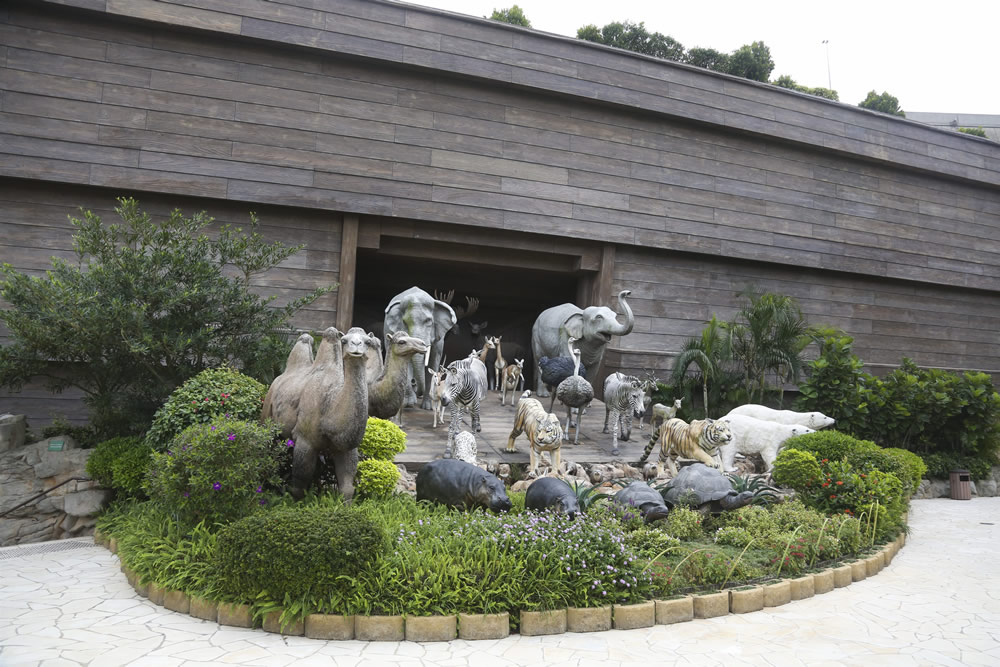
Noah’s Ark is in the vicinity of Ma Wan Park. This theme park is the only full-sized replica of the legendary Noah’s Ark in the world and is surrounded by greenery and 67 pairs of life sized animal sculptures. Inside the Ark, you can also find other facilities like Ark Expo, Treasure House, Ark Life Education House, hotel, etc.
Occupying an area of 126 ha in North Lantau, Hong Kong Disneyland Resort is a world-class family entertainment destination, and is one of the important tourism infrastructures in Hong Kong.
Taking MTR Disneyland Resort Line from Sunny Bay MTR Station will direct you to Hong Kong Disneyland Resort. Once getting on the Disneyland Resort Line, a magical journey starts with the joyful atmosphere of the theme park filled by the specially designed train compartments and Disneyland Resort MTR Station.
Taking pictures in front of the fountain featuring Disney’s signature cartoon characters at the entrance tops the list of must-do things. Going through the nostalgic American town of Main Street USA, the glamorous castle at Fantasyland, which is the landmark of the theme park, catches every visitor’s eyes. Thrill rides offering different degrees of excitement, themed performances and musicals, theaters etc. scatter in other different themed lands: Tomorrowland highlighting space technology and adventure, Adventureland offering unique jungle adventure experiences, Toy Story Land featuring a colourful and childlike world, Grizzly Gulch giving distinctive exploration of abandoned towns in western USA, Mystic Point filling with the explorer’s collectibles and the “Frozen” themed land, World of Frozen. Disney characters pop up different parts of the theme park to greet and take photos with visitors.
Catering facilities offering various choices of eateries are available at all lands of the theme park. The parades and fireworks show on selective dates are definitely items on the list of must-do things to be completed. After all adventure missions, you may also take a break at the 3 themed hotels of the Resort and gain a comprehensive experience of Disney’s fairy tale fantasy world.
Hong Kong Disneyland Resort is a must-see attraction for inbound tourists and a place associated with fond memories of families.
Covering an area of about 30 ha, Inspiration Lake Recreation Centre is situated next to Hong Kong Disneyland Resort in North Lantau. The 12-ha Inspiration Lake is the signature feature of the Recreation Centre. This man-made lake has shimmering water, water feature composited with many sprinklers, and man-made waterfalls. Visitors can rent pedal boats and surrey bikes at Boat Centre for touring around the lake.
Besides, there is a 4-ha arboretum which acquires a wide variety of native and introduced species of plants. Also, the gazebos are ideal locations for taking pictures. Other facilities in the Recreation Centre include children playground and jogging track with fitness stations.
With pleasant views and recreation facilities, Inspiration Lake Recreation Centre is a wonderful attraction for family outing.
Website:
https://www.hongkongdisneyland.com/destinations/inspiration-lake-recreation-centre/
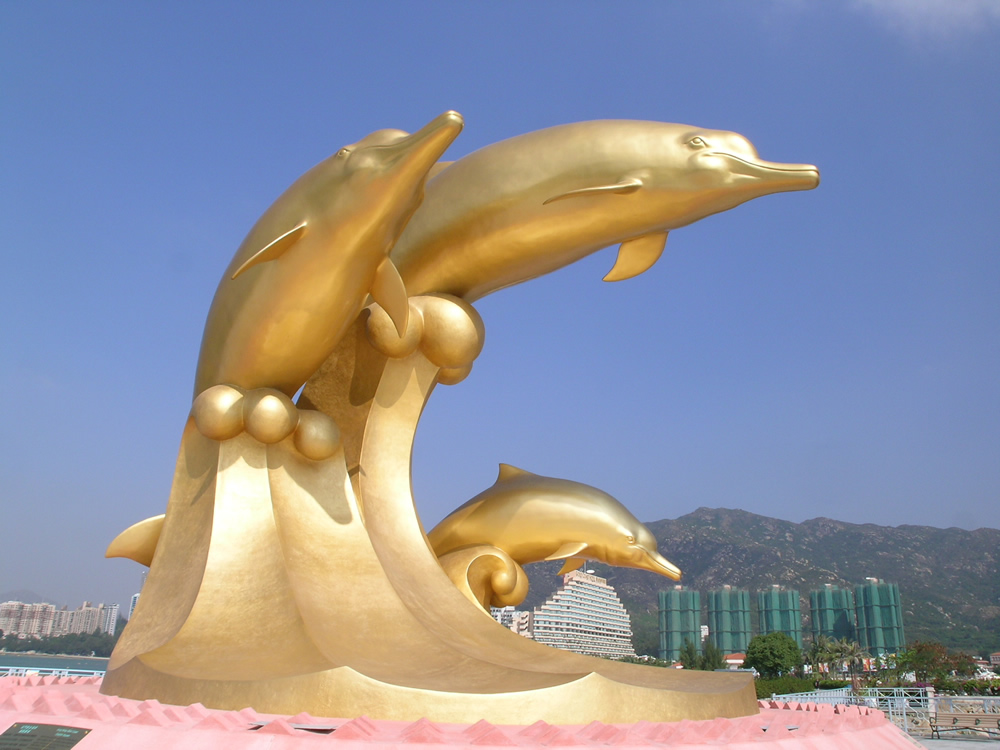
Hong Kong Gold Coast sits close to Castle Peak Bay and is a large tourist resort in Tuen Mun. It comprises a resort hotel, a shopping piazza and a yacht club, and is next to the Golden Beach and Dolphin Square.
Both the hotel and shopping piazza are European style architectures enveloped by the romantic ambiance of the Mediterranean. Apart from indulging in international delicacies at various al fresco or waterfront dining options, visitors can also take a relaxed stroll at the promenade and enjoy the stunning sunset view.
Adjacent to the Cafeteria New Beach, the Golden Beach is one of the signature beaches in Tuen Mun. The beach facilities adopt the same architectural style as that of the hotel and shopping piazza nearby. The footpath near the beach leads visitors to the Dolphin Square.
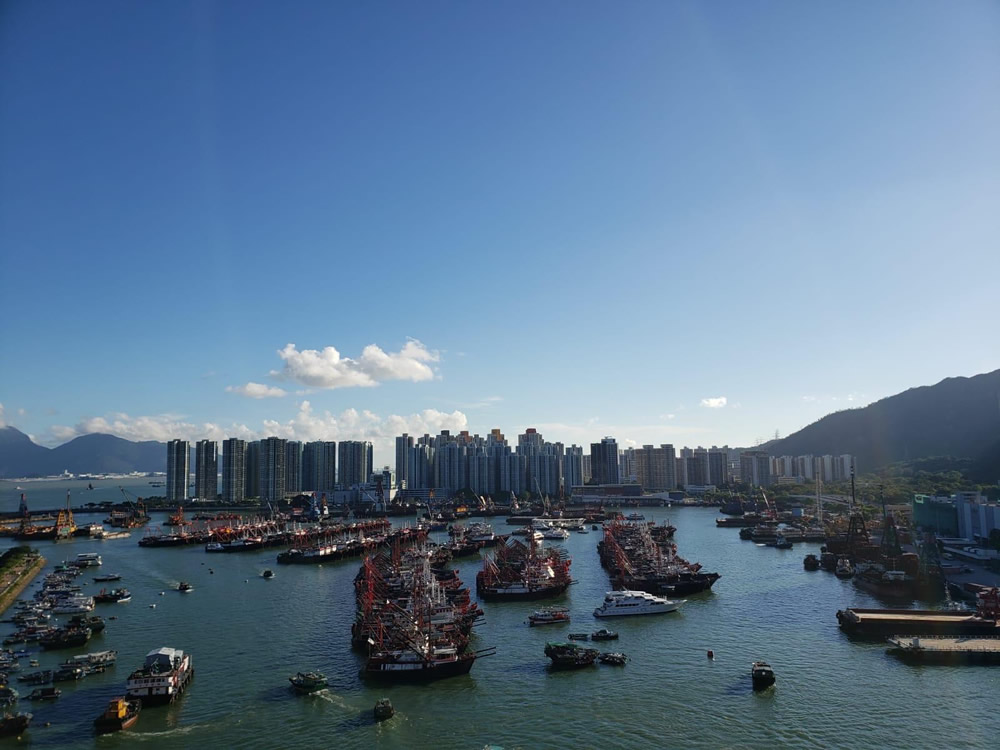
Castle Peak Bay Waterfront Promenade, built on the breakwater of Tuen Mun Typhoon Shelter, is about 800 m in length. Paved with tiles in different shades of red with pattern of dancing dragon, together with benches themed on “Tanka-boat” and “Chinese style sail”, the Promenade showcases the vitality and offers a splendid view of Tuen Mun Typhoon Shelter.
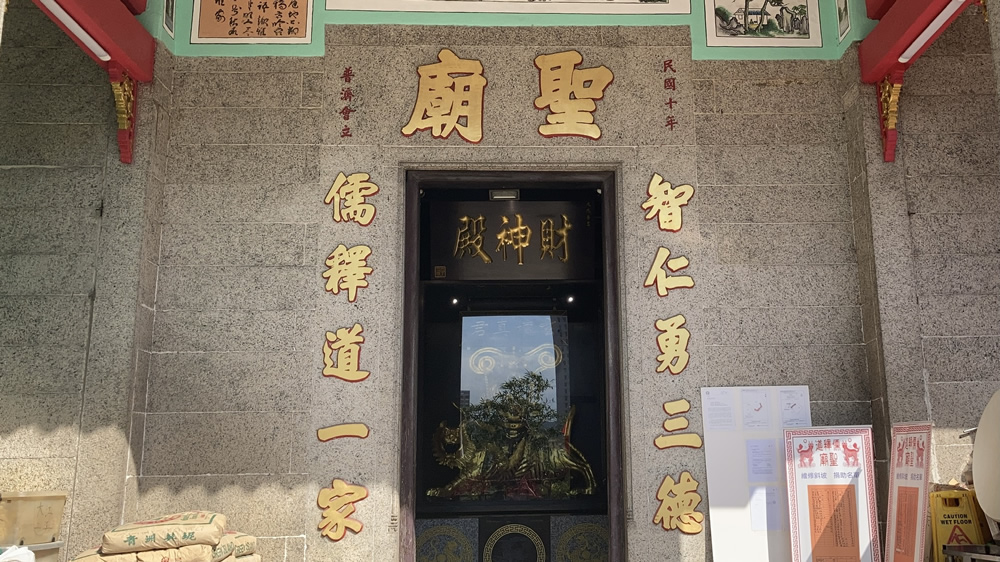
Named after the nearby Sam Shing Temple, Sam Shing Hui at the coast of Castle Peak Bay is one of the few fishing villages in Hong Kong that still preserves the ambience of a fishing harbour. Lots of visitors are attracted to Sam Shing Seafood Market there to treat themselves to catches from the sea.
Sam Shing Temple at Ki Lun Kong adjoining Sam Shing Estate is so named because it is dedicated to Confucius, Sakyamuni Buddha and Yuen Mun Gao Tai Sheung To Cho. Erected in 1921, the Temple was rated Grade 2 historic building in 2009. There is a boulder perched on the side of Ki Lun Kong Public Park next to the Temple. According to the inscription on the plaque, the boulder marks the original shoreline of Tuen Mun before reclamation.
Tuen Mun Golf Centre at Lung Mun Road is the 1st public golf driving range in Hong Kong. The Centre occupies an area of 48 500 sq m providing a 2-storey driving range with 91 bays, practice greens and bunker facilities. Golf training courses at different levels and related programmes are also offered for the promotion of golf sports.
Occupying an area of 34 800 sq m, the Hong Kong Jockey Club Tuen Mun Public Riding School at Lung Mun Road is the largest public riding facility in Hong Kong.
Major facilities of the Riding School include a horse paddock, 2 pony paddocks, a stable and a hacking trail of approximately 950 m in length meandering along the mountain side enabling riders to enjoy riding in the wild. A wide variety of activities, such as group training classes, visits, riding competitions, etc. are also provided to promote the equestrian sports.
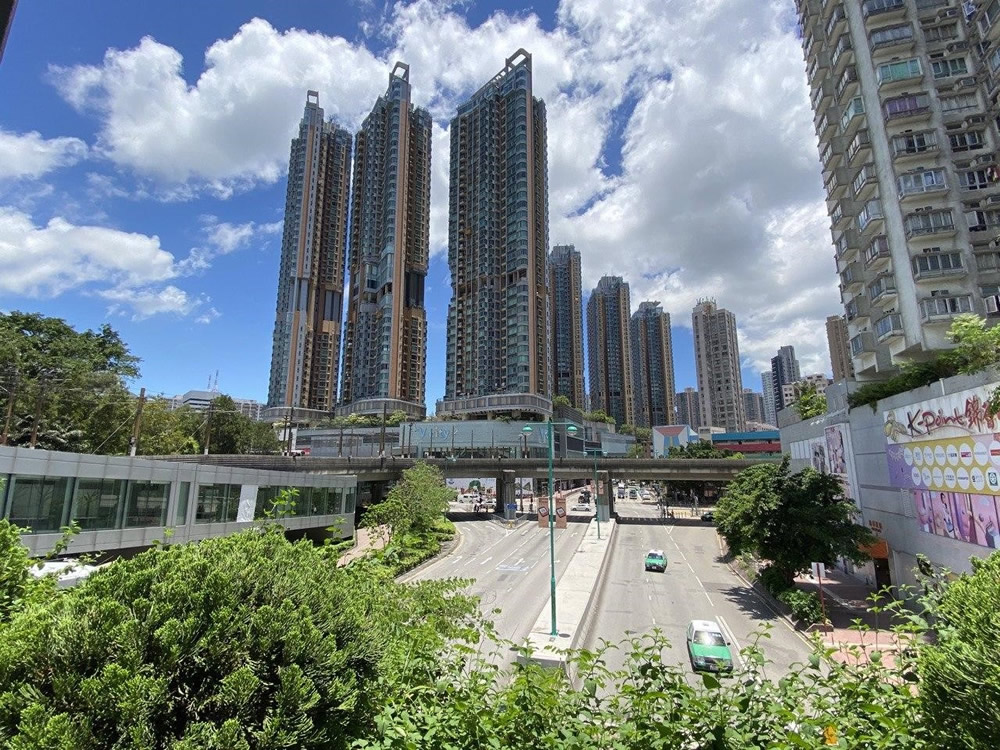
Tuen Mun Town Centre is the focal point of the district, where you can do all the shopping and participate in cultural and entertainment activities. Department stores, cinema, numerous stores, booths and restaurants can be found in the large shopping area comprising tmtplaza, Trend Plaza and V City, meeting the needs of residents and visitors.
Cultural landmarks at Tuen Mun Town Centre includes Tuen Mun Public Library, Tuen Mun Cultural Square and Tuen Mun Town Hall, where many entertainment and cultural events are held. In addition, Tuen Mun Park, a large leisure park of the district, is also provided there. The 1-ha artificial lake, model boat pool, children’s play area and reptile house of the Park are all very popular.
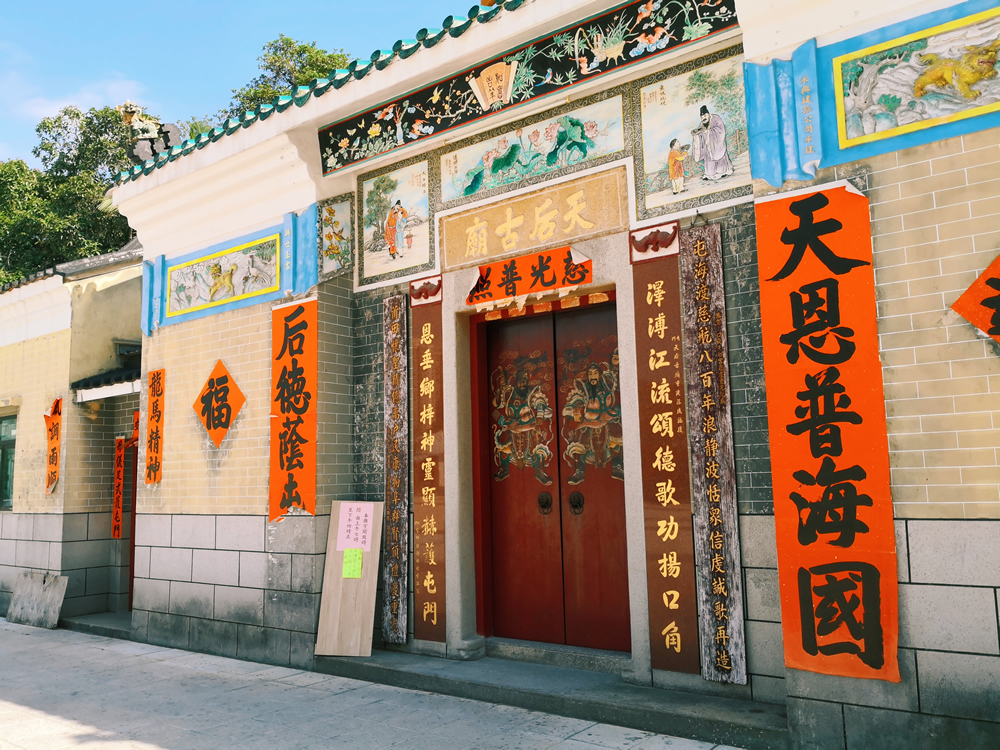
Hau Kok Tin Hau Temple at Tin Hau Road in Tuen Mun Kau Hui was originally called “Mouth Horn Tin Hau Temple” in Chinese as it is located at a hillock like a horn stretched out to the mouth of the sea. The Temple was pushed inland and surrounded by factories since the 1970s and 1980s due to reclamation for development.
The Temple was built by villagers and members of the To clan of the area (the largest lineage in Tuen Mun), and has undergone various expansion and redevelopment projects over the years. An iron bell in the Temple, which was presented by a Zhejiang native in the 36th year of Kangxi reign (1697) of the Qing Dynasty, is the earliest historical evidence of the Temple.
Tin Hau Temple Plaza fronting the Temple is a comfortable public open space for large-scale recreational and cultural activities such as Tin Hau Festival Parade cum Fa Pau Lots Drawing Ceremony, Lunar New Year Fair and “Poon Choi” Feast.
Standing at the Plaza, Fa Pau Exhibition Hall displays full-size mock-ups of Fa Pau. Together with exhibition panels, images and photographs, the Hall offers an in-depth introduction of the Temple, Tin Hau Festival and related folk customs (e.g. Fa Pau Competition).
Shan King Trail is near Tuen Mun Shan King Estate and Yeung King Playground. This verdant trail is about 1 km long and is suitable for all ages to enjoy the tranquil surroundings.
After finishing Shan King Trail, hikers may continue their journey to Tsing Shan Monastery by going uphill along Tsing Shan Monastery Path, or descending along the Path to Tsing Wun Road as the end point.
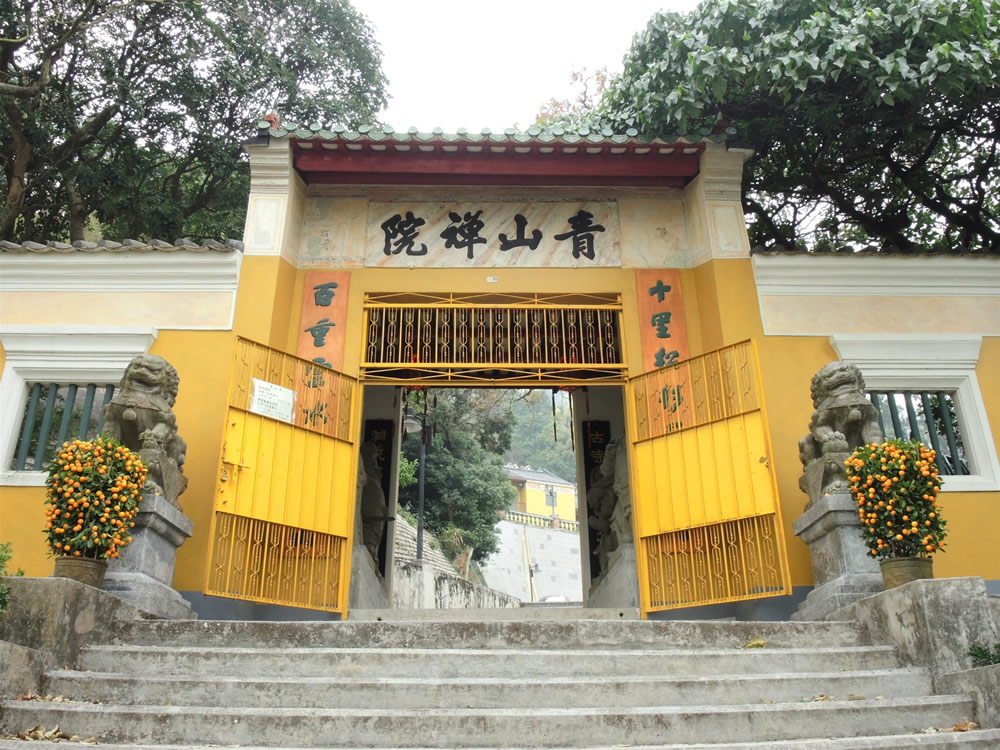
Tsing Shan Monastery, also known as Tsing Shan Temple, nestles on the hillside of Castle Peak in Tuen Mun. The Monastery and Ling To Monastery and Ling Wan Monastery in Yuen Long are “The 3 Ancient Temples in Hong Kong”.
The history of Tsing Shan Monastery can be traced back to Lau Song Dynasty (420 - 479) of the Northern and Southern Dynasties. Legend has it that an accomplished Buddhist monk, Master Pui To (water-crossing on a cup), lived in seclusion in Castle Peak during the Lau Song Dynasty, earning Castle Peak another name of Pui To Mountain. It is said that the original monastery was desolate as residents moved inland in compliance with a relocation order in early years of the Qing Dynasty (1636 - 1912). In 1829, the To clan built a Taoist temple named Tsing Wan Kwun. In the late 1910s, the then abbot of Tsing Wan Kwun built Tsing Shan Monastery nearby the Taoist temple.
Tsing Shan Monastery is composed of building complexes full of distinctive architectural features. Of them, the ridge of Tai Hung Po Din is decorated with Shiwan glazed ceramic opera figurines, while Mountain Gatehouse, Guest Hall and Hall of Merit are decorated with mouldings with exquisite craftsmanship.
The building complexes of the Monastery have considerable heritage value. In 2010, “Heung Hoi Ming Shan” Pai-lau, Tai Hung Po Din, Bodhisattva and Ksitigarbha Hall, Mountain Gatehouse and Hall for the Protection of the Law were rated Grade 1 historic buildings; “Absolute Gate of the Law” Pai-lau, Dormitory, Guest Hall, Devotee’s Forest and Kwun Yum Pavilion were rated Grade 2 historic buildings; and Hall of Merit was rated Grade 3 historic building.
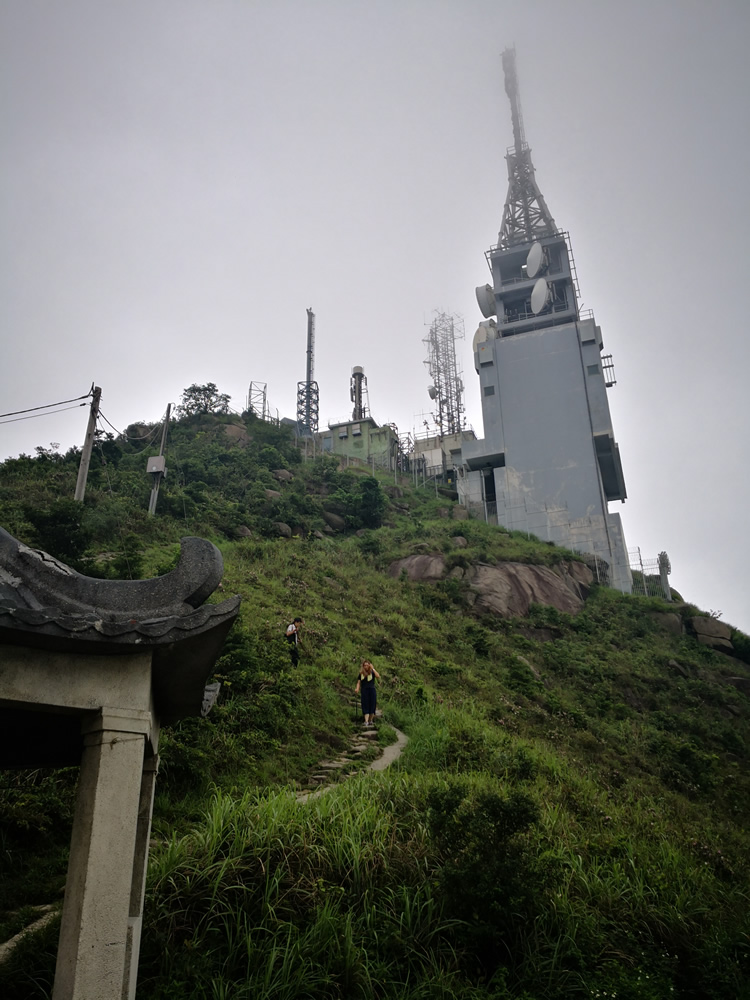
Castle Peak is a mountain in Tuen Mun that stretches northward and connects with Yuen Tau Shan (also known as “Ling To Shan”). Legend has it that an accomplished Buddhist monk, Master Pui To (water-crossing on a cup), lived in seclusion in Castle Peak during the Lau Song Dynasty (420 - 479) of the Northern and Southern Dynasties, earning Castle Peak another name of Pui To Mountain.
Castle Peak, about 583 m high and with precipitous slops, together with Sharp Peak and High Junk Peak in Sai Kung are called the “3 Sharp Summits in Hong Kong”. The name “Castle Peak” is derived from the mountain’s castle-like summit. At the summit, you will be rewarded with an almost 360° sweeping view of Tuen Mun and Pak Nai of Yuen Long, and even the Hong Kong International Airport and Deep Bay on sunny days.
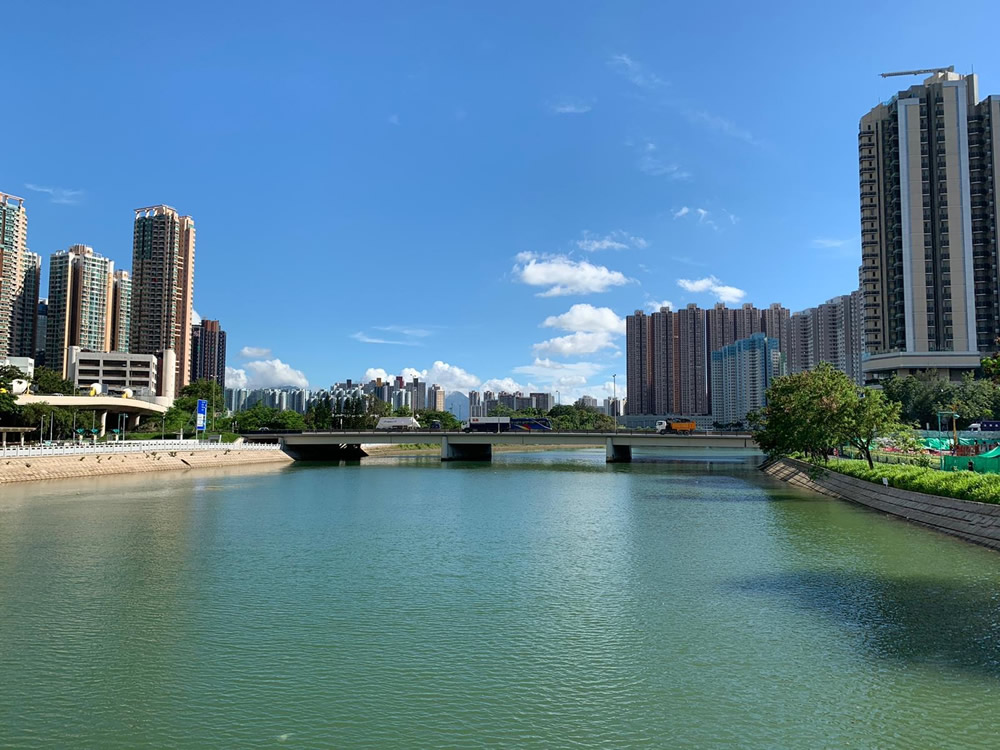
Tuen Mun River stretches across the center of Tuen Mun New Town. Along the riversides are decorative streetlights. Artworks designed by local artists at Tsing Yin Garden, Tuen Mun Riverside Park, Pui To Road (South) Rest Garden and Choi Yee Bridge Garden bring the area into a vibrant and lively community.
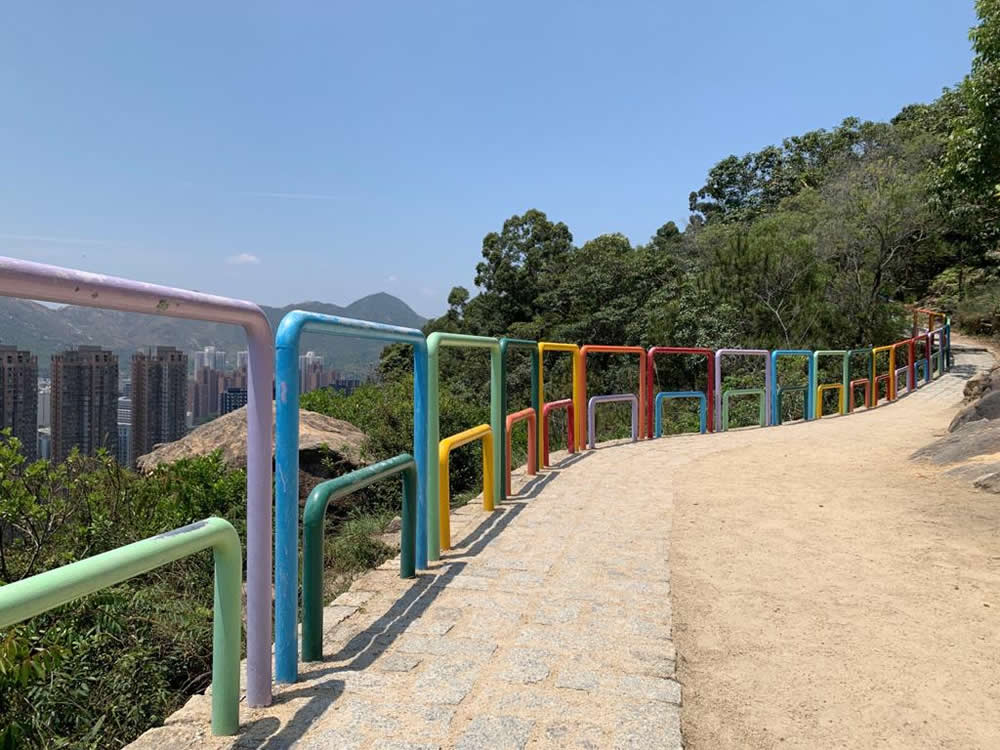
Tuen Mun Trail is located near Tuen Mun Town Center. To start the journey, hikers may climb up the stairs adjacent to CCC Hoh Fuk Tong College to reach the catchwater via MacLehose Trail (Section 10) and then make a left turn to Tuen Mun Trail.
The Trail offers visitors a spectacular panoramic view of Tuen Mun Town Centre to Siu Hong, and an indistinct view of Castle Peak, Lantau Island and Shenzhen. It also takes visitors through the rainbow-colored railing. Hikers may continue their journey either by going downhill towards Prime View Garden, or uphill towards Fu Tei Barbecue Area.
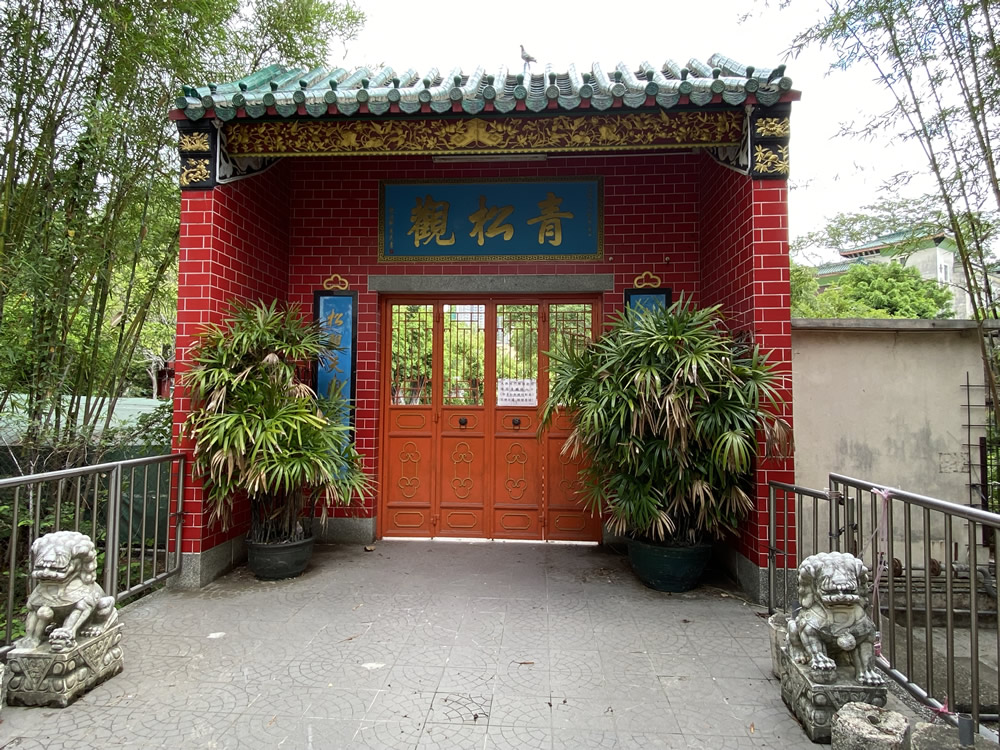
Ching Chung Koon in Kei Lun Wai of Tuen Mun, just next to Tuen Mun Hospital, is a renowned Taoist monastery in Hong Kong.
First inaugurated at Wai Ching Street, Kowloon in 1950, Ching Chung Koon established its current permanent monastery in Tuen Mun in 1960 with the completion of Shun Yeung Din. Thereafter, other buildings constructed for the worship of Taoism have been completed. Among them, Shun Yeung Din, Ching Wah Tong and Yik Fa Kung are used for religious ceremonies or sacrificial rites, while Mui Ngok Hin and Man Ching Lau are elderly homes.
The monastery’s charming landscaped garden featuring ponds and pavilions, bonsai shows displaying valuable classical Chinese potted plants and delicious vegetarian meals offered at Yee Wo Chai attract numerous worshippers and visitors. Besides, the monastery organises Taoist study courses to promote Taoism.
Among various buildings in the monastery, Shun Yeung Din and Yik Fa Kung were rated Grade 2 historic buildings in 2009.
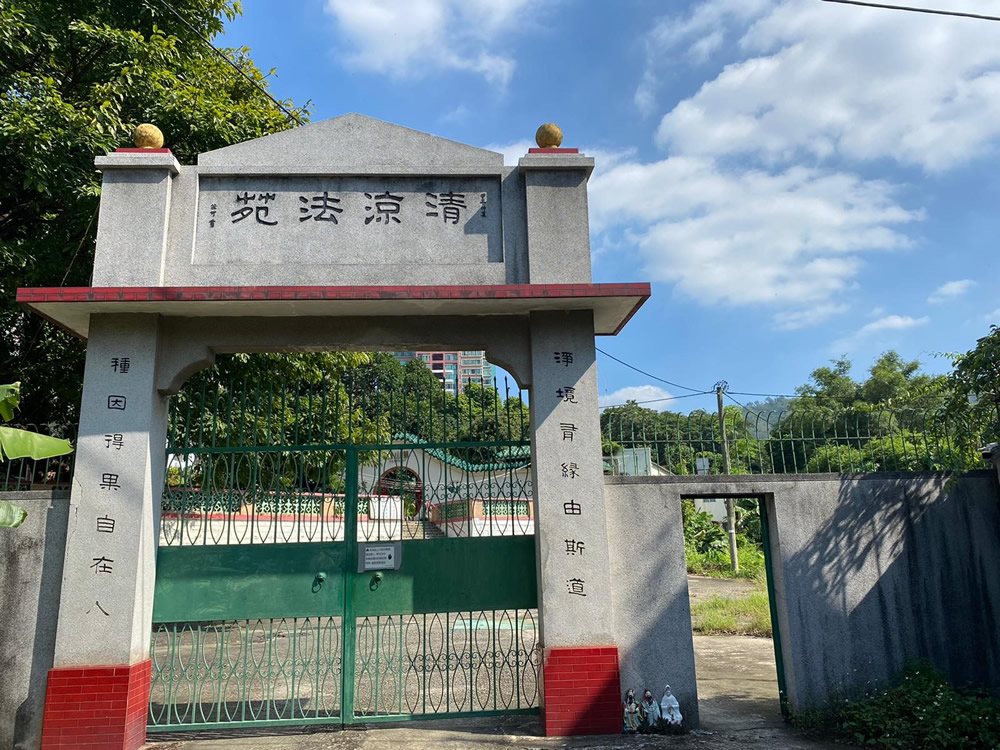
Ching Leung Nunnery in Fu Tei of Tuen Mun was first built in 1912. This Buddhist monastery was initially called the Garden of Sweet-scented Osmanthus because Osmanthus could be seen almost everywhere in the area prior to the New Town Development in Tuen Mun.
Important structures in the Nunnery include Ching Yan Siu Chok built in around 1913 and Fat Din built in 1928. Both buildings are a mixture of Western and Chinese styles. Ching Yan Siu Chok and Fat Din were rated Grade 3 historic buildings in 2010.
Ching Leung Nunnery is also a must-go place for savouring vegetarian meals.
Lingnan University’s history dates back to 1888, when the forerunner, the Christian College in China, was founded in Guangzhou, and to 1967, when the institution, as Lingnan College, was re-established in Hong Kong. In 1999, the college gained university status and was renamed Lingnan University.
In 1995, Lingnan University moved from its old campus at Stubbs Road on Hong Kong Island to the present campus site in Fu Tei of Tuen Mun. The architectural style of the new campus incorporates features of the university’s original site in Guangzhou.
Website:
https://www.ln.edu.hk/
Miu Fat Buddhist Monastery at Castle Peak Road - Lam Tei was first constructed in 1960. At the main entrance of Ten Thousand Buddhas Hall completed in 1980 is a pair of giant dazzling lifelike gold dragons clinging to the 3-storey red-brick columns. The interior walls along the staircase to the 2nd floor of the Hall are adorned with Buddha reliefs.
Completed in 2010, Miu Fat Buddhist Monastery main complex adjoining Ten Thousand Buddhas Hall comprises a Fat Din (Buddhist shrine), a community hall, a library and cultural/welfare facilities. The architectural design of the complex is derived from the idea of Mount Sumeru. The top floor is Tai Hung Po Din which design resembles a gigantic crystal lotus blossom and a monk hat. At the lookout of the shrine, visitors can enjoy the splendid views of the rural landscape of Tuen Mun.
Located on the rooftop of H.A.N.D.S Shopping Centre at Yau Oi Estate and On Ting Estate in Tuen Mun, the H.A.N.D.S. Sports Ground of around 110 000 sq ft features a variety of sports facilities, including a rooftop skatepark, a basketball court, a soccer pitch and a skateboard ground. The floors and walls of the sports ground are designed with bright colours and lively lines, making it a vibrant and energetic place to enjoy sports.
Tsing Chuen Wai at Lam Tei in Tuen Mun was previous named “Mak Yuen Wai” (literally meaning “Wheat Field Walled Village”). Its present name came from the fact that the enclosure walls were made of grey bricks. Tsing Chuen Wai is mainly populated by the To clan. The only surviving portion of the original grey-brick boundary wall at the main entrance, Tin Hau Temple and the ancestral hall in the village give a glimpse of the past life of the walled village.
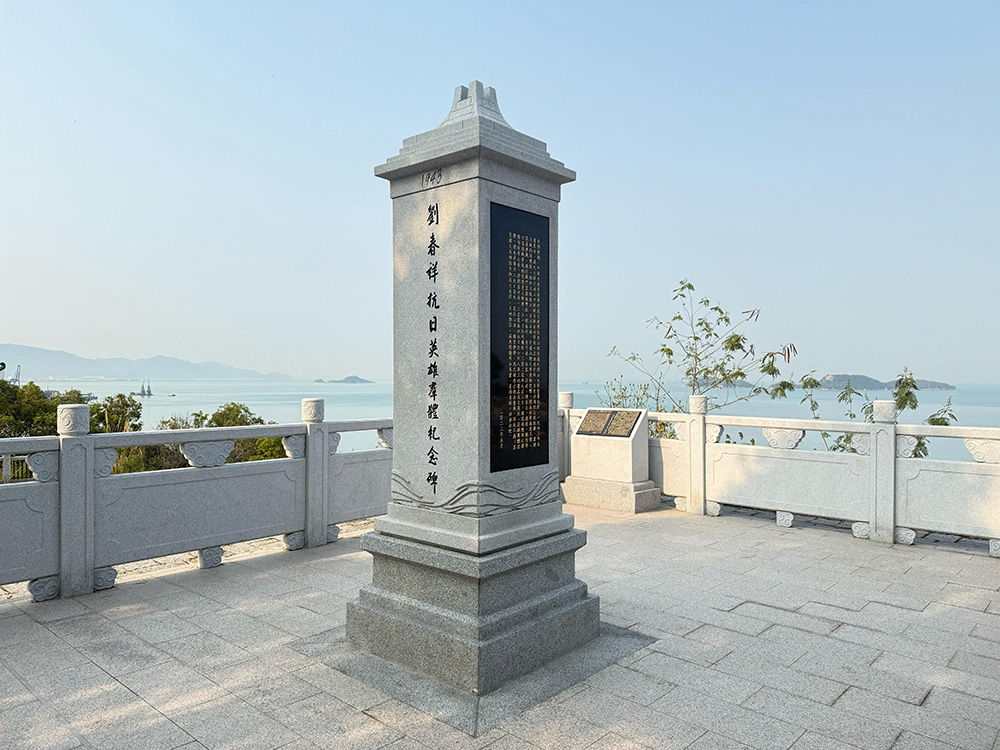
Located at Lung Kwu Tan, Tuen Mun, the Cenotaph is established to commemorate the heroic deeds of 12 anti-Japanese martyrs of the Hero Group of the War of Resistance Against Japanese Aggression, including Liu Chunxiang, who sacrificed their lives in the battles in the waters off Lung Kwu Chau in 1943.
In September 2020, the Ministry of Veterans Affairs announced the third batch of famous anti-Japanese martyrs and heroes, including Liu Chunxiang and his fellow martyrs. The Cenotaph was completed in late April 2023, on the eve of the 80th anniversary of the sacrifice of Liu Chunxiang and his hero group. Standing 3.1 m tall with a solemn and dignified design, the Cenotaph has inscriptions engraved on the left and right sides recounting the heroic group's moving deeds and commemorative verses on the back. The Cenotaph is located on a viewing platform at a hilltop on the coast of Lung Kwu Tan, from where visitors can gaze out over the waters of Lung Kwu Chau where the anti-Japanese sea battles took place and pay tribute to those who lost their lives in combat.
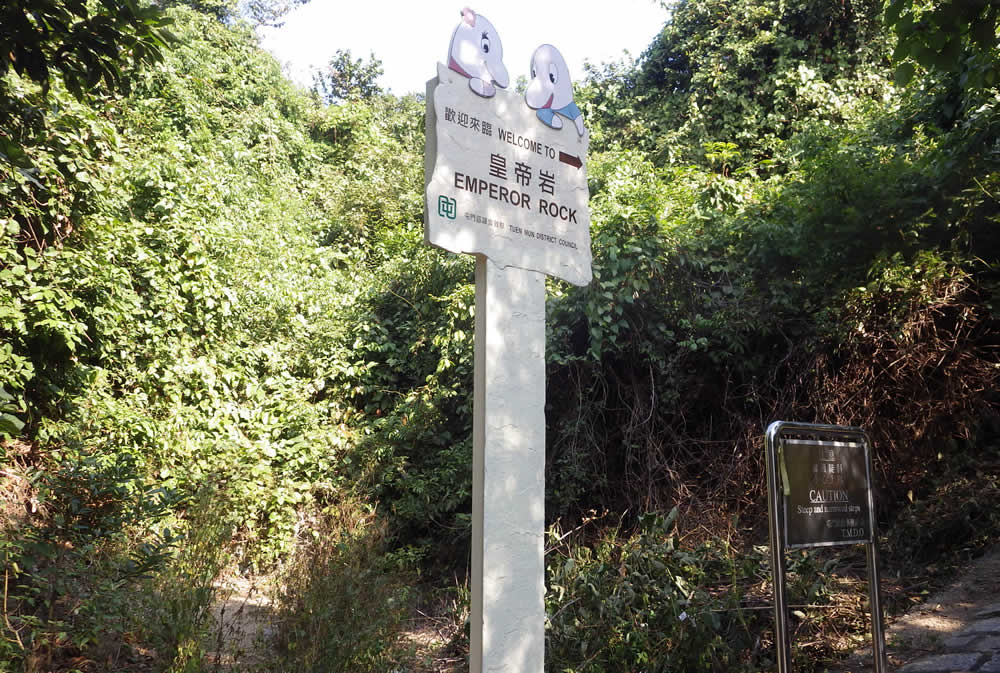
Emperor's Rock is on the hill overlooking Lung Kwun Tan. It is said that in the final years of the Southern Song Dynasty (1127 - 1279), Emperor Zhao Shi had resided there when he fled to the south during the Mongolian invasion. The name of Emperor’s Rock was hence given.
Emperor's Rock is a renowned scenic spot for its natural beauty.
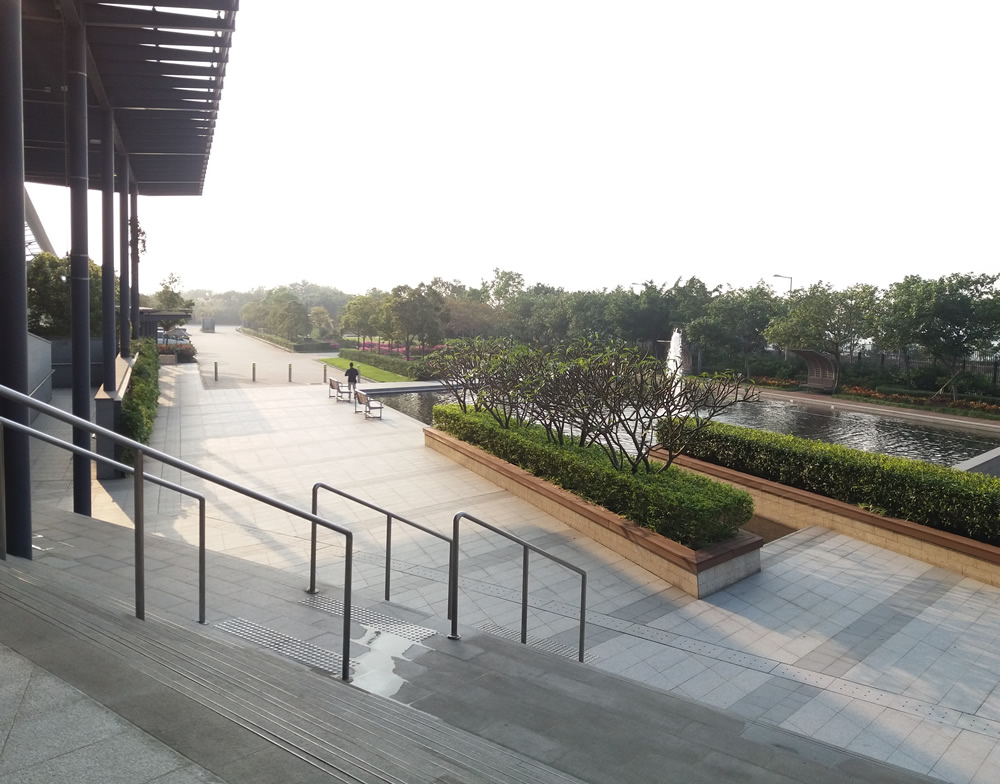
Located at Nim Wan Road in Tuen Mun, T·PARK is a sludge treatment facility deploying advanced technologies in Hong Kong’s “waste-to-energy” journey, as well as an eco-friendly park integrating recreational, ecological and educational facilities. A high-tech thermal treatment process is applied to sludge incinerators with a treatment capacity of up to 2 000 tonnes of sludge per day. The heat energy generated in the incineration process is recovered and turned into electricity supporting T·PARK as well as for the public power grid.
Visitors can enjoy a variety of recreational and educational facilities at T·PARK for free, including a splendid outdoor garden, an outdoor footbath, 3 spa pools featuring different temperatures, and an interactive exhibition hall that introduces the sludge treatment process. T·PARK enriches visitors’ knowledge of environmental protection whilst seeking to relax and escape from the hustle and bustle of city life.
To visit T·PARK, please book online in advance (https://www.tpark.hk/en/visit/).
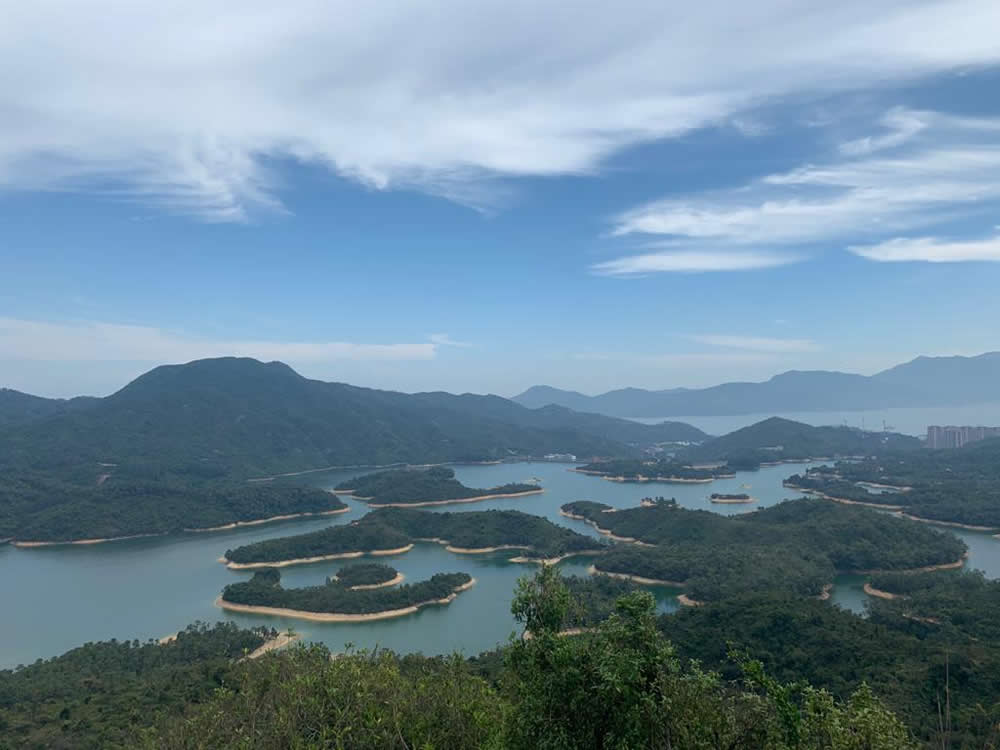
Tai Lam Chung Reservoir was completed in 1957. Dozens of small islands scatter in the reservoir. These green archipelago were actually knolls before the valley was flooded by water. The reservoir is nicknamed the “Thousand-Island Lake of Hong Kong”, and is a hot destination for hikers.
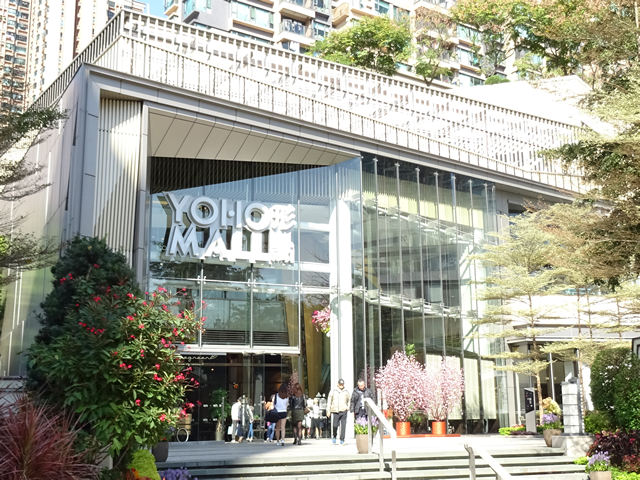
Located beside Yuen Long MTR Station, the YOHO Series shopping centres, including YOHO MALL, YOHO MIX, and YOHO PLUS, form a large-scale retail hub in the North and West New Territories with a total floor area of 1 200 000 sq ft. The design concept of the hub is to integrate greenery with urban lifestyle. With a large amount of outdoor green space, together with over 400 renowned international brands, restaurants and an extensive outdoor gourmet promenade, YOHO Series shopping centres offer a comfortable one-stop shopping experience.
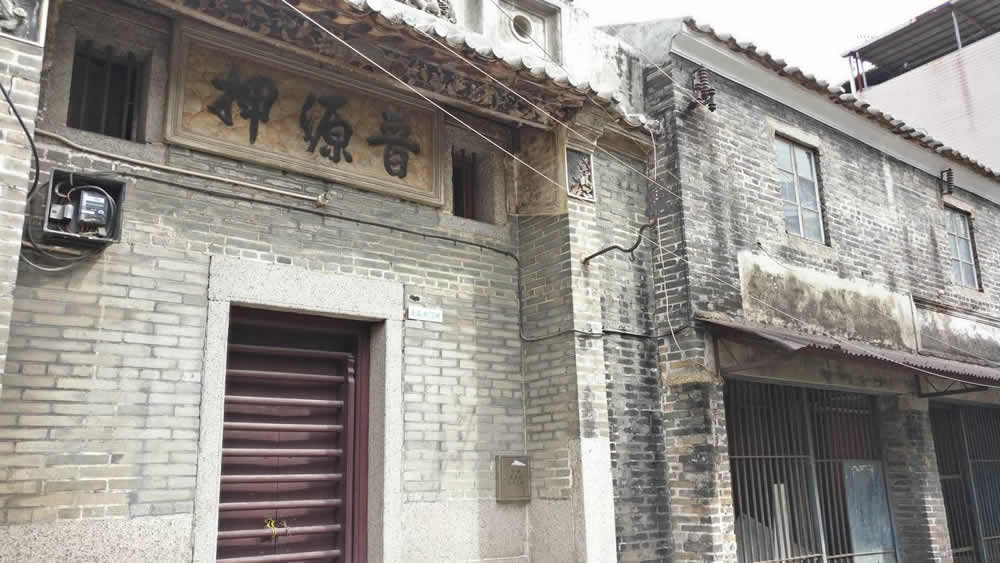
Situated between Sai Bin Wai and Nam Bin Wai, Yuen Long Kau Hui was established in the 8th year of the Kangxi reign (1669) of the Qing Dynasty. The market used to be a busy market in Yuen Long and was acclaimed “The Manchu Street”. Located inside Kau Hui are Cheung Shing Street, Lee Yick Street and Wine Street, all lined with shops of various trades.
Many historic buildings and residences in ancient style can be found there. Among them, the "Chun Yuen Pawn House", one of the earliest pawnshops in Hong Kong, was rated Grade 1 historic building in 2009.
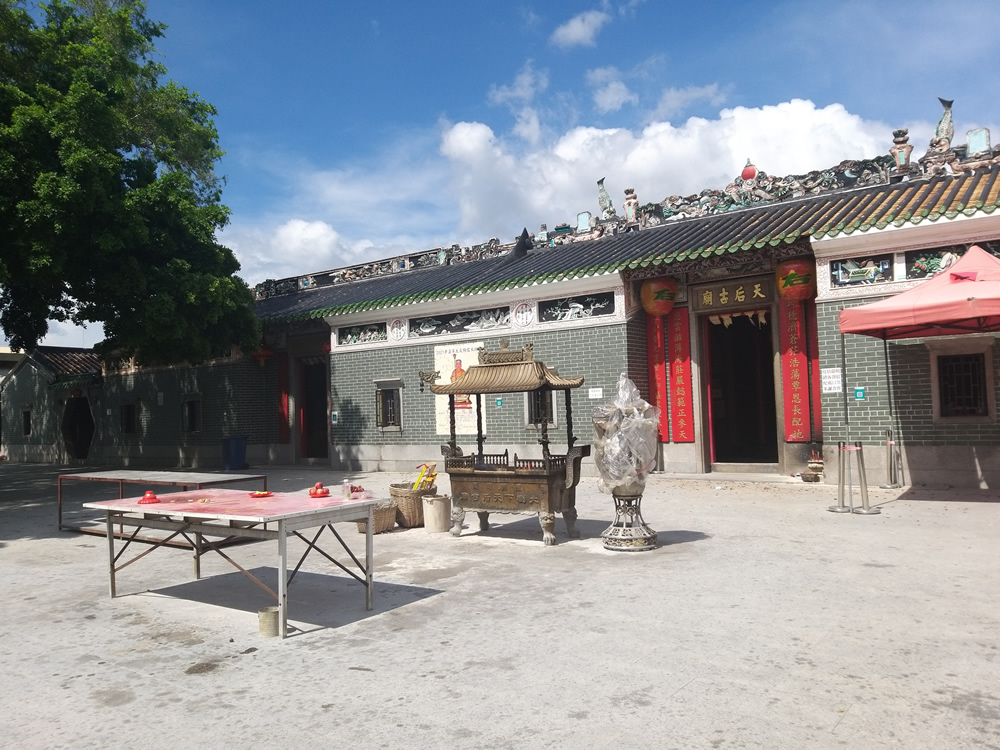
Tai Shu Ha Tin Hau Temple, located at Nga Yiu Tau of Shap Pat Heung, was built in around the 51st year of the Qianlong reign (1786) of the Qing Dynasty. The Temple got its name from being housed under a big tree. The main hall is dedicated to Tin Hau while those on the two sides are respectively Ying Yung Tsz dedicated to the martyrs in a battle in 1899 against the British occupation of the New Territories, and Man Mo Din dedicated to Man Cheong (God of Literature) and Kwan Tai (God of Martial Arts).
Tin Hau, also known as “Matsu”, was said to be a native in Fujian Province called Lam Mak Leung during the Song Dynasty (960 - 1279). According to legend, she had gifted power and saved many people from sea disasters. The seafarers therefore worship Tin Hau and regard her as their patron saint.
On Tin Hau Festival, which falls on the 23rd day of the 3rd lunar month, there will be extravagant celebrations. Villagers would organise grand parades, including lion, dragon and qilin dancing along the streets of Yuen Long to the Temple. The celebrations in Yuen Long are amongst the most elaborate and gorgeous Tin Hau Festival celebrations in Hong Kong.
Tai Shu Ha Tin Hau Temple was rated Grade 2 historic building in 2010.
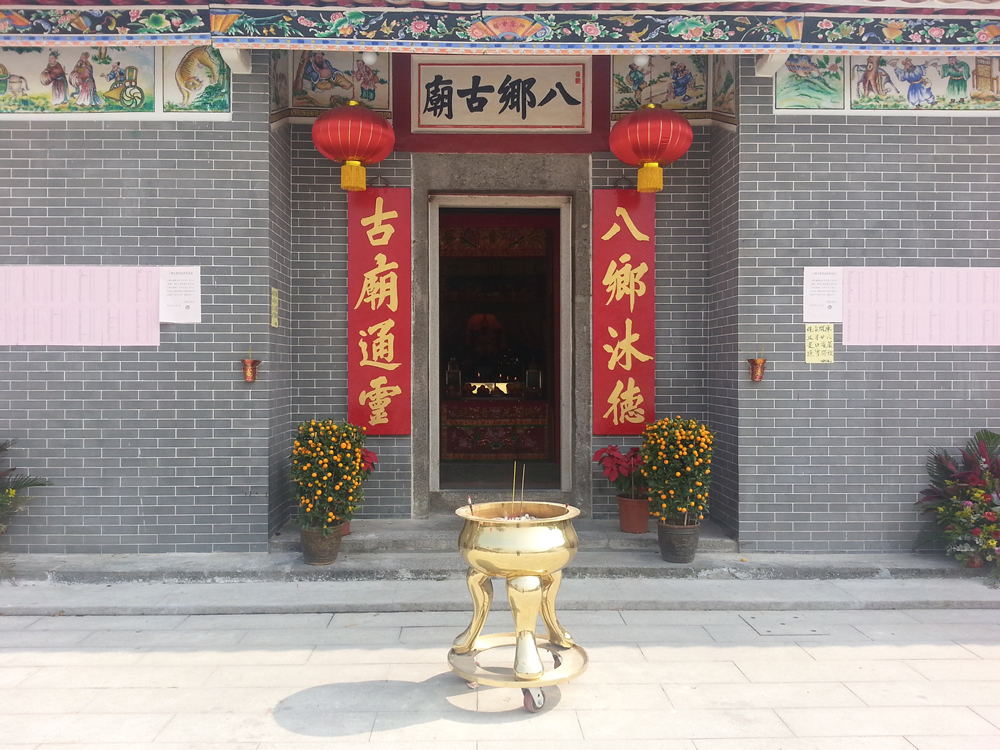
Pat Heung Temple, located at Pat Heung Sheung Tsuen, was constructed before 1861 by Pat Heung villagers. As the main deity is Kwun Yum, the Temple is also called “Pat Heung Kwun Yum Temple”. It is a sacred place to hold important events - worship of gods and ancestors in spring and autumn, and celebrations for Kwun Yum Festival. During these events, hundreds of banquet tables serving "Poon Choi" or vegetarian dishes are arranged in the open space in front of the Temple. The Temple has always been a symbol of glory and dignity to indigenous villagers in Pat Heung.
Pat Heung Temple was rated Grade 2 historic building in 2010.
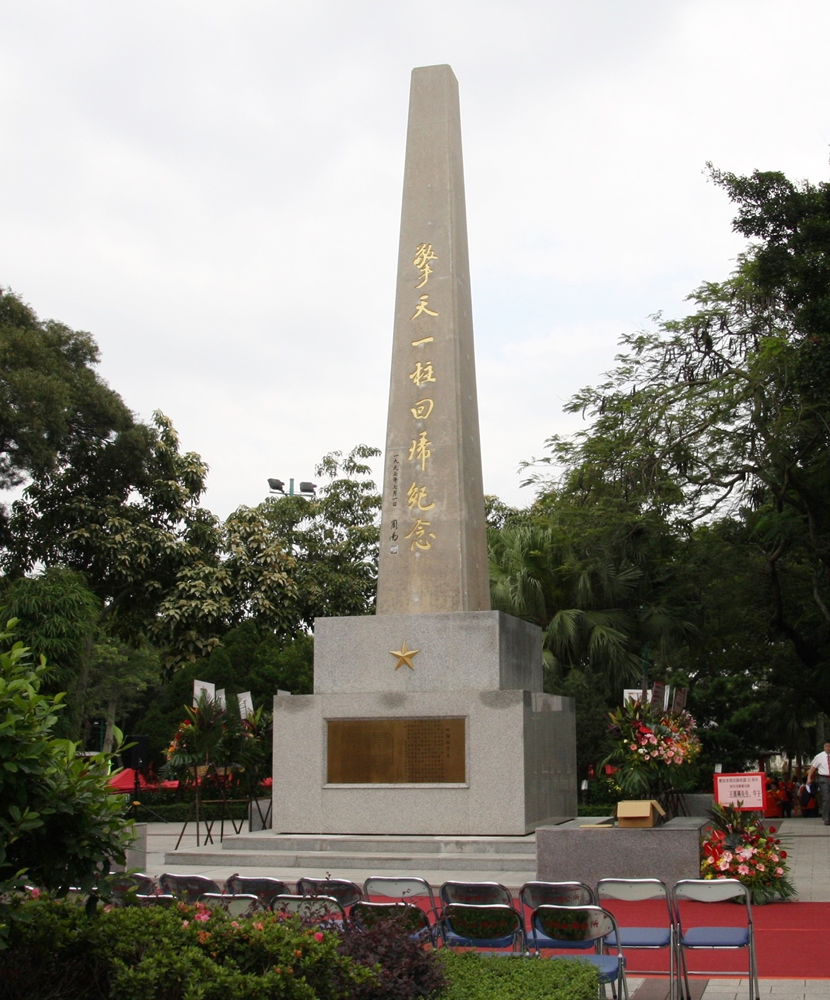
The Reunification Memorial Pillar is situated in Sheung Tsuen Park, Pat Heung. It was built by Pat Heung Rural Committee to commemorate the reunification of Hong Kong with the Mainland.
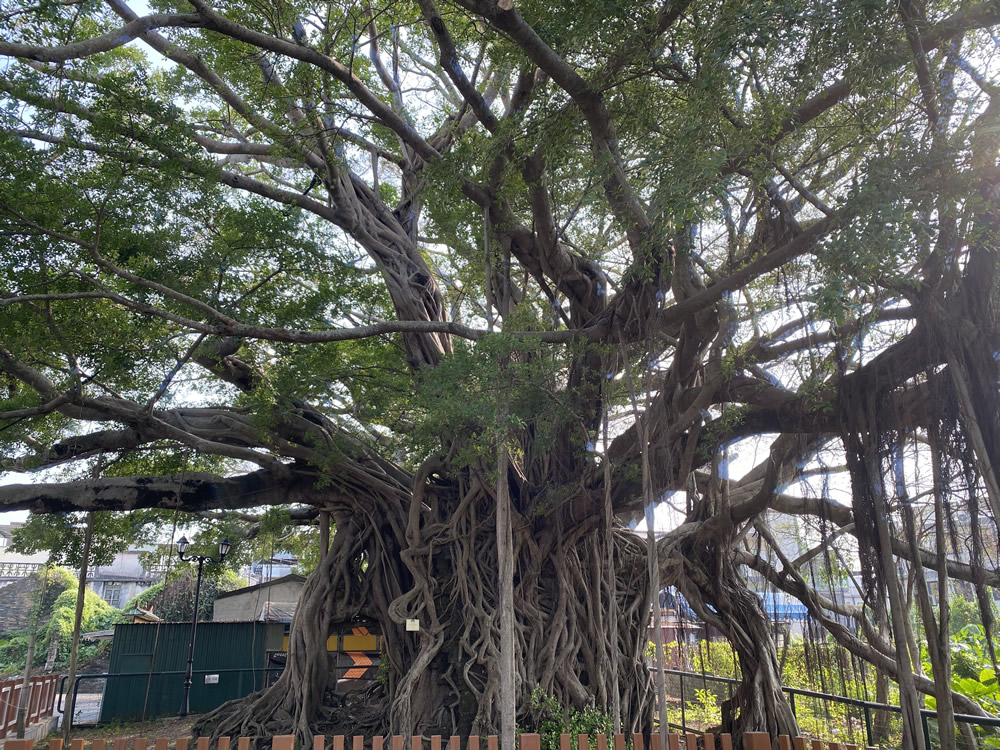
Kam Tin Tree House in Shui Mei Village is said to be a former study hall of the Tang Clan in Kam Tin. The owner left Kam Tin because of the enforcement of an inland migration order during the Qing Dynasty (1644 - 1911), and never returned. Another legend has it that the building was a Tin Hau Temple but was abandoned after it had collapsed. After many years, the branches of a Chinese Banyan next to the house grew unkempt and eventually wrapped themselves around the house.
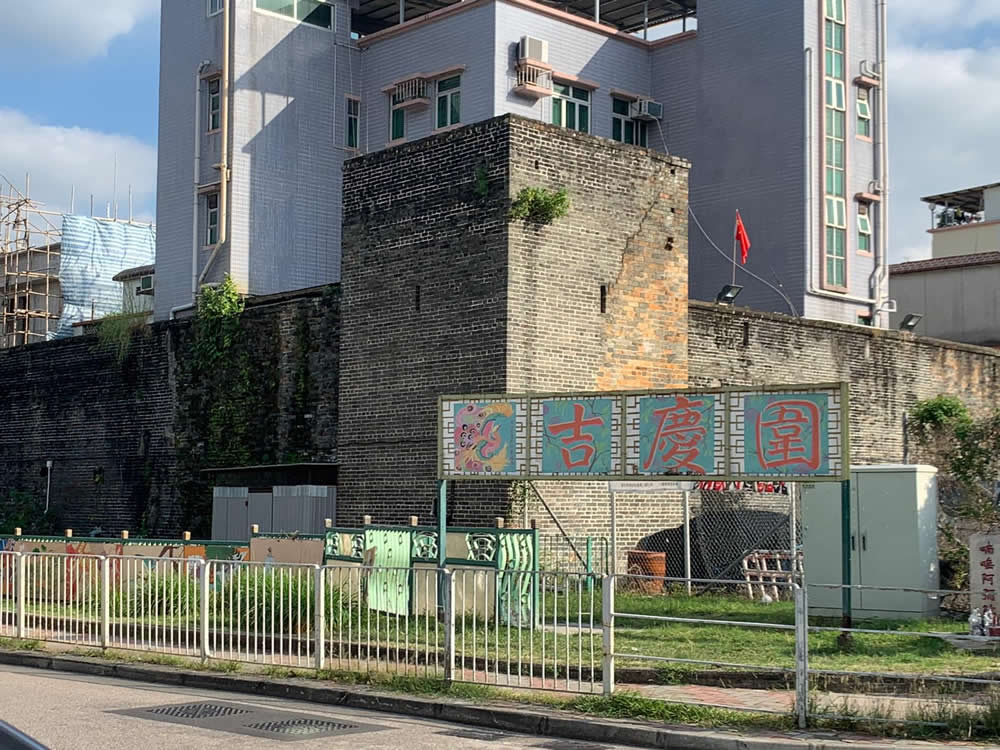
Kat Hing Wai at Kam Tin in Yuen Long is a historic walled village built during the Chenghua reign (1465 - 1487) of the Ming Dynasty by the Tang Clan. The square shape village is completely surrounded by grey brick walls erected to protect villagers from invaders. Inside the village, there is a small temple dedicated to 15 deities.
Kat Hing Wai is best known for the "Iron Gates Incident" of 1899, when the British army tried to take over the New Territories but faced strong resistance from villagers of Kam Tin Heung. After several battles, the villagers withdrew behind the iron gates to hold out against the British army. Later, the British army entered Kat Hing Wai, removed and shipped the gates away as booty.
In 1924, Tang Pak Kau, a senior of the clan, petitioned to the British Government for the return of the gates. The British Government finally returned the gates, and a returning ceremony was held on 26 May 1925.
The Shrine, Entrance Gate, Watchtowers and Enclosing Walls of Kat Hing Wai were rated Grade 1 historic buildings in 2010.
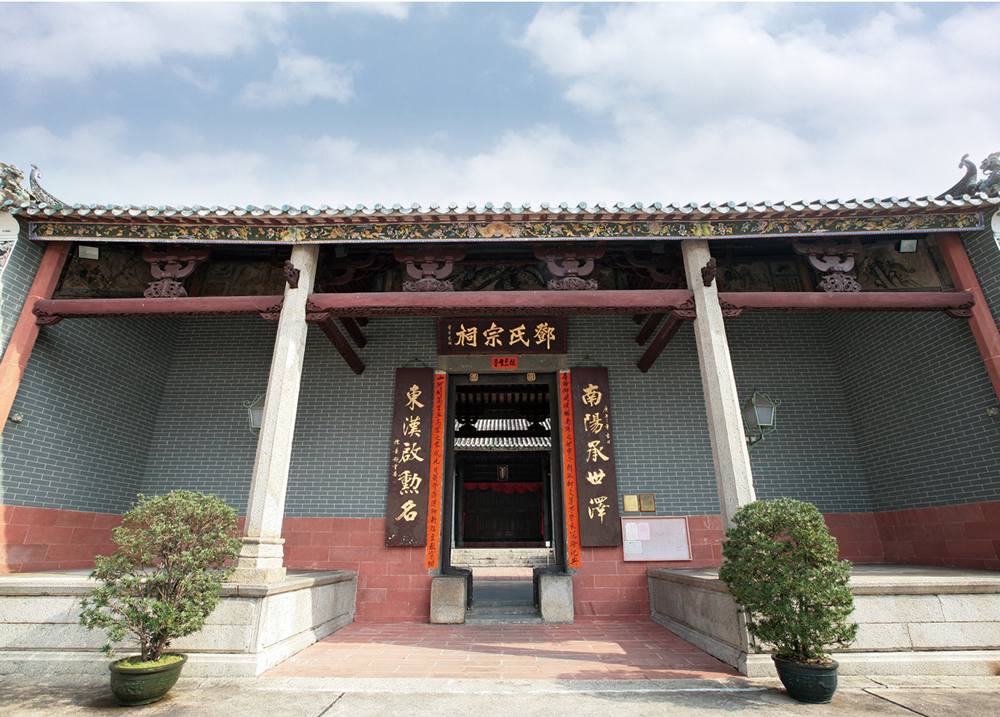
Ping Shan Heritage Trail is the first of its kind in Hong Kong. Ping Shan Heung is one of the oldest area in the territory. The Tang Clan, one of the "Five Great Clans" in the New Territories, has been living in the area since the 12th century. Many splendid structures built in those days still remain today, witnessing historical and social developments over the years.
Stretching about 1.6 km in length, the Trail meanders through Hang Tau Tsuen, Hang Mei Tsuen and Sheung Cheung Wai, linking up a number of traditional Chinese buildings within easy walking distance. Unique attractions along the Trail include The Tang Ancestral Hall (Hong Kong's largest ancestral hall) and Tsui Sing Lau Pagoda (Hong Kong's only surviving ancient pagoda) and Yu Kiu Ancestral Hall, which were declared monuments in 2001; Yan Tun Kong Study Hall, which was declared a monument in 2009, Tat Tak Communal Hall, which was declared a monument in 2013; and several other historic buildings and traditional constructions.
Moreover, Visitors may visit Ping Shan Tang Clan Gallery cum Heritage Trail Visitors Centre to know more about the local folk culture and heritage along the Trail. The Gallery was formerly the Old Ping Shan Police Station, which was built in 1900 and was rated Grade 2 historic building in 2010.
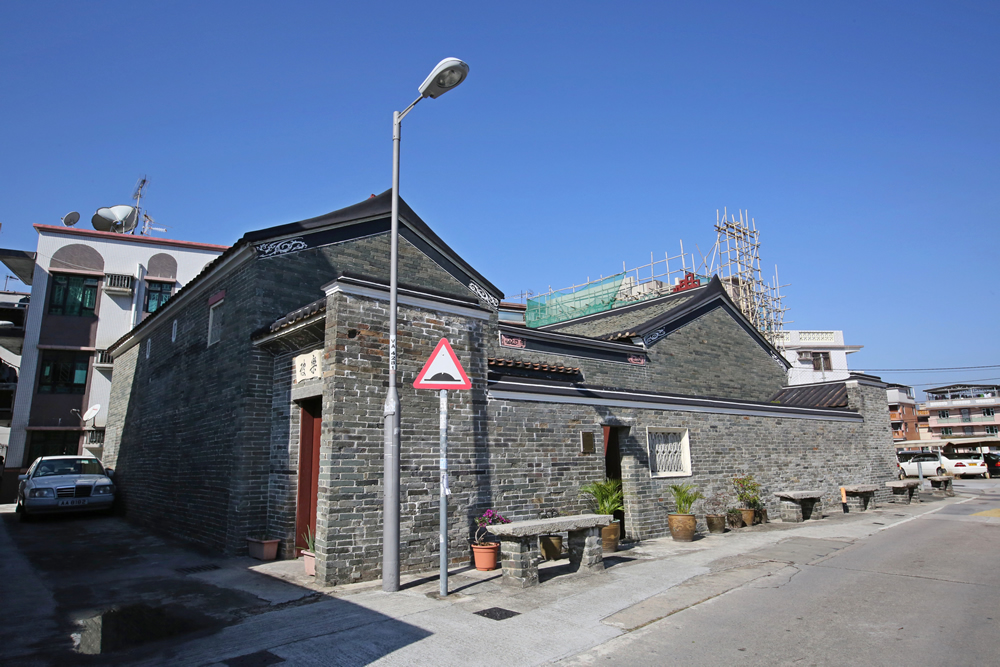
Yi Tai Study Hall at Shui Tau Village of Kam Tin Heung was built by Tang Yi Tai Wui, a group of 16 local scholar-gentry during the Daoguang reign (1821 - 1850) of the Qing Dynasty to worship Man Cheong (God of Literature) and Kwan Tai (God of Martial Arts), and as a venue for educating the young villagers. Its architectural designs are particularly interesting. The doorways of the halls on the two sides are moon-shaped openings. The gable walls are adorned by plaster mouldings of plants and birds while the window lattices feature coin patterns and irregular geometric patterns.
The forecourt of Yi Tai Study Hall is paved with white stones, earning it the epithet of “Pak Shek Hong” (White Stone Lane). Students who attended the study hall were thus called “Students of White Stone Lane”. The study hall is a two-hall rectangular building. The front hall is dedicated to the God of Wealth, Man Cheong, Kwan Tai and God for the Imperial Civil Service Examination. Separated by a courtyard in the middle, the rear hall is a study room.
Yi Tai Study Hall was declared a monument in 1992.
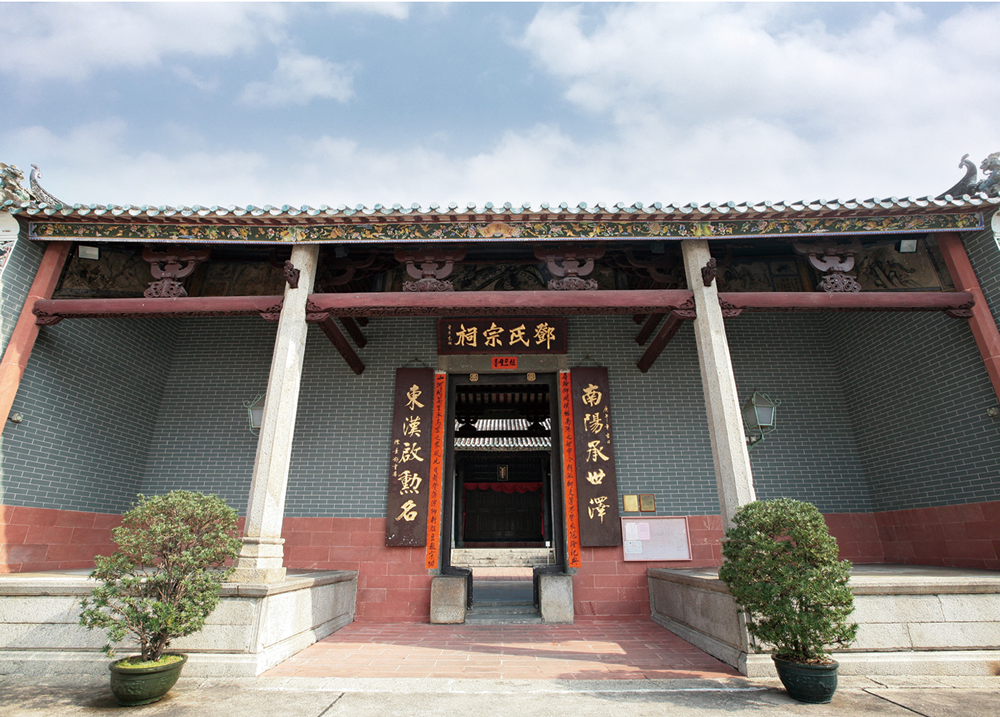
The Tang Ancestral Hall, situated at the junction of Hang Tau Tsuen and Hang Mei Tsuen of Ping Shan Heung, was constructed by Tang Fung Shun, the 5th generation ancestor of the Tang Clan in the Yuan Dynasty (1271-1368).
The Tang Ancestral Hall is a three-hall structure with two internal courtyards. The beams are carved with animals and auspicious Chinese motifs, while the roof ridges are decorated with Shiwan ceramic figures. The major characteristic of this hall is the absence of a threshold at the main entrance, and the red sandstone pathway in the front internal courtyard suggesting that one of the Tang clansmen had held a high-ranking position in the imperial government.
The Tang Ancestral Hall was declared a monument in 2001.
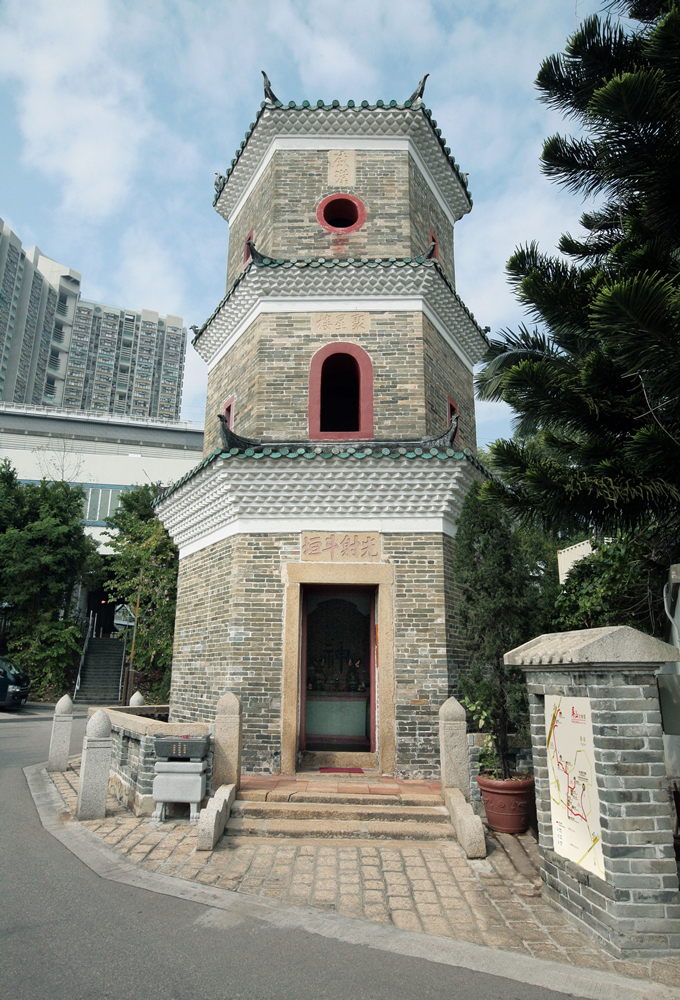
Situated to the north of Sheung Cheung Wai, Tsui Sing Lau Pagoda is the only surviving ancient pagoda in Hong Kong. It was built by Tang Yin Tung, the 7th generation ancestor of the Tang Clan around the Hongwu reign (1368 - 1398) of the Ming Dynasty. It is said that the pagoda is a fung shui structure originally situated at the estuary of a river facing Deep Bay for warding off evil spirits from the north and preventing flooding.
The three-storey pagoda is a hexagonal-shaped grey-brick structure about 13 m in height. According to the Tangs, the pagoda was originally seven storeys, but lost the four upper storeys due to typhoons. Fui Shing (Champion Star), a deity believed to be in control of success and failure in examinations, is housed on the upper floor. The Tang Clan believed that Fui Shing would ensure success for the clansmen in the imperial civil service examinations.
Tsui Sing Lau Pagoda was declared a monument in 2001.
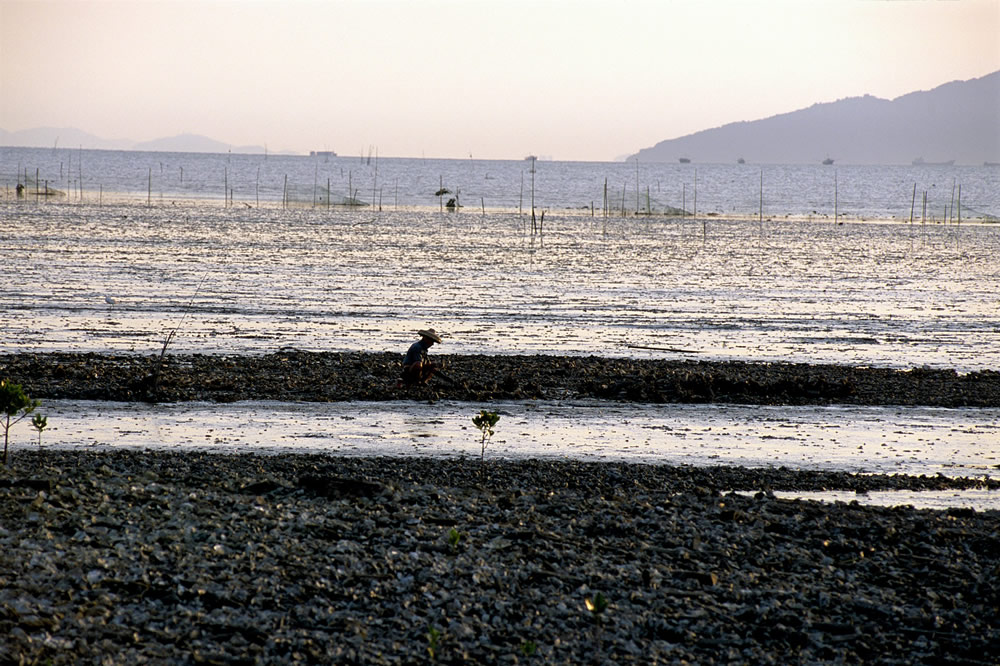
Lau Fau Shan is famous for oyster farming with a large number of oyster beds along the shoreline area. It is also a popular location for enjoying seafood. A number of seafood stalls offering endless choices of seafood cluster on Lau Fau Shan Main Street. Visitors can buy seafood from the stalls and bring them to the restaurants nearby for preparing the dishes.
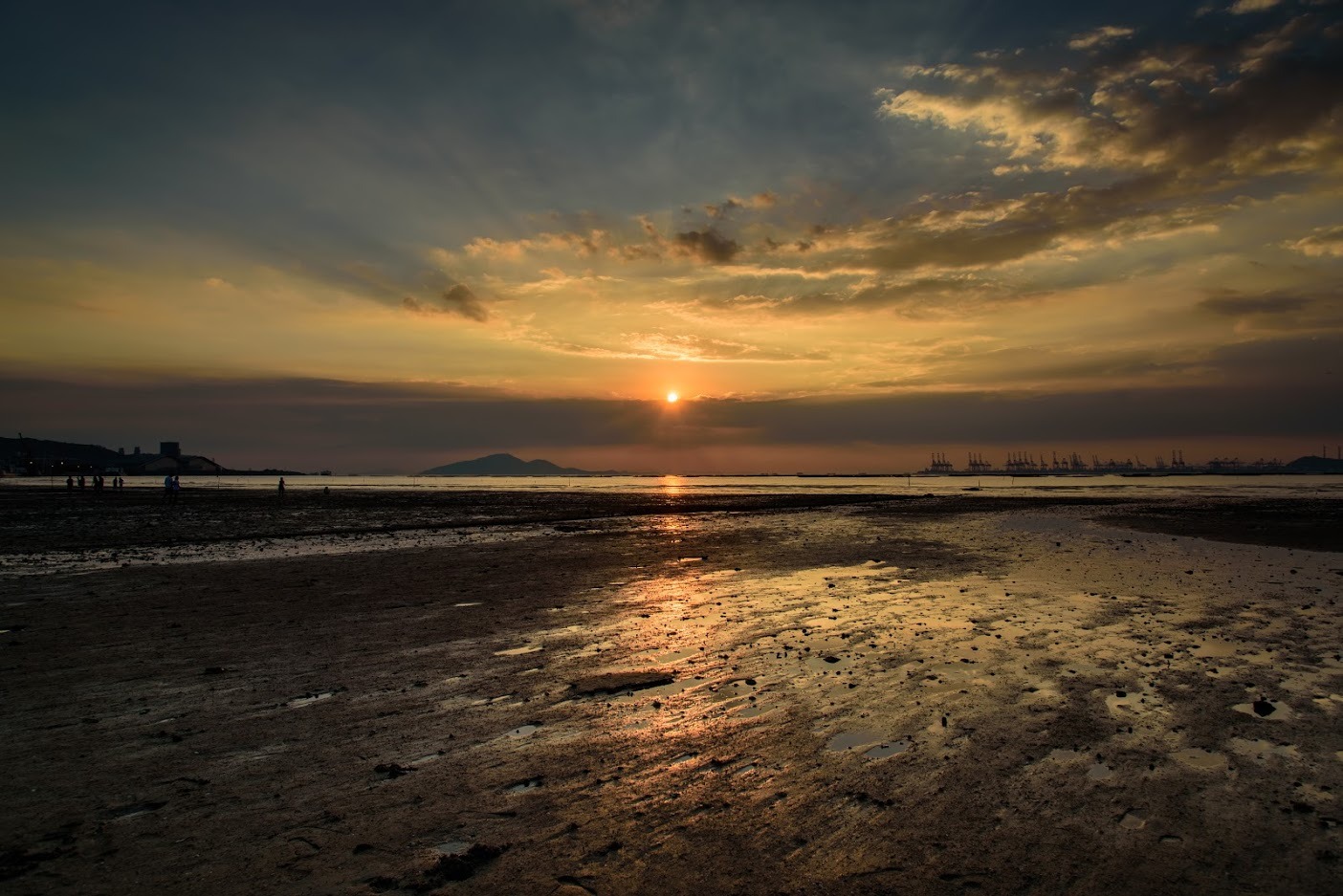
To the west of Lau Fau Shan is Pak Nai, covering Sheung Pak Nai and Ha Pak Nai. Bordering Deep Bay, Pak Nai commands a magnificent view overlooking Shekou in the Mainland. With mangroves growing along the shallow banks of the coast and the enchanting sunset view, Pak Nai is a popular hot spot for photography enthusiasts.
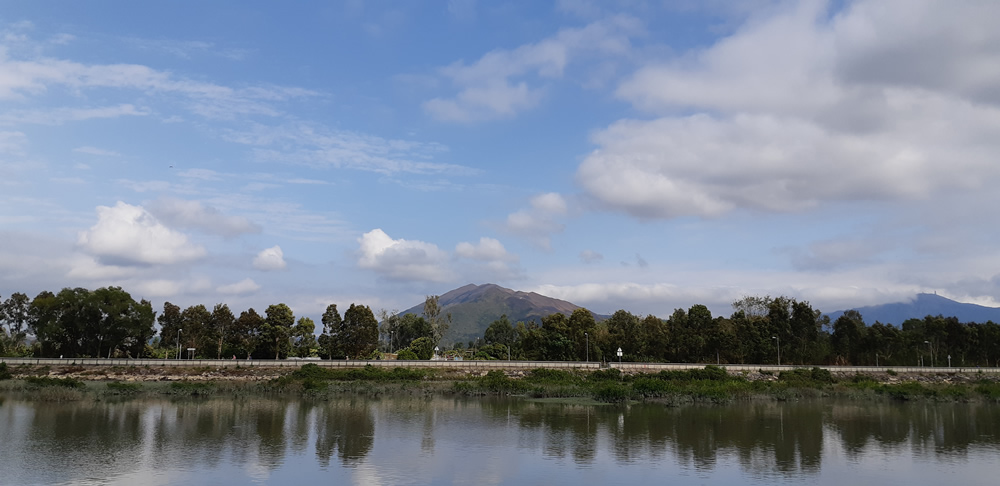
Nam Sang Wai is a distinctive place which was shot to fame for having a salt water crocodile found there. The meandering Shan Pui River, luxurious growth of reed beds and mangroves in Nam Sang Wai attract a large number of photography enthusiasts and bird-watchers.
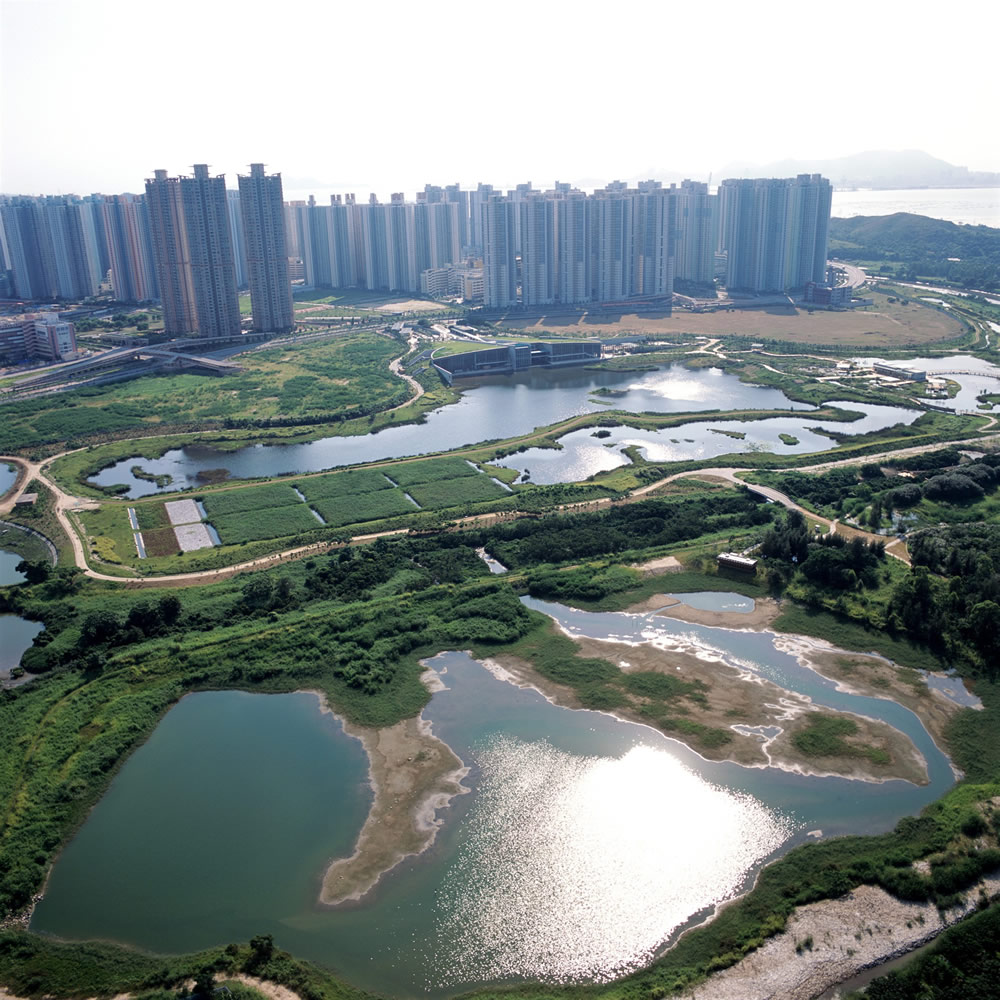
Hong Kong Wetland Park, located at the northern part of Tin Shui Wai, includes a visitor centre and a 60 ha Wetland Reserve. The visitor centre houses themed exhibition galleries, theatre, souvenir shop, restaurant and indoor play area. The Wetland Reserve is constructed wetlands of habitats specially designed for waterbirds. Other facilities in the park include stream walk, mangrove boardwalk, bird hides, etc.
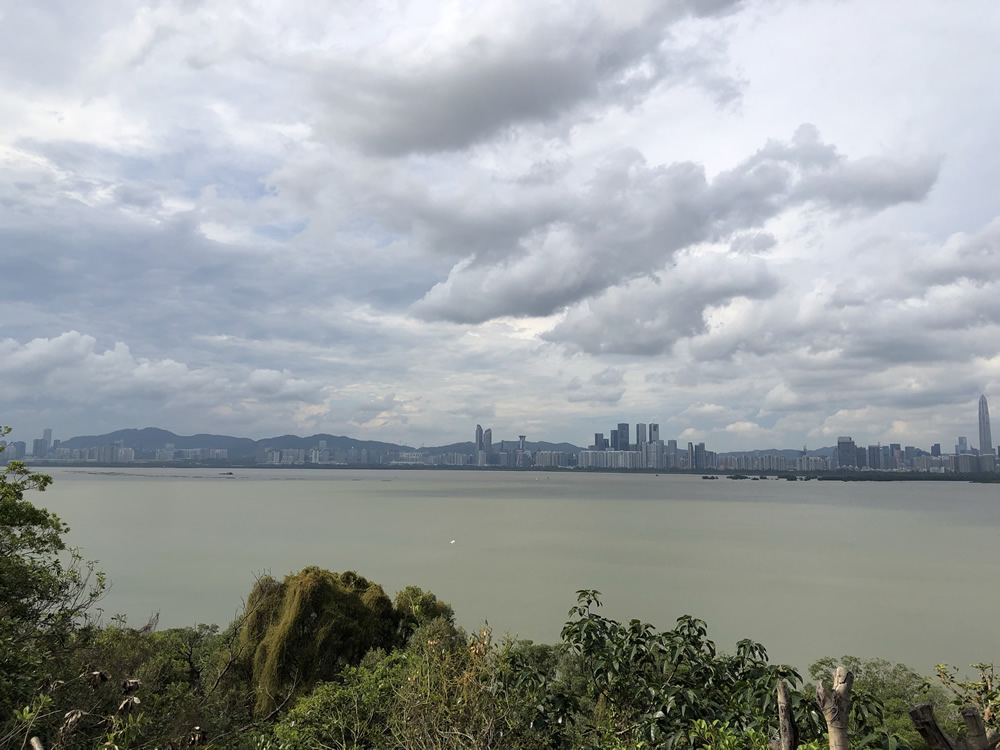
Tsim Bei Tsui is located at the northwestern part of the New Territories, bordering Deep Bay and adjacent to Mai Po. Visitors can enjoy the natural scenery of Mai Po on the east, and the magnificent views of Deep Bay and Shenzhen on the west. There are also mangroves growing along the coast which has been shaped into a vast bay by sediments washed down Shenzhen River over the years. During ebb tides, the bay is transformed into an expansive mudflat providing food for different species of living creatures in the area.
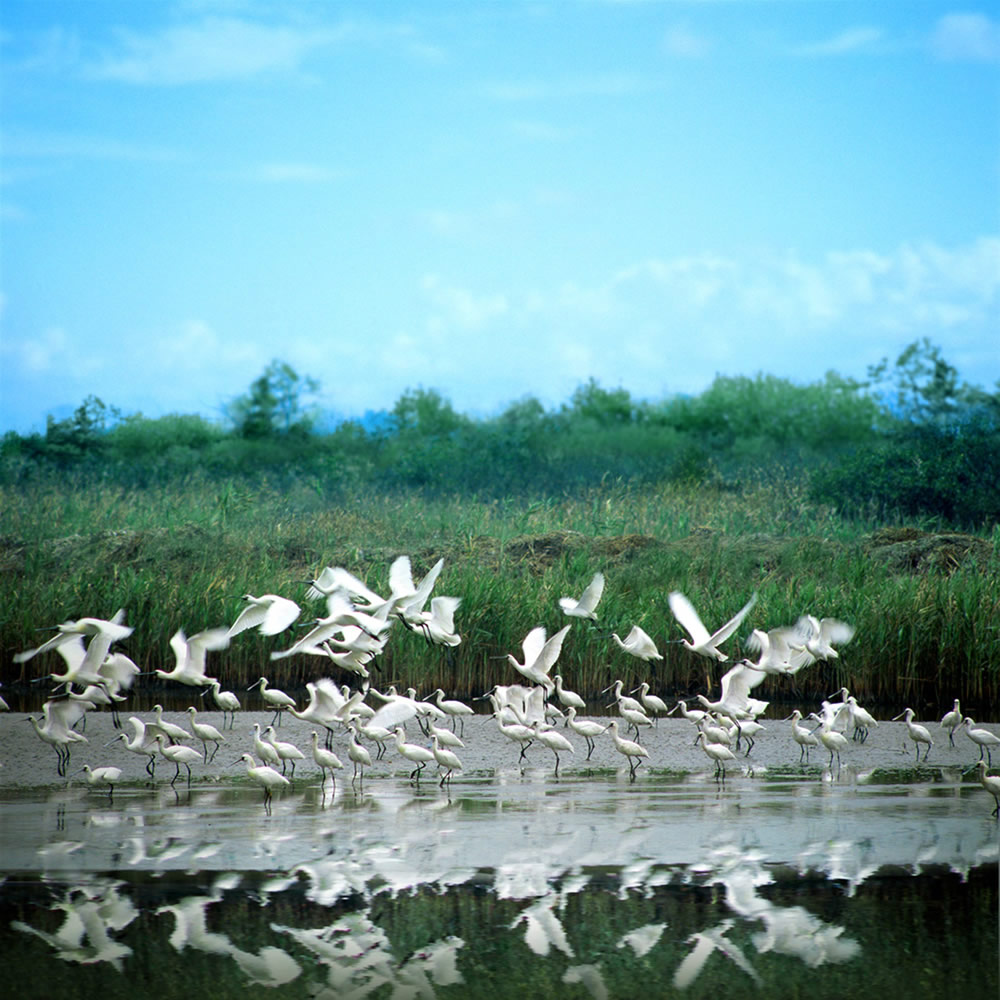
The 380-ha Mai Po Nature Reserve (MPNR) is part of the Mai Po Marshes Site of Special Scientific Interest, nested within the Mai Po Inner Deep Bay Ramsar Site (the Ramsar Site) in the northwestern part of the New Territories. It has been managed by the World Wide Fund for Nature Hong Kong (WWF-Hong Kong) since 1983.
The Ramsar Site has a shallow bay with extensive intertidal mudflats backed by mangal, tidal shrimp ponds (gei wais), fishponds and reed beds. It serves as an important over-wintering and refueling station site for the waterbirds during their migrations between Arctic Russia and Australia. Amongst the tens of thousands of migratory waterbirds are a number of globally threatened species such as the Black-faced Spoonbill (Platalea minor), Saunder’s Gull (Larus saundersi) and Nordmann’s Greenshank (Tringa guttifer). Spring and autumn are the best seasons for bird watching. Visitors can enjoy the natural landscape along the broadwalk and walking trail in MPNR.
Remarks: MPNR is a restricted area. To visit MPNR, visitors are required to obtain a permit issued by the Agriculture, Fisheries and Conservation Department or join public guided tours organised by WWF-Hong Kong.
Websites:
Agriculture, Fisheries and Conservation Department
https://www.afcd.gov.hk/english/index.html
WWF - Hong Kong
https://www.wwf.org.hk/en/
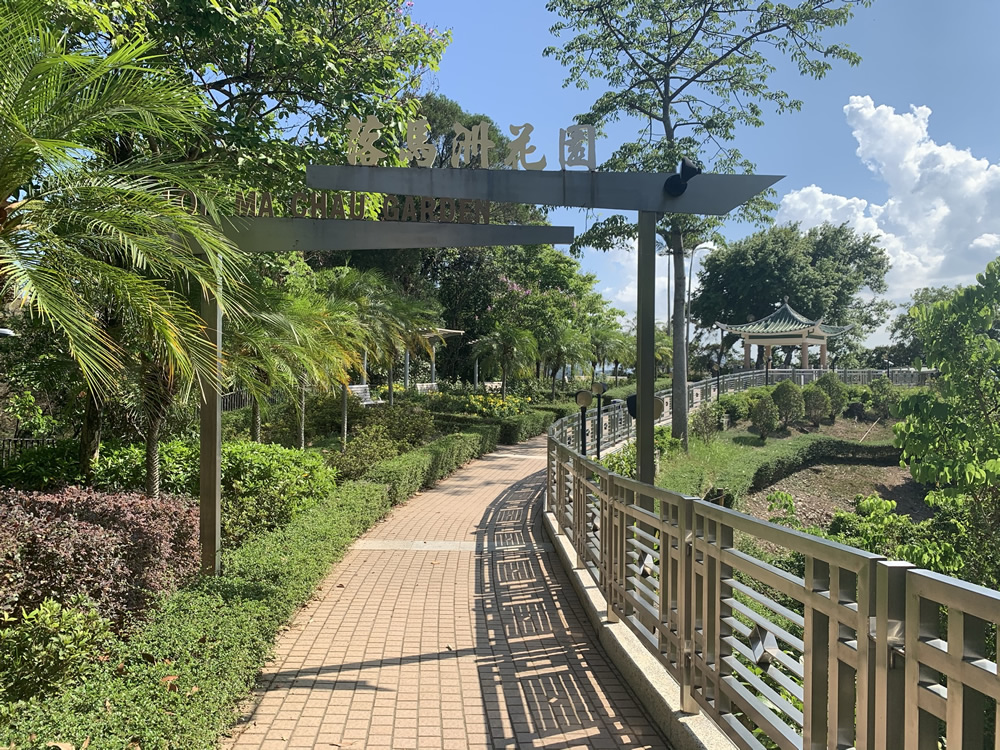
There is a lookout at the Lok Ma Chau Garden at San Tin Heung, where visitors can view the Shenzhen Special Economic Zone.
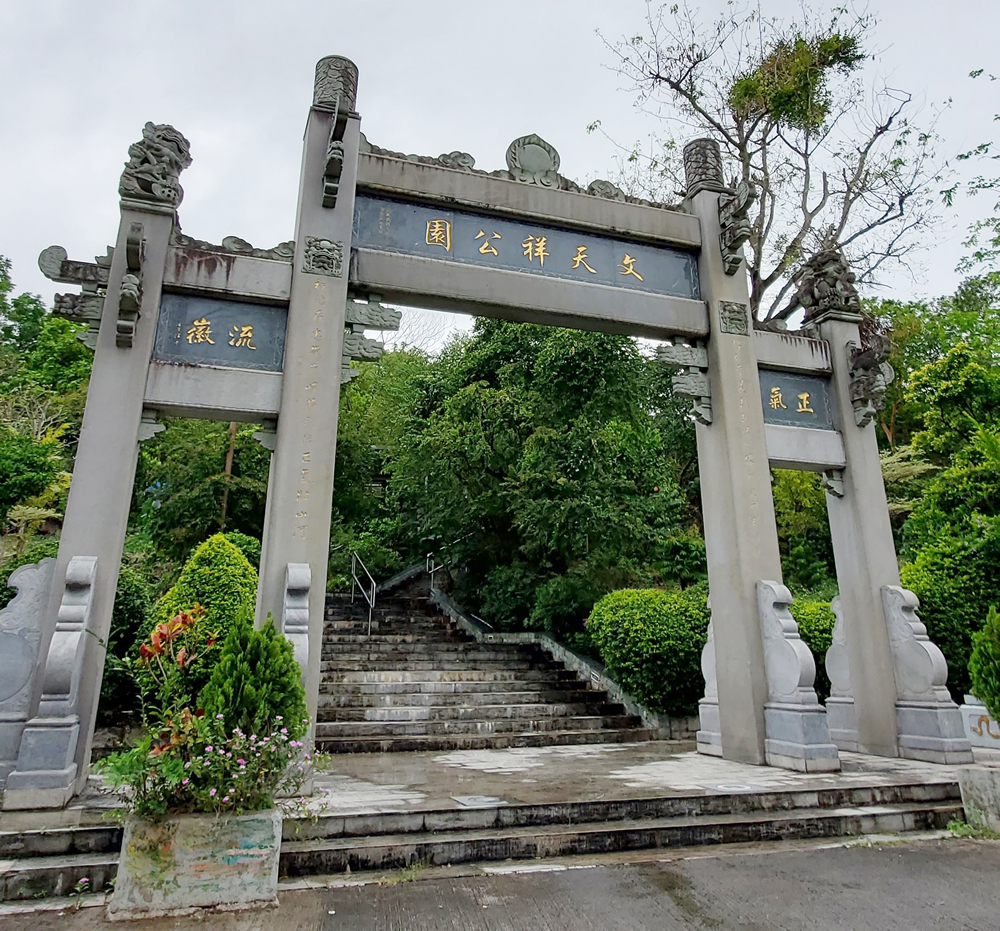
Man Tin Cheung Park commemorates Man Tin Cheung, a renowned patriotic general in the Southern Song Dynasty (1127 – 1279). The 6 m high statue is located at the highest point of the Park, fronting a stone tablet engraved with the biography of the general. Man Tin Cheung’s famous "Song of the Spirit of Resistance", a poetry written when he was captured by the Mongol troops, was also inscribed on the stone tablet. His bravery, integrity and patriotism are well respected.
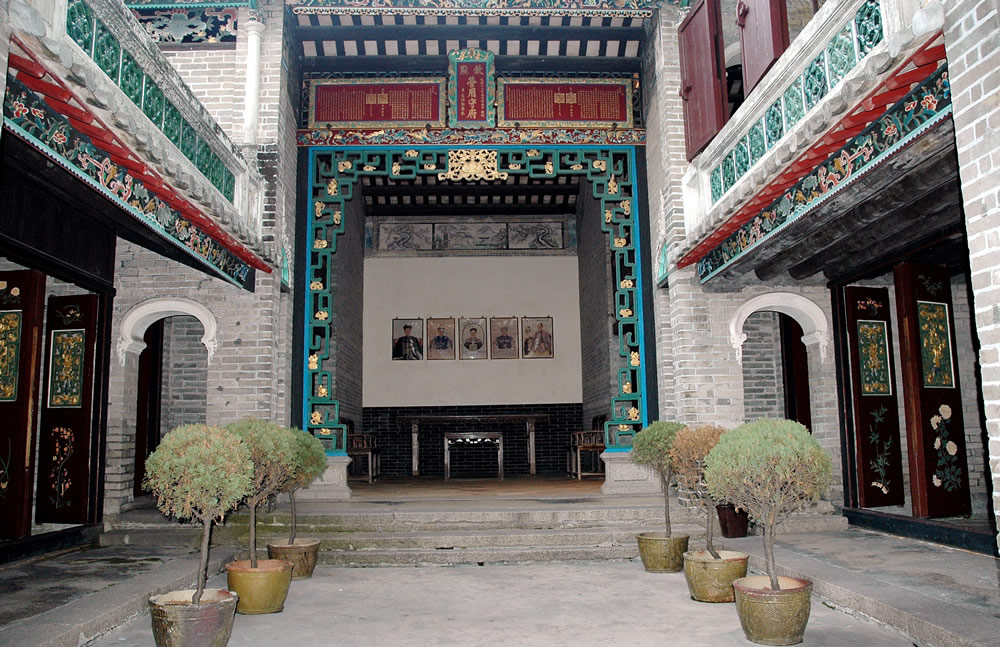
Tai Fu Tai was built in the 4th year of the Tongzhi reign (1865) of the Qing Dynasty. A richly decorated residence surrounded by green-brick walls with spacious front and back yards, Tai Fu Tai is a fine example of a traditional dwelling of the scholar-gentry in southern China and is one of the most beautifully embellished historic buildings in Hong Kong.
Tai Fu Tai was declared a monument in 1987.





.gif)





_190x132.png)